
Asura: Tale Of The Vanquished – Anand Neelakantan
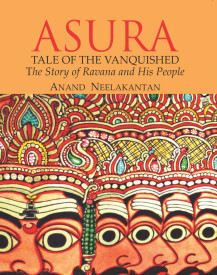 The epic tale of victory and defeat… The story of the Ramayana had been told innumerable times. The enthralling story of Rama, the incarnation of God, who slew Ravana, the evil demon of darkness, is known to every Indian. And in the pages of history, as always, it is the version told by the victors that lives on. The voice of the vanquished remains lost in silence.
But what if Ravana and his people had a different story to tell? The story of the Ravanayana has never been told. Asura is the epic tale of the vanquished Asura people, a story that has been cherished by the oppressed castes of India for 3000 years. Until now, no Asura has dared to tell the tale. But perhaps the time has come for the dead and the defeated to speak.
“For thousands of years, I have been vilified and my death is celebrated year after year in every corner of India. Why? Was it because I challenged the Gods for the sake of my daughter? Was it because I freed a race from the yoke of caste-based Deva rule? You have heard the victor’s tale, the Ramayana. Now hear the Ravanayana, for I am Ravana, the Asura, and my story is the tale of the vanquished.”
“I am a non-entity – invisible, powerless and negligible. No epics will ever be written about me. I have suffered both Ravana and Rama – the hero and the villain or the villain and the hero. When the stories of great men are told, my voice maybe too feeble to be heard. Yet, spare me a moment and hear my story, for I am Bhadra, the Asura, and my life is the tale of the loser.”
The ancient Asura empire lay shattered into many warring petty kingdoms reeling under the heel of the Devas. In desperation, the Asuras look up to a young saviour – Ravana. Believing that a better world awaits them under Ravana, common men like Bhadra decide to follow the young leader. With a will of iron and a fiery ambition to succeed, Ravana leads his people from victory to victory and carves out a vast empire from the Devas. But even when Ravana succeeds spectacularly, the poor Asuras find that nothing much has changed from them. It is then that Ravana, by one action, changes the history of the world.
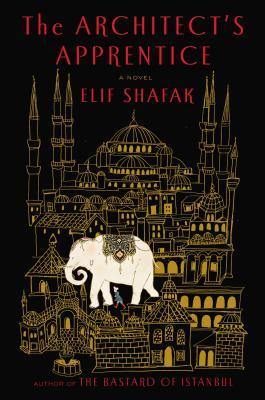 In her latest novel, Turkey’s preeminent female writer spins an epic tale spanning nearly a century in the life of the Ottoman Empire.
 30 stories about ordinary Singaporeans at their best and worst, their joys and griefs and angers, their dreams fulfilled or lost. They are tales about the awesome human condition and the even more awesome human spirit, interweaved with the author’s vignettes of her nearly 50 years in Singapore, such as how she came from Malaysia to live in Singapore and her run-in with then Prime Minister Goh Chok Tong.
 In a land where skin colour can determine one’s destiny, fraternal twins Pullamma and Lata are about to embark on a journey that will tear their lives apart. Dark skinned Pullamma dreams of being a wife. With three girls in her family, the sixteen year old is aware there isn’t enough dowry to secure suitable husbands for them all. But a girl can hope. She’s well versed in cooking, pickle making, cow washing — you name it. She’s also obliged her old-fashioned grandmother by not doing well in school. Fair skinned and pretty, her twin sister Lata would rather study medicine than get married. Unable to grasp the depth of Lata’s desire, the twins’ Grandmother formalizes a wedding alliance for the girl. Distraught, Lata rebels, with devastating consequences. As Pullamma helps ready the house for her older sister Malli’s bride viewing, she prays for a positive outcome to the event. What happens next is so inconceivable that it will shape Pullamma’s future in ways she couldn’t have foreseen. Tell A Thousand Lies is a sometimes wry, sometimes sad, but ultimately realistic look at how superstition and the colour of a girl’s skin rules India’s hinterlands.
 The vivid, often startling memoir of a young woman shaped by two dramatically disparate worlds. Saira Shah is the English-born daughter of an Afghan aristocrat, inspired by his dazzling stories to rediscover the now lost life their forebears presided over for nine hundred years within sight of the minarets and lush gardens of Kabul and the snow-topped mountains of the Hindu Kush. Part sophisticated, sensitive Western liberal, part fearless, passionate Afghan, falling in love with her ancestral myth-chasing Afghanistan-Shah becomes, at twenty-one, a correspondent at the front of the war between the Soviets and the Afghan resistance. Then, imprisoning herself in a burqa, she risks her life to film Beneath the Veil, her acclaimed record of the devastation of women’s lives by the Taliban. Discovering her extended family, discovering a world of intense family ritual, of community, of male primacy, of arranged marriages, and finding at last the now war-ravaged family seat, she discovers as well what she wants and what she rejects of her extraordinary heritage.

