

Growing up in Mumbai, it almost felt like an unspoken rule that every child had to learn a classical art form. Music or dance, sometimes both. It was simply what one did. No one questioned it, and no one really explained it either. It sat somewhere between discipline, culture, and expectation.
My sister took to dancing naturally. As soon as she could, she signed up with a teacher in the neighbourhood and seemed entirely at ease with movement in a way I never was.
I, on the other hand, have always been, and remain, spectacularly uncoordinated.
Dance was never going to be my thing.
So music it was.
Carnatic classical music, to be precise.
There was a well-known fine arts academy in Matunga that conducted classes in a school building not far from ours. It offered lessons in both vocal music and instruments, and for many children in the area, it was a familiar part of growing up. When I was about six years old, I joined the vocal class.
Another girl joined at the same time. She was a classmate of my neighbour and lived in a building directly opposite mine. From her building, you could clearly see the approach road that led to the school where our classes were held.
That small detail became important.
Before each class, we would meet downstairs, lingering just a little longer than necessary. There was no urgency in our waiting. We would talk, watch the street, stretch out those few extra minutes of freedom.
And then, at some point, one of us would spot her.
The teacher.
Walking up the road, unhurried, entirely unaware of the small drama unfolding at a distance.
That was our cue.
We would immediately spring into action, running as fast as our legs could carry us, trying to reach the classroom before she did, as though arriving before the teacher somehow counted as being more prepared, or perhaps less guilty of our delay.
It was a small ritual, repeated week after week. Looking back, I suspect we enjoyed that moment more than the class itself.
I continued for about two years.
My friend stopped after the first year, and not long after, I followed. The decision was not dramatic. There was no particular incident, no sudden loss of interest. It was simply that I was not willing to give up my playtime two or three times a week to sit in a classroom learning something that required patience I did not yet have.
At that age, play always wins.
For a few years after that, music drifted in and out of my life. I would sing occasionally, mostly at home, without structure or discipline. It was there, but lightly held.
And then, when I was about ten or eleven years old, something shifted again.
A lady in my building came home one day to invite us to a concert she was organising with her friend. This friend lived nearby and was known to my parents. She had been learning music for many years and was now beginning to teach. The concert, as it turned out, was not just a performance. It was also a way of introducing herself to potential students.
I still remember sitting there, listening.
Something about that evening stayed with me. It was not just the music, though that was certainly part of it. It was the atmosphere. The stillness. The way everyone seemed to be listening with intention.
I came home and told my mother I wanted to start learning music again.
And so, I did.
This time, it was different.
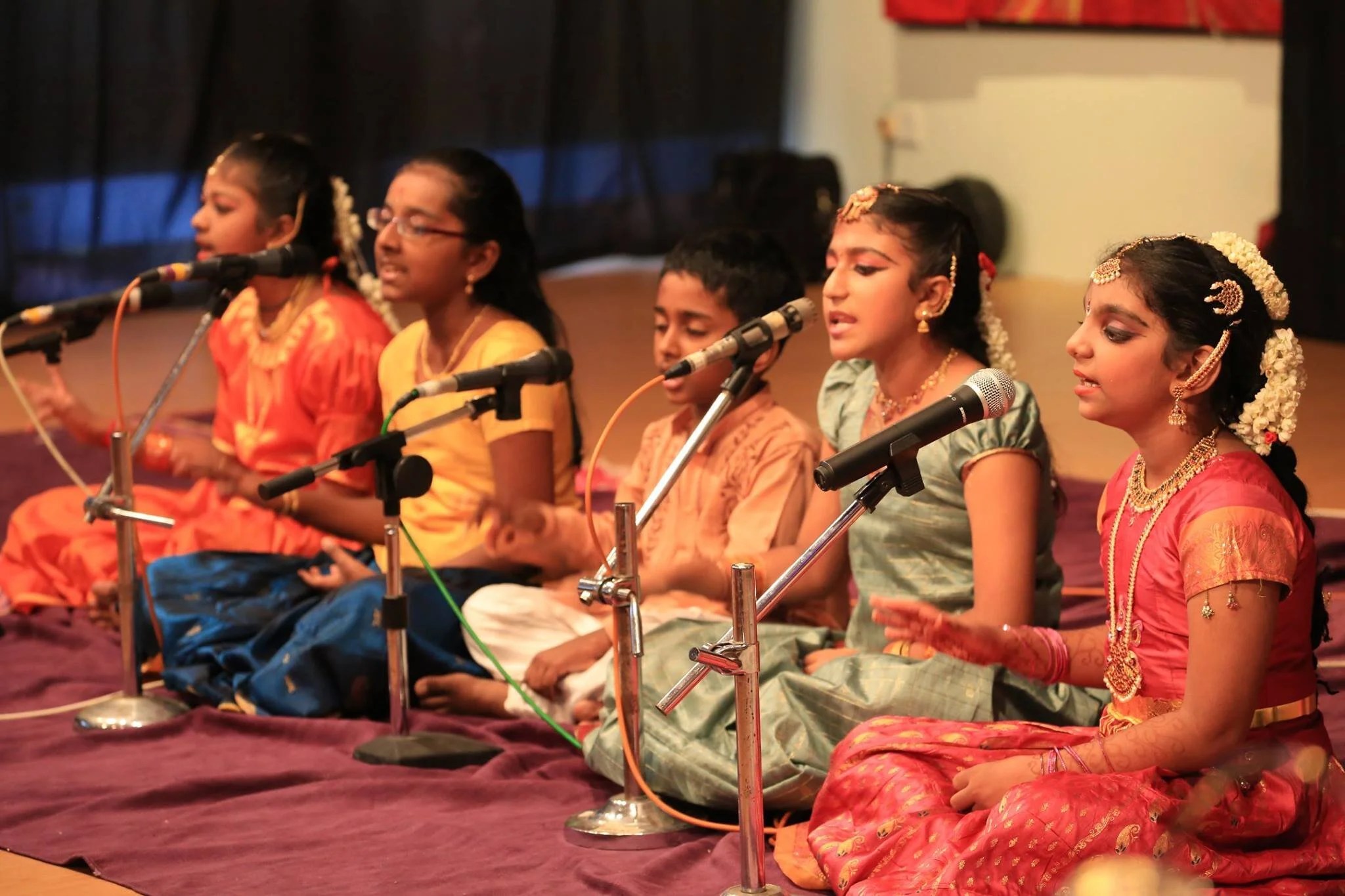
The classes were more structured, the expectations clearer. There were other students too, including a girl from my school who lived about fifteen minutes away. The group was small enough to feel personal, but large enough to create a sense of shared effort.
We sat cross-legged on the floor, notebooks open, repeating after the teacher. The steady drone of the shruti box filled the room, constant and unwavering, like a line we were expected to stay within. There was no rushing ahead. Each note had to be held, corrected, and repeated.
“Again,” she would say.
Not sharply. Not impatiently. Just firmly enough to let you know that almost right was not enough.
There is a particular kind of discipline that comes with learning classical music. It is not dramatic or visible. It lies in repetition. In practising the same notes and the same patterns over and over again until they begin to settle somewhere deeper than memory.
I stayed with it for about four years.
Long enough to understand that this was not something one mastered quickly. Long enough to feel both the frustration and the quiet satisfaction that comes with incremental progress.
And then, as it often happens, something else began to take precedence.
Studies.
By the time I reached class eight, the balance between schoolwork and everything else began to shift. Time became more structured, expectations more defined. Something had to give.
And once again, music classes were the thing that fell away.
But this time, it did not leave entirely.
Even without formal lessons, music stayed.
It found its way into everyday life. Into quiet moments, into routines, into the spaces between tasks. I was always singing something, humming something, or listening to music. It did not require effort anymore. It had simply become part of how I existed.
And without realising it, I carried it forward.
When I was pregnant with GG and BB, I found myself singing to them. Not in any deliberate or planned way, but naturally. Carnatic music, yes, but also small ditties, rhymes, and the occasional Bollywood song that had made its way into memory.
And then, when they were born, that continued.
Music became part of their early world, too.
It was not something I consciously decided to pass on. It was simply there, as it had been for me.
And when they turned seven, they both began formal music training.
What followed, however, reminded me that no two journeys are the same.
BB stopped when he reached puberty, and his voice broke. It was a practical decision, and perhaps an inevitable one. But music did not leave him either. It stayed, just in a different form. He sings informally, listens to music constantly, and engages with it in his own way.
GG, on the other hand, continued.
And continues still.
Through PSLE, through O levels, through polytechnic, and now university, music has remained her constant. There have been pauses, of course. Moments where studies took over, where classes were missed. But she always returns.
It is, quite clearly, her happy place.

Looking back, what strikes me is not how long or how well any of us learned music in a formal sense.
It is how it stayed.
In different forms, at different intensities, across different phases of life. Sometimes structured, sometimes casual. Sometimes central, sometimes in the background.
It never really left.
And perhaps that is the point of these early lessons.
Not mastery.
Not performance.
But familiarity.
The knowledge that something exists, that it can be returned to, that it can sit quietly within you without demanding constant attention.
I never became a trained classical singer.
But I became someone for whom music is always within reach.
And somewhere along the way, that feels like enough.

