Experiences over Things – Because Experience is the best Teacher

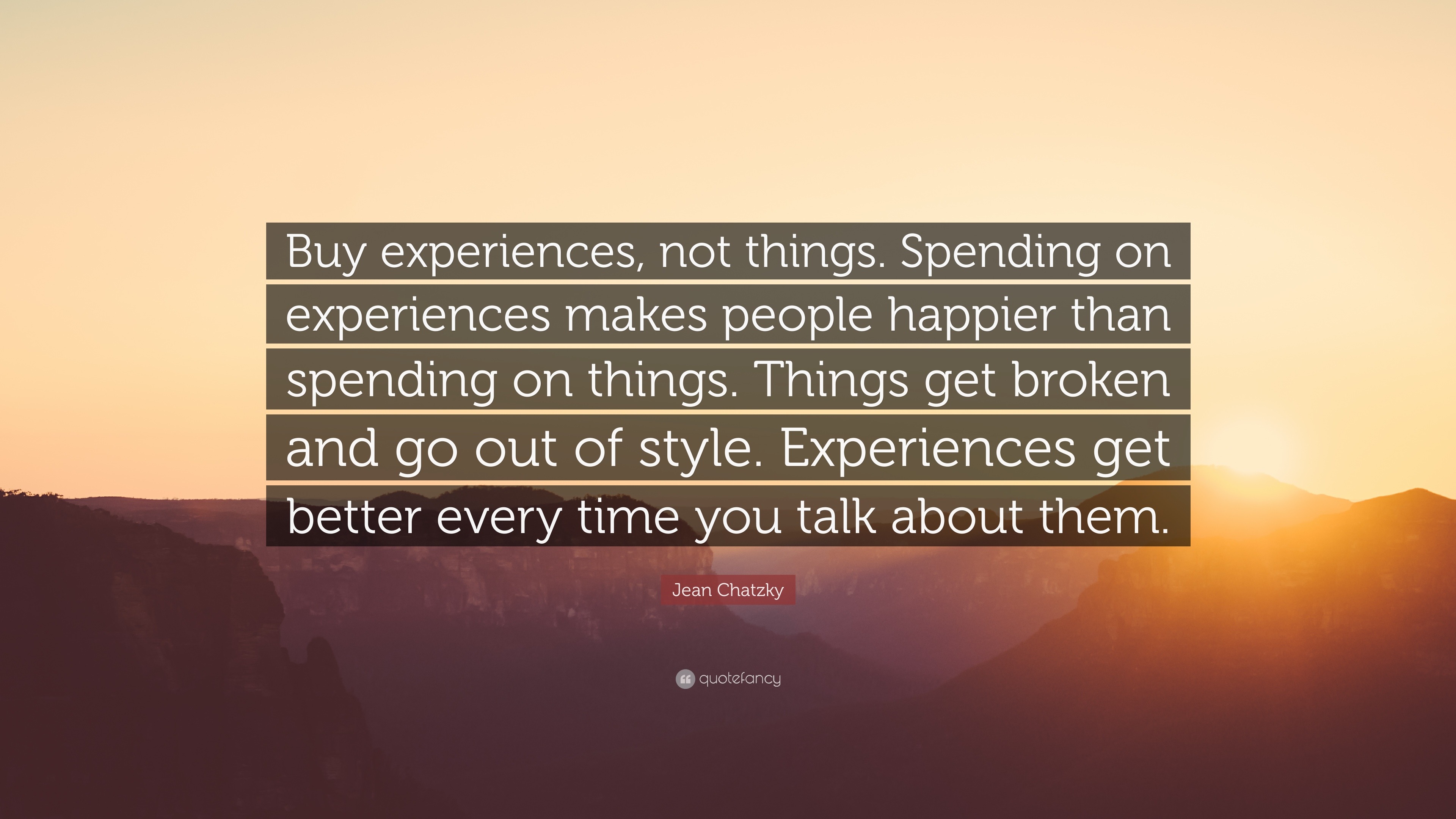
“Buy experiences, not things. Spending on experiences makes people happier than spending on things. Things get broken and go out of style. Experiences get better every time you talk about them.” – Jean Chatzky

When I was younger, I wanted the best of everything – be it clothes, skincare, holidays and material things. But as I grow older, material things are slowly losing the importance they once had. When the urge to fill cupboards reduced, the urge to experience started increasing.

I also find that this is something that younger people do more than us. It is perhaps something to do with a scarcity of resources. Growing up in a middle class regulated India, we were hard-pressed to have enough money for a lot of material things and a lot of things that today would seem normal, even in India used to be considered luxury items. But today’s children have grown up with a lot of things we considered a luxury. For example, BB & GG took their first overseas trip and plane ride when they were slightly over a year old while I must have taken my first domestic plane ride when I was about 10-11 years old and my first overseas trip only in my twenties!

For today’s generation who are digital natives, they only know a world where the largest retail store doesn’t own any items aka Amazon, the biggest transportation service doesn’t own any vehicles, Uber, and the most popular hotel chain doesn’t own any hotels aka AirBnB. In a world where jobs are not stable and freelancing and being a digital nomad is slowly becoming a thing, it is no wonder that they prefer to have fewer possessions and more experiences.

So what makes some people choose experiences over things? And while reading up about this issue, I realised that there are many people like me, whole encompass the spectrum of people of all ages, who are starting to opting out of accumulating things and exploring experiences instead.

Experiences result in greater happiness: According to research, experiences result in longer-lasting happiness than material possessions. Humans quickly adapt to their external surroundings and as a result, the happiness provided by new material possessions is short-lived. Over time, people’s satisfaction with the things they buy decreases, whereas their satisfaction with experiences over time increases.

Experiences provide better memories: We usually look back on memories and these memories, especially if they are associated with our loved ones provide us with years of pleasant memories and bring a warm smile in our hearts when we think about them. Does something you own bring that smile to your face? Maybe, but memory will always trump a physical thing.

Experiences result in less clutter: Most physical possessions eventually become a burden on our lives. They take up physical space in our homes and mental space in our minds. They require care, attention, maintenance, organization. Experiences, on the other hand, are accompanied with little to no physical baggage. All you need to do to go back to a memory is to close your eyes and think about that time, there’s no need to clutter up your homes, which are getting smaller, especially in crowded cities like Singapore.

Experiences provide greater opportunity to connect with other people: When we experience things with others because we enjoy time together with people we love and are comfortable with, we can connect with them on a level that spending that time and money on things just can’t do.

Experiences result in greater mindfulness: In a 2010 research, it was concluded that a wandering mind is an unhappy mind. And the greater a person’s ability to stay present in a given moment, the greater happiness they experience during and after. Experiences provide a greater opportunity and this regard.

Experiences result in less comparison with others: In a materialistic society, we are always comparing ourselves with others and if we have a bigger house or more possessions, we are supposed to more successful compared to whom we are comparing ourselves with. But how do you compare experiences? There’s no standard template with which you can do that. An experience that is very important to one will have no value to another and so everyone’s experience is unique and special.

Experiences let you grow as an individual: When you experience and learn different things, you can view the world differently. Experiences make you more emphatic and make an individual a better person overall.

So let’s start gathering more experiences to experience the various facets of life to live a more enriched and fulfilling life. While material things may bring fleeting moments of joy, but are separate from the individual. Experiences, on the other hand, live with an individual for a long time, maybe even their own life and become intrinsically entwined with the individual. And at the end of the day, we are the total sum of all our experiences.

Travel: Interesting Mumbai Attractions and Experiences

Source

I have a serious case of writers’ block and just can’t think of anything to write. So I was browsing the net to see if I can find some inspiration when I came across this list about my hometown Mumbai. This is a list of the top attractions in Mumbai if you want to know.

Some of these places are old favourites, and some of them are places where I have never been earlier. This list is a good starting point for me to use when I next go to Mumbai and take BB & GG around to play tourist.

I’ve spoken many times about my birthplace and hometown of Mumbai before. The financial capital of India, and one of the most cosmopolitan cities in the country (before the word was even a word), Mumbai is fast-paced, and some may even say a cold city. But it’s a city like no other. I may go anywhere in the world, live across continents, but Mumbai will always hold a very special place in my heart. Like someone once said, “Mumbai is a city, but Bombay is an emotion”. Old-timers still call the city Bombay, we still can’t get Mumbai as easily in our lips as Bombay, even though the name change was way back in 1995!

So anyway on to the attractions and experiences which make this city so special.

Kala Ghoda

Source

Kala Ghoda which means black horse in Hindi is where the biggest cultural festival of the year takes place. The entire main street is taken over by stalls selling art and craft work, and prime performance venues are booked for plays, workshops and other events. The street is also lined with art installations, food stalls and street performers. If you are in Mumbai when it’s not festival time (which happens in February), you can still stroll along this area to see the neo-colonial and classic British architecture. I love walking here on Sundays when it is quite empty of the crowds which happen during a weekday because this is the heart of the city’s business centre. Walk along PM Road from CST station to Kala Ghoda and soak in the atmosphere of colonial British Bombay.

Marine Drive

Source

The Queen’s Necklace as it’s fondly called is a 3.5 kilometre stretch in south Mumbai which turns into a major hangout spot during the evenings. It is called the Queens’s Necklace because, if viewed at night from an elevated point anywhere along the drive, the street lights resemble a string of pearls in a necklace. There’s a great view of the Mumbai skyline from Marine Drive and if you happen to be in Mumbai during the monsoon season, make sure you head there during the rains. The crashing waves make it so much fun!

Elephanta Caves

Source

A small island two km off the shore of Mumbai in the Arabian Sea, Elephanta Caves, which is a UNESCO World Heritage Site is an hour-long ferry ride away from Gateway of India. The complex consists of five Shaivite caves and a few Buddhist stupa mounds that may be dating to the 2nd century BCE, as well as a small group of two Buddhist caves with water tanks. It is divided into wings and the ‘Trimurti’ or the three-headed sculpture is one of the most important sculptures there. This cave structure has some of the world’s best rock-cut sculptures and most of the carvings here depict stories from Hindu mythology. Watch out for the monkeys though, they can be something of a nuisance on the island. The caves are closed on Mondays and possibly during the monsoon season.

Chor Bazaar

Source

Tucked away in the depths of South Mumbai, Chor Bazaar or Thieves Market is famous as the underbelly of the city. More of a flea market today, it is a good place to search for random goods like automobile parts, furniture, old Bollywood paraphernalia, gramophone records and a bunch of other vintage stuff. What you find depends on your ability to unearth some classics from the eclectic souveniers abounding there. Haggling comes quite naturally to these shop owners so you can get away with pretty decent bargains. This market stretches out on Mutton Street, and the shops are open from 11 am to 7:30 pm.

Bandra Worli Sealink

Source

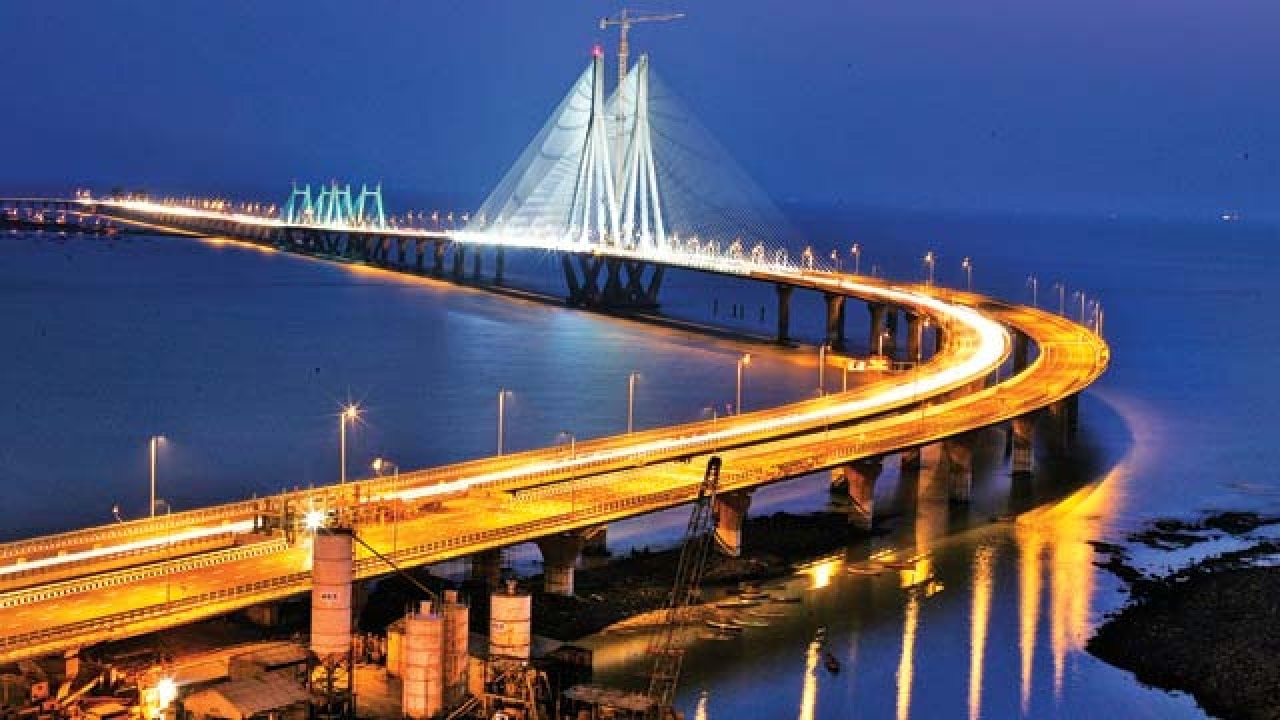
The Bandra-Worli sea-link is truly a modern-day architectural marvel, that helps the choked traffic of Bombay by diverting a large part of it on a high-speed, six-lane expressway over the sea. It’s clean, it’s fast, no stopping, no two-wheelers, no people on foot, no photography. Driving down the sea-link can only be described as exhilarating. In this city of overcrowded houses, with stuck traffic and loud honking all around, a drive down this road can be the highlight of your day. Drive down this road, or get into a metered taxi and enjoy 6–7 minutes of pure, clean air as you drive above the deep Arabian Sea. It’s even better when you have the a view of the orange sky as the sun rises or sets, or the lit-up skyline of Mumbai, the city that never sleeps.

Flamingos at Sewri

Source

Sewri, a station on the Central Railway Harbor Line, and one of the original seven islands of Bombay has a vast expanse of mangrove mudflats that are a protected ecology. Every October onwards, until February, thousands of pink flamingoes descend upon the seas of Mumbai in Sewri, along with other rare birds like the Egret. Head to Sewri on a weekend, and watch a rare phenomena take place in front of you in one of the most unlikely of places- Mumbai, the city of cars and buildings and taller buildings.

Khotachiwadi

Source

A small heritage village tucked away in Girgaon, Khotachiwadi has the prettiest old style Portuguese houses in South Mumbai. They are mostly constructed out of wood, have small verandahs, and even tiny backyards. Unfortunately, a lot of these houses have been torn down in the past to make way for new constructions and now only a handful of them are still standing, so if you are in Mumbai, make sure you see these houses before they are all gone.

Dr. Bhau Daji Lad Museum

Source

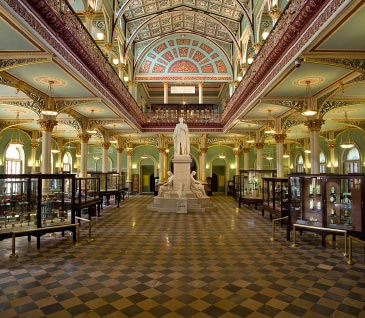
The oldest museum in Mumbai, the Dr Bhau Daji Lad Museum houses artefacts and finds related to the cultural history of the city. Among the most interesting displays are old maps of Bombay harbour, dioramas of different parts of the city, and an old but complete warrior’s suit of chainmail.