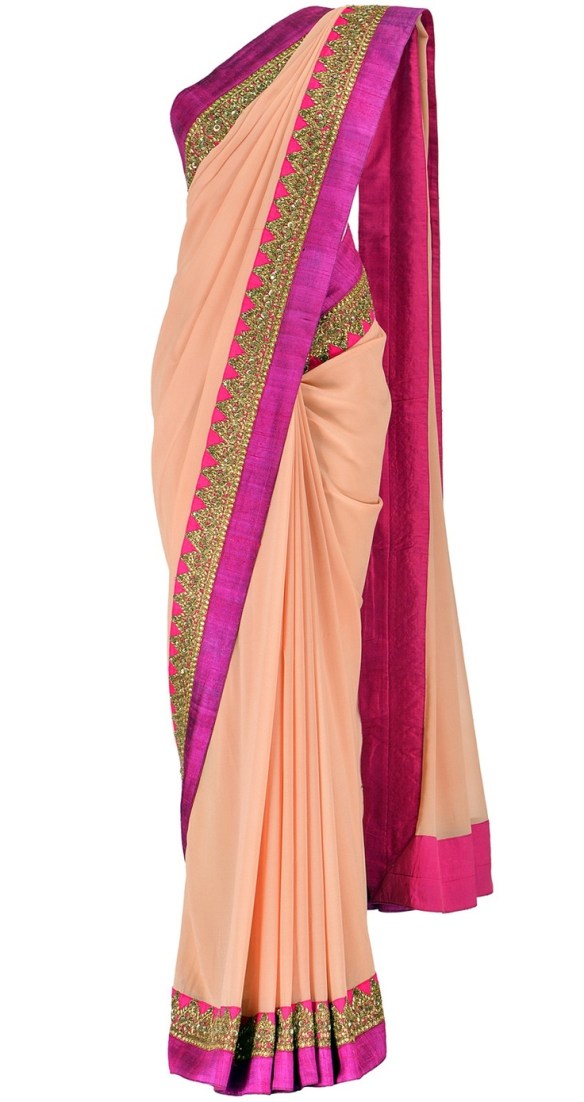
 The very word ‘Saree or Sari’ evokes a sense of pure bliss for the six yards of fabric which exude grace and elegance. This traditional Indian garment for women is in every Indian woman’s wardrobe, even if she is not a saree wearer, but she will wear a saree for very special occasions.
I used to love wearing the saree and have loads of memories pre-marriage of wearing them. Back in college, we used to have ‘Saree Day’ and ‘Traditional Day’ each year, where girls would wear the saree on saree day and either a saree or their traditional dress on traditional day. When we had official functions in college, again the saree would come out and those days the whole college would look so colourful with everyone checking out theirs and their friends sarees and accessories.
Even when I started work, sarees played an important role. Every interview was always in a saree, as this was considered formal wear for women and again when we had important meetings, presentations or visitors we’d all wear sarees to work. Another time the saree was brought out was during festivals. During festivals, everyone came in their festive best and during festivals like Navratri, where each day has a specific colour associated with it, all the women in the office would wear the same colour!
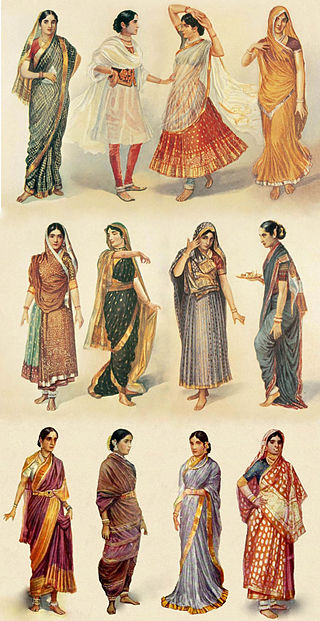 After coming to Singapore, my saree wearing slowed down and after having BB & GG, almost came to a stop! But in the last year or so, I have rediscovered my love for the saree again, what with seeing images of women doing everything in this garment on social media. I’ve now decided to wear them more often, though the heat does everything to discourage me. I’ve also decided to buy more sarees from India’s rich heritage and want to own atleast one saree from every Indian state – from the Bandini of Rajasthan to the Patola of Gujarat to the Kantha of West Bengal to the Muga Silk of Assam to the Sambalpuri of Odisha to the Pochampalli of Telangana to the Paithani from Maharashtra to the Kanjivaram from Tamil Nadu to the Mangalgiri and Gadwal silks from Andhra Pradesh to the Maheshwari and Chanderi from Madhya Pradesh to the Banrasi Silk from Uttar Pradesh to Mysore Silks from Karnataka. The rich cultural heritage of the various Indian states ensure you can never run out of sarees to wear!
Now I am off to arrange my small stack of sarees and make notes on what I need to buy to add to it!

 Made into a powerful, award-winning film in 1970, this important Kannada novel of the sixties has received widespread acclaim from both critics and general readers since its first publication in 1965. As a religious novel about a decaying brahmin colony in the south Indian village of Karnataka, “Samskara” serves as an allegory rich in realistic detail, a contemporary reworking of ancient Hindu themes and myths, and a serious, poetic study of a religious man living in a community of priests gone to seed. A death, which stands as the central event in the plot, brings in its wake a plague, many more deaths, live questions with only dead answers, moral chaos, and the rebirth of one man. The volume provides a useful glossary of Hindu myths, customs, Indian names, flora, and other terms. Notes and an afterword enhance the self-contained, faithful, and yet readable translation.
 Malgudi Days is a collection of short stories by R.K. Narayan published in 1943.
 Sacred India is a close-focus view of spirituality in India with a very God-is-in-the-details approach. Lonely Planet tackles a bafflingly large subject with admirable grace in this loosely structured, accessibly sized coffee-table book. A florid painting of Ganesh, a hundred capped heads bowed in prayer, weather-beaten flags whipped in the Himalayan wind: all are diverse glimpses of India’s spiritual cultures. India’s four major religions–Hinduism, Islam, Sikhism, and Buddhism–are gathered in an impressionistic collage of vibrant photos and text. Christianity, Jainism, Judaism, Zoroastrianism, as well as tribal religions and gurus are also covered in smaller sections. The book’s photos are lavish in color and pungently evocative–but decidedly not opulent. They excel at the intensely personal (a lotus flower, a turban-swathed camel trader, a Muslim woman reading the Quran), but their zoomed-in style sometimes falls short of capturing the sense of awe and grandeur we like to associate with religion. Sacred India offers brief glimpses of a wide-ranging and multicolored land; but unlike the fable of the blind men and the elephant, the picture formed in the mind’s eye from these richly textured details will be greater than the sum of its parts.
 When twenty-something reporter Miranda Kennedy leaves her job in New York City and travels to India with no employment prospects, she longs to immerse herself in the turmoil and excitement of a rapidly developing country. What she quickly learns in Delhi about renting an apartment as a single woman—it’s next to impossible—and the proper way for women in India to ride scooters—perched sideways—are early signs that life here is less Westernized than she’d counted on.
 Memories and Such