

Nestled amidst the lush, undulating Sahyadri hills of Maharashtra, the Bhimashankar Temple stands as one of India’s twelve sacred Jyotirlingas dedicated to Lord Shiva. Located approximately 50 km northwest of Pune, deep within the Bhimashankar Wildlife Sanctuary, this ancient temple is renowned not only for its spiritual gravitas but also for the pristine natural beauty that surrounds it. As the supposed source of the Bhima River and a vital ecological zone, Bhimashankar merges myth, faith, and conservation. It continues to draw devotees, trekkers, nature enthusiasts, and seekers of peace, making it a place where the divine and natural worlds seamlessly blend.
Bhimashankar’s legends are epic, layered with tales of demon-kings, cosmic battles, and divine intervention. One widely revered legend narrates how Tripurasura, a powerful demon, performed severe penance in the dense Bhimashankar jungle seeking a boon of immortality from Shiva. Granted this wish on the condition of helping others, Tripurasura eventually succumbed to arrogance, wreaking havoc on humanity and the gods alike. The celestial beings beseeched Shiva, who, with the aid of Parvati in Ardhanarishwara form, destroyed Tripurasura in a fearsome battle. It is said that the sweat pouring from Shiva’s body after the long struggle led to the birth of the Bhima River, forever intertwining the region’s geography with its mythic past.
Another legend, with powerful moral undertones, recounts the story of Bhima, son of Kumbhakarna, the brother of Ravana. Infuriated after learning of his father’s death by Vishnu’s avatar Rama, Bhima performed intense penance and was granted enormous strength by Brahma. Bhima’s reign was oppressive: he imprisoned the pious King Kamrupeshwar and demanded worship. When Kamrupeshwar defied him, praying to Shiva instead, Bhima attempted to destroy the linga, only for Shiva to appear and obliterate him. At the request of gods and sages, Shiva remained at the site as the Bhimashankar Jyotirlinga.
Ancient texts also suggest Shiva’s battle not only rid the world of the demon Bhima but blessed the landscape itself. The Bhima River’s origin from Shiva’s exertions is regarded as a blessing to the region. Devotees connect river and shrine in daily worship, reinforcing an ecological ethos unique among Jyotirlinga sites.
Bhimashankar Temple is a tapestry of faith, history, and changing dynasties. References to Bhimashankar’s spiritual energy appear in the Shiva Purana, Uma Samhita, and later narratives. The earliest constructed shrine is believed to date to the 13th century, designed by the legendary Vishwakarma sculptors. Bhimashankar flourished under Maratha rulers, especially Nana Phadnavis in the 18th century, who built the sabhamandap or assembly hall and the shikhara or spire, renovating and expanding the temple complex. The Maratha king, Chhatrapati Shivaji Maharaj, endowed the temple, facilitating daily worship and festivals, maintaining its growing Hindu cultural importance.

Bhimashankar continued to weather turbulence, both natural and political, remaining a key spiritual hub for Maharashtra and neighbouring regions. In recent decades, increasing awareness of environmental preservation, as part of the Bhimashankar Sanctuary, has added a new dimension of stewardship.
The temple’s location within a dense forest, revered since ancient times as the Dakini Jungle, is unique among Jyotirlinga temples. Many legends centre not just on the temple but its wild surroundings, seen as extensions of Lord Shiva’s domain.
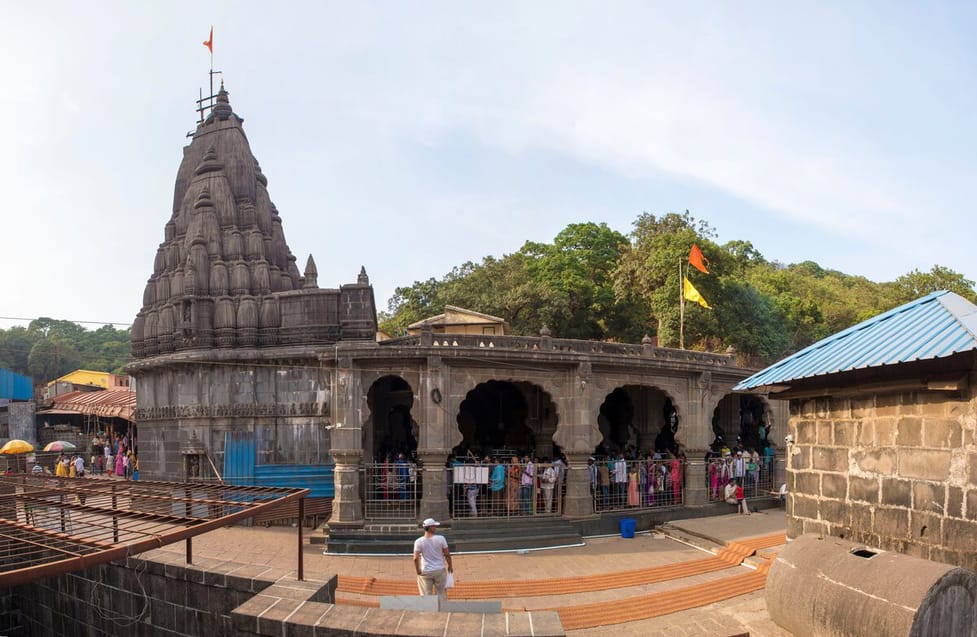
Bhimashankar’s temple architecture harmonises ancient forms, local design, and sacred symbolism. Built primarily in the Nagara style, which is the northern Indian temple architecture style, with influences of the Hemadpanthi style that is distinctive to the Deccan region. The temple is constructed on a high platform, accessed by steps, with a central garbhagriha, the sanctum, housing a swayambhu or self-manifested Shiva linga, exactly at the centre of the floor. The temple’s hallways, doorframes, and pillars showcase intricate carvings of gods, humans, natural motifs, and mythological episodes. The exterior spire or shikhara and assembly hall were expanded significantly by Nana Phadnavis.
Sculptures around the temple illustrate Lord Shiva’s life and exploits, divine beings, and flora and fauna of the Sahyadris. Scenes from Tripurasura’s battle are a highlight, reflecting devotion and artistry. A large stone Nandi, Lord Shiva’s vehicle, sits facing the linga, a common feature in Shiva temples. There is also a shrine dedicated to Shaneeshwara or Saturn, unique for Jyotirlingas, reflecting local traditions. Set in a forested plateau, the temple grounds often host rare wildlife such as the Malabar Giant Squirrel, with endemic flora enveloping the sanctum, blending spirituality and conservation.
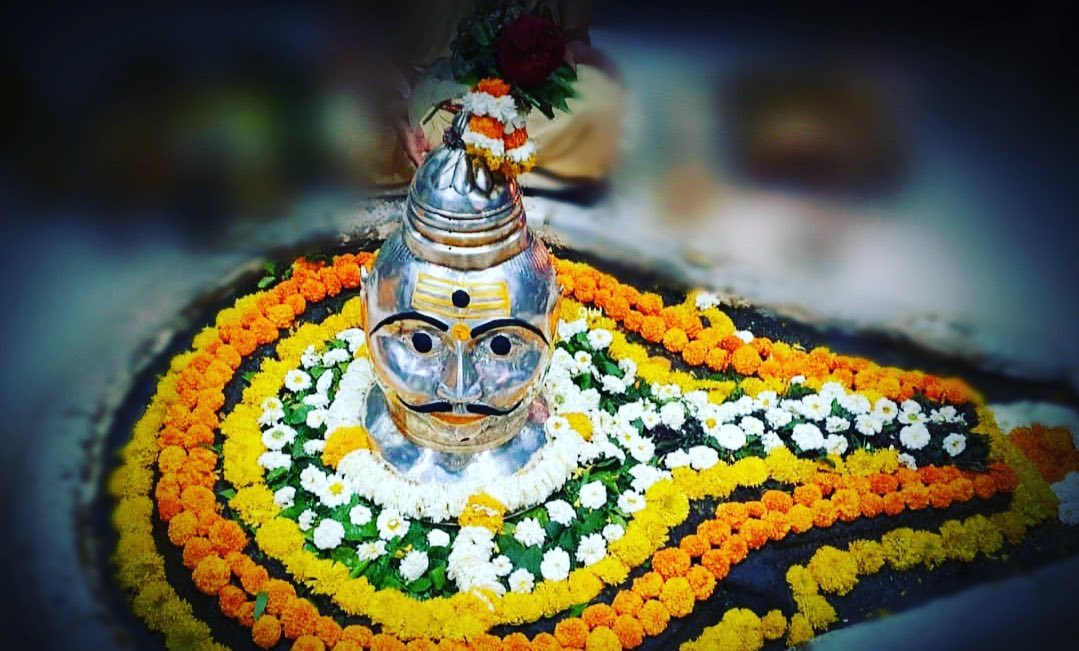
The temple pulsates with daily worship and grand festivals. Each morning, the Jyotirlinga is ritually bathed with water, milk, ghee, and honey, while the air vibrates to Vedic chanting. Aartis mark every worship, with prasad distributed amongst devotees. Bilva leaves, flowers, and coconuts are traditional offerings. The origin of the Bhima River is commemorated; devotees offer prayers at riverbanks and temples alike. Shaneeshwara Puja is conducted with special offerings and prayers that reflect the temple’s additional planetary significance.
Mahashivaratri is the highlight of Bhimashankar’s ritual calendar, with night-long prayers, processions, and community feasts. The month of Shravan, the fourth lunar month, is especially auspicious for Shiva worship, and sees thousands of devotees, chanting, music, and community activities. Local festivals and fairs bring villagers, tribal communities, and urban devotees together for song, dance, and worship. Villagers, tribal groups, and local societies help maintain and decorate the shrine, celebrating local customs, preserving forests, and promoting hospitality.
The pilgrimage to Bhimashankar melds spiritual quest and nature’s adventure. From Pune, buses and cars take pilgrims to the base village; the final approach is a trek through thick forests, streams, and mountain paths, offering adventure and meditation. The route passes through the Bhimashankar Wildlife Sanctuary, home to rare plants, animals, and panoramic views, making travel a spiritual journey itself. Simple dharamshalas, eco-lodges, and homestays await visitors; local food markets and eateries offer Maharashtrian specialties. Guides, shopkeepers, and priests provide support, sustaining the region’s reputation for warmth and welcome. Many visitors report a palpable presence of divinity in the air, amplified by misty mountains, the sounds of forest creatures, and flowing river. Stories of prayers answered, healings, and peaceful meditation are widely recounted, strengthening Bhimashankar’s mystique.
Bhimashankar’s influence permeates regional and national culture. Pilgrimage songs, Marathi bhakti poetry, and folk tales narrate the myths of Tripurasura, the Bhima River, and Shiva’s miracles. Festivals feature local musicians, dancers, and storytellers; the temple’s stories inspire Marathi films, plays, and visual arts. Artisans craft icons, paintings, and handicrafts inspired by temple motifs. The local community views Bhimashankar not only as a religious centre, but as a symbol of ecological harmony and regional pride. Tribal communities near Bhimashankar celebrate unique rituals blending Hindu traditions with native forest lore. Efforts to preserve the Sahyadri ecosystem echo Shiva’s ancient protector role.
Management, tourism, and conservation shape Bhimashankar’s contemporary vibrancy. The temple is managed by a temple trust that coordinates daily worship, festival calendars, and facilities. Preservation initiatives balance ancient shrine care with sustainable tourism. Pilgrim numbers swell on weekends, festival days, and during Shravan, bringing new economic prosperity and resource strains. Eco-tourism, wildlife walks, and cultural programs support conservation and community development.
Efforts to repair and restore the historic temple continue, addressing wear from weather and growing crowds. Conservation of forest and river is a shared priority between officials, villagers, and devotees. Visitors converge from cities, villages, and abroad—devotees, trekkers, ecologists—reflecting Bhimashankar’s universal appeal.
Bhimashankar Temple stands as a beacon of myth, biodiversity, and spiritual power in Maharashtra’s Sahyadris. Its legends of Shiva’s triumphs, ecological blessings, and community resilience are carved in both stone and landscape. The temple’s enduring role in the Jyotirlinga circuit, its integration into the natural world, and its celebration of local identity mark it as a vital manifestation of India’s spiritual and ecological heritage, a sanctuary where legend, faith, and nature forever intermingle.





 Memories and Such