Eats, Shoots & Leaves: The Zero Tolerance Approach to Punctuation – Lynne Truss
In Eats, Shoots & Leaves, former editor Lynne Truss, gravely concerned about our current grammatical state, boldly defends proper punctuation.
She proclaims, in her delightfully urbane, witty, and very English way, that it is time to look at our commas and semicolons and see them as the wonderful and necessary things they are. Using examples from literature, history, neighborhood signage, and her own imagination, Truss shows how meaning is shaped by commas and apostrophes, and the hilarious consequences of punctuation gone awry.
Featuring a foreword by Frank McCourt, and interspersed with a lively history of punctuation from the invention of the question mark in the time of Charlemagne to George Orwell shunning the semicolon, Eats, Shoots & Leaves makes a powerful case for the preservation of proper punctuation.
The Sense of Style: The Thinking Person’s Guide to Writing in the 21st Century – Steven Pinker
Why is so much writing so bad, and how can we make it better? Is the English language being corrupted by texting and social media? Do the kids today even care about good writing? Why should any of us care?
In The Sense of Style, the bestselling linguist and cognitive scientist Steven Pinker answers these questions and more. Rethinking the usage guide for the twenty-first century, Pinker doesn’t carp about the decline of language or recycle pet peeves from the rulebooks of a century ago. Instead, he applies insights from the sciences of language and mind to the challenge of crafting clear, coherent, and stylish prose.
In this short, cheerful, and eminently practical book, Pinker shows how writing depends on imagination, empathy, coherence, grammatical knowhow, and an ability to savor and reverse engineer the good prose of others. He replaces dogma about usage with reason and evidence, allowing writers and editors to apply the guidelines judiciously, rather than robotically, being mindful of what they are designed to accomplish.
Filled with examples of great and gruesome prose, Pinker shows us how the art of writing can be a form of pleasurable mastery and a fascinating intellectual topic in its own right.
21st February 1952, around 9 am, students began gathering in the premises of University of Dhaka in defiance of Section 144 which banned public gathering. This gathering was because the then Pakistan government led by Jinnah’s successor, Governer-General Khawaja Nazimuddin staunchly defended the ‘Urdu only’ policy during a speech on 27 January 1952. Then later that month, at a meeting, the central government’s proposal of writing the Bengali language in Arabic script was vehemently opposed and the meeting’s action committee called for an all out protest on 21 February, including strikes and rallies, to prevent which the government imposed section 144 in Dhaka.
Later that morning, as armed police surrounded the campus, students gathered at the university gate attempted to break the police line. In retaliation, the police fired fired tear gas shells towards the gate to warn the students. A section of students ran into the Dhaka Medical College while others rallied towards the university premises cordoned by the police. The vice-chancellor asked police to stop firing and ordered the students to leave the area. However, the police arrested several students for violating section 144 as they attempted to leave. Enraged by the arrests, the students met around the East Bengal Legislative Assembly and blocked the legislators’ way, asking them to present their insistence at the assembly. When a group of students sought to storm into the building, police opened fire and killed a number of students, including Abdus Salam, Rafiq Uddin Ahmed, Sofiur Rahman Abul Barkat and Abdul Jabbar. As the news of the killings spread, disorder erupted across the city. Shops, offices and public transport were shut down and a general strike began.
Soon dissorder spread across the then East Pakistan as large processions ignored section 144 and condemned the actions of the police. During the continued protests, police actions led to the death of four more people.
Today, 21 February, which is a public holiday in Bangladesh is also called State Language Day or Language Martyrs’ Day which was also proclaimed by the United Nations in November 1999 as International Mother Tongue Language Day. In Bangladesh, on this day, people visit the Shaheed Minar, a solemn and symbolic structure erected at the location of the massacre in memory of the language movement which led to the country’s independence.
Languages, especially what we refer to mother tongue languages, which are the ones we first learn to speak with our parents and family are one of the most powerful ways to preserve and develop culture and to promote it all across the world.
With their complex implications for identity, communication, social integration, education and development, languages are of strategic importance for people and planet. Yet, due to globalization processes, they are increasingly under threat, or disappearing altogether. When languages fade, so does the world’s rich tapestry of cultural diversity. Opportunities, traditions, memory, unique modes of thinking and expression — valuable resources for ensuring a better future — are also lost.
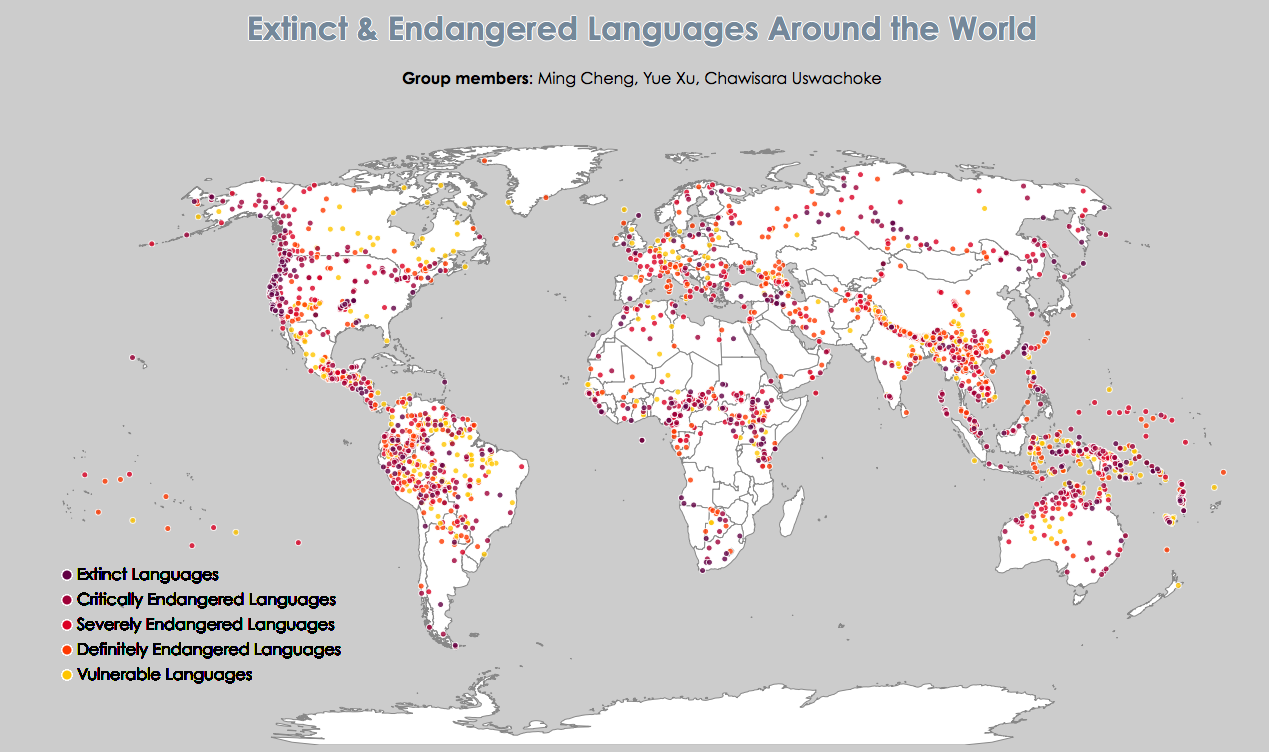
At least 43% of the estimated 6000 languages spoken in the world are endangered. Only a few hundred languages have genuinely been given a place in education systems and the public domain, and less than a hundred are used in the digital world.
International Mother Language Day has been observed every year since February 2000 to promote linguistic and cultural diversity and multilingualism.
Languages are the most powerful instruments of preserving and developing our tangible and intangible heritage. All moves to promote the dissemination of mother tongues will serve not only to encourage linguistic diversity and multilingual education but also to develop fuller awareness of linguistic and cultural traditions throughout the world and to inspire solidarity based on understanding, tolerance and dialogue.
Every two weeks a language disappears taking with it an entire cultural and intellectual heritage.
Linguistic diversity is increasingly threatened as more and more languages disappear. Globally 40 per cent of the population does not have access to an education in a language they speak or understand. Nevertheless, progress is being made in mother tongue-based multilingual education with growing understanding of its importance, particularly in early schooling, and more commitment to its development in public life.
Multilingual and multicultural societies exist through their languages which transmit and preserve traditional knowledge and cultures in a sustainable way.
Today there is growing awareness that languages play a vital role in development, in ensuring cultural diversity and intercultural dialogue, but also in strengthening co-operation and attaining quality education for all, in building inclusive knowledge societies and preserving cultural heritage, and in mobilizing political will for applying the benefits of science and technology to sustainable development.
The theme for the 2020 edition is “Languages without borders”. Today, make it a point to communicate in the language you were first exposed to, your Mother Tongue. And if it is a language or dialect that is in danger of becoming extinct, then all the more, you owe it to yourself and the future generations to preserve it.
Here’s an interesting Youtube video from a TEDx talk by Dr. Colleen Fitzgerald who speaks about the future of endangered languages. Do watch it!
And another TEDx talk by linguist Mandana Seyfeddinipur on why endangered languages matter.
When I was a student, years back, my school had an ‘English Only’ policy. What this meant was that we could only speak English while in school. If teachers found students talking in any other language other than English, they would punish the student. However, this enforcement was possible only in kindergarten and primary schools. By the time we reached secondary school, we were effortlessly speaking multiple languages with each other – English when speaking to our teacher and a mixture of English, Hindi, Gujarati and even Parsi when speaking with each other. What we didn’t know then was that we were actually code-switching!
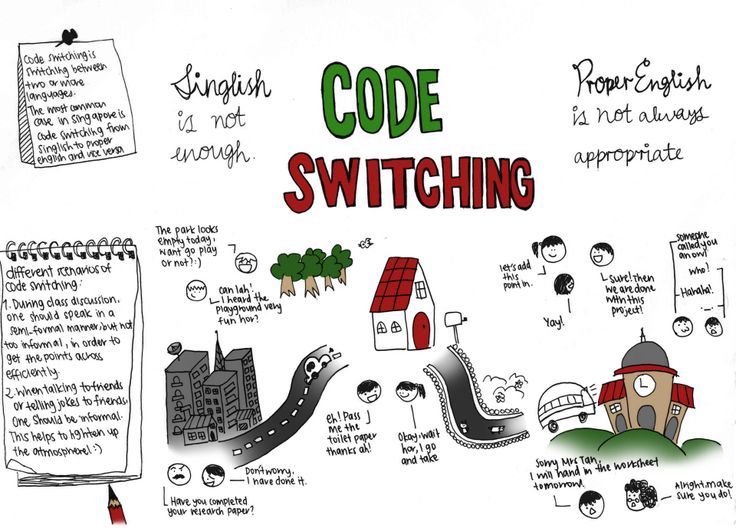
What is Code Switching? According to Wikipedia, “in linguistics, code-switching occurs when a speaker alternates between two or more languages, or language varieties, in the context of a single conversation. Multilingual speakers of more than one language, sometimes use elements of multiple languages when conversing with each other.”
Code Switching happens in societies which are multilingual in nature, so you see a lot of ode switching in places like Mumbai and Singapore which have people living in close contact who speak different languages. I guess it also happens when people who speak multiple languages live and work together. I’ve been known to speak in English, Hindi and Tamil all in the same sentence!
While working, when I have colleagues who speak Hindi or Tamil, I more often than not speak to them in those languages, especially when we want to speak things we do not want the others to know about, switching to English when another colleague joins us. I see this a lot here in offices here when ethnic Chinese people usually speak in Mandarin, but here, many do not speak English when others who don’t know the language join them.
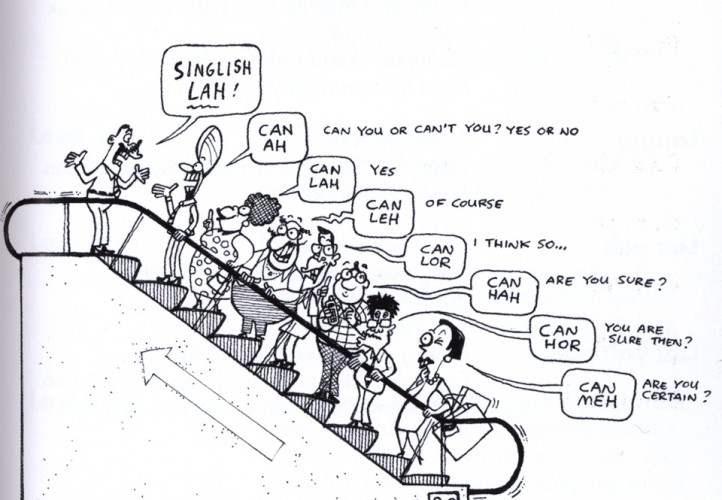
GG code switches more than BB moving between Mandarin, Singlish and Standard English. I am pretty particular about not using Singlish at home, but I am sure both GG & BB code switch between Standard English and Singlish when they are out with friends. This is actually fairly common in Singapore, where Singlish (or Singapore English), a colloquial version of English is the localised version spoken here. While English is the official language of business, Singlish is the language spoken between friends and while relaxing at home with words borrowed from Mandarin, Hokkien, Malay and Tamil.
When people are skilled Code Switchers, it allows them to connect culturally to people immediately. When you travel, when you hear Singlish or even Hinglish (the Indian version of Singlish), you immediately know you are among friends. It also allows you to make friends easily, especially when you and the person opposite you speaks a similar language. Code Switching also allows you to fit in immediately in a new environment.
I realise this when I go to Mumbai, I immediately start speaking in Hindi over English, even with friends with whom I’d text in English. I assume the reverse would happen if we go to a predominantly English speaking country – we’d automatically start speaking in English and also possibly start mimicking their accent.
I think back and realise we do this without realising it – one of my old bosses was a Brit and when I spoke to him, I realised my accent had become more crisp, almost copying the British accent.
So do you Code Switch? I’d love to hear your views on this interesting phenomena!
Language: The ability to acquire and use a complex system of communication, particularly the human ability to do so, and a language is any specific example of such a system.
Human beings, unless living in a completely isolated environment use language innately – when a parent coos to their baby, they are laying the foundation for the language they are native speakers of in the baby.
Most people (around 40% of the world’s population) are very fluent in a single language, usually called their mother tongue, many are bi-lingual (around 43% of the world’s population) which means they are fluent in two languages, usually English and their mother tongue, few are tri-lingual (around 13% of the world’s population), very few people are multi-lingual (around 3% of the world’s population) meaning they can speak four languages fluently and miniscule percent of the world population (less than 1%) can be called polygots or someone who can speak several languages fluently.
Most people in Singapore are bi lingual, speaking two languages with ease, English and their mother tongue, depending on what that is. Growing up, I guess most people around me were tri or multi-lingual – knowing English, Hindi, their mother tongues and to some extent the state language of Marathi. Although notionally my mother tongue is Tamil, the languages I think and dream are English and Hindi as these two were the languages we used all the time – in school, outside and even at home. My paternal grandfather, a product of the British education system, insisted I and my sister speak English to him and the English had to be grammatically correct. For a very long time, I could not speak to him in any other language other than English and it was only a few years before his death, we started speaking to him in other languages, specifically Tamil. My paternal grandmother, on the other hand, used to speak to us in Tamil, which to this date is not too fluent for both me and my sister. My parents, used to speak to us in a mixture of languages – both English and Tamil.
When we started school, it was frowned upon to speak any other language other than English in school and so this started a life-long love for the language. Like I mentioned earlier, I think, feel and even dream in English, so can this be called my native language?
Living in culturally diverse city like Bombay meant that you had to speak another language to engage with others – this usually was Hindi and with neighbours belonging to the Northern part of India, it meant my Hindi also achieved that level of fluency. Friends also cemented this level of fluency and thus I can comfortably claim to be bi-lingual, maybe tri-lingual (can I be that if I can’t read or write Tamil?).
Other languages I have a passing level of fluency to are Marathi (my home state language), French (this was my third language in school and college), Malayalam (from neighbours) and Kannada (my grandparents moved to Bangalore when I was in elementary school and yearly holidays to the city ensured I learnt a bit of the language).
Yesterday morning while S was driving me to work, the local Tamil radio channel was on. During the morning show, one of the DJs was, using the wrong way to pronounce a certain alphabet. Now this is going to be difficult to show here – there’s a letter which is a very guttural Y, but many people can’t speak it as it should be spoken and instead pronounce it as an L, which is wrong. This DJ, on national radio was continuously pronouncing words with this letter wrong. I am surprised that for a country which prides itself on it’s national bi-lingual policy allows someone to get away to speaking wrong on air like this. Also surprising is that till date, no one has come forward to correct this person as I am sure many eminent speakers of the language are probably tuning into the station!






 Memories and Such