In My Hands Today…

Lost Islamic History: Reclaiming Muslim Civilisation from the Past – Firas Alkhateeb

Islam has been one of the most powerful religious, social and political forces in history. Over the last 1400 years, from origins in Arabia, a succession of Muslim polities and later empires expanded to control territories and peoples that ultimately stretched from southern France to East Africa and South East Asia.

Yet many of the contributions of Muslim thinkers, scientists and theologians, not to mention rulers, statesmen and soldiers, have been occluded. This book rescues from oblivion and neglect some of these personalities and institutions, while offering the reader a new narrative of this lost Islamic history. The Umayyads, Abbasids, and Ottomans feature in the story, as do Muslim Spain, the savannah kingdoms of West Africa and the Mughal Empire, along with the later European colonization of Muslim lands and the development of modern nation-states in the Muslim world.

Throughout, the impact of Islamic belief on scientific advancement, social structures, and cultural development is given due prominence, and the text is complemented by portraits of key personalities, inventions and little known historical nuggets. The history of Islam and of the world’s Muslims brings together diverse peoples, geographies and states, all interwoven into one narrative that begins with Muhammad and continues to this day.

In My Hands Today…

The Singularity Is Nearer: When We Merge with AI – Ray Kurzweil

Since it was first published in 2005, Ray Kurzweil’s The Singularity Is Near and its vision of an exponential future have spawned a worldwide movement. Kurzweil’s predictions about technological advancements have largely come true, with concepts like AI, intelligent machines, and biotechnology now widely familiar to the public.

In this entirely new book Ray Kurzweil brings a fresh perspective to advances toward the Singularity—assessing his 1999 prediction that AI will reach human level intelligence by 2029 and examining the exponential growth of technology—that, in the near future, will expand human intelligence a millionfold and change human life forever. Among the topics he discusses are rebuilding the world, atom by atom with devices like nanobots; radical life extension beyond the current age limit of 120; reinventing intelligence by connecting our brains to the cloud; how exponential technologies are propelling innovation forward in all industries and improving all aspects of our well-being such as declining poverty and violence; and the growth of renewable energy and 3-D printing. He also considers the potential perils of biotechnology, nanotechnology, and artificial intelligence, including such topics of current controversy as how AI will impact employment and the safety of autonomous cars, and “After Life” technology, which aims to virtually revive deceased individuals through a combination of their data and DNA.

The culmination of six decades of research on artificial intelligence, The Singularity Is Nearer is Ray Kurzweil’s crowning contribution to the story of this science and the revolution that is to come.

In My Hands Today…

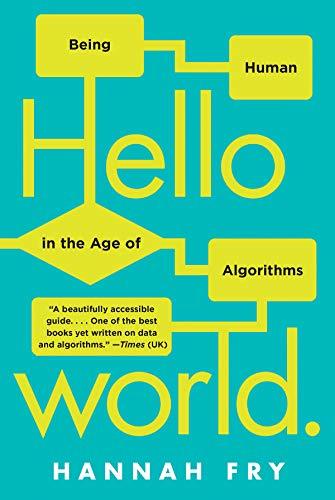
Hello World: Being Human in the Age of Algorithms – Hannah Fry

When it comes to artificial intelligence, we either hear of a paradise on earth or of our imminent extinction.

It’s time we stand face-to-digital-face with the true powers and limitations of the algorithms that already automate important decisions in healthcare, transportation, crime, and commerce.

Hello World is indispensable preparation for the moral quandaries of a world run by code, and with the unfailingly entertaining Hannah Fry as our guide, we’ll be discussing these issues long after the last page is turned.

In My Hands Today…

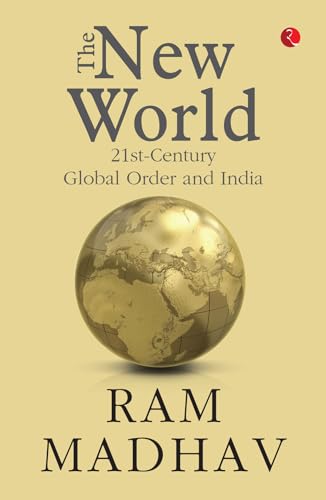
The New World: 21st-Century Global Order and India – Ram Madhav

Are there enduring patterns in history that can shed light on today’s shifting power dynamics and the struggle for a new international order? What lessons does the past offer for the present—and the future?

As the old world order fades and a new one slowly emerges, humanity stands at a pivotal crossroads. This period of transition presents a rare opportunity for rising nations like India to play a decisive role in shaping what comes next.

In The New 21st-Century Global Order and India, Ram Madhav offers a sweeping and influential exploration of the rise and fall of great powers and the international orders they create. Tracing the story of the liberal world order established by the West about seventy years ago, he examines the possible form of the emerging new order. He adopts an interdisciplinary approach as he delves into the most urgent concerns facing our global the rise of China and its challenge to the United States, the decline of global multilateralism and the emergence of multipolarity, the transformative impact of artificial intelligence and other frontier technologies, and the challenges posed by demographics and climate change, among others. He also envisions India’s emerging role in the evolving balance of power within the global system.

As always, Madhav presents his ideas with vivid clarity and accessibility, guided by unwavering principle and sharp insight. Free of heavy-handed jargon, he offers a clear perspective on modern civilization and where we are headed.

The New 21st-Century Global Order and India is a comprehensive resource for anyone seeking to understand the more representative global order that is less asymmetric and more diverse.

In My Hands Today…

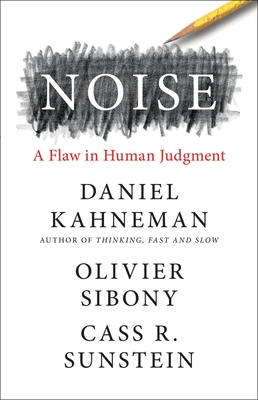
Noise: A Flaw in Human Judgment – Daniel Kahneman, Olivier Sibony, Cass R. Sunstein

Imagine that two doctors in the same city give different diagnoses to identical patients — or that two judges in the same courthouse give different sentences to people who have committed the same crime. Suppose that different food inspectors give different ratings to indistinguishable restaurants — or that when a company is handling customer complaints, the resolution depends on who happens to be handling the particular complaint. Now imagine that the same doctor, the same judge, the same inspector, or the same company official makes different decisions, depending on whether it is morning or afternoon, or Monday rather than Wednesday. These are examples of noise: variability in judgments that should be identical.

In Noise, Daniel Kahneman, Cass R. Sunstein, and Olivier Sibony show how noise contributes significantly to errors in all fields, including medicine, law, economic forecasting, police behavior, food safety, bail, security checks at airports, strategy, and personnel selection. And although noise can be found wherever people make judgments and decisions, individuals and organizations alike are commonly oblivious to the role of chance in their judgments and in their actions.

Drawing on the latest findings in psychology and behavioral economics, and the same kind of diligent, insightful research that made Thinking, Fast and Slow and Nudge groundbreaking New York Times bestsellers, Noise explains how and why humans are so susceptible to noise in judgment — and what we can do about it.