In My Hands Today…

Wanted: Toddler’s Personal Assistant – Stephanie Kiser
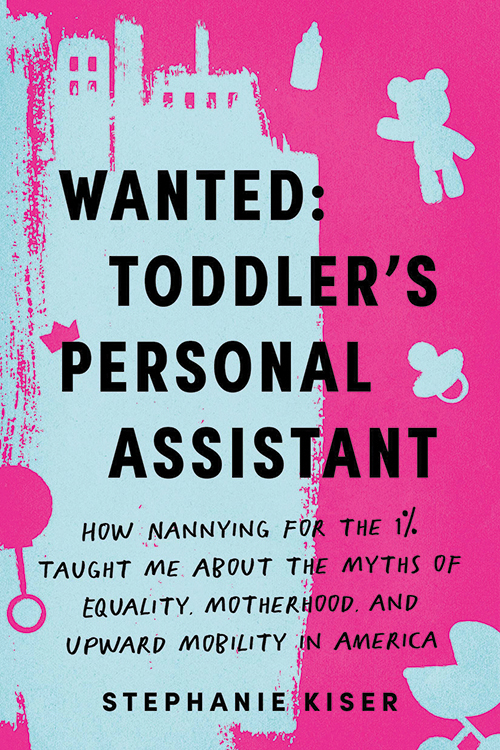
What are the lives of America’s richest families really like? Their nannies see it all…

When Stephanie Kiser moves to New York City after college to pursue a career in writing, she quickly learns that her entry-level salary won’t cover the high cost of living―never mind her crushing student loan debt. But there is one in-demand job that pays more than enough to allow Stephanie to stay in the city: nannying for the 1%. Desperate to escape the poverty of her own childhood, Stephanie falls into a job that hijacks her life for the next seven years: a glorified personal assistant to toddlers on Manhattan’s Upper East Side.

At first, nannying seems like the perfect solution―the high pay covers Stephanie’s bills, and she’s surprised by how attached she becomes to the kids she cares for, even as she gasps over Prada baby onesies and preschools that cost more than her college tuition. But the grueling twelve-hour days leave her little time to see her friends, date, or pursue any creative projects that might lead to a more prestigious career. The allure of the seemingly-glamorous job begins to dull as Stephanie comes to understand more about what really happens behind the closed doors of million-dollar Park Avenue apartments―and that money doesn’t guarantee happiness. Soon she will have to decide whether to stay with the children she’s grown to love, or if there’s something better out there just beyond her reach.

Wanted: Toddler’s Personal Assistant is alternately poignant and funny, a portrait of a generation of Americans struggling to find work they love balanced against the headwinds of global uncertainty and an economy stacked against anyone trying to work their way up from the bottom. It’s a provocative story of class, caregiving, friendship, and family―and a juicy, voyeuristic peek behind the curtain of obscene wealth and the privilege and opportunity that comes with it. In this unputdownable memoir, Stephanie chronicles her journey from newbie nanny to beloved caregiver—and the painful decision to eventually say goodbye to the children she has grown to love.
In My Hands Today…

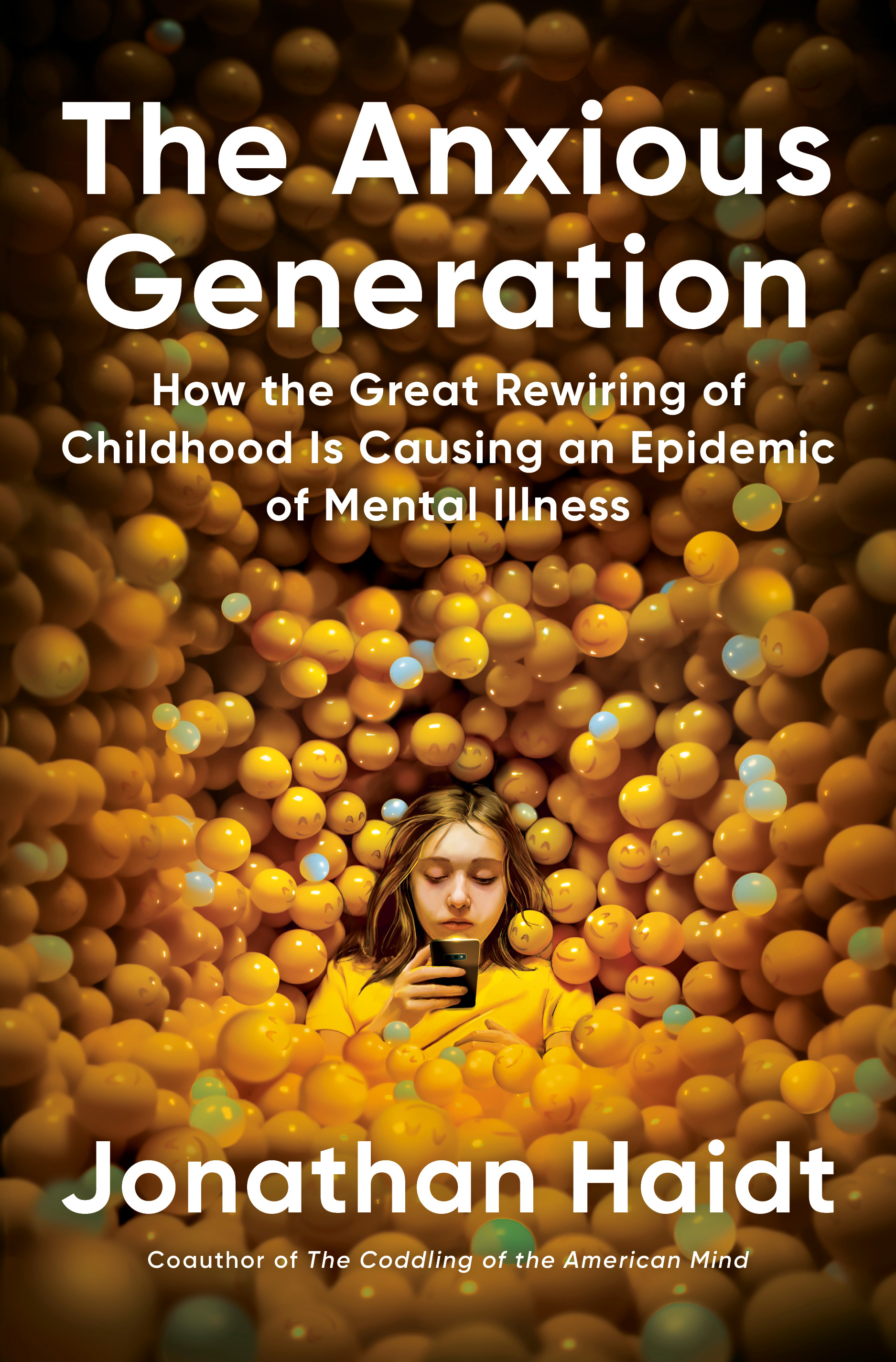
The Anxious Generation: How the Great Rewiring of Childhood is Causing an Epidemic of Mental Illness – Jonathan Haidt

After more than a decade of stability or improvement, the mental health of adolescents plunged in the early 2010s. Rates of depression, anxiety, self-harm, and suicide rose sharply, more than doubling on many measures. Why?

In The Anxious Generation, social psychologist Jonathan Haidt lays out the facts about the epidemic of teen mental illness that hit many countries at the same time. He then investigates the nature of childhood, including why children need play and independent exploration to mature into competent, thriving adults. Haidt shows how the “play-based childhood” began to decline in the 1980s, and how it was finally wiped out by the arrival of the “phone-based childhood” in the early 2010s. He presents more than a dozen mechanisms by which this “great rewiring of childhood” has interfered with children’s social and neurological development, covering everything from sleep deprivation to attention fragmentation, addiction, loneliness, social contagion, social comparison, and perfectionism. He explains why social media damages girls more than boys and why boys have been withdrawing from the real world into the virtual world, with disastrous consequences for themselves, their families, and their societies.

Most important, Haidt issues a clear call to action. He diagnoses the “collective action problems” that trap us, and then proposes four simple rules that might set us free. He describes steps that parents, teachers, schools, tech companies, and governments can take to end the epidemic of mental illness and restore a more humane childhood.

Haidt has spent his career speaking truth backed by data in the most difficult landscapes—communities polarized by politics and religion, campuses battling culture wars, and now the public health emergency faced by Gen Z. We cannot afford to ignore his findings about protecting our children—and ourselves—from the psychological damage of a phone-based life.

In My Hands Today…

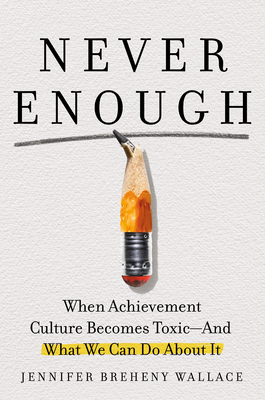
Never Enough: When Achievement Culture Becomes Toxic-and What We Can Do About It – Jennifer Breheny Wallace

In the ever more competitive race to secure the best possible future, today’s students face unprecedented pressure to succeed. They jam-pack their schedules with AP classes, fill every waking hour with resume-padding activities, and even sabotage relationships with friends to “get ahead.” Family incomes and schedules are stretched to the breaking point by tutoring fees and athletic schedules. Yet this drive to optimize performance has only resulted in skyrocketing rates of anxiety, depression, and even self-harm in America’s highest achieving schools. Parents, educators, and community leaders are facing the same how can we teach our kids to strive towards excellence without crushing them?

In Never Enough, award-winning reporter Jennifer Breheny Wallace investigates the deep roots of toxic achievement culture, and finds out what we must do to fight back. Drawing on interviews with families, educators, and an original survey of nearly 6,000 parents, she exposes how the pressure to perform is not a matter of parental choice but baked in to our larger society and spurred by increasing income inequality and dwindling opportunities. As a result, children are increasingly absorbing the message that they have no value outside of their accomplishments, a message that is reinforced by the media and greater culture at large.

Through deep research and interviews with today’s leading child psychologists, Wallace shows what kids need from the adults in the room is not more pressure, but to feel like they matter , and have intrinsic self-worth not contingent upon external achievements. Parents and educators who adopt the language and values of mattering help children see themselves as a valuable contributor to a larger community. And in an ironic twist, kids who receive consistent feedback that they matter no matter what are more likely to have the resilience, self-confidence, and psychological security to thrive.

Packed with memorable stories and offering a powerful toolkit for positive change, Never Enough offers an urgent, humane view of the crisis plaguing today’s teens and a practical framework for how to help.

In My Hands Today…

Housewife: Why Women Still Do It All and What to Do Instead – Lisa Selin Davis

The notion of “housewife” evokes strong reactions. For some, it’s nostalgia for a bygone era, simpler and better times when men were breadwinners and women remained home with the kids. For others, it’s a sexist, oppressive stereotype of women’s work. Either way, housewife is a long outdated concept—or is it?

Lisa Selin Davis, known for her smart, viral, feminist, cultural takes, argues that the “breadwinner vs. homemaker” divide is a myth. She charts examples from prehistoric female hunters to working class housewives in the 1930s, from First Ladies to 21st century stay-at-home moms, on a search for answers to the problems of what is referred to as women’s work and motherhood. Davis discovers that women have been sold a lie about what families should be. Housewife unveils a interdependence, rather than independence, is the American way.

The book is a clarion call for all women—married or single, mothers or childless—and for men, too, to push for liberation. In Housewife , Davis builds a case for systemic, cultural, and personal change, to encourage women to have the power to choose the best path for themselves.

In My Hands Today…

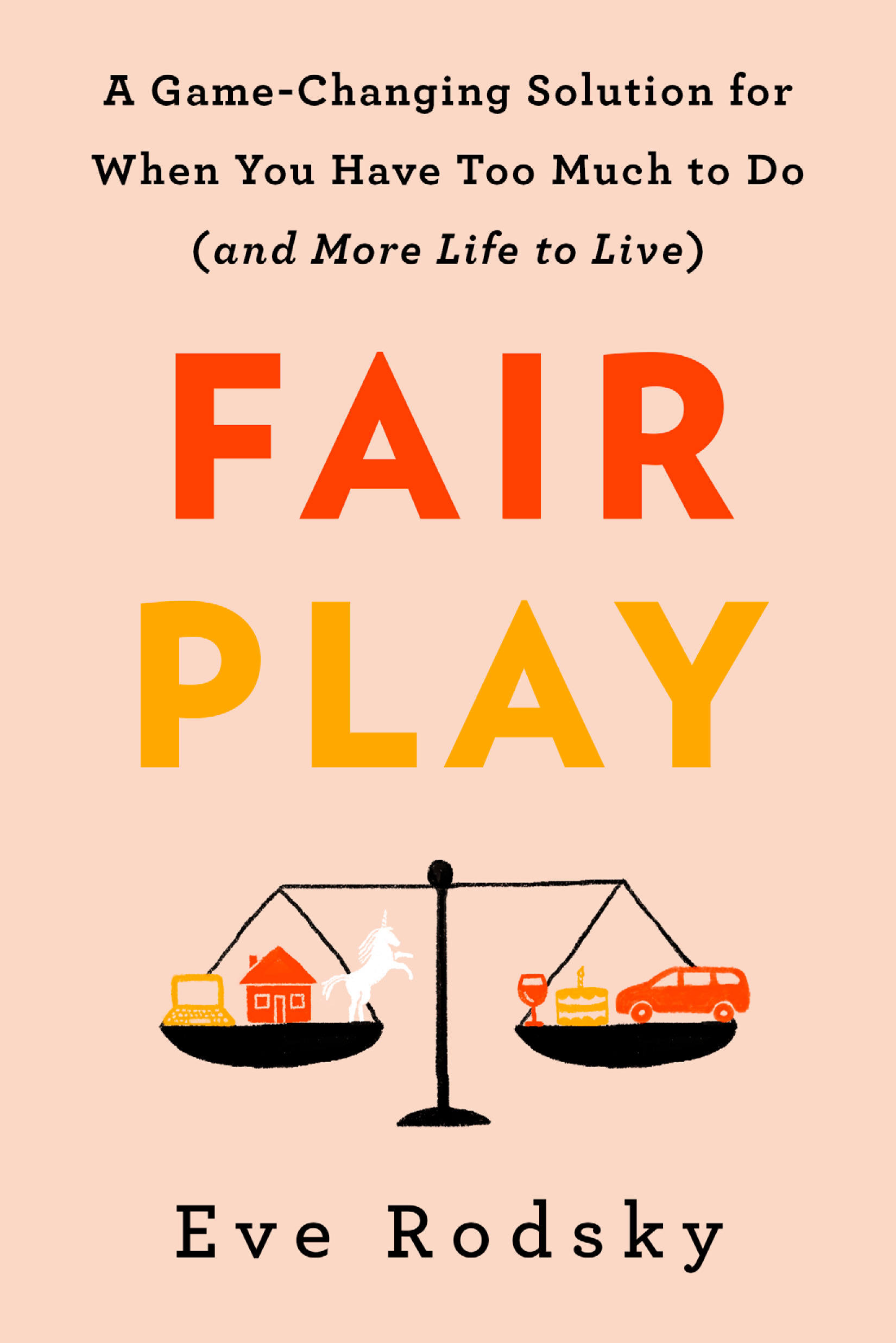
Fair Play: A Game-Changing Solution for When You Have Too Much to Do – Eve Rodsky

It started with the Sh*t I Do List. Tired of being the “shefault” parent responsible for all aspects of her busy household, Eve Rodsky counted up all the unpaid, invisible work she was doing for her family — and then sent that list to her husband, asking for things to change. His response was… underwhelming. Rodsky realized that simply identifying the issue of unequal labor on the home front wasn’t enough: She needed a solution to this universal problem. Her sanity, identity, career, and marriage depended on it.

The result is Fair Play: a time- and anxiety-saving system that offers couples a completely new way to divvy up domestic responsibilities. Rodsky interviewed more than five hundred men and women from all walks of life to figure out what the invisible work in a family actually entails and how to get it all done efficiently. With four easy-to-follow rules, 100 household tasks, and a figurative card game you play with your partner, Fair Play helps you prioritize what’s important to your family and who should take the lead on every chore from laundry to homework to dinner.

“Winning” this game means rebalancing your home life, reigniting your relationship with your significant other, and reclaiming your Unicorn Space — as in, the time to develop the skills and passions that keep you interested and interesting. Are you ready to try Fair Play? Let’s deal you in.