In My Hands Today…

The Smartest Kids in the World: And How They Got That Way – Amanda Ripley

Through the compelling stories of three American teenagers living abroad and attending the world’s top-notch public high schools, an investigative reporter explains how these systems cultivate the “smartest” kids on the planet.

America has long compared its students to top-performing kids of other nations, but how do the world’s education superpowers look through the eyes of an American high school student? Author Amanda Ripley follows three teenagers who chose to spend one school year living and learning in Finland, South Korea, and Poland. Through their adventures, Ripley discovers startling truths about how attitudes, parenting, and rigorous teaching have revolutionized these countries’ education results.

In The Smartest Kids in the World, Ripley’s astonishing new insights reveal that top-performing countries have achieved greatness only in the past several decades; that the kids who live there are learning to think for themselves, partly through failing early and often; and that persistence, hard work, and resilience matter more to our children’s life chances than self-esteem or sports.

Ripley’s investigative work seamlessly weaves narrative and research, providing in-depth analysis and gripping details that will keep you turning the pages. Written in a clear and engaging style, The Smartest Kids in the World will enliven public as well as dinner table debates over what makes for brighter and better students.

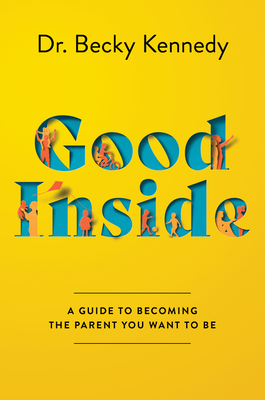
The Power of Positive Parenting: Nurturing Your Child’s Emotional Intelligence

Nearly 90% of all adults will become parents at some point in their lives. And while most strive to be great parents, they may also find themselves confused and frustrated by the seemingly endless challenges of parenthood. Irrespective of where one is in their parenting journey, the journey is challenging and not with its twists and turns.

Positive parenting is the continual relationship between a parent(s) and a child or children that includes caring, teaching, leading, communicating, and providing for the needs of a child consistently and unconditionally. Parents strive to raise happy, confident, and well-adjusted children who want them to thrive in all aspects of life, including their emotional well-being. Emotional intelligence is a vital skill that enables individuals to understand and manage their own emotions and empathise with others. It plays a significant role in building healthy relationships, making responsible decisions, and navigating life’s challenges.

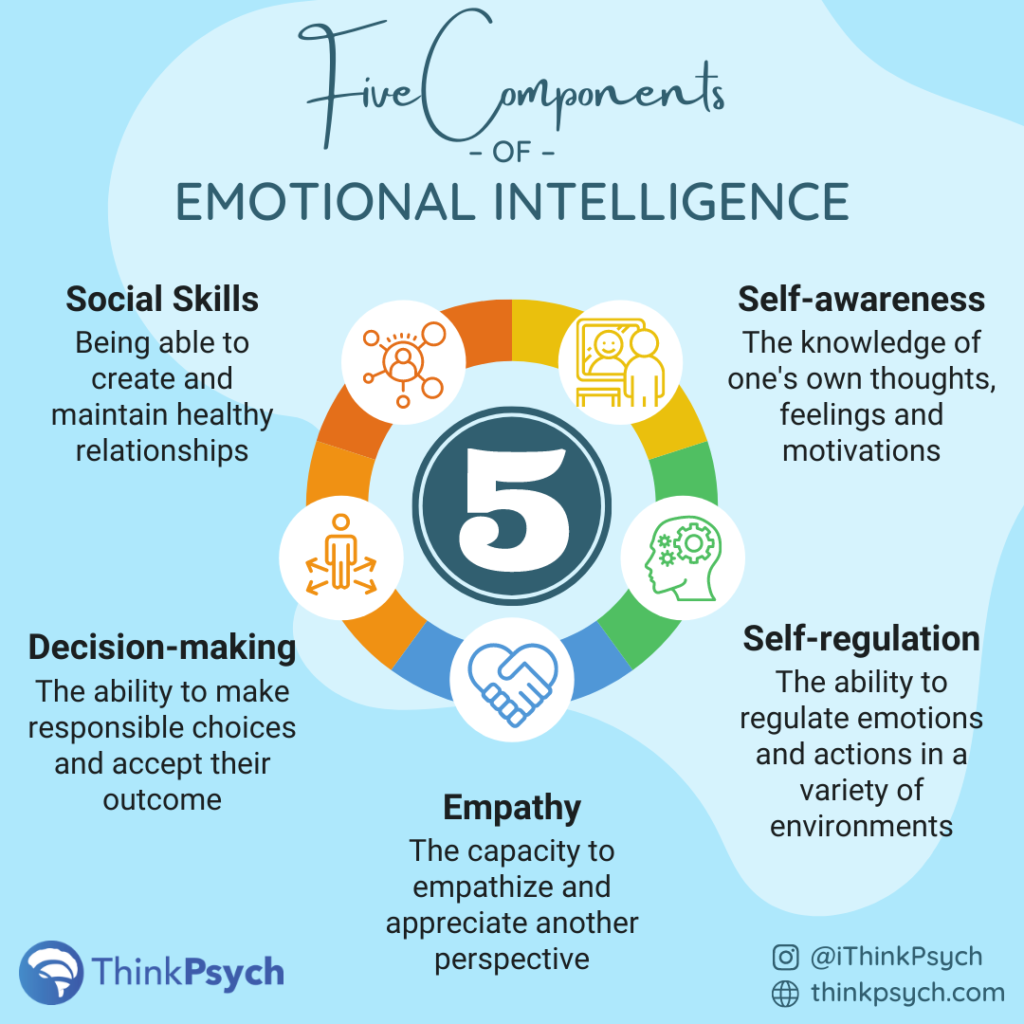
Emotional intelligence encompasses various skills and abilities that contribute to effective emotional management. These skills include self-awareness, self-regulation, empathy, motivation, and social skills. By cultivating emotional intelligence in children, they are equipped with the tools to navigate their emotions and relationships successfully.

Positive parenting is an approach that emphasises respect, empathy, and open communication. It focuses on nurturing a strong parent-child relationship, which serves as the foundation for emotional intelligence development.

Positive parenting creates a loving and supportive environment: Children thrive when they feel loved and supported. Parents should express their affection and appreciation regularly by offering praise for their children’s efforts and achievements and providing comfort and reassurance during difficult times. This sense of security helps children develop a strong foundation for emotional well-being.

Positive parenting advocates active listening: A parent should actively listen to their child’s thoughts, feelings, and concerns. This can be done by maintaining eye contact, nodding, and summarising their words. When children feel heard and understood, they develop trust and learn how to express their emotions effectively.

Positive parenting fosters open communication: Parents should encourage open and honest communication with their children. They should create a safe space where the children are comfortable with sharing their thoughts and feelings without fear of judgment or criticism. Parents should respond with empathy and understanding, validating their emotions and perspectives.

Positive parenting teaches emotional literacy: Help your child develop a vocabulary for their emotions. Label and discuss different emotions, both positive and negative, so they can better understand and communicate their feelings. This awareness lays the groundwork for emotional regulation.

So how can parents use positive parenting to nurture emotional intelligence in their children?

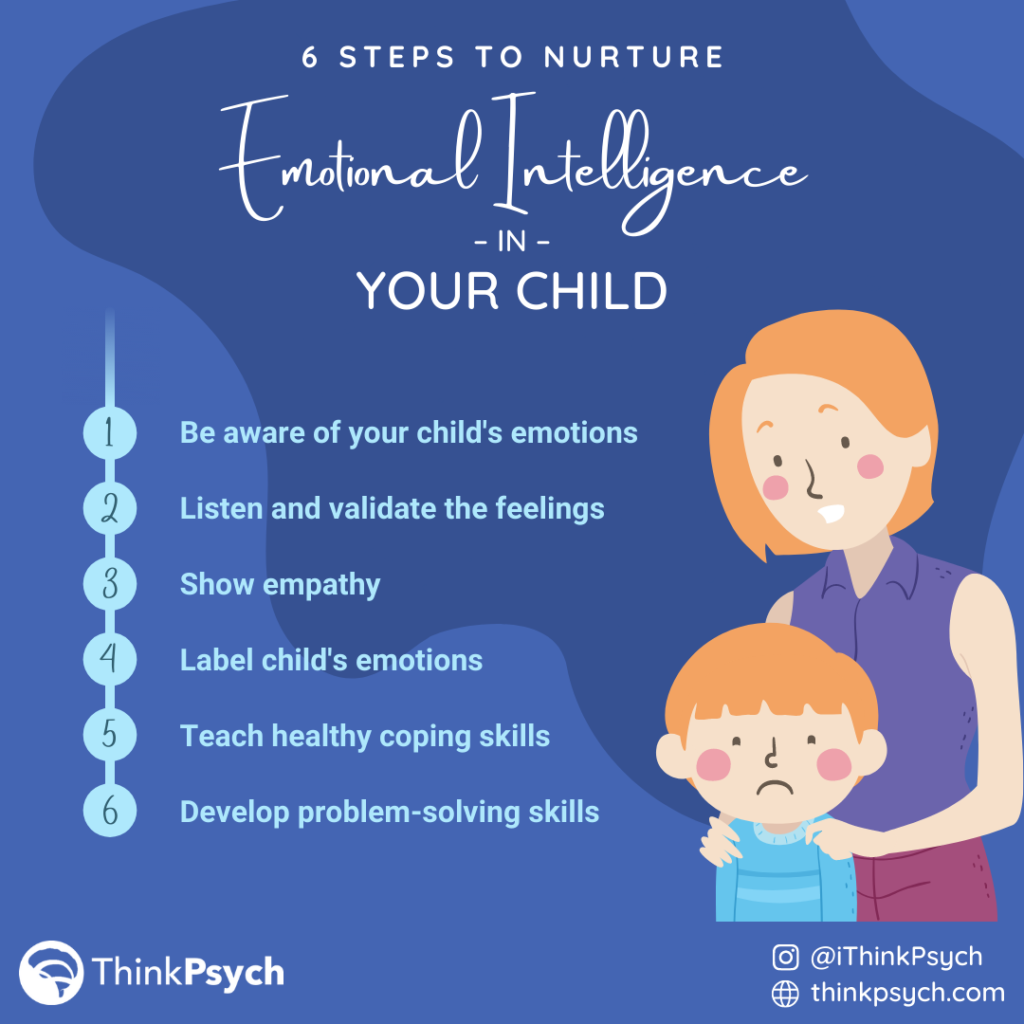
Emotion Coaching: Emotion coaching involves recognising and validating the child’s emotions while guiding them in managing those emotions constructively. When the child experiences a strong emotion, acknowledge and empathise with their feelings. Help them identify the emotion and explore coping strategies to regulate it effectively.

Encourage Problem-Solving: Parents should teach their child problem-solving skills by involving them in decision-making processes. Encourage them to brainstorm solutions and evaluate the pros and cons of each option. This empowers them to think critically, make responsible choices, and develop resilience.

Model Healthy Emotional Expression: Children learn by observing their parents. Parents should model healthy emotional expression by constructively managing their emotions. They should demonstrate effective coping strategies such as deep breathing, taking breaks, or seeking support when they encounter challenging situations and seeing this, their child will learn to emulate these strategies.

Teach Empathy and Perspective-Taking: Parents can help their child to develop empathy by encouraging them to understand and consider the feelings of others. They should engage in discussions about how different actions and words can impact someone’s emotions as well as encourage them to put themselves in others’ shoes and see things from different perspectives.

Foster Emotional Regulation: Emotional regulation is a vital aspect of emotional intelligence. Parents should teach their children various techniques for managing their emotions, such as deep breathing exercises, counting to ten, or engaging in physical activities. They should encourage them to find healthy outlets for their emotions, such as journaling, drawing, or engaging in hobbies.

Encourage Social Skills Development: Social skills play a significant role in emotional intelligence. Parents should encourage their children to engage in activities that foster social interactions, such as team sports, clubs, or community service. They should provide opportunities for them to practice skills like active listening, cooperation, and conflict resolution.

Set Realistic Expectations: Emotional intelligence development is a gradual process. Parents should be patient with their children and set realistic expectations based on their age and individual capabilities. Celebrating small milestones along the way and providing constructive feedback to support their growth will help their children.

Nurturing a child’s emotional intelligence is an investment that will benefit them throughout their lives. By practising positive parenting techniques, one can create a nurturing environment that fosters emotional well-being and resilience. Emotional intelligence is a skill that can be developed and strengthened over time.

Parents, remember to embrace the journey, be present for your child, and watch them flourish as they navigate life with confidence, empathy, and emotional intelligence.

In My Hands Today…

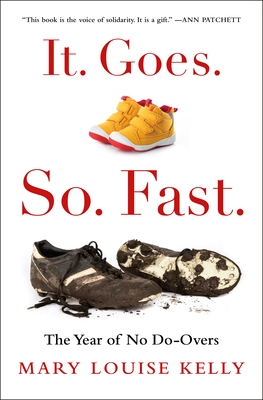
It. Goes. So. Fast.: The Year of No Do-Overs – Mary Louise Kelly

The time for do-overs is over.

Ever since she became a parent, Mary Louise Kelly has said “next year.” Next year will be the year she makes it to her son James’s soccer games (which are on weekdays at 4 p.m., right when she is on the air on NPR’s All Things Considered, talking to millions of listeners). Drive carpool for her son Alexander? Not if she wants to do that story about Ukraine and interview the secretary of state. Like millions of parents who wrestle with raising children while pursuing a career, she has never been cavalier about these decisions. The bargain she has always made with herself is this: this time I’ll get on the plane, and next year I’ll find a way to be there for the mom stuff.

Well, James and Alexander are now seventeen and fifteen, and a realization has overtaken Mary Louise: her older son will be leaving soon for college. There used to be years to make good on her promises; now, there are months, weeks, minutes. And with the devastating death of her beloved father, Mary Louise is facing act three of her life head-on.

Mary Louise is coming to grips with the reality every parent faces. Childhood has a definite expiration date. You have only so many years with your kids before they leave your house to build their own lives. It’s what every parent is supposed to want, what they raise their children to do. But it is bittersweet. Mary Louise is also dealing with the realities of having aging parents. This pivotal time brings with it the enormous questions of what you did right and what you did wrong.

This chronicle of her eldest child’s final year at home, of losing her father, as well as other curve balls thrown at her, is not a definitive answer―not for herself and certainly not for any other parent. But her questions, her issues, will resonate with every parent. And, yes, especially with mothers, who are judged more harshly by society and, more important, judge themselves more harshly. What would she do if she had to decide all over again?

Mary Louise’s thoughts as she faces the coming year will speak to anyone who has ever cared about a child or a parent. It. Goes. So. Fast. is honest, funny, poignant, revelatory, and immensely relatable.

In My Hands Today…

The World Deserves My Children – Natasha Leggero

When Natasha Leggero got pregnant at forty-two after embarking on the grueling IVF process, she was over the moon. But once her feelings of bliss dissipated, she couldn’t help but shake the lingering question: Am I doing this right? And then, Should I be doing this if the world is about to end?

In The World Deserves My Children, Natasha explores themes like “geriatric” motherhood, parenting in an environmental panic, fear and love, discipline (and conflicting schools of thought on how not to raise a brat), and more. Ultimately, Natasha determines that motherhood is worth it. After all, where do you think the next five generations of humans will be if the only people who are having kids don’t believe in science? The world deserves my children.

In My Hands Today…

The Price of Admission: How America’s Ruling Class Buys Its Way into Elite Colleges — and Who Gets Left Outside the Gates – Daniel Golden

Every spring thousands of middle-class and lower-income high-school seniors learn that they have been rejected by America’s most exclusive colleges. What they may never learn is how many candidates like themselves have been passed over in favor of wealthy white students with lesser credentials—children of alumni, big donors, or celebrities.

In this explosive book, the Pulitzer Prize–winning reporter Daniel Golden argues that America, the so-called land of opportunity, is rapidly becoming an aristocracy in which America’s richest families receive special access to elite higher education—enabling them to give their children even more of a head start. Based on two years of investigative reporting and hundreds of interviews with students, parents, school administrators, and admissions personnel—some of whom risked their jobs to speak to the author—The Price of Admission exposes the corrupt admissions practices that favor the wealthy, the powerful, and the famous.

In The Price of Admission, Golden names names, along with grades and test scores. He reveals how the sons of former vice president Al Gore, one-time Hollywood power broker Michael Ovitz, and Senate Majority Leader Bill Frist leapt ahead of more deserving applicants at Harvard, Brown, and Princeton. He explores favoritism at the Ivy Leagues, Duke, the University of Virginia, and Notre Dame, among other institutions. He reveals that colleges hold Asian American students to a higher standard than whites; comply with Title IX by giving scholarships to rich women in “patrician sports” like horseback riding, squash, and crew; and repay congressmen for favors by admitting their children. He also reveals that Harvard maintains a “Z-list” for well-connected but underqualified students, who are quietly admitted on the condition that they wait a year to enroll.

The Price of Admission explodes the myth of an American meritocracy—the belief that no matter what your background, if you are smart and diligent enough, you will have access to the nation’s most elite universities. It is must reading not only for parents and students with a personal stake in college admissions, but also for those disturbed by the growing divide between ordinary and privileged Americans.