In My Hands Today…

Tipu Sultan: The Saga of Mysore’s Interregnum, 1760–1799 – Vikram Sampath
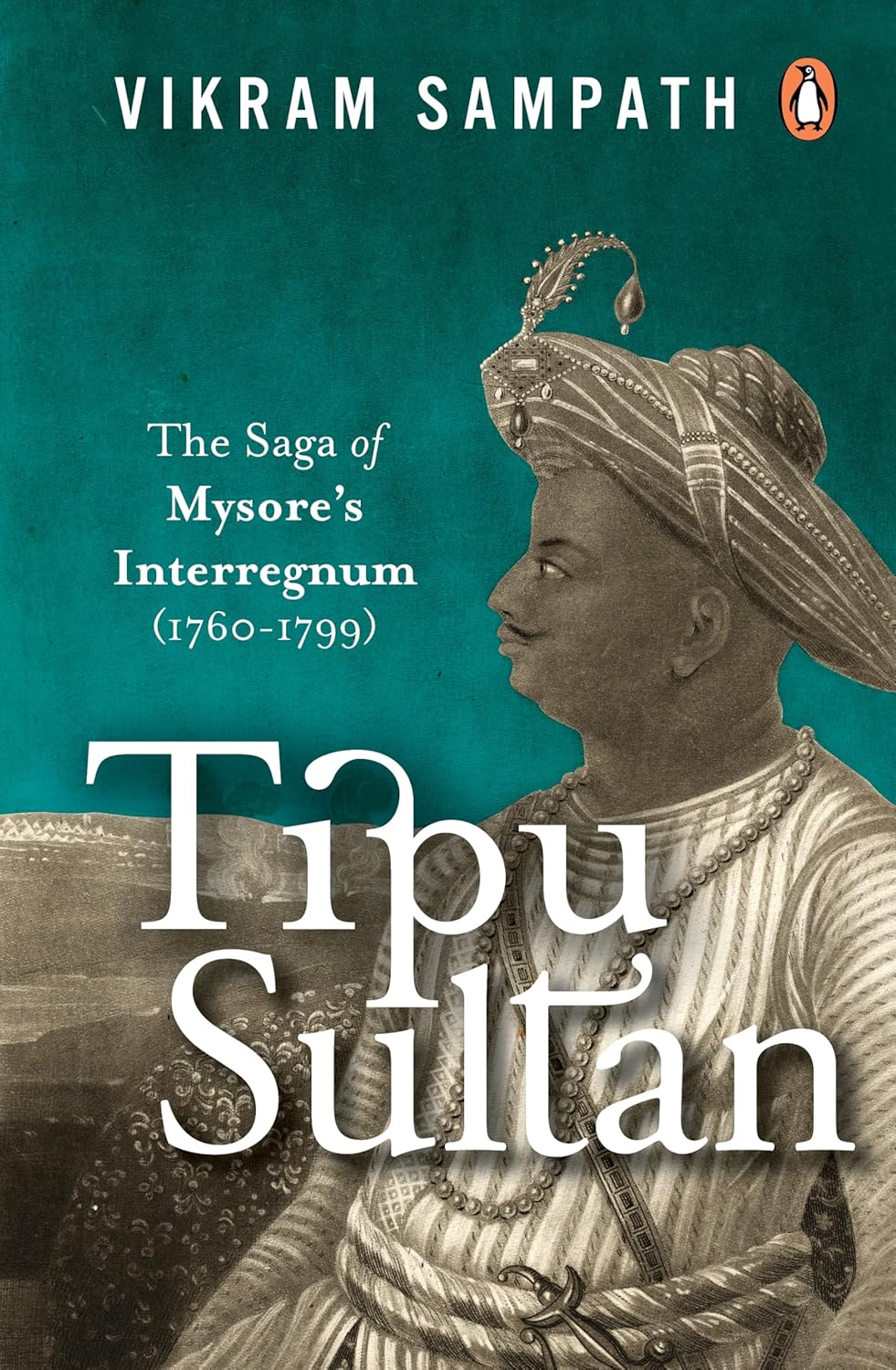
Tipu’s ascent to power was accidental. His father Haidar Ali was a beneficiary of the benevolence of the Maharaja of Mysore. But in a series of fascinating events, the Machiavellian Haidar ran with the hare and hunted with the hounds; he ended up overthrowing his own benefactor and usurping the throne of Mysore from the Wodeyars in 1761. In a war-scarred life, father and son led Mysore through four momentous battles against the British, termed the Anglo-Mysore Wars. The first two, led by Haidar, brought the English East India Company to its knees. Chasing the enemy to the very gates of Madras, Haidar made the British sign such humiliating terms of treaties that sent shockwaves back in London.

In the hubris of this success, Tipu obtained the kingdom on a platter, unlike his father, who worked up the ranks to achieve glory. In a diabolical war thirst, Tipu launched lethal attacks on Malabar, Mangalore, Travancore, Coorg, and left behind a trail of death, destruction and worse, mass-conversions and the desecration of religious places of worship. While he was an astute administrator and a brave soldier, the strategic tact with opponents and the diplomatic balance that Haidar had sought to maintain with the Hindu majority were both dangerously upset by Tipu’s foolhardiness on matters of faith. The social report card of this eighteenth-century ruler was anything but clean. And yet, one simply cannot deny his position as a renowned military warrior and one of the most powerful rulers of Southern India.
In My Hands Today…

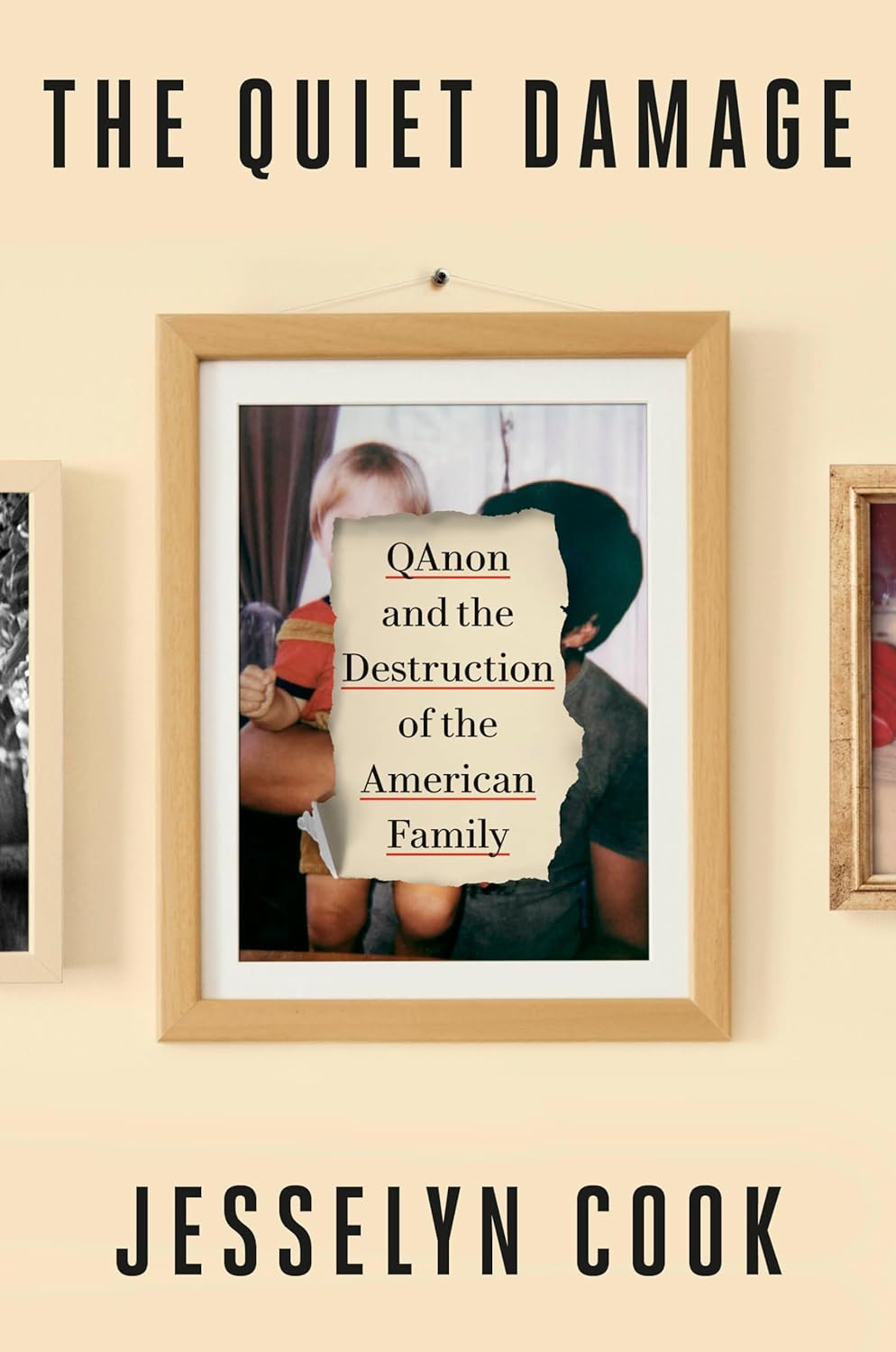
The Quiet Damage: QAnon and the Destruction of the American Family – Jesselyn Cook

The riveting story of five families shattered by pernicious, pervasive conspiracy theories, and how we might set ourselves free from a crisis that could haunt American life for generations.

“SHED MY DNA”: three excruciating words uttered by a QAnon-obsessed mother, once a highly respected lawyer, to her only son, once the closest person in her life. QAnon beliefs and adjacent conspiracy theories have had devastating political consequences as they’ve exploded in popularity. What’s often overlooked is the lasting havoc they wreak on our society at its most basic and intimate level—the family.

In The Quiet Damage, celebrated reporter Jesselyn Cook paints a harrowing portrait of the vulnerabilities that have left so many of us susceptible to outrageous falsehoods promising order, purpose, and control. Braided throughout are the stories of five American families: an elderly couple whose fifty-year romance takes a heartbreaking turn; millennial sisters of color who grew up in dire poverty—one to become a BLM activist, the other, a hardcore conspiracy theorist pulling her little boy down the rabbit hole with her; a Bay Area hippie-type and her business-executive fiancé, who must decide whether to stay with her as she turns into a stranger before his eyes; evangelical parents whose simple life in a sleepy suburb spirals into delusion-fueled chaos; and a rural mother-son duo who, after carrying each other through unspeakable tragedy, stop speaking at all as ludicrous untruths shatter a bond long thought unbreakable.

Charting the arc of each believer’s path from their first intersection with conspiracy theories to the depths of their cultish conviction, to—in some cases—their rejection of disinformation and the mending of fractured relationships, Cook offers a rare, intimate look into the psychology of how and why ordinary people come to believe the unbelievable. Profound, brilliantly researched, and beautifully written, The Quiet Damage lays bare how we have been taken hostage by grifters peddling lies built on false hope—and how we might release our loved ones, and ourselves, from their grasp.

In My Hands Today…

India that is Bharat: Coloniality, Civilisation, Constitution – J. Sai Deepak

India, That Is Bharat, the first book of a comprehensive trilogy, explores the influence of European ‘colonial consciousness’ (or ‘coloniality’), in particular its religious and racial roots, on Bharat as the successor state to the Indic civilisation and the origins of the Indian Constitution. It lays the foundation for its sequels by covering the period between the Age of Discovery, marked by Christopher Columbus’ expedition in 1492, and the reshaping of Bharat through a British-made constitution-the Government of India Act of 1919. This includes international developments leading to the founding of the League of Nations by Western powers that tangibly impacted this journey.

Further, this work also traces the origins of seemingly universal constructs such as ‘toleration’, ‘secularism’ and ‘humanism’ to Christian political theology. Their subsequent role in subverting the indigenous Indic consciousness through a secularised and universalised Reformation, that is, constitutionalism, is examined. It also puts forth the concept of Middle Eastern coloniality, which preceded its European variant and allies with it in the context of Bharat to advance their shared antipathy towards the Indic worldview. In order to liberate Bharat’s distinctive indigeneity, ‘decoloniality’ is presented as a civilisational imperative in the spheres of nature, religion, culture, history, education, language and, crucially, in the realm of constitutionalism.

In My Hands Today…

Blood in the Machine: The Origins of the Rebellion Against Big Tech – Brian Merchant

The most urgent story in modern tech begins not in Silicon Valley but two hundred years ago in rural England, when workers known as the Luddites rose up rather than starve at the hands of factory owners who were using automated machines to erase their livelihoods.

The Luddites organized guerrilla raids to smash those machines—on punishment of death—and won the support of Lord Byron, enraged the Prince Regent, and inspired the birth of science fiction. This all-but-forgotten class struggle brought nineteenth-century England to its knees.

Today, technology imperils millions of jobs, robots are crowding factory floors, and artificial intelligence will soon pervade every aspect of our economy. How will this change the way we live? And what can we do about it?

The answers lie in Blood in the Machine . Brian Merchant intertwines a lucid examination of our current age with the story of the Luddites, showing how automation changed our world—and is shaping our future.

In My Hands Today…

The Patient Assassin: A True Tale of Massacre, Revenge, and India’s Quest for Independence – Anita Anand

The dramatic true story of a celebrated young survivor of a 1919 British massacre in India, and his ferocious twenty-year campaign of revenge that made him a hero to hundreds of millions—and spawned a classic legend.

When Sir Michael O’Dwyer, the Lieutenant Governor of Punjab, ordered Brigadier General Reginald Dyer to Amritsar, he wanted Dyer to bring the troublesome city to heel. Sir Michael had become increasingly alarmed at the effect Gandhi was having on his province, as well as recent demonstrations, strikes, and shows of Hindu-Muslim unity. All these things, to Sir Michael, were a precursor to a second Indian revolt. What happened next shocked the world. An unauthorized gathering in the Jallianwallah Bagh in Amritsar in April 1919 became the focal point for Sir Michael’s law enforcers. Dyer marched his soldiers into the walled garden, blocking the only exit. Then, without issuing any order to disperse, he instructed his men to open fire, turning their guns on the thickest parts of the crowd, filled with over a thousand unarmed men, women, and children. For ten minutes, the soldiers continued firing, stopping only when they ran out of ammunition.

According to legend, eighteen-year-old Sikh orphan Udham Singh was injured in the attack, and remained surrounded by the dead and dying until he was able to move the next morning. Then, he supposedly picked up a handful of blood-soaked earth, smeared it across his forehead, and vowed to kill the men responsible.

The truth, as the author has discovered, is more complex—but no less dramatic. Award-winning journalist Anita Anand traced Singh’s journey through Africa, the United States, and across Europe until, in March 1940, he finally arrived in front of O’Dwyer himself in a London hall ready to shoot him down. The Patient Assassin shines a devastating light on one of history’s most horrific events, but it reads like a taut thriller and reveals the incredible but true story behind a legend that still endures today.