Most of our trips to Mumbai have been evening flights and so there was nothing to see outside. We’ve done day flights regionally, but I can only remember two other daytime flights to Mumbai in the last 20 odd years. Both times, we flew Singapore Airlines and both flights were in wide-bodied planes, perhaps an Airbus. Earlier this year, when I flew to India, I flew Vistara, the airline that was created due to a partnership between Singapore Airlines and the Indian conglomerate, the Tata Group. Vistara uses a smaller aircraft which is single aisle and so probably flies much lower in the air compared to Singapore Airlines flights. So this time around, I enjoyed the flight because I could see the ground while flying. Up until we entered the Bay of Bengal, I enjoyed the scenery below and took many photographs of the journey. This photographic essay is the result of that trip. My apologies if I shared some photos previously.
This scene greeted me almost as soon as the plane took off from Singapore’s Changi airport. You can see the buildings of Changi in the left and the National Service Resort & Country Club in the front and centre.
A minute later, this is one of Singapore’s offshore islands, maybe Pulau Ubin or Pulau Tekong.
About 30 minutes into the flight, we were flying over the Malaysian peninsula, probably flying over the North South expressway, on the way to the country’s capital of Kuala Lumpur.
About 45 into the flight, you can clearly see the island of Penang and the famous Penag bridge.
The next island is the island of Langkawi, which lies almost on the border between Malaysia and Thailand. We visited the island more than a decade back and have very fond memories of the place and hope to visit it again soon.
About an hour and 40 minutes into the flight, we flew over the Thai island of Krabi.
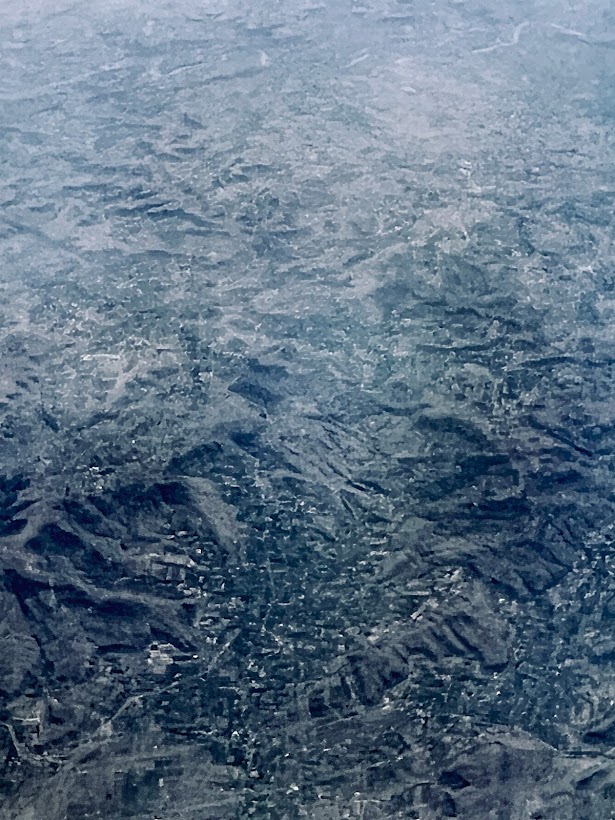
After Thailand, we veered course to fly over the Bay of Bengal and try as I much wanted to, I could not see much out of the window and the next time I saw something interesting, we were flying over Ahmednagar in my home state of Maharashtra, about 20-25 minutes before we landed in Mumbai.
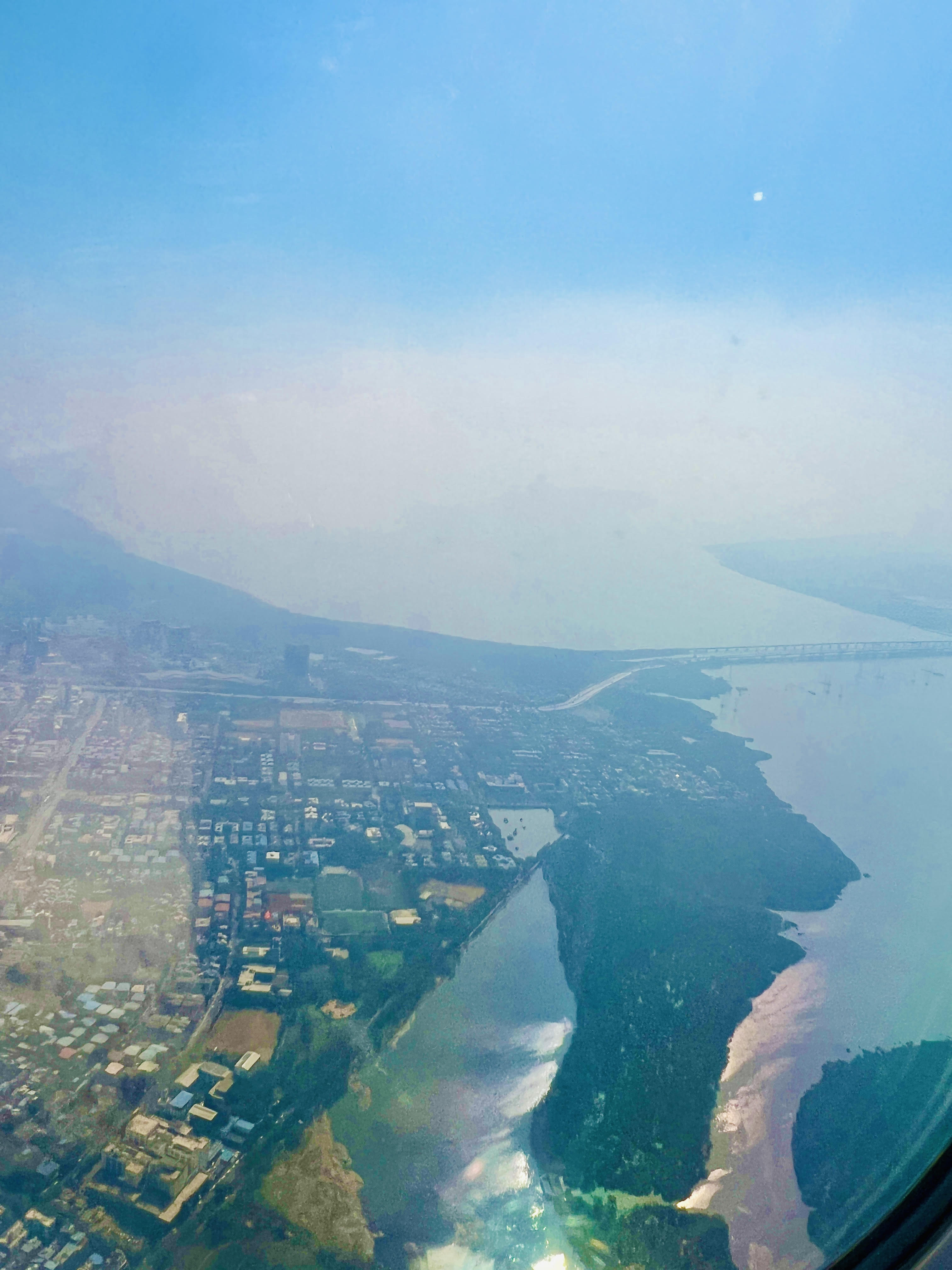
This photo was taken as we approach Chhatrapati Shivaji Maharaj Terminus for landing into Mumbai. This is the Vashi Bridge which seperates Mumbai from Navi Mumbai or New Bombay, the planned city and part of the Mumbai Metropolitan Region (MMR). Seeing the bridge brought back so many Mumbai memories of school trips and seeing the bridge I know we are on the verge of landing into Mumbai.
We were on our descent for landing and this is taken just a couple of minutes before touchdown. This is most likely the Eastern Express Highway in Vikhroli East, a few seconds before landing in Mumbai.
And finally touchdown after flying about 5.5 hours. I was back in the city of my birth after more than two years. But now I doubt I will fly into Bombay anytime soon, but never say never!
I hope you enjoyed this photographic journey as much as I liked searching through the photos I took during the flight and remembered my journey.
Yesterday marked the last day of the fasting month of Ramadan and today, billions of Muslims worldwide celebrate the festival of Eid al-Fitr.
Eid al-Fitr or the Feast of Breaking the Fast, is the earlier of the two official holidays celebrated within Islam, with the other being Eid al-Adha. This festival marks the end of the month-long dawn-to-sunset fasting of Ramadan and falls on the first day of Shawwal in the Islamic calendar. Because the Islamic calendar is lunar, the date of the festival changes every year. The start of the Hijri month varies based on when the new moon is sighted by local religious authorities. Also known as Ramzan Eid, the Lesser Eid, or simply Eid, Eid al-Fitr commemorates the end of the fasting month of Ramadan. An occasion for special prayers, family visits, gift-giving and charity, it takes place over one to three days, beginning on the first day of Shawwal, the 10th month in the Islamic calendar and is a day of joy as families get together after a month of austerity and fasting.
One of the five pillars of Islam, during the ninth month of the Islamic calendar, Ramadan, nearly all Muslims are required to fast from sunrise to sundown and abstain from smoking, drinking, including water and sexual activity during the daylight hours. Ramadan is the month in which the Prophet Muhammad received the teachings of the Quran, the Islamic holy book, as a guide for mankind and a means for judging between right and wrong. Fasting during Ramadan, known as Sawm, is one of the five pillars, the basic principles that are essential to the Islamic faith. Muslims observe Ramadan by reading the Quran, emphasising charity or zakat, abstaining from food and drink during daylight hours, and concentrating on prayer and study to increase their taqwa, or sacred consciousness. Fasting during Ramadan takes people out of their normal lifestyles and requires them to engage in solemn contemplation and examination. Experiencing hunger and thirst is supposed to heighten people’s awareness of the sufferings of the poor, and gain a greater appreciation for what they have.
After a month of prayer, devotion and self-control, Muslims celebrate the accomplishment of their sacred duties during Ramadan with the beginning of Eid al-Fitr, or the Festival of Breaking the Fast. The festival is a national holiday in many countries with large Muslim populations. Celebrations of Eid al-Fitr typically last for three days, one day fewer than those of Eid al-Adha. For this reason, Eid al-Fitr is often called Lesser or Smaller Eid. Eid al-Adha, known as Greater Eid, is seen as the more important holiday of the two.
Eid al-Fitr was originated by the Islamic prophet Muhammad. According to certain traditions, these festivals were initiated in Medina after the migration of Muhammad from Mecca. Anas, a well-known companion of the Islamic prophet, narrated that, when Muhammad arrived in Medina, he found people celebrating two specific days in which they entertained themselves with recreation and merriment. At this, Muhammad remarked that Allah had fixed two days of festivity: Eid al-Fitr and Eid al-Adha.
During Eid al-Fitr, Muslims take part in special morning prayers, greet each other with formal embraces and offer each other greetings of Eid Mubarak or Have a blessed Eid. They gather with family and friends, give games and gifts to children and prepare and eat special meals, including sweet dishes like baklava or Turkish delight in Turkey, date-filled pastries and cookies in Saudi Arabia and Iraq and bint al sahn or honey cake in Yemen.
Another of the five pillars of Islam is Zakat or giving to those in need. Muslims often prepare for Eid al-Fitr by giving money to charity so that less fortunate families can enjoy the festivities as well. In addition to charity, Muslims are also encouraged to give and seek forgiveness during Eid al-Fitr and look forward to the opportunity to fast again during Ramadan the following year.
Traditionally, Eid al-Fitr begins at sunset on the night of the first sighting of the crescent moon. If the moon is not observed immediately after the 29th day of the previous lunar month, either because clouds block its view or because the western sky is still too bright when the moon sets, then the holiday is celebrated the following day. Eid is celebrated for one to three days, depending on the country and it is forbidden to fast on the day of Eid, and a specific prayer is nominated for this day. As an obligatory act of charity, money is paid to the poor and the needy known as Zakat-ul-Fitr before performing the Eid prayer which is performed by the congregation in an open area such as a field, a community centre or a mosque. No call to prayer is given for this Eid prayer, and it consists of only two units of prayer, with a variable amount of Takbirs and other prayer elements depending on the branch of Islam observed. The Eid prayer is followed by the sermon and then a supplication asking for Allah’s forgiveness, mercy, peace and blessings for all living beings across the world. The sermon also instructs Muslims as to the performance of rituals of Eid, such as the zakat. The sermon of Eid takes place after the Eid prayer, unlike the Friday prayer which comes first before prayer with some imams believing that listening to the sermon at Eid is optional. After the prayers, Muslims visit their relatives, friends, and acquaintances or hold large communal celebrations in homes, community centres, or rented halls.
In India, Eid is a public holiday and the holiday begins after the sighting of the new moon on Chand Raat. On that evening, people head to markets to finish their shopping for Eid, for clothing and gifts and begin preparing their food for the next day. Traditional Eid food often includes biriyani, sheer khurma, and sevvaiyyan, a dish of fine, toasted sweet vermicelli noodles with milk and dried fruit, among other regionally-specific dishes. Women and girls also put henna in each others’ hands and the next morning, Muslims go to their local mosque for the Eid Namaz and give Eid zakat before returning home. Afterwards, children are given Eidi or cash gifts and friends and relatives visit each other’s homes to eat and celebrate. In Pakistan, this Eid is also known as Chhoti or Lesser Eid and is celebrated more or less like in India. At home, family members enjoy a special Eid breakfast with various types of sweets and desserts, including Kheer and the traditional dessert Sheer Khurma, which is made of vermicelli, milk, butter, dry fruits, and dates. Children also get cash gifts known as Eidi with the State Bank of Pakistan issuing fresh currency notes every year for this purpose.
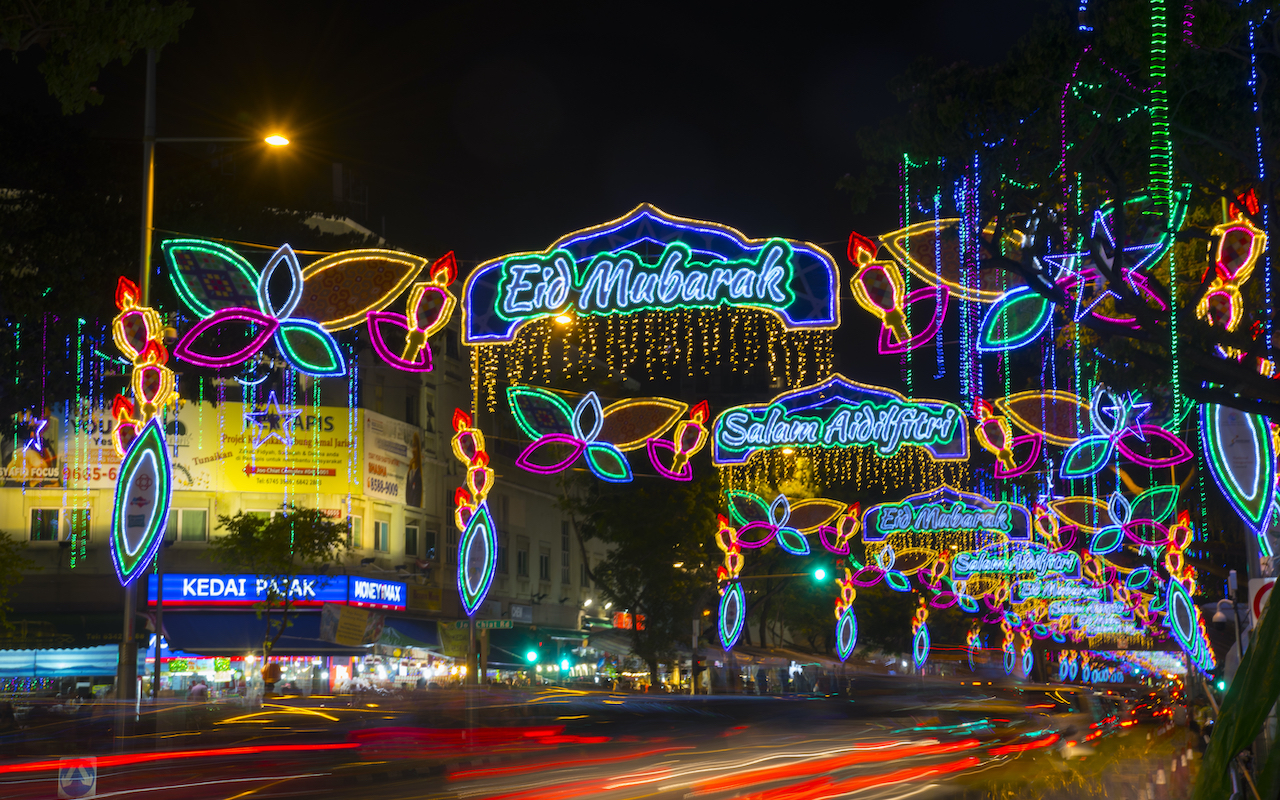
In Malaysia, Singapore, and Brunei, Eid is more commonly known as Hari Raya Aidilfitri, Hari Raya Idul Fitri, Hari Raya Puasa, Hari Raya Fitrah or Hari Lebaran where Hari Raya means a celebration day. It is customary for workers in the city to return to their home town to celebrate with their families and to ask forgiveness from parents, in-laws, and other elders. This is known in Malaysia as balik kampung or homecoming. The night before Hari Raya is filled with the sounds of takbir in the mosques or musallahs. In many parts of Malaysia, especially in the rural areas, pelita, panjut or lampu colok which are oil lamps, similar to tiki torches are lit up and placed outside and around homes. Special dishes like ketupat, rendang, lemang which is a type of glutinous rice cooked in bamboo and other Malay delicacies such as various kuih-muih are served during this day. It is common to greet people with Salam Aidilfitri or Selamat Hari Raya which means Happy Eid. Muslims also greet one another with maaf zahir dan batin, which asks to forgive their physical and emotional wrongdoings. In Singapore and Malaysia, especially in the major cities, people take turns to set aside a time for an open house when they stay at home to receive and entertain neighbours, family and other visitors. It is common to see non-Muslims made welcome during Eid at these open houses. Children are given token sums of money, also known as Duit Raya, from their parents or elders.
To everyone celebrating Eid, Eid Mubarak and Selamat Hari Raya Adilfitri!
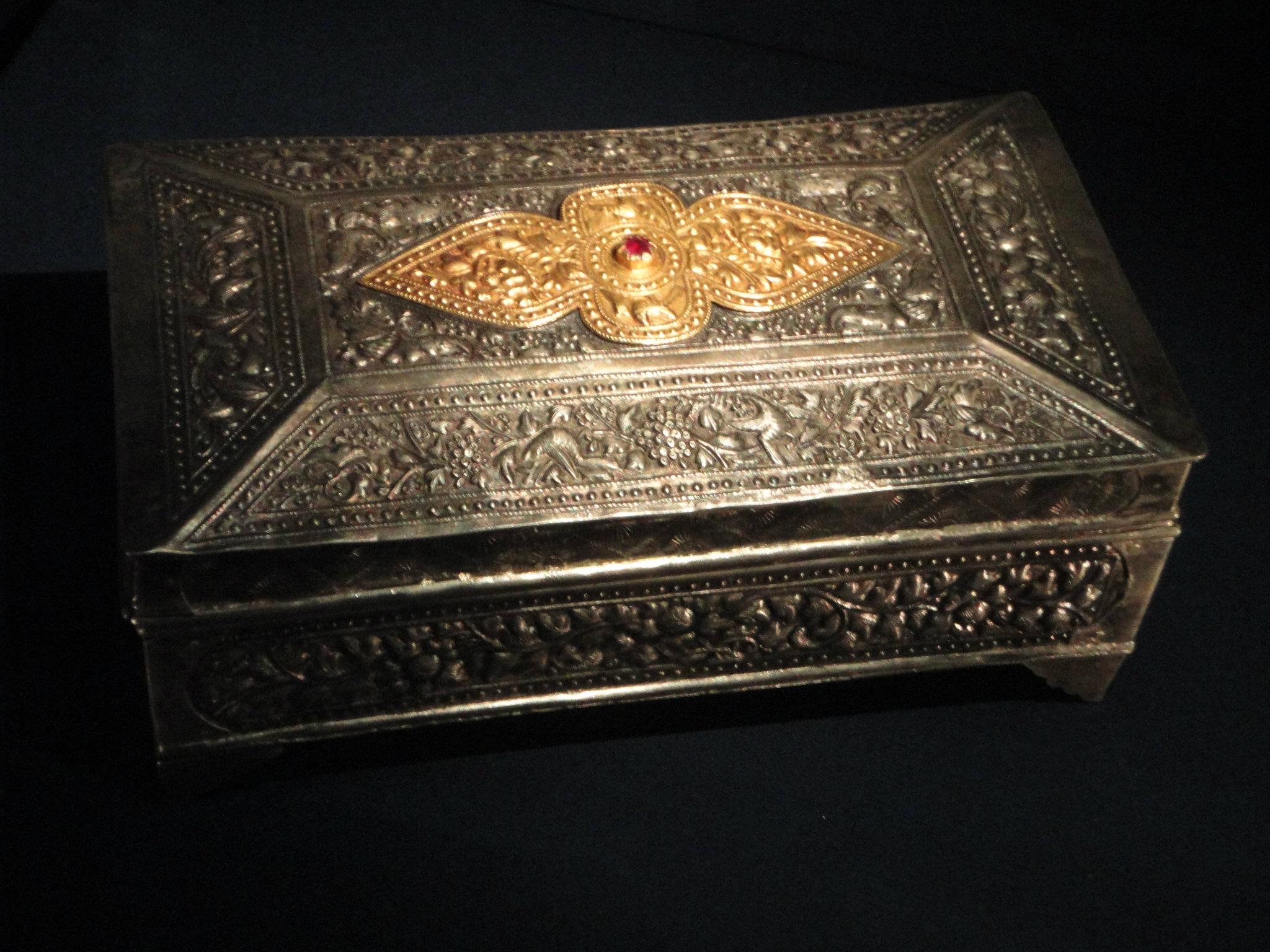
The other day I was doing a digital detox and came across these photos. They are quite old, more than a decade old and most of them are from an exhibit at the Asian Civilisations Museum, here in Singapore. We had decided to take BB & GG when they were still in kindergarten to showcase the museum, my favourite, if I may add.
Eating Chilli Crab in the Anthropocene: Environmental Perspectives on Life in Singapore – edited by Matthew Schneider-Mayerson
In this era of climate crisis, in which our very futures are at stake, sustainability is a global imperative. Yet we tend to associate sustainability, nature, and the environment with distant places, science, and policy. The truth is that everything is environmental, from transportation to taxes, work to love, cities to cuisine.
This book is the first to examine contemporary Singapore from an ecocultural lens, looking at the ways that Singaporean life and culture is deeply entangled with the nonhuman lives that flourish all around us. The authors represent a new generation of cultural critics and environmental thinkers, who will inherit the future we are creating today. From chilli crab to Tiger Beer, Changi Airport to Pulau Semakau, O-levels to orang minyak films, these essays offer fresh perspectives on familiar subjects, prompting us to recognise the incredible urgency of climate change and the need to transform our ways of thinking, acting, learning, living, and governing so as to maintain a stable planet and a decent future.
Today Singapore celebrates its 56th National Day and in honour of that, here are some perhaps known and unknown facts of the country I now call home.
Singapore is not just one island, but is made up of 63 other offshore that surround the main island. These include Sentosa, the largest of the offshore islands, Pulau Ubin, St John’s Island and Sisters’ Islands.
Singapore is one of the 20 smallest countries in the world. The main island is 42 km long and 23 km wide and has a total land area of just 683 sq km.
There are only three city-states that exist in the world, and Singapore is one of them, other than Monaco and Vatican City.
After New Zealand, Singapore is the easiest place across the globe to do business, according to a business list published by the World Bank.
Singapore is the least corrupt city in Asia and the third least corrupt in the world, after Denmark and New Zealand at number one and tied in third place with Finland, Sweden and Switzerland.
Standing 165 meters high, the Singapore Wheel is the second-highest in the world, losing the first rank by only 2 meters.
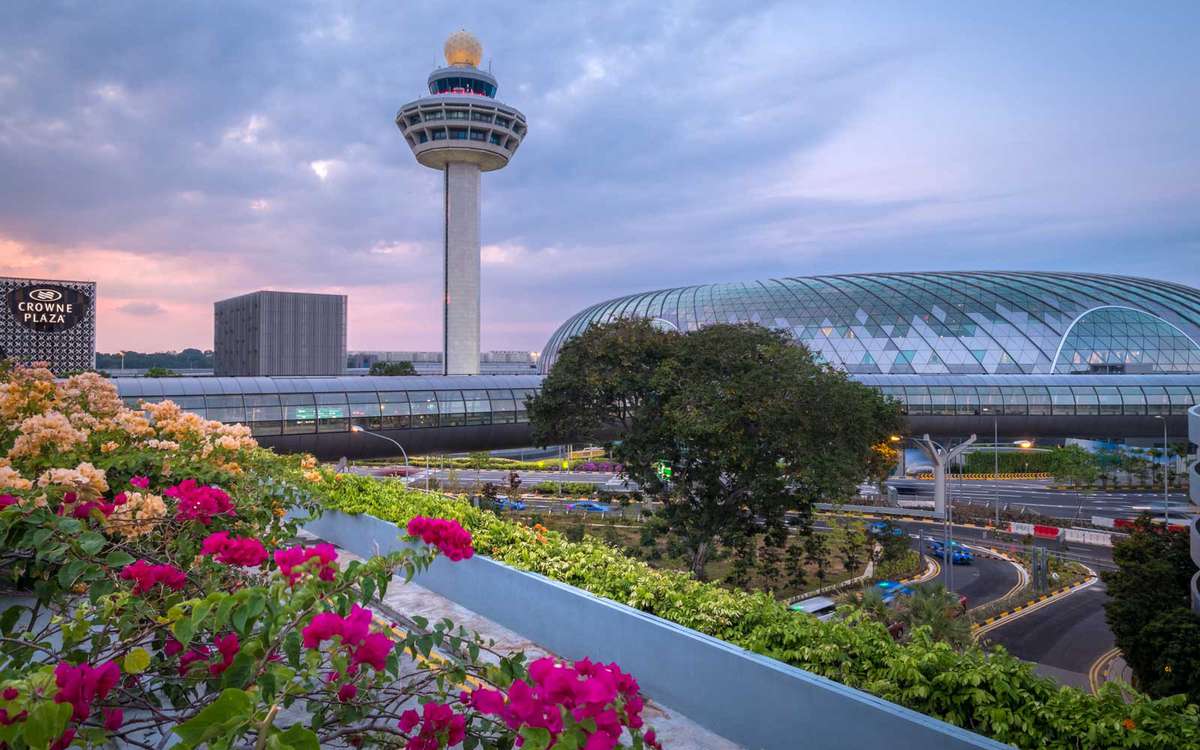
Singapore’s Changi airport has been has been named the world’s best airport for the eighth year in a row at the annual Skytrax World Airport Awards in 2020.
Singapore’s national carrier, Singapore Airlines has also consistently been voted the best airline with SIA at number 2 in the 2020 Skytrax World Awards.
As of April 2021, Singaporean citizens had visa-free or visa on arrival access to 192 countries and territories, ranking the Singaporean passport 2nd in terms of number of countries a passport holder can visit without pre-arrival visa arrangements according to the Henley Passport Index.
There are over 3000 kilometres of roads in Singapore, which when stretched from end to end, can cover the distance between Singapore and Hong Kong.
Singapore is the second most densely populated country in the world after Monaco as well as being fully urbanised.
Singapore has often been called, locally and internationally as the Little Red Dot.This term was first coined by then Indonesian President Habibie who used it to make a remark about the country’s appearance on the map which is usually represented as a red dot. Although that was an unfortunate reference and one which Singaporeans did not take too well to, the term has stuck and is commonly used by the media.
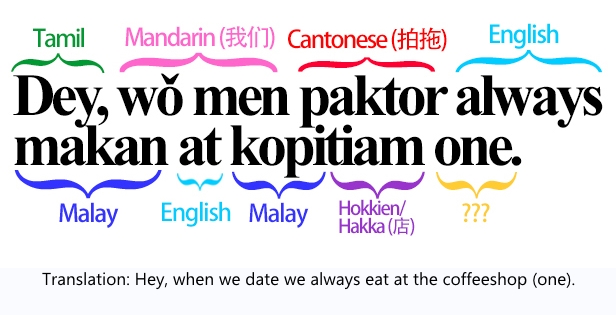
The national language of Singapore is Malay. The four official languages of the country are English, Chinese, Tamil, and Malay. And although English is Singapore’s language of business, locals speak Singlish, not just English. So visitors should not be too surprised to hear Singaporeans adding exclamations like ‘lah’ and ‘leh’ to their sentence. Singlish— our colourful local slang— is an integral part of everyday conversation amongst Singaporeans. So what is Singlish? Singlish is a collection of colloquial catchphrases and lingo influenced by Singapore’s multiculturalism. Other examples include the Singlish term “chope”, which means to reserve a seat. Locals often chope seats at a hawker centre using packets of tissue paper. And like many Asian countries, Singaporeans also tend to refer to older strangers as Aunties and Uncles.
Singapore is renowned for having some of the cleanest streets in the world, largely due to a 50,000-strong cleaning workforce employed to keep the streets clean. Singapore is also known for its strict laws on littering, spitting on the streets, vandalism and public urination that can result in heavy fines and/or a punishment called Corrective Work Order, where offenders are required to pick up litter in public wearing a bright vest.
Singapore once disappeared from maps. There was a period of time when the city was wiped out from the map. With the exchange of hands between the Majapahit Empire and Siam’s Ayutthaya Kingdom in present day Thailand, as well as marking itself as an important trading port for the Sultanate of Johor, Singapore became hot sauce for traders. This led to Portuguese pirates burning the city down in 1613, leaving the city obsolete for more than a hundred years until migrants from around the region started setting camp, rising it from its ashes. In 1819, Sir Stamford Raffles established a British trading post, and word about Singapore got around.
Singapore’s time zone has been changed six times. From 1905 to 1932, Singapore was seven hours ahead of the Greenwich Mean Time or GMT, and then it moved 20 minutes forward from 1933 to 1941, and a further 10 minutes forward from 1941 to 1942. During the Japanese occupation in World War II, clocks were moved an hour and 30 minutes ahead to sync with Japan’s time. When the war ended, the clocks reverted back and finally settled to sync with Malaysia’s in 1982. Currently Singapore is 8 hours ahead of the GMT.
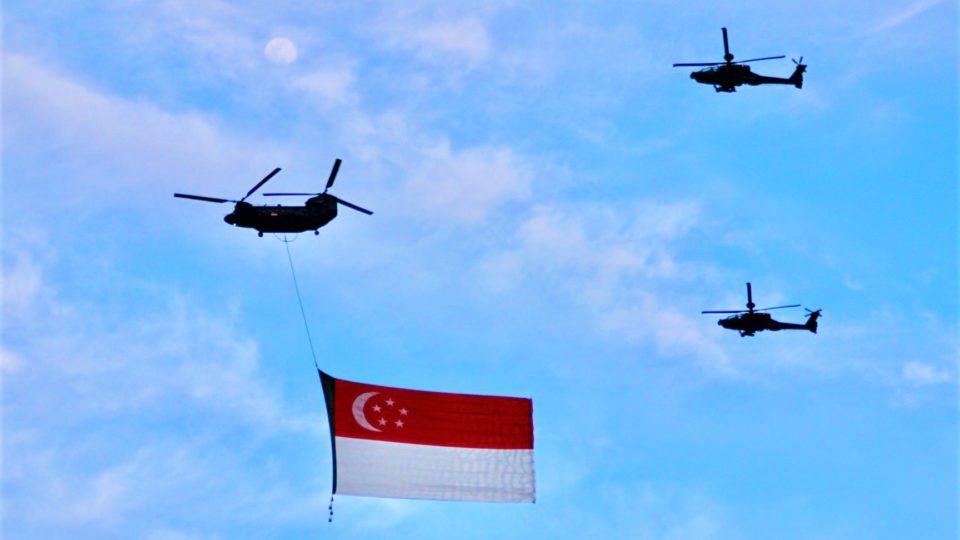
The red of Singapore’s flag represents universal brotherhood and equality of man while the white symbolizes purity and virtue. The crescent moon stands for a young nation on the rise and the five stars signify the ideals of democracy, peace, progress, justice and equality.
A Gallups Law & Order study has highlighted Singapore as the safest country in the world, for several years running. The UN Office on Crime & Drugs also ranks Singapore as the country with the lowest crime rate in the world together with Japan, at 0.2% homicides in 2017.
80% of Singaporeans live in government housing. The Singapore government owns almost 80% of the land and has used it to guarantee housing to its citizens in what is known as HDBs or Housing Development Board which offers discounted housing to its citizens.
Chewing gum has been banned in Singapore since 1992. But it is not the chewing which carries a penalty, but the importing of it. But locals are known to bring in some chewing gum, especially from Malaysia, but one needs to be careful as technically, bringing some gum from an overseas trip turns one into a chewing gum smuggler. The penalties are quite strict with a fine of up to S$100,000 and 2 years imprisonment.
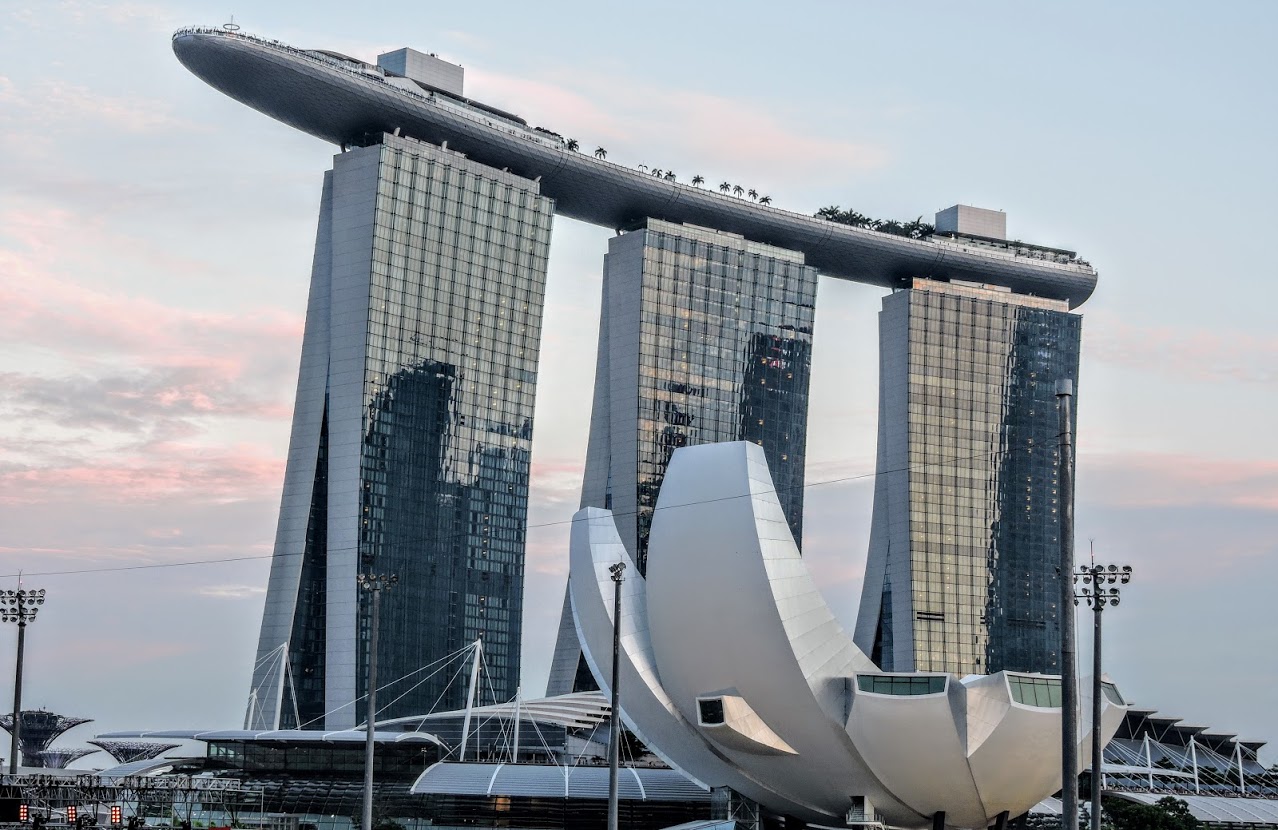
Singapore is that it is home to two very profitable casinos which jointly generate over $4bn in revenues annually and puts the country on fourth place in the world casino ranking by gross revenues, but even though it’s far behind the world’s largest casino market of Macau which generates $33bn because of Singapore size, it represents a much larger percentage of GDP. Local residents, including Singapore citizens and permanent residents need to pay $100 to access the casino but entrance is free to foreign visitors.
Buildings in Singapore cannot be higher than 280 metres. Currently, there are three buildings of that height – OUB Centre, UOB Plaza and Republic Plaza.
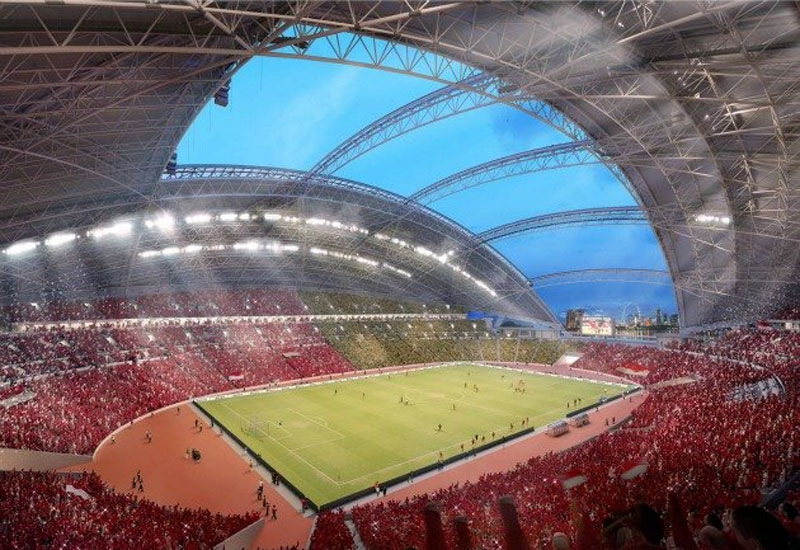
The National Stadium at the Sports Hub has the world’s largest dome with a retractable roof. The 20,000 sqm roof dome measures 312m in diameter and can open and close in 20 minutes. In 2016, the National Day Parade returned to the National Stadium after 10 years. The dome roof let performers ‘fly’ through the air in a first for the Parade!
Singapore is seriously green. In fact, it is one of the world’s greenest cities with nearly half of Singapore’s land area or approximately 700 sq km under green cover. Beyond numerous parks and gardens, there are pockets of undiscovered plant life housed in the most unusual of places. Like the Parkroyal on Pickering which is known for its hotel-in-a-garden concept and its four-storey cascading vertical garden. Other than green areas, parks and park connectors, Singapore is rich in biodiversity in its nature reserves and is home to over 2,100 native vascular plant species. The Bukit Timah Nature Reserve in particular, is said to contain more tree species in a single hectare than the total number of tree species found in North America. However, Singapore also has one of the highest percentages of green spaces of any city in the world at 30% according to a study by MIT and the World Economic Forum.
Singapore is also home to the world’s first night zoo with the Night Safari providing a nocturnal experience like no other in the city. Opened in 1994, the 35-hectare park features over 1,000 animals in their naturalistic night-time environments. Visitors can hop onto a 40-minute tram ride for an overview of the park’s main attractions and also walk along the four interlinked walking trails within the park, for a zoo trip like no other.
Singapore is a city of man-made waterfalls. According to the Wildlife Reserves Singapore, the first man-made waterfall was built at Jurong Bird Park in 1971. Dropping from a height of 30 metres, it is said to be the tallest waterfall in an aviary to date. At the Gardens by the Bay, in the Cloud Forest dome, there is a huge, 35-metre waterfall, which is the centrepiece of the misty conservatory, designed to house plant life from the tropical highlands. And no trip to Singapore is complete without a visit to the world’s tallest indoor waterfall. Housed in the retail and lifestyle complex of Jewel Changi Airport, the HSBC Rain Vortex soars at 40 metres, and is surrounded by a lush indoor garden.
Singapore pioneered the first F1 night race which has been held annually since 2008. The Grand Prix Season Singapore features a gamut of concerts, racing and entertainment activities, for Formula One fans and visitors of all ages. The Formula 1 Singapore Grand Prix made racing history as the world’s first ever FORMULA 1 night race. The twisty Marina Bay street circuit has largely remained unchanged in the years since; the track’s brightly lit floodlights also add to the spectacular night views of Singapore. According to Formula 1, the Marina Bay Street Circuit also boasts more corners, 23 in all, than any other circuits on the Formula One race calendar.
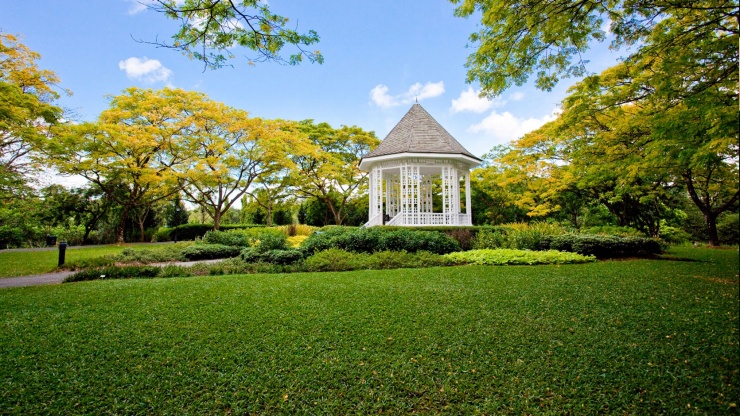
It’s home to a UNESCO World Heritage Site with some unique VIPs. The Singapore Botanic Gardens became a UNESCO World Heritage Site in 2015 and has a history of over 150 years since its founding in 1859, more than a century older than modern Singapore itself. Its most popular attraction is the National Orchid Garden, which houses thousands of orchid species known as Very Important Plants or VIPs. Over 200 hybrid orchids in this garden have been affectionately named after visiting foreign dignitaries such as Nelson Mandela, the Duke and Duchess of Cambridge as well as celebrities like actors Jackie Chan, Zhou Xun and Bae Yong Jun. Singapore’s first botanic garden opened in 1822, on the slopes of the area now known as Fort Canning Hill. Measuring just 19 hectares, the garden closed in 1829 due to rising costs and its land was then used for various public projects, including an Armenian church, a school and a hospital.
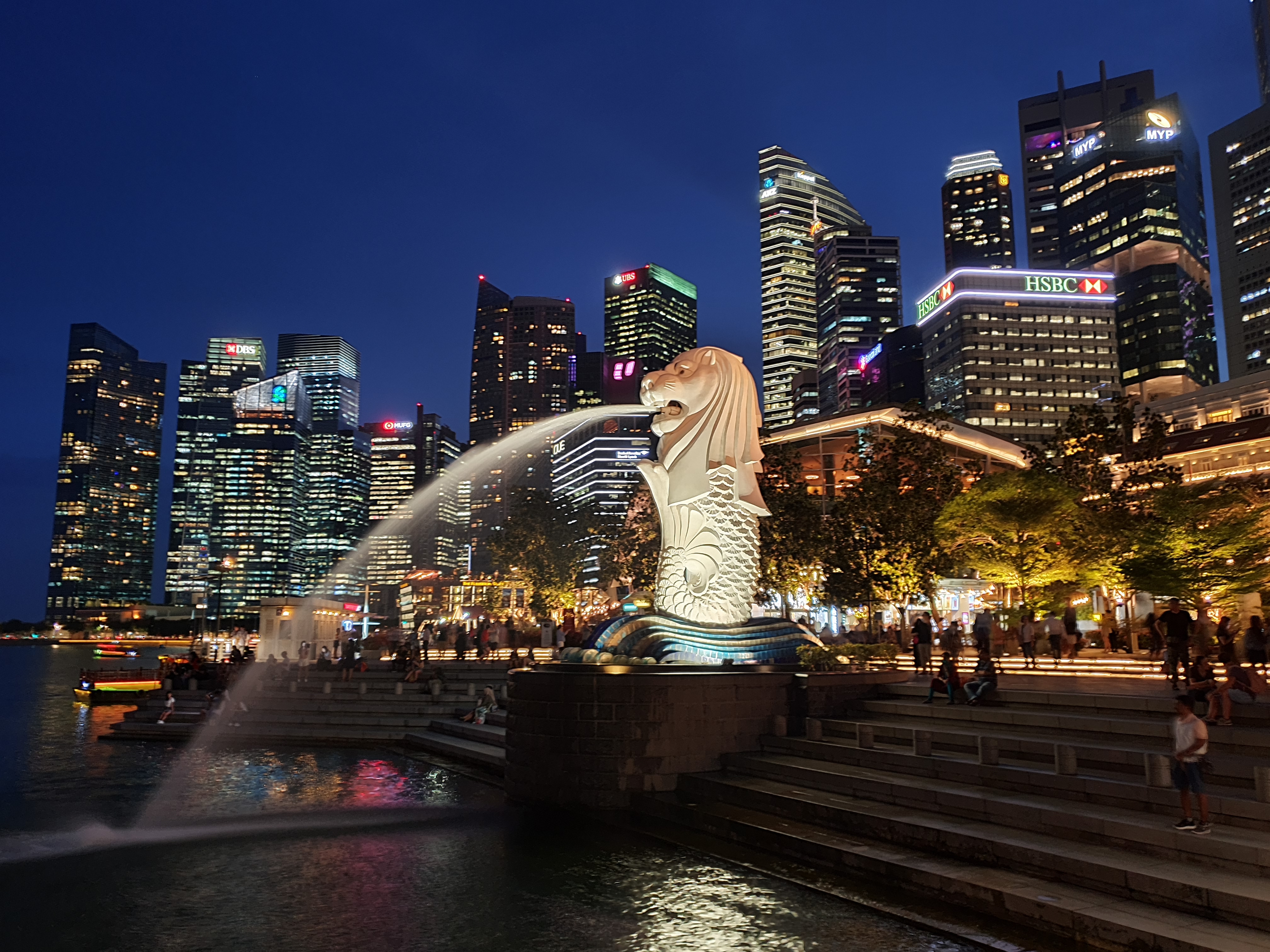
Everyone has heard about the Merlion, Singapore’s iconic emblem. The Merlion is a mythical creature with a lion’s head and a fish’s tail. But what many people don’t know is that the Merlion was partly inspired by the city’s Sanskrit name, Singapura, which means Lion City. This Sanskrit name is thought to have been given by a Sumatran prince Sang Nila Utama, who ruled Temasek, a settlement on the Singapura island during the early 14thcentury. While hunting for animals, the prince spotted a strange creature moving quickly, which was identified as a lion by his advisors. However, there were no records of lions native to Singapore. It might have been a tiger that he saw, for tigers used to be found in the wild in Singapore, up until the 1930s. The Merlion is however is completely made up and was designed by Alec Fraser-Brunner, a member of the Souvenir Committee and curator of the Van Kleef Aquarium, for the logo of the Singapore Tourism Board (STB) in use from 26 March, 1964 to 1997 and has been its trademarked symbol since 20 July 1966.
Built in 1869, and originally named Edinburgh Bridge after the Duke of Edinburgh’s visit, Cavenagh Bridge is the oldest bridge in Singapore. It was named Cavenagh after the last India-appointed Governor of the Straits Settlement, Sir Orfeur Cavenagh. The Cavenagh coat of arms and original signages still stand at each end of the bridge that’s used by pedestrians today. Based on the vintage police notices that are still up, no vehicles, even cattle and horses, are allowed to cross the bridge to this date. The bridge spans the Singapore river and provides scenic views of the city’s business district. On the other hand, the close-by Anderson Bridge has a morbid past. Completed in 1910 and named after then Governor of the Straits Settlements and High Commissioner for the Federated Malay States, Sir John Anderson, the steely exterior of the bridge, before becoming part of the famous F1 street circuit, used to have severed heads of spies and criminals hanging from it during the Japanese occupation of Singapore.
Singapore is the only country in the modern world to gain independence against its own will. The late Prime Minister Lee Kuan Yew wanted a merger and unity. However, due to extreme political fallouts, the Malaysian parliament unanimously voted to expel Singapore, forcing the little red dot to stand as an independent and sovereign state.
From the From the 1960s to the 1990s, the government deemed long hair to be negative and detrimental to the country. Therefore, popular bands like Led Zeppelin and the Bee Gees had to cancel their Singapore tours due to the ban.
Collectively, Singaporeans are the fastest pedestrians in the world, walking at a speed of about 6.15 kilometres per hour.
Of the only five official Tintin shops in the world, one of them is in Chinatown in Singapore with the remaining four in Japan and Europe.
One can find the National Anthem of Singapore on the back of the SGD 1000 note, written in micro text.
Military service is compulsory for all male Singapore citizens and second generation permanent residents who serve for two years in active duty as full-time national servicemen (NSFs) in the Singapore Armed Forces (SAF), Singapore Police Force (SPF) or Singapore Civil Defence Force (SCDF), following which they transition to an operationally-ready reservist state as operationally-ready national servicemen (NSmen). Enlistees are called up after they finish their A levels or diploma, and are usually 18 years and above, though they can enlist early after they turn 16 with parental consent. As operationally ready servicemen, they need to come back for training on an annual basis as part of the reservist force until they turn 40 or complete a certain amount of training sessions.
The signature Singapore Sling, which contains gin, Cointreau, cherry brandy, Dom Benedictine, pineapple juice, Grenadine, Angostura bitters and lime, was first served at the Long Bar in Raffles Hotel in the year 1915.
Singapore as a country has grown in land size in the last decades. This is not through expansion or invasion of other countries but through land reclamation efforts which started in varying degrees, since the arrival of the British in 1822. Around 25% of Singapore today did not exist at independence and has been reclaimed from the sea to cater to industrial and population growth.
The USB flash drive that the whole world uses was invented in Singapore. Trek 2000 International came up with the thumb drive in 2000.
The Mint Museum of Toys is the world’s first museum for toy artefacts. It houses a world-class collection of over 50,000 vintage toys and collectibles, of which 8,000 are on display in the museum.
Suntec City’s Fountain of Wealth is the largest fountain in the world! Made of cast iron, it cost almost US$6 million to build in 1997.
Singapore is the only country in the world that reclaims and recycles water. The five NEWater plants meet up to 40% of the country’s current water needs.
Singaporeans speak in a mixture of languages even in a single sentence. Growing up in a multicultural society, it’s not uncommon to have friends from different races and when that happens, one tends to learn phrases from each other’s languages. So its not difficult to have people speaking multiple language in any conversation.
So here are some known and unknown facts about Singapore for those who don’t know this city. Happy birthday Singapore and may you continue to grow and prosper. Majulah Singapura!















 Memories and Such