Growing up in Mumbai

Matunga – for any Tambrahm in Mumbai, especially those of a certain age, the very word evokes the feel of home. Sometimes called ‘Mini Madras’, Matunga in what would be some where in the centre of what is the original city (as opposed to the suburbs) was probably the first place the initial immigrants, young, eager, bright and wide-eyed, came to from Dadar station when their trains from the south arrived in Mumbai all ready to conquer the world, with an introduction to perhaps, if they are lucky, to a relative (distant or otherwise), or maybe someone from the same village they belonged to, or even a relative’s relative!

While I am not sure if this is 100% accurate, from what I’ve heard from my parents and grandparents, most young Tamil Brahmin boys and men started arriving in Mumbai (or Bombay as it was called then) somewhere in the early forties, some years before India would finally throw off the yoke of British dominance and become independent.

Both sets of my grandparents arrived in Bombay somewhere in the early to mid-forties, luckier than most as both my grandfathers had an older brother already settled in the city, in Matunga as it were! If I were to probably measure the distance my paternal and maternal grandparents live away from each other, when they first arrived in the city, it should probably be a maximum of 1 km.

Matunga is the heart of the Tamil Brahmin community in Bombay and as such the roads are filled with the sights and sounds of temple bells and the smells of filter coffee and delicious food!

Temples like Bhajana Samaj, Astika Samaj and Sankara Math, shops like Mysore Concerns, Giri Stores and the row of flower sellers in the road outside the post office along with the vegetable sellers who have carts close-by are all hallmarks of the Tamil Brahmin community in Matunga! Who can forget the Ram Navami and Navaratri celebrations in Bhajana Samaj, the Diwali sweets that always were sold in the hall in Sankara Matt, the banana leaf sold by the vegetable vendors during any major festival, the gaggle of priests, outside the temples, the sound of the temple bells and sugarcane stalks just before Pongal?

When their families grew, both sets of my grandparents moved from their family homes and out of Matunga. But they both didn’t’ pull the umbilical cord too much and move far away. Both of them moved another kilometer away from Matunga in opposite directions actually, and that was where my parents were brought up.

So growing up, we lived in another area which was a fifteen minute walk from Matunga, which was in the periphery of our lives, without actually living there. We used to go to Matunga for literally everything and my mum still goes there atleast two to three times a week for her weekly ‘fix’. This area in Bombay is the lifeline for the community and even today when other mini Matungas have sprung up across the city and suburbs – like Chembur, Chedda Nagar, Bangur Nagar, Mulund, Dombivili, Vashi, etc you can still people who have moved away from Matunga come here on weekends to catch-up with family and friends, eat at childhood haunts and buy essentials which you don’t get anywhere else in the city.

Growing up, there was always this disconnect – we were Tamilians, but without the accent which is usually caricatured in movies and television and always had questions on why we needed to wear a bindi on our forehead or flowers in our hair. In my and my sister’s case, it was compounded by the fact we didn’t go to the school that most of our Brahmin friends and relatives went to (which was a school run by a Tamil trust where the language was taught as a second language)!

Growing up also we were quite insular. I would say this with the benefit of hindsight. Every Tamilan I knew at that point in time was a Brahmin – either from one of the districts of Tamil Nadu or from Palakkad (from Kerala who are called Kerala Iyers or Palakkad Brahmins). Where we stayed, while not in Matunga, was in fact another Tamil conclave, with almost all the 30-40 buildings in the area having a sizeable Tambrahm population each. My building had 19 flats and with the exception of 2-3, every flat was a Tambrahm flat! This was pretty much the case (the percentages being slightly more or less, with some exceptions) for the other buildings in the street I lived in. Even in school, my friends who were Tamil were Brahmins. In fact, coming to Singapore with its vast Tamil population was actually a culture shock to me as I had never seen so many people from so many Tamil communities and the temples were the biggest shock – I had not heard of all the different Gods that were worshipped there (all the temples I visited prior to this were my community temples or the other temples in Mumbai)

Since most of the community emigrated to Bombay around 60-80 years back, the dialect of Tamil, we speak is completely different from what is spoken by the community in places like Chennai and Singapore. Bombay Tambrahms have retained the words and cadence of their speech from all those years while communities in Singapore and Chennai have adopted more of the local language. So the Tamil we speak may actually seem strange to those who don’t speak like this! S used to tell me that they used to be made fun of in school when they spoke Brahmin Tamil, which is why his Tamil sounds more like how it is in movies while mine is the one they make fun of in movies!

Writing this post has made me so nostalgic. I think the next time I go to Mumbai, I will try and capture all the sights and sounds of the city so that every time I miss Mumbai, I have these to see and hear! Also this post has made me realise I need to pen down more about my life, so that GG and BB know what that was like….

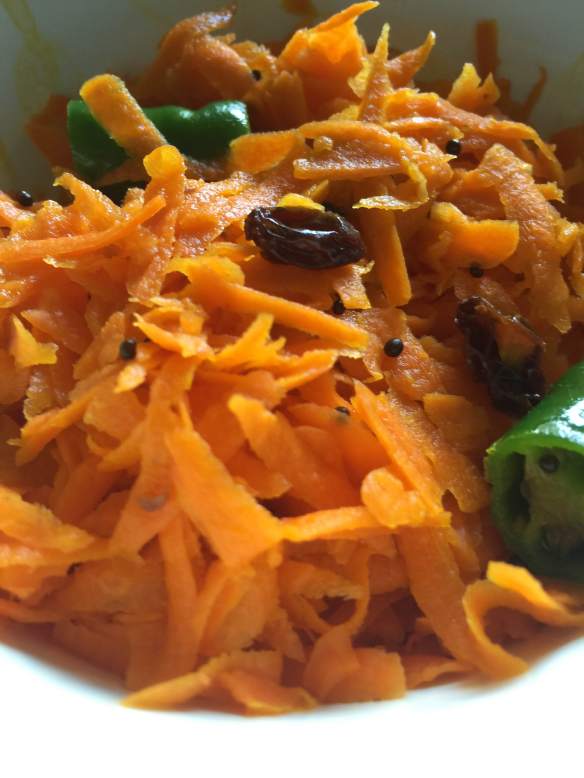
Recipe: Carrot and Raisin Salad

I’ve been so busy this week that I’ve not really had time to sit and think over a nice blog post. My apologies….So here’s another recipe which I made last weekend.

Carrot Salad 3This is something my mum used to make all the time growing up and I always assumed it was typical tambram food. Maybe not and this is something she learned. But I think many communities across India have a similar recipe. My mum’s recipe does not have raisins, which is something I usually add – I saw something similar at a dinner at S’ aunt’s place aeons ago and started using it since then.
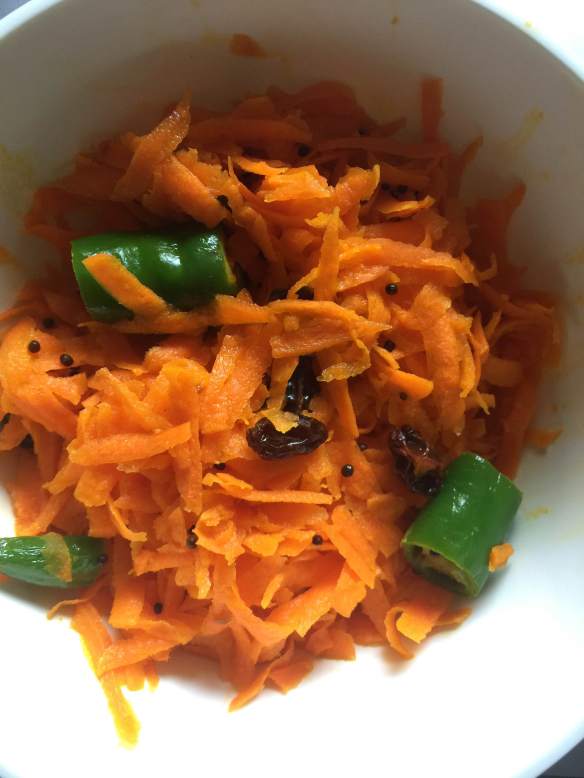
This salad is a quick one, you can be done in less than 15 minutes, start to end and is a very healthy and colourful addition to your table!

Carrot and Raisin Salad

Carrot Salad 1Ingredients:

  • 1 cup carrots, peeled and grated/shredded
  • 1/4 cup raisins
  • 2-3 fresh green chillies, chopped into medium pieces
  • Salt to taste
  • 1-1.5 tsps lemon juice
  • 1 tsp ghee or oil
  • 1 tsp mustard seeds
  • A pinch of asafoetida
  • Chopped coriander leaves to garnish

Method:

  • Shred or grate the carrots and keep aside.
  • Make sure the raisins are at room temperature
  • In a pan, heat the ghee or oil and when it’s warm, add in the mustard seeds. When the seeds pop, put in the asafoetida and saute for a few seconds. Then add in the chopped green chillies and let it saute for a couple of minutes.
  • Now add the grated carrots and cook for a few minutes. The carrots should not cook and should still be crunchy. Add the raisins and salt to taste and remove from the fire.
  • Pour in the lemon juice to the tartness you like and garnish with coriander leaves.

Yummy carrot and raisin salad ready….

Carrot Salad 2

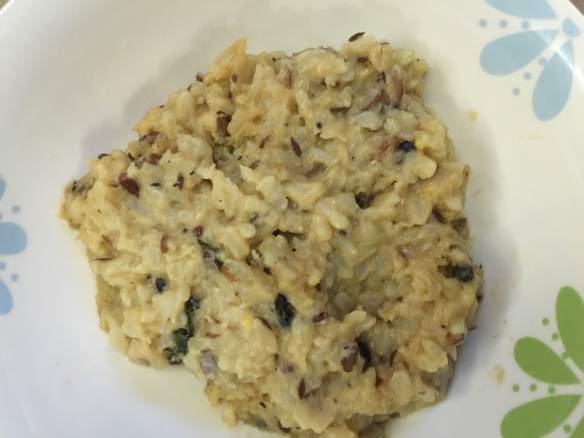
Recipe: Brown Rice Savory Pongal aka Ven Pongal

IMG_5277Last week, I blogged about the sweet Pongal recipe which I made as a neividhyam or offering to the Lord on the occasion of the festival of Pongal. That evening, I made the salted version for dinner. The method for both is quite similar and you can make both at the same time with little extra effort.

This is often eaten as a breakfast dish, especially in the southern parts of India. This combination of rice and dal will really fill you up and if you, like me, plan on having this for dinner, then go a bit easy as you tend to feel really full sometime after your meal!

Brown Rice Ven Pongal

IMG_5278

Ingredients:

  • 2 cups brown rice (traditionally made with white rice)
  • 1 cup yellow moong dal
  • 2 cups water
  • 2 cups milk
  • 2 tsps cumin seeds
  • 2-3 tbsps ghee
  • 2 tsps whole black pepper
  • 1 tsp pepper powder
  • 1 tsp grated ginger
  • 4-5 leaves of curry leaves
  • A handful of broken cashew nuts
  • Salt to taste

Method:

  • Wash the rice well, drain and keep aside. In a pressure cooker, lightly pan fry the dal till a nice aroma comes.
  • Add the rice, water, milk, salt, peppercorns and cook under pressure for 4-5 whistles.
  • In another pan, heat 1 tbsp ghee and fry the cashewnuts until they brown nicely. Remove and keep aside and in the same pan, fry the cumin seeds, and when it begins to splutter, add the curry leaves, grated ginger and pepper powder and fry for a few seconds. Remove from the flame and keep aside.
  • When the pressure reduces, open the cover of the pressure cooker and check if the rice and dal mixture has become mushy (it should look like a risotto at this point). If no, add more water and/or milk and cook it further till it becomes mushy.
  • Add the remaining ghee here and stir well. When it has achieved the right consistency, add the fried cashewnuts and the seasoning (cumin seeds, ginger, curry leaves and pepper powder) and mix well checking for salt.
  • Serve with sambar or coconut chutney

IMG_5276

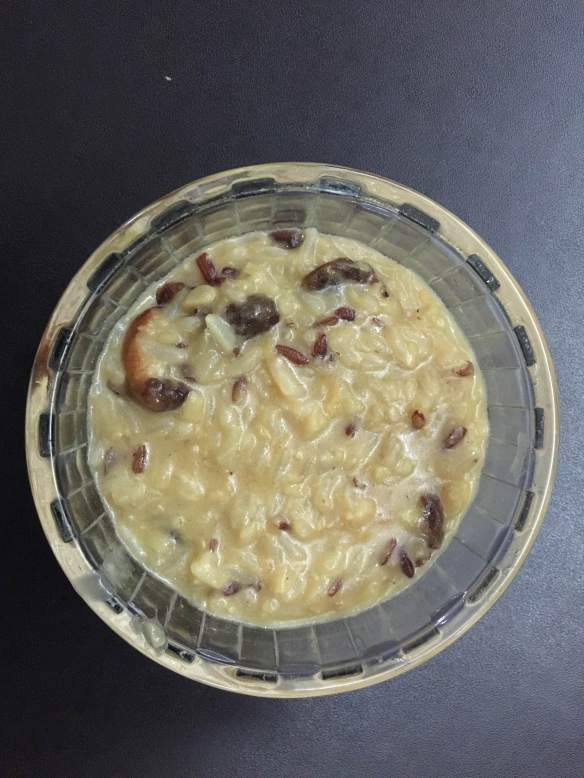
Recipe: Brown Rice Sweet Pongal

IMG_5275

Last week was the festival of Pongal, and as is the tradition I made some sweet Pongal in the morning. The only twist to the recipe was that instead of normal white rice, I used the healthier brown rice. It was quite good, though you need to cook it a tad longer than usual.

IMG_5274

Ingredients:

  • 1 cup brown rice
  • 3 tbsps yellow moong dal
  • ½ cup jaggery (increase this measure to ¾ cup if you like it sweeter)
  • 1 cup milk
  • 2 cups water
  • A handful of cashewnuts
  • A handful of raisins
  • 3-4 tbsps Ghee.

Method:

  • Wash the rice, drain and keep aside.
  • In a largish pressure cooker, dry roast the moong dal for a while till it emits a nice aroma. Do not let it burn.
  • Then add the washed rice, 2 cups of water and 1 cup of milk and pressure cook for 4-6 whistles. Let the pressure come down. You can cook it in a large pot also if you do not have a pressure cooker. In that case, keep an eye on it and add water and milk periodically. You need to cook it till the dal and rice break down and cook, becoming mushy.
  • While the pressure is coming down, in a small skillet, put 1 tbsp ghee and fry the cashewnuts and raisins till the cashewnuts brown and the raisins plump up. Remove and keep aside.
  • Put the jaggery in another container and pour a bit of water over it to cover. It will dissolve in a few seconds. You could also do this in a microwave for 1 minute. Then once the jaggery has dissolved, strain it to remove any impurities present and keep aside.
  • Once you can open the lid of the cooker, add the jaggery, cashewnuts and raisins and cook over a medium flame for 5-10 mins.
  • When the mixture becomes thick, it’s time to remove it from the flame and enjoy!

Picture1

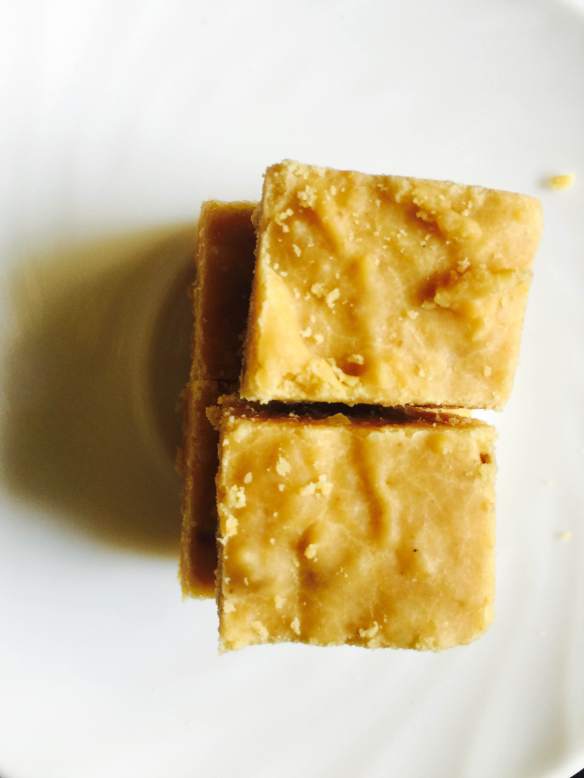
Diwali Recipes: 7 Cup Cake

IMG_5059

This is another traditional tambram recipe and which is one of my go-to recipes when I need to make something quickly. It does take a bit of time to make, but the efforts are super worth it! The ingredients are given as cups which is where the name of the recipe came from, but essentially it’s just a measure. It doesn’t matter how big your cup size is, just use the same amount for all the ingredients and your cake or barfi will come out fab!

IMG_5057

Ingredients:

  • 1 cup chickpea flour or besan
  • 1 cup ghee
  • 1 cup grated coconut (you can fresh or frozen, I’ve used fresh for this recipe)
  • 1 cup Milk
  • 3 cups Sugar

Method:

  • Take a big plate or cake tin and grease it slightly. Or, you could lightly spray it with oil and then put baking paper over to completely cover it, this reduces the amount of ghee used in the recipe slightly.
  • Fry the chickpea flour or besan in a dry pan and do not overfry it. Stop when it starts changing colour. At this point, add the coconut, sugar and milk to the pan and continue stirring.
  • When the sugar starts to dissolve, add the ghee and keep stirring. You will need to keep stirring the pan, so that the mixture does not catch in the bottom.
  • After about 15 minutes (more or less depending on your quantity), the mixture will start leaving the sides of the pan. At this point, take a few drops and put it in your greased plate. If it stays in shape, it is ready, otherwise continue stirring and repeating this step till you get to this point.
  • Switch off the gas and pour it into your prepared greased plate. Using a clean spatula, level the mixture and make it smooth. Let it cool for a while and when still slightly warm, lightly score lines in the mixture with a knife or pizza cutter. You could cut squares or diamonds in any size. Let it cool completely before transferring to an airtight container.

This should be good for a week or so outside and around 2 weeks or so inside the fridge.

IMG_5060