World Book and Copyright Day

Today is the World Book and Copyright Day also known as World Book Day. I have written previously about this day, so hop there to know more about the history of why this day has been celebrated.

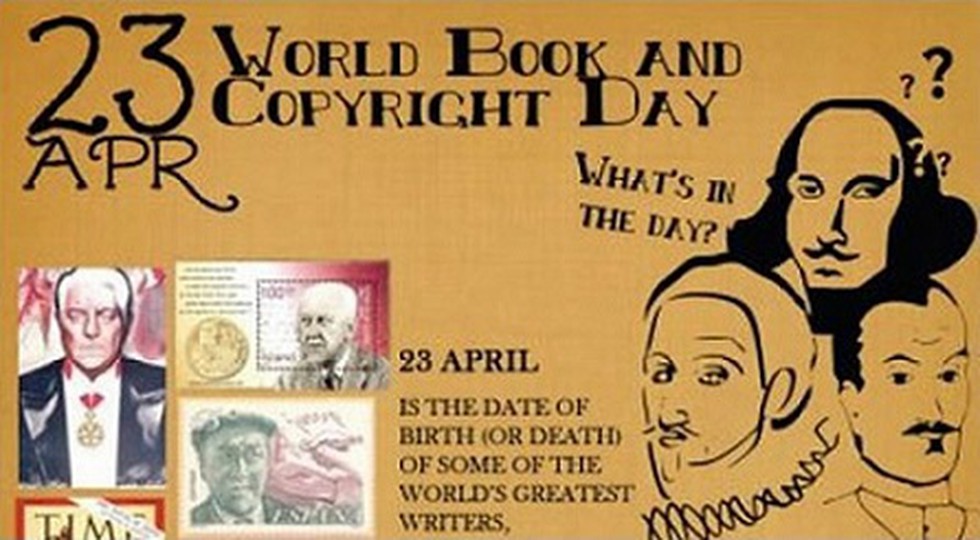
The World Book and Copyright Day is a celebration to promote the enjoyment of books and reading. Each year, on 23 April, celebrations take place all over the world to recognise the scope of books, a link between the past and the future, a bridge between generations and across cultures. On this occasion, UNESCO and the international organizations representing the three major sectors of the book industry – publishers, booksellers and libraries, select the World Book Capital for a year to maintain, through its own initiatives, the impetus of the Day’s celebrations.

The original idea of this day was from the Spanish writer Vicente Clavel Andrés as a way to honour the author Miguel de Cervantes, first on 7 October, his birth anniversary, then on 23 April, his death anniversary. In 1995 at UNESCO’s General Conference held in Paris, it was decided that the World Book and Copyright Day would be celebrated on 23 April, as the date is symbolic in world literature as it is also the anniversary of the death of Miguel de Cervantes, William Shakespeare and Inca Garcilaso de la Vega, as well as that of the birth or death of several other prominent authors.

This year, when many schools and institutes of learning have been shut because of the pandemic caused by COVID-19, reading has become an essential habit, more than ever. As more people spend time at home and limit social gatherings, the power of books should and can be leveraged to combat isolation, reinforce ties between people, expand our horizons, while stimulating our minds and creativity. Books have the unique ability both to entertain and to teach. They are at once a means of exploring realms beyond our personal experience through exposure to different authors, universes and cultures, and a means of accessing the deepest recesses of our inner selves.

Not just during the month of April, but all year round, it is critical to take the time to read on your own or with your children, if they are too young to read on their own. It is a time to celebrate the importance of reading, foster children’s growth as readers and promote a lifelong love of literature and integration into the world of work. Through reading and the celebration of World Book and Copyright Day, we can open ourselves to others despite distances, and we can travel thanks to our imagination, even though leisure travel has stopped more or less across the world.

The 2021 World Book Capital is Tbilisi, Georgia. Cities designated as UNESCO World Book Capital undertake to carry out activities with the aim of encouraging a culture of reading and diffusing its values in all ages and population groups in and out of the national borders. The cities commit to promoting books and fostering reading during a 12 months period between one World Book and Copyright Day and the next.

So please read today if you don’t otherwise read often. If you are a parent with a child too young to read, sit down with them with a favourite book and spend time reading and inculcating the love and joy that comes when you read a good book. For parents with older children, be a good role model and lead by example and show to your children how important reading is. I am going to spend most of today and the weekend with a good book, some nice hot tea or coffee and just read. What about you?

World Health Day

Today is World Health Day, a day dedicated to creating awareness of a specific health theme to highlight a priority area of concern for the World Health Organisation or WHO. This day has, over the past 50 years, from its inception in 1948

April 7 of each year marks the celebration of World Health Day. From its inception at the First Health Assembly in 1948 and since taking effect in 1950, the celebration has aimed to create awareness of a specific health theme to highlight a priority area of concern for the World Health Organization.

The World Health Day has a large number of wide-reaching aims and priorities including to improve understanding of universal health coverage and the importance of primary health care as its foundation, to spur action from individuals, policy-makers and health-care workers to make universal health care a reality for everyone, everyone should have the information and services they need to take care of their own health and the health of their families and to have skilled health workers providing quality, people-centred care; and policy-makers committed to investing in primary health care.

The theme for the 2021 World Heath Day is to build a fairer, healthier world. Why is this so? Because this world is an unequal world. As COVID-19 has highlighted, some people are able to live healthier lives and have better access to health services than others and this is entirely due to the conditions in which they are born, grow, live, work and age. All over the world, some groups struggle to make ends meet with little daily income, have poorer housing conditions and education, fewer employment opportunities, experience greater gender inequality, and have little or no access to safe environments, clean water and air, food security and health services. This leads to unnecessary suffering, avoidable illness, and premature death. And it harms our societies and economies. Not only is this unfair, it is preventable. That’s why world leaders are being called upon to ensure that everyone has living and working conditions that are conducive to good health as well as to monitor health inequities, and to ensure that all people are able to access quality health services when and where they need them.

2021 has also been designated as the International Year of Health and Care Workers (YHCW) in appreciation and gratitude for their unwavering dedication in the fight against the COVID-19 pandemic. Under the theme of Protect, Invest and Together, a year-long campaign which highlights the urgent need to invest in health workers for shared dividends in health, jobs, economic opportunity and equity, has been launched by the WHO. The campaign’s objectives is to ensure the world’s health and care workers are prioritised for the COVID-19 vaccine in the first 100 days of 2021, recognise and commemorate all health and care workers who have lost their lives during the pandemic, mobilise commitments from countries, international financing Institutions and bilateral and philanthropic partners to protect and invest in health and care workers, engage countries and all relevant stakeholders in dialogue on a care compact to protect health and care workers’ rights, decent work and practice environments and bring together communities, influencers, political and social support in solidarity, advocacy and care for health and care workers.

This year, please support to ensure that our health and care workforces are supported, protected, motivated and equipped to deliver safe health care at all times, not only during COVID-19. The pandemic of COVID-19 has hit all countries hard, but its impact has been harshest on those communities which were already vulnerable, who are more exposed to the disease, less likely to have access to quality health care services and more likely to experience adverse consequences as a result of measures implemented to contain the pandemic.

Therefore it is more than important to have a healthier world, one where everyone has access to the healthcare they need.

World Water Day

Leonardo Da Vinci once said, water is the driving force of nature which is so true. Without water, humanity would probably not exist and all our searching for new planets to inhabit all hinges on the possibility of finding water in the new planet.

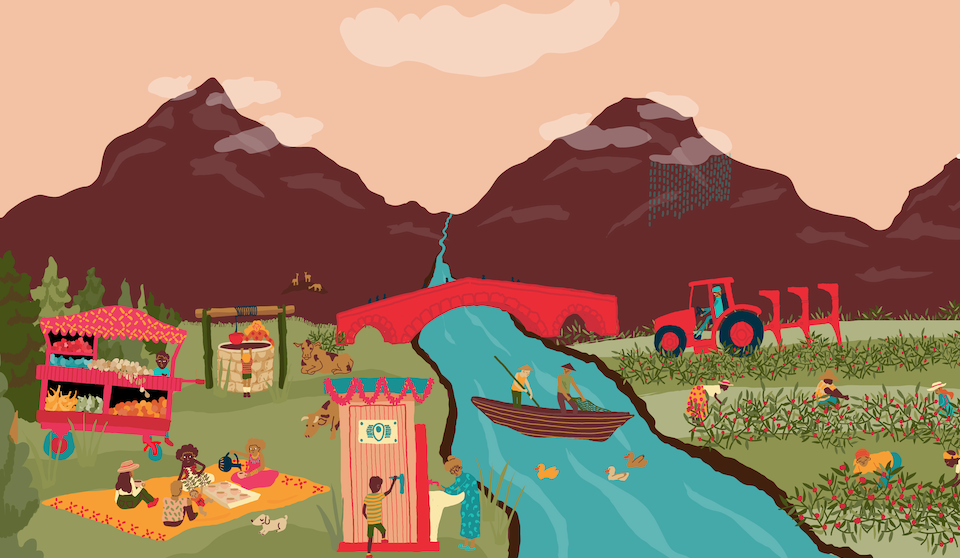
Water means different things to different people. Water important to our home and family life, our livelihood, our cultural practices, wellbeing and local environment. In households, schools and workplaces, water can mean health, hygiene, dignity and productivity. In cultural, religious and spiritual places, water can mean a connection with creation, community and oneself. In natural spaces, water can mean peace, harmony and preservation.

Today, water is under extreme threat from a growing population, increasing demands of agriculture and industry, and the worsening impacts of climate change. The World Water Day celebrates water and raises awareness of the 2.2 billion people living without access to safe water. It is a means of focusing attention on the importance of freshwater and advocating for the sustainable management of freshwater resources. The day is about taking action to tackle the global water crisis and achieving Sustainable Development Goal 6: water and sanitation for all by 2030. The first World Water Day was celebrated in 1993 and is an annual United Nations Observance focusing on the importance of freshwater, coordinated by UN-Water. This Day is an opportunity to learn more about water related issues, be inspired to tell others and take action to make a difference. Water is an essential building block of life. It is more than just essential to quench thirst or protect health; water is vital for creating jobs and supporting economic, social, and human development.

A new World Water Development Report is released each year on or near World Water Day, to provide decision-makers with tools to formulate and implement sustainable water policies. This report is coordinated by UNESCO’s World Water Development Programme (WWAP) on behalf of UN-Water. The annual theme for World Water Day is aligned with the focus of the report.

The theme of World Water Day 2021 is valuing water. Beyond the issues of pricing, this topic includes the environmental, social and cultural value people place on water. Economic development and a growing global population means agriculture and industry are getting thirstier and water-intensive energy generation is rising to meet demand. Climate change is making water more erratic and contributing to pollution. As societies balance the demands on water resources, many people’s interests are not being taken into account. How we value water determines how water is managed and shared. The value of water is about much more than its price – water has enormous and complex value for our households, culture, health, education, economics and the integrity of our natural environment. If we overlook any of these values, we risk mismanaging this finite, irreplaceable resource.

Under the theme of valuing water, there is a digital campaign this year about generating a global, public conversation on social media about how people value water for all its uses. The aim is to create a more comprehensive understanding of how water is valued by different people in different contexts so we can safeguard this precious resource for everyone. Taking place on social media, from now until the end of December, a digital campaign aims to generate conversations – to gather opinions and comments from people around the world about water and what it means to them. The aim is to understand how people value water – whether it is economically, socially, culturally or in other ways – how it plays a role in their lives.

The Sustainable Development Goal number 6 is to ensure water and sanitation for all. Without a comprehensive understanding of water’s true, multidimensional value, we will be unable to safeguard this critical resource for the benefit of everyone.

Source

There are five different perspectives on valuing water:

  1. Valuing water sources – natural water resources and ecosystems: All water is generated by ecosystems. And all the water we abstract for human use eventually returns to the environment, along with any contaminants we have added. The water cycle is our most important ‘ecosystem service’. Higher value must be given to protecting the environment to ensure a good quality water supply and build resilience to shocks such as flood and drought.
  2. Valuing water infrastructure – storage, treatment and supply: Water infrastructure stores and moves water to where it is most needed, and helps clean and return it to nature after human use. Where this infrastructure is inadequate, socio-economic development is undermined and ecosystems endangered. Typical valuations of water infrastructure tend to underestimate or not include costs, particularly social and environmental costs. It is difficult to recover all costs from tariffs (known as full cost recovery). In many countries, only part or all of the operational costs are recovered, and capital investments are covered by public funds.
  3. Valuing water services – drinking water, sanitation and health services: The role of water in households, schools, workplaces and health care facilities is critical. Furthermore, WASH (water, sanitation and hygiene) services also adds value in the form of greater health, particularly in the context of the COVID-19 pandemic. WASH services are often subsidized, even in highincome countries. However, untargeted subsidies can benefit people with existing water connections, rather than improving the situation for poor and underserved communities.
  4. Valuing water as an input to production and socio-economic activity – food and agriculture,
    energy and industry, business and employment:
    Agriculture places the biggest demand on global freshwater resources and is a major contributor to environmental degradation. Despite being fundamental to food security, water in food production is generally given a low value when assessed purely through the economic lens of value produced in relation to water used. Many of the wider benefits include improving nutrition, generating income, adapting to climate change and reducing migration which are often not reflected in the cost of water. For the energy, industry and business (EIB) sector, water-related threats such as water scarcity, flooding and climate change can push up costs and disrupt supply chains. Corporate mismanagement of water can damage ecosystems and harm reputations and affect sales. Traditionally, the EIB sector has valued water by the volume used, plus the costs of wastewater treatment and disposal. More organisations are adopting integrated water resource management (IWRM) planning approaches as they improve their sustainability.
  5. Valuing socio-cultural aspects of water – recreational, cultural and spiritual attributes: Water can connect us with notions of creation, religion and community. And water in natural spaces can help us feel at peace. Water is an intrinsic part of every culture but the values we attribute to these functions are difficult to quantify or articulate. Economics often considers water to be a resource for practical human usage and pays little or no attention to its socio-cultural, or environmental, value. There is a need to fully understand cultural values around water by involving a more diverse group of stakeholders in water resources management.
Source

We owe this to our children and grandchildren that we bestow upon them a world that is inhabitable, fertile and prosperous, all of which need water. There is a saying attributed to Ismail Serageldin, founding director of Bibliotheca Alexandria who forecasted in 1995 that wars of the 21st century will be fought over water. And when we see the geopolitics of our world, we see this becoming increasingly true. A water crisis is a global crisis. Without sustainable access to water, we will be unable to achieve quality education or the development of more prosperous, fairer societies.Without water, it is possible that humanity will eventually die off and we, as a generation can’t and should not allow this to happen. History has shown that majoe civilizations of the world, including the Indus Valley, the Yangtze, the Nile and the Tigris and Euphrates rivers are testament to this fact. So let’s conserve and save water so we leave a better world to the future generations.

International Day of Mathematics

Yesterday was a day which many of us don’t know about and many of us are glad of the fact. There is a very small percentage of our population who love this subject – Mathematics. Maybe someone like BB and his friends who are math nerds would appreciate this day, but for the rest of us plebs, it is one just like any other.

Each year on Pie day which is March 14 or in the American way of writing dates, 3/14 is the
mathematical constant for pie is approximately 3.14 and this day has been celebrated in many countries as Pie Day.

The International Day of Mathematics or IDM is the opportunity the explain and celebrate the essential role that mathematics and mathematics education play in breakthroughs in science and technology, improving the quality of life, empowering women and girls, and contributing to the achievement of the Sustainable Development Goals of the 2030 Agenda of the United Nations. The first IDM proclaimed by UNESCO and co-organised with the International Mathematical Union or IMU was celebrated in 2020 which celebrated the beauty and importance of mathematics in our everyday lives. This annual event will be marked in more than 107 countries with over 1000 individual events.

The major goals of an International Day of Mathematics, with expected benefits for students, for teachers, for women and girls and for society at large are to improve understanding among the general public, decision makers and in schools, of the importance of mathematics in education; contribute to capacity building in mathematical and scientific education, with special focus on girls and children from developing countries; achieve gender equality and empower women and girls in mathematics; improve understanding among the general public, with decision makers and in schools of the importance of mathematics as a tool for developments which lead to more prosperous economy circumstances; emphasise the importance of basic research in mathematical sciences as the seed to breakthroughs in technology and the management of society; highlight the role of mathematics in the organization of modern society, including economic, financial, health and transport systems, telecommunications in the quest for human well-being, etc.; raise awareness of the role of mathematics in fighting disasters, epidemics, emerging diseases, invasive species; highlight the role of mathematics in moving to a circular economy of sustainability compatible with preservation of biodiversity; equip the general public and young people with tools for understanding the planetary challenges and the capacity to respond as knowledgeable citizens; increase international networking and collaborations in public awareness of mathematics and increase the access to information, providing a simple way to give citizens a choice in all aspects of their daily life.

Each year, the day is commemorated with a different theme and the theme for 2021 is Mathematics for a Better World. As the world faces the COVID-19 pandemic, mathematics provides its models and tools to help us understand, monitor, and control the spread of the virus. It is also used to create weather forecasts and prepare for natural disasters. It warns us of climate change and helps us to anticipate and mitigate its consequences. Mathematics is central to the efficient organization of societies for the benefit of all citizens. It optimizes transportation and communication networks and enables smart planning and management of health, economic, and social systems. Science and mathematics have a crucial role in steering decisions to promote peace and social justice. As a common language to the planet, mathematics is an essential part of humankind’s cultural heritage. It is present in arts, music, and games, for human enjoyment and well-being.

For more information on the IDM and the events happening around the world, please head to the official website of the International Day of Mathematics. The site also has interesting games and activities you do to commemorate IDM. Here’s another interesting place where you can learn more about the beauty of mathematics is

International Women’s Day

Today is the International Women’s Day. And while I do wonder why we do need one single day to celebrate women, when every day should be a celebration of what women are and can do, in today’s world where millions of girls and women are still downtrodden, perhaps it is for them we should have this one day when they are celebrated, honoured and venerated.

87,000 women are killed every year just because they are women. 111 countries have no repercussions for husbands who rape their wives. 2.7 billion women are legally restricted from having the same choice of jobs as men. 45 countries do not have specific laws against domestic violence and 35% of women globally have experienced sexual or physical violence

The International Women’s Day is a day to join with people around the world and shout the message for equal rights loud and clear and to say with emphasis that women’s rights are human rights! Today is the day to celebrate all women, in all their diversities, to embrace their facets and intersections of faith, race, ethnicity, gender or sexual identity, or disability, to celebrate those who came before us, those who stand beside us now, and those who will come after. Today is the day to celebrate the achievements of women, whether social, political, economic or cultural.

International Women’s Day is a day which celebrates on a global scale the social, economic, cultural and political achievements of women. The day also marks a call to action for accelerating gender parity. Significant activity is witnessed worldwide as groups come together to celebrate women’s achievements or rally for women’s equality. The day is important because worldwide celebrations are held to celebrate women’s achievements, raise awareness about women’s equality, lobby for accelerated gender parity and fundraise for female-focused charities

While reading about the IWD, I found two separate themes for the day. The theme from the UN is Women in leadership: Achieving an equal future in a COVID-19 world. This theme celebrates the tremendous efforts by women and girls around the world in shaping a more equal future and recovery from the COVID-19 pandemic. which calls for women’s right to decision-making in all areas of life, equal pay, equal sharing of unpaid care and domestic work, an end all forms of violence against women and girls, and health-care services that respond to their needs. Women stand at the front lines of the COVID-19 crisis, as health care workers, caregivers, innovators, community organizers and as some of the most exemplary and effective national leaders in combating the pandemic. The crisis has highlighted both the centrality of their contributions and the disproportionate burdens that women carry.

Women leaders and women’s organizations have demonstrated their skills, knowledge and networks to effectively lead in COVID-19 response and recovery efforts. Today there is more acceptance than ever before that women bring different experiences, perspectives and skills to the table, and make irreplaceable contributions to decisions, policies and laws that work better for all. Majority of the countries that have been more successful in stemming the tide of the COVID-19 pandemic and responding to its health and broader socio-economic impacts are headed by women. For instance, Heads of Government in Denmark, Ethiopia, Finland, Germany, Iceland, New Zealand and Slovakia have been widely recognized for the rapidity, decisiveness and effectiveness of their national response to COVID-19, as well as the compassionate communication of fact-based public health information.

Yet, women are Heads of State and Government in only 20 countries worldwide. In addition to persistent pre-existing social and systemic barriers to women’s participation and leadership, new barriers have emerged with the COVID-19 pandemic. Across the world, women are facing increased domestic violence, unpaid care duties, unemployment and poverty. Despite women making up a majority of front-line workers, there is a disproportionate and inadequate representation of women in national and global COVID-19 policy spaces. To uphold women’s rights and fully leverage the potential of women’s leadership in pandemic preparedness and response, the perspectives of women and girls in all of their diversity must be integrated into the formulation and implementation of policies and programmes in all spheres and at all stages of pandemic response and recovery.

The second theme is from the official IWD website whose theme is Choose To Challenge. A challenged world is an alert world, and from challenge comes change. Individually, we’re all responsible for our thoughts and actions – all day, every day. We can choose to challenge and call out gender bias and inequality and can choose to seek out and celebrate women’s achievements. Collectively, all of us can help create an inclusive world.

So why does the International Women’s Day matter? It matters because we’re still not there yet! Today is a day to recognise how far we’ve come towards gender equality, and also how far we have left to go. It may seem strange today, but back in 1911, only eight countries allowed women to vote, equal pay for equal work was unheard of – if women were allowed to work at all – and reproductive rights were non-existent. Even supposedly western and first world countries like Switzerland only allowed women to vote in 1971 at the federal level! And middle-eastern countries like Bahrain, Kuwait, Saudi Arabia, the United Arab Emirates have only allowed women to vote in the 21st century with Saudi Arabia only allowing women to vote just six years back in 2015!

Today the world has come a long way. Where once women couldn’t vote, they are now leading countries, where women faced restrictions on working, they’re running corporations now. Even though in many countries, women have rights their grandmothers could only have dreamt about, there is still no complete equality. And the majority of the world’s women are still treated as second or third-class citizens.

More than 100 years ago, when women marched for the first time, that first march was about ending harmful workplace conditions, equal rights, equal pay, and an end to exploitation. But in all these years, nothing has changed much and the reasons women march are still relevant today. Because the rights of women are not secure. When rights for women take two steps forward, more often than not, it’s accompanied by a step back and even if laws and rights are established, in many countries these rights are ignored.

The International Women’s Day is a yearly chance to remind those in charge and everyone else that progress has not been equal. This day is an opportunity to acknowledge the compounded challenges faced by women everywhere, be it women of colour, women with disabilities, and queer or trans women, and stand in partnership with them.

Because sometimes we need to remember we’re not alone. Happy International Women’s Day to all the lovely women and the men who support and motivate their women!