World Television Day

Can any of us imagine a world without television. The generation which has grown up with the flickering television screen would probably be as brefet of it as today’s generation without access to the internet.

In 1927, a 21 year old inventor by the name of Philo Taylor Farnsworth invented the world’s first electronic television. He lived in a home without electricity until he was 14 years old. In high school, he began to think of a system that could capture moving pictures, change them into a code, and them move those images with radio waves to different devices. He was years ahead of the mechanical television system as his structure captured moving images using a beam of electrons. Farnsworth later famously transmitted the image of a dollar sign using his television after a fellow inventor asked “When are we going to see some dollars from this thing?” Neither of them knew how prelevant the television would become across the world with young people today having no concept of a world without one. The first mechanical tv station called W3XK, created by Charles Francis Jenkins aired its first broadcast in 1928.

Television continues to be the single largest source of video consumption. I seriously doubt there are many households in this world today who don’t have access to a television set. Though screen sizes have changed, and people create, post, stream and consume content on different platforms, the number of households with television sets around the world continues to rise. The interaction between emerging and traditional forms of broadcast creates a great opportunity to raise awareness about the important issues facing our communities and our planet.

In times of internet, with people hooked to their laptops and mobile screens, does the television still hold importance, one may ask. As per the United Nations, television continues to be the single largest source of video consumption with the number of TV households across the world rising from 1.63 million in 2017 to 1.74 billion by 2023, according to a study. The World Television Day stands as a reminder of the power of visual media and how it helps in shaping public opinion and influencing world politics.

In recognition of the increasing impact television has on decision-making by bringing world attention to conflicts and threats to peace and security and its potential role in sharpening the focus on other major issues, including economic and social issues, the United Nations General Assembly proclaimed 21 November as World Television Day, through resolution 51/205 of 17 December 1996.

World Television Day is not so much a celebration of the tool, but rather the philosophy which it represents. Television represents a symbol for communication and globalisation in the contemporary world. On 21 and 22 November 1996 the United Nations held the first World Television Forum, where leading media figures met under the auspices of the United Nations to discuss the growing significance of television in today’s changing world and to consider how they might enhance their mutual cooperation. That is why the General Assembly decided to proclaim 21 November as World Television Day. This was done in recognition of the increasing impact television has on the process of decision-making. Television was thus acknowledged as a major tool in informing, channelling and affecting public opinion. Its impact and presence and its influence on world politics could not be denied.

Now the day is commemorated with meet-ups at local and global levels to raise awareness among people about the role television plays in communication and globalisation. This day acknowledges the role of broadcast media. Writers, journalists, bloggers and others associated with the medium come together to promote this day. The interaction between emerging and traditional forms of broadcast creates a great opportunity to raise awareness about the important issues facing our communities and our planet. The World Television Day also marks the commitment of governments, news organisations and individuals to deliver unbiased information in times when veracity of content on social media is questionable.

World Diabetes Day 2020

Tomorrow is World Diabetes Day. As someone who is diabetic, this day is something that I like to write about each year so more people become aware of this silent killer. Created in 1991 by the International Diabetes Federation and the World Health Organisation in response to growing concerns about the escalating health threat posed by diabetes, the World Diabetes Day became an official United Nations Day in 2006. 14 November was chosen to commemorate the day as it is the birthday of Sir Frederick Banting, who co-discovered insulin along with Charles Best in 1922.

The world’s largest diabetes awareness campaign reaching a global audience of over 1 billion people in more than 160 countries, the World Diabetes Day draws attention to issues of paramount importance to the diabetes world and keeps diabetes firmly in the public and political spotlight.

The World Diabetes Day campaign aims to be the platform to promote IDF advocacy efforts throughout the year and be the global driver to promote the importance of taking coordinated and concerted actions to confront diabetes as a critical global health issue. The campaign is represented by a blue circle logo that was adopted in 2007 after the passage of the UN Resolution on diabetes. The blue circle is the global symbol for diabetes awareness. It signifies the unity of the global diabetes community in response to the diabetes epidemic.

Today, world-wide, 463 million adults, or an estimated one in eleven, were living with diabetes in 2019, with the number of people living with diabetes expected rise to 578 million by 2030. Many must live with the complications of diabetes and many still die young as a consequence of their condition. 1 in 2 adults with diabetes remain undiagnosed and the majority have type 2 diabetes. More than 3 in 4 people with diabetes live in low and middle-income countries and 1 in 6 live births or approximately 20 million are affected by high blood glucose or hyperglycaemia in pregnancy. Two-thirds of people with diabetes live in urban areas and three-quarters are of working age. 1 in 5 people with diabetes or about 136 million are above 65 years old. Diabetes caused 4.2 million deaths in 2019 and was responsible for at least $760 billion in health expenditure in 2019, accounting for about 10% of the global total spent on healthcare. The numbers continue to grow but the resources allocated to diabetes are often insufficient and are under increased pressure as a result of the COVID-19 pandemic. The WHO estimates that diabetes services have been disrupted in 50% of countries worldwide.

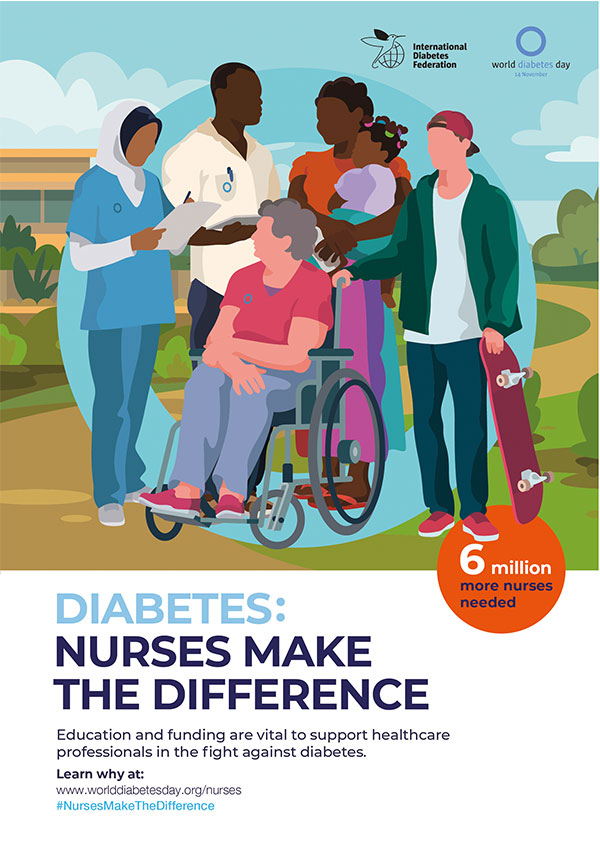
Every year, the World Diabetes Day campaign focuses on a dedicated theme that runs for one or more years. The theme for World Diabetes Day 2020 is The Nurse and Diabetes. This year’s campaign aims to raise awareness around the crucial role that nurses play in supporting people living with diabetes.

Nurses currently account for over half of the global health workforce. They do outstanding work to support people living with a wide range of health concerns. People who either live with diabetes or are at risk of developing the condition need their support too. People living with diabetes face a number of challenges, and education is vital to equip nurses with the skills to support them. As the number of people with diabetes continues to rise across the world, the role of nurses and other health professional support staff becomes increasingly important in managing the impact of the condition. Healthcare providers and governments must recognise the importance of investing in education and training. With the right expertise, nurses can make the difference for people affected by diabetes.

According to the World Health Organization, nurses account for 59% of health professionals and the global nursing workforce is 27.9 million, of which 19.3 million are professional nurses with a global shortage of nurses in 2018 being 5.9 million with 89% of that shortage concentrated in low and middle-income countries. The estimated number of nurses trained and employed needs to grow by 8% a year to overcome alarming shortfalls in the profession by 2030. WHO estimates that the total investment required to achieve the targets outlined in the Social Development Goals by 2030 stand at 3.9 trillion USD – 40% of which should be dedicated to remunerating the health workforce.

As highly valued members of the community, nurses do outstanding work to support people living with a wide range of health concerns. People who either live with diabetes or are at risk of developing the condition need their support too. People living with diabetes face a number of challenges, and education is vital to equip nurses with the skills to support them. The IDF wants to facilitate opportunities for nurses to learn more about the condition and receive training so that they can make a difference for people with diabetes. As the number of people with diabetes continues to rise across the world, the role of nurses and other health professional support staff is becoming increasingly important in managing the impact of the condition. Nurses are often the first and sometimes only health professional that a person interacts with and so the quality of their initial assessment, care and treatment is vital. Nurses play a key role in diagnosing diabetes early to ensure prompt treatment, providing self-management training and psychological support for people with diabetes to help prevent complications and tackling the risk factors for type 2 diabetes to help prevent the condition. Healthcare providers and governments must therefore recognise the importance of investing in education and training. With the right expertise, nurses can make the difference for people affected by diabetes.

In my last year’s post on this day, I have written extensively about the types of diabetes, so read more there.

International Day of the Girl Child

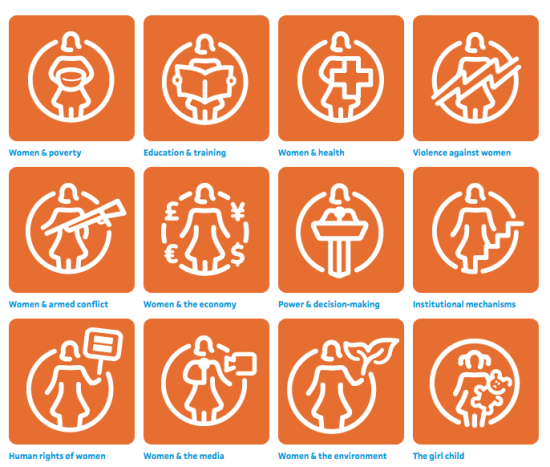
Also called the Day of Girls and the the International Day of the Girl, the International Day of the Girl Child was first declared by the United Nations on 11 October 2012 to increase awareness of the gender inequality faced by girls worldwide and support more opportunity for girls. The inequality faced by girls include areas such as access to education, nutrition, legal rights, medical care, and protection from discrimination, violence against women and forced child marriage. The celebration of the day also reflects the successful emergence of girls and young women as a distinct cohort in development policy, programming, campaigning and research.

In 1995, before the girls of today were even born,the fourth World Conference on Women made history for the women’s rights agenda with the adoption of the Beijing Declaration and Platform for Action was adopted, the most visionary blueprint for the empowerment of women and girls. The Beijing Declaration and Platform for Action is the most progressive blueprint ever for advancing the rights of not only women but girls. Now, about half a century later, the Platform for Action remains a powerful foundation for assessing progress on gender equality. It calls for a world where every girl and woman can realize all her rights, such as to live free from violence, to attend and complete school, to choose when and whom she marries, and to earn equal pay for equal work. The Platform for Action specifically calls on the global community to eliminate all forms of discrimination against girls; eliminate negative cultural attitudes and practices against girls; promote and protect the rights of girls and increase awareness of their needs and potential; eliminate discrimination against girls in education, skills development and training; eliminate discrimination against girls in health and nutrition; eliminate the economic exploitation of child labour and protect young girls at work; eradicate violence against girls; promote girls’ awareness of and participation in social, economic and political life and strengthen the role of the family in improving the status of girls. 

The International Day of the Girl increases awareness of issues faced by girls around the world. Many of the global development plans do not include or consider girls, and their issues have become “invisible.” More than 62 million girls around the world had no access to education, as of 2014, according to USAID. Worldwide and collectively, girls ages 5 to 14 spend more than 160 million hours more on household chores than boys of the same age do. Globally, one in four girls are married before the age of 18. Each year, 12 million girls under 18 are married; 130 million girls worldwide are still out of school; and approximately 15 million adolescent girls aged 15-19 have experience forced sex. The International Day of the Girl Child helps to raise awareness not only of the issues that girls face, but also of what is likely to happen when these problems are solved. For example, educating girls helps reduce the rate of child marriage, disease and helps strengthen the economy by helping girls have access to higher paying jobs.

This day began as a project of Plan International, a non-governmental organisation that operates worldwide through their “Because I Am a Girl” campaign, which raised awareness on the importance of nurturing girls globally and in developing countries in particular. Awareness for the initiative grew internationally and soon the United Nations got involved in this campaign which finally became the International Day of the Girl Child with the inaugural day on October 11, 2012.

The resolution states that the Day of Girls recognises the empowerment of and investment in girls, which are critical for economic growth, the achievement of all Millennium Development Goals, including the eradication of poverty and extreme poverty, as well as the meaningful participation of girls in decisions that affect them, are key in breaking the cycle of discrimination and violence and in promoting and protecting the full and effective enjoyment of their human rights, and recognizing also that empowering girls requires their active participation in decision-making processes and the active support and engagement of their parents, legal guardians, families and care providers, as well as boys and men and the wider community.

Each year’s Day of Girls has a theme; the theme for this year’s celebrations is “My voice, our equal future” where girls, especially adolescent girls will focus their their demands to live free from gender-based violence, harmful practices, and HIV and AIDS; learn new skills towards the futures they choose and lead as a generation of activists accelerating social change

If you want to get involved in the International Day of the Girl Child, you can do so by sharing stories of inspiring adolescent girls or girl-led organisations who are developing innovative solutions or leading efforts towards positive social change, including gender equality, in their communities and nations. Let’s amplify their leadership, actions and impact to inspire others. You can also participate in a youth-led digital activation which will be launched on the 11th. This will be led by young people across the world who are developing a digital activism campaign, aiming to raise the diversity of girls’ voices and their vision for a reimagined future.

World Mental Health Day

Mental health is essential to our overall well-being and as important as physical health. When we feel mentally well, we can work productively, enjoy our free time, and contribute actively to our communities. Tomorrow is commemorated as World Mental Health Day to put a spotlight on what mental illness is and how it can affect large portions of society.

Today, more than ever before mental health has come front and centre of people’s conscious. Because of the pandemic that’s hit our world, there are many, due to various reasons, who have reached the end of their teather, mentally and physically. Physical symptoms are very visible and treatable, but what about mental symptoms? Mental illnesses are the silent killers of our century and is one of the most neglected areas of public health.

Close to 1 billion people are living with a mental disorder, 3 million people die every year from the harmful use of alcohol and one person dies every 40 seconds by suicide. And now, billions of people around the world have been affected by the COVID-19 pandemic, which is having a further impact on people’s mental health. Yet, relatively few people around the world have access to quality mental health services. In low- and middle-income countries, more than 75% of people with mental, neurological and substance use disorders receive no treatment for their condition at all. Furthermore, stigma, discrimination, punitive legislation and human rights abuses are still widespread.

The limited access to quality, affordable mental health care in the world before the pandemic, and particularly in humanitarian emergencies and conflict settings, has been further diminished due to COVID-19 as the pandemic has disrupted health services around the world. Primary causes have been infection and the risk of infection in long-stay facilities such as care homes and psychiatric institutions; barriers to meeting people face-to-face; mental health staff being infected with the virus; and the closing of mental health facilities to convert them into care facilities for people with COVID-19. The current worldwide pandemic arose against an already dire mental health landscape that saw mental health conditions on the rise across the globe. About 450 million people live with mental disorders that are among the leading causes of ill-health and disability worldwide according to the WHO World Health Report of 2001. One person in every four will be affected by a mental disorder at some stage of their lives while mental, neurological and substance use disorders exact a high toll on health outcomes, accounting for 13% of the total global burden of disease according to a WHO report from 2012. The World Health Organization in 2018 stated that every 40 seconds someone dies by suicide. Annually, this represents over 800 000 people that die by suicide, which is more than people dying by war and homicide put together. For every suicide, there are many more people who attempt suicide every year. A prior suicide attempt is the single most important risk factor for suicide in the general population. Suicide is the second leading cause of death among 15 to 29-year-olds while 79% of global suicides occur in low- and middle-income countries. Every suicide is a tragedy that affects families, communities and entire countries and has long-lasting and devastating effects on the people left behind.

The World Economic Forum in 2018 noted that mental health disorders are on the rise in every country in the world and could cost the global economy up to $16 trillion between 2010 and 2030 if a collective failure to respond is not addressed. We are faced with an international mental health crisis and have been forewarned over the past two decades of this imminent catastrophe. This has been compounded by the need for psychosocial support and mental health interventions during this trying time. This bleak picture necessitates that we ensure that mental health is prioritised now more than ever before.

So this year’s World Mental Health Day’s message is a call for the world to come together and begin to readdress this inequality in the treatment of mental health. According to the World Health Organisation, unless the world makes a serious commitment to scale up investments in mental health now, the health, social and economic consequences will be far-reaching.

Countries are estimated to spend, on an average, only around 2% of their total healthcare budgets on mental health and  international development assistance for mental health has never exceeded 1% of all development assistance for health. This is despite the fact that for every US$ 1 invested in scaled-up treatment for common mental disorders such as depression and anxiety, there is a return of US$ 5 in improved health and productivity.

Because of the global pandemic, this year’s World Mental Health Day event will be online and the WHO will host a global online advocacy event on mental health. You can click on WHO’s social media pages to follow the event.

If you or someone you know are stressed and need resources to keep mentally healthy and reduce stress, here’s a link where you can find many resources to help you. In cases of mental distress, the first step is to talk to someone you trust. If you feel you need it, seek help from a professional.

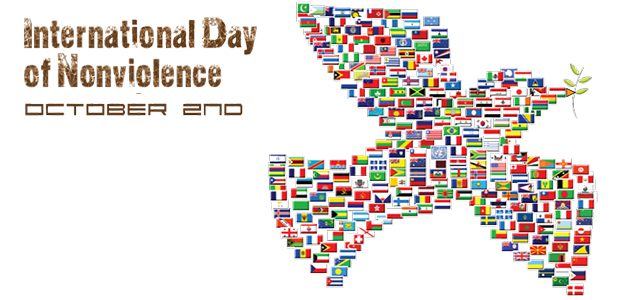
International Day of Non Violence

Source

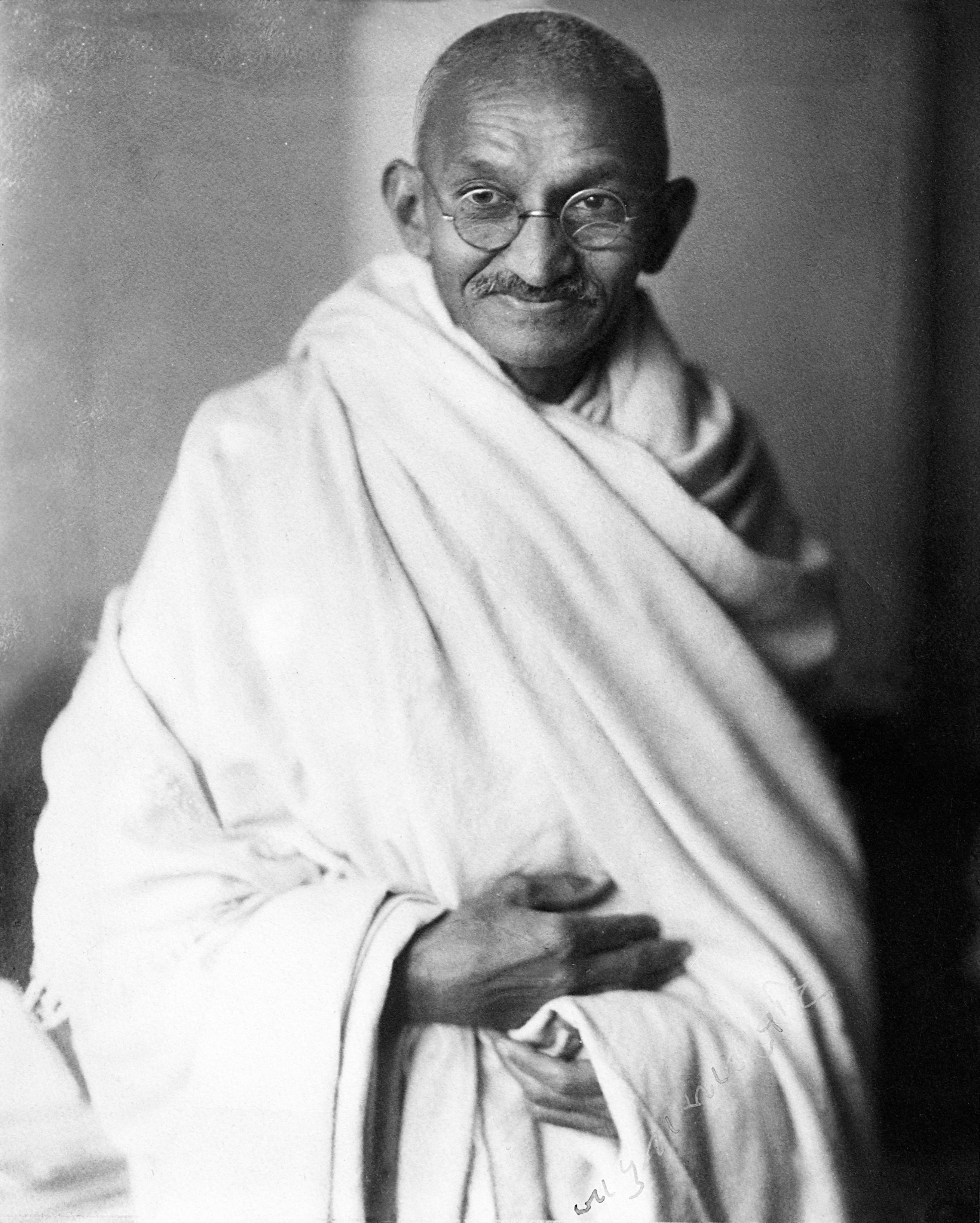
In honour of the man who probably showed the world what non violence can achieve, 02 October, the birth anniversary of Mohandas Karamchand Gandhi, who led the non violent uprising leading to India’s independence, has been declared the International Day of Non Violence by the United Nations on 15 June 2007.

According to the resolution which established the commemoration, the International Day is an occasion to “disseminate the message of non-violence, including through education and public awareness”. The resolution reaffirms “the universal relevance of the principle of non-violence” and the desire “to secure a culture of peace, tolerance, understanding and non-violence”.

The principle of non-violence, also known as non-violent resistance, rejects the use of physical violence in order to achieve social or political change. Often described as “the politics of ordinary people”, this form of social struggle has been adopted by mass populations all over the world in campaigns for social justice.

Professor Gene Sharp, a leading scholar on non-violent resistance, uses the following definition in his publication, The Politics of Nonviolent Action: “Nonviolent action is a technique by which people who reject passivity and submission, and who see struggle as essential, can wage their conflict without violence. Nonviolent action is not an attempt to avoid or ignore conflict. It is one response to the problem of how to act effectively in politics, especially how to wield powers effectively.”

While non-violence is frequently used as a synonym for pacifism, since the mid-twentieth century the term non-violence has been adopted by many movements for social change which do not focus on opposition to war.

One key tenet of the theory of non-violence is that the power of rulers depends on the consent of the population, and non-violence therefore seeks to undermine such power through withdrawal of the consent and cooperation of the populace.

There are three main categories of non-violence action: protest and persuasion, including marches and vigils; non-cooperation; and non-violent intervention, such as blockades and occupations.

Why is such a day important for us to commemorate? Days like these raise awareness because the term, “non-violence,” has been used so often in the last century that its meaning has taken on new forms. Often believed to be a synonym for pacifism, which it can be, it’s also been adopted by groups around the world to be a force for social change, rather than strictly opposition to war. Non-violence is a proven method for social change because the term “Non-violence” is a broad umbrella term under which there are several categories. Non-violent actions include protests, marches and vigils, which were successfully employed in the 1960s to bring about social changes in America. Non-cooperation and non-violent intervention, such as blockades and sit-ins, were also successfully used in America to demonstrate further inequalities. All of these efforts led to the peaceful spread of ideas. And lastly world over there are plenty of conflicts to solve as globalisation has given us a more productive global economy but it’s also led to more complex issues that need solving. To help keep these problems from escalating to violence, spreading the ideas and success stories of nonviolence will be crucial.

Mohandas Karamchand Gandhi, known in India as Mahatma Gandhi and the Father of the Nation was a was a lawyer, an anti-colonial nationalist, and political ethicist, who employed nonviolent resistance to lead the successful campaign for India’s independence from British rule, and in turn inspired movements for civil rights and freedom across the world. The honorific Mahatma which in Sanskrit means a great soul, first applied to him in 1914 in South Africa, is now used throughout the world.

Born and raised in a Hindu family in coastal Gujarat, western India, Gandhi trained in law at the Inner Temple, London, and was called to the bar at age 22 in June 1891. After two uncertain years in India, where he was unable to start a successful law practice, he moved to South Africa in 1893 to represent an Indian merchant in a lawsuit. He went on to stay for 21 years. It was in South Africa that Gandhi raised a family, and first employed nonviolent resistance in a campaign for civil rights. In 1915, aged 45, he returned to India. He set about organising peasants, farmers, and urban labourers to protest against excessive land-tax and discrimination. Assuming leadership of the Indian National Congress in 1921, Gandhi led nationwide campaigns for easing poverty, expanding women’s rights, building religious and ethnic amity, ending untouchability, and above all for achieving Swaraj or self-rule. The same year Gandhi adopted the Indian loincloth, or short dhoti and, in the winter, a shawl, both woven with yarn hand-spun on a traditional Indian spinning wheel, or charkha, as a mark of identification with India’s rural poor. Thereafter, he lived modestly in a self-sufficient residential community, ate simple vegetarian food, and undertook long fasts as a means of self-purification and political protest. Bringing anti-colonial nationalism to the common Indians, Gandhi led them in challenging the British-imposed salt tax with the 400 km Dandi Salt March in 1930, and later in calling for the British to Quit India in 1942. He was imprisoned for many years, upon many occasions, in both South Africa and India.

After independence as many displaced Hindus, Muslims, and Sikhs made their way to their new lands, religious violence broke out, especially in the Punjab and Bengal. Eschewing the official celebration of independence in Delhi, Gandhi visited the affected areas, attempting to provide solace. In the months following, he undertook several fasts unto death to stop religious violence. The last of these, undertaken on 12 January 1948 when he was 78, also had the indirect goal of pressuring India to pay out some cash assets owed to Pakistan. Some Indians thought Gandhi was too accommodating. Among them was Nathuram Godse, a Hindu nationalist, who assassinated Gandhi on 30 January 1948 by firing three bullets into his chest.

In fact, in India, his birth anniversary which falls on 02 October is one of the three mandated national holidays in India. In a country with a multi religious population, public holidays which are usually holidays for festivals are mandated mostly by the state government and at work, a lot is left to individual companies to decide on holidays based on their workforce. Gandhi Jayanti, as his birth anniversary is called, is one of mandated holiday, irrespective of what other holiday you get, along with Independence Day on 15 August and Republic Day on 26 January.

I, for one, believe violence is over-rated. While I don’t want to get into any arguments, I personally believe that the money spent on shoring up their military, sometimes up to almost 10-15% of their GDP (depending on which report you want to use) could be used for the betterment of their citizens by providing more aid to the more vulnerable portions of their society, providing those without access to food, education and healthcare to what they lack and so much more. But this is an argument or a blog post for another day.