International Equal Pay Day

Today is the International Equal Pay Day. World over, irrespective of where women work, they always earn less than a man in the same position. This is something I have always rallied about why a man should earn more than a woman when both are doing what is essentially the same thing.

Across all regions, women are paid less than men, with the gender pay gap estimated at 23 per cent globally. Gender equality and the empowerment of women and girls continues to be held back owing to the persistence of historical and structural unequal power relations between women and men, poverty and inequalities and disadvantages in access to resources and opportunities that limit women’s and girls’ capabilities. Progress on narrowing that gap has been slow. Women earn 77 cents for every dollar men earn for work of equal value – with an even wider wage gap for women with children. At the current rate of progress, the World Economic Forum predicts that it will take another 217 years before the gender pay gap finally closes. While equal pay for men and women has been widely endorsed, applying it in practice has been difficult. Women are concentrated in lower-paid, lower-skill work with greater job insecurity and under-represented in decision-making roles and women carry out at least two and a half times more unpaid household and care work than men.

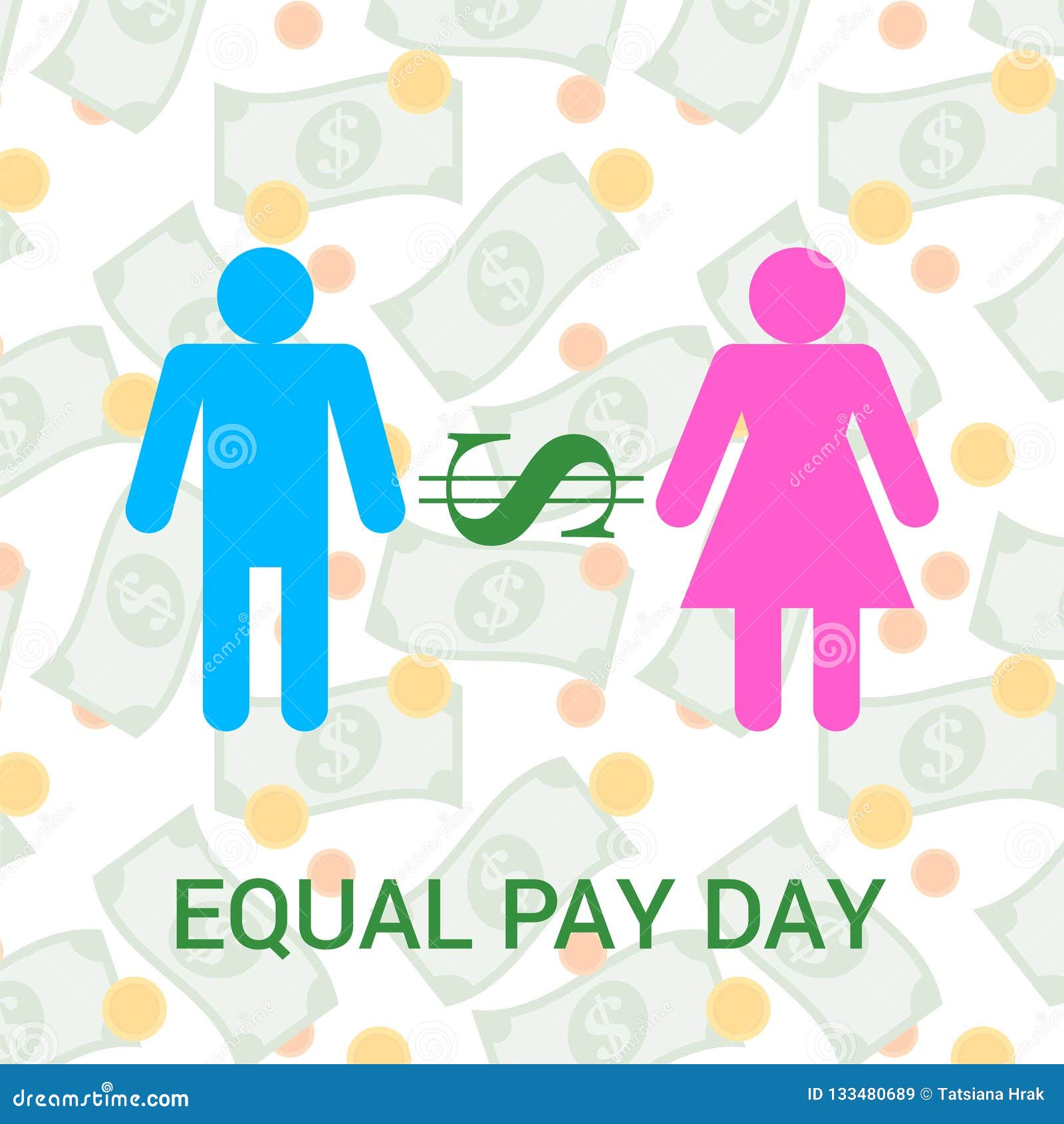
Recognising this to be something the world needs to take note of, this year for the first time, the United Nations has declared today, that is September 18 to be the International Equal Pay Day.

This day calls attention to the severe gender pay gap and the reasons for this gap are manifold and intertwined. The major causes of a pay gap between men and women include factors like women’s work being undervalued, the lack of women in certain sectors like perhaps construction and STEM subject fields, women still face a glass ceiling when moving up the career ladder, women working part-time more often than men, women interrupting their careers more frequently due to family-related breaks, and of course the widespread prevelance of gender stereotypes. Cultural bias, societal assumptions and a lack of progress in workplace design all contribute to the gender pay gap.

So why does this pay gap exist between the genders?

There are many reasons for this. At the heart of which is the assumption that senior roles can’t be done by women who can’t spend a lot of time at work which women who have to work at home too can’t do. And women who are in senior positions have not had the gender pay gap reduced in over almost half a century. But today with the world working from home and showing it can be done and effectively too lets us know that women can manage a home and a senior position, so that’s one excuse which can be thrown away.

Another reason for this pay gap could be attributed to the maternity leave that women of certain years take. Though it is illegal to ask this question in many countries, there are many Asian countries in which hiring managers do and will ask women who are in their twenties and thirties this question and not only does this discriminate hiring practices, it also enables hiring managers to offer women a lower starting pay as compared to a man with the same qualifications and career trajectory. Unfortunately, even if women try to return to work after having a child, they often face what is known as the “motherhood penalty”. As most workplaces still don’t offer much flexibility for mothers, they are often forced to take on lower-paying and less demanding jobs. However, even if they are able to find a job that suits them, mothers are much less likely to get an interview compared to fathers and childless women. What’s more, while women are penalised for having children, men are rewarded, with research from the University of Massachusetts finding fathers are more likely to be hired than childless men and tend to be paid more.

The third reason is that there is perceived wisdom that women choose low-paid occupations like that of teachers and nurses because they offer more flexibility, or are more family-friendly. Again, the perception that it is a choice to prioritise children over paid work, rather than being due to a lack of viable alternatives, positions the gender pay gap as a fact of life, and releases employers from responsibility for changing it.

Another reason is that although a study by Harvard Business Review found that women actually rank more highly than men in 12 out of the top 16 leadership qualities – including problem solving, communication skills and innovativeness – women are consistently overlooked by employers, who still tend to view men as being more competent.

And not only are women being short-changed when it comes to hiring decisions and negotiating salaries – we’re also receiving less in performance bonuses. An Australian study by Mercer found that men were receiving up to 35 per cent more in performance bonuses than women, despite receiving the same performance rating.

In some more developed countries like South Korea the gap is as much as 33% while other developed countries don’t fare well either with countries like Germany has a 22% income gap and the United Kingdom has 20%, Switzerland has 17%. On the other hand, less developed countries seem to have lower gender income gaps, with countries like Pakistan and Vietnam having a gap of almost 11%, Colombia with a gap of 0.3% and countries in southeast Asia like Thailand and Malaysia having a negative gap, meaning here women tend to earn more than men with women earning more than men by about 2.25% in Malaysia and 21.5% in Thailand.

So what can be done to bridge this income and pay gap between men and women? Economists say one thing hiring managers could do is share salary information during the hiring itself and not make sharing of your pay an unwritten offence in a organisation. The more information that is available, the easier it will be able to know what a man gets for the same role and women can be in a better position to negotiate salaries.

When both parents share in the household chores, it makes it easier for mums to be able to spend more time at work and is able to climb the career ladder. So if the mother is the one who is always called by school and child care about her child and is expected to drop everything to get there, then her career is bound to suffer. When both parents are equally responsible, then both will have a career trajectory. This is something cultural and will take some time before men step up, though many men are staunch defenders of a woman’s right to a successful career.

Women should be encouraged to work in occupations which are not traditionally female-centric like nursing and teaching. Yes, today more and more women are joining occupations not traditionally female, but there is still work to be done for more representation in sectors like construction and STEM related fields. I also believe that women should seek out and search for mentors in their fields of study and work who can guide them so they can achieve the success they deserve.

Source: United Nations

This gender pay gap is something all of us, women and men have to work on to ensure that our children and grandchildren get paid fairly for the work they do. Nobody should be penalised just because of their gender and everyone should have access to equal pay for the work they do. Let’s all work together for this!


International Day of Friendship

As an old saying goes, friends are the family we choose. The role of a friend in someone’s life is great and to a large extent, many of our decisions are determined by what our friends say and do.

Friendship are as important to our wellbeing as eating right and exercising and they also help us grow through each year of our lives. The basic components of any relationship, from our marriage to our coworkers, are all founded in friendship. We learn how to interact with people because of our friends, even the ones that are opposite from us or share a different worldview.

One of the most overlooked benefits of friendship is that it helps keep our minds and bodies strong. In fact, it’s as important to our physical health as eating well and keeping fit. A recent Harvard study concluded that having solid friendships in our life even helps promote brain health. Friends helps us deal with stress, make better lifestyle choices that keep us strong, and allow us to rebound from health issues and disease more quickly. Friendship is equally important to our mental health. One study even suggested spending time with positive friends actually changes our outlook for the better.

Friends don’t completely cure loneliness, but they do help us during lonely times. They teach us how to accept kindness and also to reach out when we need help. Having a steady stream of friends lets us know that some friendships won’t last forever but each one brings something special. We learn more about ourselves and how important it is to have someone, who knows and understands you. A good friend can change our value system so we learn to inject more meaning into our lives. In spending time with friends, we fill up our lives with great conversation, heartfelt caring and support, and laugh out loud fun. When we fall on hard times, friends are there to put things in perspective and help us. When we have success, they’re smiling at our good fortune. We don’t just live when we have healthy friendships, we thrive.

The original idea for a day of friendship came from Hallmark cards in the 1930’s. Originally celebrated on 2nd August, the day was largely viewed cynically by the public as a money making exercise, sales of friendship day cards did not take off in Europe and by the mid-1940’s the day had faded into obscurity in the USA. The idea of a day to honour friendship was, however, adopted by a number of countries in Asia where it remained a popular custom to reserve a day for celebrating friendships and the exchange of gifts between friends.

The first World Friendship Day was proposed for 30 July 1958 by the World Friendship Crusade, an international civil organisation that campaigns to foster a culture of peace through friendship. Many years later, in 2011, the 30th July was declared as the International Day of Friendship by the General Assembly of United Nations.

Source

Because friends are so important in our lives, in 1997, the UN General Assembly made a proposal to make 30 July the International Day of Friendship, which defined the culture of peace as a set of values, attitudes and behaviours that reject violence and endeavour to prevent conflicts by addressing their root causes with a view to solving problems. Recognising that enormous harm and suffering are caused to children through different forms of violence, the UN General Assembly emphasised that the promotion of a culture of peace and non-violence should be instilled in children through education. If children learn to live together in peace and harmony, as friends, that will contribute to the strengthening of international peace and cooperation.

The International Day of Friendship is also based on the recognition of the relevance and importance of friendship as a noble and valuable sentiment in the lives of human beings around the world. The day was proclaimed in 2011 by General Assembly with the idea that friendship between peoples, countries, cultures and individuals can inspire peace efforts and build bridges between communities.

The day places particular emphasis in involving young people, as future leaders, in community activities that include different cultures and promote international understanding and respect for diversity. It is also intended to support the goals and objectives of the Declaration and Programme of Action on a Culture of Peace and the International Decade for a Culture of Peace and Non-Violence for the Children of the World which was supposed to be between 2001 and 2010.

With the growing popularity of social media throughout the world, there has been an increase in celebrating World Friendship day and International Day of Friendship online as well as with community activities in local communities aimed at bringing those of different backgrounds together. How can you, as an individual mark this day? Reach out to a close friend either via telephone or using video to check on them and spend some qulity time together. Because of worldwide lockdowns, you may be unable to meet them physically, but today technology has ensured that distances are now not an issue anymore.

World Youth Skills Day

Our youth make up a bulk of the world’s population today with many countries and continents having a younger population as compared to an ageing one. Today, there are about 1.2 billion young people aged 15 to 24 years, who account for 18 per cent of the global population.

Rising youth unemployment is one of the most significant problems facing economies and societies in today’s world, for developed and developing countries alike. At least 475 million new jobs need to be created over the next decade to absorb the 73 million youth currently unemployed and the 40 million new annual entrants to the labour market. At the same time, OECD surveys suggest that both employers and youth consider that many graduates are ill-prepared for the world of work.

Attaining decent work is a significant challenge. In many countries, the informal sector and traditional rural sector remains a major source of employment. The number of workers in vulnerable employment currently stands at 1.44 billion worldwide. Workers in Sub-Saharan Africa and South Asia account for more than half this number, with three out of four workers in these regions subject to vulnerable employment conditions.

In November 2014, the United Nations, at its General Assembly, declared 15 July as World Youth Skills Day or WYSD. The aim of WYSD is to recognize the strategic importance of equipping young people with skills for employment, decent work and entrepreneurship, and to highlight the crucial role of skilled youth in addressing current and future global challenges. Today’s WYSD takes places in a very challenging world. The COVID-19 pandemic and lockdown measures have led to the worldwide closure of technical and vocational education and training or TVET institutions, threatening the continuity of skills development. UNESCO currently estimates that nearly 70% of the world’s learners are affected by school closures across education levels. Respondents to a survey of TVET institutions, jointly collected by UNESCO, the International Labour Organization (ILO) and the World Bank, reported that distance training has become the most common way of imparting skills, with considerable difficulties regarding, among others, curricula adaptation, trainee and trainer preparedness, connectivity, or assessment and certification processes.

Even before the current panademic, young people were almost three times more likely to be unemployed than adults and continuously exposed to lower quality of jobs, greater labor market inequalities, and longer and more insecure school-to-work transitions. In addition, women are more likely to be underemployed and under-paid, and to undertake part-time jobs or work under temporary contracts.

The international community has set an ambitious 2030 Agenda for Sustainable Development which calls for an integrated approach to development which recognises that eradicating poverty in all its forms and dimensions; combating inequality within and among countries; preserving the planet; creating inclusive and sustainable economic growth; achieving full and productive employment and decent work for all women and men; and ensuring full gender equality and fostering social inclusion, are interdependent.

Education and training are central to the achievement of the 2030 Agenda. The vision of the Incheon Declaration: Education 2030 is fully captured by Sustainable Development Goal 4 which says, “Ensure inclusive and equitable quality education and promote lifelong learning opportunities for all”. Education 2030 devotes considerable attention to technical and vocational skills development, specifically regarding access to affordable quality Technical and Vocational Education and Training (TVET); the acquisition of technical and vocational skills for employment, decent work and entrepreneurship; the elimination of gender disparity and ensuring access for the vulnerable. In this context, TVET is expected to address the multiple demands of an economic, social and environmental nature by helping youth and adults develop the skills they need for employment, decent work and entrepreneurship, promoting equitable, inclusive and sustainable economic growth, and supporting transitions to green economies and environmental sustainability.

TVET can equip youth with the skills required to access the world of work, including skills for self-employment. TVET can also improve responsiveness to changing skill-demands by companies and communities, increase productivity and increase wage levels. TVET can reduce access barriers to the world of work, for example through work-based learning, and ensuring that skills gained are recognised and certified. TVET can also offer skills development opportunities for low-skilled people who are under- or unemployed, out of school youth and individuals not in education, employment and training (NEETs).

The active engagement of youth in sustainable development efforts is central to achieving sustainable, inclusive and stable societies by the target date, and to averting the worst threats and challenges to sustainable development, including the impacts of climate change, unemployment, poverty, gender inequality, conflict, and migration.

The theme of the 2020 World Youth Skills Day is ‘Learning to Learn for Life and Work’ because, in an ever-evolving world, today’s young people will need to learn new skills throughout their lifetime. Some estimates suggest 85 per cent of jobs that will exist in 2030 haven’t been invented yet, meaning the single most important skill a young person can have is knowing how to acquire new skills.

Today, nurture the skills your child has, make them curious and eager to learn. It is only when they become a lifelong learner, will they learn the skills to learn new skills. Many of the skills needed to do a job or profession in the next decade are not yet invented today, so making a child a curious and eager learner is the best skill you can impart to them, one that will stand in good stead their whole life!

World Blood Donor Day

Blood is what regulates the human body and without blood in our systems, we will not be able to live and breathe. It is thicker than water, and feels a bit sticky. The temperature of blood in the body is 38° C, which is about one degree higher than body temperature. Blood has three important functions:Blood plays an important role in regulating the body’s systems as well as supplying oxygen and nutrients to tissues, removing waste, transporting hormones and other signals throughout the body. Composed of plasma, red blood cells, white blood cells and platelets, the main function of blood is to regulate the pH of the body and the core body temperature. The amount of blood a person has in his body depends mostly on his size and weight.

Blood is an important resource, both for planned treatments and urgent interventions. It can help patients suffering from life-threatening conditions live longer and with a higher quality of life, and supports complex medical and surgical procedures. Blood is also vital for treating the wounded during emergencies of all kinds (natural disasters, accidents, armed conflicts, etc.) and has an essential, life-saving role in maternal and perinatal care.

There’s no end to the benefits of donating blood for those who need it. Blood is needed to save lives in times of emergencies and to sustain the lives of those with medical conditions, like leukemia, thalassaemia and bleeding disorders, as well as patients who are undergoing major surgeries. For many patients, blood donors are their lifeline. One unit of blood can save three lives!

It turns out that donating blood doesn’t just benefit recipients. There are health benefits for donors, too, on top of the benefits that come from helping others. Donating blood has benefits for your emotional and physical health. According to a report by the Mental Health Foundation, helping others can reduce stress, improve your emotional well-being, benefit your physical health, help get rid of negative feelings as well as provide a sense of belonging and reduce isolation.

For those who have a rare blood group, it is all the more important they donate blood. I am one of those individuals. My blood group is B-ve and I am the only person in my family to have this blood group. In fact, I was so convinced that the result was wrong the first time I did the test to determine thhe blood type, that I did multiple tests to confirm the fact that my group was so different from the rest of my family. B negative is one of the rarest blood groups with around 3-4% of the population having this group. S and the children are O positive and because of this, I had to take multiple injections when I was pregnant so that my body does not reject the children’s positive blood group. I used to donate blood and also had a card from the local Red Cross which stated my blood group and to not do any transfusion if I needed it unless the check the blood which will be transferred into my body, but I lost it when my wallet got nicked some years back. These days, even though I want to, because of my diabetes, I am unable to donate blood. S on the other hand, is an enthusiastic donor and donates multiple times a year.

Yesterday was World Blood Donor Day. The event serves to raise awareness of the need for safe blood and blood products and to thank blood donors for their life-saving gifts of blood.

A blood service that gives patients access to safe blood and blood products in sufficient quantity is a key component of an effective health system. Ensuring safe and sufficient blood supplies requires the development of a nationally coordinated blood transfusion service based on voluntary non-remunerated blood donations. However, in many countries, blood services face the challenge of making sufficient blood available, while also ensuring its quality and safety.

The need for safe blood is universal. Safe blood is critical both for treatments and urgent interventions. It can help patients suffering from life-threatening conditions live longer and with a higher quality of life and supports complex medical and surgical procedures. Blood is also vital for treating the wounded during emergencies of all kinds (natural disasters, accidents, armed conflicts, etc.) and has an essential, life-saving role in maternal and neonatal care.

But access to safe blood is still a privilege of the few. Most low- and middle-income countries struggle to make safe blood available because donations are low and equipment to test blood is scarce. Globally, 42% of blood is collected in high-income countries, which are home to only 16% of the world’s population.

An adequate supply of safe blood can only be assured through regular donations by voluntary unpaid blood donors. This is why the World Health Assembly in 2005 designated a special day to thank blood donors and encourage more people to give blood freely. World Blood Donor Day takes place every year on 14 June. As well as thanking blood donors, it is a day to raise awareness about the global need for safe blood and how everyone can contribute.

The campaign theme for this year’s World Blood Donor Day is “Safe blood saves lives” with the slogan “Give blood and make the world a healthier place”. The idea is to focus on the contribution an individual giver can make to improve health for others in the community. Blood donations are needed all over the world to ensure individuals and communities have access to safe and quality-assured blood and blood products in both normal and emergency situations. Through the campaign, we call on more people all over the world to become life-savers by volunteering to donate blood regularly.

The objectives of this year’s campaign are to celebrate and thank individuals who donate blood and encourage more people to start donating; to raise wider awareness of the urgent need to increase the availability of safe blood for use wherever and whenever it is needed to save life; to demonstrate the need for universal access to safe blood transfusion and provide advocacy on its role in the provision of effective health care and in achieving universal health coverage; and to mobilise support at national, regional and global levels among governments and development partners to invest in, strengthen and sustain national blood programmes.

The day and the theme are also a call to action for governments, national health authorities and national blood transfusion services to provide adequate resources and put in place systems and infrastructures to increase the collection of blood from voluntary, non-remunerated blood donors; to provide quality donor care; to promote and implement appropriate clinical use of blood; and to set up systems for the oversight and surveillance on the whole chain of blood transfusion.

Are you a blood donor, if yes, here’s a huge shoutout to you and if no, please consider giving some blood to someone who needs it, if you are physically able to.

Global Day of Parents

sarvatIrthamayI maataa sarvadevamayaH pitaa
maataraM pitaraM tasmaat sarvayatnena pUjayet

Mother is (the embodiment) of all pilgrimages, father is (the embodiment) of all deities. Hence, mother and father are to be revered with all efforts.

Old Sanskrit Shloka

Parents are the bedrock of society. Without parents to nurture a child, physically, mentally, spiritually, socially and psychologically, we may well have been living in isolation! They say a parent a born along with the child and so the importance of a parent in the child’s life, especially in the early years can’t be emphasised enough.

Being a parent is the most important job in the world. The first 1,000 days of life is a once-in-a-lifetime opportunity to build a baby’s brain and shape a child’s ability to learn and grow. Parents want to give their children the best they can. Yet, many have no choice but to work long hours, often away from home, to support their families. Parents need time to give their child the best start in life. Parenting is probably one of the most fulfilling, if not the most demanding job we will ever have! The responsibility to care for another tiny human being who depends on you and your partner for their very survival is immense, but it is something we humans do so quite instinctively. After all, the urge to procreate is in our DNA, though there are exceptions to the rule.

A parent is a child’s first hero. A girl’s first love is her father and when she looks for partners as she grows up, she will look for a man like her father if she has been brought up in a loving environment and the opposite of her father if her father had been abusive growing up. Likewise, for a boy, his mother is the first woman in his life. He will probably look for a woman like her when he is looking to get into a relationship and will most likely compare women he meets with his mother. Again, a loving mother will inspire him to look for similar qualities in his partner and an abusive and non-maternal mother figure will make him look for someone with the exact opposite qualities.

Parents nurture their children throughout their lives, guiding them, sometimes invisibly. They play multiple roles in their children’s lives – as teachers, as coaches, as psychologists, as friends and as parents.

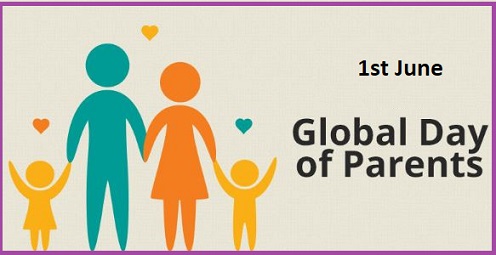
Because parents such a huge role in everybody’s lives the United Nations decided to observe June 1, that today as the Global Day of Parents. This day was proclaimed in 2012 and honours parents throughout the world. The Global Day provides an opportunity to appreciate all parents in all parts of the world for their selfless commitment to children and their lifelong sacrifice towards nurturing this relationship.

Emphasising the critical role of parents in the rearing of children, the Global Day of Parents recognises also that the family has the primary responsibility for the nurturing and protection of children. For the full and harmonious development of their personality, children should grow up in a family environment and in an atmosphere of happiness, love and understanding.

The central goals of the 2030 Agenda for Sustainable Development adopted by the world leaders in 2015, focus on ending poverty, promoting shared economic prosperity, social development and people’s well-being while protecting the environment. Families remain at the centre of social life ensuring the well-being of their members, educating and socializing children and youth and caring for young and old.

In particular, family-oriented policies can contribute to the achievement of Sustainable Development Goals 1 to 5 relating to doing away with poverty and hunger; ensuring healthy lives and promoting of well-being for all ages; ensuring educational opportunities throughout the lifespan and achieving gender equality.

So why celebrate such a day? Days like this reminds us to respect others. As a child, you are taught to respect others, especially our elders, but I believe that you have to respect everyone, irrespective of the fact that they are older than you. Our parents have been with us through thick and thin and have been there for us in every stage of our life. A parental unit is not just a mother or a father, it is the two individuals who have brought you to life, so a day like this showcases the other parent who may not be taking an active interest in their child’s life, but on days like this, they can spend some time with their child or vice versa and learn from each other. Parenting is like playing a game of tag. It is hard going it alone and so when you are a parental unit, you have to recognise that both partners play an equal part in bringing up their children.

So take some time today to talk to your parentsm, your first teacher and nurturer and tell them how much you love them and appreciate all that they have gone through to bring you up to be the person you are today. And if you are a parent yourself, give yourself a pat on the back for a job well done!