Short Story: The Lonavala Getaway

The train screeched to a halt at Lonavala station, and Arjun practically bounced out of his seat. “Finally! Fresh air!” he declared dramatically, throwing his arms wide as if he could already breathe in the hill station’s crisp atmosphere through the train’s grimy windows.

Calm down, Mountain Man,” laughed Priya, adjusting her oversized sunglasses. “We haven’t even gotten off yet.”

Their group of six had been planning this weekend trip for months. There was Arjun, the eternal optimist and self-appointed trip organiser; Priya, sharp-tongued but fiercely loyal; Rohit, quiet and thoughtful, who’d been harboring feelings for Priya since their first year; Kavya, bubbly and Instagram-obsessed; Vikram, the skeptic who complained about everything but never missed a hangout; and Neha, practical and level-headed, often the voice of reason.

I still think we should have booked a proper hotel,” Vikram grumbled, hefting his designer backpack. “This Airbnb thing sounds sketchy.

It’s not sketchy, it’s authentic,” Arjun countered. “The listing said it’s a colonial-era bungalow with ‘old-world charm.’ How cool is that?”

Old-world charm usually means no Wi-Fi and questionable plumbing,” Vikram muttered.

Kavya, who had been frantically taking selfies since they’d entered the Western Ghats, looked up from her phone. “Guys, I’m getting no signal. Like, zero bars. How am I supposed to post our trip?”

That’s the point!” Arjun said. “Digital detox! Quality time! Bonding!”

I’m already feeling detoxed,” Neha said dryly. “Mainly of my will to live.”

After a bumpy auto-rickshaw ride through winding roads flanked by misty hills and cascading waterfalls, they arrived at their destination. The bungalow stood at the end of a narrow dirt path, surrounded by dense trees that seemed to lean in conspiratorially. It was exactly as advertised: a sprawling colonial structure with weathered white walls, green shutters, and a wraparound veranda that had seen better decades.

It looks like something out of a horror movie,” Rohit observed quietly.

Or a romantic period drama,” Priya added, and Rohit’s heart did a little skip.

Why not both?” Kavya said cheerfully, finally finding one tiny bar of signal and immediately snapping photos.

The caretaker, an elderly man named Raman uncle, greeted them with a mixture of warmth and what seemed like concern. He was lean and weathered, with kind eyes that seemed to hold secrets.

Welcome, welcome,” he said, jangling a large set of keys. “You are the college group, yes? From Mumbai?”

“That’s us!” Arjun beamed. “Ready for the best weekend ever!”

Raman uncle’s smile faltered slightly. “Ah, yes. Well, let me show you the house. There are just a few… guidelines.”

As he led them through the musty interior, pointing out the kitchen, bathrooms, and bedrooms, his tone grew more serious. “Please, do not go to the third floor. It is not safe, old floorboards, you understand. And after sunset, it is better to stay inside. The forest can be… confusing at night.”

“Confusing how?” Neha asked, her practical mind immediately catching the euphemism.

“Animals,” Raman uncle said quickly. “Leopards, sometimes. And the paths, they all look the same in the dark.”

Vikram shot Arjun a pointed look. “Leopards. Great choice, organiser.”

Leopards are scared of humans,” Arjun said dismissively. “And look at this place! It’s perfect!

After Raman uncle left, promising to return the next evening, the group settled in. They distributed themselves across the four bedrooms on the second floor, with Arjun and Vikram sharing one, Priya and Kavya sharing another, and Rohit and Neha taking the remaining two rooms.

The first evening passed pleasantly enough. They cooked a chaotic dinner together, with Priya demonstrating her surprising culinary skills. At the same time, Kavya documented every dish for her Instagram story (which she couldn’t post due to the poor signal, leading to much dramatic sighing). Rohit found excuses to help Priya in the kitchen, and she didn’t seem to mind, which gave him hope.

This is nice,” Vikram admitted grudgingly as they sat on the veranda after dinner, sharing bottles of beer they’d brought from Mumbai. “Peaceful.

See? I told you…” Arjun began, but was interrupted by a strange sound from above.

Thump. Drag. Thump. Drag.

Everyone looked up at the ceiling.

What was that?” Kavya whispered.

Probably just the wind,” Neha said, but her voice lacked conviction.

Wind doesn’t make dragging sounds,” Rohit pointed out.

Thump. Drag. Thump. Drag.

The sound came again, clearly footsteps, but dragging, as if someone was pulling something heavy across the floor above them.

That’s the third floor,” Priya said quietly. “The one we’re not supposed to go to.”

Maybe it’s just settling,” Arjun suggested, though his usual confidence seemed shaken. “Old houses make weird noises.”

Vikram stood up abruptly. “I’m going to check.”

Are you insane?” Kavya hissed. “Raman uncle specifically said not to go up there!”

Raman uncle also said there were leopards, and I haven’t seen any paw prints. I bet he just doesn’t want us messing with his storage or something.”

Before anyone could stop him, Vikram had stalked inside and up the creaking staircase. The others followed reluctantly, clustering at the bottom of the stairs leading to the third floor.

Vikram?” Arjun called. “Find anything?”

There was a long pause, then Vikram’s voice, strangely strained: “Guys? You need to see this.”

They climbed the narrow staircase to find Vikram standing in a doorway, his face pale. Beyond him was a room that looked like it belonged in a different century, or a different world entirely.

The room was filled with old photographs, hundreds of them, covering every wall. But these weren’t ordinary family photos. They showed the same group of six young people, over and over again, in different poses, different clothes, but always the same faces. Their faces.

“What the hell?” Priya breathed.

Kavya grabbed Neha’s arm. “Those are us. Those are literally us.”

In photo after photo, they could see themselves, laughing on the veranda downstairs, cooking in the kitchen, sitting around the very same table where they’d just eaten dinner. The photos looked old, yellowed at the edges, as if they’d been taken decades ago.

“This is impossible,” Rohit said, stepping closer to examine one of the images. “These photos… they look vintage, but that’s definitely me.”

“And me,” Arjun whispered, pointing to a photo showing him with his arm around a laughing Priya. “But I’ve never seen this picture before in my life.”

Neha, ever practical, was examining the room more carefully. “Look at this,” she said, pointing to a corner where dozens of diaries were stacked. She opened one at random and began reading aloud:

“Day 1: Arrived at the bungalow with the group. Arjun is as enthusiastic as ever, Vikram is complaining, and Kavya can’t stop taking photos. Rohit keeps looking at Priya when he thinks no one is watching. Some things never change.”

What does that mean, ‘some things never change’?” Kavya asked, her voice small.

Neha flipped to another entry: “‘Day 15: We tried to leave today, but the path just led us back to the house. Raman uncle won’t explain what’s happening. He just smiles sadly and tells us to be patient.”

Day 15?” Arjun repeated. “We’ve only been here one day.”

Keep reading,” Priya urged, though her voice was shaking.

“Day 43: Rohit finally told Priya how he feels. She said she’d known all along and had been waiting for him to find the courage. Even trapped here, there’s still room for happiness.”

Rohit and Priya looked at each other, and despite the surreal horror of the situation, something passed between them.

“Day 78: We think we understand now. We’ve been here before. Many times. The photos prove it. But each time, we forget when we arrive. We only start remembering as the cycle nears its end.”

“Cycle?” Vikram’s voice cracked. “What cycle?”

Neha flipped ahead frantically. “Day 127: This is my last entry. Tomorrow we’ll try to leave again, and we’ll wake up in Mumbai with no memory of this place, planning another trip to Lonavala. But maybe this time, if we’re lucky, someone will read these diaries before it’s too late. If you’re reading this, you are us, and we are you. Find Raman uncle. Ask him about the curse. Ask him about the English sahib who died here in 1923. Ask him how to break free.”

The room fell silent except for the sound of their collective breathing.

This is insane,” Vikram said finally. “Someone’s playing an elaborate prank. Those photos are doctored, the diaries are fake…

He was interrupted by the sound of footsteps on the stairs. They all turned to see Raman uncle ascending slowly, his face grave.

You found the room,” he said simply.

What is this?” Arjun demanded, his voice higher than usual. “What’s happening to us?”

Raman uncle sighed deeply. “It is a long story. There was an Englishman, James Worthington, who built this house in 1922. He fell in love with a local woman, Kamala, but her family forbade the match. In his anger and heartbreak, he… he did something terrible. He turned to dark practices, tried to bind her spirit to this place so she could never leave him.”

And?” Priya prompted when he paused.

“The ritual went wrong. Instead of binding just her, he created a trap for love itself. Young couples, groups of friends with love between them, they come here, and the house feeds on their connections, their emotions. It keeps them in a loop, living the same experiences over and over.”

“That’s impossible,” Neha said, but her voice lacked conviction.

“How many times?” Rohit asked quietly. “How many times have we been here?

Raman uncle’s eyes were sad. “This is your forty-seventh visit.”

The number hit them like a physical blow.

Forty-seven times,” Kavya whispered. “We’ve lived through this forty-seven times?”

But we don’t remember,” Priya said, as if trying to make sense of it. “We go back to Mumbai and plan the trip again, with no memory of what happened here.”

The house lets you leave when the cycle completes,” Raman uncle explained. “But it also makes you forget, ensuring you’ll return. Only in the final days do the memories begin to surface.”

So, how do we break it?” Arjun asked. “There has to be a way.”

Raman uncle looked at them for a long moment. “The curse was born from love turned selfish, possessive. It can only be broken by love freely given, without expectation of return.

What does that mean?” Vikram demanded.

But before Raman uncle could answer, something extraordinary happened. Despite the supernatural horror of their situation, despite being trapped in a cosmic loop for who knows how long, Rohit stepped forward and took Priya’s hand.

I need to tell you something,” he said, his voice steady despite everything. “I’ve been in love with you since the first year. Maybe that’s why we keep coming back here, I don’t know. But if we’re trapped, if this is all we have, I want you to know.”

Priya looked at him, tears in her eyes. “I know,” she said softly. “I’ve always known. And I’ve been waiting for you to be brave enough to say it.”

They kissed then, simple and sweet, and something in the house seemed to shudder.

“Well, this is awkward,” Kavya said, but she was smiling through her tears. “Here I thought the scariest part would be the supernatural imprisonment.”

“Actually,” Neha said thoughtfully, “I think they might be onto something. Raman uncle, when you said love freely given…”

“The curse feeds on selfish love, possessive love,” Raman uncle confirmed. “But love that expects nothing in return, love that wishes only happiness for the other person…”

Arjun suddenly laughed, and they all turned to stare at him. “You know what’s funny? In forty-seven loops, we’ve probably become the best of friends anyone could ask for. We’ve shared everything, been through everything together, even if we don’t remember it.”

“We have,” Vikram agreed, and for once, he wasn’t complaining. “And honestly? Even if we’re trapped, even if this is all insane, I can’t think of five people I’d rather be trapped with.”

One by one, they moved closer together, forming a circle on the dusty floor of the photograph room.

“I love you all,” Kavya said simply. “Not romantically, well, except you two are adorable, but I love our friendship. I love that Arjun always believes the best in everything, that Vikram pretends to be cynical but cares more than anyone, that Neha always keeps us grounded, that Priya makes us all braver, and that Rohit sees beauty in everything.”

“I love that we found each other,” Neha added. “In all the chaos of college, in Mumbai, in life, we found each other.”

“And I love that even here, even in this impossible situation, we’re still us,” Priya said. “We’re still taking care of each other.”

The house began to tremble. The photographs on the walls started to fade, their edges curling as if being consumed by invisible flames.

It’s working,” Raman uncle said, his voice filled with wonder. “In forty-seven cycles, you never… You were always trying to escape, to get away. You never chose to stay together.”

Because we never remembered how much we meant to each other,” Rohit realised.

The trembling intensified, and a warm light began to fill the room. One by one, the photographs crumbled to dust, decades of trapped moments finally released.

What happens now?” Arjun asked.

Now you choose,” Raman uncle said. “You can leave, return to Mumbai, and continue your lives with the full memory of what happened here. The curse is broken, you’ll never be drawn back.”

“Or?” Priya prompted.

Raman uncle smiled. “Or you acknowledge what you’ve learned in forty-seven lifetimes of friendship. That some bonds are stronger than any magic.”

They looked at each other, these six friends who had been through more together than any group should ever have to endure, even if they couldn’t remember most of it.

We’re graduating next year anyway,” Kavya pointed out. “We were all worried about staying in touch, starting careers, growing apart.”

“Can’t really grow apart from people you’ve been cosmically bonded to,” Vikram said with a grin.

“So we stay together?” Neha asked. “Always?”

“Not trapped,” Rohit clarified, squeezing Priya’s hand. “But connected. By choice.”

“I can’t think of anything I’d want more,” Arjun said honestly.

The light grew brighter, and they felt themselves being lifted, not by any supernatural force, but by the simple power of choosing love, friendship, romance, and loyalty over fear.

When the light faded, they were standing on the veranda of the bungalow, but it looked different now. Cleaner, brighter, as if decades of sadness had been washed away. The sun was rising over the Western Ghats, painting the sky in shades of gold and pink.

“So,” Kavya said, pulling out her phone and finding, miraculously, full signal bars. “Anyone want to extend this trip a few more days? I have a feeling we’ve got some catching up to do.”

They laughed, and the sound echoed across the hills, free and clear and full of promise.

Later, much later, as they sat around the kitchen table sharing stories and filling in gaps that memory couldn’t quite bridge, Raman uncle appeared in the doorway. But he looked different now, younger, lighter, as if a great weight had been lifted from his shoulders.

“Thank you,” he said simply. “I have been the caretaker here for sixty years, watching groups come and go, trapped in their cycles. You are the first to choose love over escape.”

“What will you do now?” Neha asked.

He smiled. “Return to my own life, I think. I have grandchildren I have not seen in many years.”

As he prepared to leave, Arjun called out to him. “Raman uncle, one more question. In forty-seven cycles, did we ever… did Rohit and Priya ever…?”

“Every time,” the old man said with a twinkle in his eye. “Love always finds a way, beta. Even in the worst circumstances.”

And as their laughter filled the morning air, echoing across the hills of Lonavala, six friends discovered that some stories don’t end, they just begin again, deeper and truer than before.

The house stood peaceful in the morning light, no longer a prison but a place where love had learned to set itself free.

Sacred Stones, Spaces and Stories: Shakthipeeta Part 21

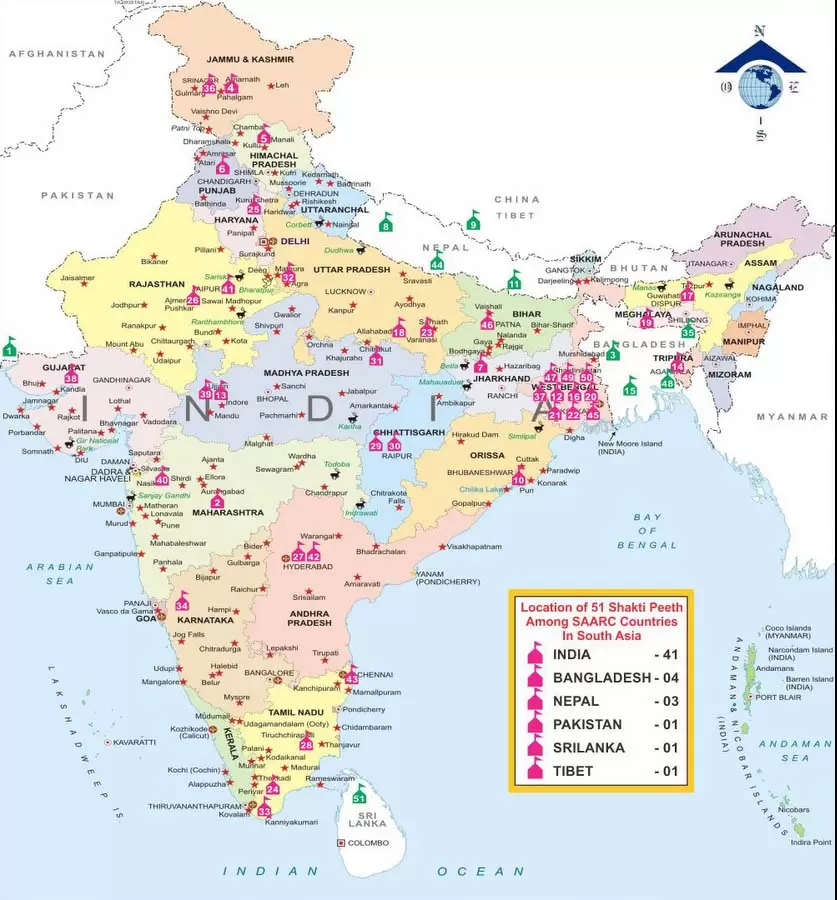
Last week, we completed all the Shakti Peethas located within India’s borders. From this part, let’s look at Shakti Peethas that are in what used to be part of India, pre-independence as well as one which though was probably never a part of India, but is in an area that is revered in Hinduism and symbolism.

Jeshoreshwari Kali Temple, Shyamnagar Upazila, Bangladesh

The Jeshoreshwari Kali Temple, located in Ishwaripur village, Shyamnagar Upazila, Satkhira district in Bangladesh is dedicated to Goddess Kali. Known as the Goddess of Jessore, the Jeshoreshwari Kali Temple blends mythology, devotion, and architectural heritage.

The Jeshoreshwari Kali Temple has a rich history that dates back centuries. It is believed that the temple was originally established by a Brahmin named Anari, who constructed a grand structure with 100 doors to honor Maa Jeshoreshwari. The exact timeline of its construction remains uncertain, but it is widely regarded as one of the oldest temples in Bangladesh. The temple gained prominence during the reign of Maharaja Pratapaditya, a 16th-century ruler of Jessore. According to legend, one of his generals discovered a luminant ray of light emanating from the bushes in Ishwaripur. Upon investigation, they found a stone carved in the shape of a human palm. Recognizing its divine significance, Maharaja Pratapaditya built the Jeshoreshwari Kali Temple at this site and began worshipping Goddess Kali. Later renovations were carried out by rulers such as Lakshman Sen and other local patrons. However, much of the original structure was damaged over time due to invasions and natural decay. Despite this, the temple continues to attract devotees who revere it as a sacred Shakti Peetha.

According to legend, the palm of Sati’s hand fell at this site, sanctifying it as a centre of divine feminine energy. Goddess Sati is worshipped here as Jeshoreshwari, symbolising divine protection and strength. Lord Shiva is revered as Chanda Bhairava, representing his role as a guardian and protector. 

The sanctum sanctorum houses a black stone idol of Maa Jeshoreshwari adorned with vermilion, gold ornaments, and garlands. The idol exudes an aura of power and compassion. The palm-shaped stone discovered by Maharaja Pratapaditya is preserved within the temple premises and is considered highly sacred by devotees. A large rectangular platform known as Natmandir was built adjacent to the main temple. This structure allowed devotees to view Maa Jeshoreshwari’s face during rituals. Although much of it crumbled after 1971, remnants such as pillars remain visible today. The temple showcases traditional Bengali architecture with intricate carvings on its walls and domed roofs. Despite its simplicity, the temple’s design emphasises spiritual connection over material grandeur. The name Jeshoreshwari translates to Goddess of Jessore. Historically, Ishwaripur was part of Jessore before administrative boundaries changed. 

Daily pujas are performed by priests who offer flowers, fruits, coconuts, sweets, incense sticks, and rice to Maa Jeshoreshwari. Morning Aarti begins at sunrise with chanting of hymns like Durga Saptashati, while evening Aarti concludes with lighting oil lamps around the temple premises. Kali Puja is celebrated with great fervor at Jeshoreshwari Temple. Elaborate rituals are conducted overnight to honor Maa Kali’s fierce aspect. Devotees offer red sarees and garlands made from hibiscus flowers during this festival. An annual fair, a mela is held in the temple compound during Kali Puja or Navratri celebrations. This event includes cultural performances, stalls selling religious items, and community feasts. Navratri is celebrated twice a year and devotees observe fasts during these nine days to seek blessings for prosperity and protection. On new moon nights, special Tantric rituals are conducted by priests to invoke Maa Jeshoreshwari’s protective energy.

One of the most popular legends associated with Jeshoreshwari Temple involves Maharaja Pratapaditya’s general discovering a luminant ray of light emanating from bushes in Ishwaripur village. Upon investigating further, they found a stone carved in the shape of a human palm. Recognizing its divine significance, Maharaja Pratapaditya built the temple at this site and began worshipping Goddess Kali. Devotees believe that touching or praying before the palm-shaped stone brings blessings and fulfills wishes. Many pilgrims visit specifically to seek Maa Jeshoreshwari’s intervention in resolving personal or familial issues. It is said that Maa Jeshoreshwari possesses miraculous healing powers. Many devotees claim to have been cured of ailments after offering prayers or participating in rituals at this sacred shrine.

The Jeshoreshwari Kali Temple offers visitors a unique spiritual experience rooted in mythology and devotion. 

Chattal Bhawani Shaktipeeth/Chandranath Temple, Chittagong, Bangladesh

The Chattal Bhawani Shaktipeeth, also known as the Chandranath Temple, is a revered Hindu shrine located atop Chandranath Hill in Sitakunda, Chittagong. According to legend, the right arm of Goddess Sati fell at this sacred site. The temple is dedicated to Maa Bhawani, a form of Goddess Sati, and Lord Shiva, is worshipped here as Chandrasekhar Bhairava. 

The exact date of the temple’s construction remains uncertain, but historical records suggest that it has existed for several centuries. According to local legends, the temple was originally established by a king who received divine instructions in a dream to build a shrine atop Chandranath Hill. Over time, the temple gained prominence as a centre for Shaktism and received patronage from various rulers and devotees. The name Chattal Bhawani derives from Chattal, an ancient name for Chittagong, and Bhawani, a form of Goddess Sati symbolising protection and strength. 

The sanctum sanctorum houses two main idols: one of Maa Bhawani and another of Lord Shiva as Chandrasekhar. Maa Bhawani’s idol exudes an aura of power and compassion, while Lord Shiva’s idol depicts him with a crescent moon on his head. Devotees believe that these idols radiate divine energy that fulfils wishes and grants blessings. The temple is situated at an altitude of approximately 1,020 feet above sea level on Chandranath Hill. Pilgrims must climb around 3,500 steps to reach the summit, making their journey both physically challenging and spiritually rewarding. The hill offers panoramic views of the surrounding landscape, including lush greenery and distant rivers.

The temple complex features a medieval chariot known for its intricate wood carvings. This chariot is used during special festivals and processions. The area around Chandranath Hill is rich in natural beauty, with attractions such as waterfalls, the Sohosrodhara Jorna and scenic trails that enhance the spiritual ambience. The temple has received patronage from various rulers over centuries. Notably, King Dhanya Manikya of Tripura attempted to relocate the Shiva idol to his kingdom but failed due to divine intervention.

Daily pujas are performed by priests. Morning Aarti begins at sunrise with chanting of hymns while the evening Aarti concludes with lighting oil lamps around the temple premises. Shivratri is celebrated with great fervour at Chandranath Temple. Devotees observe fasting and perform night-long prayers dedicated to Lord Shiva. Special yagnas are conducted during this festival to invoke divine blessings. An annual fair known as the Sitakund Mela is held during Shivratri celebrations in February-March. This event attracts thousands of pilgrims who gather for rituals, cultural performances, and community feasts. On new moon nights, special Tantric rituals are conducted by priests to invoke Maa Bhawani’s protective energy. The trek up Chandranath Hill is considered an act of devotion. Pilgrims often chant mantras or sing devotional songs during their ascent.

According to legend, King Dhanya Manikya of Tripura attempted to relocate the Shiva idol from Chandranath Temple to his kingdom but failed despite multiple efforts. It is believed that divine forces intervened to protect the sanctity of the temple. In the late medieval period, Gangaram Biswas from West Bengal built the first set of stairs leading up to Chandranath Hill after his elderly mother expressed her desire to visit the temple but was unable to climb due to her age. These steps were later renovated by zamindars from Bengal. Devotees believe that praying at Chandranath Temple cures ailments and grants peace of mind. Many pilgrims visit specifically seeking Maa Bhawani’s intervention in resolving personal or familial issues.

The Chattal Bhawani Shaktipeeth with its hilltop location emphasises ancient traditions while preserving spiritual heritage. Whether you seek spiritual solace or wish to explore India’s rich cultural heritage, visiting this ancient shrine will leave you feeling connected to divine feminine energy. 

Dhakeshwari Temple, Dhaka, Bangladesh

The Dhakeshwari Temple, located in Dhaka is one of the most revered Hindu shrines in the Indian subcontinent. Known as the Dhakeshwari Jatiya Mandir or National Temple, it is not only the largest Hindu temple in Bangladesh but also one of the 51 Shakti Peethas, where parts of Goddess Sati’s body are believed to have fallen. 

It is said that a gem from Sati’s crown fell here. The temple is dedicated to Maa Dhakeshwari, a form of Goddess Durga or Adi Shakti, and Lord Shiva is worshipped here as Vishwesh Bhairava. According to legend, King Ballal Sen of the Sena dynasty who ruled in the 12th century discovered a hidden idol of Goddess Durga under a tree in Dhaka after being guided by a divine dream. The goddess revealed herself as Dhakeshwari, meaning Goddess of Dhaka, and instructed the king to establish her temple at this site. Ballal Sen built the temple to honour her and named it after her divine form. The temple is believed to have given Dhaka its name.

Another legend ties the temple’s origin to King Bijoy Sen’s wife, who prayed for a safe childbirth at Langolbond while on a pilgrimage. Her son Ballal Sen later fulfilled her vow by constructing this temple as an offering to Maa Dhakeshwari. Over centuries, the temple underwent several renovations and reconstructions due to natural decay and destruction during invasions. During the 17th century, Raja Man Singh is said to have rebuilt parts of the temple. However, much of its original structure was lost during political upheavals in modern history. 

The original idol of Maa Dhakeshwari was relocated during Partition in 1947 to Kumortuli in Kolkata due to safety concerns. Today, two temples—one in Kolkata known as the Dhakeswari Mata Temple housing the original idol and one in Dhaka with a replica—serve as spiritual centres for devotees. The main temple follows the traditional Pancharatna or five-spired architecture with intricate carvings depicting scenes from Hindu mythology. Within the complex are four smaller Shiva temples arranged in a row, each housing a Shiva Lingam. 

A large pond within the temple premises adds serenity to the environment and is used for ritualistic purification by devotees before entering the sanctum. A spacious Natya Mandir or prayer hall stands adjacent to the main shrine for devotional performances during festivals. One popular belief suggests that drums or dhaks were played from an elevated stage at this temple to demarcate the city’s boundaries during its early settlement period. The sound of these drums gave rise to the name Dhaka.

Daily pujas are performed by priests. Morning Aarti begins at sunrise with chanting of hymns like Durga Saptashati, while evening Aarti concludes with lighting oil lamps around the sanctum. Like all Shakti Peethas, Durga Puja is celebrated with great fervour with elaborate rituals conducted over nine days. The deity is adorned with new clothes and jewelry donated by devotees during this festival. Navratri is celebrated twice a year with devotees observing fasts during these nine days as an act of devotion. Devotees participate in mass bathing rituals at Langolbond on Sukla Ashtami, the eighth day of the Chaitra month before visiting Dhakeshwari Temple for blessings. On new moon nights, special Tantric rituals are conducted by priests. 

According to legend, King Ballal Sen dreamt of Maa Durga instructing him to find her idol buried beneath a tree near present-day Old Dhaka. Upon excavation, he discovered her statue under what became known as the Dhakka tree and established her shrine there. It is believed that pilgrims who meditate at this Shakti Peetha receive blessings equivalent to wearing divine gemstones that protect them from misfortune. 

During Partition in 1947, priests relocated Maa Dhakeshwari’s original idol to Kumortuli in Kolkata due to concerns over communal violence targeting Hindu temples in East Pakistan, now Bangladesh. 

The Dhakeshwari Temple offers visitors a unique spiritual experience. The Pancharatna architecture which emphasises ancient traditions amid bustling Old Dhaka provides a unique experience. 

World Gratitude Day: The Power of Thankfulness

In a world often dominated by stress, negativity, and the relentless pursuit of more, World Gratitude Day stands as a beacon of positivity, reminding us to pause and appreciate the good in our lives. Celebrated annually on September 21, this day encourages individuals, communities, and nations to express thankfulness and recognise the profound impact of gratitude on our well-being.

World Gratitude Day was born in 1965 during a Thanksgiving dinner in the meditation room of the United Nations building. The idea was proposed by Sri Chinmoy, a spiritual leader and meditation teacher who believed that gratitude could foster global unity and peace. At the dinner, Chinmoy suggested the creation of a global holiday dedicated to gratitude, and each attendee pledged to host an event in their home country on September 21 every year. The first World Gratitude Day was celebrated in 1966, and by 1977, the United Nations Meditation Group officially recognised the day. Since then, it has been observed annually, with people from all walks of life coming together to express their appreciation for the blessings in their lives.

Gratitude is more than just a polite “thank you”; it is a profound emotion that can transform our mental, emotional, and physical well-being. Research has shown that practicing gratitude can lead to increased happiness, improved relationships, and even better physical health.

Gratitude shifts our focus from what we lack to what we have, fostering a sense of contentment and reducing feelings of envy and resentment. Studies have shown that individuals who regularly practice gratitude experience higher levels of happiness and life satisfaction. Expressing gratitude strengthens our relationships by making others feel valued and appreciated. It fosters empathy and compassion, creating a positive feedback loop of kindness and generosity.

Gratitude has been linked to improved sleep, reduced stress, and even a stronger immune system. By focusing on the positive aspects of our lives, we can reduce the harmful effects of stress and promote overall health.

While World Gratitude Day does not have an official theme each year, the overarching message remains the same: to cultivate a sense of appreciation and thankfulness in our lives. There are countless ways to celebrate World Gratitude Day, whether through personal reflection, acts of kindness, or community events.

  • Keep a gratitude journal: Start writing down three things you are grateful for everyday. This simple exercise can help shift your focus to the positive aspects of your life and cultivate a sense of appreciation.
  • Write gratitude letters: Take the time to write heartfelt letters to the people who have made a positive impact on your life. Expressing your gratitude in writing can be a powerful way to strengthen your relationships and make others feel valued.
  • Perform random acts of kindness: Show your appreciation for others by performing small acts of kindness. Whether it’s buying coffee for a stranger, helping a colleague with a project, or volunteering your time, these gestures can have a ripple effect of positivity.
  • Practice mindfulness: Take a few moments throughout the day to be present and appreciate the beauty around you. Notice the small things, like the warmth of the sun on your face or the sound of birds chirping outside your window.
  • Host a gratitude gathering: Organise a gathering with friends, family, or colleagues to share what you are grateful for. This can be a powerful way to foster a sense of community and connection.

Gratitude has the power to transform not only individuals but also entire communities and societies. When people practice gratitude, they are more likely to engage in prosocial behaviors, such as volunteering, donating to charity, and helping others in need. This creates a culture of kindness and generosity, where people feel valued and supported.

In the workplace, gratitude can increase employee satisfaction, improve teamwork, and increase productivity. When employees feel appreciated, they are more motivated and engaged, creating a positive and productive work environment.

On a global scale, gratitude can foster a sense of unity and peace. By recognising and appreciating the good in our lives, we can cultivate a sense of interconnectedness and empathy, leading to a more compassionate and harmonious world.

As we approach World Gratitude Day, let us take the time to reflect on the blessings in our lives and express our appreciation to those who have made a positive impact. Gratitude is a powerful force that can transform our lives, our relationships, and our world. By practicing gratitude, we can create a ripple effect of positivity, kindness, and compassion that extends far beyond ourselves.

So, make gratitude a daily practice. Whether through a simple “thank you,” a heartfelt letter, or an act of kindness, let us spread the message of gratitude and create a world where appreciation and thankfulness are at the forefront of our lives.

Sacred Stones, Spaces and Stories: Shakthipeeta Part 20

Nalhateswari Temple, Nalhati, West Bengal
The Nalateswari Temple, located in Nalhati, Birbhum district is dedicated to Maa Nalateswari, a form of Goddess Sati, and Lord Shiva is worshipped here as Jogesh Bhairava. It is believed that the larynx or nala of Goddess Sati fell at this site.

The temple’s history dates back to the 16th century, with its construction attributed to the Malla kings. However, local legends suggest that the temple was rediscovered by Ram Sharam Devsharma, a devotee who found the larynx of Maa Sati in the dense forests of Nalhati. Over time, the temple became a centre of devotion and was later renovated by Rani Bhavani and Maharaja Ranajit Singh of Nashipur in the late 19th century. The name Nalateswari derives from Nala or larynx and Ishwari or goddess. The temple also served as a refuge for freedom fighters during India’s independence movement.

The sanctum sanctorum houses a self-manifested or swayambhu stone idol of Maa Nalateswari adorned with vermilion, sindoor, a silver crown, and three golden eyes or trinayan. Her golden-red tongue symbolizes her fierce aspect. Below her idol lies the sacred nala or throat of Sati. It is believed that no matter how much water is poured on it, it never overflows or dries up. Devotees often hear a gulping sound resembling human swallowing when water flows through it. A sacred pond known as Lalita Kund lies within the temple premises. Pilgrims take a holy dip in this pond before entering the shrine to purify their souls. The temple features traditional Bengali architecture with a raised pinnacle, a shikhara, above its sanctum. Its design includes a natmandir, a prayer hall, and smaller shrines dedicated to Lord Shiva, Lord Ganesha, and Lord Hanuman. A mysterious neem tree near the temple is considered sacred by devotees. It is said to possess healing powers and is often worshipped alongside Maa Nalateswari.

Daily worship at the temple include the morning and evening aartis. Navratri is celebrated twice a year with grand rituals honoring Maa Nalateswari’s nurturing aspect. Devotees observe fasting during these nine days to seek blessings for prosperity and protection. Kali Puja is celebrated with great fervor at Nalateswari Temple. Elaborate rituals are conducted to honor Maa Durga’s fierce aspect as Kali. Devotees offer red hibiscus flowers symbolic of power and victory over evil forces. Every full moon or Purnima, a grand fair is held within the temple grounds. This event includes cultural programs, stalls selling handicrafts, and community feasts. On new moon or Amavasya nights, special Tantric rituals are conducted by priests to invoke Maa Nalateswari’s protective energy.

According to legend, Kamdev, the Hindu god of love, dreamt about the existence of Maa Sati’s larynx in the forests of Nalhati. Guided by his vision, he discovered the sacred spot where her nala lay buried beneath layers of earth. This marked the beginning of worship at this Shakti Peetha. Devotees believe that pouring water on Maa Nalateswari’s throat produces a gulping sound resembling human swallowing—a phenomenon considered miraculous by pilgrims who visit this shrine. During India’s struggle for independence, freedom fighters used the temple premises as a hideout due to its remote location and supportive priests who provided them shelter and food.

The Nalateswari Temple offers visitors a unique spiritual experience rooted in mythology and devotion. It is a must visit for those seeking solace or want to explore India’s rich cultural heritage.

Tarapith, Rampurhat, West Bengal
Recognised as one of the Shakti Peethas, the Tarapith Temple, located in Rampurhat is dedicated to Goddess Tara, a fierce and compassionate form of Shakti. At Tarapith, it is said that the third eye of Sati fell, sanctifying the location as a center of immense spiritual energy. The temple is closely associated with tantric practices and the mystic saint Bamakhepa, whose life and devotion to Tara are legendary.

The temple is said to have been established in the 13th century and has undergone several renovations over time. The current structure was built in 1225 by Jagannath Ray of Mallarpur village. The temple’s name derives from Tara which means star or eye in Bengali, symbolizing the divine vision of Goddess Tara. Tarapith has been a centre for tantric practices for centuries and is regarded as a Siddha Pitha, a site where devotees can attain enlightenment and supernatural powers or siddhis. The temple’s proximity to the cremation ground further enhances its significance for tantric practitioners.

Goddess Sati is worshipped here as Maa Tara, symbolising protection, compassion, and divine wisdom. Lord Shiva is revered as Akshobhya Bhairava, representing his role as a guardian and protector. The third eye or netra of Sati is believed to have fallen at this site.

The main idol of Maa Tara depicts her suckling Lord Shiva as a child. This unique form symbolises her nurturing aspect while also embodying her fierce power. The idol is adorned with a silver crown, red vermilion or sindoor, and garlands made from skulls or mundamala, emphasising her tantric association. Tarapith is renowned as one of India’s most important centres for tantric worship. Tantriks perform esoteric rituals in the adjoining cremation ground to invoke Maa Tara’s blessings. Offerings such as liquor and meat are made during specific rituals, reflecting ancient tantric traditions.

The cremation ground near the temple is considered highly sacred and serves as a hub for tantric practices. Devotees believe that Maa Tara resides here in her ferocious form. Many pilgrims visit this site to meditate or perform ancestral rites or tarpan. The temple is closely linked to the mystic saint Bamakhepa, who spent his life worshipping Maa Tara. His ashram near the temple continues to attract devotees seeking spiritual guidance.

The temple features an eight-roofed structure, an aatchala, with intricate carvings depicting scenes from Hindu epics like the Mahabharata and Ramayana. Its simplicity contrasts with its profound spiritual energy.

Daily pujas are performed by priests who offer flowers, bananas, coconuts, sweets, liquor, and even meat to Maa Tara. Morning Aarti begins at sunrise with chanting of hymns like Durga Saptashati, while evening Aarti concludes with lighting oil lamps around the temple premises. Kamalakanta Kali Puja is the annual festival dedicated to Maa Kali that attracts thousands of devotees who gather for night-long prayers and rituals. Special offerings like red sarees and garlands made from hibiscus flowers are presented to Maa Tara during this time.

Devotees perform tarpan or ancestral rites at the cremation ground near the temple to honor their ancestors and seek their blessings. Tantriks perform esoteric rituals during auspicious nights like Amavasya or the new moon, to invoke Maa Tara’s blessings for spiritual growth or supernatural powers. Devotees often seek healing from ailments by offering prayers at Maa Tara’s shrine or taking a dip in the sacred tank adjacent to the temple.

According to legend, Sage Vashishtha performed intense penance at Tarapith to please Goddess Tara. Despite reciting her mantra 300,000 times, he failed to invoke her presence. On Lord Buddha’s advice, Vashishtha adopted tantric practices, vamachara, and successfully pleased Maa Tara. She appeared before him in her nurturing form—breastfeeding Lord Shiva—and turned into a stone idol that became enshrined in the temple.

Known as the mad saint, Bamakhepa was one of Maa Tara’s most ardent devotees. He spent years meditating in the cremation ground and was said to possess miraculous healing powers granted by Maa Tara herself. Once when priests denied him food before offering it to Maa Tara, she appeared in a queen’s dream demanding that Bamakhepa be fed first as her beloved son. The sacred tank near the temple is believed to have healing properties. Devotees often bathe here before entering the temple premises or collect its water for use in rituals.

The Tarapith Temple offers visitors a unique spiritual experience rooted in mythology and devotion. Its unique features like tantric practices emphasise ancient traditions while preserving spiritual heritage.

Shrinkala Devi Temple, Pandua, West Bengal
The Shrinkala Devi Temple, once located in Pandua, West Bengal, is shrouded in controversy and uncertainty. Unlike many other Shakti Peethas, this sacred site has a complex history that has led to debates about its current location and status.

Originally situated in Pandua, Hooghly district, the Shrinkala Devi Temple was considered one of the 51 Shakti Peethas and was believed to be the spot where Sati’s stomach fell. However, the original temple structure no longer exists. Historical records indicate that it was destroyed by Muslim invaders, likely during the Delhi Sultanate period. A minar was subsequently built at the site, possibly by Zafar Khan Gazi, a general of Sultan Alauddin Khalji in the late 13th century.

The destruction of the original temple has led to several controversies and competing claims about the true location of the Shrinkala Devi Shakti Peetha. Some believe that the original site in Pandua remains the true Shakti Peetha, despite the absence of a temple structure. The Archaeological Survey of India now maintains the site. Another claim suggests that Rishyasringa Maharshi, on the goddess’s command, moved the deity to Sringeri in Karnataka. Some devotees believe the Shakti Peetha is present in the Ganga Sagar region, also known as Adinath Kshetra. There are also claims that the temple might be located in Chotila, Gujarat while some sources suggest the temple might be near the Somnath temple in Prabhas Pattan.

In recent years, there have been efforts by Hindu organisations to reclaim and revive the worship of Shrinkala Devi. The Sanyukta Hindu Front initiated a campaign in 2022 to restore the significance of the Shrinkala Devi temple. They have started performing regular pujas on Amavasya or new moon days and are seeking information from the Archaeological Survey of India about the original site in Pandua.

Despite the absence of a physical temple, devotion to Shrinkala Devi continues. Given the uncertainty of the temple’s location, many devotees worship Shrinkala Devi in a formless aspect. An annual 30-day festival called Mela Tala is celebrated near the original site in Pandua during the month of Magha, around February. The Sanyukta Hindu Front has encouraged devotees to perform small pujas in their homes or offices on Amavasya days.

As efforts continue to reclaim and revive the worship of Shrinkala Devi, this Shakti Peetha serves as a poignant reminder of the complex interplay between faith, history, and cultural preservation in modern India. It challenges us to consider how spiritual traditions can endure and evolve even in the absence of physical structures, and how devotees can maintain connections to sacred sites across vast distances and through centuries of change.

Adulting 101: Navigating the Job Market – Resume Writing, Interviews, and Networking

The job market can be intimidating, especially for young adults entering the workforce for the first time. Whether fresh out of university or looking for a new role, knowing how to craft a standout resume, ace interviews, and network effectively are critical skills for landing the right job.

Why is navigating the job market important? Entering the job market can be overwhelming, but it’s also an opportunity for growth, exploration, and building your dream career. Here’s why mastering the process is vital. Understanding what employers look for and presenting yourself effectively can set you apart from other candidates. Securing the right job opens doors to new opportunities, mentorships, and long-term career development. Navigating the job market successfully helps you gain confidence in your abilities and value as a professional. Equipped with the right skills, you can make the transition into the workforce more manageable and rewarding. Let’s start by focusing on the first element: creating a powerful resume.

Part 1: Resume Writing – Crafting a Standout Application
Your resume is your first point of contact with potential employers. It’s a snapshot of your professional story that showcases your skills, accomplishments, and experiences. Here’s how to craft a winning resume:

  • The purpose of a resume: The resume’s purpose is to summarise your qualifications and convince hiring managers to invite you for an interview. It should be tailored to highlight the skills and experiences that are relevant to the specific role you’re applying for.
  • Key components of a resume: A well-structured resume typically includes contact information like name, phone number, email address, and LinkedIn profile. Ensure your email is professional. It should also include a brief overview of your qualifications and career goals. Highlight relevant technical and soft skills that align with the job description. List your work experience in reverse chronological order, focusing on accomplishments rather than duties. Mention your degrees, institutions, and graduation dates and include any certifications, awards, or recognitions that boost your credibility for the role.
  • Resume writing tips: Follow these tips for a polished and impactful resume. Customise your resume for each job application by emphasising skills and experience relevant to the role. Start bullet points with strong action verbs like “implemented,” “led,” “optimised,” or “achieved.” Use numbers to quantify achievements (e.g., “Improved sales by 20%” or “Managed a team of 5”). Limit your resume to one page unless you have extensive experience. Check for spelling or grammar mistakes. Errors can make a bad impression.
  • Avoid common resume mistakes: Be mindful of these pitfalls: Avoid cluttering your resume with irrelevant details. Focus on what’s important. Use a clean, professional layout with clearly labeled sections. Replace vague objectives with a professional summary showcasing your value.

Part 2: Interview Preparation – How to Shine in the Spotlight
Securing an interview means that your resume has done its job. Now, it’s time to shine in person (or virtually) by showcasing your skills, personality, and enthusiasm for the role.

  • Types of job interviews: Understanding the types of interviews can help you prepare better. Traditional interviews are one-on-one conversations with hiring managers, while in panel interviews, multiple interviewers ask questions in a formal setting. Behavioural interviews focus on past experiences and how you’ve handled specific situations. Virtual interviews are conducted via video platforms like Zoom or Teams, while group interviews involve interaction with other candidates and assessing your teamwork skills.
  • Preparing for the interview: Preparation is the key to interview success. Study the company and research its mission, values, products, and services to familiarise yourself with the industry and competitors. Understand the role. analyse the job description to identify key responsibilities and required qualifications, and prepare to discuss how your skills align with the role. Practice common interview questions, including “tell me about yourself”, “what are your strengths and weaknesses”, “why do you want to work here”, and “describe a challenge you’ve faced and how you overcame it.”
  • Prepare STAR responses: Use the STAR method when answering behavioral questions. S stands for Situation, where you describe the context of the example. T stands for Task, where you explain the goal or challenge. A stands for Action, which details the steps you took to address the situation. R stands for Result, or the outcome and what you learned. Dress professionally and choose attire appropriate for the company culture (business formal or smart casual). Avoid noisy jewelry or overly casual clothing. Practice mock interviews and practice interviews with friends or mentors to refine your answers and boost your confidence.
  • Performing well during the interview: Make a lasting impression by showcasing professionalism and enthusiasm. Arrive on time. If it’s virtual, test your tech setup and video connection beforehand. For in-person interviews, arrive early. Be engaged and actively listen to questions and respond thoughtfully.
  • Highlight your value and focus on how you can contribute to the company rather than just describing your skills. Ask questions and prepare thoughtful questions about the role or company to show genuine interest. Express gratitude and thank the interviewer for their time and opportunity.

Part 3: Networking – Building and Leveraging Connections
Networking is one of the most powerful tools for career advancement. Building professional relationships and tapping into your network can lead to job opportunities, mentorships, and collaboration.

Networking is crucial for several reasons. Many jobs are not publicly listed but filled through referrals. Networking allows you to learn about industries, roles, and companies from experienced professionals. Consistently connecting with others helps you establish your reputation in your field.

Networking doesn’t mean randomly handing out business cards. It’s about building meaningful connections. Start with your existing network and inform friends and family about your career goals; they may have valuable connections. Reach out to former professors or alumni networks for advice and introductions. Attend conferences, workshops, or seminars in your field. Participate in job fairs to connect with recruiters and learn about opportunities.

Leverage online platforms like LinkedIn by optimising your profile and engaging with professionals by commenting on posts, joining groups, and messaging connections. Build connections at work by connecting with colleagues and building relationships with coworkers by collaborating effectively and supporting team efforts. Seek mentorship by finding experienced colleagues who can share insights and guidance. Practice professional communication and be genuine when networking authentically rather than self-promotion. Follow up and send thank-you emails or messages after meetings or introductions.

Introverted individuals can excel at networking by leveraging their strengths. Focus on one-on-one interactions rather than large groups, and prepare talking points to ease conversations. Use written communication (emails or LinkedIn messages) to connect thoughtfully.

Putting It All Together
Navigating the job market takes effort, strategy, and resilience. By mastering the three pillars—resume writing, interviews, and networking—you can position yourself for success. Here’s how to integrate these strategies:

  • Build a strong foundation by crafting a polished resume and tailoring it for each job application.
  • Prepare for opportunities and practice for interviews thoroughly to showcase your skills confidently.
  • Cultivate relationships and dedicate time to build a network that supports your career goals.
  • Stay persistent because rejections are inevitable in any job search, but persistence is key. Learn from setbacks and keep improving.

Navigating the job market as a young adult is a vital step in personal and professional growth. By focusing on writing a standout resume, preparing thoroughly for interviews, and building a strong network, you can create the foundation for a successful career. Remember, each step in your journey is an opportunity to learn, connect, and grow. With dedication and the strategies outlined here, you’ll be ready to tackle the job market and achieve your goals!