Sacred Stones, Spaces and Stories: Shakti Peethas Part 1

For the past few months, I have been increasingly interested in Hinduism. I’ve been praying more and learning more about my culture, and so a natural offshoot of this was becoming more interested in the different temples and their stories. As I started learning more, I thought I should share it with everyone, hence this new series. This series, which I will call Sacred Stones, Spaces, and Stories, will dive deeper into the various temples across the subcontinent. I will start with the Shaktipeeths dedicated to the Mother Goddess. We can learn more about the Divya Desams, Vaishnava temples of great significance, the Jyotirlingas, dedicated to Lord Shiva, as well as the Ashtavinayaks, temples for Lord Ganesha. Follow me on this journey as we learn more about the incredible temples and the stories behind them. I will upload a new post every Friday starting next week about one or more temples. Today, let’s learn more about Shaktipeeths.

Shakti Peethas are sacred sites in Hinduism dedicated to the worship of Goddess Shakti, the divine feminine power. These temples hold immense spiritual significance and are scattered across the Indian subcontinent, including parts of Bangladesh, Nepal, and Pakistan. The origin of these temples is deeply rooted in Hindu mythology, particularly in the tragic tale of Goddess Sati and Lord Shiva.
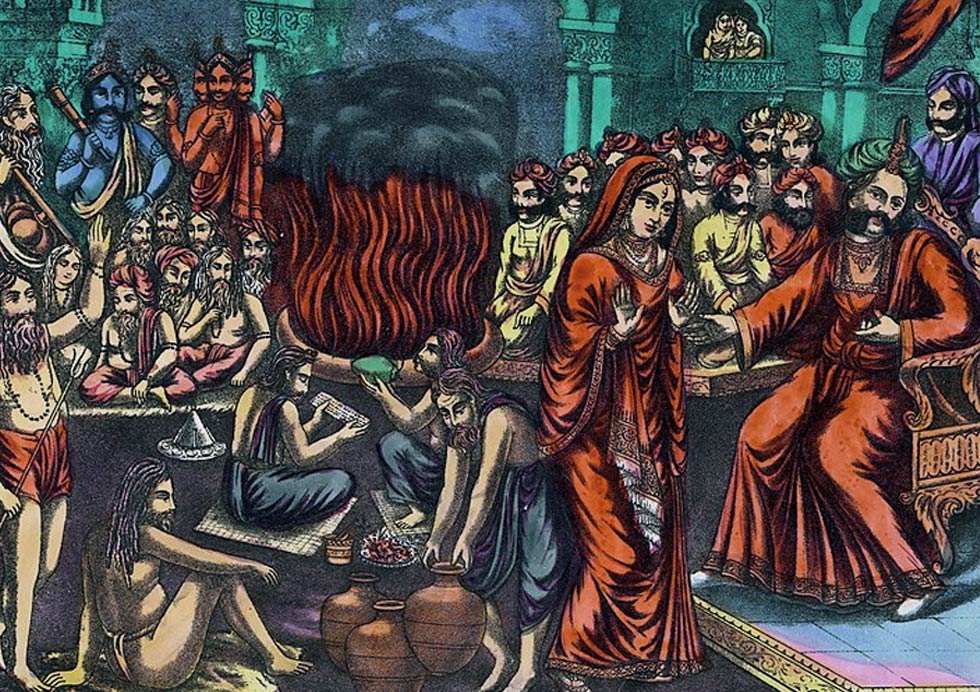
The story behind the creation of Shakti Peethas is one of the most poignant and significant in Hindu mythology. It revolves around Goddess Sati, the first consort of Lord Shiva, and her father, King Daksha. Sati, daughter of King Daksha, was married to Lord Shiva against her father’s wishes. Daksha, disapproving of this union, organised a grand yajna or sacrificial ritual but deliberately excluded Sati and Shiva from the invitation. Despite Shiva’s advice, Sati decided to attend the yajna, determined to uphold her husband’s honour.

At the yajna, Daksha publicly insulted Lord Shiva, which Sati could not bear. In a supreme act of devotion and protest, Sati invoked her yogic powers and immolated herself in the sacrificial fire. This act of self-sacrifice had profound cosmic repercussions and forms the crux of the Shaktipeetha origin story.

Upon learning of Sati’s death, Lord Shiva was overcome with grief and rage. He created two fearsome deities, Virabhadra and Bhadrakali, who wreaked havoc at Daksha’s yajna. Shiva then took up Sati’s charred body and began to perform the Tandava, the cosmic dance of destruction, across the universe. As Shiva’s dance threatened to unravel the cosmic order, the other gods appealed to Lord Vishnu to intervene. Using his divine discus, the Sudarshana Chakra, Vishnu dismembered Sati’s body into multiple pieces. These pieces fell to earth at various locations, each becoming a sacred Shakti Peetha.

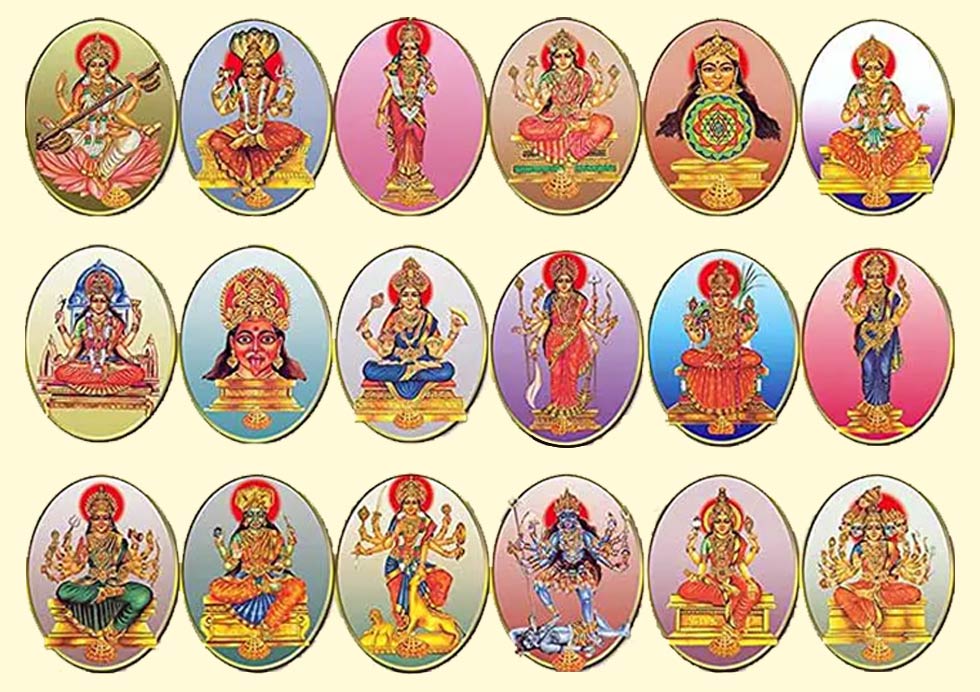
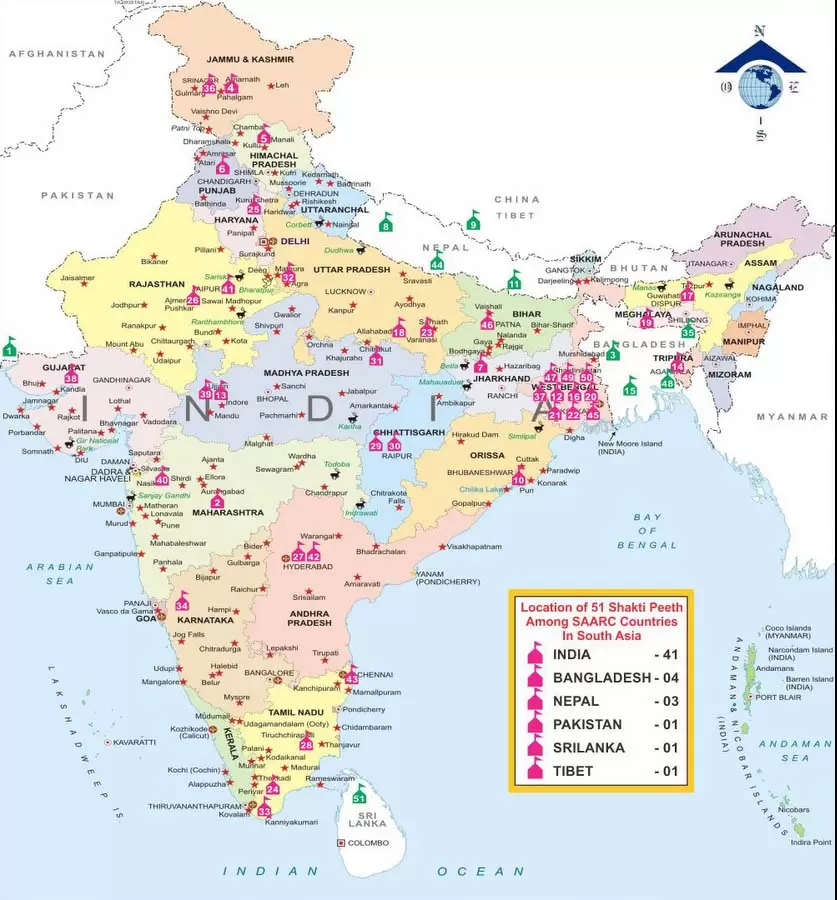
Each Shakti Peetha is believed to embody a particular form of the Goddess Shakti, representing different aspects of her divine power. These sites are not just temples but are considered to be living manifestations of the Goddess herself. The exact number of Shakti Peethas is a matter of debate among different Hindu texts. Various Puranas mention 51, 52, 64, or even 108 Shakti Peethas. However, 51 is the most commonly accepted number. These sacred sites are spread across the Indian subcontinent, with some located in present-day Bangladesh, Nepal, and Pakistan.

Among the Shakti Peethas, four are considered to be of paramount importance and are known as the Adi Shakti Peethas. These are the Kamakhya Temple in Assam, associated with Sati’s yoni or vagina; the Kalighat Temple in Kolkata, associated with Sati’s face; the Tara Tarini Temple in Behrampur, Odisha, associated with Sati’s chest; and the Bimala Temple in Puri, associated with Sati’s feet. These four sites are believed to be the most potent in terms of spiritual energy and are highly revered by devotees.

Shakti Peethas are not merely places of worship; they represent the fundamental concept of Shakti or divine feminine energy in Hinduism. They are considered sources of immense spiritual power and are believed to fulfil the desires of devotees who visit them with true devotion.

At each Shakti Peetha, the Goddess is worshipped in a specific form, often accompanied by a form of Bhairava, a manifestation of Lord Shiva. The worship practices can vary from one Peetha to another, but they generally involve offerings, prayers, and sometimes elaborate rituals.

Visiting the Shakti Peethas is considered a significant pilgrimage in Hinduism. Many devotees undertake arduous journeys to visit these sites, believing that such pilgrimages can lead to spiritual enlightenment, fulfilment of wishes, and liberation from the cycle of birth and death.

Many Shakti Peethas have faced challenges over the centuries, including invasions, natural disasters, and the ravages of time. Some, like those in Bangladesh, have witnessed heroic efforts by devotees to protect and preserve them. Efforts are ongoing to restore and maintain these ancient temples. Many have undergone renovations to preserve their architectural beauty while maintaining their spiritual essence. However, the challenge lies in balancing modernisation with the preservation of the temples’ historical and spiritual integrity.
Shakti Peethas are not just religious sites but also repositories of art, architecture, and cultural heritage. They often feature intricate carvings, sculptures, and architectural styles that reflect the artistic traditions of their respective regions. In the contemporary era, Shakti Peethas continue to be centres of faith and pilgrimage. They attract millions of devotees annually and play a significant role in the spiritual and cultural life of Hindus. Many Shakti Peethas have become important tourist destinations, contributing to the local economy. This has led to the development of infrastructure around these sites, making them more accessible to pilgrims and tourists alike. Some Shakti Peethas have evolved into spiritual retreats and yoga centres, offering programmes that blend traditional practices with modern wellness approaches. This evolution reflects the adaptability of these ancient sites to contemporary spiritual needs.

As we explore these Shakti Peethas, we delve into a world where myth and reality intertwine, where ancient stories come alive through stone and ritual, and where the divine feminine is celebrated in all her power and glory. These temples serve as bridges between the earthly and the divine, offering seekers a chance to connect with the primordial energy of creation. As we continue this series on Hindu temples, the Shakti Peethas serve as a profound starting point, setting the stage for an exploration of the rich and diverse world of Hindu sacred architecture and spirituality. These temples, with their deep-rooted legends and living traditions, offer a window into the heart of Hindu philosophy and practice, inviting us to discover the divine in the world around us and within ourselves. So let’s start on our journey of exploration.

Poem: Wings of Wanderlust

Source

Travel is more than just a journey; it is a feeling, a rush of excitement, and a gateway to new adventures. When plans are made, the heart begins to race with anticipation. The thrill of discovering unfamiliar landscapes, tasting new cuisines, and immersing in unknown cultures fills every step with wonder. A holiday is not just an escape; it’s an opportunity to embrace the world’s endless possibilities.

Wings of Wanderlust

The suitcase lies open, a promise untold,
Of adventures ahead, both thrilling and bold.
Maps unfold and dreams take flight,
The heart beats faster with wanderlust’s light.

The countdown begins, excitement takes hold,
A new place awaits its stories of old.
What sights will I see? What paths will I tread?
What colours and flavours will dance in my head?

The airport hums with its vibrant sound,
A gateway to wonders, the world unbound.
Each boarding pass holds a treasure in store,
A chance to discover, to learn, to explore.

The mountains call with their towering grace,
The ocean’s whisper of an endless embrace.
The streets of a city, alive and unknown,
Each step is a story, each corner my own.

I’ll taste the spices, hear songs from afar,
Chase sunsets that shimmer like a guiding star.
Feel cultures unfold in the warmth of a smile,
Find a home in the world, if just for a while.

Oh, the joy of travel, the freedom it brings,
The soul takes flight on its wandering wings.
For every journey writes a tale that stays,
A cherished memory for endless days.

World Press Freedom Day

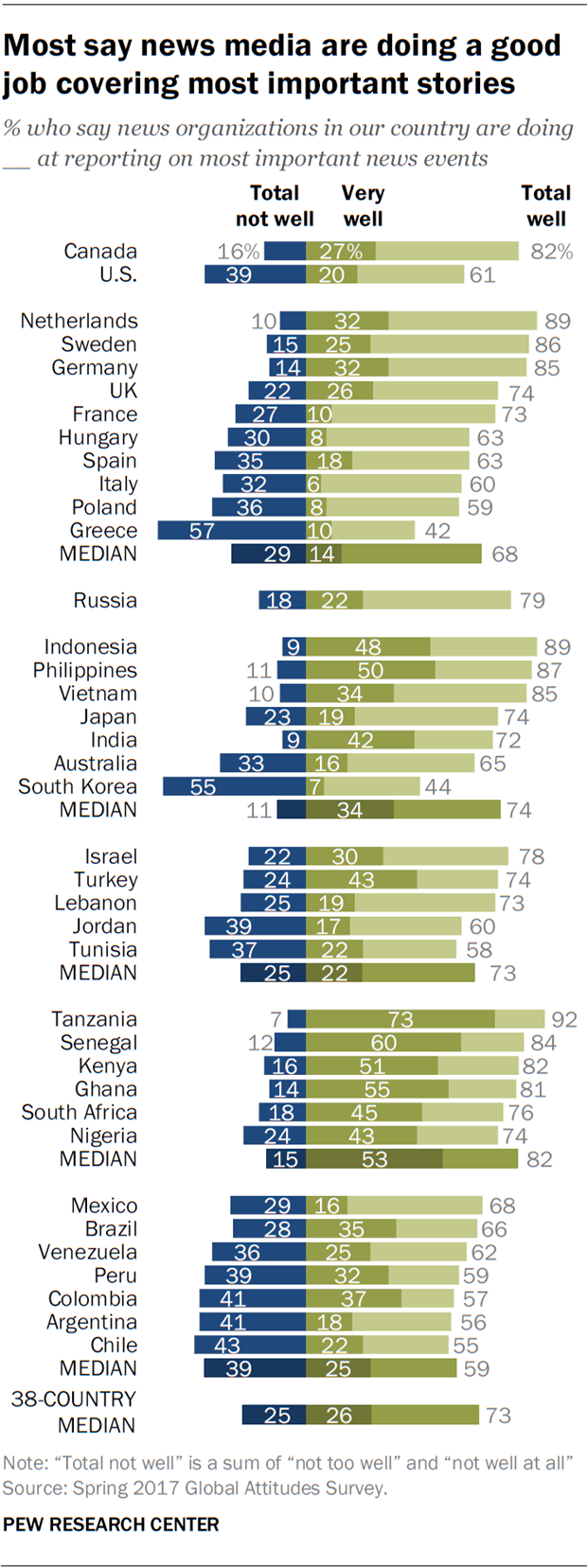
World Press Freedom Day, observed annually on May 3, serves as a vital reminder of the importance of press freedom in democratic societies. This day not only celebrates the fundamental principles of press freedom but also evaluates the state of media freedom worldwide, defends the media against attacks on their independence, and pays tribute to journalists who have sacrificed their lives in pursuit of truth.

Press freedom refers to the right of journalists and media organisations to report news and express opinions without censorship or restraint from the government or other powerful entities. It is a cornerstone of democracy, enabling citizens to access information, hold power accountable, and engage in informed public discourse. The importance of press freedom today cannot be overstated.

A free press acts as a watchdog over government actions, revealing corruption and abuse of power. Journalists inform the public about critical issues, ensuring that citizens are aware of events and policies that affect their lives. A pluralistic media landscape allows for a variety of perspectives and opinions to be heard, fostering a more inclusive society. Free expression is linked to other fundamental rights, such as the right to assembly and the right to participate in governance.

Despite these critical roles, press freedom is increasingly under threat. Journalists face censorship, harassment, violence, and even imprisonment in many parts of the world. According to UNESCO, the ongoing challenges highlight the need for vigilance in protecting journalistic freedoms.

The origins of World Press Freedom Day trace back to the Windhoek Declaration, adopted in 1991 during a conference organised by UNESCO in Windhoek, Namibia. This declaration was a response to escalating attacks on journalists during conflicts in Africa and emphasised the need for an independent and pluralistic press as essential for democracy.

In December 1993, following a recommendation from UNESCO’s General Conference, the United Nations General Assembly officially proclaimed May 3 as World Press Freedom Day. This date was chosen to commemorate the Windhoek Declaration’s adoption and to remind nations of their commitment to uphold press freedom as enshrined in Article 19 of the Universal Declaration of Human Rights.

World Press Freedom Day serves several critical purposes. The day provides an opportunity to raise awareness about the importance of press freedom and its role in democracy. It encourages governments and civil society to assess the state of press freedom within their countries. The day highlights the risks faced by journalists worldwide and calls for action to protect their rights. It pays tribute to journalists who have lost their lives while reporting on critical issues.

In recent years, themes associated with World Press Freedom Day have focused on various pressing issues affecting journalism today, such as digital safety, media plurality, and environmental reporting. The theme for the 2025 edition of World Press Freedom Day is “A Press for the Planet.” This theme emphasises journalism’s crucial role in addressing global environmental crises. It recognises that journalists are essential in informing the public about environmental issues, advocating for sustainable practices, and holding powerful entities accountable for their impact on the planet. The focus on environmental journalism aligns with growing concerns about climate change and ecological degradation. As traditional media faces challenges such as declining revenues and increasing censorship, it becomes even more crucial to support journalistic efforts that prioritise environmental reporting.

World Press Freedom Day is more than just a commemoration; it is a call to action for individuals, organisations, and governments worldwide to recognise and uphold the principles of press freedom. In an era where misinformation can spread rapidly and where many journalists face threats simply for doing their jobs, it is imperative that society collectively defend these freedoms.

It is our duty as a world citizen to reflect on our responsibilities toward supporting a free press that can effectively address global challenges—especially those related to our planet’s future. By championing press freedom today, we contribute not only to democracy but also to a sustainable world where truth prevails over misinformation.

Minimalism, Maximalism, or Something In Between?

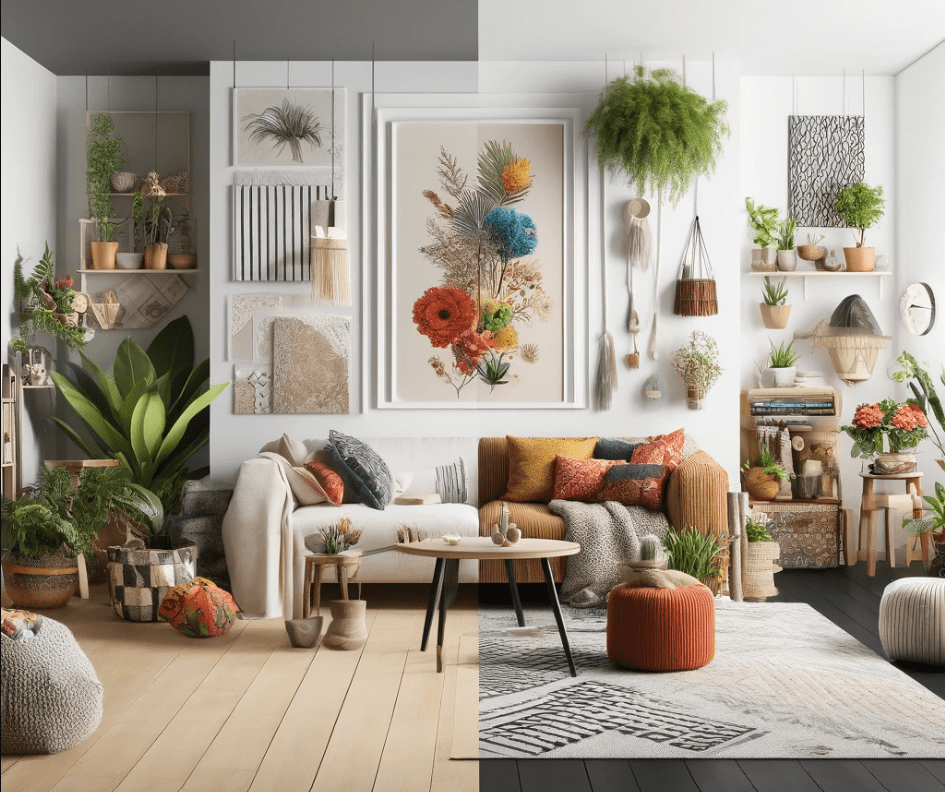
The debate between minimalism and maximalism continues to shape our lifestyle choices today, influencing everything from interior design to personal habits. Both philosophies offer unique perspectives on how to live, each with its own set of principles and aesthetic values.

Understanding Minimalism
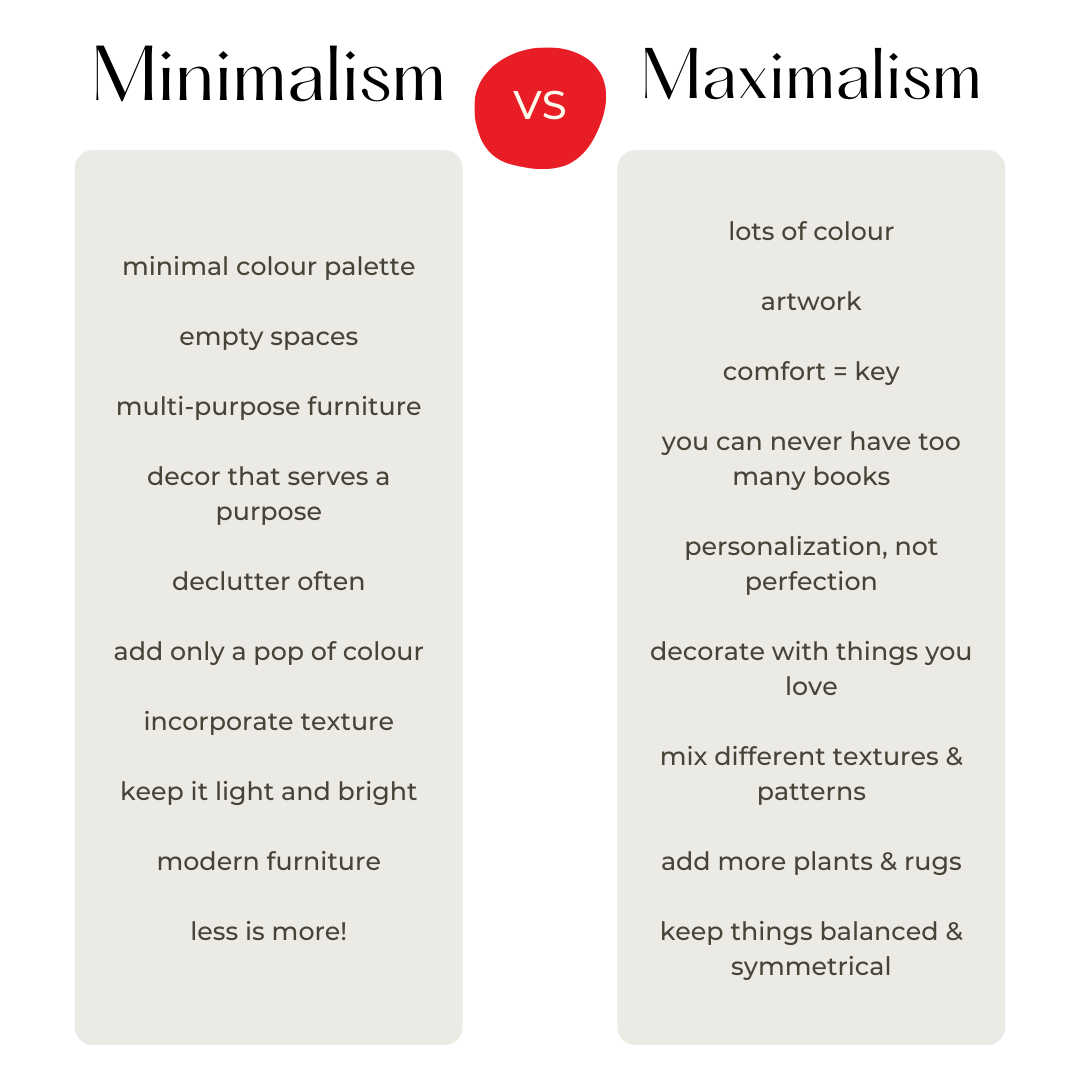
Minimalism is a lifestyle and design philosophy that emphasises simplicity, functionality, and intentionality. It’s about stripping away the excess and focusing on what truly matters. In the context of interior design, minimalism is characterised by clean lines and uncluttered spaces, neutral colour palettes, an emphasis on functionality, and limited decorative elements. The minimalist approach extends beyond aesthetics, encouraging a lifestyle of reduced consumption and increased mindfulness. Minimalists often report feeling a sense of calm and clarity in their simplified environments. The key principles of minimalism include quality over quantity, intentional living, decluttering and organisation, a focus on essentials, and sustainable consumption.

Understanding Maximalism
In contrast to minimalism, maximalism embraces abundance, complexity, and rich visual experiences. This design philosophy is characterised by bold colours and patterns, an eclectic mix of furniture and decor, layered textures and materials, and personal collections and statement pieces. Maximalism is not just about accumulating things; it’s about creating spaces that reflect personality, inspire curiosity, and encourage conversation. Maximalist environments often evoke feelings of energy and excitement. The key principles of maximalism are self-expression through design, embracing variety and contrast, storytelling through objects, celebration of personal interests, and creating immersive environments.

The pendulum of design trends has swung between minimalism and maximalism over the years, reflecting broader societal shifts. In the 1980s and 1990s, maximalism thrived, mirroring the optimism and prosperity of the era. The late 1990s and early 2000s saw a shift towards minimalism, influenced by modernist principles and growing awareness of sustainability. Recently, there has been a resurgence of maximalism, particularly in the wake of the COVID-19 pandemic. This revival is driven by a desire for joy, self-expression, and escapism after periods of isolation. Social media platforms have also played a role in showcasing and popularising bold, maximalist aesthetics.

As we look forward, both minimalism and maximalism continue to evolve and coexist. Here’s how these philosophies are expected to manifest.

Minimalism is expected to have a renewed focus on reducing physical and digital clutter, as well as an emphasis on investing in high-quality, durable items rather than disposable goods. Minimalists also pay attention to sustainable choices with increased attention to eco-friendly and sustainable products and practices and live in multifunctional spaces in designs that prioritise versatility and efficiency in living areas. Minimalists also extend their minimalist principles to digital minimalism, which includes the use of minimalist principles in the use of technology and online presence.

Maximalism is expected to continue to be bold in its expressions with the continued use of vibrant colours, patterns, and eclectic combinations. They live in personalised spaces in interiors that reflect an individual’s personality and interests more strongly. They have curated collections with thoughtful displays of personal collections and meaningful objects and layered textures that incorporate various materials and textures to create rich, sensory experiences. Maximalists tell stories through design, using decor and arrangements to convey personal narratives and cultural influences.

Is one better than the other?
The question of whether minimalism or maximalism is better is subjective and depends on individual preferences, lifestyles, and goals. Both approaches have their strengths and can contribute positively to one’s life when applied thoughtfully.

Benefits of minimalism include reduced stress from clutter, increased focus and productivity, financial benefits from reduced consumption, environmental sustainability, and easier maintenance of living spaces. The benefits of maximalism are enhanced creativity and self-expression, rich, stimulating environments, celebrations of personal history and interests, the potential for unique, characterful spaces, and the opportunity for constant evolution and change. Ultimately, the choice between minimalism and maximalism should be guided by what brings one joy and aligns with one’s values. Some individuals may find a balance by incorporating elements of both philosophies, creating a personalised approach that suits their needs.

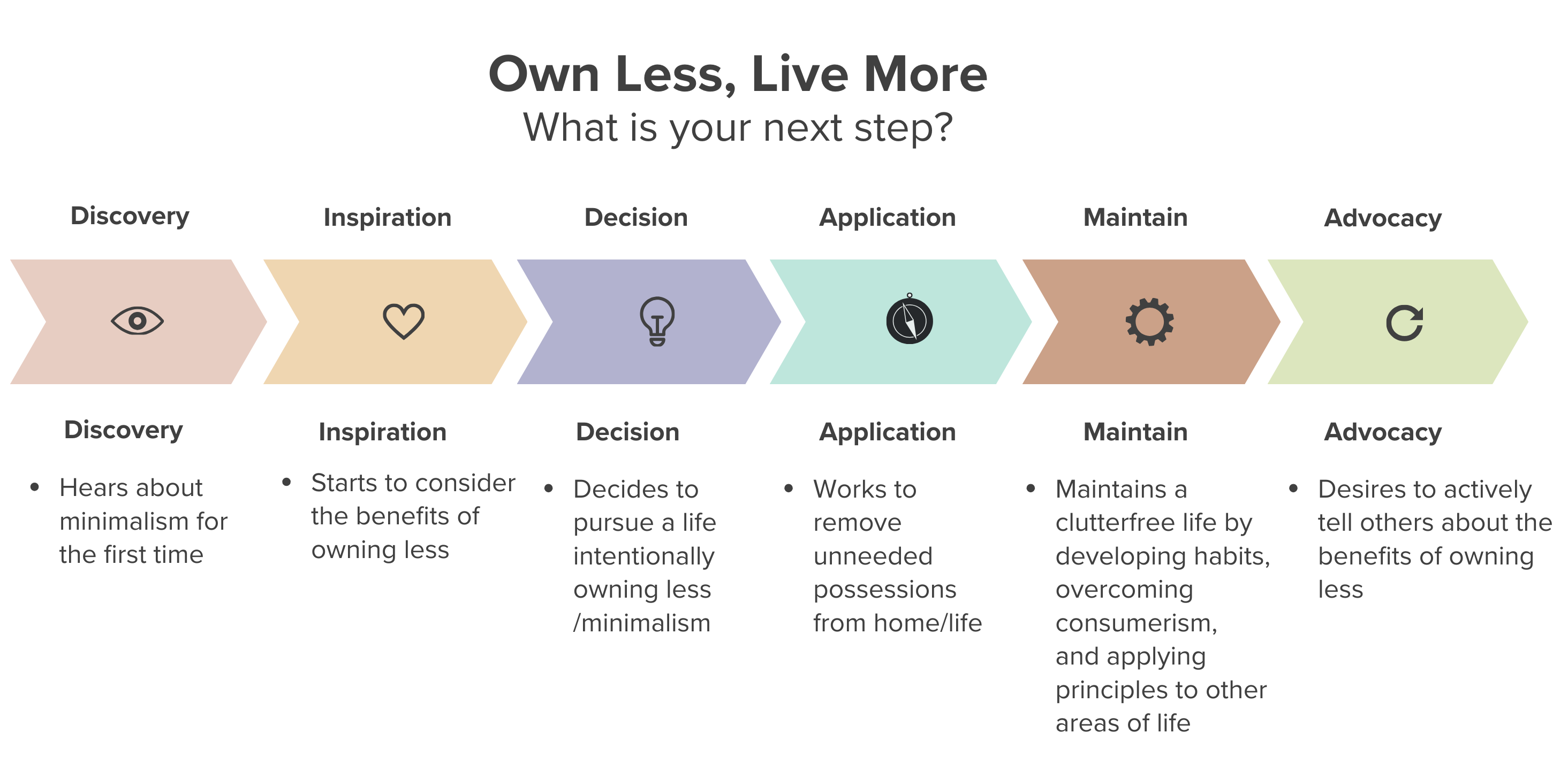
Strategies for becoming a minimalist
If one is drawn to the minimalist lifestyle, here are some strategies to help one embrace this philosophy:

  • Start with a decluttering challenge: Begin by systematically going through one’s belongings and removing items that don’t serve a purpose or bring one joy.
  • Adopt the one-in-one-out rule: For every new item one brings into one’s home, remove one existing item.
  • Focus on quality: When making purchases, prioritise well-made, durable items that will last longer and serve multiple purposes.
  • Simplify one’s wardrobe: Create a capsule wardrobe with versatile pieces that can be mixed and matched.
  • Embrace digital minimalism: Declutter one’s digital life by organising files, unsubscribing from unnecessary emails, and limiting social media use.
  • Practice mindful consumption: Before making a purchase, one should ask oneself if the item is truly necessary and aligns with one’s values.
  • Create breathing space: In one’s living areas, leave some empty spaces to promote a sense of calm and openness.
  • Develop a minimalist mindset: Focus on experiences rather than material possessions, and practice gratitude for what one has.
  • Streamline one’s schedule: Eliminate unnecessary commitments and focus on activities that truly matter.
  • Regular maintenance: Schedule periodic decluttering sessions to prevent the accumulation of unnecessary items.

Strategies for becoming a maximalist
If the maximalist approach resonates, one can consider these strategies to embrace this vibrant lifestyle:

  • Start with colour: Introduce bold colours into one’s space through paint, textiles, or artwork.
  • Mix patterns and textures: Experiment with combining different patterns and textures in one’s decor and clothing.
  • Curate personal collections: Display collections of items that reflect one’s interests and experiences.
  • Layer one’s decor: Add depth to one’s spaces by layering rugs, textiles, and decorative objects.
  • Embrace eclectic furniture: Mix different styles and periods of furniture to create a unique, personalised look.
  • Create gallery walls: Use walls as a canvas to display a variety of artwork, photographs, and meaningful objects.
  • Incorporate plants: Add life and texture to the space with a variety of indoor plants.
  • Use statement pieces: Invest in bold, eye-catching furniture or decor items that serve as conversation starters.
  • Play with lighting: Use various light sources, including statement fixtures, to create ambience and visual interest.
  • Tell a story: Use the space to showcase items that represent one’s personal history, travels, and experiences.

Finding balance
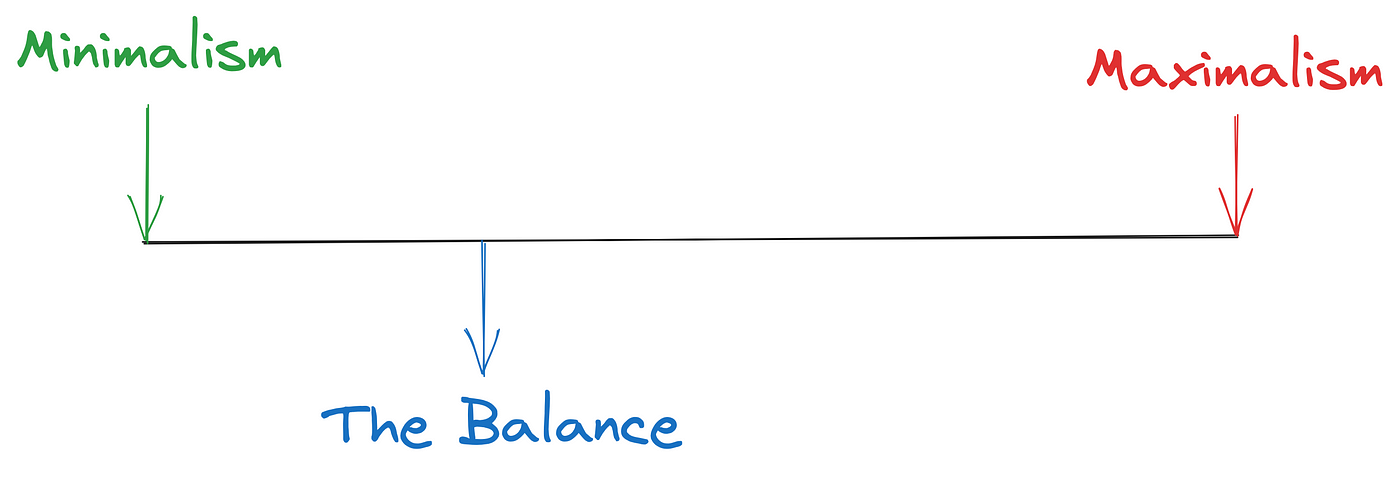
While minimalism and maximalism represent two ends of the spectrum, many people find that a balanced approach works best for them. Here are some ways to incorporate elements of both philosophies:

  • Selective maximalism: Apply maximalist principles to specific areas or rooms while keeping others more minimalist.
  • Rotating displays: Use a minimalist base but rotate collections or artwork to keep spaces fresh and interesting.
  • Functional maximalism: Embrace bold design choices while ensuring that each item serves a purpose.
  • Minimalist colour palette with maximalist textures: Use a limited colour scheme but incorporate various textures for depth.
  • Curated maximalism: Apply maximalist principles thoughtfully, ensuring that each element contributes to a cohesive whole.

The choice between minimalism and maximalism remains a personal one, reflecting individual values, lifestyles, and aesthetic preferences. Both philosophies offer unique benefits and can contribute to a fulfilling life when applied thoughtfully. Minimalism provides a framework for simplicity, intentionality, and reduced consumption, which can lead to decreased stress and increased focus. On the other hand, maximalism offers opportunities for self-expression, creativity, and the creation of rich, personalised environments. Ultimately, the right choice depends on what resonates with the individual and supports their well-being. Some may find that a hybrid approach, incorporating elements of both minimalism and maximalism, provides the best of both worlds. Whether one chooses to embrace minimalism, maximalism, or a balance of both, the key is to create an environment and lifestyle that brings one joy, supports their goals, and reflects their authentic self.

Short Story: The Compass

The sun was setting over the small coastal town of Crescent Bay, casting a warm golden hue over the waves. Emma Carter stood in her grandfather’s study, surrounded by dusty bookshelves filled with travelogues and maps. It had been a week since her grandfather, a renowned explorer, had passed away, and she still felt the weight of his absence.

As she rummaged through his belongings, Emma’s fingers brushed against something cool and metallic. She pulled out an ornate compass, its burnt orange casing reflecting the fading light. It was unlike any compass she had seen before—intricate designs adorned its surface, and it felt strangely alive in her hand.

“Ah, you found it,” came a voice from behind her. It was her grandmother, Margaret, who entered the room with a gentle smile tinged with sadness. “Your grandfather always said that compass held more than just direction.”

“What do you mean?” Emma asked, turning the compass over in her hands. Margaret’s eyes sparkled with nostalgia. “He believed it would lead you to places you needed to be—not just physically, but emotionally as well. It was his most prized possession.”

Emma felt a surge of curiosity. “What was his last wish?” Margaret took a deep breath, her expression growing serious. “He wanted you to follow in his footsteps and explore the world. He believed there were still adventures waiting for you.”

Emma’s heart raced at the thought. She had always dreamed of becoming an explorer like her grandfather, but life had kept her tethered to Crescent Bay—school, work, and responsibilities. Now, with this compass in hand and her grandfather’s wish echoing in her mind, she felt an undeniable pull to embark on a journey.

The next morning, Emma packed a small backpack with essentials—water, snacks, a notebook to document her journey—and slipped the compass into her pocket. With one last glance at her childhood home, she set off towards the nearby cliffs that overlooked the ocean.

As she reached the edge of the cliffs, Emma took out the compass and held it before her. The needle spun wildly before settling in one direction—toward the north. She smiled at the thought of adventure awaiting her. “Alright,” she said aloud to herself, “let’s see where this leads.”

Following the compass’s direction, Emma trekked through winding paths and dense forests that bordered Crescent Bay. With each step she took into the wilderness, she felt a sense of freedom wash over her—a stark contrast to the confines of everyday life. Hours passed as she walked deeper into nature. The compass led her to a hidden waterfall cascading into a crystal-clear pool surrounded by vibrant wildflowers. Emma gasped at the beauty before her; it was as if nature had painted this scene just for her.

She sat on a rock by the water’s edge and opened her notebook to jot down her thoughts. “Day 1: Found a hidden waterfall,” she wrote. “The compass is guiding me toward something special.” As she wrote, Emma couldn’t shake off the feeling that this journey was more than just an exploration of new places—it was also about uncovering pieces of herself that had long been buried under layers of expectation and routine. The next day brought new adventures as Emma continued to follow the compass northward. Each destination revealed breathtaking landscapes—a secluded beach with golden sands, and an ancient grove filled with towering trees that whispered secrets in the wind.

One afternoon, while exploring an old fishing village along the coast, Emma stumbled upon an elderly man sitting outside a small shop filled with trinkets and souvenirs. His weathered face broke into a warm smile as he saw Emma approach. “Ah! You look like someone who enjoys adventure,” he said with a twinkle in his eye. “I do!” Emma replied enthusiastically. “I’m following my grandfather’s compass.” The man’s expression shifted to one of recognition. “Your grandfather? Thomas Carter? He was quite the explorer! I remember him well.”

Emma’s heart swelled with pride. “Yes! He passed away recently.” The man nodded solemnly. “He left behind quite a legacy. Did he ever tell you about his journey to find the Lost Isles?” Emma shook her head. “No, he didn’t mention it.” “Ah,” he said thoughtfully. “It’s said that those isles hold treasures beyond imagination—both material and spiritual.” He leaned closer and whispered conspiratorially, “Many have searched for them but few have returned unchanged.”

Intrigued by his words, Emma asked him for more details about these isles and how they related to her grandfather’s adventures. “Your grandfather believed that true treasure lies not just in gold or jewels but in understanding oneself,” he explained. “Perhaps your compass is guiding you toward those isles—not just geographically but emotionally as well.” With newfound determination igniting within her, Emma thanked the man and continued on her journey.

Days turned into weeks as Emma followed the compass further along the coast and inland through lush landscapes dotted with villages rich in culture and history. Each place she visited seemed to resonate with stories from generations past—stories that echoed themes of love, loss, resilience, and hope.

One evening while camping under starlit skies near a serene lake, Emma reflected on what she had learned so far. She realized that every destination brought new insights about herself and her family’s legacy—the sacrifices made by those who came before her and their dreams woven into hers. As she sat by the flickering campfire writing in her notebook about these revelations, she felt an overwhelming sense of connection—not only to nature but also to those who had walked this earth long before her.

“Maybe my grandfather wasn’t just an explorer,” she mused aloud to herself. “Maybe he was also searching for something deeper—a way to understand our place in this world.” But not all days were peaceful; one afternoon while hiking through dense woods toward what appeared on maps as an uncharted area near the coast—dark clouds gathered ominously overhead.

Emma quickened her pace but soon found herself caught in a torrential downpour that soaked through her clothes within minutes. Seeking shelter beneath an ancient tree with gnarled roots protruding from its base—she huddled against its trunk trying desperately to shield herself from the rain pelting down relentlessly around them! As thunder rumbled overhead sending shivers down her spine—Emma closed her eyes tightly wishing the storm would pass quickly allowing sunlight back into life once more!

Suddenly—a flash illuminated the surroundings revealing something glinting among the roots below! Curiosity piqued despite fear gripping her heart; she reached down carefully brushing away mud until uncovering a small metallic box intricately engraved resembling designs reminiscent of ancient times!

Heart racing—she pried open the lid revealing inside delicate necklace adorned with beautifully crafted emeralds glistening even amidst gloom surrounding them! “This must be part of what my grandfather sought!” Emma gasped realising the connection between the necklace discovered here today aligning perfectly alongside stories told earlier during travels! With renewed vigour despite the storm raging outside—Emma carefully secured the necklace around her neck feeling the warmth radiating from stones nestled against her skin!

Once the rain subsided allowing sunlight to break through the clouds illuminating the path ahead—she continued onward determined to uncover secrets hidden within the legacy left behind not just by ancestors but also by those who loved fiercely throughout history!

Days later, arriving at a coastal town bustling with life; locals welcomed warmly sharing tales woven together across generations connecting past present future alike reminding everyone importance of cherishing memories made along the way!

One evening while dining at a local eatery surrounded by laughter joy filling air; Emma overheard a conversation between two fishermen discussing legends tied back towards Lost Isles mentioned earlier during travels! Intrigued—she approached them asking questions prompting them to share stories passed down through families revealing deeper truths surrounding love triangles heartbreaks tragedies faced throughout centuries past…

Each tale resonated deeply within the heart inspiring hope and resilience reminding everyone present how love transcends time itself weaving threads connecting lives forevermore!

After weeks spent exploring the coastline and discovering hidden gems along the way—Emma finally arrived at a destination marked clearly upon the map indicating a location rumouredto to lead towards Lost Isles itself! Standing upon a cliff overlooking the vast expanse of ocean waves crashing against rocks below; she felt a mixture of excitement and trepidation coursing through her veins knowing that her journey was nearing its conclusion yet realising adventure never truly ends!

Taking a deep breath and gathering courage; she held tightly onto the emerald necklace feeling its energy pulsate reminding strength derived from the legacy left behind guiding every step taken thus far! With determination igniting spirit within; Emma set sail aboard the small boat navigating treacherous waters guided solely by intuition trusting compass leading true north towards destiny awaiting discovery…

After hours spent battling waves, she finally emerged victorious upon a shore of pristine white sand stretching endlessly before her. Her eyes were wide open taking everything the moment offered fully appreciating the beauty surrounding her. As sunlight bathed the landscape illuminating the vibrant colours of the flora and fauna thriving all around; Emma stepped ashore feeling a connection deepening within her heart knowing this place held significance beyond comprehension!

Exploring further inland, Emma discovered hidden caves adorned with beautifully crafted murals depicting stories told throughout history capturing the essence of love lost and found again reminding everyone of the importance of cherishing bonds formed across generations…

While exploring the cave adorned with intricately carved symbols resembling the emerald necklace discovered earlier; realisation dawned upon Emma. She understood the truth behind the legacy woven throughout lives lived long ago—the necklace wasn’t merely an artefact representing wealth but rather the embodiment of hope resilience love transcending time itself! After days spent uncovering secrets hidden within the Lost Isles; Emma returned home feeling transformed and enriched with the experiences gained along the way shaping her perspective forevermore!

Back at Crescent Bay surrounded by familiar sights and sounds, Emma’s heart was filled with warmth reminding everyone present of the importance of embracing the journey undertaken together and forging deeper connections. As the news spread throughout the community regarding the discoveries made during Emma’s travels, it inspired others to pursue dreams and to ignite passions reigniting the flames of hope within hearts longing for adventure awaiting discovery beyond horizons unseen…

Standing upon the cliff overlooking ocean waves crashing against rocks below once again; Emma held tightly onto her emerald necklace feeling energy pulsate reminding strength derived from the legacy left behind guiding every step taken thus far! With newfound purpose igniting spirit within; she vowed to continue honouring ancestors ensuring stories lived on inspiring future generations embracing journeys undertaken together forging connections deeper than ever imagined possible…