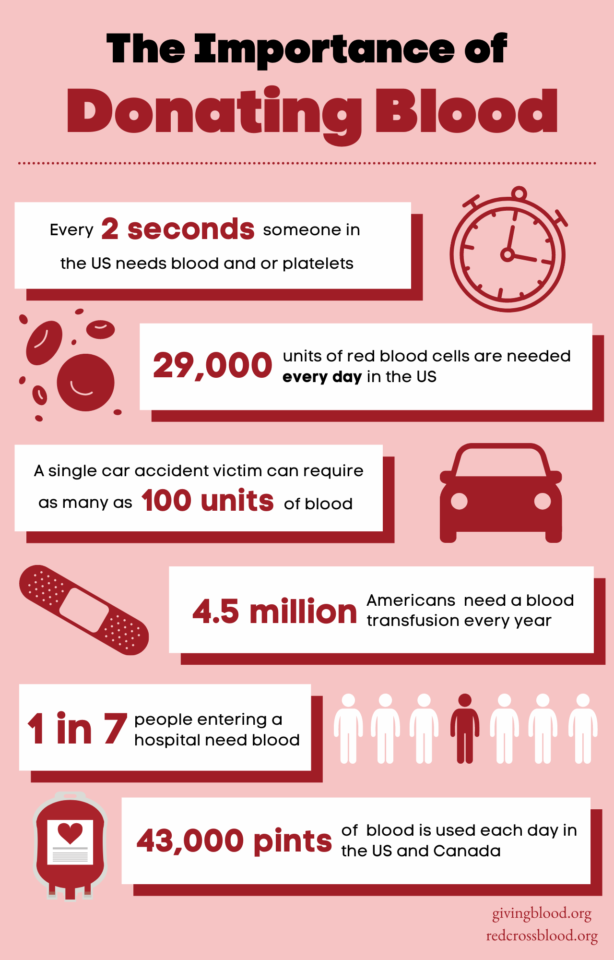
Poem: Solitude

I am someone who loves being alone. I love days when there is noone at home and I can revel in the solitude. This poem is an ode to those days of solitude…

Solitude

In the stillness of a quiet room,
Where shadows dance and thoughts consume,
Solitude whispers, a gentle embrace,
A sanctuary found, a sacred space.

No voices echo, no footsteps tread,
Just the silent hum of thoughts unsaid,
In solitude’s arms, the world grows still,
A tranquil haven where dreams fulfill.

The outside clamour fades away,
As solitude invites the heart to stay,
To wander through fields of introspection,
To seek the soul’s quiet reflection.

In the hush of this serene retreat,
The mind finds solace, the spirit is replete,
There is no need for words or human touch,
For solitude’s company is just as much.

Here, the heart can freely roam,
In its vast expanse, it calls its own,
To ponder mysteries, to contemplate,
In solitude, the soul does elevate.

It’s a dance of shadows, a silent song,
Where solitude’s presence feels so strong,
A friend to those who seek its grace,
A refuge found in this quiet place.

In solitude, the self is known,
A time to cherish, a time to own,
The depth of being, the quiet profound,
In solitude’s silence, true peace is found.

So, fear not the quiet, nor the alone,
For in solitude’s realm, the heart has grown,
A tapestry of thoughts, so pure, so wide,
In the embrace of solitude, we find our guide.

World Population Day

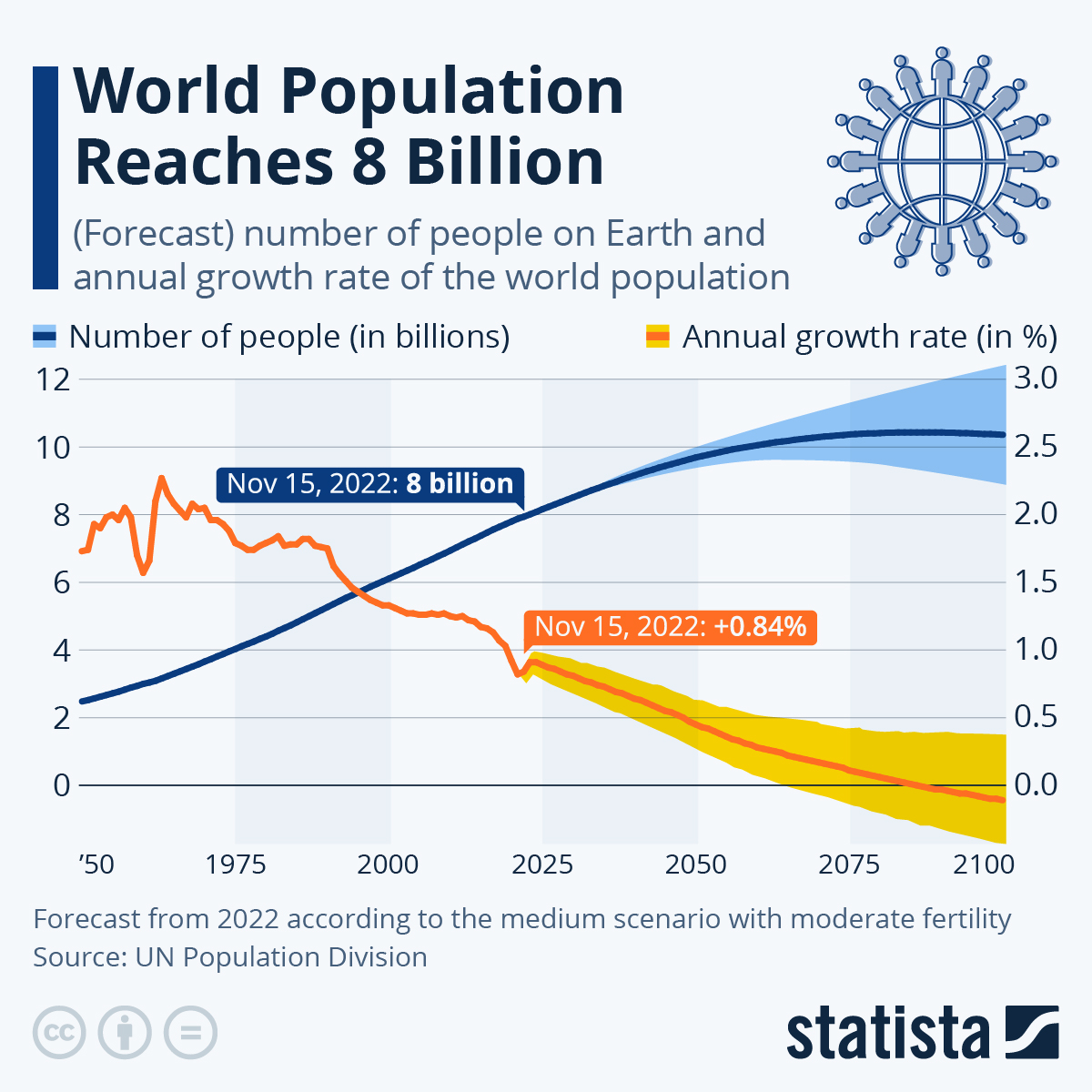
Every year on 11 July, the world observes World Population Day, a pivotal occasion that shines a spotlight on the complex dynamics of global population trends and their far-reaching implications. As humanity continues to grow, this day serves as a poignant reminder of the delicate balance we must strike between accommodating our burgeoning numbers and preserving the planet’s finite resources.

The origins of World Population Day can be traced back to 1989, when the United Nations Development Programme, UNDP, proposed the idea of commemorating the day. This initiative was born out of the recognition that the world’s population had reached a staggering five billion people on July 11, 1987, a milestone that underscored the urgency of addressing population-related challenges. The first official observance of World Population Day took place on July 11, 1990, with over 90 countries participating. Since then, it has become an annual event, providing a platform for governments, non-governmental organisations, and civil society to raise awareness, promote advocacy, and foster dialogue on critical issues related to population growth, reproductive health, and sustainable development.

Population growth is a complex phenomenon with both positive and negative implications. On the one hand, a growing population can drive economic growth, innovation, and cultural diversity. A larger workforce can contribute to increased productivity, while a diverse population can foster creativity and new perspectives.

However, unchecked population growth can also strain finite resources, exacerbate environmental degradation, and intensify social and economic inequalities. Rapid population growth can lead to overcrowding, inadequate access to healthcare, education, and housing, and increased competition for limited resources such as food, water, and energy.

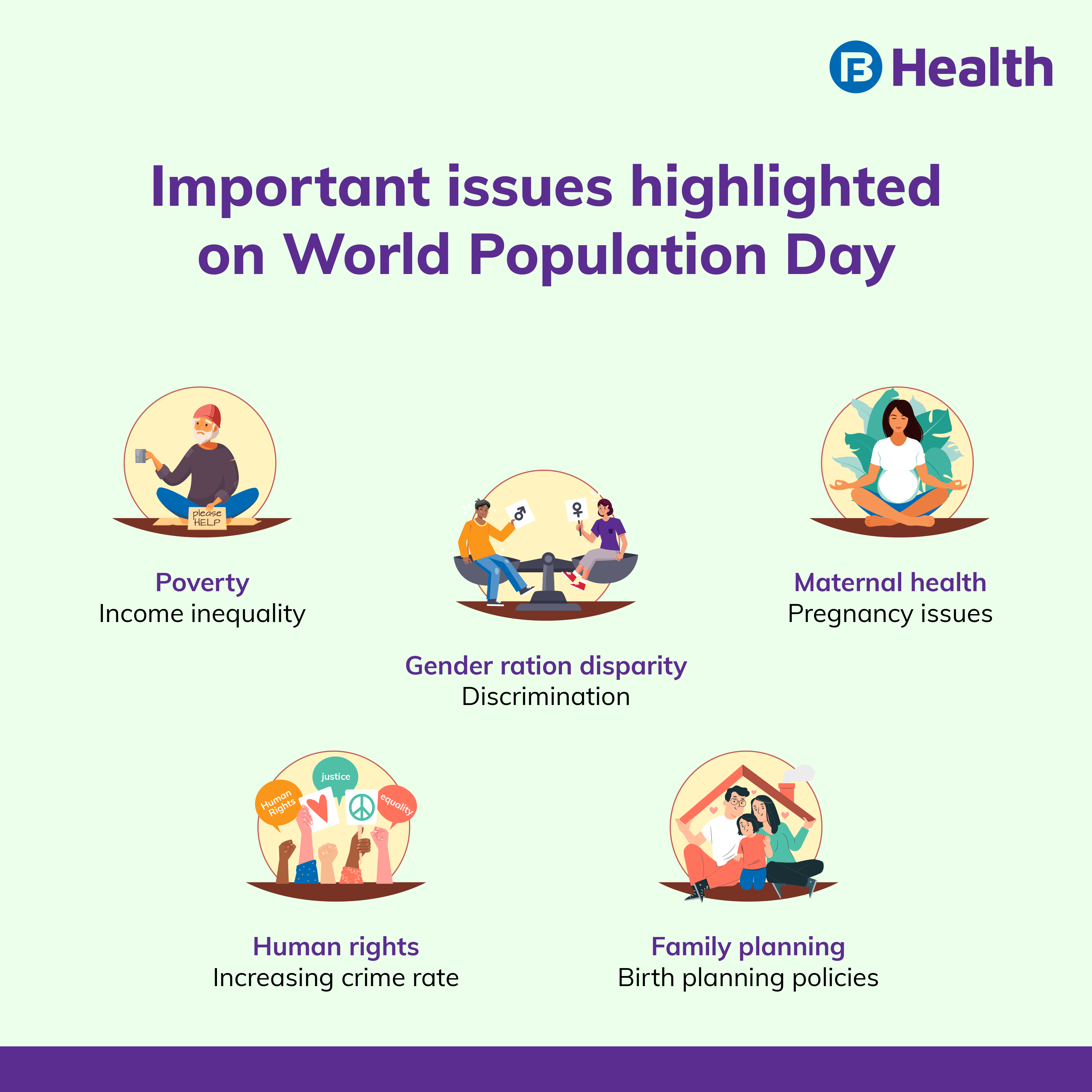
It is crucial to strike a balance between accommodating population growth and ensuring sustainable development. This requires a multifaceted approach that addresses issues such as access to family planning services, women’s empowerment, education, and economic opportunities, as well as responsible resource management and environmental conservation.

World Population Day serves as a powerful reminder of the interconnectedness of population dynamics and global development challenges. It highlights the importance of investing in reproductive health services, promoting gender equality, and empowering women and girls to make informed choices about their lives and families. By raising awareness and fostering dialogue, World Population Day aims to mobilise efforts towards achieving the United Nations’ Sustainable Development Goals (SDGs), particularly those related to health, education, gender equality, and sustainable cities and communities.

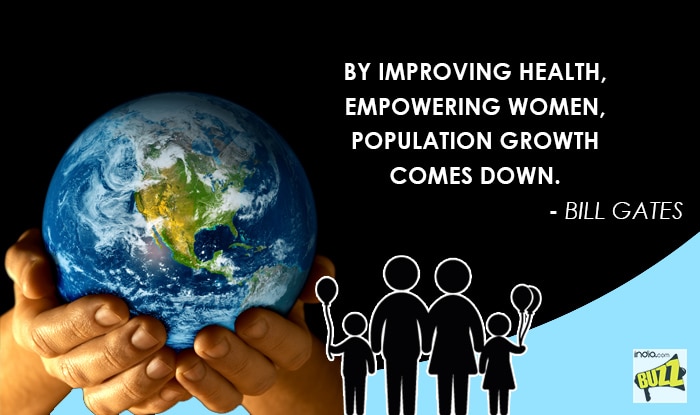
Each year, the United Nations sets a specific theme for World Population Day, providing a focal point for discussions and initiatives. For 2024, the theme is “Empowering Women, Transforming Societies.” This theme recognises the pivotal role that women play in shaping population dynamics and driving sustainable development. When women are empowered with access to education, healthcare, and economic opportunities, they are better equipped to make informed decisions about their reproductive health and family planning. This, in turn, can lead to improved maternal and child health outcomes, reduced poverty, and greater gender equality. Empowering women has a ripple effect on society as a whole. When women can participate fully in social, economic, and political spheres, they can contribute to the development of more inclusive, equitable, and sustainable communities.
Women’s empowerment through education and reproductive health services allows them to make informed family planning choices, which can help manage population growth rates. Gender discrimination and a lack of opportunities for women hinder their ability to fully participate in and contribute to economic and social progress. Promoting women’s rights, ending gender-based discrimination, and ensuring access to sexual and reproductive health services are crucial for achieving many of the Sustainable Development Goals related to health, education, and inclusive development.

World Population Day serves as a vital reminder of the intricate relationship between population dynamics, sustainable development, and the empowerment of women and girls. As we celebrate this day in 2024, let us renew our commitment to creating a world where every individual has access to quality education, healthcare, and economic opportunities, regardless of gender. By empowering women and promoting gender equality, we can unlock the transformative potential of societies and pave the way for a more sustainable and equitable future for all. It is through collective action, advocacy, and a shared vision that we can address the challenges posed by population growth and ensure a prosperous and thriving world for generations to come.

Adulting 101: Financial Literacy

As GG & BB turn 21 later this year (where did all the time go?), I decided to start a new series aimed at young adults. This series will have articles on what adulting is all about. So what is adulting? Adulting is simply doing things that an adult does – work, make and save money, buy or rent a home, etc. Today’s topic, the first in the series, will talk about a very important, perhaps the most important, aspect of adulting – financial literacy.

Being financially literate means having the knowledge and skills to make informed decisions about managing money effectively. This critical life skill empowers one to achieve their financial goals, build wealth, and secure their future.

What is financial literacy? Financial literacy encompasses understanding concepts like budgeting, saving, investing, credit, debt management, and risk protection through insurance. It involves being able to read and analyse financial statements, calculate interest rates, and comprehend the time value of money. Ultimately, financial literacy equips one with the ability to make sound financial choices that align with their short-term and long-term objectives.

Developing financial literacy early in one’s career is crucial for several reasons. Understanding credit, interest rates, and the consequences of overspending can help one steer clear of accumulating unmanageable debt, which can hinder their financial progress. Unexpected expenses like medical bills or job loss can derail finances. Financial literacy teaches the importance of setting aside funds for emergencies and providing a safety net. Whether it’s buying a home, funding retirement, or achieving other financial milestones, financial literacy empowers an individual to make informed decisions about saving and investing for their future goals. Lastly, being financially literate means understanding the role of insurance in protecting assets and income from potential risks, such as accidents, illness, or natural disasters.

One of the fundamental principles of financial literacy is the importance of saving. Developing the habit of saving early can have a profound impact on long-term financial well-being. Here are some reasons why saving should be a priority:

  1. Emergency fund: as mentioned earlier, an emergency fund can provide a financial cushion during unexpected events, preventing one from going into debt or depleting their long-term savings.
  • Retirement planning: compound interest is a powerful force that can help retirement savings grow exponentially over time. Starting to save for retirement early, even with small amounts, can make a significant difference in future financial security.
  • Achieving financial goals: Whether it’s buying a house, starting a business, or taking a dream vacation, saving consistently can help one achieve their financial goals more quickly.

Here are some tips for starting on a financial literacy journey:

  1. Create a budget to track income and expenses to understand where the money is going. Budgeting is the foundation of effective money management.
  • Build an emergency fund and aim to save at least three to six months’ worth of living expenses for unexpected emergencies.
  • Educate oneself by reading books, attending workshops, or taking online courses to improve one’s financial knowledge. Understanding concepts like compound interest, credit scores, and investment strategies can empower one to make better financial decisions.
  • Automate savings by setting up automatic transfers from salary and other commonly used accounts to a dedicated savings account, making saving a habit and reducing the temptation to spend.
  • Seeking professional advice by working with a financial advisor, especially for more complex financial matters like retirement planning or investment strategies. One should look for fee-only advisors who act as fiduciaries, putting one’s interests first.
  • Once an emergency fund has been established and high-interest debts have been paid off, one should consider investing in diversified portfolios like mutual funds or exchange-traded funds (ETFs) to build long-term wealth.

The key things to focus on in building emergency funds are setting realistic goals, making saving automatic and consistent, cutting expenses where possible, and taking advantage of opportunities to direct extra money towards the emergency fund. Building the habit and making it a priority from a young age will pay off tremendously. To build an emergency fund, here are some effective ways to start:

  1. Start small and set achievable goals: Begin by saving the first $1,000 (or an equivalent amount in your currency) as an initial emergency fund target. Set small, realistic goals like saving $20-$100 per month until that first $1,000 is reached. Having an achievable initial goal will help one stay motivated and build the habit of saving.
  • Set up automatic transfers: Automate savings by setting up recurring transfers from the main account to a dedicated high-yield savings account for the emergency fund. Treat these automatic transfers like a recurring bill that gets paid first before other expenses. Automating the process makes it easier to save consistently without having to think about it.
  • Cut back on unnecessary expenses: Identify and reduce discretionary spending on things like eating out, entertainment, subscriptions, etc. Cook at home, find free/low-cost hobbies, and cancel unused memberships. Redirect the money saved from cutting expenses into the emergency fund.
  • Use windfalls and pay raises: When one receives tax refunds, bonuses, gifted money or pay raises, allocate a portion towards the emergency fund. Don’t treat windfalls as extra spending money; instead, prioritise saving some of it.

Developing financial literacy is an ongoing journey, but the sooner you start, the better prepared you’ll be to navigate the financial challenges and opportunities that lie ahead. Embrace financial education, cultivate healthy money habits, and take control of your financial future from the very beginning of your career.

Short Story: The Pink Spectacles

Shivani was a curious and imaginative 6-year-old girl who lived in a small village near Ratnagiri, nestled in the lush green hills of the Konkan region. She loved to explore the winding paths and swaying coconut trees near her family’s modest home, often getting lost in her little world.

But lately, Shivani has been having trouble seeing things. When she tried to read the blackboard at school, the letters would become a blurry mess. And during playtime, she sometimes missed the ball when her friends tossed it to her, much to their amusement.

“Arre, Shivani, kai jhala? What happened to you? Can’t you see?” Her older brother Akshay would tease. Shivani would huff in frustration, wishing she could see as well as her brother. She didn’t understand why her eyesight had suddenly become so bad.

“Aai, I think there’s something wrong with my eyes,” Shivani would tell her mother, Meena, after school each day. “I can’t see things like I used to.” Meena would frown with concern, gently examining Shivani’s eyes. “Hmm, they do seem a bit strained. Maybe you need to rest them more, bala. No more reading in the dark, okay?”

But even after taking breaks, Shivani’s vision didn’t improve but seemed worse. She started bumping into furniture and tripping over rocks on the ground that she couldn’t quite make out. “Arre, look at our little Shivani, she’s turning into a chamgadar! Shivani the bat,” Akshay would laugh, flapping his arms around. “Flapping around, crashing into everything!”. Shivani would feel her face flush with embarrassment. She didn’t want to be a clumsy bat – she wanted to be able to see clearly and run and play like the other children.

One day, Shivani’s teacher at the village school announced that a team of eye doctors would be coming to the school for a special eye camp. Any student having trouble with their vision could get checked and receive free spectacles if needed. Shivani’s parents, Meena and Rajesh, decided to take her to the eye camp. They were relieved that Shivani’s eyes could be properly examined at the camp in their village.

When the day of the eye camp arrived, Shivani was both excited and nervous. She had never seen a real doctor, let alone an eye doctor with all their strange-looking equipment. The ophthalmologist, a kind older man with a warm smile, greeted Shivani and her parents. “Kaishi ahes,” he said, crouching down to Shivani’s level. “How are you? Let’s look into your eyes, shall we?”. Shivani sat patiently as the doctor shone a bright light into each of her eyes and had her read letters off a chart on the wall. After a thorough examination, the doctor turned to Meena and Rajesh.

“Well, it’s clear that your daughter has a case of myopia or nearsightedness,” the doctor explained. “Her eyes are having trouble focusing on distant objects. But the good news is that spectacles can easily correct this.” Shivani’s eyes widened with excitement. “Chashma? Really?” she exclaimed. The doctor chuckled and nodded, then led them to a table filled with different frames.

“Now, let’s find the perfect pair for you,” he said, gesturing to the selection. Shivani’s gaze immediately landed on a pair of frames with a sparkly pink design. “I want those!” she declared, pointing eagerly. The doctor carefully placed the spectacles on Shivani’s face, and when she looked around, everything came into sharp focus.

“Wow, I can see everything so clearly!” Shivani marvelled, her face lighting up with a huge smile. “The trees, the people, the blackboard – everything is so clear.”. Meena and Rajesh exchanged relieved glances, thrilled to see their daughter so excited and happy. “You look beautiful, beta,” Meena said, giving Shivani a warm hug. Shivani couldn’t stop grinning as she admired her new pink spectacles. She could hardly wait to show them off to her friends and family.

When Shivani returned to school the next day, wearing her new pink glasses, her classmates were instantly fascinated. “Wow, Shivani, your chashma is so chamak, so shiny!” exclaimed her best friend Priya. “Can I try them on?”

Shivani carefully handed the spectacles to Priya, who immediately started giggling. “Everything looks so big and close up! It’s like I’m a giant!” Soon, all of Shivani’s friends were lining up to take turns trying on the pink glasses, running around the schoolyard and marvelling at how the world looked through Shivani’s eyes. “Be careful, you’ll break them!” Shivani fretted, but she couldn’t help laughing at her friends’ antics. She had never felt so popular and special before.

Even Akshay, who usually teases Shivani, seemed impressed by her new look. “Hey choti, you look like a movie star with those glasses!” he said with a grin. “Now you can see all the mischief I get into!” Shivani rolled her eyes at her brother, but she secretly felt proud. She loved her new spectacles and how they made her stand out from the crowd. No more bumping into things for her!

With her pink, shiny chashma on, Shivani began to see the world in a whole new way. She noticed so many details she had never paid attention to before – the intricate patterns on the saris of the women in the village, the tiny insects crawling on the leaves, the wispy clouds drifting across the sky. “Aai, look at that bird up there!” Shivani would exclaim, pointing to the sky. “I can see its feathers so clearly!” Meena would smile and nod, happy to see her daughter so fascinated by the world around her. She was glad they had taken Shivani to the eye camp and that she was adjusting well to her new spectacles.

Shivani’s favourite thing to do was to sit on the roof of her house and gaze out at the lush green hills and swaying coconut trees in the distance. She could see for miles, watching the farmers tending to their crops and the cows grazing in the meadows. It was like a whole new world had opened up to her. At night, Shivani would lie in bed and stare up at the twinkling stars with wonder. She could not get over how she could see them so clearly now. She felt like she was floating in a sea of glittering lights, just like the ones on her frames. “I’m so lucky to have these glasses,” Shivani would whisper to herself. “They make everything so beautiful.”

One evening, as Shivani was sitting on the roof gazing out at the pristine beaches and crashing waves of the Konkan coast, her grandmother came up to join her. “Ajji, tell me a story,” Shivani pleaded, snuggling up to the elderly woman. Her grandmother, Radha, chuckled and nodded. “Alright, my dear. Have you heard the legend of the boksi witch that haunts these hills?”

Shivani shook her head, her eyes widening with curiosity. “Well, they say that long ago, there was a beautiful young woman who lived in these very hills,” Dadi began. “She was known for her kindness and healing powers, and the villagers would come to her for help with all sorts of ailments.” Shivani listened intently, captivated by the story.

“But one day, a jealous woman in the village accused the young healer of being a boksi – a witch who practices black magic. The villagers, filled with fear and superstition, turned on her and burned her at the stake.” Shivani gasped, her hand flying to her mouth.

“They say that the young woman’s spirit never found peace, and now her boksi form roams these hills at night, seeking revenge on those who wronged her,” Ajji continued, her voice lowering to a whisper. Shivani shivered, glancing nervously at the shadowy trees surrounding their home. “But don’t worry, my dear,” Radha said, patting Shivani’s hand reassuringly. “As long as you have your chashma, you’ll be able to see the boksi coming from miles away!” Shivani giggled, feeling a bit more at ease. She knew her ajji was just teasing her, but the legend of the boksi witch had certainly piqued her imagination.

As Shivani lay in bed that night, she couldn’t help but wonder if the boksi was real. She stared up at the twinkling stars, wishing she could see through the darkness with her chashma. But alas, they were no match for the inky blackness of the Konkan night.

The next day, Shivani was so busy daydreaming about the boksi witch that she wasn’t paying attention to where she was going. As she was walking home from school, she became entranced by the swaying coconut trees and the crashing waves in the distance.

Suddenly, Shivani felt herself collide with something solid. She looked up to see an elderly woman glaring down at her, her wrinkled face twisted in anger. “Arre, you foolish girl! Can’t you see where you’re going?” the woman scolded, her voice raspy and harsh. Shivani felt her face flush with embarrassment. “I’m so sorry, kaki,” she stammered. “I didn’t mean to.” “Bah, you children these days, always with your heads in the clouds!” the woman interrupted, shaking her head in disgust. “You should be more careful, or you’ll end up like the poor boksi witch, doomed to wander these hills forever!” Shivani’s eyes widened in fear at the mention of the boksi. She quickly apologized again and hurried home, her heart pounding.

When Shivani told her parents what had happened, Meena and Rajesh were concerned. “Bala, you need to be more mindful when you’re wearing your spectacles,” Meena said gently. “They are a gift, but you have to use them responsibly.” Rajesh nodded in agreement. “Your ajji’s stories may be just legends, but there are real dangers out there. We don’t want you to get hurt, Shivani.” Shivani felt ashamed of her carelessness. She knew her parents were right—she had to be more careful, both for her safety and out of respect for the gift of her glasses.

From that day on, Shivani made a conscious effort to be more aware of her surroundings. She would take the time to carefully navigate the winding paths and crowded markets, always keeping her spectacles firmly in place. Shivani also started using her improved vision to help others. She would read signs and labels out loud to her illiterate grandmother, and assist her younger cousins with their homework by writing out the answers in big, clear letters. “You’re such a good girl, Shivani,” her grandmother would say, patting her on the head. “Your spectacles are a blessing, not just for you but for all of us.”

Shivani beamed with pride at her grandmother’s words. She felt like she had learned an important lesson – that her spectacles were not just about seeing the world more clearly, but about using her gift to make a difference in the lives of those around her. As Shivani sat on the roof, gazing out at the lush green hills and the shimmering Konkan coastline, she couldn’t help but feel grateful for the spectacles that had opened up a whole new world to her. She knew that with her newfound vision, she could accomplish anything she set her mind to – even if it meant facing the legendary boksi witch that haunted these very hills.

World Blood Donor Day

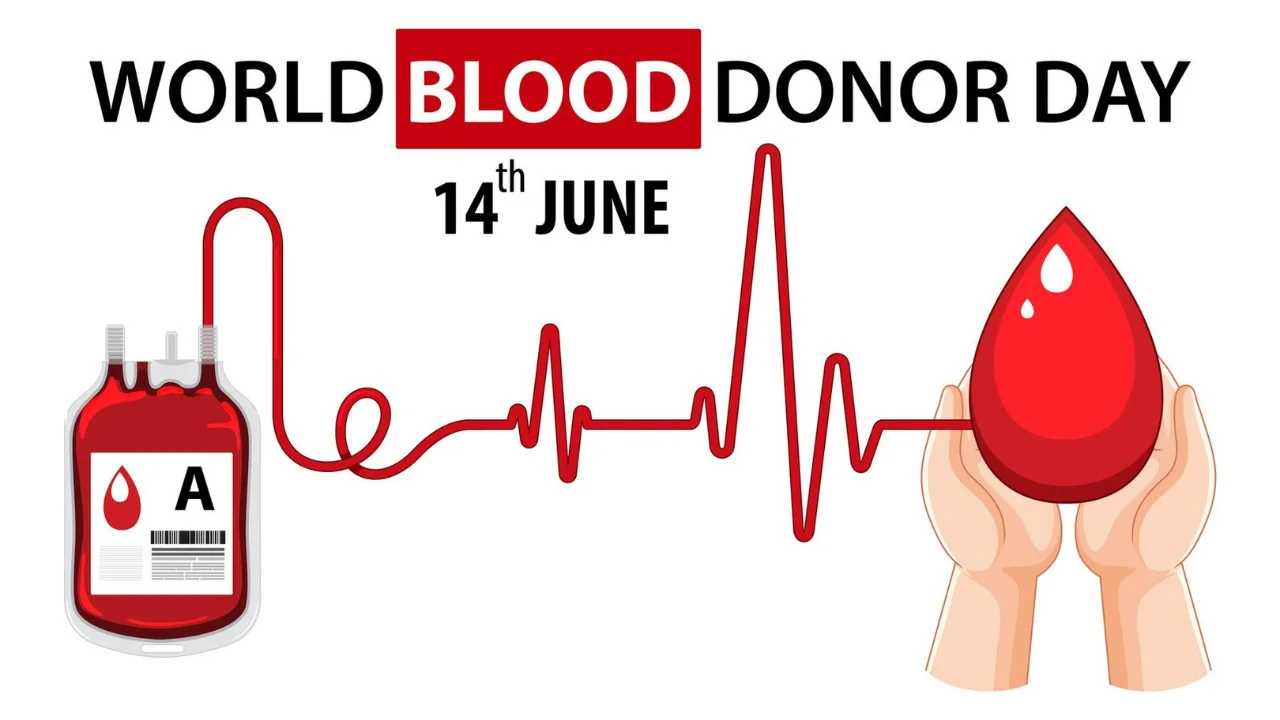
Friday is World Blood Donor Day, a global event celebrated annually on June 14th to raise awareness about the critical need for safe blood and blood products and to honour the selfless individuals who donate blood to save lives.

The idea for World Blood Donor Day was first proposed by the World Health Organisation or WHO, in 2004, in collaboration with the International Federation of Red Cross and Red Crescent Societies, the International Federation of Blood Donor Organisations, and the International Society of Blood Transfusion. The date of June 14th was chosen to commemorate the birthday of Karl Landsteiner, the Austrian-American physician who discovered the ABO blood group system in 1901 – a groundbreaking achievement that paved the way for safe blood transfusions and the modern practice of blood banking.

The first World Blood Donor Day was celebrated in 2005, and since then, it has become an annual event observed by all member states of the WHO. The event aims to thank voluntary blood donors for their life-saving contributions, while also encouraging more people to become regular blood donors.

The theme for World Blood Donor Day 2024 is “Give Blood, Give Plasma, Share Life, Share Often.”. This theme reflects the crucial role that blood and plasma donations play in maintaining the health and well-being of communities around the world. The 2024 theme will focus on several key objectives, including, celebrating and expressing gratitude to individuals who donate blood and plasma, inspiring more people to become blood donors, and encouraging healthy individuals to donate blood and plasma regularly, within safe and feasible limits, to improve the quality of life for patients who depend on transfusions and contribute to the establishment of a reliable blood supply system. emphasising the vital role of voluntary, non-remunerated regular blood and plasma donations in achieving universal access to safe blood products for all populations, and mobilising support at national, regional, and global levels from governments and development partners to invest in, strengthen, and sustain national blood programs. The 2024 campaign aims to raise awareness about the importance of blood and plasma donations and to inspire more people to become regular, voluntary blood donors.

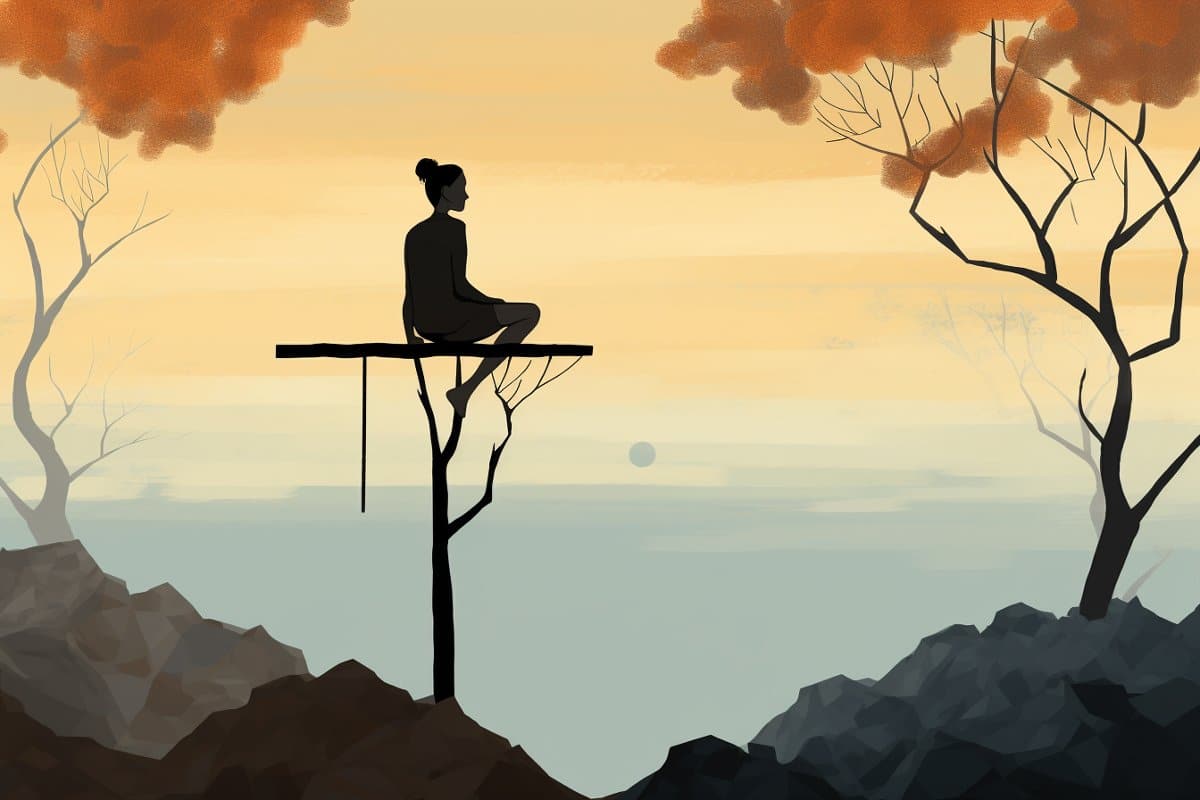
So why is blood donation so important? Blood is a precious and irreplaceable resource that is essential for saving lives and supporting complex medical and surgical procedures. Every day, millions of people around the world rely on blood transfusions to treat life-threatening conditions, such as severe bleeding, anaemia, and various forms of cancer. However, in many countries, there is not an adequate supply of safe blood, and blood services face the challenge of making sufficient blood available while also ensuring its quality and safety. An adequate supply can only be assured through regular donations by voluntary, unpaid blood donors.

The WHO’s goal is for all countries to obtain all their blood supplies from voluntary, unpaid donors by 2020. As of 2014, 60 countries had their national blood supplies based on 99-100% voluntary, unpaid blood donations, while 73 countries were still largely dependent on family and paid donors. In 2020, the WHO found that from 2013 to 2018, blood donations from voluntary, unpaid donors increased by 7.8 million across 156 countries. By 2018, 79 countries, mostly high- and middle-income, were collecting more than 90% of their blood supply from voluntary, unpaid donors. However, in 56 countries, more than half of the blood supply was still dependent on family/replacement and paid blood donors as of 2018. So, while progress has been made, with more countries transitioning to 100% voluntary, unpaid blood donation systems, there are still a significant number of countries that remain heavily reliant on family/replacement and paid donors. Continued efforts are needed to promote voluntary blood donation globally. World Blood Donor Day plays a vital role in promoting a culture of voluntary blood donation, ensuring the availability of safe blood, and saving lives through the selfless acts of blood donors.

Blood is classified into different types based on the presence or absence of specific antigens on the surface of red blood cells. The main blood group systems are ABO and Rh, which together determine an individual’s blood type. The ABO blood group system consists of four main blood types: A, B, AB, and O. The Rh system, on the other hand, is based on the presence or absence of the Rh factor, which can be either positive (+) or negative (-). The rarity of blood types varies significantly, with some being more common than others. Here’s a breakdown of the relative rarity of different blood types:

  • O-negative: The universal donor blood type, O-negative, is the rarest, accounting for only about 7% of the population.
  • AB-positive: The universal recipient blood type, AB-positive, is the least common, making up only about 3.4% of the population.
  • A-negative: Approximately 6.3% of the population has this blood type.
  • B-negative: Around 1.5% of people have this blood type.
  • O-positive: The most common blood type, O-positive, is found in about 37.4% of the population.
  • A-positive: Approximately 35.7% of people have this blood type.
  • B-positive: Around 8.5% of the population has this blood type.

The rarity of certain blood types, such as O-negative and AB-positive, underscores the importance of having a diverse and reliable pool of blood donors. Individuals with these rare blood types play a crucial role in ensuring that patients in need can receive the specific blood products they require.

Blood donation has a profound and immediate impact on the lives of those in need. Every unit of blood donated can potentially save up to three lives, as the different components of blood like red cells, platelets, and plasma can be separated and used to treat a variety of medical conditions. Blood transfusions are essential for treating severe bleeding, anaemia, and various forms of cancer, as well as supporting complex medical and surgical procedures. They also play a critical role in maternal and perinatal care, helping to reduce rates of death and disability due to severe bleeding. Beyond the direct impact on patients, blood donation also has broader societal benefits. A reliable and sustainable blood supply helps to strengthen national health systems, ensuring that essential medical services are available when needed. It also fosters a sense of community and solidarity, as individuals come together to support one another in times of need.

World Blood Donor Day 2024 presents a unique opportunity for individuals around the world to become part of the #GenerationDonor movement. By donating blood or plasma, people can make a tangible and life-changing difference in the lives of those who depend on these vital resources. To encourage more people to become regular blood donors, the 2024 campaign will feature educational initiatives, such as a World Blood Donor Day quiz, to raise awareness about the importance of blood donation and the different blood types. The campaign will also provide resources and support for individuals and organizations to organise their blood donation events and activities.

By participating in World Blood Donor Day 2024, people can not only save lives but also inspire others to follow in their footsteps. Together, we can build a global community where the gift of blood and plasma is celebrated and shared freely, ensuring that no one is left behind in the quest for universal access to safe blood products. As we recognise the rarity of certain blood types and the profound impact that blood donation can have on individual lives and entire communities, we are reminded of the power of collective action.