Tomorrow is Valentine’s Day and is celebrated all over the world as the festival of love. So in honour of this festival, here are some funnies from Pinterest.


Happy Valentine’s Day everyone!

Tomorrow is Valentine’s Day and is celebrated all over the world as the festival of love. So in honour of this festival, here are some funnies from Pinterest.
Happy Valentine’s Day everyone!
In the middle of the week, Singaporeans were treated to the good news that from tomorrow, all COVID restrictions will be stood down and the disease alert or DORSCON level will move down to the lowest level of green. This also means that Singapore establishes a new endemic norm as we learn to live with the disease and adapt to it. This puts COVID-19 in the same category as the Middle East Respiratory Syndrome (MERS) and the H7N9 bird flu strain.
According to the Ministry of Health, this is due to the mild nature of the disease, especially among those who have been vaccinated, and the minimal disruption posed to healthcare capacity and daily lives. The DORSCON level has been maintained at Yellow – the second-lowest tier – since April last year, after more than two years at Orange.
From Monday, masks will no longer be mandatory on public transport as well as in some healthcare and residential care settings. However, visitors, staff, and patients will still be required to wear masks in settings where there is interaction with patients as well as indoor patient-facing areas. These include hospital wards, emergency departments, consultation rooms and waiting areas, pharmacies, clinics, and nursing homes.

Today’s quote is attributed to the singer Brian Nhira who exhorts us that even though we may not have reached our peak, we are still on our journey and on the way to the top. This is a quote that is full of hope that tells us not to give up, even at our lowest. And I think this quote is perfect for today because in the last three years, when we thought the restrictions and limitations would never end, today, many countries have opened up completely and we are on the way to a world where we have learned to live with the virus.
BB & GG are very busy with school with BB finalising his project report and preparing for his project presentations while GG is super busy with exams that start next week. She has been doing late at night and early in the morning studying, and I hope she does well and gets the reward for her hard work.
That’s all from me this week. Stay safe people!
The Gene: An Intimate History – Siddhartha Mukherjee

Spanning the globe and several centuries, The Gene is the story of the quest to decipher the master-code that makes and defines humans, that governs our form and function.
The story of the gene begins in an obscure Augustinian abbey in Moravia in 1856 where a monk stumbles on the idea of a ‘unit of heredity’. It intersects with Darwin’s theory of evolution, and collides with the horrors of Nazi eugenics in the 1940s. The gene transforms post-war biology. It reorganizes our understanding of sexuality, temperament, choice and free will. This is a story driven by human ingenuity and obsessive minds – from Charles Darwin and Gregor Mendel to Francis Crick, James Watson and Rosalind Franklin, and the thousands of scientists still working to understand the code of codes.
This is an epic, moving history of a scientific idea coming to life, by the author of The Emperor of All Maladies. But woven through The Gene, like a red line, is also an intimate history – the story of Mukherjee’s own family and its recurring pattern of mental illness, reminding us that genetics is vitally relevant to everyday lives. These concerns reverberate even more urgently today as we learn to “read” and “write” the human genome – unleashing the potential to change the fates and identities of our children.
Majestic in its ambition, and unflinching in its honesty, The Gene gives us a definitive account of the fundamental unit o
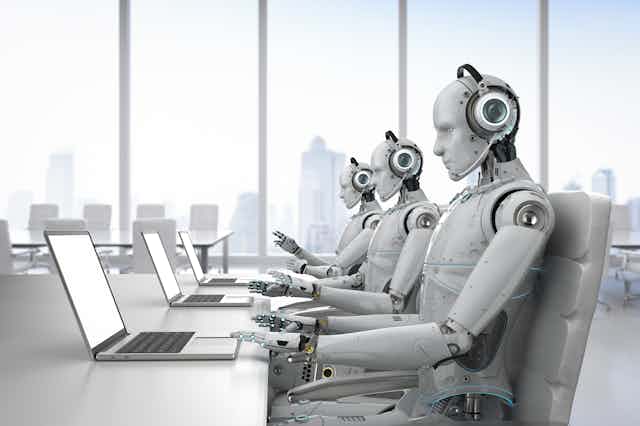
In the last few months, the excitement over the artificial intelligence software, ChatGPT has been unprecedented. So what is this software that has made everyone, irrespective of the work they do so excited?
According to ChatGPT itself, ChatGPT or Generative Pre-trained Transformer, is a language model developed by OpenAI, trained on a diverse range of internet text to generate human-like responses to natural language inputs. It uses state-of-the-art deep learning techniques, specifically transformer architecture, to generate text that is coherent and contextually appropriate. ChatGPT can be used for various tasks such as question answering, text completion, and language translation, among others. However, it’s important to note that while ChatGPT generates plausible text, it is not perfect and may provide incorrect or biased responses at times.
It took Netflix 3.5 years to reach 1 million users, while Facebook took 10 months to get to the same number and Spotify took 5 months and Instagram reached 1 million users in 2.5 months. Beating all these numbers, it took ChatGPT only 5 days to reach 1 million registered users.
A chatbot, like one of those text-messaging software programs that organisations are increasingly foisting on us, makes the average chatbot look like what humans would have looked as a Netherlander. The output is apparently so good that people assessing its written output cannot tell it apart from a human being’s work.
The product of a research lab known as OpenAI, one of the leading AI research organisations, ChatGPT is a language model first released in 2019 and based on the transformer architecture, which has revolutionised natural language processing. ChatGPT has been trained on a large corpus of text data and can generate human-like responses to a wide range of prompts. It has been used in various applications, including chatbots, language translation, and content creation, and continues to advance the field of AI language processing. The generative AI field is poised for a breakthrough in 2023
ChatGPT and other AI language models will likely have several impacts on the future, including improved efficiency and accuracy in various industries such as customer service, healthcare, and finance; advancements in natural language processing and understanding; increased automation of tasks that previously required human intelligence, the development of new applications and technologies, and the ethical considerations and debates surrounding the use of AI, particularly in decision-making processes that impact people’s lives. AI language models like ChatGPT will continue to shape and transform the way we live, work and interact with technology.
In the next decade, AI is expected to significantly impact the way we live and work in several ways. Repetitive tasks will get automated, freeing up time for more creative and strategic work. There will be improved efficiency and accuracy in various industries, including healthcare, finance, and customer service. Advancements in fields such as robotics and autonomous systems will lead to increased productivity and new job opportunities. Personalised experiences and services, including personalised medicine and personalised education, will soon be available to anyone who needs it. It will also speed up the development of new technologies, such as smart cities and the Internet of Things or IoT, improving our daily lives and work. However, these changes will also bring about new ethical considerations and challenges, such as job displacement and privacy concerns. As AI continues to evolve, it will be important to balance the benefits with responsible and ethical considerations.
So what does this really mean for all of us? A lot of jobs will become obselete, especially as AI starts to become more and more nuanced and intelligent which will mimic a reasonably intelligent person.
In the second half of January, Microsoft announced a new multiyear, multibillion-dollar investment with OpenAI, the lab that created ChatGPT. Though the specific amount was not known, Microsoft is said to be investing as much as USD 10 billion in the research lab. The deal marks the third phase of the partnership between the two companies, following Microsoft’s previous investments in 2019 and 2021. Microsoft said the renewed partnership will accelerate breakthroughs in AI and help both companies commercialize advanced technologies in the future. It is said that ChatGPT will soon be incorporated into Microsoft’s web browser Bing and MS Office applications. The computation costs of the application are estimated to be around a mind-boggling USD 100,000 a day or about USD 3 million a month or USD 36 million a year. These costs are likely to fall, however, and they would be much easier to bear with thousands of paying customers.
The best way to use ChatGPT depends on the specific use case and the desired outcome. Some common ways to use ChatGPT include chatbots where ChatGPT can be integrated into chatbots to provide human-like responses to customer inquiries, in language generation where ChatGPT can generate human-like text, such as articles, stories, or poetry or even to answer questions with ChatGPT being used to answer questions based on its training data. ChatGPT can also be used for data analysis where it can assist with data analysis by automatically generating summaries or insights from large datasets. And finally ChatGPT can be used to translate text from one language to another.
To get the best out of this chat with ChatGPT, here are some tips from ChatGPT itself. By following these tips, you can improve the accuracy and quality of your interactions with ChatGPT and get the most out of this chat.
At the end of the day, even if the general idea of AI feels like something out of a science fiction novel or movie, it cannot do everything that a human mind can do. Computers can do specific tasks exceptionally well, but no AI can write a story, play chess, fix a network outage, chat with customers, give suppliers a hard time and drink colleagues under the table after work, sometimes all at the same time.
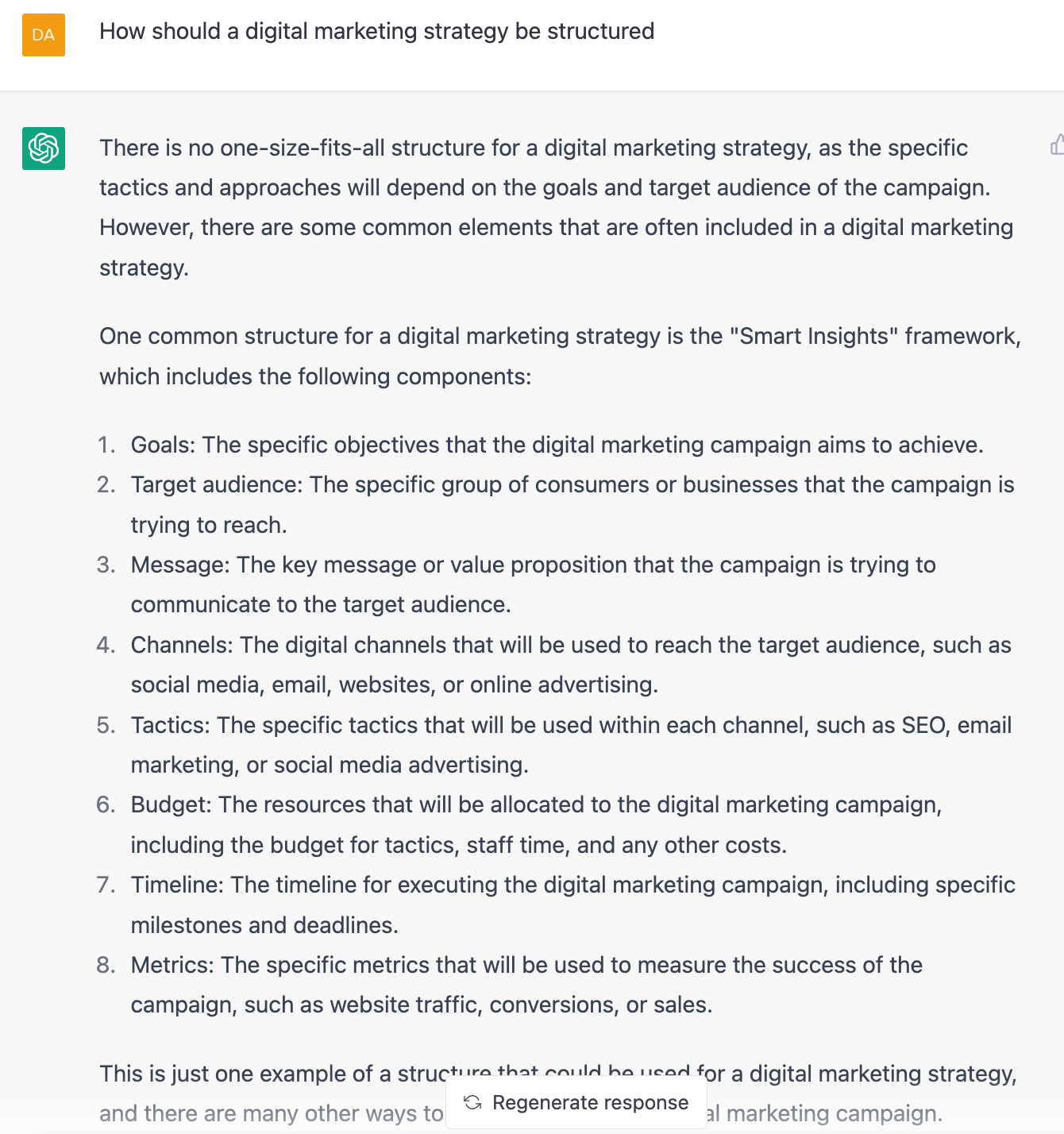
To give some idea on what ChatGPT can do, I asked it this question and here’s what it told me.
Can you write a short paragraph on the impact of the Ukraine war by Russia on the world?
The Ukraine war, which began in 2014 when Russia annexed Crimea, has had significant impacts on the world. It has resulted in increased tensions between Russia and the international community, particularly with Western countries. The conflict has also led to economic sanctions against Russia, which have impacted its economy and global trade. The war has caused a humanitarian crisis, with thousands of people losing their lives and millions displaced. It has also destabilized the region and impacted regional security. The Ukraine war has also heightened concerns about the use of military force to resolve disputes and has reignited debates about the role of international law and the UN in resolving conflicts. Overall, the impact of the Ukraine war on the world has been significant and far-reaching, and its resolution remains a key challenge for international peace and security.
So have you started playing with ChatGPT? I would love to hear from you about your thoughts.
Akbar: The Great Mughal – Ira Mukhoty

Abu’l Fath Jalal-ud-din Muhammad Akbar, the third Mughal emperor, is widely regarded as one of the greatest rulers in India’s history. During his reign, the Mughal Empire was one of the wealthiest in the world, and covered much of the Indian subcontinent. Although there are dozens of books on the empire, there are surprisingly few full-length accounts of its most remarkable emperor, with the last major study having been published over two decades ago. In Akbar: The Great Mughal, this outstanding sovereign finally gets his due, and the reader gets the full measure of his extraordinary life.
Akbar was born on 15 October 1542 and after a harrowing childhood and a tumultuous struggle for succession following the death of his father, Humayun, became emperor at the age of thirteen. He then ruled for nearly fifty years, and over the course of his reign established an empire that would be hailed as singular, both in its own time and for posterity.
In this book, acclaimed writer Ira Mukhoty covers Akbar’s life and times in lavish, illuminating detail. The product of years of reading, research, and study, the biography looks in great detail at every aspect of this exceptional ruler—his ambitions, mistakes, bravery, military genius, empathy for his subjects, and path-breaking efforts to reform the governance of his empire. It delves deep into his open-mindedness, his reverence towards all religions, his efforts towards the emancipation of women, his abolishing of slavery and the religious tax—jiziya—and other acts that showed his statesmanship and humanity. The biography uses recent ground-breaking work by art historians to examine Akbar’s unending curiosity about the world around him, and the role the ateliers played in the succession struggle between him and his heir, Prince Salim (who became Emperor Jahangir).




 Memories and Such