More photos from Banerghetta….


More photos from Banerghetta….
An Era of Darkness: The British Empire in India – Shashi Tharoor

In 1930, the American historian and philosopher Will Durant wrote that Britain’s ‘conscious and deliberate bleeding of India… [was the] greatest crime in all history’. He was not the only one to denounce the rapacity and cruelty of British rule, and his assessment was not exaggerated. Almost thirty-five million Indians died because of acts of commission and omission by the British—in famines, epidemics, communal riots and wholesale slaughter like the reprisal killings after the 1857 War of Independence and the Amritsar massacre of 1919.
Besides the deaths of Indians, British rule impoverished India in a manner that beggars belief. When the East India Company took control of the country, in the chaos that ensued after the collapse of the Mughal empire, India’s share of world GDP was 23 per cent. When the British left it was just above 3 per cent.
The British empire in India began with the East India Company, incorporated in 1600, by royal charter of Her Majesty Queen Elizabeth I, to trade in silk, spices and other profitable Indian commodities. Within a century and a half, the Company had become a power to reckon with in India. In 1757, under the command of Robert Clive, Company forces defeated the ruling Nawab Siraj-ud-Daula of Bengal at Plassey, through a combination of superior artillery and even more superior chicanery. A few years later, the young and weakened Mughal emperor, Shah Alam II, was browbeaten into issuing an edict that replaced his own revenue officials with the Company’s representatives. Over the next several decades, the East India Company, backed by the British government, extended its control over most of India, ruling with a combination of extortion, double-dealing, and outright corruption backed by violence and superior force. This state of affairs continued until 1857, when large numbers of the Company’s Indian soldiers spearheaded the first major rebellion against colonial rule. After the rebels were defeated, the British Crown took over power and ruled the country ostensibly more benignly until 1947, when India won independence.
In this explosive book, bestselling author Shashi Tharoor reveals with acuity, impeccable research, and trademark wit, just how disastrous British rule was for India. Besides examining the many ways in which the colonizers exploited India, ranging from the drain of national resources to Britain, the destruction of the Indian textile, steel-making and shipping industries, and the negative transformation of agriculture, he demolishes the arguments of Western and Indian apologists for Empire on the supposed benefits of British rule, including democracy and political freedom, the rule of law, and the railways.
The few unarguable benefits—the English language, tea, and cricket—were never actually intended for the benefit of the colonized but introduced to serve the interests of the colonizers. Brilliantly narrated and passionately argued, An Era of Darkness will serve to correct many misconceptions about one of the most contested periods of Indian history.
India is a land of diverse cultures, traditions, and festivals. Every region and state has their special festival and the Behdienkhlam festival holds a special place in the hearts of the people of Meghalaya, the Pnars. This vibrant festival showcases the rich cultural heritage of the region and serves as a testament to the spirit of unity and harmony.
The Behdienkhlam Festival or Chasing away the Demon of Cholera is celebrated annually in July after the sowing period and is the most important dance festival of the Jaintia tribes. This festival is also an invocation to God, seeking his blessings for a bumper harvest. Women however do not participate in the dancing, as they offer sacrificial food to the spirits of their forefathers. The festival held at Jowai is one of the most well-known recreational festivals in Meghalaya. Derived from the Khasi language, Behdienkhlam translates to driving away the plague. Historically, the festival was initiated as a means to ward off epidemics and promote good health and prosperity within the community. Over time, it has evolved into a celebration of unity, agricultural abundance, and the overall well-being of the Khasi people.
The Behdienkhlam festival takes place annually in July, after the sowing of paddy fields and before the harvest season. It spans several days, typically lasting for a week. The festival culminates on the fourth day with the most significant events and rituals.
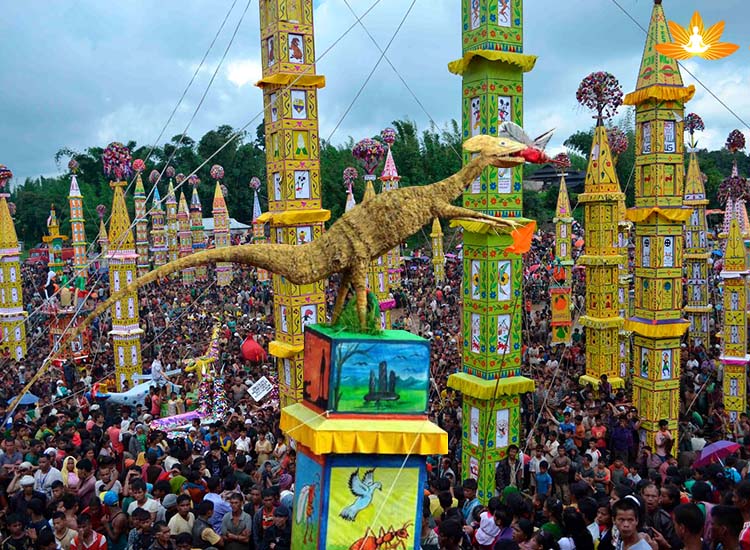
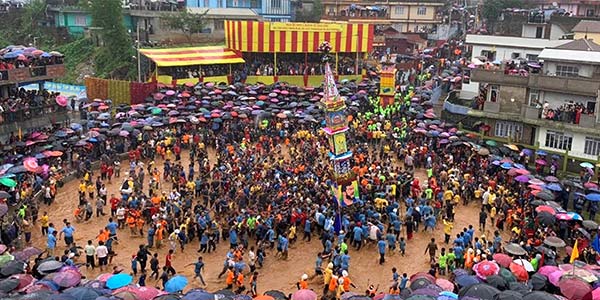
The preparation for the festival begins weeks in advance with the construction of raths or chariots. These elaborately decorated structures are carried by the villagers in a procession, symbolising the collective strength and unity of the community.
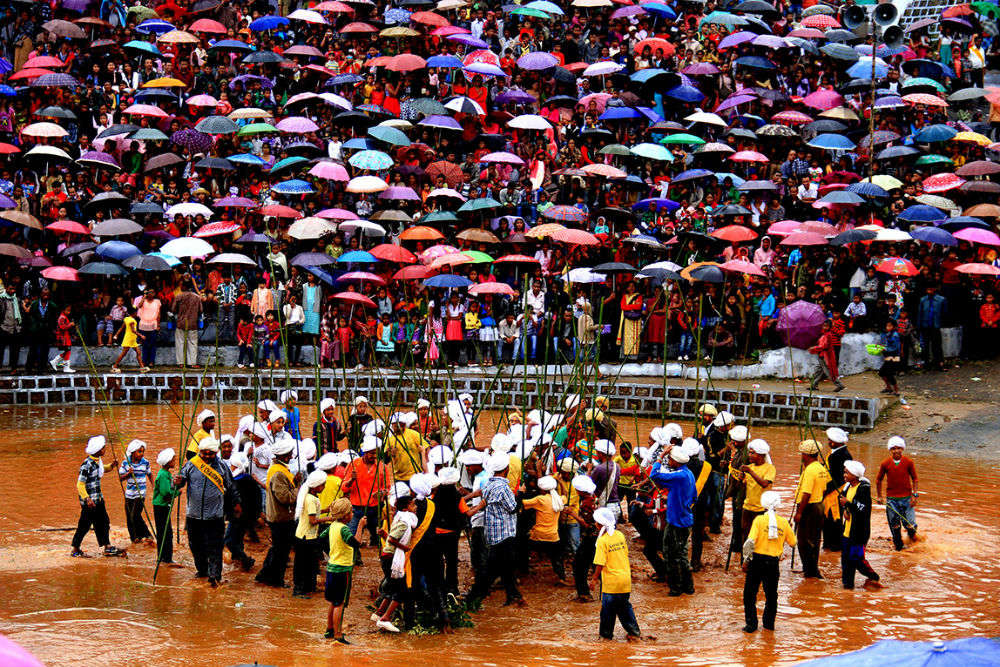
A series of religious rites are being performed by the Daloi or the chief with young men making a symbolic gesture of driving away the evil spirit, plague and disease by beating the roof of every house with bamboo poles. The Pomblang ceremony is a crucial aspect of the festival involving the sacrifice of goats and cocks to appease the deities and seek their blessings. The sacrificial animals are chosen based on specific criteria, and the rituals are performed by designated priests. One of the prominent highlights of the festival is the Nongkrem dance, performed by young men and women from the community. This captivating dance is a rhythmic display of synchronised movements accompanied by traditional musical instruments. It is believed to invoke blessings from the deities for a prosperous harvest season. Behdienkhlam is known for its unique sporting events that reflect the physical prowess and camaraderie of the participants. The most notable among these is the Dewanshah, a game that involves the throwing of a wooden ball and another popular sport is Khnong Lum, a race where participants carry large wooden posts on their shoulders. The climax of the celebration is the fight for a large undressed beam by two groups of people in opposition to each other. This leads to the heavy beam getting across a muddy ditch called Wah-eit-nar and a lot of horseplay enters into this part of the event when mud is smeared by the participants on each other.
On the last day, in the afternoon people would gather in a place called Aitnar and both young and old would dance to the tunes of the pipes and drums. The dancers are highly emotional when tall-decorated structures called rots and wooden post-called khnongs would be brought into the pool with rain expected on the last day of the festival. On the last day, people dressed up in their best attire converge in Mynthong to witness a game similar to football, called dad-lawakor. The game is played with a wooden ball between the Northerners and the Southerners with the side winning the match signifying that in the following year, there would be a bumper harvest in that particular region.
The Behdienkhlam festival is a community-driven celebration that fosters a sense of belonging and solidarity. It brings people together, transcending caste, creed, and social barriers. This collective engagement strengthens the social fabric and reinforces the cultural identity of the Khasi people. The festival plays a crucial role in preserving the indigenous cultural heritage of the Khasi community and serves as a platform for the transmission of traditional knowledge, rituals, and values to younger generations. The festival has also become a major tourist attraction, drawing visitors from across India and around the world. Despite its significance and popularity, the Behdienkhlam festival faces certain challenges in the modern era. Rapid urbanisation, changing lifestyles, and the influence of globalisation have impacted the traditional practices associated with the festival.
We are now almost exactly at the halfway point of the year. How was the first half of the year for you, and what are your expectations for the second half?
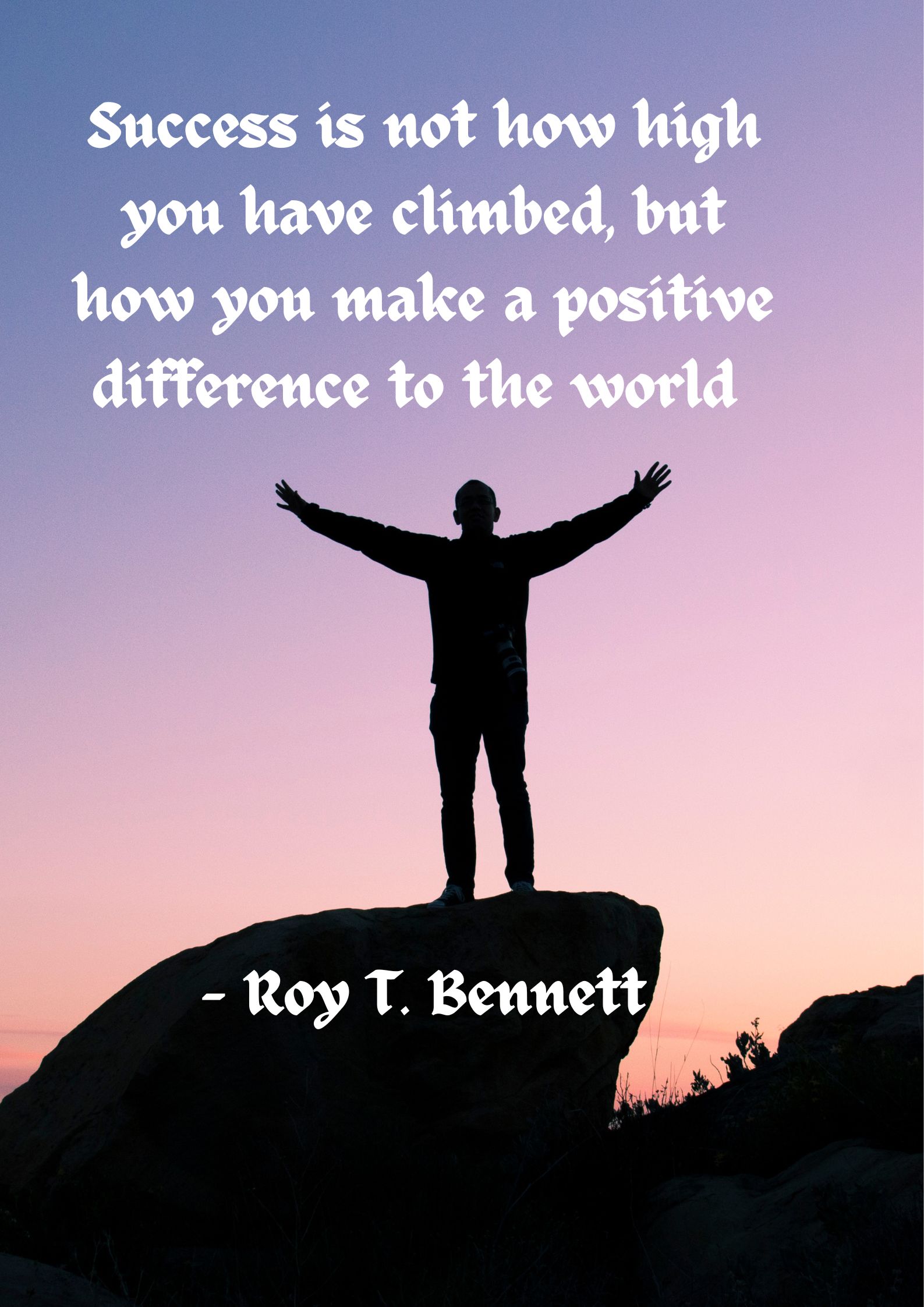
Our quote today is from motivational author and speaker Roy T. Bennett, who is known for his inspirational quotes and writings. His book, “The Light in the Heart,” is a collection of positive and uplifting messages that aim to inspire personal growth, happiness, and inner peace. The book encourages readers to reflect on their lives, pursue their dreams, and cultivate a positive mindset. Today’s quote emphasises that true success is not solely determined by the height of one’s achievements or the status one has attained but by the positive impact and contributions they have made to the world. Climbing to great heights in terms of wealth, power, or personal accomplishments is not enough if it does not bring about positive change or benefit others. An individual should use their abilities, influence, and resources to create a positive impact and contribute to the greater good, going beyond personal gain and focusing on making a meaningful difference in the world.
Later this week, GG will go for her university orientation, and she is super excited about meeting her new classmates and seniors. My hopes and prayers for her are that she enjoys the next four years, makes amazing connections and goes on to have the career she always dreamt about. GG is, as usual, busy with his friends and his gaming. He is enjoying life until he either gets an internship or enlists in national service, whichever comes first.
That’s all from me this week. Stay safe, stay happy and always stay positive!
Knowing What We Know: The Transmission of Knowledge: From Ancient Wisdom to Modern Magic – Simon Winchester

From the creation of the first encyclopedia to Wikipedia, from ancient museums to modern kindergarten classes–this is a look at how humans acquire, retain, and pass on information and data, and how technology continues to change our lives and our minds.
With the advent of the internet, any topic we want to know about is instantly available with the touch of a smartphone button. With so much knowledge at our fingertips, what is there left for our brains to do? At a time when we seem to be stripping all value from the idea of knowing things–no need for math, no need for map-reading, no need for memorization–are we risking our ability to think? As we empty our minds, will we one day be incapable of thoughtfulness?
Addressing these questions, Simon Winchester explores how humans have attained, stored, and disseminated knowledge. Examining such disciplines as education, journalism, encyclopedia creation, museum curation, photography, and broadcasting, he looks at a whole range of knowledge diffusion–from the cuneiform writings of Babylon to the machine-made genius of artificial intelligence, by way of Gutenberg, Google, and Wikipedia to the huge Victorian assemblage of the Mundanaeum, the collection of everything ever known, currently stored in a damp basement in northern Belgium.
Throughout this tour, Winchester forces us to ponder what rational humans are becoming. What good is all this knowledge if it leads to lack of thought? What is information without wisdom? Does Rene Descartes’s Cogito, ergo sum–“I think therefore I am,” the foundation for human knowledge widely accepted since the Enlightenment–still hold? And what will the world be like if no one in it is wise?
 Memories and Such