

Thiruppadagam Temple, Kanchipuram, Tamil Nadu
In Kanchipuram, where several Divya Desams lie close to each other within the sacred landscape of the town, Thiruppadagam carries a story drawn directly from the Mahabharata. The presiding deity here is Pandava Thoothar Perumal, a form of Krishna, with Rukmini Thayar as the goddess. The name Thiruppadagam itself is linked to the Tamil word padagam, which refers to something vast or expansive. The temple takes its identity from the unusually tall image of Krishna inside the sanctum, where the Lord stands in a commanding form that fills the space. The moment this form represents is not one of battle, but one of diplomacy, the moment when Krishna went to the Kaurava court as a messenger for the Pandavas.
The story behind this temple takes us back to a tense moment in the Mahabharata. Before the Kurukshetra war began, the Pandavas made one last attempt to avoid conflict. They sent Krishna to the court of the Kauravas to negotiate peace. His message was simple and reasonable: the Pandavas were willing to settle for just a small portion of land rather than claim the entire kingdom. Yet the Kauravas refused even this modest request. Worse still, they attempted to capture Krishna in the court itself. At that moment, Krishna revealed his divine nature. Expanding into a vast cosmic form, he filled the hall with radiance and power, making it clear that no force could contain him. The image of Krishna in Thiruppadagam reflects this moment of revelation, the messenger who stood firm when diplomacy failed.
Inside the temple, the idol of Pandava Thoothar Perumal stands unusually tall, rising far above the height typically seen in temple sanctums. The form immediately captures attention, not because of elaborate ornamentation but because of sheer presence. The posture is upright and confident, suggesting both authority and calm restraint. This is not the playful Krishna of Vrindavan nor the charioteer of Kurukshetra. This is Krishna, the statesman, the messenger who carries the weight of justice while still offering peace. The expression on the idol reflects that balance: composed, firm and unwavering.
Historically, Thiruppadagam reflects the long religious history of Kanchipuram itself. The earliest structure of the temple likely dates back to the Pallava period, when Kanchipuram served as a major centre of learning and worship. The Pallavas supported temples dedicated to both Shiva and Vishnu, creating a landscape where philosophical traditions flourished side by side. Later Chola rulers strengthened the structure and supported ritual practices, while Vijayanagara patrons contributed mandapams and architectural refinements. Even with these additions, the temple retained a relatively modest scale compared to some of the larger shrines in the town. The focus remained on the sanctum and the striking image of Krishna.
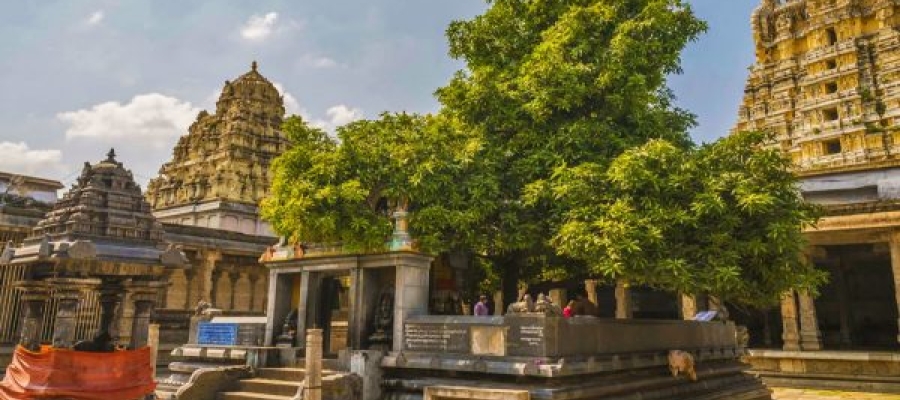
Architecturally, the temple follows the familiar layout of South Indian temples but with an emphasis on vertical space. The sanctum is designed to accommodate the tall idol of the Lord, creating a sense of upward movement when one steps inside. The gopuram at the entrance is dignified but not overwhelming, and the courtyard leads naturally toward the main shrine. Rukmini Thayar’s sanctum lies nearby, bringing a sense of warmth and balance to the temple environment. While Krishna’s form inside the sanctum carries authority, the presence of the goddess softens the atmosphere and reminds devotees that compassion accompanies justice.
The daily rituals at Thiruppadagam follow the Vaishnavite tradition, with worship unfolding through the day in a steady rhythm. Suprabhatam opens the morning, followed by alankaram and neivedyam. Evening aradhanai gathers devotees once again before the temple closes. During major festivals such as Vaikunta Ekadasi and Krishna Jayanthi, the temple becomes more active, with processions and special prayers drawing larger crowds. Yet even during these celebrations, the sanctum retains its quiet gravity. Standing before the tall form of Pandava Thoothar Perumal, devotees often feel a sense of perspective. The image seems to remind them that the challenges of the present moment are part of a much larger story.
For pilgrims visiting Kanchipuram’s Divya Desams, Thiruppadagam offers a distinct experience. After visiting temples associated with light, protection or philosophical clarity, encountering Krishna as the messenger of peace introduces another dimension. The temple speaks of responsibility and moral courage. Krishna did not go to the Kaurava court as a warrior. He went as a negotiator, willing to prevent war if possible. Only when peace was rejected did the path of conflict become inevitable. This message resonates strongly even today. It reminds devotees that strength is not always expressed through confrontation. Sometimes it appears through patience and reason.
Culturally, Thiruppadagam holds its place through the hymns of the Alvars, who recognised the temple as one of the sacred Divya Desams. Their verses describe the Lord who stood tall as a messenger, embodying both compassion and authority. Over the centuries, this image has shaped the way devotees understand Krishna’s role in the Mahabharata. The temple emphasises not only the victory of dharma but also the effort made to preserve peace before conflict began.
In modern times, Thiruppadagam continues to function as an active place of worship within the living fabric of Kanchipuram. Renovations have preserved the sanctum and strengthened the structure while keeping the temple’s original character intact. Pilgrims visiting the Divya Desam circuit still pause here to stand before the towering form of Krishna. The experience often leaves a lasting impression, not because of elaborate decoration but because of the powerful simplicity of the image.

Thiruppadagam ultimately represents the dignity of standing firm for what is right. Pandava Thoothar Perumal reminds devotees that the pursuit of justice begins with dialogue, patience and the willingness to seek peace. Only when those efforts fail does the path of confrontation arise. In the larger Divya Desam journey, this temple offers a lesson drawn from the Mahabharata itself — that true strength lies not in the ability to fight, but in the courage to stand tall for dharma even when the world refuses to listen.
Nilathingal Thundam Temple, Kanchipuram, Tamil Nadu
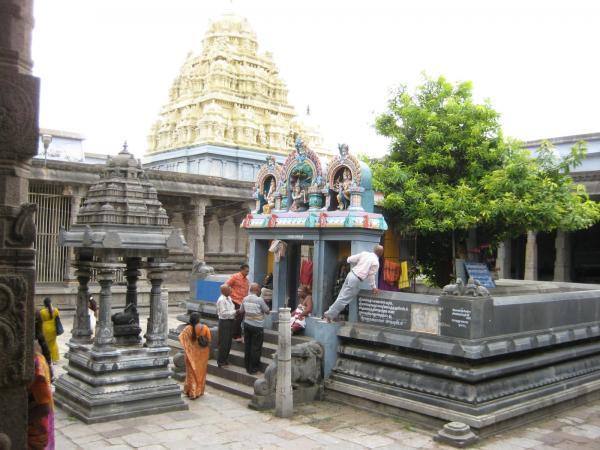
In Kanchipuram, where sacred spaces sit close to one another and centuries of devotion overlap in quiet ways, Nilathingal Thundam stands with a story that is both gentle and unusual. The presiding deity here is Nilathingal Thundathan Perumal, with Nilathingal Thayar as the goddess. What makes this Divya Desam distinct is its location within the famous Ekambareswarar Temple complex, one of the largest Shaivite temples in Tamil Nadu. In a town where the worship of Shiva and Vishnu has long existed side by side, Nilathingal Thundam quietly reflects that shared sacred geography. The name itself holds the key to its identity. “Nilaa” refers to the moon, “thingal” also points to the moon’s cool radiance, and “thundam” suggests a fragment or beam. Together, the name evokes the image of a soft ray of moonlight.
The legend connected with this temple speaks of that very cooling light. According to tradition, Vishnu once performed intense penance in this place, standing beneath a sacred tree. The austerity generated such heat that the surrounding space grew almost unbearable. The gods grew concerned that the intensity of the penance might disturb the natural balance. To calm the situation, Shiva directed the moon to shine its cooling rays upon Vishnu. The gentle light softened the heat and restored harmony. Because the moon’s glow brought relief, the place came to be known as Nilathingal Thundam. The story carries a quiet message. Even divine intensity sometimes requires soothing grace. Heat must be balanced by coolness, effort by compassion.
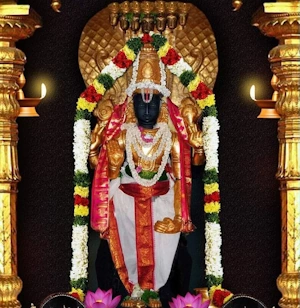
This idea shapes the way devotees experience the shrine. The form of Nilathingal Thundathan Perumal reflects calm rather than grandeur. The idol stands with quiet composure, holding the conch and discus in the familiar Vaishnavite manner. Yet the atmosphere of the shrine feels slightly different from that of others in Kanchipuram. Perhaps it is the story of moonlight, or perhaps it is the fact that the shrine exists within a larger Shaivite complex. Either way, the space carries a sense of gentle balance rather than dramatic devotion.
Historically, Nilathingal Thundam shares the long timeline of Kanchipuram’s temple culture. The Ekambareswarar temple complex itself expanded through the Pallava, Chola and Vijayanagara periods, and the Vishnu shrine remained part of that evolving structure. Its presence within a Shaivite temple reflects the older spiritual landscape of the region, where sectarian boundaries were less rigid than later interpretations sometimes suggest. Devotion flowed across traditions, and temples often housed multiple expressions of the divine. Nilathingal Thundam quietly preserves that memory.
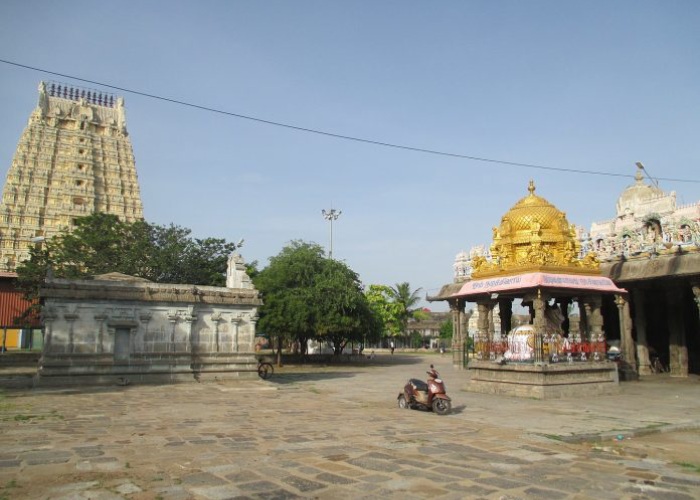
Architecturally, the shrine is modest compared to the vast corridors and towering gopurams of the Ekambareswarar complex. Visitors often reach it after passing through the larger temple’s courtyards, which makes the space feel almost hidden. The sanctum is simple, and the focus remains firmly on the deity rather than elaborate decoration. Nilathingal Thayar’s shrine adds warmth to the environment, reinforcing the temple’s underlying theme of soothing grace. Together the two sanctums create a space that feels calm and balanced.
The daily worship follows the Vaishnavite tradition even though the shrine stands within a Shaivite temple complex. Priests conduct the rituals in a steady rhythm, beginning with the morning prayers and continuing through the evening aradhanai. Festivals connected to Vishnu are observed here as well, though often in a quieter manner compared to the larger celebrations elsewhere in Kanchipuram. Devotees visiting the Ekambareswarar temple frequently make their way to Nilathingal Thundam afterwards, acknowledging the presence of Vishnu within the same sacred grounds.
The pilgrimage experience at this temple often unfolds unexpectedly. Many visitors arrive at Ekambareswarar primarily to worship Shiva, and only later discover the Vishnu shrine within the complex. When they step into the small sanctum of Nilathingal Thundathan Perumal, the shift in atmosphere is noticeable. The intensity of the larger temple gives way to a softer presence. The story of the moon’s cooling rays begins to make sense in that moment. The space itself seems to invite a slower pace.
Culturally, Nilathingal Thundam stands as a quiet reminder of harmony between traditions. The Alvars sang of the Lord here, recognising the Divya Desam even within a Shaivite setting. Their verses acknowledge the gentle grace of the deity who received the moon’s cooling light. Over centuries, this story has shaped the way devotees interpret the shrine. It suggests that devotion need not compete with itself. Light from one source can soothe another without conflict.
In modern times, the shrine continues to function within the living rhythm of Kanchipuram’s temple life. Pilgrims following the Divya Desam circuit include Nilathingal Thundam in their journey, even though its physical presence is smaller than many others. Renovations and maintenance within the Ekambareswarar complex have helped preserve the shrine, ensuring that the story it represents remains accessible to new generations of devotees.

Nilathingal Thundam ultimately represents the gentle balance between intensity and calm. Nilathingal Thundathan Perumal stands as the Lord who received the moon’s cooling light, reminding devotees that even the strongest spiritual effort benefits from grace. In the wider Divya Desam journey, this temple offers a quiet lesson. Strength does not always come from force. Sometimes it arrives like moonlight, soft, steady and exactly what is needed to restore harmony.

