Sacred Stones, Spaces, and Stories: Divya Desams – Part 30

Thiruvidanthai Temple, Chengalpattu, Tamil Nadu
Thiruvidanthai, located along the East Coast Road near Chengalpattu, feels different from many other Divya Desams the moment you approach it. There is the sea not too far away, the open sky, and a sense of quiet movement in the air. The presiding deity here is Nithya Kalyana Perumal, and the goddess is Komalavalli Thayar. The name itself tells you what the temple is about. Nithya Kalyana means eternal marriage, and this is one of the rare temples where the central idea is not just devotion or protection, but union. It is not a one-time event remembered in myth. It is something that is believed to continue every single day.

The legend of Thiruvidanthai is tied to a sage named Kalava Maharishi. According to tradition, he had 360 daughters and was deeply concerned about finding them suitable marriages. He prayed to Vishnu for help, and the Lord appeared before him in a human form and agreed to marry each daughter. One by one, he married them, a single marriage each day, until all 360 daughters were wed. At the end of this sequence, the Lord is said to have united all the brides into one form, who became Komalavalli Thayar, seated on his left thigh. Because this act of marriage happened daily, the deity came to be known as Nithya Kalyana Perumal. The story may sound unusual at first, but its meaning is not difficult to understand. It speaks about continuity, patience and the idea that grace unfolds over time, not all at once.

Inside the sanctum, this legend takes a clear visual form. The Lord stands with Komalavalli Thayar seated on his left thigh, a posture that immediately sets this temple apart. The image is intimate without being overwhelming. It conveys closeness, companionship and a sense of balance. Unlike temples where the goddess has a separate identity that you move toward after seeing the Lord, here the two are inseparable in the main form. That changes the way the temple is experienced. You do not encounter the divine as divided aspects. You encounter it as a union.

There is also a deeper layer to the legend that often stays with visitors. The number 360 is not accidental. It corresponds to the days of a year, suggesting that the idea of union is not limited to one moment in time. It repeats, renews and continues. In that sense, the temple speaks about the rhythm of life itself. Relationships are not built in a single act. They are sustained over time, day after day. The daily marriage of the Lord becomes a symbolic reminder of that continuity.

Historically, Thiruvidanthai carries traces of Pallava and later Chola patronage, like many temples in this region. The structure that stands today reflects additions and restorations over different periods, with inscriptions pointing to ongoing support for rituals and temple upkeep. Despite its age and significance, the temple has not grown into an overwhelming scale. It remains accessible, grounded and closely tied to its surroundings. Its location along the coast adds to its character. The air feels different here, and that sense of openness carries into the temple space.

Architecturally, the temple follows the Dravidian style but with a simplicity that suits its theme. The entrance gopuram marks the boundary clearly, and the prakarams guide you inward without distraction. The sanctum becomes the focal point almost immediately. The deity’s posture, with Thayar seated on his thigh, draws attention not through grandeur but through meaning. The temple tank nearby and the open spaces around the complex add to the feeling of calm. Everything about the layout supports a slower pace.

The daily rituals at Thiruvidanthai follow the Vaishnavite tradition, but the temple is especially known for its association with marriage. Devotees come here with prayers related to relationships, particularly those seeking a suitable partner. It is common to see people performing specific prayers with the hope of resolving delays or difficulties in marriage. Yet even beyond that, the temple’s meaning is wider. It is not only about marriage in the literal sense. It is about connection, balance and the ability to sustain relationships with care.

Festivals such as Brahmotsavam and Vaikunta Ekadasi bring larger gatherings, but the temple’s identity remains rooted in its daily rhythm. The idea of nithya kalyanam is not confined to festival days. It is embedded in the everyday life of the temple. That continuity is what gives the place its distinct energy.

The pilgrimage experience at Thiruvidanthai is shaped by its location and its story. The journey along the coast, the approach through quieter roads and the openness of the surroundings all prepare the mind differently from temples located in dense urban spaces. Once inside, the sanctum holds attention in a steady way. Devotees often spend time simply looking at the form of the Lord and Thayar together, letting the meaning of that image settle slowly.
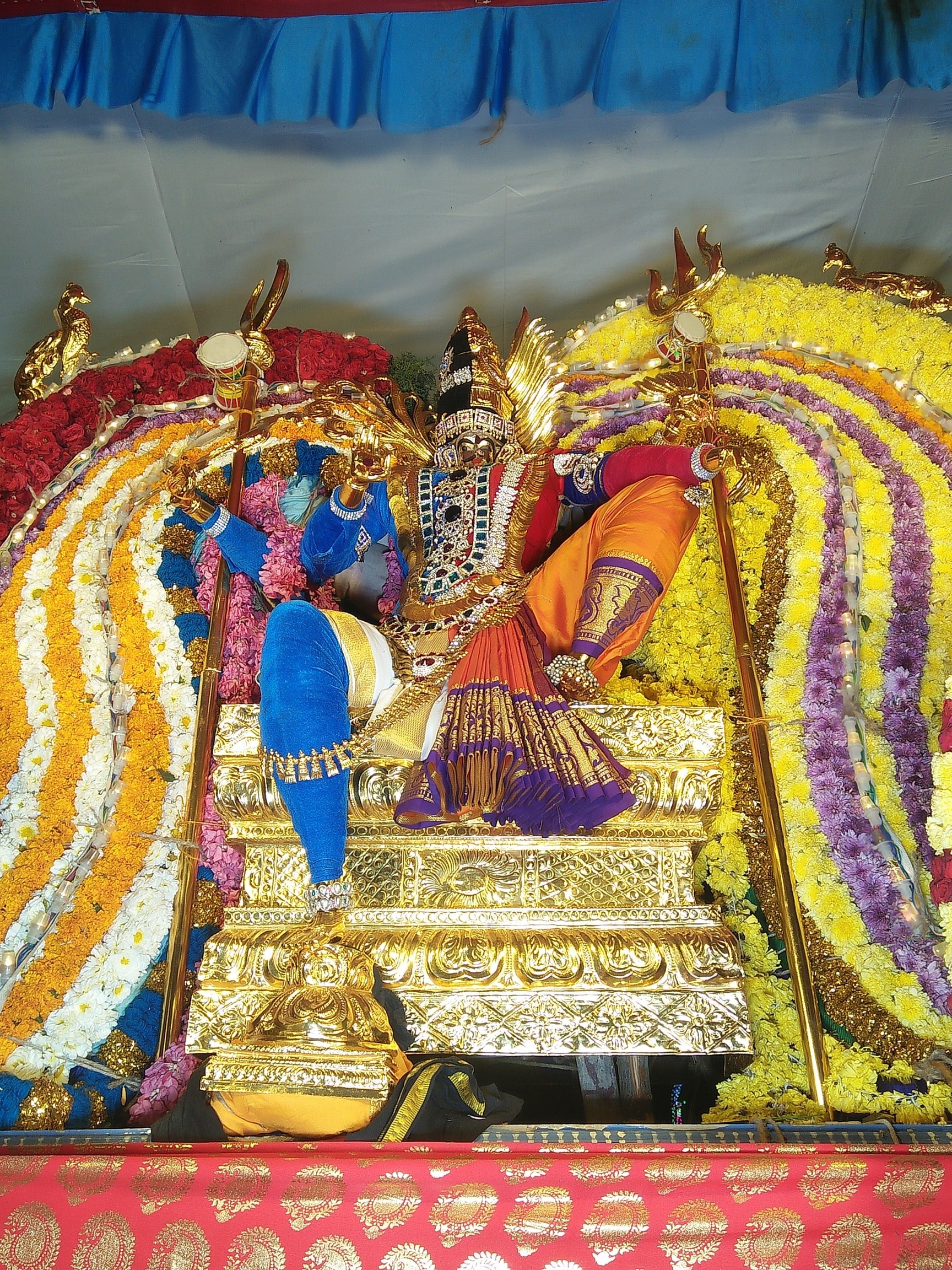
Culturally, Thiruvidanthai holds a strong place within the Divya Desam tradition through the hymns of the Alvars, who recognised the significance of the shrine. Over time, the temple has also become widely known as a place where prayers for marriage are offered, drawing people from different regions and backgrounds. Yet the deeper message of the temple goes beyond that single aspect. It speaks about companionship, continuity and the way relationships are shaped over time.

In modern times, Thiruvidanthai continues to function as an active temple, with a steady flow of devotees throughout the year. Its proximity to Chennai has made it more accessible, but it has managed to retain its quiet character. Renovations and maintenance have preserved the structure while keeping the atmosphere unchanged.

Thiruvidanthai ultimately represents union as a living process rather than a single event. Nithya Kalyana Perumal does not simply marry once and remain distant. He continues the act, day after day, reminding devotees that connection is sustained through repetition and care. In the larger Divya Desam journey, this temple offers a gentle but clear insight. Some forms of grace are not sudden. They are built slowly, one day at a time.

Thirukkadanmallai Temple, Mahabalipuram, Tamil Nadu
In Mahabalipuram, where stone meets sea and ancient carvings carry stories across centuries, Thirukkadanmallai stands with a quiet difference. The presiding deity here is Sthalasayana Perumal, and the goddess is Nilamangai Thayar. The name itself tells you what makes this temple distinct. Sthala means place or ground, and sayanam means reclining. Here, Vishnu reclines not on Adisesha, as he does in many temples, but directly on the ground. That single detail shifts the entire mood of the shrine. It brings the divine closer to the earth, closer to the human world, and perhaps closer to the experience of those who come here.

The legend of Thirukkadanmallai is tied to a sage named Pundarika. According to tradition, he wished to worship Vishnu with lotus flowers and set out to gather them from distant waters. When he returned, carrying the flowers with care, he found an old man lying at the spot where he intended to offer his worship. The presence of the old man blocked his ritual. At first, this seemed like an interruption, even an obstacle. But when the sage looked more closely, he realised that the old man was none other than Vishnu himself. The Lord had chosen to lie there, not on a celestial serpent but on the very ground where the devotee stood. In that moment, the act of worship changed. It was no longer about offering flowers to a distant form. It became about recognising the divine in what seemed ordinary.

Inside the sanctum, this story takes shape in a simple but striking way. Sthalasayana Perumal reclines on the bare ground, without the usual support of Adisesha. The form is calm, but there is a certain directness to it. The Lord is not elevated or set apart. He is present at the same level. Nilamangai Thayar’s shrine nearby adds balance to the space, bringing a sense of quiet reassurance. Together, the two create an atmosphere that feels grounded rather than distant. The temple does not try to lift you out of the world. It meets you where you are.

There is also another layer to the temple’s story that connects it to the larger landscape of Mahabalipuram. The area was once a major port under the Pallavas, and the shoreline was active with trade and movement. Over time, parts of the old town were lost to the sea. Local tradition holds that there were once several temples along this coast, many of which are now submerged. Thirukkadanmallai is seen as one of the few that remain, carrying forward a memory of what once existed. That connection to the sea adds a quiet sense of impermanence to the temple. It reminds you that even stone and structure do not last forever, but the act of worship continues.

Historically, the temple reflects the Pallava period, when Mahabalipuram flourished as a centre of architecture and art. The nearby shore temples and rock-cut monuments speak of that time, and Thirukkadanmallai belongs to the same cultural landscape. Later additions and maintenance through subsequent dynasties ensured that the temple remained active. Unlike the grand sculptural monuments that draw visitors to Mahabalipuram today, this temple continues as a place of living worship rather than historical display. That distinction matters. It keeps the temple rooted in present practice rather than only in the past.

Architecturally, the temple is modest compared to the famous monuments around it. The gopuram is not towering, and the layout is simple. The path from the entrance to the sanctum is direct, without elaborate diversions. The focus remains on the reclining form of the Lord. The simplicity of the structure aligns with the story it carries. There is no need for excess. The meaning is already clear.

The daily rituals follow the Vaishnavite tradition, with regular pujas performed throughout the day. The temple becomes more active during festivals such as Vaikunta Ekadasi and Brahmotsavam, when devotees gather in larger numbers. Yet even during these times, the atmosphere does not lose its calm. The presence of the sea nearby seems to shape the rhythm of the place. There is movement, but it is not hurried.

For pilgrims, the experience of Thirukkadanmallai is shaped as much by its surroundings as by the temple itself. The sound of waves, the open sky and the sense of history in the air all become part of the visit. After seeing the grand stone carvings and monuments of Mahabalipuram, stepping into this temple creates a shift. The focus moves from spectacle to presence. Standing before Sthalasayana Perumal, one begins to understand the simplicity of the legend. The divine does not always arrive in expected forms. Sometimes it lies quietly in the space you thought you knew.

Culturally, the temple holds its place in the Divya Desam tradition through the hymns of the Alvars, who recognised the significance of the shrine. Over time, it has also become part of the broader identity of Mahabalipuram, a place known for both its history and its living traditions. The temple bridges those two worlds. It stands as a reminder that while monuments may draw attention, it is the continuity of worship that keeps a place alive.

In modern times, Thirukkadanmallai continues to receive both pilgrims and visitors. Some arrive as part of the Divya Desam circuit, while others discover the temple while exploring Mahabalipuram. Renovations and maintenance have preserved the structure, but the essential character of the temple remains unchanged. It still feels grounded, steady and close to the earth.

Thirukkadanmallai ultimately represents a form of grace that meets you at your level. Sthalasayana Perumal does not remain elevated or distant. He lies on the ground, reminding devotees that the divine is not separate from the world but present within it. In the larger Divya Desam journey, this temple offers a quiet insight. Not every sacred encounter requires height or distance. Sometimes it begins when you recognise what is already before you.

Travel Bucket List – India: Tamil Nadu Part 6

After visiting the temple towns, let’s check out some beach and coastal towns plus some other interesting places in the state. This is the last part in this series.

Mahabalipuram
Mahabalipuram, also called Mamallapuram is famous for its shore temples built in 7th century. This UNESCO World Heritage Site was the second capital of the Pallava kings of Kanchipuram. It is an ancient historic town and was a bustling seaport during Pallava kings in 7th Century AD. According to the legend, it has been named after the demon king Mahabali who was renowned for his generosity. Some maintain that it has been named Mamallapuram after the Pallava King Narasimha Varman I, a great wrestler with the title Mamallan.

It is known for its historical monuments, sculptures, scenic beauty, culture and tradition. Mahabalipuram art can be divided into four categories: open air bas-relief, structured temples, man-made caves and rathas or chariot temples. The famous Arjuna’s Penance and the Krishna Mandapa adorn massive rocks near the centre of the village. The beautiful Shore Temple towers over the waves, behind a protective breakwater. Sixteen man-made caves in different stages of completion are also seen, scattered through the area. The striking feature is that all the sculptures here are monolithic – giant structures carved from single rocks.

The temples of Mamallapuram, built largely during the reigns of Narasimha Varman and his successor Rajasimha Varman, showcase the movement from rock-cut architecture to structural buildings. The mandapas and the rathas shaped as temple chariots are made from the granite rock face, while the famed Shore Temple, erected half a century later, is built as a structured temple with huge blocks of rocks following wonderful architecture. Thirukadalmallai temple, Cholamadal Artist’s Village, Mahabalipuram Beach, Tiger Cave and Crocodile Bank serve as popular picnic spots for people here.

One of the prominent festivals celebrated here is the Mamallapuram Dance Festival, which is organized by the Department of Tourism every year during December – January. As part of the festival, various dance forms are showcased including Bharatanatyam, Kuchipudi, Kathakali and Odissi.

The best time to visit Mahabalipuram is from October to March while the peak season is from November to February. Usually it takes one full day to visit Mahabalipuram.

Kanyakumari
Located at the southernmost tip of the Indian Peninsula, Kanyakumari is also called Cape Comorin. Kanyakumari has been a great centre for art and religion for centuries. It was also an area of great trade and commerce. It was ruled by Cholas, Pandyas and Nayaks. Later on, Kanyakumari came under the rule of the Venad dynasty and its capital was located at Padmanabhapuram. In spite of the troubles encountered in the southern border of Venad, Marthanda Varma expanded the kingdom northwards to Aluva and established the kingdom of Travancore. In 1745, the capital was shifted from Padmanabhapuram to Thiruvananthapuram. Kanyakumari was ruled by the kings of Travancore, under the authority of the British, till India’s independence in 1947, after that it became a part of the independent Indian Union.

The city gets its name from the Hindu goddess Kanyakumari who was also known as Kumari Amman. Swami Vivekananda is said to have been lived here for a while and meditated. It is situated at the confluence of Bay of Bengal, Arabian Sea and Indian Ocean. This place offers marvelous views of both the sunrise as well as the sunsets. It is the only place in India where one can enjoy the unique spectacle of a sunset and the moonrise simultaneously on full moon days.

One of the main attractions in Kanyakumari is the Kumari Amman or Bhagavaty Amman Temple. Considered as one of the Shakti Peethas, this 3000-year-old temple, dedicated to the Goddess Kumari Amman attracts large number of devotees every year. The temple is the first Durga temple created by Lord Parasurama and one of the 108 Shakthi Peethas. This temple is situated at the shore of the Laccadive Sea. The Kumari temple has been mentioned in Ramayana, Mahabharata and Purananooru.

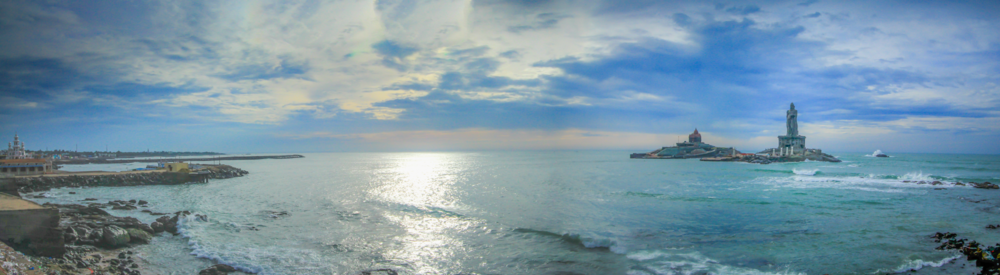
The Thiruvalluvar Statue has a height of 95 feet and stands upon a 38-foot rock that represents the 38 chapters of “virtue” in the Thirukkural. The statue standing on the rock represents “wealth” and “pleasures”, signifying that wealth and love be earned and enjoyed on the foundation of solid virtue. The combined height of the statue and pedestal is 133 feet, denoting the 133 chapters in the Thirukkural. The statue, with its slight bend around the waist, is reminiscent of a dancing pose of the ancient Indian deities like Nataraja. Vivekananda Rock Memorial

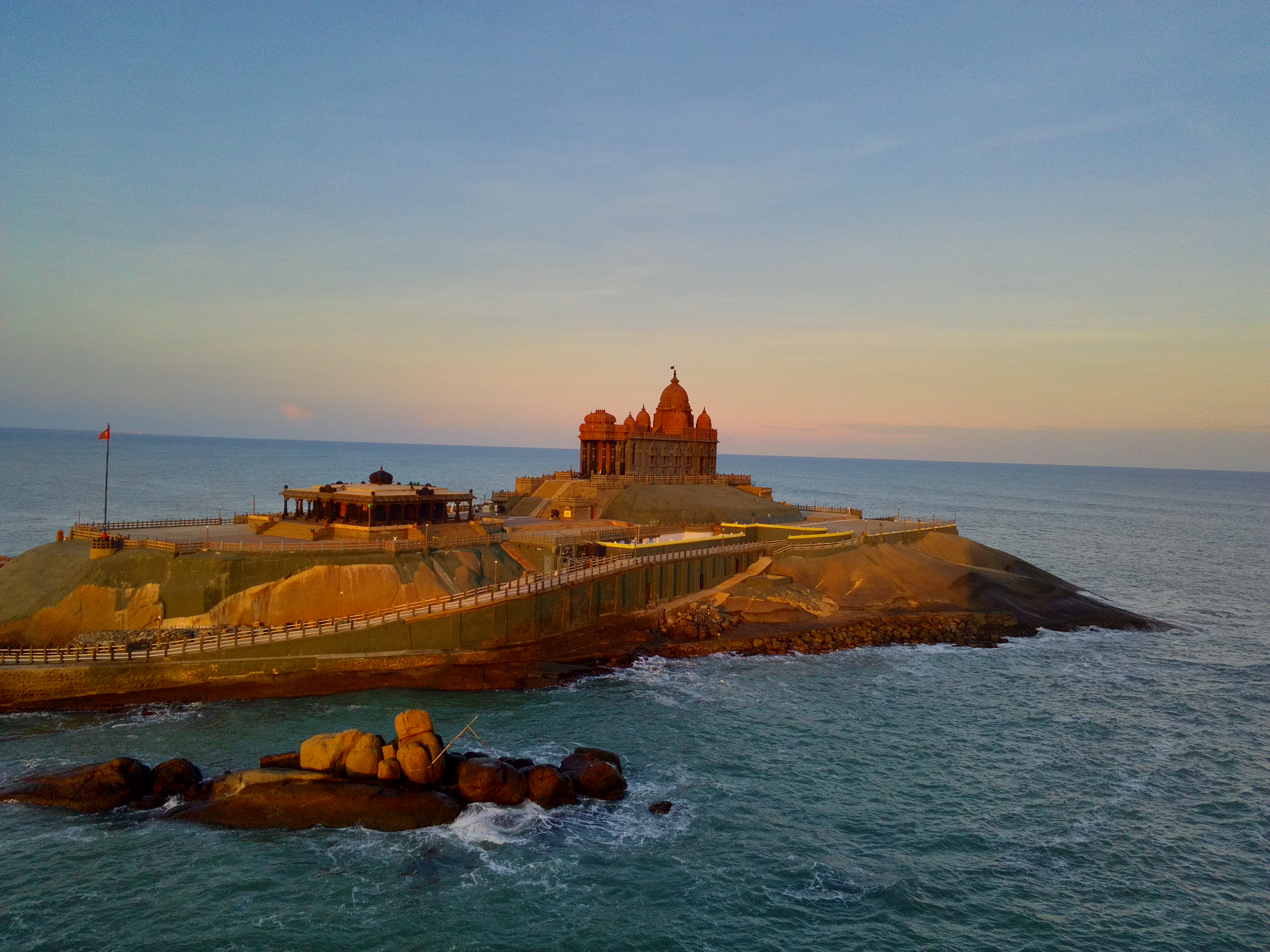
The Vivekananda Rock Memorial is a popular tourist monument in Kanyakumari. The memorial stands on one of two rocks located about 500 metres east of the mainland of Vavathurai. It was built in 1970 in honour of Swami Vivekananda who is said to have attained enlightenment on the rock. According to local legends, it was on this rock that Goddess Kumari performed austerity. A meditation hall (Dhyana Mandapam) is also attached to the memorial for visitors to meditate. The design of the mandapa incorporates different styles of temple architecture from all over India. The rocks are surrounded by the Laccadive Sea. The memorial consists of two main structures, the Vivekananda Mandapam and the Shripada Mandapam.

The Gandhi Memorial Mandapam has been built on the spot where the urn containing the Mahatma’s ashes was kept for public viewing before immersion. Resembling central Indian Hindu temples in form, the memorial was designed in a way that on Gandhi’s birthday, 2 October, the first rays of the sun fall on the exact place where his ashes were kept.

Near Kanyakumari’s southern shore stands a monument, called the Tsunami Memorial Park to the memory of those who died in the 2004 Indian Ocean earthquake and tsunami, an underwater megathrust earthquake that claimed around 280 000 lives in many countries, including India, Sri Lanka, Somalia, Thailand, Maldives and Indonesia.

Padmanabhapuram Palace, Suchindram, Pechiparai Reservoir, Vattakottai Fort, St Xavier’s Church and Udayagiri Fort are some of the other places to see in Kanyakumari. Some of the popular beaches near Kanyakumari are Thengapattinam Beach, Sanguthurai Beach and Chothavilai Beach.

The Chaitra Poornima Festival, Navratri, and the Holy Annual Festival of the Catholic Church are some of the major festivals celebrated in Kanyakumari.

The best time to visit Kanyakumari is from October to March while the peak season is from November to February.

Mudumalai Wildlife Sanctuary
At a distance of 37 km from Ooty, the Mudumalai Wildlife Sanctuary or Mudumalai National Park is located at the foothills of the Nilgiri hills in the state of Tamil Nadu. It is one of the finest and most attractive wildlife sanctuaries in India. The protected area is home to several endangered and vulnerable species including Indian elephant, Bengal tiger, gaur and Indian leopard. There are at least 266 species of birds in the sanctuary, including critically endangered Indian white-rumped vulture and long-billed vulture.

Mudumalai is the first sanctuary in South India set up in 1940 and was declared as a National Park in 1990. In April 2007, the Tamil Nadu state government declared Mudumalai to be a tiger reserve. Mudumalai is a part of Niligiri Biosphere Reserve which includes the Bandipur National Park, Rajiv Gandhi National Park (Nagarhole) in Karnataka, and Wayanad Wildlife Sanctuary in Kerala.

By sharing its boundaries with the states of Karnataka and Kerala, the sanctuary is divided into 5 ranges – Masinagudi, Theppakadu, Mudumalai, Kargudi and Nellakota. There is a high diversity of animal life in the park with about 50 species of fishes, 21 species of amphibians, 34 species of reptiles, 200 species of birds and 50 species of mammals. The park is ideal home to several endangered and vulnerable species including Elephant, Tiger, Gaur, Leopard, Deer, Wild dog etc. There are about 200 species of birds in the park, including White rumped vulture, long billed vulture, Red crest, Mynas, Parakeets, and Owls etc.

Theppakadu is the entry point to the Sanctuary which has an Information Centre. The forest department organizes Elephant Safari into the park and also Elephant Interaction Camp. Trekking is not permitted in Mudumalai. Also, no jeep safaris are available here and private vehicles are only allowed on the outer peripheral roads in the park. The Forest Department runs mini-bus safaris into the Park starting from Theppakadu. The safari bus stops at Moyar Watchtower which offers spectacular views of Moyar Gorge & Waterfalls. Mornings are the best time for safari to spot the wildlife. The safari takes visitors to jungle home campus, which is situated 10 km into the deep jungle.

The Forest Department has accommodation in Forest Rest Houses at Theppakadu, Kargudi, Abayaranyam and Masinagudi. The forest department has cottages in various locations within the forests available on a first-come, first-served basis, and there are various private resorts and guest houses that visitors can stay in.

The best time to visit the Mudumalai National Park is from December to June.

The one hour Vehicle Safari starts from 6-9 am and then again from 3-6 pm. The 40-minute Elephant Safari starts from 7:30 – 10:30 am and then again from 2:30 PM – 5:30 pm.

The entry fee to the sanctuary is Rs 135 with other fees for photography, videography and Rs. 1500 for jeeps to enter the sanctuary.

Hogenakkal Falls
Hogenakkal is a waterfall where the Kaveri river splits into multiple streams of waterfalls and where there is water throughout the year.

Also known at Marikottayam, Hoge actually means smoke and Kal means rock. Sometimes referred to as the “Niagara Falls of India,” it is known for bathing areas and hide boat rides, projecting itself as a major tourist attraction. Carbonatite rocks in this site are considered to be the oldest of its kind in South Asia and one of the oldest in the world.

The word Hogenakal is formed of two Kannada words hoge and kal. When the water falls on the rocks it appears as if hoge (smoke) is emanating from the top of the kal (rock) because of the force of the water, hence Hogenakkal (smoking rocks). It is also called as Marikottayam by the people of Tamil Nadu.

Other than the Hogenakkal Falls, Mettur Dam, Melagiri Hills and Pennagram Villages are other places in the vicinity which are worth visiting.

Kutralam Falls
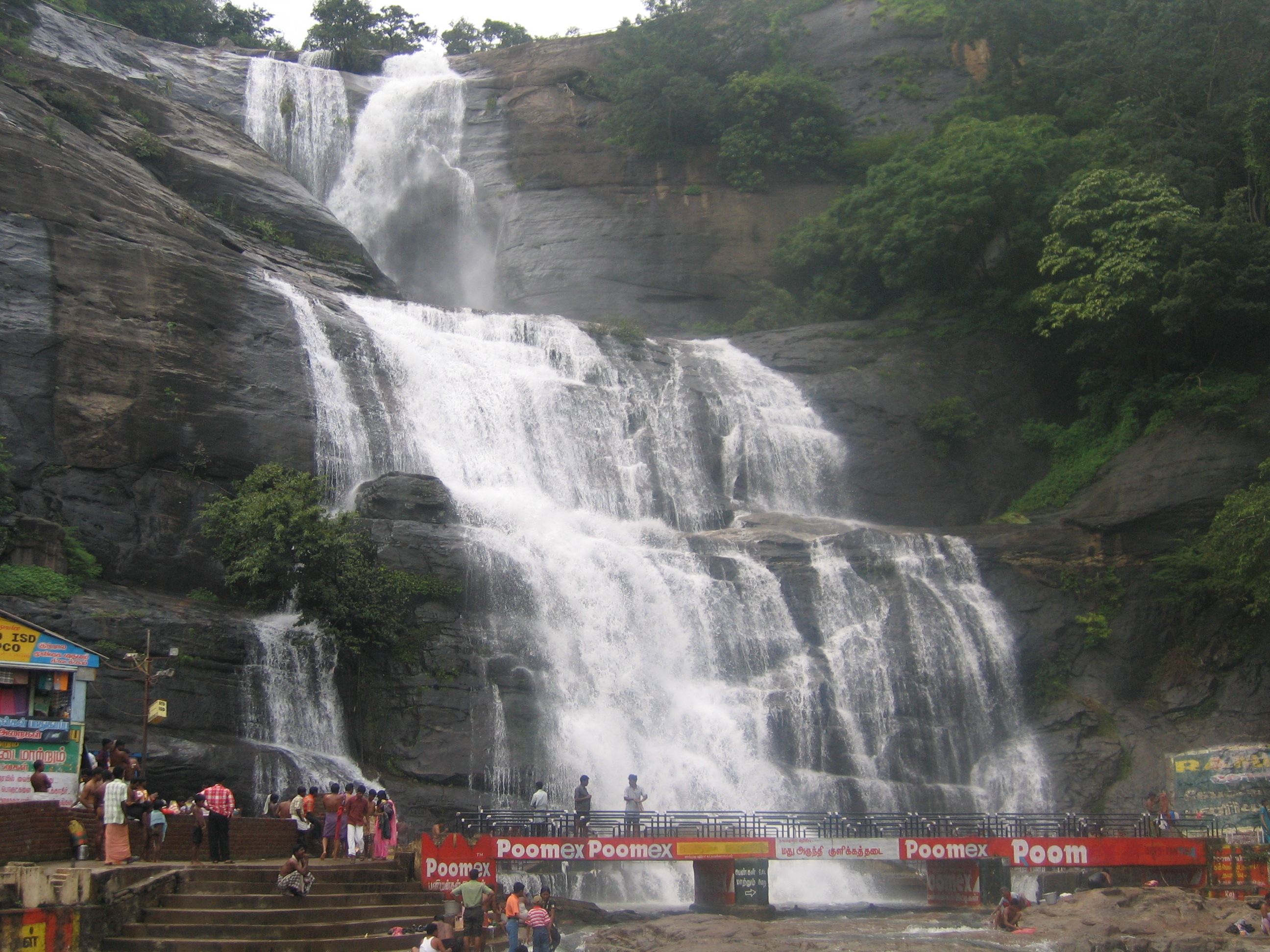
Kutralam or Courtallam, is a small town bordering Kollam District, famous for its waterfalls on the Western Ghats. With captivating panoramic vistas, the township is popularly renowned as ‘Spa of South’. It has nine waterfalls in the region that add a charm to its exotic beauty. One will also find Kutrallam adorned with ancient temples reflecting the age-old legends attached to them. The town itself like many other cities of India narrates mythological folklores adding to its mystique.

One of the prime attractions of all the nine waterfalls, Main Falls also known as Peraruvi is situated in the town center. It falls from an altitude of 60m and serves as the biggest of all the falls in the area. In fact, the water stream besides being a major sightseeing spot, is also place of worship for locals. However, take care of the time you travel as between November and January, the stream dries up. But at the same time during the peak season, it displays a sight of sheer beauty. Two temples dedicated to Goddess Kuzhalvaimozhi Amman and Sri Thirukutralanthar (Lord Shiva) are also big attention seekers situated in the vicinity.

A sight of pure brilliance, Five Falls is one of the most sought after destination in Kutrallam, situated around 4 km from the main town. Visitors are absolutely awe inspired by the sight it presents with falls splitting into five parts before rushing down at the Aranvankadu Pass. These five falls are regarded as the five heads of the cobras by the locals. However, three falls out of five can be accessed by men whereas only two falls are open for women. There are two temples also lying in the vicinity of waterfalls namely Swami Ayyappa Temple and Vinayaka Temple attracting lot of devotees.

Shenbaga Falls is one of those places which apart from being a famous tourists spot is also a major place of worship for locals. Also known as Chembakadevi, this place can be reached easily from Main Falls via trekking trail. The distance between the two is almost 3 kms. This fall derives its name from village Shenbaga Devi situated in the proximity that houses a temple dedicated to Goddess Shenbaga Devi, an incarnation of Goddess Durga. Owing to its religious importance, the place is flocked by the devotees in large number. They pay the homage to goddess with Shenbaga flowers which can be bought on the way to the temple from various shops.

Situated 4 km from the Main Falls, Honey Falls or Thenaruvi are quite famous among the locals as well as tourists. The stream derived its name from the beehives that are formed here during the dry season on the face of the rock. The view of the falls is very enchanting formed in the shape of horseshoe. The falls comprises of three streams that falls down to form a small lake right amid a rainforest. Situated about a 2 hour trek from Main Falls, this falls do not have the provision of bathing.

Palaruvi Falls, cascading downstream from the height of 300 ft, is one of the prime attractions in Kutrallam. The name Palaruvi means ‘Stream of Milk’ in the regional language. Ironically it seems to be a glittering stream of milk as it flows down. The roaring sounds of the fall stand in stark contrast to the silence of the forests and mist-kissed mountains around it. Situated in the Thenmala ranges, Palaruvi falls are surrounded by lush green forests, the Kallada River and some minor waterfalls. The enchanting place is perfect for savouring nature’s beauty. The fall not only does have an alluring beauty but also is considered sacred by the locals. The milk-like water is worshipped by people who believe it to be a religious spot. Also, Palaruvi waterfalls are among those seasonal waterfalls which ace their mightiness during the shower season and almost dry up in the midst of hot summers. The heavy downpour of water creates a splashing pool beneath for the people to enjoy the freshness of its water.

This brings us to the end of a visit around Tamil Nadu. I hope you had as much fun reading these posts as I had writing them. There are many on this list which I mean to visit the next time I go visit my ancestral state.