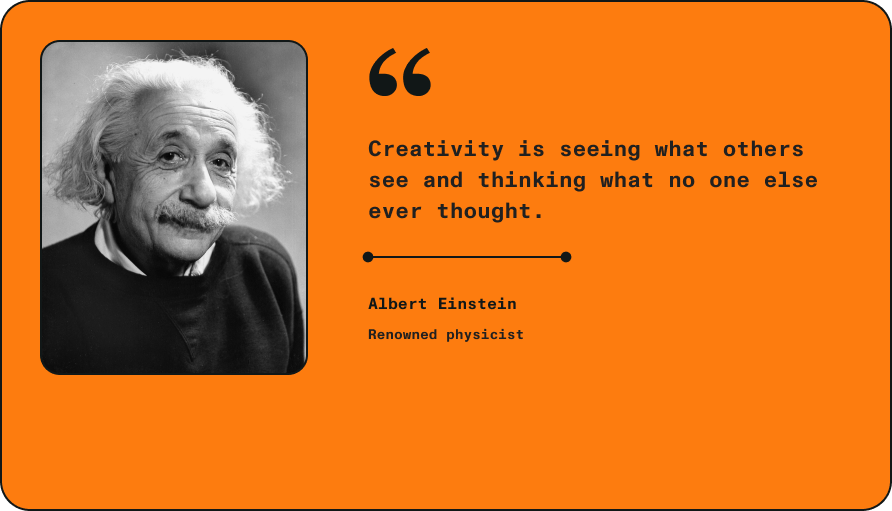
Creativity is often viewed as a mystical, elusive quality reserved for artists, musicians, and writers. However, this perception is misleading. A fundamental aspect of human cognition and experience, creativity manifests in various forms across different contexts.
So what is creativity? Creativity is defined as the ability to generate new ideas, solutions, or expressions that are both novel and appropriate. It involves two primary processes: thinking and producing. While many people may have imaginative ideas, true creativity is realised when those ideas are acted upon and brought into existence.
Creativity encompasses a wide range of activities, from artistic endeavours such as painting and writing to problem-solving in everyday situations. It is characterised by the ability to perceive the world in new ways, find hidden patterns, make connections between seemingly unrelated phenomena, and generate innovative solutions.
Rollo May, a prominent psychologist, described creativity as ‘the process of bringing something new into being, requiring passion and commitment’. He emphasised that creativity can lead to heightened consciousness and a sense of ecstasy in the creator. The notion that creativity is an exclusive trait is exclusive to a select few is a common misconception. Everyone has the potential for creativity, though it may manifest differently in each individual.
Research supports the idea that creativity is not a binary trait but a spectrum. A study conducted by George Land and Beth Jarman in 1968 revealed that 98% of children aged five scored at a genius level of creativity. However, as they grew older, this percentage dramatically decreased, with only 12% of 15-year-olds and a mere 2% of adults maintaining that level of creative thinking.
This decline is often attributed to societal pressures, educational systems, and self-imposed limitations that stifle creative expression. Many individuals internalise the belief that they are not creative, leading to a cycle of self-doubt and conformity. Creativity is not limited to artistic pursuits; it can be found in everyday activities and problem-solving scenarios. Ruth Richards, a psychology professor, refers to this as “everyday creativity,” which includes engaging in activities that bring joy and fulfilment, such as cooking, gardening, or DIY projects. Engaging in creative behaviours enhances resilience, self-awareness, and connection to the world.
Imagination is defined as the ability to form mental images, concepts, and sensations that are not present to the senses. It involves simulating scenarios, visualizing outcomes, and exploring ideas without direct sensory input. This cognitive process is essential for creativity, as it provides the raw material from which creative ideas are generated.
While imagination and creativity are often used interchangeably, they represent distinct concepts. Imagination refers to the capacity to envision new ideas and possibilities, whereas creativity is the application of those imaginative ideas to produce something novel and valuable. In other words, imagination is the wellspring of ideas, and creativity is the act of bringing those ideas into reality.
What role does imagination play in the creative process? Imagination provides cognitive freedom, allowing individuals to explore ideas without constraints. This freedom is essential for creative thought, as it encourages experimentation and the exploration of unconventional solutions. Imagination plays a key role in problem-solving by allowing individuals to visualise potential solutions and outcomes. It enables creative thinkers to simulate different scenarios and evaluate the consequences of their ideas. This process of mental simulation is vital for generating innovative solutions to complex challenges.
Imagination facilitates the ability to make connections between seemingly unrelated concepts. By visualising and manipulating ideas in the mind, individuals can identify patterns and relationships that may not be immediately apparent. This capacity for associative thinking is a hallmark of creativity, enabling the generation of original ideas. Imagination is closely tied to emotional engagement, as it allows individuals to connect with their feelings and motivations. This emotional resonance can fuel creativity, as passionate engagement with an idea often leads to more profound and impactful creative expressions.
Imagination encourages the exploration of alternatives and “what if” scenarios. This exploratory mindset is essential for creativity, as it allows individuals to consider multiple perspectives and potential outcomes, ultimately leading to more innovative solutions.
While some may believe that creativity is an innate quality, it can be nurtured and developed through practice and intentionality. Here are several strategies to enhance creativity in daily life:
Embrace curiosity: Curiosity is the foundation of creativity. Cultivating a curious mindset allows one to explore new ideas and perspectives. Ask questions, challenge assumptions, and seek out new experiences that broaden the understanding of the world.
Create a supportive environment: Surround oneself with people who inspire and encourage creativity. Engage in discussions, collaborate on projects, and share ideas with others. A supportive environment fosters creativity by providing a safe space for experimentation and exploration.
Practice mindfulness: Mindfulness encourages present-moment awareness, allowing one to observe their thoughts and feelings without judgment. This practice can help clear mental clutter, making room for new ideas and insights. Techniques such as meditation, deep breathing, and journaling can enhance mindfulness and creativity.
Set aside time for creativity: Dedicate specific time in the daily routine for creative pursuits. Whether it is writing, drawing, or brainstorming new ideas, carving out time for creativity allows one to focus and immerse themselves in the creative process.
Experiment and take risks: Creativity thrives on experimentation. Allow oneself to take risks and try new approaches, even if they lead to failure. Embrace mistakes as valuable learning experiences that contribute to growth as a creative thinker.
Engage in diverse activities: Participate in a variety of activities that challenge thinking and stimulate creativity. This could include taking up a new hobby, learning a musical instrument, or exploring different art forms. Engaging in diverse experiences helps one make connections and draw inspiration from various sources.
Limit self-criticism: The inner critic can be a significant barrier to creativity. Practice self-compassion and silence the negative self-talk that discourages one from pursuing creative endeavours. Remember that creativity is a process, and producing imperfect work is okay.
To further enhance creative practice, consider the following tips and tricks:
Keep a creativity journal: Document thoughts, ideas, and inspirations regularly. This journal can be a valuable resource for future projects and help you track creative progress.
Use prompts and challenges: Engage in creative prompts that encourage thinking outside the box. This could involve daily drawing prompts, writing exercises, or cooking challenges.
Take breaks: Allow oneself to step away from tasks and give the mind a chance to rest. Breaks can lead to moments of inspiration and clarity, allowing new ideas to surface.
Collaborate with others: Collaborating with others can spark new ideas and perspectives. Seek out opportunities for teamwork and brainstorming sessions to enhance your creative output.
Limit distractions: Create a focused environment by minimising distractions like social media and notifications. A distraction-free space allows for deeper concentration and creativity.
Explore nature: Spending time in nature can stimulate creativity. Take walks, observe the surroundings, and let the natural world inspire thoughts and ideas.
Practice gratitude: Cultivating gratitude can shift the mindset and open one up to new possibilities. Reflect on what one is grateful for and how it contributes to one’s creative journey.
Creativity is an essential aspect of human experience that transcends artistic expression. It is a skill that can be cultivated and enhanced through practice, curiosity, and a supportive environment. By recognising that everyone possesses the potential for creativity, one can embrace one’s unique creative journeys and explore new ways to express oneself.
Incorporating creativity into one’s daily life not only enriches one’s personal experiences but also enhances one’s professional endeavours. By adopting practical strategies and fostering a curious mindset, one can unlock one’s creative potential and lead more fulfilling, innovative lives. Remember, creativity is not a destination but a journey—one that is open to everyone willing to explore and embrace it.
Imagination plays a crucial role in the creative process, acting as the foundation for generating ideas and solutions. It allows individuals to envision possibilities beyond their immediate reality, facilitating the transformation of abstract thoughts into tangible outcomes. This article explores the significance of imagination in creativity, its distinction from creativity, and how it can be harnessed to enhance creative endeavours.






 Memories and Such