Poem: Farewell Mumbai

As you all are aware by now, my parents have moved away from Mumbai to live in a retirement home. I was in Mumbai last month to help them make the move and as we took off from Mumbai, I scribbled the first version of this poem on the plane.

Farewell Mumbai

As the plane takes off, I peer out of the window
Unbidden, my eyes fill up and soon the tears start to flow
The city of my birth gradually became smaller
I watch intently until it is but a speck, a blur

I bid goodbye to my childhood and adulthood home
As I see it disappear from high above the aerodrome
Instead of luggage, I take with me so many memories
Of a lifetime spent here, of multitude journies

I don’t know when I will be back, will it be months or years or even decades?
And when I am back, will the memories be still as strong or would they have faded?
And if and when I am back, will it still be home or just another place?
I would hate for this to happen though to my birthplace

Farewell dear Mumbai, the city of dreams
A city within which reside, people of two extremes,
A place where dreams are made and sometimes broken
But the city has space for all because here is all the action

I will return one day, that is certain
But it will be as a visitor, not a resident
Mumbai is in my heart, tomorrow, today and yesterday
And you can’t take a Mumbaikar out of Mumbai

In My Hands Today…

My Own Words – Ruth Bader Ginsburg, Mary Hartnett and Wendy W. Williams

My Own Words showcases Ruth Ginsburg’s astonishing intellectual range.

In this collection Justice Ginsburg discusses gender equality, the workings of the Supreme Court, being Jewish, law and lawyers in opera, and the value of looking beyond US shores when interpreting the US Constitution.

Throughout her life Justice Ginsburg has been a prolific writer and public speaker. This book’s sampling is selected by Justice Ginsburg and her authorized biographers Mary Hartnett and Wendy W. Williams, who introduce each chapter and provide biographical context and quotes gleaned from hundreds of interviews they have conducted.

Witty, engaging, serious, and playful, My Own Words is a fascinating glimpse into the life of one of America’s most influential women and a tonic to the current national discourse.

World Wildlife Day

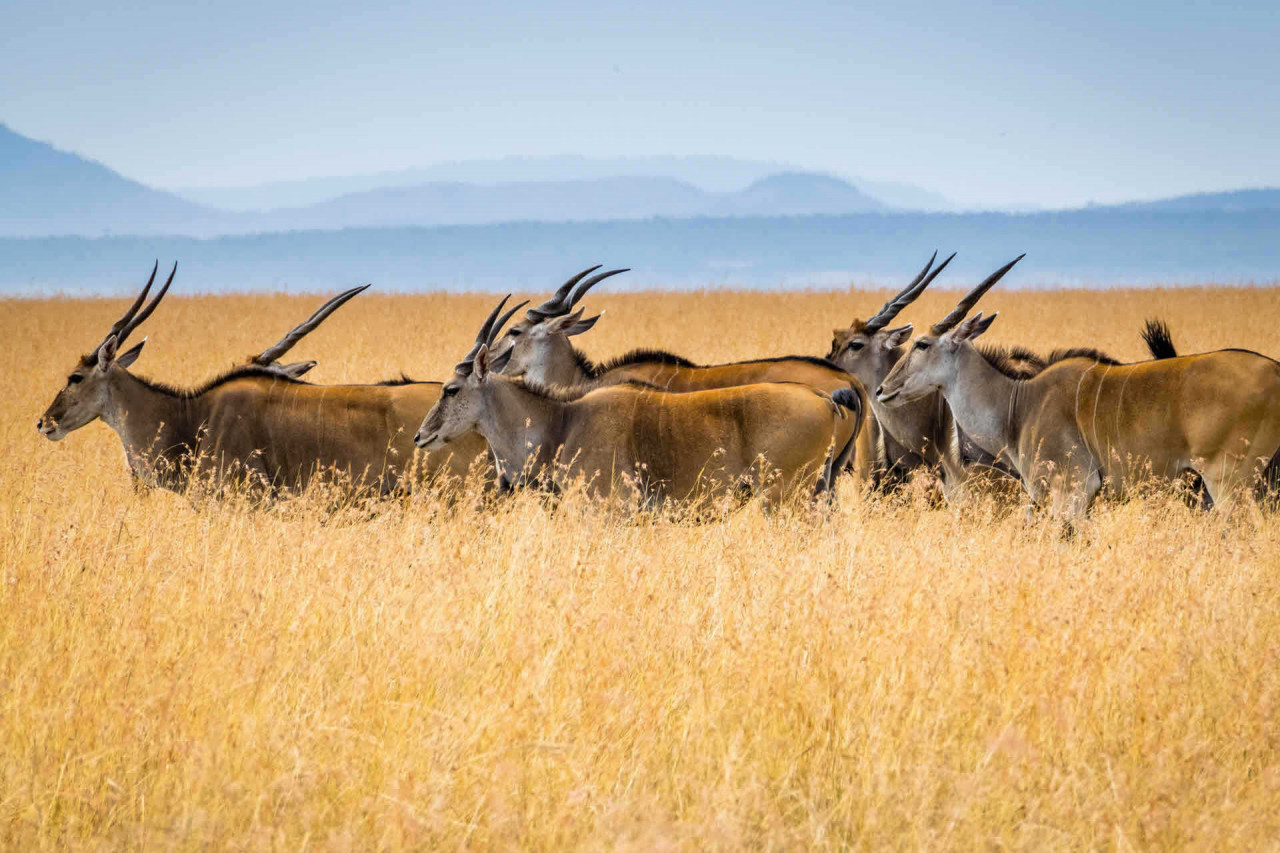
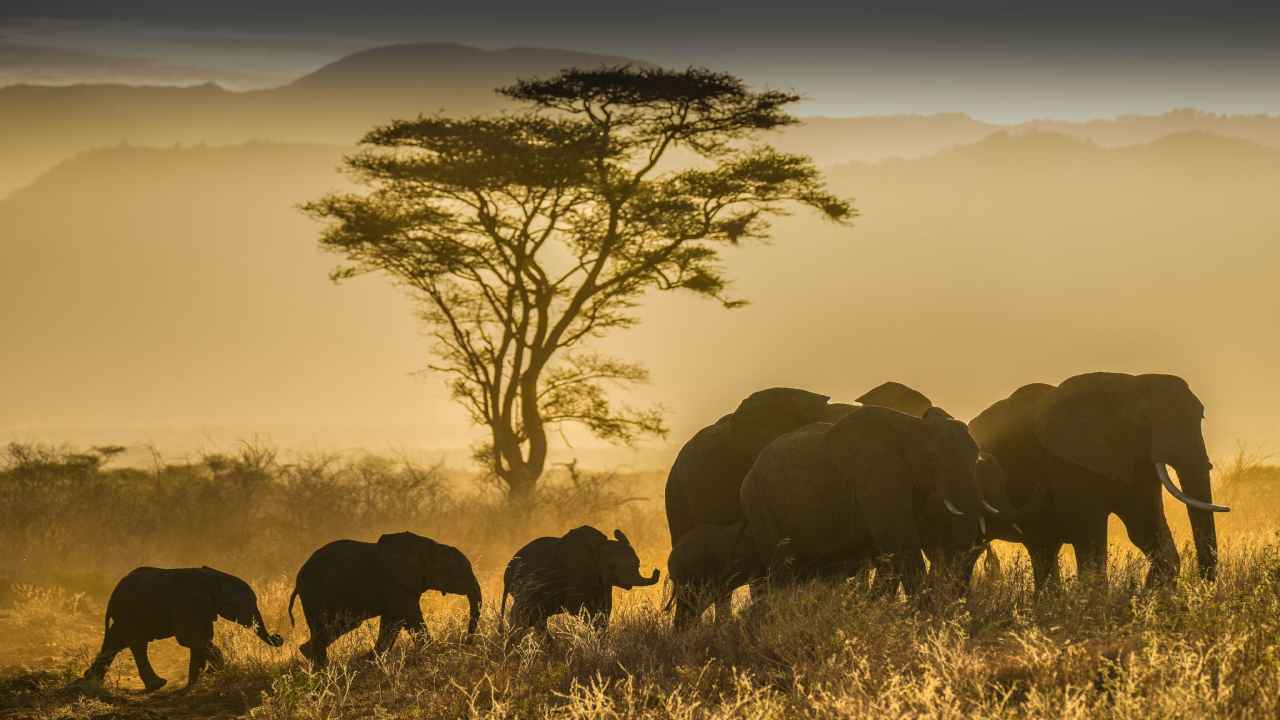
Humans share our planet with other species who coexist with us. The term wildlife traditionally refers to undomesticated animal species but has come to include all organisms that grow or live wild in an area without being introduced by humans. Wildlife can be found in all ecosystems – deserts, forests, rainforests, plains, grasslands, and other areas, including the most developed urban areas, all have distinct forms of wildlife. While the term in popular culture usually refers to animals that are untouched by human factors, most scientists agree that much wildlife is affected by human activities with many wild animals, even the dangerous ones, have value to human beings which may be economic, educational, or emotional. Humans have historically tended to separate civilization from wildlife in many ways, including the legal, social, and moral senses. Global wildlife populations have decreased by 68% since 1970 as a result of human activity, particularly overconsumption, population growth and intensive farming, according to a 2020 World Wildlife Fund’s Living Planet Report and the Zoological Society of London’s Living Planet Index measure, which is further evidence that humans have unleashed a sixth mass extinction event. According to CITES, it has been estimated that annually the international wildlife trade amounts to billions of dollars and it affects hundreds of millions of animal and plant specimens.

According to data from the International Union for Conservation of Nature (IUCN) Red List of Threatened Species, over 8,400 species of wild fauna and flora are critically endangered, while close to 30,000 more are understood to be endangered or vulnerable. In 2019, the Intergovernmental Science-Policy Platform on Biodiversity and Ecosystem Services‘ Global Assessment Report on Biodiversity and Ecosystem Services found that a quarter of species on Earth already face the threat of extinction and that global ecosystems had declined by an average of nearly half, relative to their earliest estimated states. Continued loss of species, habitats and ecosystems also threaten all life on Earth, including us. People everywhere rely on wildlife and biodiversity-based resources to meet all our needs, from food to fuel, medicines, housing, and clothing. Millions of people also rely on nature as the source of their livelihoods and economic opportunities.

Between 200 and 350 million people live within or adjacent to forested areas around the world, relying on the various ecosystem services provided by forest and forest species for their livelihoods and to cover their most basic needs, including food, shelter, energy and medicines. Roughly 28% of the world’s land surface is currently managed by indigenous peoples, including some of the most ecologically intact forests on the planet. These spaces are not only central to their economic and personal well-being but also their cultural identities.

On 20 December 2013, at its 68th session, the United Nations General Assembly (UNGA) proclaimed 3 March – the day of signature of the Convention on International Trade in Endangered Species of Wild Fauna and Flora (CITES) in 1973 – as UN World Wildlife Day to celebrate and raise awareness of the world’s wild animals and plants. The UNGA resolution also designated the CITES Secretariat as the facilitator for the global observance of this special day for wildlife on the UN calendar. World Wildlife Day has now become the most important global annual event dedicated to wildlife. This day was proposed by Thailand to celebrate and raise awareness of the world’s wild fauna and flora and member countries reaffirmed the intrinsic value of wildlife and its various contributions, including ecological, genetic, social, economic, scientific, educational, cultural, recreational and aesthetic, to sustainable development and human well-being.

World Wildlife Day will celebrate forest-based livelihoods and seek to promote forest and forest wildlife management practices that accommodate both human well-being and the long-term conservation of forests and promote the value of traditional practices that contribute to establishing a more sustainable relationship with these crucial natural systems. The animals and plants that live in the wild have an intrinsic value and contribute to the ecological, genetic, social, economic, scientific, educational, cultural, recreational and aesthetic aspects of human well-being and to sustainable development.

The planet’s forests are home to some 80 per cent of all terrestrial wild species. They help regulate the climate and support the livelihoods of hundreds of millions of people and some 90 per cent of the world’s poorest people are dependent in some way on forest resources, particularly the indigenous communities that live in or near forests.

Some 28 per cent of the world’s land is managed by indigenous communities, including some of the most intact forests on the planet which provide livelihoods and cultural identity. The unsustainable exploitation of forests harms these communities and contributes to biodiversity loss and climate disruption. Every year, the world loses 4.7 million hectares of forests, an area larger than Denmark and the major cause is unsustainable agriculture as well as global timber trafficking, which accounts for up to 90 per cent of tropical deforestation in some countries and also attracts the world’s biggest organised crime groups. The illegal trade in wild animal species is another threat, increasing the risks of zoonotic diseases, such as Ebola and COVID-19.

World Wildlife Day has a different theme every year and in 2022 will be celebrated under the theme “Safeguarding key species for ecosystem restoration” with the celebrations seeking to draw attention to the conservation status of some of the most critically endangered species of wild fauna and flora, and to drive discussions towards imagining and implementing solutions to conserve them. The day will therefore drive the debate towards the imperative need to reverse the fate of the most critically endangered species, to support the restoration of their habitats and ecosystems and to promote their sustainable use by humanity.

World Wildlife Day is an opportunity to celebrate the many beautiful and varied forms of wild fauna and flora and to raise awareness of the multitude of benefits that their conservation provides to people. At the same time, the Day reminds us of the urgent need to step up the fight against wildlife crime and human-induced reduction of species, which have wide-ranging economic, environmental and social impacts. Given these various negative effects, Sustainable Development Goal 15 focuses on halting biodiversity loss.

Forests, forests species and the livelihoods that depend on them currently find themselves at the crossroads of the multiple planetary crises we currently face, from climate change to biodiversity loss and the health, social and economic impacts of the COVID-19 pandemic.

So on this day, pledge to protect the forests and the flora and fauna which live in them. We deserve to leave this planet a better place than when we started using it.

In My Hands Today…

Moorish Spain – Richard Fletcher

Beginning in the year 711 and continuing for nearly a thousand years, the Islamic presence survived in Spain, at times flourishing, and at other times dwindling into warring fiefdoms.

But the culture and science thereby brought to Spain, including long-buried knowledge from Greece, largely forgotten during Europe’s Dark Ages, was to have an enduring impact on the country as it emerged into the modern era.

In this gracefully written history, Richard Fletcher reveals the Moorish culture in all its fascinating disparity and gives us history at its best: here is vivid storytelling by a renowned scholar.

Benford’s Law

Numbers are all around us and with numbers come number patterns. And when we research number patterns, we come across something very interesting. Also known as the Newcomb–Benford law, the law of anomalous numbers or the first-digit law, Benford’s Law is a statistical statement about the occurrence of digits in lists of data and is an observation that in many real-life sets of numerical data, the leading digit is likely to be small.

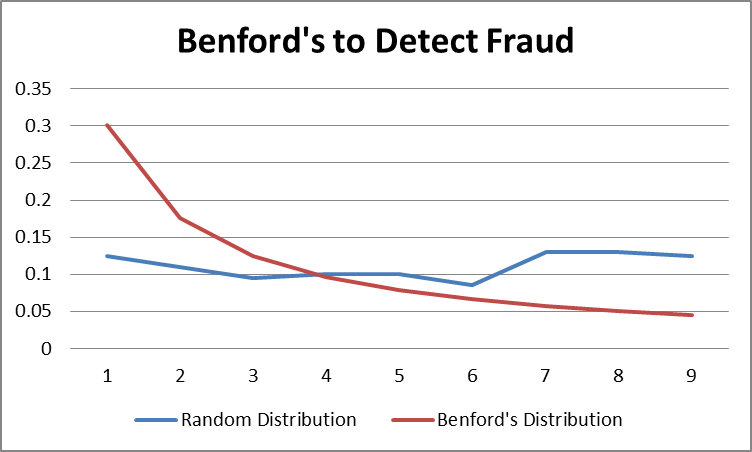
According to the law, in sets that obey the law, the number 1 appears as the leading significant digit about 30% of the time, while 9 appears as the leading significant digit less than 5% of the time. If the digits were distributed uniformly, they would each occur about 11.1 % of the time. Benford’s Law also makes predictions about the distribution of second digits, third digits, digit combinations, and so on. The law is named after physicist Frank Benford, who stated it in 1938 in a paper titled “The Law of Anomalous Numbers”, although it had been previously stated by Simon Newcomb in 1881 and is similar in concept, though not identical in distribution, to the Zipf’s law. So according to Benford’s Law, the finding that the first digits or numerals to be exact of the numbers found in series of records of the most varied sources do not display a uniform distribution, but rather are arranged in such a way that the digit “1” is the most frequent, followed by “2”, “3”, and so in a successively decreasing manner down to “9”

The discovery of Benford’s law goes back to 1881 when the Canadian-American astronomer Simon Newcomb noticed that in logarithm tables the earlier pages that started with 1 were much more worn than the other pages. Newcomb’s published result is the first known instance of this observation and includes distribution on the second digit, as well. Newcomb proposed a law that the probability of a single number N being the first digit of a number was equal to log(N + 1) − log(N). The phenomenon was again noted in 1938 by the physicist Frank Benford, who tested it on data from 20 different domains and was credited for it. Benford’s data set included the surface areas of 335 rivers, the sizes of 3259 US populations, 104 physical constants, 1800 molecular weights, 5000 entries from a mathematical handbook, 308 numbers contained in an issue of Reader’s Digest, the street addresses of the first 342 persons listed in American Men of Science and 418 death rates. The total number of observations used in the paper was 20,229.

It has been shown that this result applies to a wide variety of data sets, including electricity bills, street addresses, stock prices, house prices, population numbers, death rates, lengths of rivers, and physical and mathematical constants. Like other general principles about natural data – for example, the fact that many data sets are well approximated by a normal distribution — some illustrative examples and explanations cover many of the cases where Benford’s law applies, though there are many other cases where Benford’s law applies that resist a simple explanation. It tends to be most accurate when values are distributed across multiple orders of magnitude, especially if the process of generating the numbers is described by a power-law, which is common in nature.

Benford’s law tends to apply most accurately to data that span several orders of magnitude. As a rule of thumb, the more orders of magnitude that the data evenly covers, the more accurately Benford’s law applies. For instance, one can expect that Benford’s law would apply to a list of numbers representing the populations of UK settlements. But if a settlement is defined as a village with a population between 300 and 999, then Benford’s law will not apply.

In general, it has been seen a series of numerical records follows Benford’s Law when they
represents magnitudes of events or events, such as populations of cities, flows of water in rivers or sizes of celestial bodies; do not have pre-established minimum or maximum limits; are not made up of numbers used as identifiers, such as identity or social security numbers, bank accounts, telephone numbers; and have a mean which is less than the median, and the data is not concentrated around the mean

This law can be utilised to detect patterns or the lack thereof in naturally occurring datasets. This can lead to important applications in data science such as catching anomalies or fraud detection. It’s expected that a large set of numbers will follow the law, so accountants, auditors, economists and tax professionals have a benchmark what the normal levels of any particular number in a set are.

In the latter half of the 1990s, accountant Mark Nigrini found that Benford’s law can be an effective red-flag test for fabricated tax returns; True tax data usually follows Benford’s law, whereas made-up returns do not. Ponzi schemes can be detected using the law. Unrealistic returns, such as those purported by the Maddoff scam, fall far from the expected Benford probability distribution.

In 1972, Hal Varian suggested that the law could be used to detect possible fraud in lists of socio-economic data submitted in support of public planning decisions. Based on the plausible assumption that people who fabricate figures tend to distribute their digits fairly uniformly, a simple comparison of first-digit frequency distribution from the data with the expected distribution according to Benford’s law ought to show up any anomalous results. In the United States, evidence-based on Benford’s law has been admitted in criminal cases at the federal, state, and local levels.

Walter Mebane, a political scientist and statistician at the University of Michigan, was the first to apply the second-digit Benford’s law-test (2BL-test) in election forensics. Such analyses are considered a simple, though not foolproof, method of identifying irregularities in election results and helping to detect electoral fraud. Benford’s law has been used as evidence of fraud in the 2009 Iranian elections. An analysis by Mebane found that the second digits in vote counts for President Mahmoud Ahmadinejad, the winner of the election, tended to differ significantly from the expectations of Benford’s Law and that the ballot boxes with very few invalid ballots had a greater influence on the results, suggesting widespread ballot stuffing. Another study used bootstrap simulations to find that the candidate Mehdi Karroubi received almost twice as many vote counts beginning with the digit 7 as would be expected according to Benford’s law, while analysis from Columbia University concluded that the probability that a fair election would produce both too few non-adjacent digits and the suspicious deviations in last-digit frequencies as found in the 2009 Iranian presidential election is less than 0.5%. Benford’s Law has also been applied for forensic auditing and fraud detection on data from the 2003 California gubernatorial election, the 2000 and 2004 United States presidential elections, and the 2009 German federal election.

Benford’s law has also been misapplied to claim election fraud. When applying the law to Joe Biden’s election returns for Chicago, Milwaukee, and other localities in the 2020 United States presidential election, the distribution of the first digit did not follow Benford’s law. The misapplication was a result of looking at data that was tightly bound in range, which violates the assumption inherent in Benford’s law that the range of the data is large.

Macroeconomic data the Greek government reported to the European Union before entering the eurozone was shown to be probably fraudulent using Benford’s law, albeit years after the country joined the EU. In genome data, the number of open reading frames and their relationship to genome size differs between eukaryotes and prokaryotes with the former showing a log-linear relationship and the latter a linear relationship. Benford’s law has been used to test this observation with an excellent fit to the data in both cases. The law has also been used successfully in scientific fraud detection. A test of regression coefficients in published papers showed agreement with Benford’s law. As a comparison group subjects were asked to fabricate statistical estimates. The fabricated results conformed to Benford’s law on first digits but failed to obey Benford’s law on second digits.

So if you want to test Benford’s Law yourself, it’s very simple. Just pick up a random book or magazine and list or sort the numbers. You will find about 30% of the numbers collected from any issue will start with the number 1. Let me know in the comments section if the law fit in your experiment.