In My Hands Today…

The Art of Fermentation: An in-Depth Exploration of Essential Concepts and Processes from Around the World – Sandor Ellix Katz

Winner of the 2013 James Beard Foundation Book Award for Reference and Scholarship, and a New York Times bestseller, The Art of Fermentation is the most comprehensive guide to do-it-yourself home fermentation ever published. Sandor Katz presents the concepts and processes behind fermentation in ways that are simple enough to guide a reader through their first experience making sauerkraut or yogurt, and in-depth enough to provide greater understanding and insight for experienced practitioners.

While Katz expertly contextualizes fermentation in terms of biological and cultural evolution, health and nutrition, and even economics, this is primarily a compendium of practical information–how the processes work; parameters for safety; techniques for effective preservation; troubleshooting; and more.

With two-color illustrations and extended resources, this book provides essential wisdom for cooks, homesteaders, farmers, gleaners, foragers, and food lovers of any kind who want to develop a deeper understanding and appreciation for arguably the oldest form of food preservation, and part of the roots of culture itself.

Readers will find detailed information on fermenting vegetables; sugars into alcohol (meads, wines, and ciders); sour tonic beverages; milk; grains and starchy tubers; beers (and other grain-based alcoholic beverages); beans; seeds; nuts; fish; meat; and eggs, as well as growing mold cultures, using fermentation in agriculture, art, and energy production, and considerations for commercial enterprises. Sandor Katz has introduced what will undoubtedly remain a classic in food literature, and is the first–and only–of its kind.

World Gratitude Day: The Power of Thankfulness

In a world often dominated by stress, negativity, and the relentless pursuit of more, World Gratitude Day stands as a beacon of positivity, reminding us to pause and appreciate the good in our lives. Celebrated annually on September 21, this day encourages individuals, communities, and nations to express thankfulness and recognise the profound impact of gratitude on our well-being.

World Gratitude Day was born in 1965 during a Thanksgiving dinner in the meditation room of the United Nations building. The idea was proposed by Sri Chinmoy, a spiritual leader and meditation teacher who believed that gratitude could foster global unity and peace. At the dinner, Chinmoy suggested the creation of a global holiday dedicated to gratitude, and each attendee pledged to host an event in their home country on September 21 every year. The first World Gratitude Day was celebrated in 1966, and by 1977, the United Nations Meditation Group officially recognised the day. Since then, it has been observed annually, with people from all walks of life coming together to express their appreciation for the blessings in their lives.

Gratitude is more than just a polite “thank you”; it is a profound emotion that can transform our mental, emotional, and physical well-being. Research has shown that practicing gratitude can lead to increased happiness, improved relationships, and even better physical health.

Gratitude shifts our focus from what we lack to what we have, fostering a sense of contentment and reducing feelings of envy and resentment. Studies have shown that individuals who regularly practice gratitude experience higher levels of happiness and life satisfaction. Expressing gratitude strengthens our relationships by making others feel valued and appreciated. It fosters empathy and compassion, creating a positive feedback loop of kindness and generosity.

Gratitude has been linked to improved sleep, reduced stress, and even a stronger immune system. By focusing on the positive aspects of our lives, we can reduce the harmful effects of stress and promote overall health.

While World Gratitude Day does not have an official theme each year, the overarching message remains the same: to cultivate a sense of appreciation and thankfulness in our lives. There are countless ways to celebrate World Gratitude Day, whether through personal reflection, acts of kindness, or community events.

  • Keep a gratitude journal: Start writing down three things you are grateful for everyday. This simple exercise can help shift your focus to the positive aspects of your life and cultivate a sense of appreciation.
  • Write gratitude letters: Take the time to write heartfelt letters to the people who have made a positive impact on your life. Expressing your gratitude in writing can be a powerful way to strengthen your relationships and make others feel valued.
  • Perform random acts of kindness: Show your appreciation for others by performing small acts of kindness. Whether it’s buying coffee for a stranger, helping a colleague with a project, or volunteering your time, these gestures can have a ripple effect of positivity.
  • Practice mindfulness: Take a few moments throughout the day to be present and appreciate the beauty around you. Notice the small things, like the warmth of the sun on your face or the sound of birds chirping outside your window.
  • Host a gratitude gathering: Organise a gathering with friends, family, or colleagues to share what you are grateful for. This can be a powerful way to foster a sense of community and connection.

Gratitude has the power to transform not only individuals but also entire communities and societies. When people practice gratitude, they are more likely to engage in prosocial behaviors, such as volunteering, donating to charity, and helping others in need. This creates a culture of kindness and generosity, where people feel valued and supported.

In the workplace, gratitude can increase employee satisfaction, improve teamwork, and increase productivity. When employees feel appreciated, they are more motivated and engaged, creating a positive and productive work environment.

On a global scale, gratitude can foster a sense of unity and peace. By recognising and appreciating the good in our lives, we can cultivate a sense of interconnectedness and empathy, leading to a more compassionate and harmonious world.

As we approach World Gratitude Day, let us take the time to reflect on the blessings in our lives and express our appreciation to those who have made a positive impact. Gratitude is a powerful force that can transform our lives, our relationships, and our world. By practicing gratitude, we can create a ripple effect of positivity, kindness, and compassion that extends far beyond ourselves.

So, make gratitude a daily practice. Whether through a simple “thank you,” a heartfelt letter, or an act of kindness, let us spread the message of gratitude and create a world where appreciation and thankfulness are at the forefront of our lives.

2025 Week 38 Update

This week, I was very productive, working on my blog posts, so that’s a big win for me. But on the other hand, because I was walking more than usual, halfway through the week, my legs decided to give up on me. I had excruciating pain in both my legs, one by one, so much that I had to stop walking for the rest of the week so I could recover. I guess my age is catching up, and I need to scale back on my daily walks. But I also want to finish my walk back home, and since I am in the last few hundred kilometres, it’s a catch-22 situation. But I think my health concerns should come above this walk, so I plan to scale down for a few days before I start walking, but at a slower pace.

Today’s quote from Corrie ten Boom highlights the futility of worry. Corrie ten Boom reminds us that worrying doesn’t prevent future problems; it doesn’t solve or lessen them. Instead, it drains our energy, focus, and peace in the present moment. By dwelling on what might happen tomorrow, we weaken ourselves today, making it harder to face challenges with clarity and resilience. Her message is simple yet powerful: rather than wasting strength on imagined fears, we should conserve our energy for living fully today. Trust, faith, and presence are far more effective than worry in preparing us for the future.

Corrie ten Boom was a Dutch Christian watchmaker who, along with her family, helped many Jews escape the Nazis during World War II by hiding them in their home. She was eventually arrested and sent to a concentration camp, where she survived and later shared her story in her memoir The Hiding Place. After the war, Corrie travelled the world as a speaker and writer, teaching about forgiveness, faith, and resilience. Her life and words continue to inspire people to trust in hope and courage even in the darkest times.

Today’s motivation is about going through tough times. When you’re going through a tough time, be gentle with yourself. Give yourself the space to notice your self-critical thoughts. It’s not like you’re doing it on purpose. These unpleasant thoughts are not your fault. It’s part of the human experience. There is nothing productive about obsessing over something that can’t be changed. Refrain from forming conclusions about your situation based on these unhelpful thoughts. Embrace the transformative power of pause. Tap into your inner knowing and trust in your own resilience.

GG is, as usual, busy with school. She also scored, not one, but all three internships she had applied to for next year. She already had accepted one offer before she got the other two, so she will have to turn the others down, but hopefully will be able to intern with them before she graduates. I am so proud of her!

BB’s flight back home has been changed and he will come almost two days later than he was supposed to. This means his offboarding leave will be reduced by at least one day. He sent some amazing photos from his trip and these photos have made me add Australia to my bucket list.

That’s all from me this week. Stay positive and keep smiling!

In My Hands Today…

The Third Gilmore Girl – Kelly Bishop

Kelly Bishop’s long, storied career has been defined by landmark achievements, from winning a Tony Award for her turn in the original Broadway cast of A Chorus Line to her memorable performance as Jennifer Grey’s mother in Dirty Dancing. But it is probably her iconic role as matriarch Emily in the modern classic Gilmore Girls that cemented her legacy.

Now, Bishop reflects on her remarkable life and looks towards the future with The Third Gilmore Girl. She shares some of her greatest stories and the life lessons she’s learned on her journey. From her early transition from dance to drama, to marrying young to a compulsive gambler, to the losses and achievements she experienced—among them marching for women’s rights and losing her second husband to cancer—Bishop offers a rich, genuine celebration of her life.

Full of witty insights, The Third Gilmore Girl is a warm, unapologetic, and spirited memoir from a woman who has left indelible impressions on her audiences for decades and has no plans on slowing down.

Sacred Stones, Spaces and Stories: Shakthipeeta Part 20

Nalhateswari Temple, Nalhati, West Bengal
The Nalateswari Temple, located in Nalhati, Birbhum district is dedicated to Maa Nalateswari, a form of Goddess Sati, and Lord Shiva is worshipped here as Jogesh Bhairava. It is believed that the larynx or nala of Goddess Sati fell at this site.

The temple’s history dates back to the 16th century, with its construction attributed to the Malla kings. However, local legends suggest that the temple was rediscovered by Ram Sharam Devsharma, a devotee who found the larynx of Maa Sati in the dense forests of Nalhati. Over time, the temple became a centre of devotion and was later renovated by Rani Bhavani and Maharaja Ranajit Singh of Nashipur in the late 19th century. The name Nalateswari derives from Nala or larynx and Ishwari or goddess. The temple also served as a refuge for freedom fighters during India’s independence movement.

The sanctum sanctorum houses a self-manifested or swayambhu stone idol of Maa Nalateswari adorned with vermilion, sindoor, a silver crown, and three golden eyes or trinayan. Her golden-red tongue symbolizes her fierce aspect. Below her idol lies the sacred nala or throat of Sati. It is believed that no matter how much water is poured on it, it never overflows or dries up. Devotees often hear a gulping sound resembling human swallowing when water flows through it. A sacred pond known as Lalita Kund lies within the temple premises. Pilgrims take a holy dip in this pond before entering the shrine to purify their souls. The temple features traditional Bengali architecture with a raised pinnacle, a shikhara, above its sanctum. Its design includes a natmandir, a prayer hall, and smaller shrines dedicated to Lord Shiva, Lord Ganesha, and Lord Hanuman. A mysterious neem tree near the temple is considered sacred by devotees. It is said to possess healing powers and is often worshipped alongside Maa Nalateswari.

Daily worship at the temple include the morning and evening aartis. Navratri is celebrated twice a year with grand rituals honoring Maa Nalateswari’s nurturing aspect. Devotees observe fasting during these nine days to seek blessings for prosperity and protection. Kali Puja is celebrated with great fervor at Nalateswari Temple. Elaborate rituals are conducted to honor Maa Durga’s fierce aspect as Kali. Devotees offer red hibiscus flowers symbolic of power and victory over evil forces. Every full moon or Purnima, a grand fair is held within the temple grounds. This event includes cultural programs, stalls selling handicrafts, and community feasts. On new moon or Amavasya nights, special Tantric rituals are conducted by priests to invoke Maa Nalateswari’s protective energy.

According to legend, Kamdev, the Hindu god of love, dreamt about the existence of Maa Sati’s larynx in the forests of Nalhati. Guided by his vision, he discovered the sacred spot where her nala lay buried beneath layers of earth. This marked the beginning of worship at this Shakti Peetha. Devotees believe that pouring water on Maa Nalateswari’s throat produces a gulping sound resembling human swallowing—a phenomenon considered miraculous by pilgrims who visit this shrine. During India’s struggle for independence, freedom fighters used the temple premises as a hideout due to its remote location and supportive priests who provided them shelter and food.

The Nalateswari Temple offers visitors a unique spiritual experience rooted in mythology and devotion. It is a must visit for those seeking solace or want to explore India’s rich cultural heritage.
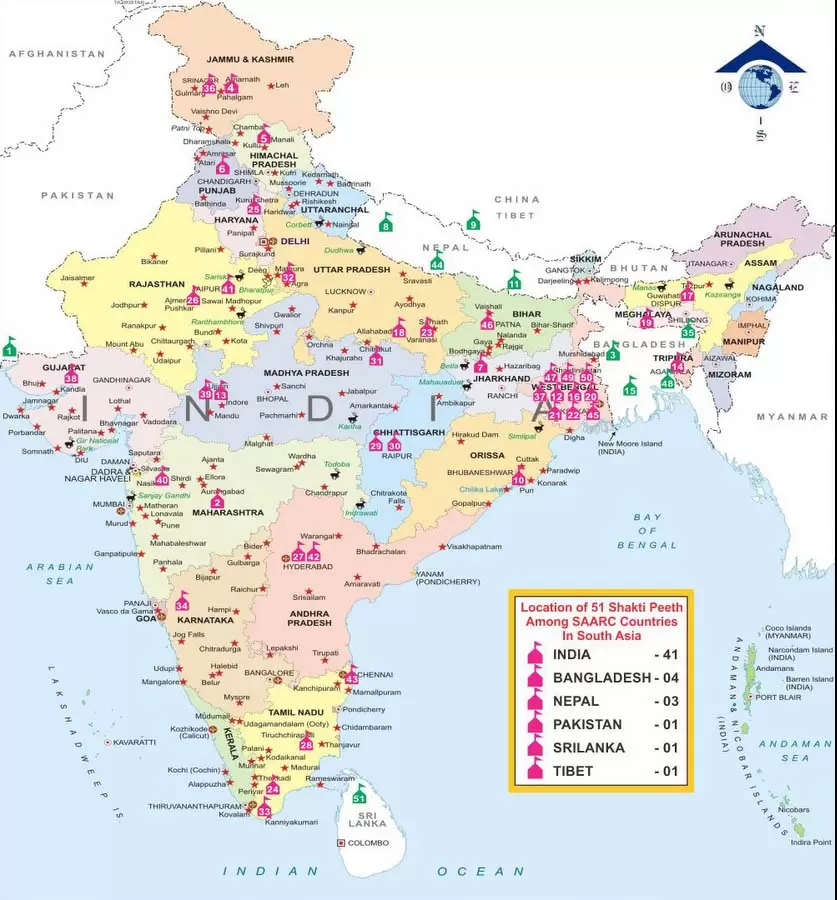
Tarapith, Rampurhat, West Bengal
Recognised as one of the Shakti Peethas, the Tarapith Temple, located in Rampurhat is dedicated to Goddess Tara, a fierce and compassionate form of Shakti. At Tarapith, it is said that the third eye of Sati fell, sanctifying the location as a center of immense spiritual energy. The temple is closely associated with tantric practices and the mystic saint Bamakhepa, whose life and devotion to Tara are legendary.

The temple is said to have been established in the 13th century and has undergone several renovations over time. The current structure was built in 1225 by Jagannath Ray of Mallarpur village. The temple’s name derives from Tara which means star or eye in Bengali, symbolizing the divine vision of Goddess Tara. Tarapith has been a centre for tantric practices for centuries and is regarded as a Siddha Pitha, a site where devotees can attain enlightenment and supernatural powers or siddhis. The temple’s proximity to the cremation ground further enhances its significance for tantric practitioners.

Goddess Sati is worshipped here as Maa Tara, symbolising protection, compassion, and divine wisdom. Lord Shiva is revered as Akshobhya Bhairava, representing his role as a guardian and protector. The third eye or netra of Sati is believed to have fallen at this site.

The main idol of Maa Tara depicts her suckling Lord Shiva as a child. This unique form symbolises her nurturing aspect while also embodying her fierce power. The idol is adorned with a silver crown, red vermilion or sindoor, and garlands made from skulls or mundamala, emphasising her tantric association. Tarapith is renowned as one of India’s most important centres for tantric worship. Tantriks perform esoteric rituals in the adjoining cremation ground to invoke Maa Tara’s blessings. Offerings such as liquor and meat are made during specific rituals, reflecting ancient tantric traditions.

The cremation ground near the temple is considered highly sacred and serves as a hub for tantric practices. Devotees believe that Maa Tara resides here in her ferocious form. Many pilgrims visit this site to meditate or perform ancestral rites or tarpan. The temple is closely linked to the mystic saint Bamakhepa, who spent his life worshipping Maa Tara. His ashram near the temple continues to attract devotees seeking spiritual guidance.

The temple features an eight-roofed structure, an aatchala, with intricate carvings depicting scenes from Hindu epics like the Mahabharata and Ramayana. Its simplicity contrasts with its profound spiritual energy.

Daily pujas are performed by priests who offer flowers, bananas, coconuts, sweets, liquor, and even meat to Maa Tara. Morning Aarti begins at sunrise with chanting of hymns like Durga Saptashati, while evening Aarti concludes with lighting oil lamps around the temple premises. Kamalakanta Kali Puja is the annual festival dedicated to Maa Kali that attracts thousands of devotees who gather for night-long prayers and rituals. Special offerings like red sarees and garlands made from hibiscus flowers are presented to Maa Tara during this time.

Devotees perform tarpan or ancestral rites at the cremation ground near the temple to honor their ancestors and seek their blessings. Tantriks perform esoteric rituals during auspicious nights like Amavasya or the new moon, to invoke Maa Tara’s blessings for spiritual growth or supernatural powers. Devotees often seek healing from ailments by offering prayers at Maa Tara’s shrine or taking a dip in the sacred tank adjacent to the temple.

According to legend, Sage Vashishtha performed intense penance at Tarapith to please Goddess Tara. Despite reciting her mantra 300,000 times, he failed to invoke her presence. On Lord Buddha’s advice, Vashishtha adopted tantric practices, vamachara, and successfully pleased Maa Tara. She appeared before him in her nurturing form—breastfeeding Lord Shiva—and turned into a stone idol that became enshrined in the temple.

Known as the mad saint, Bamakhepa was one of Maa Tara’s most ardent devotees. He spent years meditating in the cremation ground and was said to possess miraculous healing powers granted by Maa Tara herself. Once when priests denied him food before offering it to Maa Tara, she appeared in a queen’s dream demanding that Bamakhepa be fed first as her beloved son. The sacred tank near the temple is believed to have healing properties. Devotees often bathe here before entering the temple premises or collect its water for use in rituals.

The Tarapith Temple offers visitors a unique spiritual experience rooted in mythology and devotion. Its unique features like tantric practices emphasise ancient traditions while preserving spiritual heritage.

Shrinkala Devi Temple, Pandua, West Bengal
The Shrinkala Devi Temple, once located in Pandua, West Bengal, is shrouded in controversy and uncertainty. Unlike many other Shakti Peethas, this sacred site has a complex history that has led to debates about its current location and status.

Originally situated in Pandua, Hooghly district, the Shrinkala Devi Temple was considered one of the 51 Shakti Peethas and was believed to be the spot where Sati’s stomach fell. However, the original temple structure no longer exists. Historical records indicate that it was destroyed by Muslim invaders, likely during the Delhi Sultanate period. A minar was subsequently built at the site, possibly by Zafar Khan Gazi, a general of Sultan Alauddin Khalji in the late 13th century.

The destruction of the original temple has led to several controversies and competing claims about the true location of the Shrinkala Devi Shakti Peetha. Some believe that the original site in Pandua remains the true Shakti Peetha, despite the absence of a temple structure. The Archaeological Survey of India now maintains the site. Another claim suggests that Rishyasringa Maharshi, on the goddess’s command, moved the deity to Sringeri in Karnataka. Some devotees believe the Shakti Peetha is present in the Ganga Sagar region, also known as Adinath Kshetra. There are also claims that the temple might be located in Chotila, Gujarat while some sources suggest the temple might be near the Somnath temple in Prabhas Pattan.

In recent years, there have been efforts by Hindu organisations to reclaim and revive the worship of Shrinkala Devi. The Sanyukta Hindu Front initiated a campaign in 2022 to restore the significance of the Shrinkala Devi temple. They have started performing regular pujas on Amavasya or new moon days and are seeking information from the Archaeological Survey of India about the original site in Pandua.

Despite the absence of a physical temple, devotion to Shrinkala Devi continues. Given the uncertainty of the temple’s location, many devotees worship Shrinkala Devi in a formless aspect. An annual 30-day festival called Mela Tala is celebrated near the original site in Pandua during the month of Magha, around February. The Sanyukta Hindu Front has encouraged devotees to perform small pujas in their homes or offices on Amavasya days.

As efforts continue to reclaim and revive the worship of Shrinkala Devi, this Shakti Peetha serves as a poignant reminder of the complex interplay between faith, history, and cultural preservation in modern India. It challenges us to consider how spiritual traditions can endure and evolve even in the absence of physical structures, and how devotees can maintain connections to sacred sites across vast distances and through centuries of change.