The Position of Spoons: And Other Intimacies – Deborah Levy
Deborah Levy’s vital literary voice speaks about many things.
On footwear: “It has always been very clear to me that people who wear shoes without socks are destined to become my friends and lovers.”
On public parks: “A civic garden square gentles the pace of the city that surrounds it, holding a thought before it scrambles.”
On Elizabeth Hardwick: “She understands what is at stake in literature.”
On the conclusion of a marriage: “It doesn’t take an alien to tell us that when love dies we have to find another way of being alive.”
Levy shares with us her most tender thoughts as she traces and measures her life against the backdrop of different literary imaginations; each page is a beautiful, questioning composition of the self. The Position of Spoons is full of wisdom and astonishments and brings us into intimate conversation with one of our most insightful, intellectually curious writers.
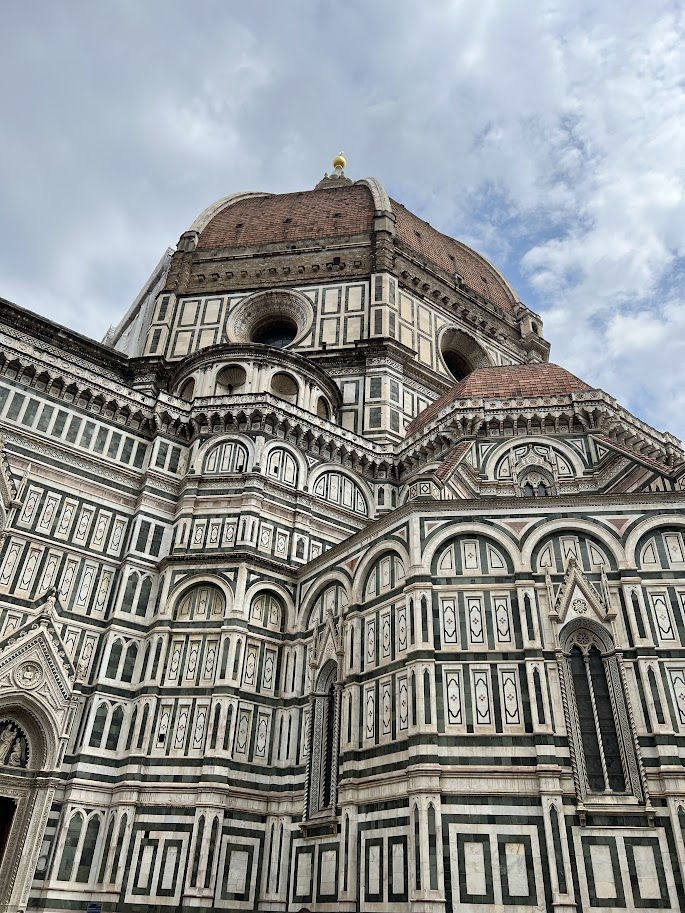
Early the next day, we checked out of our Airbnb and made our way to the Roma Termini station for our Frecciarossa train to Florence. We had booked business class tickets, and other than two other people in the carriage, we had the carriage to ourselves. We reached Florence around 10:30 am and took a taxi to our next Airbnb. Our Florence host had graciously allowed us to leave our luggage in the Airbnb while it was being cleaned. So after dropping our luggage, we started our short Florence trip. We walked to the Duomo, and I had a jaw-dropping moment there. It dominates the landscape and made me think of St. Paul’s Cathedral in London.
The Duomo
Construction of Florence’s Duomo complex began in 1296 under Arnolfo di Cambio; Filippo Brunelleschi crowned it with his revolutionary double-shell dome in 1436, still the world’s largest in masonry at 43 m wide. We did not go inside and climb the dome, but the next time, I will climb all 463 steps in Brunelleschi’s Dome and brush past Vasari’s Last Judgment fresco before stepping onto a 91 m-high lantern terrace for city-wide views. One can also climb the 414 steps up Giotto’s Campanile for a front-row view of the dome’s herringbone brickwork. At the Museo dell’Opera del Duomo, one can stand inches from Ghiberti’s original Gates of Paradise and Michelangelo’s Pietà Bandini before they return outdoors.
Piazza della Signoria, Time Unfolding
After lunch in the shadow of Brunelleschi’s Dome, we walked to Piazza della Signoria, which has anchored Florentine civic life since 1330. Its irregular “w-shaped” stones still front the crenellated Palazzo Vecchio, the seat of government from the medieval Republic to today’s city council. Under the tower’s shadow, the square doubles as an open-air sculpture gallery. A copy of Michelangelo’s David guards the palace door; the neighbouring Loggia dei Lanzi frames masterpieces from Cellini’s Perseus to Giambologna’s Sabine Women. Ammannati’s marble-and-bronze Fountain of Neptune returned to full sparkle in 2019 after a €1.5 million Ferragamo-funded overhaul that replaced long-silent pumps and cleaned centuries of grime. I loved the sculpture of the young woman holding a smartphone. Apparently, it is a four-metre contemporary bronze by Thomas J. Price called Time Unfolding, which will remain until 14 September 2025. Beyond statuary, one can climb the Arnolfo Tower for 360° city views or follow the freshly reopened Vasari Corridor from Palazzo Vecchio toward the Uffizi and Ponte Vecchio, walking the same secret Medici passage first built in 1565.
While we were relaxing amidst the statues, we were told our Airbnb was ready for us. So we quickly gathered our things and checked in. After resting for a while, we decided to head out, this time just walking and taking in Florence. We split up initially and then met up and did some shopping before heading out for dinner. After dinner, it was time for some gelato and then bed before our Tuscan road trip the next day.
The beautiful Tuscan countryside
We woke up early, and two of us went out to get the car we had reserved. Here is where we hit the first of the many snags of the day. Our plan was to be out of Florence by 8:30 am, but when we reached the car rental place by 8 am, it was still shut, and there was a queue of about 10ish people ahead of us. By the time we collected the car, it was almost 10 am, and our ticket at Pisa was for 10:30 am. The distance between Florence and Pisa is between 60 and 90 minutes, and so we were late even before we started the drive.
Leaning Tower of Pisa
The Leaning Tower of Pisa looms improbably over the Campo dei Miracoli, tilting 3.97° off-plumb because the alluvial clay beneath its foundations started to give way soon after work began in 1173; the bell tower was finally completed in 1372. A decade-long engineering rescue from 1990 to 2001 removed 70 tonnes of soil, nudged the structure upright by 45 cm, and reopened it to visitors; a web of fibre-optic sensors now feeds live data to engineers who forecast at least 200 years of stability. Climbing the 251 spiral steps is a disorienting thrill; the gradient alternately steepens and eases as the tilt shifts underfoot before one steps onto the belfry terrace for wide-angle views of Tuscany and a close-up of the seven medieval bells. Back on the lawn, look for the delicate reliefs at ground level and indulge in the obligatory “holding-up-the-tower” photo.
We reached Pisa and the Leaning Tower around noon, and after parking the rented car close to the complex, we walked over. We tried going inside but were not allowed and were told to purchase new tickets. Since we were getting late, we left the Leaning Tower complex and had a quick meal before making our way to the next stop on our itinerary.
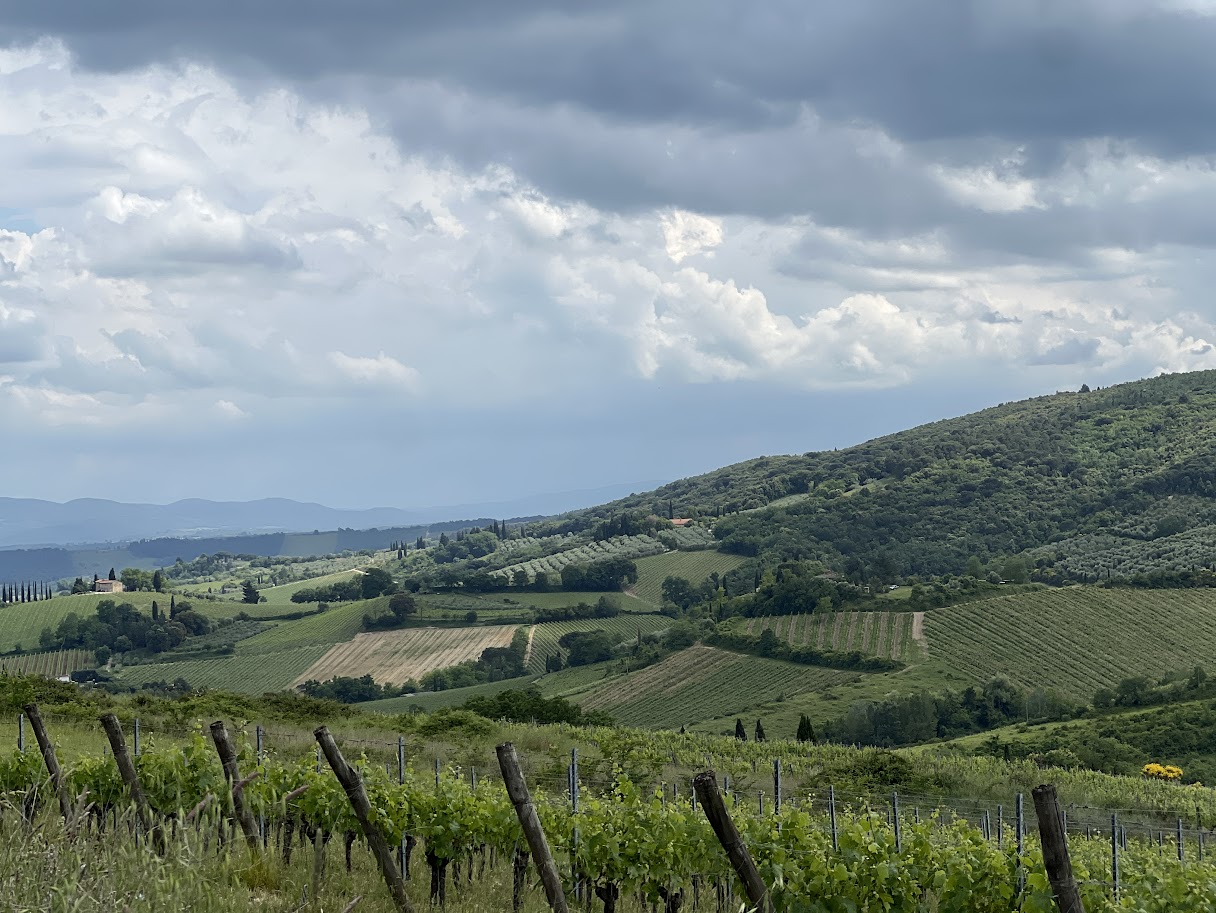
The beautiful Tuscan countryside
Perched on a ridge of Tuscan vineyards, San Gimignano still thrusts 14 medieval tower-houses skyward, remnants of more than 70 that once broadcast family pride and rivalries. Their unmistakable skyline, intact walls, and 14th-century fresco cycles earned the town UNESCO World Heritage status in 1990. At the Piazza del Duomo, you begin at the Torre Grossa, where one can climb 218 wooden steps for sweeping views of the Apuan Alps and Siena’s dome. Inside the adjoining Palazzo Comunale, Benozzo Gozzoli’s pastoral frescoes frame a camera-ready civic courtyard. Steps away, the Romanesque Collegiata cathedral dazzles with a near-complete Old and New Testament cycle by the 14th-century Sienese school. But we didn’t make it into the town. By the time we reached the town’s car park, we realised we had to leave if we were to make it to our wine tasting session at the Castello di Brolio on time. Reluctantly, we left and took the route passing through Siena, which we wanted to come back to.
Castello di Brolio
Driving through the Tuscan countryside is amazing! We took the long route and stopped frequently to take in the views and photos. And we finally made it to the Castello di Brolio just in time for the wine tasting session. Castello di Brolio has belonged to the Ricasoli family since 1141, making it Italy’s oldest continuously run wine estate. The brick-red battlements you see today are a 19th-century neo-Gothic rebuild commissioned by Baron Bettino Ricasoli, the statesman who also penned the original Chianti Classico formula. We circled the ramparts for postcard vistas that sweep across 240 hectares of vineyards to Siena and distant Monte Amiata, then wandered Renaissance box gardens and the family chapel. We had the Classic wine tasting with three wines, and after the session, some of my sisters brought bottles of wine to take home. I am not a drinker, but even I loved the wines we tasted.
After the wine tasting, it was time for dinner. As I mentioned, some of my sisters are big foodies, and one of them found a Michelin-starred vegetarian restaurant in Siena, so we decided to go there because they were not picking up the phone to make a reservation. Another sister wanted to visit Siena, so this worked for everyone.
Siena
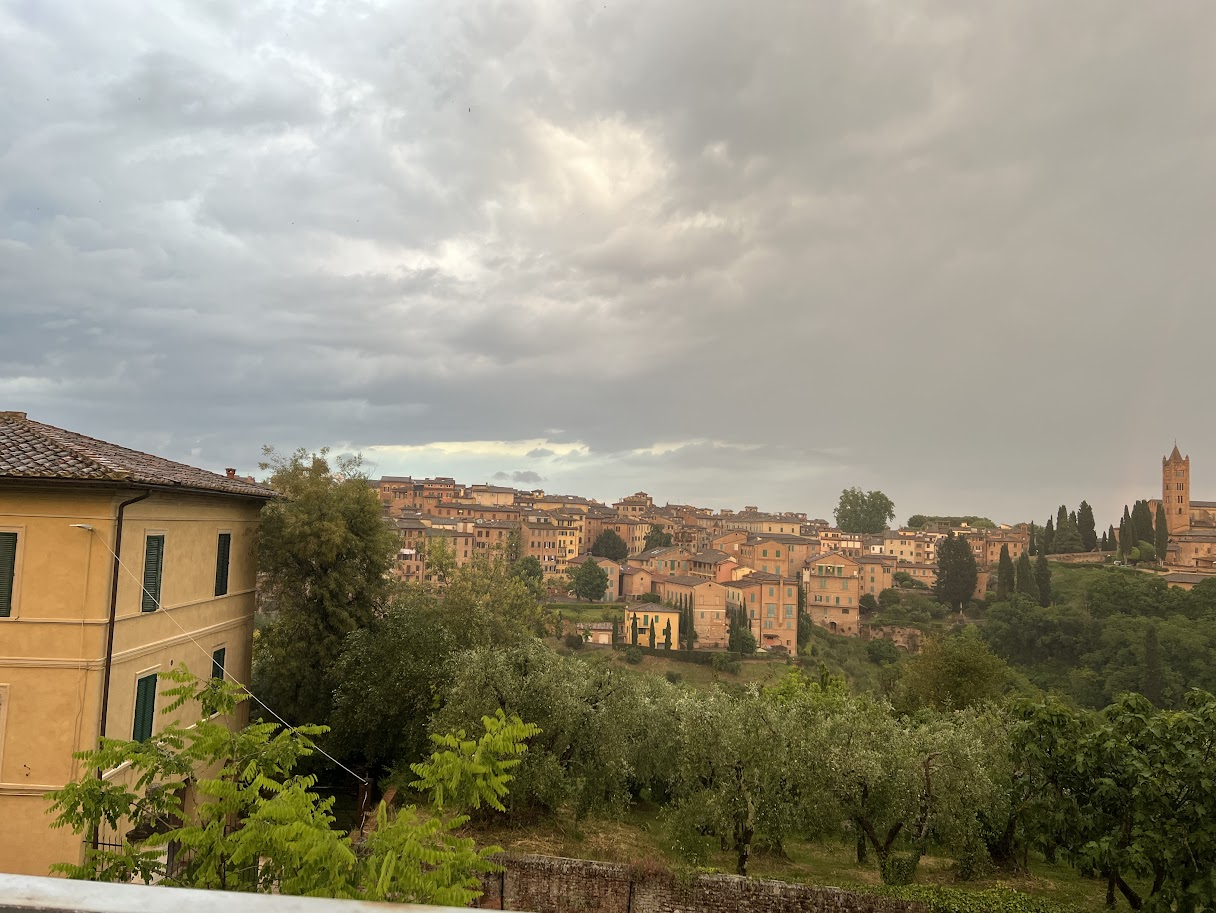
We reached Siena around 7 pm. Set atop three converging ridges in southern Tuscany, Siena preserves one of Europe’s purest Gothic cityscapes; UNESCO inscribed the entire historic centre in 1995 for the way its 13th- and 14th-century street plan and ochre-brick facades survive almost intact. The fan-shaped Piazza del Campo is still the civic stage: twice a year it morphs into the thundering Palio horse race. Just above the square, the zebra-striped Cathedral of Santa Maria Assunta dazzles. Climb the 102-m Torre del Mangia for vineyard-striped horizons.
The restaurant was completely booked, and they turned us away. So we frantically googled alternatives. And then it started raining. We went back to the car park and tried alternatives. But it was decided unanimously that we would walk to Piazza del Campo for dinner. The streets of this part of Siena are extremely hilly and winding. But after walking to the Piazza, the views were worth it. We had dinner at one of the restaurants in the Piazza before making our way back to the car park and then the drive back to Florence.
Piazza del Campo
Piazza del Campo is the red-brick heart of Siena. Its distinctive shell unfurls in nine cream-travertine wedges, a permanent tribute to the “Nine” oligarchs who guided the city’s 14th-century heyday, and a key reason UNESCO protected the entire historic centre in 1995. On the square’s lower rim rises the Palazzo Pubblico with its soaring Torre del Mangia. While the belfry’s 400-step climb rewards you with views over Chianti hills, the palace itself offers a rarer thrill: scaffold-level tours of Ambrogio Lorenzetti’s Allegory of Good and Bad Government frescoes. Opposite, Jacopo della Quercia’s marble Fonte Gaia gleams again after a laser cleaning completed in February 2024; its wolves and Genesis reliefs now sparkle against the Sienese brick.
We left Siena around 10 pm for the 1-hour-plus drive back to Florence. I had a headache because of the rain, and so I pretty much slept the drive. I think in the entire trip, this road trip would stand out as a highlight because of all the fun we had. We stored the car in a local garage to be returned the next day.
David at the Galleria dell’Accademia
The next day was our last in Florence, and we had tickets to see David at the Academia. Our original plan was to take a 2 pm train to Venice, but because we wanted to spend more time in the city, we moved our ticket to about 6 pm. Our slot to the Academia was at noon, so after a good breakfast, a couple of us went to return the car while the rest of us worked on clearing the house and getting ready to leave. Our host very graciously offered to let us keep our luggage at a restaurant they co-owned close by, so after checking out and leaving the luggage, we walked to the Academia. We had to wait in a queue for about 15-20 minutes before we could enter.
The Galleria dell’Accademia was founded in 1784 as a teaching museum; today its seven rooms orbit Michelangelo’s David: the five-metre marble hero carved 1501-1504 and installed here in 1873 to shield him from the elements. Every two months, restorers vacuum dust from his curls and scan for micro-cracks, a ritual that keeps the icon in “remarkable health” despite drawing more than two million visitors a year.
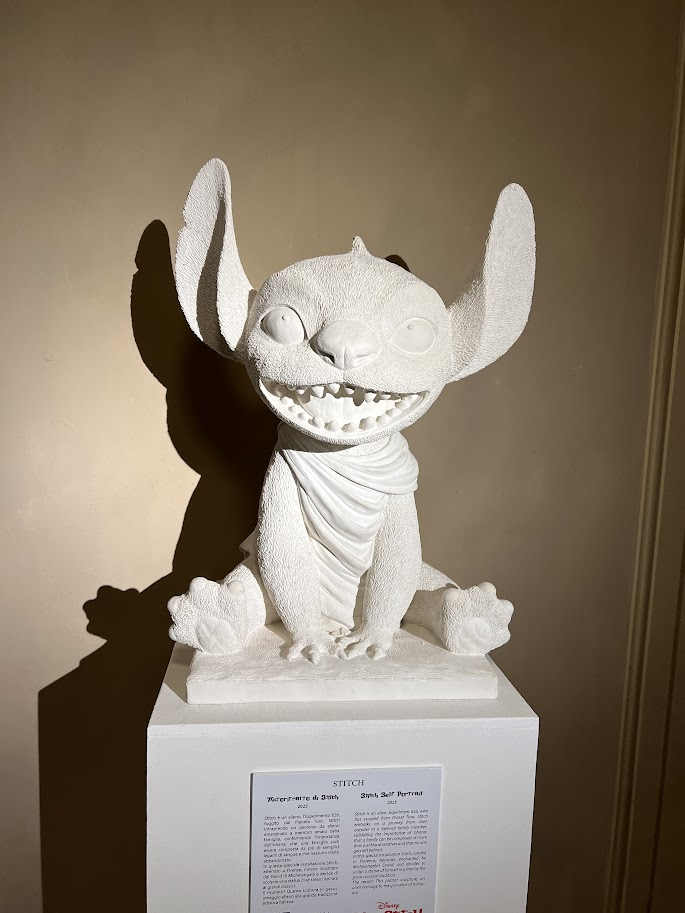
Sculpture of Stitch at the Galleria dell’Accademia
The Hall of the Prisoners, where four unfinished slaves wrestle with their marble bonds, comes first before a long hallway with David at the very end. It was not very crowded, and we could walk around the statue, taking in the sculpture’s beauty. Then we walked into the Hall of the Colossus to see Giambologna’s life-size plaster for The Rape of the Sabines flanked by early-Renaissance altarpieces. The luminous Gipsoteca Bartolini showcases 19th-century plaster casts under skylights restored in 2021, while the adjoining Museum of Musical Instruments, home to a Stradivari “Medici” violin and one of Cristofori’s earliest pianos, was amazing. Towards the exit, unexpectedly, I came across a sculpture of Stitch from the film, Lilo and Stitch, draped in a toga. The project is a three-way partnership between Disney Italy, the Italian Ministry of Culture and the museum, timed to promote the live-action Lilo & Stitch remake and to pull new, younger audiences into Florence’s most visited art space. I enjoyed this ode to modern art amidst all the classical and Renaissance art and sculptures.
After visiting the Academia, we decided to have Indian for lunch and walked to one about 10 minutes away. After lunch, we each wandered away, to do our own thing before agreeing to meet at the place where we had stored our luggage around 4 pm. Then it was time to go back to the station to catch another high-speed train to the last stop of our holiday.
Our last stop, Venice, comes up next, along with lessons learned and some tips.
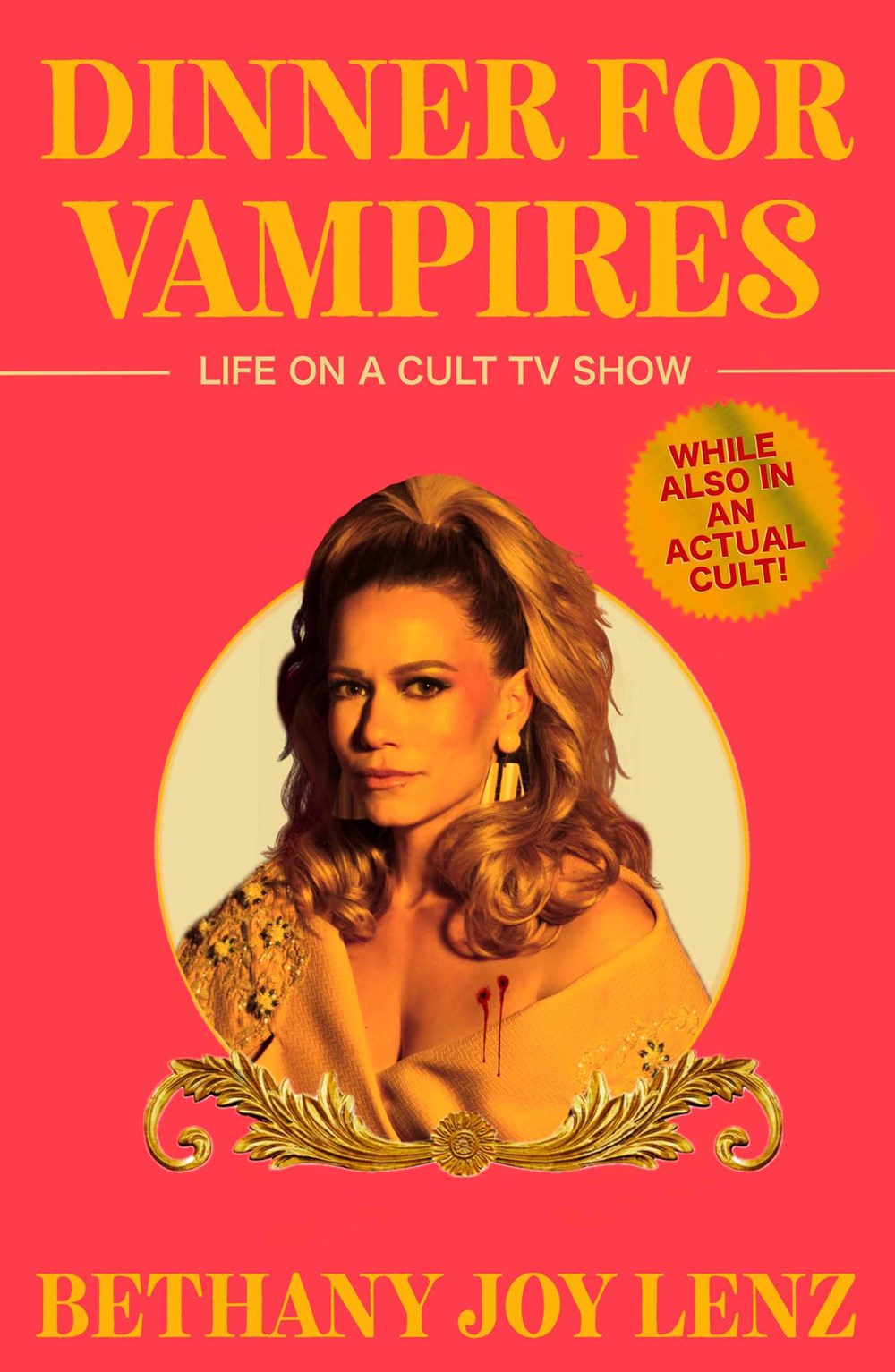
Dinner for Vampires: Life on a Cult TV Show – Bethany Joy Lenz
In the early 2000s, after years of hard work and determination to breakthrough as an actor, Bethany Joy Lenz was finally cast as one of the leads on the hit drama One Tree Hill. Her career was about to take off, but her personal life was slowly beginning to unravel. What none of the show’s millions of fans knew, hidden even from her costars, was her secret double life in a cult.
An only child who often had to fend for herself and always wanted a place to belong, Lenz found the safe haven she’d been searching for in a Bible study group with other Hollywood creatives. However, the group soon morphed into something more sinister—a slowly woven web of manipulation, abuse, and fear under the guise of a church covenant called The Big House Family. Piece by piece, Lenz began to give away her autonomy, ultimately relocating to the Family’s Pacific Northwest compound, overseen by a domineering minister who would convince Lenz to marry one of his sons and steadily drained millions of her TV income without her knowledge. Family “minders” assigned to her on set, “Maoist struggle session”–inspired meetings in the basement of a filthy house, and regular counseling with “Leadership” were just part of the tactics used to keep her loyal.
Only when she became a mother did Lenz find the courage to leave and spare her child from a similar fate. After nearly a decade (and with the unlikely help of a One Tree Hill superfan), she finally managed to escape the family’s grip and begin to heal from the deep trauma that forever altered her relationship with God and her understanding of faith. Written with powerful honesty and dark humor, Dinner for Vampires is an inspiring story about the importance of identity and understanding what you believe.
The night sky is an ancient storyteller, its shimmering lights are a silent language that speaks across time and space. Each twinkling star holds a secret, a tale of wonder, of love lost and found, of ancient dreams and distant destinies. As we gaze upward, the cosmos invites us to listen to its quiet, celestial whispers, urging us to uncover the mysteries hidden within its luminous script.
Celestial Whispers
In the velvet cloak of night, the stars convene, Scattering silver tales on a canvas unseen. Each tiny spark a word in a language so old, Whispering secrets that time has long told.
Constellations form mythic runes in the sky, Heroes and lovers, their legends still nigh. They murmur of battles fought in the cosmic embrace, Of journeys through darkness, of finding one’s place.
The silent chorus hums of dreams yet unfurled, Of hope and of wonder in a vast, timeless world. Through the flicker of light, messages unfold— Of passion and starlight, of mysteries untold.
Listen closely to the language of the night, Where every star sings with radiant might. Their whispers carry wisdom, soft and profound, A celestial lullaby in silence unbound.
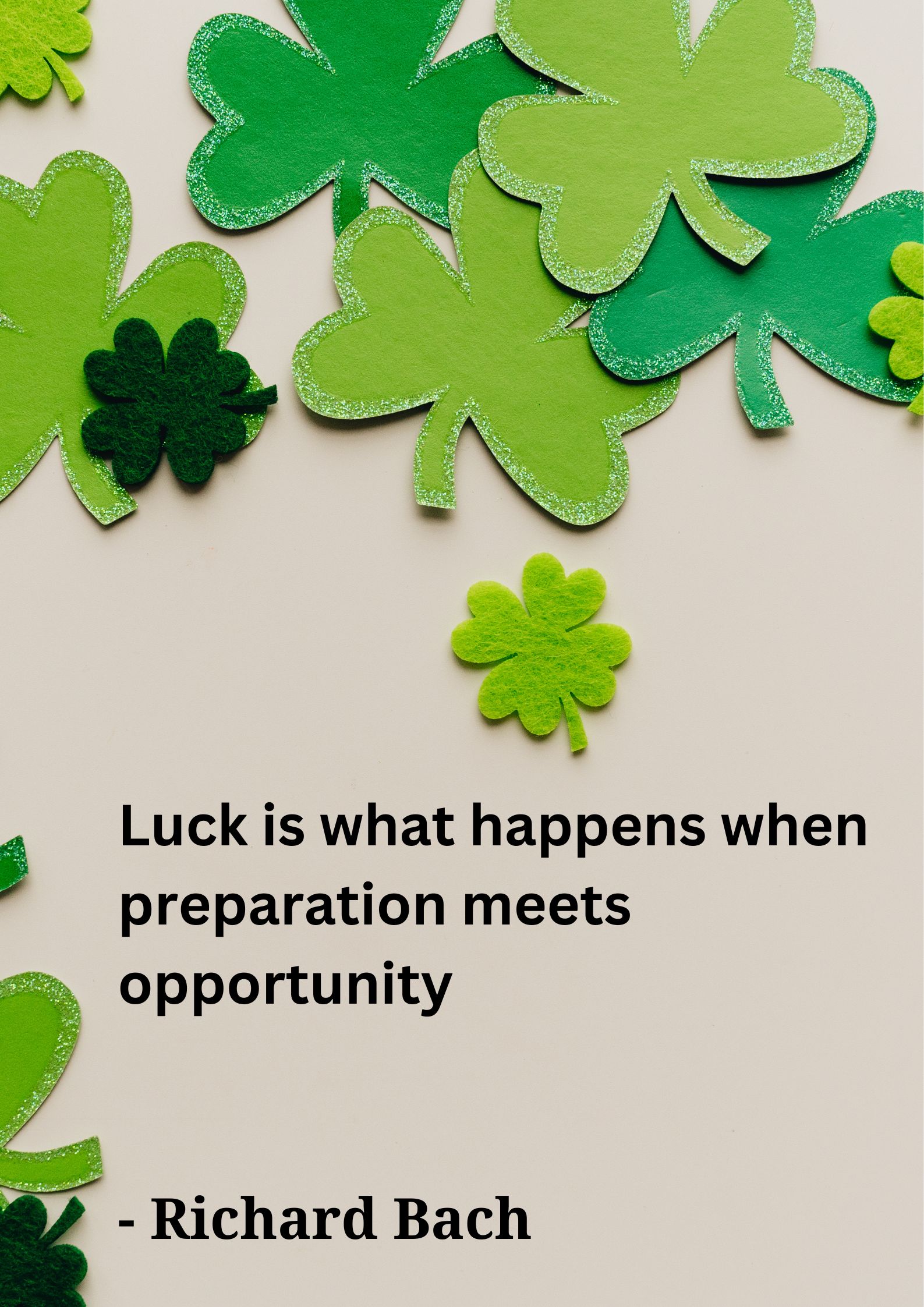
Today’s quote by American writer Richard Bach explains that luck is not purely random; it is the result of being ready when opportunities arise. Preparation equips you with the skills, knowledge, and mindset to recognise and seize chances that others might miss. When opportunity presents itself, those who are unprepared may see it pass by, while those who have prepared can act and benefit. In essence, luck is less about chance and more about diligence and readiness. The harder you work to prepare, the luckier you seem, because you are in a position to capitalise on opportunities when they come. This quote shows that luck isn’t random; instead, it’s created. When you prepare yourself with the right skills and mindset, you’re ready to seize opportunities as they arise. True luck is the meeting point of preparation and opportunity.
I also read this recently, and it resonated with me. What is meant for you will come in ways you could never predict; that’s the magic of life. Too often, we exhaust ourselves by overthinking every detail or forcing a timeline. But when we learn to trust and allow life to unfold, everything begins to align with greater ease. What’s destined for you cannot be taken away. Hold onto faith that it’s already on its way. That trust will steady you through the waiting and the unknown, and when the right opportunities arrive, they will bring the clarity and reassurance your heart has been longing for. What’s meant for you will always find its way, often in ways you never expect. Trust the timing, let life flow, and know that what’s yours cannot be lost. This came to me at the right time, when I really needed to hear it.
Yesterday, BB invited some friends to celebrate his birthday. GG has decided that this year, she will go out with her friends. I also told them that this year, they are responsible for their party; they need to source a cake, make the food (GG to make Thai green curry and rice and BB to make his pesto with pasta), and arrange for everything. And they did a good job; I am so proud of them. The reason for this early birthday is that BB leaves for his military exercise at the end of next week. He will be away for slightly over three weeks, and we are going to miss him so much!
As for me, everything is standing still. I am where I was last week in terms of my job search, and now I wonder if I should even continue with this. Is the universe giving me sign after sign, which I am ignoring? Let me sleep over this for a few days and see what I come up with.
That’s all from me this week. Stay safe, stay positive and know that the universe has a plan for you.








 Memories and Such