2026 Week 41 Update

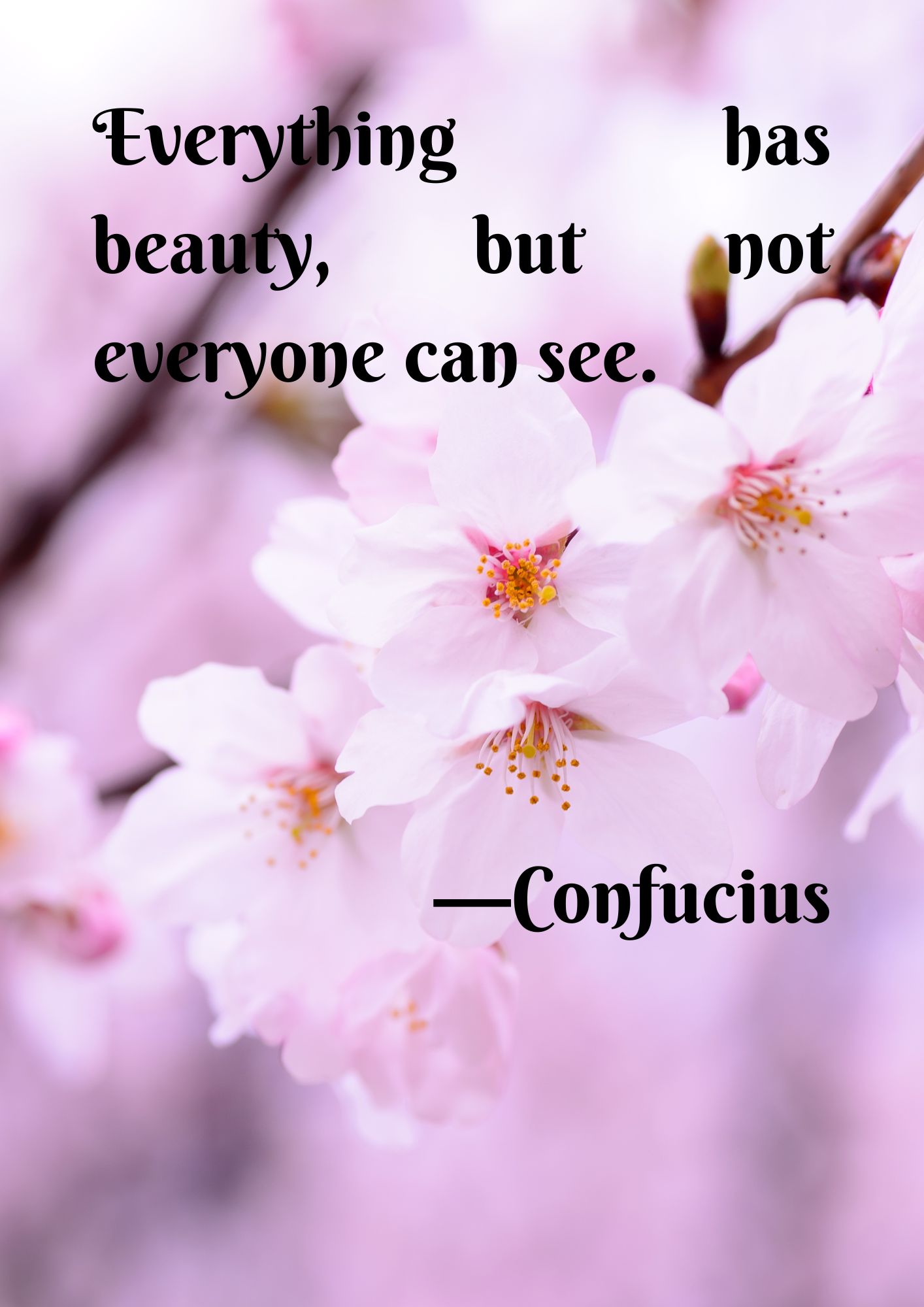
This week’s quote attributed to the Chinese philosopher and teacher whose ideas profoundly influenced Chinese and East Asian thought, Confucius invites us to think about beauty as something that depends as much on the observer as on the thing being observed.

We often associate beauty with conventional ideas of attractiveness: a spectacular sunset, an impressive building, a perfect flower or a beautiful face. Yet much of what makes life beautiful is quieter and easier to overlook. It might be found in an ageing face that carries decades of stories, weeds growing through a crack in the pavement, the sound of rain against a window, or an ordinary moment shared with someone we love. The difference is not necessarily that some people are surrounded by more beauty than others. It may simply be that they have learned to notice.

This makes the quote as much about attention as beauty. When we move through life hurriedly, distracted by what comes next or preoccupied with what is missing, we can become blind to what is already around us. Slowing down changes our perspective. Curiosity helps too. Something initially unremarkable can become fascinating when we look closely enough. It also reminds us that beauty does not require perfection. There can be beauty in imperfection, ageing, change and even things that don’t immediately appeal to us. Seeing it sometimes requires looking beyond our first judgement. Perhaps beauty isn’t particularly rare at all, our attention is.

This week felt like an exercise in balancing the things I can control with those I simply cannot. October is barely underway, yet the final quarter of the year already seems to be gathering momentum. At work, there were plans to refine, conversations to follow up on, and pieces of a complicated puzzle that needed to fit together. Some things are finally taking shape after weeks of effort, while others still require patience, persuasion and perhaps a little creative thinking. I am learning that progress isn’t always about doing more. Sometimes it is about asking better questions, making thoughtful decisions and knowing when something is good enough to move forward.

Outside work, there were reminders that life doesn’t always provide answers according to our preferred timelines. Uncertainty has a way of occupying far more mental space than it deserves, particularly when the questions matter. But I am trying to resist the temptation to write stories about outcomes that haven’t happened yet. There were smaller moments of curiosity too, the kind that sent me down unexpected paths of thought. I find myself increasingly interested in understanding not just what happens, but why I respond to things the way I do. Even the most ordinary experiences can reveal something interesting when I pay attention.

Perhaps the biggest lesson this week was that not everything needs an immediate resolution. Some things need action, others need observation, and a few simply need time. As the year moves towards its conclusion, I am beginning to realise that growth isn’t always visible in what I accomplish. Sometimes it is reflected in how I handle what remains unfinished. And perhaps that is progress enough for now.

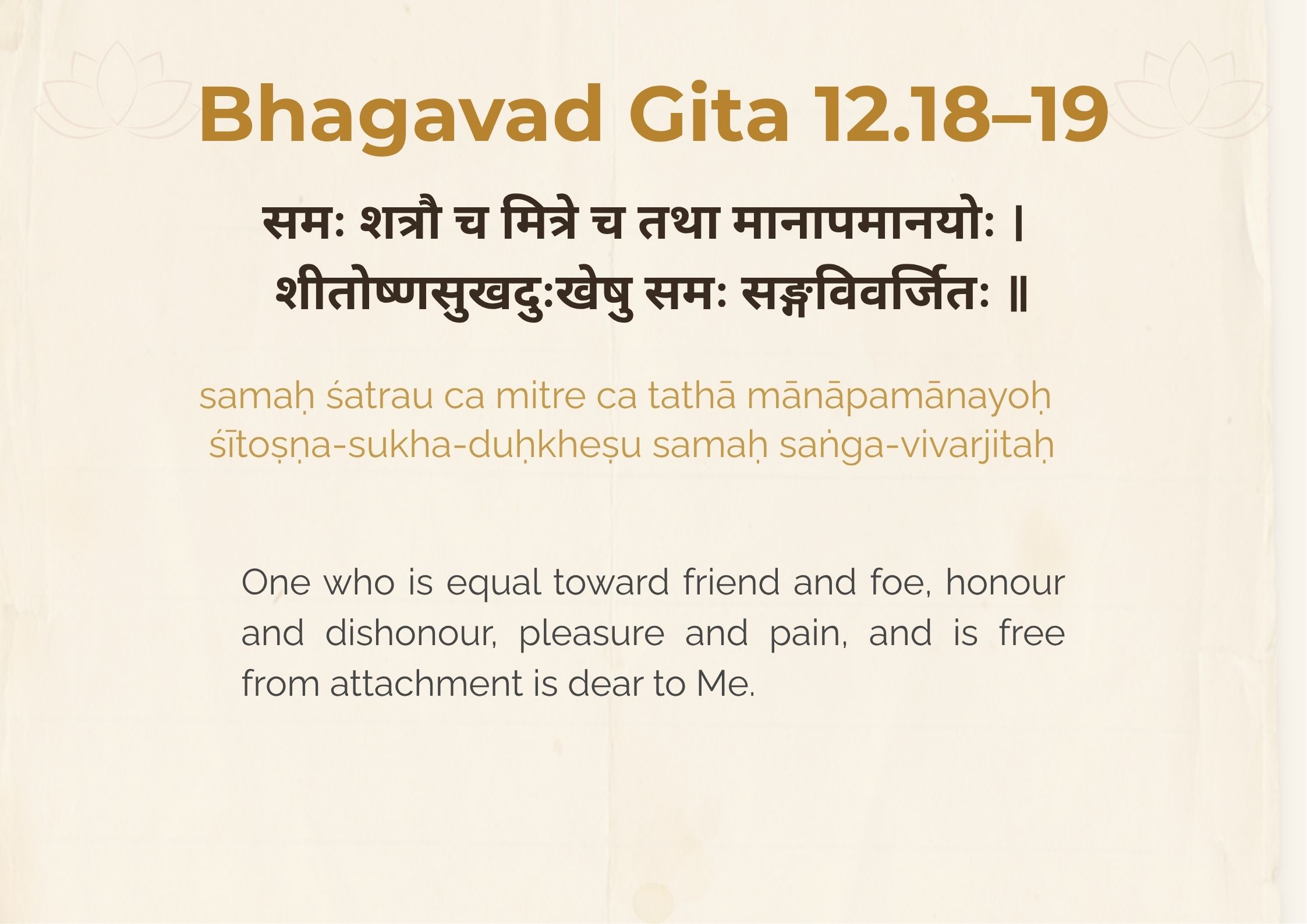
In this week’s verse, 12.18-19 from Bhagavad Gita, the Gita shares that most people are kind when circumstances are favourable. Character reveals itself when circumstances change. Krishna describes a person whose inner stability does not depend on praise, approval or comfort. Such balance does not make someone indifferent. Instead, it allows them to respond wisely rather than react emotionally. In a world full of constant judgement and comparison, this teaching remains deeply relevant.

This week, I learned that there is a quiet fire within you that glows even when life feels dark. It has carried you through moments you thought would break you completely. Stoke that fire by choosing trust, again and again. Despite the harrowing experiences you’ve endured, there is a resilient part of you that refuses to give in to the darkness. You can still care, still hope, and still respond to life with unwavering optimism. That is proof that even the hardest moments could not change who you are at your core. Stay true to your authentic self. Nourish the fire within you.

That’s all I have for this week. As always, stay safe, stay calm and be positive!

2026 Week 40 Update

And suddenly, it is October. The year has slipped quietly into its final quarter, bringing with it that familiar feeling that there is still plenty of time left, while simultaneously wondering how there can possibly be only three months remaining. Perhaps appropriately, this week felt like a mixture of looking backwards, looking ahead, and learning to live somewhere in between.

Professionally, I spent time thinking about what has been built, what still needs strengthening, and what should be handed over so that someone else can continue without having to reconstruct the entire story. At the same time, new possibilities kept appearing. Conversations led to connections, connections hinted at opportunities, and something that had previously seemed distant suddenly became worth exploring more seriously. Sometimes the most valuable result of showing up isn’t what happens in the room, but who we happen to meet there.

There was also the end-of-month ritual of looking at numbers and being reminded that long-term thinking is considerably easier in theory than when short-term results aren’t behaving themselves. Patience, apparently, needs regular practice too. And then came a reminder that not everything can be planned, measured or solved immediately. Some questions simply need time before answers arrive. For now, all I can do is take the sensible next steps without borrowing trouble from a future that hasn’t happened yet.

Maybe that’s a fitting lesson as I enter the final quarter of the year. October doesn’t need to begin with a frantic list of everything still unfinished. There are three months left, yes, but they don’t have to become a race until December. Some things will be completed. Some will carry forward. Some may change entirely. For now, I can keep moving, one ordinary day at a time, and allow the rest of the year to unfold.

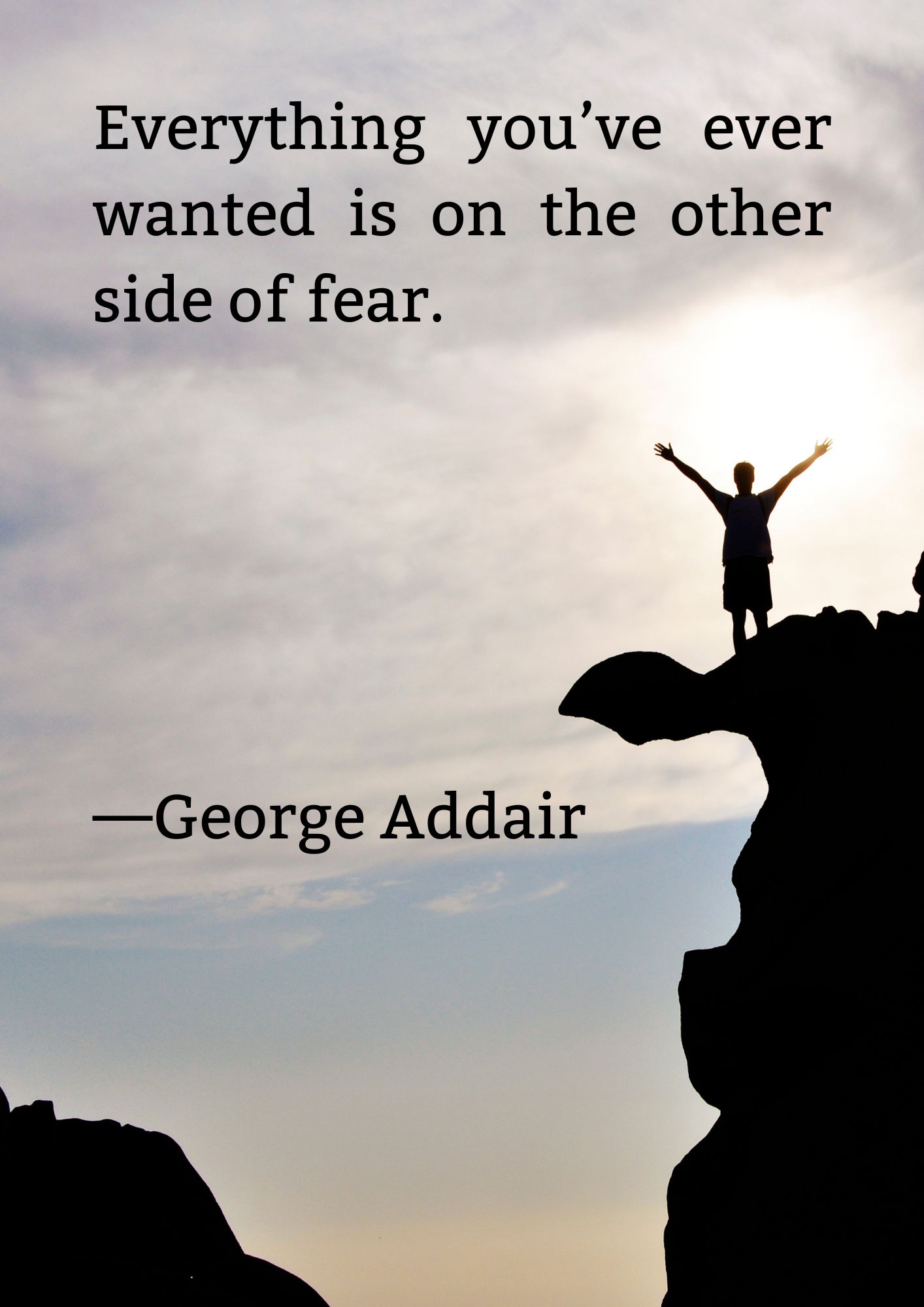
Today’s quote, often attributed to George Addair, generally described as an American real-estate developer and motivational speaker, suggests that fear often stands between us and the experiences, opportunities and changes we most desire. Fear is not always a warning that we are making the wrong choice. Sometimes it appears precisely because something matters to us. Starting something new, changing direction, speaking up, pursuing an ambition or allowing ourselves to be vulnerable all involve uncertainty. We cannot know exactly what will happen, and our instinct may be to remain with what feels familiar, even when familiar is no longer what we want.

The quote doesn’t mean that everything we desire will magically appear once we conquer fear. Nor does courage require us to become fearless. Courage is often much quieter than that. It is recognising the fear, listening to what it may be telling us, and then deciding whether we want to move forward anyway. There is also an important distinction between fear and genuine danger. Some fears protect us and deserve our attention. But many others are built around imagined failure, rejection, embarrassment or uncertainty. When these fears repeatedly determine our choices, they can gradually make our lives smaller.

Perhaps the “other side of fear” isn’t necessarily where everything we have ever wanted is waiting. It may simply be where possibility begins. We may succeed, fail, change direction or discover that what we thought we wanted wasn’t right for us after all. But unless we move through the fear, we may never find out.

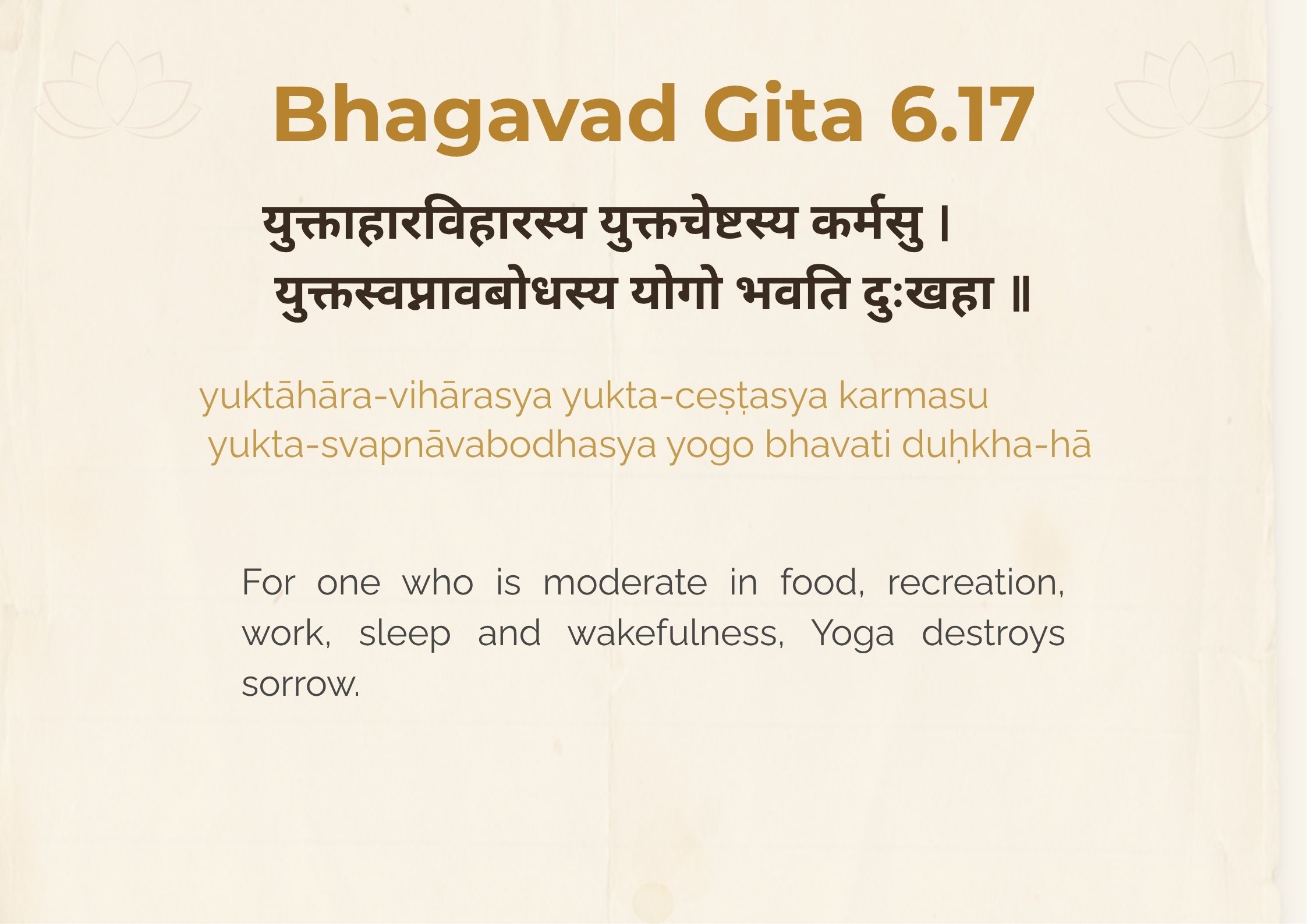
This week, in verse 6.17, the Bhagavad Gita rarely advocates extremes. Krishna repeatedly points toward balance. This verse reminds us that spiritual growth is not separate from how we eat, rest, work and care for ourselves. Many problems arise not from lack of effort but from imbalance. We push too hard, rest too little, worry too much and neglect what sustains us. Wisdom often looks less dramatic than we imagine. It is found in small daily choices repeated consistently over time.

This week, I learned that at first, it may feel like difficult circumstances are breaking you down or pulling you away from what’s meant for you. In reality, they are pushing you to grow into the version that can actually hold what’s coming. When the timing is right, your gifts will meet the most aligned version of you. Some things need space to become what they’re meant to be. What once felt overwhelming will return to you in a way that better suits who you are. Let patience guide you during these uncertain moments.

Take care, stay positive and let’s finish the last quarter of the year with a bang!

2026 Week 39 Update

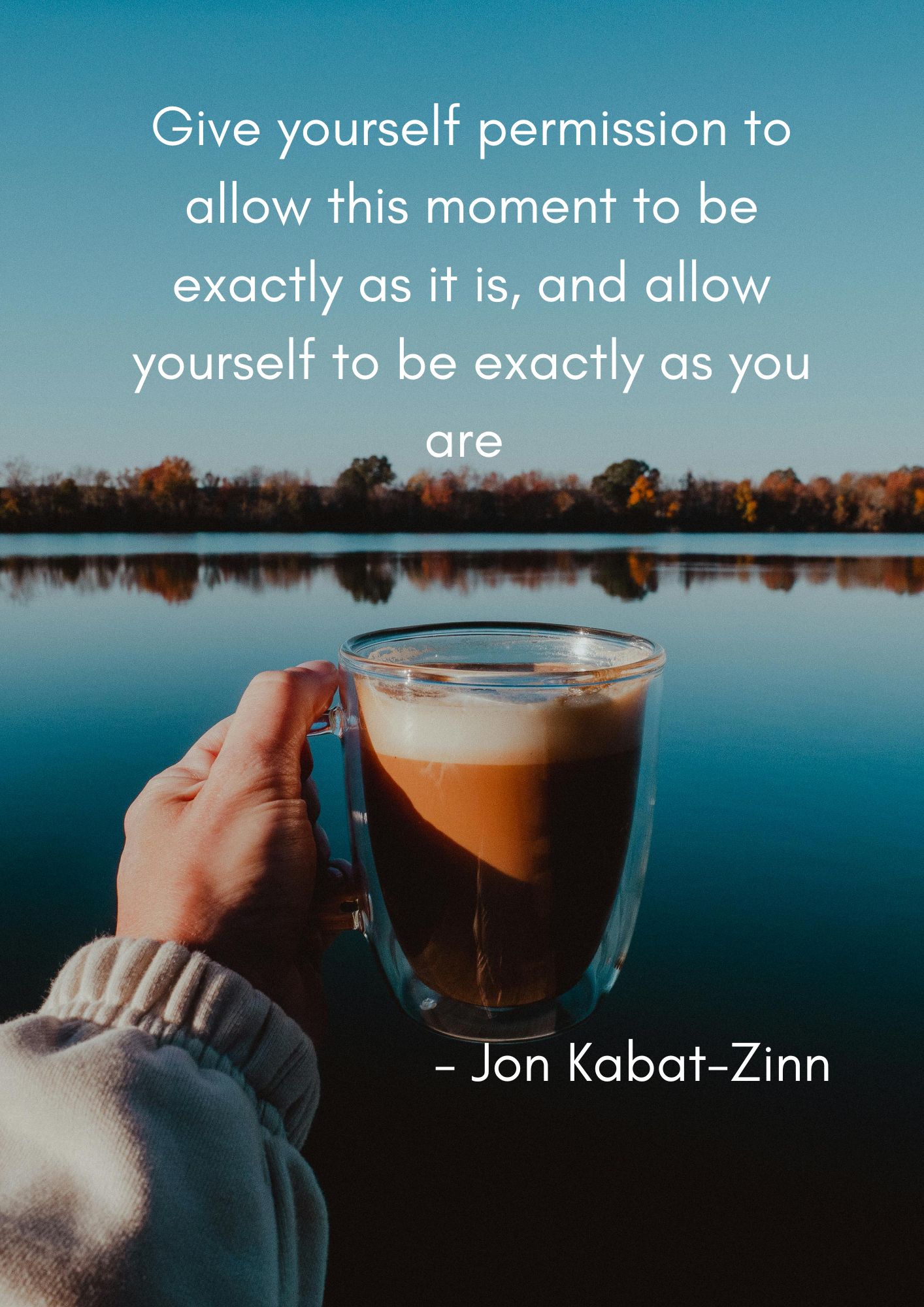
This week’s quote by American scientist, meditation teacher and professor emeritus of medicine at the University of Massachusetts Medical School, Jon Kabat-Zinn, is an invitation to stop fighting reality, even if only for a moment. Much of our inner tension comes from believing that something should be different. The situation should have worked out another way. Someone should have behaved differently. We should be more successful, calmer, happier or further along than we are. While wanting change is perfectly natural, constantly measuring the present against an imagined version of how things should be can prevent us from experiencing what is actually happening.

Kabat-Zinn isn’t suggesting that we become passive or stop trying to improve our circumstances. Acceptance is not the same as resignation. We can acknowledge, This is where I am right now, while still deciding where we would like to go next. In fact, seeing the present clearly often allows us to respond more wisely because we are no longer using our energy to deny or resist it. The second half of the quote may be even harder. Allowing ourselves to be exactly as we are means temporarily putting aside self-judgement. We don’t have to fix every flaw, resolve every uncertainty or become a better version of ourselves before deciding that we are worthy of kindness. Sometimes peace begins with something surprisingly simple: stopping the argument with the present moment.

This week felt like a lesson in turning thought into structure. So much of what I worked on involved taking something large, complicated or slightly nebulous and asking: What are we actually trying to achieve? How do we get there? And how will we know that what we’re doing is making a difference? Slowly, scattered ideas became frameworks, possibilities became plans, and information became something I could actually use. There was a lot of learning woven into the week too, the kind that makes me look differently at work I have already been doing and realise that sometimes the question isn’t simply whether something was accomplished, but what changed because of it. I suspect that distinction will stay with me long after the workshops, notes and spreadsheets have disappeared from immediate memory.

By the end of the week, there was also the satisfying feeling of having completed what I had set out to do, perhaps even a little earlier than expected. And then life provided its inevitable reminder that beautifully organised plans are only ever provisional. Something far more important needed attention, and everything else simply had to rearrange itself around it. Perhaps that’s what I’m taking away from this week. Structure matters, planning matters, measuring progress matters, but flexibility matters too. We can build systems, organise our days and carefully map the road ahead. Then life changes the itinerary without consulting us. And maybe the real measure of progress isn’t whether everything went according to plan. It’s discovering that*when it doesn’t, I can adjust the plan without losing myself in the process.

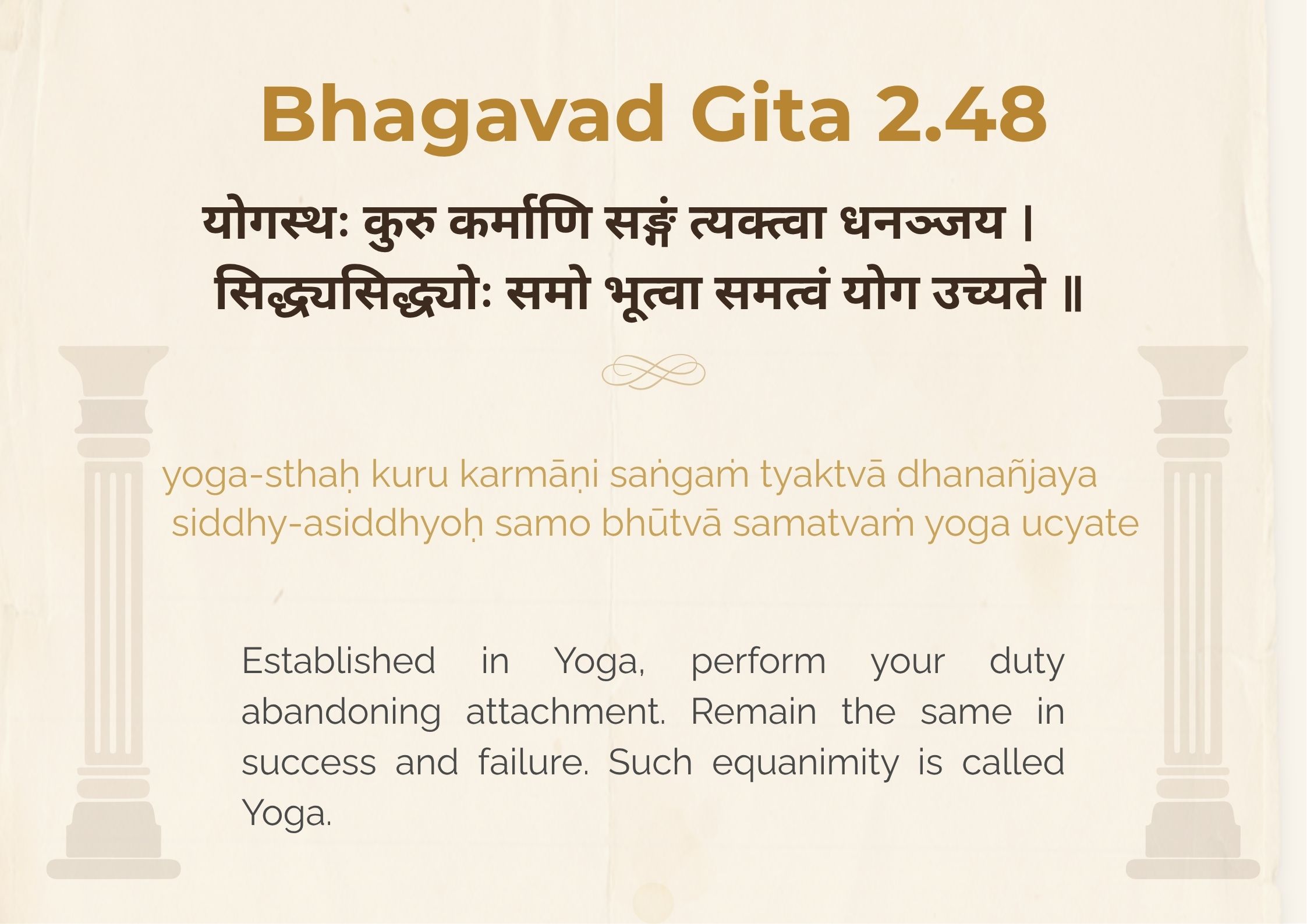
This week, in the Bhagavad Gita, in verse 2.48, most people think peace comes after success. Krishna teaches something far more radical. Peace comes from how we approach our work, not from the outcome of it. When we become attached to results, every success inflates us and every setback diminishes us. We begin living at the mercy of circumstances. This verse invites us to a different way of being. Give your best effort. Act with sincerity and commitment. Then release the need to control the outcome. Equanimity does not mean indifference. It means remaining grounded regardless of what happens. The strongest people are not those who never fail. They are those who remain steady whether they succeed or fail. In Krishna’s teaching, this balance is not merely wisdom. It is Yoga itself.

This week, I learned that when you have the courage to leave behind what’s no longer right for you, you also have the courage to move toward what’s aligned, even when it’s hidden behind the veil of uncertainty. No matter how heavy your thoughts or emotions may feel, keep trusting the process of life. What seems unbearable now will eventually become a chapter that leads you somewhere meaningful. It only takes one “yes” to begin a new adventure, one that has the power to transform your life in unexpected, magical ways. Keep going.

That’s all I have for you this week. Stay positive, stay safe and keep smiling!

The Small Rituals That Hold a Life Together

There are things in life so small that they barely announce themselves. The morning coffee was made in the same mug. The walk is taken at roughly the same time each day. The book opened before sleep, even if only for a few pages, before the eyes began to close. The evening habit of putting things back in their place. The quick glance at the sky from the kitchen window. The quiet insistence on bathing before bed after a long day outside.

None of these would usually qualify as major events. They do not look impressive from the outside. They do not lend themselves to dramatic storytelling. Yet remove enough of them, and something in life begins to loosen.

We tend to think that what shapes a life are the large things. Marriage, illness, loss, children, money, ambition, migration, career turns. And of course, those matter. It would be absurd to pretend otherwise. But most of life is not lived at the level of milestones. Most of it is lived in repetition. The turn of the key, the rinsing of the cup, the folding of the clothes, the checking of the door, the pause before the first sip.

If the milestones are the chapters, then these smaller acts are the punctuation. They shape pace. They create rhythm. They stop life from becoming one long unbroken paragraph.

This is why small rituals matter more than we often admit. Not because they are glamorous, and certainly not because they are some hidden route to becoming more efficient or successful. In fact, modern culture has a way of distorting even the simplest acts by turning them into systems. Every cup of coffee becomes a productivity hack. Every walk becomes a step count, cardio goal, or something to document. Even rest is now explained as recovery.

In that atmosphere, the ordinary ritual becomes easy to misunderstand.

But many of the rituals that hold a life together do so for a simpler reason. They make life feel inhabited. They return us to ourselves.

That may sound gentle, but there is a harder truth beneath it. Human beings need structure more than we like to admit. We enjoy telling ourselves stories about freedom, spontaneity, and keeping our options open. We praise variety and novelty. Yet most people, if they are honest, do not thrive in formlessness. They drift in it. They become frayed in it.

A life with no rhythm begins to feel curiously unreal, as if one were living slightly outside oneself.

The right rituals do not trap us. They give shape to the day so that we can move through it with less internal noise.

This is not about efficiency. In many cases, it is the opposite. Small rituals slow us down just enough to prevent us from becoming careless with our own lives. They remind us that a day is not only something to be got through. It is something to be lived inside.

A woman who waters her plants each morning is not simply tending to leaves. She is rejoining the world before the day begins. A man who irons his clothes the night before is not just preparing for work. He is telling himself, quietly, that tomorrow deserves to be met properly. Someone who cuts fruit after dinner for the family is not arranging food. They are creating a familiar landing place at the edge of the day.

This is perhaps why small rituals feel like a form of self-respect. Not the loud version that demands to be seen, but something steadier. To make your coffee properly, instead of rushing through it. To go for your walk even when the day has been crowded. To read before sleeping instead of handing your last conscious minutes to a screen.

These are small decisions. But they carry a certain message: my life is not disposable. My day is not a blur to be endured.

In Singapore, these rituals often hide in plain sight. The kopi was ordered without fuss at the same stall. The evening walk beneath HDB blocks before heading upstairs. Shoes placed outside the door, as if public life must end before private life begins. The auntie who buys flowers not for an occasion but because the flat looks incomplete without them.

Mumbai carries its own versions with a different rhythm. The cutting chai at the corner stall. The train commute was marked not only by stations but also by familiar gestures. The lamp lit at dusk while traffic pressed on outside. The small errand becomes a few minutes of conversation before returning home.

In both cities, routine is not just convenience. It is often the smallest available form of order against noise, speed, and constant movement.

Some rituals are chosen. Others are inherited. Often, they begin as irritation. A child rolls their eyes at the way a parent insists on doing things. Years pass. And one day, without ceremony, they begin doing some version of it themselves.

We inherit not just recipes or beliefs, but sequences. Ways of entering the day. Ways of ending it. Ways of preparing for guests, for festivals, for grief, and for ordinary weekdays. Much of this inheritance lives in the body long before it becomes language.

Still, we should resist making rituals sound holier than they are.

Not every repeated act is wise, and not every routine is nourishing. A woman who cannot begin her day without ten exact steps may no longer be supported by ritual but ruled by it. A family that prides itself on eating together every night may be preserving connection, or it may be preserving a pattern where one person carries the invisible weight of making it happen.

The surface can look identical. The meaning underneath may not be.

Some rituals calm us. Others harden into rigidity. Some create breathing room. Others become ways of avoiding what is wrong.

It is one thing to take a daily walk because it clears the mind. It is another thing to build such a fragile internal order around it that any interruption feels like collapse. It is one thing to light a lamp at dusk because the act centres the day. It is another thing to begin fearing the consequences of missing it.

Rituals are not automatically meaningful simply because they are repeated. They have to be examined by the life around them.

The same is true of the modern language around routines. Not everything that looks disciplined is healthy. One person’s morning structure may be an act of self-respect. Another’s may be an attempt to control a life that feels unmanageable in deeper ways.

Sometimes what a person needs is not a better routine, but a different job. Or rest. Or medical care. Or an honest conversation they have been avoiding.

Rituals can support a life. They cannot repair what we refuse to face.

And yet, even with all these complications, something remains true.

Human beings seem to need repeated acts that gather the self.

We are not built only for output. Nor are we designed to live indefinitely in disruption, novelty, and fractured attention without consequence. The current age has made rituals both more necessary and more fragile. It takes very little now to lose the texture of a morning. One glance at a phone can scatter the mind before the day has even begun. One endless evening online can flatten the transition into rest.

In such a world, a small ritual becomes a quiet line of defence.

To read before bed is to say the day will not end in noise. To take a daily walk is to insist that the body is not merely functional. To make coffee slowly is to resist the idea that speed is always a virtue. To clear the kitchen before sleeping is to give the next morning a small kindness.

These things do not transform a life dramatically. But they keep us in a relationship with it.

A life is rarely held together by insight alone. It is held together by practice. By recurring acts that seem almost too minor to matter until the season comes when we cannot manage them.

Illness, grief, overwork, caregiving, heartbreak, relocation. These things reveal how much ordinary functioning depends on the smallest scaffolding. The cup of tea is not made. The walk not taken. The book was left unopened. The meal was eaten without pause.

These absences tell their own story.

And sometimes, after such a season, returning to a small ritual can feel unexpectedly significant. Not because the act has changed, but because we have.

To make your coffee again. To take the same walk under the same trees. To hear the familiar sounds of evening, whether from a Singapore block or a Mumbai street, and feel that something in life has regained its shape.

That is no small thing.

Perhaps that is the quiet work of small rituals. They do not rescue us from being human. They do not solve the larger difficulties of living. What they do is more modest, and for that reason, more dependable.

They place small markers in the day that say the following: Begin here, pause here, and return here.

When life is going well, we barely notice them. When life begins to fray, we discover how much they were holding on to.

So perhaps the point is not to romanticise rituals, nor to dismiss them as habits for people afraid of disorder. The point is to notice which ones make a life more attentive, more decent, more inhabitable.

The cup of coffee. The walk. The lamp at dusk. The book before bed. The familiar commute. The fruit was cut after dinner.

A life does not always fall apart dramatically. Sometimes it comes undone by becoming too hurried, too shapeless, or too thin.

And sometimes it is held together again in the same way.

Not all at once, but cup by cup, walk by walk, evening by evening.

2026 Week 38 Update

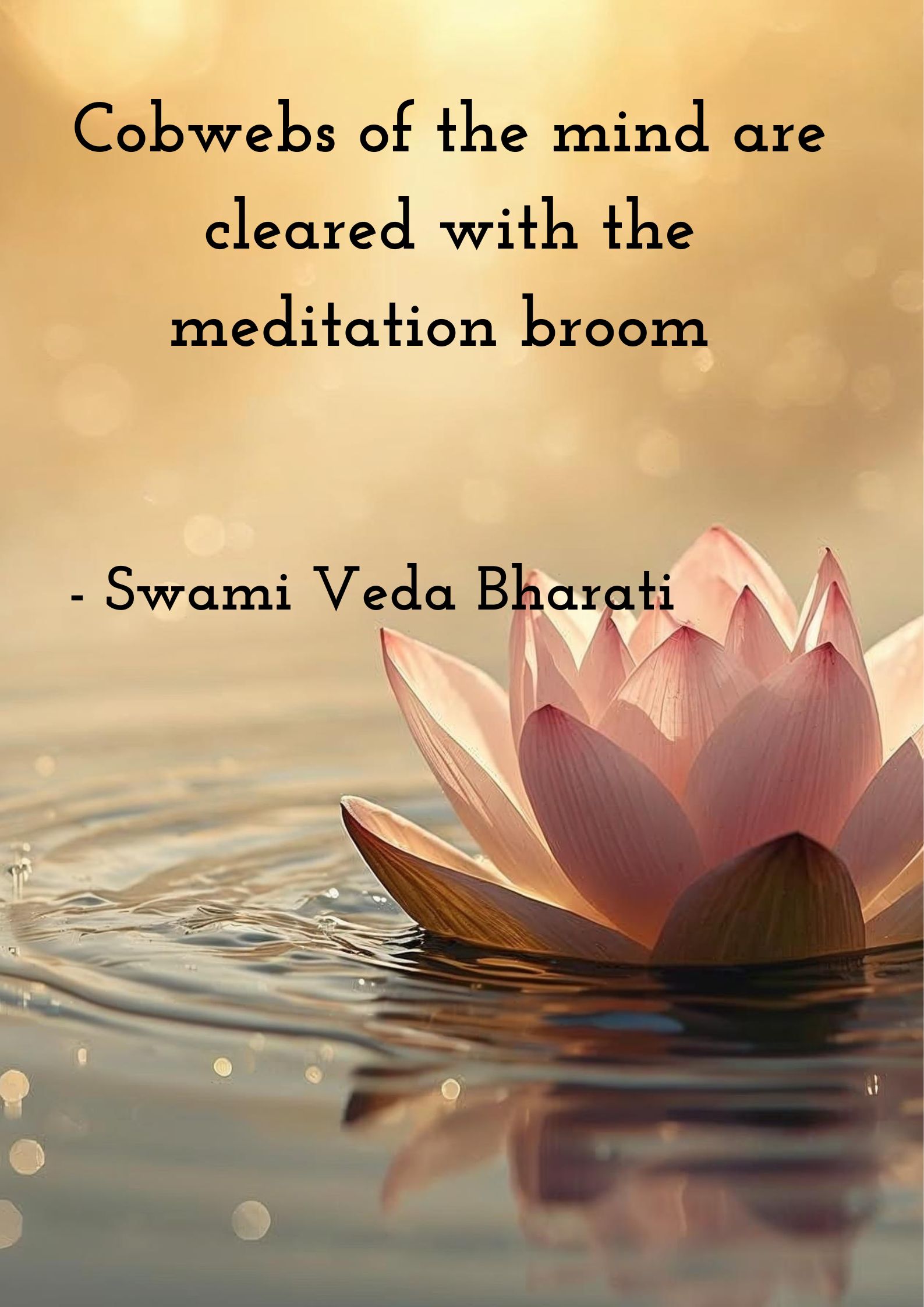
This week’s quote from Indian spiritual teacher, Swami Veda Bharati uses a wonderfully simple image to describe what meditation can do for an overcrowded mind. Cobwebs accumulate quietly. We rarely notice them forming until one day we see how much has gathered. Our minds can work in much the same way. Worries, unfinished conversations, old resentments, imagined problems, repetitive thoughts and the endless stream of information we absorb each day gradually create mental clutter. One thought catches another until it becomes difficult to see anything clearly.

Meditation, in this metaphor, becomes the broom. It does not necessarily make our problems disappear, nor does it prevent difficult thoughts from returning. Instead, regular meditation creates enough space between our thoughts for us to see them more clearly. We begin to recognise which ones deserve our attention and which can simply be allowed to pass. There is something else appealing about the metaphor. We don’t sweep our homes once and expect them to remain dust-free forever. Cleaning is a continuing practice. Meditation is similar. A single session may bring temporary calm, but its deeper benefits emerge through repetition. Each time we return to stillness, we clear away a little of what has accumulated. Perhaps the goal, then, isn’t to achieve a permanently empty or silent mind. It is simply to keep making room within it.

This week seemed to be about evidence. Not the dramatic kind, but those small, tangible signs that the work I have been doing quietly over weeks and months is beginning to produce something I can point to and say, yes, that mattered.

There was a particularly satisfying professional win, the kind that arrives after I have written the application, submitted it and largely pushed it out of my mind. Elsewhere, I spent time learning and thinking more carefully about impact, not simply what we do, but what actually changes because we do it. And another long-running project moved into a wonderfully tangible stage, where ideas and plans became things I could finally see rather than merely imagine. Then, because life apparently has a sense of humour, just as I was preparing to switch off for the weekend, another sizeable assignment landed, more new reasons not to switch my brain off completely! But there is something reassuring about that too. Different strands of my working life continue to exist alongside one another, rather than everything depending upon a single source or direction.

Away from work, there was room for ordinary pleasures, future possibilities, creativity, conversations and the small satisfaction of continuing to make everyday life work a little better. Perhaps what I am taking away from this week is that progress often becomes visible long after the work that created it. Seeds planted earlier suddenly break through the surface. A conversation leads somewhere, an application succeeds, another opportunity arrives, and sometimes, I get just enough evidence to remind myself that even when I cannot see movement, things may still be growing underneath.

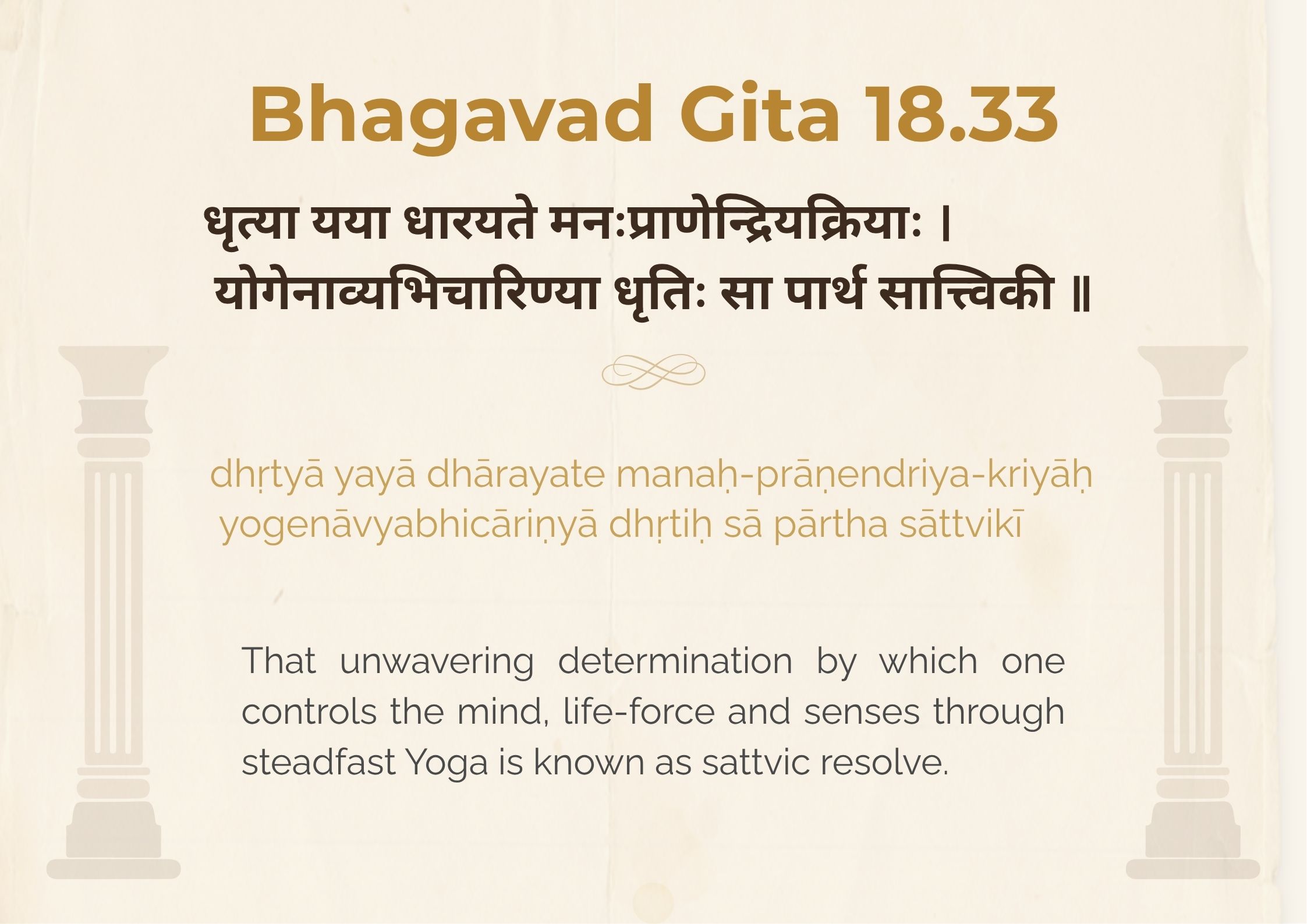
This week’s verse, 18.33 from the Bhagavad Gita tells us that motivation is powerful, but it is often temporary. Determination is quieter and far more reliable. Krishna praises the kind of strength that continues even when enthusiasm fades and progress seems invisible. Every meaningful achievement is built on this foundation. Relationships, health, spiritual growth, learning and service all require sustained effort over time. This verse teaches that true determination is not stubbornness or force. It is the steady commitment to what is right, even when no immediate reward is visible. Inner strength is often less dramatic than we imagine. It is simply choosing to continue when it would be easier to stop.

And this week I learned that life happens, circumstances change, and the people who were once an integral part of your life may no longer hold the same place. You may not talk to them or see them as often, but that doesn’t mean the connection disappears. Learning to let go with grace is one of life’s greatest lessons. Wish them well, even from a distance. The love you shared will always be part of you. Find comfort in knowing that you left them better than they were before you met them, and that your love made a difference, even if it didn’t last forever. 

That’s all from me this week. Be positive, and keep smiling. See you next week in this space!