
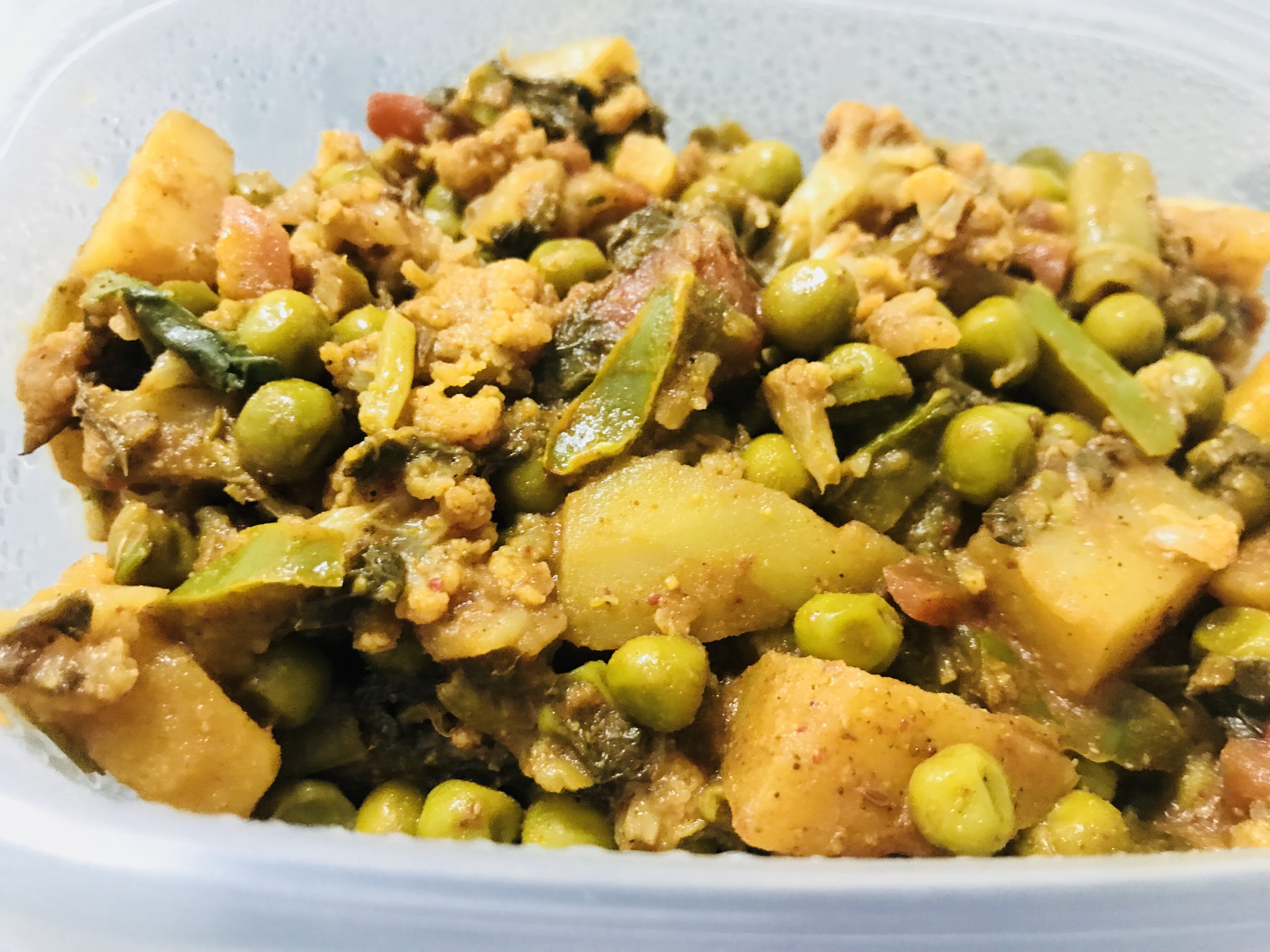
 This is my take on a super easy my mum makes for my dad. My mum makes this very often at home and so I decided to tweak it a bit. I made it as a no onion, no garlic recipe, but feel free to add both to your version.
 No Onion, No Garlic Mixed Vegetable Rice
Ingredients:
- 1 cup cooked basmati rice
- 1 carrot, chopped
- 1 potato, chopped
- 1/2 head cauliflower, chopped
- 1/2 cup green peas
- 1/2 cup chopped spinach
- 1 green bell pepper, chopped
- 1 inch piece ginger, julienned
- 1 tsp cumin seeds
- 1/2 tsp carom seeds
- 1 tsp chilli powder
- 1 tsp coriander powder
- 1/4 tsp turmeric powder
- 1 tsp cumin powder
- 1/2 tsp dry mango powder
- 1.5 tsp biryani/pulao masala
- Salt to taste
- 2 tsp oil
Method:
- Wash all the vegetables and keep aside
- Cool the cooked rice and fluff it in a plate and keep aside
- Heat a large pan and add the oil
- When the oil heats up, put in the cumin seeds and let them pop. Then add the carom seeds and let that pop too.
- Now add the ginger and let it fry for a few seconds before adding in the bell pepper.
- Then add the turmeric, chilli, coriander and cumin powder and stir for a second
- Now add all the vegetables (except for the spinach) and sauté well.
- Cover and cook until the vegetables are almost done.
- At this point, add the spinach, salt, mango powder, biryani/pulao masala and cook till the spinach wilts and the spices are well incorporated
- Now add the cooled and fluffed rice and mix well, so the rice and vegetables are mixed thoroughly
- Check for seasoning and serve with a raita of your choice

 Notes
Notes
- You can serve the recipe at the point before adding the rice as a sabzi which goes very well with Indian breads
- If you want to add onions and/or garlic, add them at the point when you put the ginger in the oil



 Today is Deepavali (as it’s called in South India) or Diwali (as it’s called in the north). Since in Mumbai, people generally refer to it as Diwali, that’s what we call it and will continue to call it irrespective of whether I am referring to it being celebrated in the north or south.
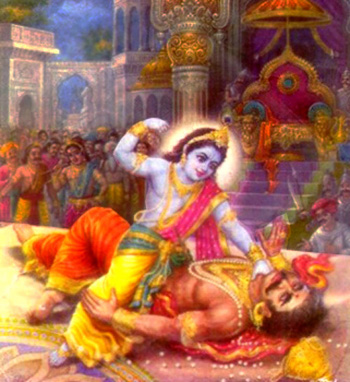 In the southern part of India, Diwali is celebrated as the day Lord Krishna killed the demon Narakasura and is called Naraka Chaturdasi. If the day falls on the new moon day or Amavasya, then you have to wake up very early and take a bath before daylight breaks. A special oil is made the previous night with herbs and spices and this is supposed to ward off the effects of winter. This oil is applied by the oldest woman in the family who is available and is done in front of the family altar. Once you bathe and get ready, you pray to the Lord and then to the elders in the family. You then eat the medicinal preparation made which prepares your stomach for the onslaught of food. Then it’s time to feast the yummy goodies you’ve slaved away at. Children and adults also light firecrackers in the early morning dawn to frighten the demons. Here in Singapore, firecrackers, especially the loud ones which make noise are banned, so we used to buy sparklers for the children when they were younger. Now that they are older, we stop at the goodie eating and visiting the temple.
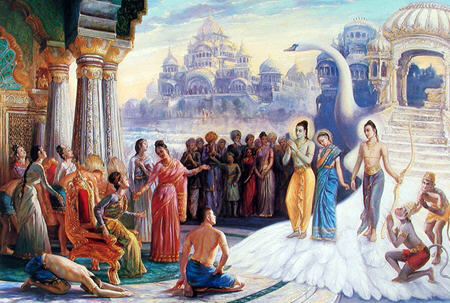 In North India, the day after Naraka Chaturdasi is usually celebrated as Diwali and is the day when Lord Rama reached Ayodhya after fulfiling the promise he made to his stepmother Keykeyi about going on a 14-year exile and in the process, killing the demon king Ravana in what is now present-day Sri Lanka which is celebrated as the festival of Dushhera. On that day, people decorate their homes with diyas and candles just like how the kingdom of Ayodhya had been decorated to welcome their beloved Lord Rama. People perform Laxmi Puja for wealth and also worship Goddess Saraswati for wisdom. Some Indian communities also celebrate their new year during this period and so there’s an additional celebration aspect during the three-four day long festivities.
 Some of the other legends from Indian mythology which are associated with this festival include: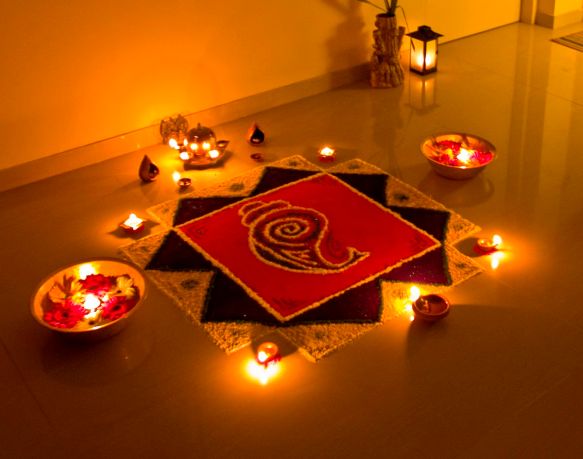
 Memories and Such