What Makes a Good Manager?

beagoodmanager-722x1024In my years of being in the workforce, I’ve had many managers, good, bad and even indifferent, but I don’t think I’ve had one as the one I reported to in my last short-lived job. This person, who was a nice person by nature, exemplified everything that a manager should not be. It was not because this person was being a manager for the first time, this person had been a good 40 odd years in the workforce and probably had been a manager for at least half that time. But the traits the person brought to the table as someone overseeing a team were traits that do not make a good manager. I kept thinking back to how this person treated people and this became the fodder for this blog post.

So what are the traits that exemplify a good manager? Keep reading….
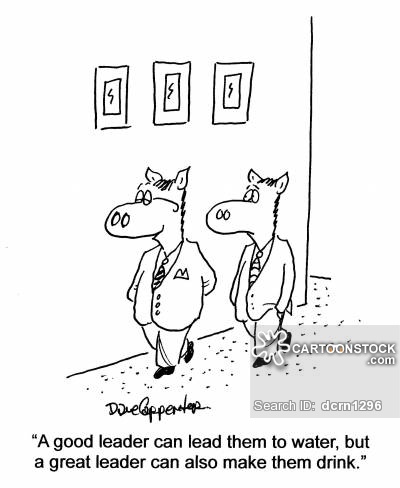
'A good leader can lead them to water, but a great leader can also make them drink.'Leadership:
A good manager should not just manage the people under them, they should inspire and lead them. They should be emotionally stable, have enthusiasm for the work they and their team does and learn to take failures as well as success. A good leader also shares credit for a job well done and does not throw any member of their team under the bus just to save their skin.

Communication:
A good manager is someone who is able to communicate well. Managers communicate in a 360 degree, from employees who report to them, peers, clients and their own managers. This can be in person, via phone or even written communication through email. What they say should not be evasive or unintelligible, but should be clear and concise and not have any room for ambiguity. Another important communication is non-verbal communication, especially when dealing with subordinates.

Planning:
Good managers are organized. They know what needs to be done and when it needs to be done. A good manager not only knows the long-term goals of the organisation but also know what they and the team they supervise need to do to achieve those goals. A good manager will not only plan and schedule the team but will also have a good grasp of the departmental budget.
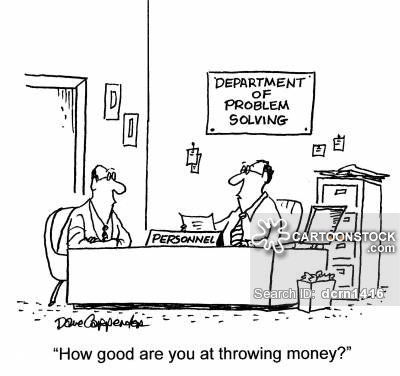
'How good are you at throwing money?'Problem-Solving:
Good managers are able to identify and solve problems. Whether it’s a personnel issue, an upset customer or a difficult vendor, good managers can think of creative solutions to problems, then execute the solutions. Good managers also take responsibility for problems that arise rather than seeing them as someone else’s responsibility and take an ethical approach to problem-solving. Great managers know in addition to being a leader, they are also teammates. They don’t just give feedback on problems; they help with implementing the solutions. These managers are very clear and realistic when it comes setting and communicating goals. Along the way, they get their hands dirty and put in the work to ensure their direct reports are set up for success. They show them how to be successful if they are falling behind and demonstrate best practices to help guide them along.

Attitude:
What sets every good manager that I’ve had over the years is simply nothing more than a good attitude. Attitude really is everything and great managers know that their energy and attitude set the pace for the day. A great manager knows when to hold certain situations lightly and when to drive certain situations with a high degree of urgency. Their communication is not hard to read or understand. A good manager never over-reacts and keep calm even under immense fire. They are always cool in the office and always have a smile on their face even under exceptional circumstances.

Transparent:
You cannot be a great manager if you sugarcoat things. They must know how to speak to their reports in a way that is direct, factual and straightforward — especially when it comes to bad news. They also get to the point quickly and transition into solution-based thinking (versus wallowing). Top-notch managers must also be transparent. This trait helps drive away any potential rumour mills before they open. They foster a culture of candour, making it easier for people to give meaningful real-time feedback.
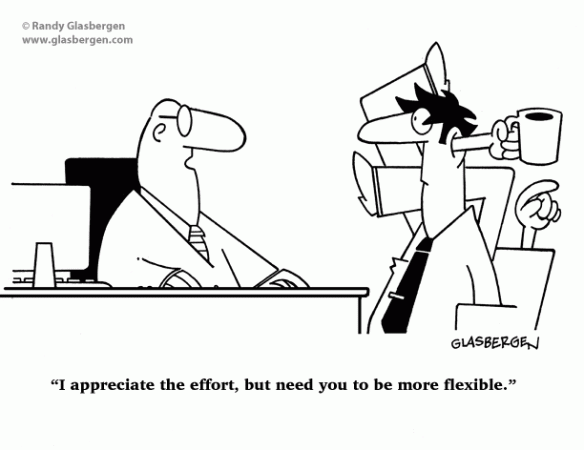
toon473Flexible:
Great managers know that it is not all about them; it is all about the people. When things get bumpy they embrace ambiguity and make others comfortable in dealing with change. They also know that no two employees are the same and spend the time getting to know what motivates and challenges people. They ask questions and listen so they can set up a working relationship that is tailored to the specific needs of an employee (as appropriate and reasonable as possible).

Accountability:
Remarkable managers are obsessed with accountability. They realize that the success of their direct reports is their success. On the flipside, they share in failures and mistakes. They hold regular one-on-one meetings with their direct reports and reinforce the outcomes they and the team are responsible for. They are vested in driving solution-based cultures and strive to build an environment of continued learning (versus finger pointing). Also, to keep staff focused, they make sure to handle and manage accountability conflicts as they come up (instead of letting things fester).

Develop great talent:
A great manager is very good at spotting potential not only among their own team members but also among the other employees in the organisation and using the spotted talent to the best of their ability. They are able to get the right people in the right roles at the right time. They do this through the encouragement of mentorship opportunities and the implementation of a proactive plan for addressing career development interests, needs and desires. Great managers care about the future as much as they care about the present for both the business and the individual.


Decision Making:
If supervisors can’t make decisions for their team, how can they expect to guide them towards the finish line for projects or goals? The truth is, they can’t. That’s why the best managers have the ability to make decisions with a wealth of information — in a short amount of time — to get the best results from their team. The best managers are hard to come by, and with good reason: they have to be emotionally intelligent, honest and hold their team to the same performance and accountability standards that they hold themselves to.

These are the traits that I found that make up a good manager. I am going to use this as a guide when I become a manager.

What has your experiences been either as a manager or under a manager? I’d love to hear in the comments section below.
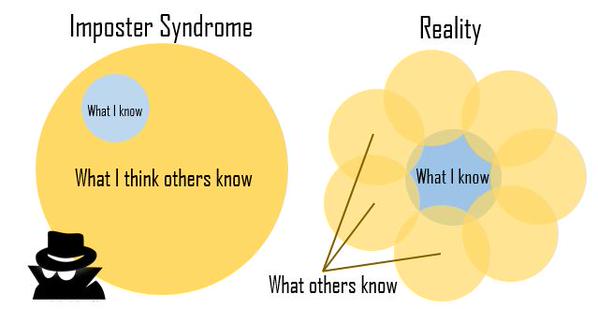
Imposter Syndrome

1429677066685-rendition-medium

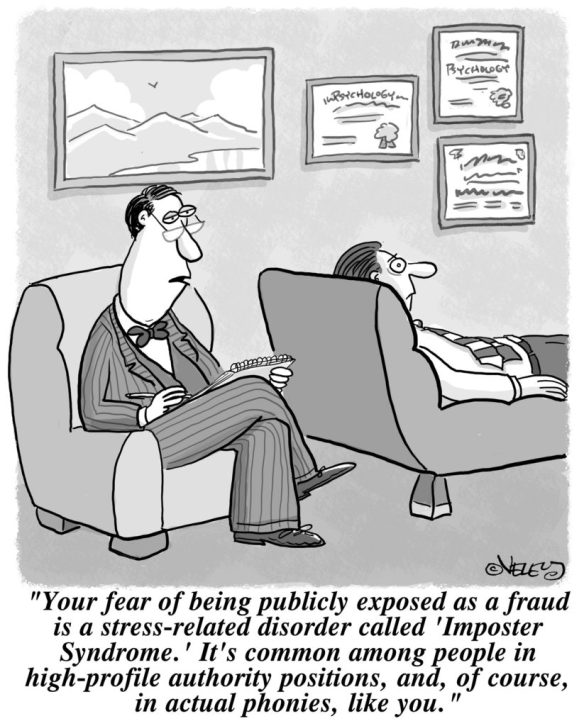
Impostor syndrome (also known as impostor phenomenon or fraud syndrome or the impostor experience) is a concept describing individuals who are marked by an inability to internalize their accomplishments and a persistent fear of being exposed as a “fraud”. The term was coined in 1978 by clinical psychologists Pauline R. Clance and Suzanne A. Imes. Despite external evidence of their competence, those exhibiting the syndrome remain convinced that they are frauds and do not deserve the success they have achieved. Proof of success is dismissed as luck, timing, or as a result of deceiving others into thinking they are more intelligent and competent than they believe themselves to be. While early research focused on the prevalence among high-achieving women, impostor syndrome has been found to affect both men and women, in roughly equal numbers

impostor-syndrome-cartoon-823x1024We’ve all been there, done that – convinced we’ve gotten a job or a project because we’ve faked it or perhaps you are getting an award for something and all you can hear in your head is a voice telling you that you will soon be outed for being a fraud! This is nothing but classic imposter syndrome and today’s post is all about that. Why this particular syndrome you may ask? Well, it’s because I am convinced I am 100% guilty of perpetuating this on myself.

Initially, it was thought that more women than men suffered from imposter syndrome, but later it was found to affect both sexes equally. When you are afflicted, you very strongly internally believe that you are not intelligent and you got (insert activity here) by luck or fluke and so you are so incompetent and unworthy of the activity that you will soon be outed as a fraud. I strongly suspect that this is what happened to me in my last position and this is why we parted ways so soon.

screenshot2015-08-13at10_48_51The most common symptoms are negative self-talk; a need to constantly check and re-check work; shying away from attention in the workplace; and forms of overcompensation like staying late at work or not setting appropriate boundaries around workload. Internally, people struggling with the syndrome experience persistent feelings of self-doubt and fear being found out as phoney. They over-internalize and blame themselves for failures, even when other factors played a role.
I particularly feel more women than men, especially Asians, suffer from this syndrome as we are generally conditioned to not take credit for our work and also diminish it when we get complimented for anything we do. As I was researching this post, I realised a lot of famous people, both men and women also had moments when they felt they were a complete fraud and it was just time till people figured them out for what they thought they were!

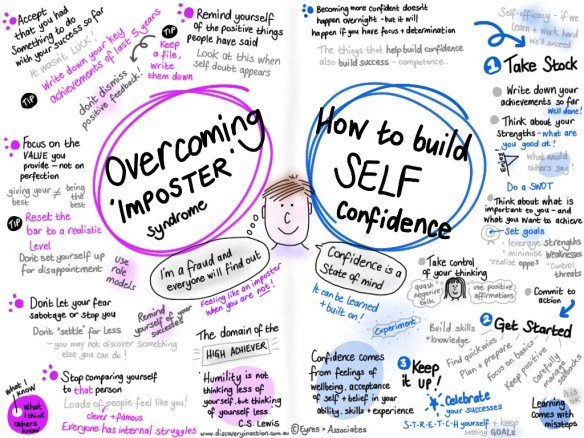
So when you get these pangs, here are some of the things you can do to overcome it:

how-to-improve-confidenceAccept that you are in this position because you did something that caused people to put you there. Learn to internalise your success and own it. Be proud of your achievements.

Focus on what you bring to the table. When you are a perfectionist, the chances of you believing that you are a fraud is very high because you set such high standards for yourself. Loosen up a bit and learn to accept that sometimes you need not be the best in everything you do. Hyper-competitive people (me included) see every little thing in life as a competition and this is what causes you immense grief where when you can’t attain the lofty self-goal you have set for yourself, you fall down to the depths and think you are a complete failure. So learn to let go, it will make life easier for you in the long run.

Stop comparing yourself to others. This is probably the most important point in overcoming this syndrome. As author Iyanla Vanzant once said, “Comparison is an act of violence against the self”, when you compare and measure yourself against someone, usually more successful than yourself, you start to internalise all your failures (against the said person) and this, in turn, makes you less confident about your own abilities and does not let you celebrate successes.

Celebrate success. When you get complimented for anything, accept it gracefully and with a smile. Most of us, and especially those of us who have internalised this syndrome. The normal reaction to a compliment is to brush it aside as something inconsequential, but the truth is that when someone compliments you for something, it’s because they appreciate what you have done, so accept it and internalise it.

Journal regularly. As an addendum to the previous point, it may help to keep a success journal which highlights all your successes. You could also add in the compliments and kudos you receive, be it work or play and when you need affirmations, all you need to do is go to your journal and read it. Personally, I would prefer to have something online or in the cloud, like perhaps Google Docs so I can access it anywhere and anytime. But if you prefer a physical notebook to record successes, then go ahead and buy the prettiest book you can find!

I am going to practice what I have just preached and start doing all these points so that I sooner than later overcome my sense of being a fraud all the time. What about you? Do you have any more tips that I can use? Please comment below.

I am ending this post with some TED Talks on how we can overcome our sense of being imposters.

2017 Week 34 Update

This week was a relatively short week with the long weekend as Singapore celebrated the feast of sacrifice or Hari Raya Haji as it is called here. We are now in September and counting down to the last few months of the year!

This weekend, we went out together as a family after a long time. I needed to buy a jacket for work and so decided to make an evening out of it. We went and shopped and then had dinner. It was an enjoyable evening.

I am looking to buy a fitness tracker and am quite confused about what to buy. I looked at the Fitbit Alta and the Flex but also like the Charge. Also, I want something which is discrete, by which I mean I don’t want to advertise the fact that I am using a fitness tracker. I used to have a Fitbit Pebble (is that the right name?) and used to clip it to my clothes or even into my pockets and nobody knew I had one. Is there one like that in the market now? Anyone with more information, please comment below so I can decide soon. My current fitness tracker is my phone and I am using the Argus app to track steps, water, movement etc. The only downside to this is that I have to make sure I am carrying my phone in my hand or in a pocket all the time and sometimes that becomes cumbersome, which is why I am looking for a new tracker.

Work-wise, I am reaching my three-month mark here and this should end the probation period. I still haven’t had any one-on-one with my manager, in spite to asking multiple times, so this is something I probably will have to give up on. Maybe when the time comes to do your annual goals, my manager will finally find time for me.

Something happened this week and I realised that this organisation was willing to spend hundreds of thousands on an event, even provide tickets which are worth thousands free of cost just to fill up seats, but would not spend a few few hundreds to allow staff to take taxis home after a 15-hour work day, because the time would not yet be 9 pm at that point (which is the official policy to  allow taxi claims)! So all the posturing about staff welfare, including having staff fun clubs is just that – posturing. They don’t put their money where their mouth is.

The other thing I am excited about is my parents coming to Singapore. I  just applied for their visa over the weekend and think it should be approved sometime this week. I have also sent my list of items to buy from Mumbai and am waiting for the goodies next month!

Have a wonderful September and an awesome week!


Life Lessons: How to deal with bullies at work and outside….


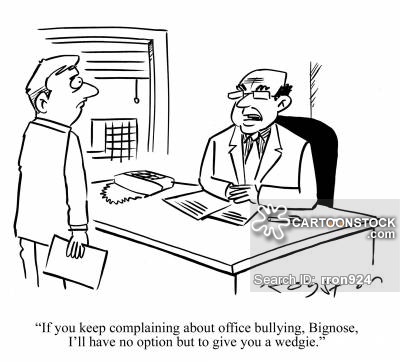
I’ve mentioned before, in this new place I am now working, I have been having issues at work, but I’ve never really elaborated on it. Today I am going to talk about some of what I am going through and what I have learned from my research on how to deal with such issues. Maybe someone else can benefit from it.


I have a colleague on the same team, who is junior to me, both in the number of years of experience we have as well as in the hierarchy of the organisation. For some reason, from the day I joined the organisation, this person has been borderline rude with me. They would be careful to be sweet and nice when in the presence of others, it was only when they were with me and maybe an intern who was working with them, would the nastiness surface. I was new to the organisation and I didn’t know how things are run. This person had been here for around a year before I joined. Anytime I asked them anything, it would be met with a curt, “I am busy” but they were not busy to chit chat with others during the time they were supposed to be busy. This went for around a month, but till that time it was done very passively. After a month of this, I sent this person an email about something which was not in both our job scopes, but which we had to do to help out. My email to the person was that when they were away, I will step in and the very rude reply I got was it was not their job too and so I was not doing them any favours. I had copied the email to our manager and the reply was also sent to everyone.


At some point, I did bring up this person’s attitude to our manager, but till date, I have not seen a resolution of the issue. I am not sure if the manager has managed to speak to this person, but since I don’t really see any improvement in attitude, I am guessing no.

So what do I do in such a case? I decided to read up and am following these points. It may be useful to others who are recipients of workplace bullying which is why I decided to blog about it.


When faced with a bully at work, we can either leave that toxic environment, stay quiet in the hope that it will blow away or confront the bully. Since I was new, leaving was not an option, I did speak to our manager, who didn’t do much to mitigate the issue and I didn’t want to confront the bully, but wanted to make sure I was no longer bullied


I first stopped talking to the bully. I didn’t interact much with them unless it was work specific and even then, I made sure I always tried to email them with a copy to our manager. This way, any rude or bullying behaviour would be out in the open and also documented since my problem was that this bully was sweet in front of others and rude when it was just us interacting. You could also keep a record of all interactions with the bully and if possible document every interaction.

After you have gathered the information, try to make time with the bully and speak calmly and emotionlessly. I need to work on this as I tend to get emotional in such times, but take deep breaths if that helps and speak to the bully. This approach may or may not work, depending on how the bully rolls, so prepare to take a step back and come back with reinforcements (aka your manager).


Usually, the perpetrator in a bullying incident is mostly intimated by you, either by what you bring to the table in terms of experience or job knowledge or what they stand to lose in terms of how your work will affect their standing in the organisation. I suspect in my case this is what happened. The bully in my instance probably thought I was a threat to them, though how I don’t know and used rude and disrespectful tones and language to compensate for that.


Another thing that usually works is not to stoop down to the bully’s level. It’s very tempting (believe me, I know), to respond with rude behaviour when faced with such behaviour, but I now believe in this, as Michelle Obama famously said, “When they go low, we go high”! Respond to rude behaviour with extreme politeness. If the rude behaviour is via email, I go very formal and polite and when a senior person sees the email exchange, the contrast between the two tones cannot be more obvious!

Lastly, I’d say don’t take this rudeness and bullying personally and over analyse everything (I am guilty of this). It is possible that the bully might have felt slighted over something you said or did, which is why they are behaving the way they do. I suspect this could have happened in my case also. In the last month, maybe I said or did (or didn’t say or do) something which may have been important to this person. Maybe once you figure out the reason why the bully behaved that way, behaviours on both sides can change. I do plan to do exactly that and see if I can figure out why my bully is behaving in such a way and see if I can turn the situation around.


Do you have any other way to work around a bully? I’d love to hear your ideas!


It’s been slightly more than three weeks since I started working and I got reacquainted with the beauty that is Office Politics!


For those who don’t know, Office politics “are the strategies that people play to gain an dvantage, personally or for a cause they support”. The term often has a negative connotation, in that it refers to strategies people use to seek advantage at the expense of others or the greater good.

Love it, revel in it, hate it or just play along with it, office politics are a staple in every organisation, be it a small organisation or a large multinational company. Someone who wants to be successful in his/her career needs to know how to play the game and eventually become a master at it!


I’ve seen different forms of the games people play at work and sometimes am amazed by the audacity of some of the tactics some people employ to get ahead. I always wonder if these people are wasted in the role they are in, they may have been better off as politicians instead of being a corporate slave.


To win at this game and come out smelling of roses, here are some strategies you should use, preferably as soon as you join a new organisation:


Map your organisation

In most organisations, the real power is not where the formal power lies. For example, maybe someone who has been there for a long time and knows the organisation inside-out, but who is fairly junior in position, may weld more soft power than the head of the organisation. This person may be able to influence people across the organisation and so has more power as he/she can people towards or away from someone.

So when you join a new organisation, watch for a couple of weeks and find out who the real influencers are and make them like you too.


Build social relations across the hierarchy

Make sure that the social relations you build in the organisation across formal hierarchies, you should be friends from people across the strata, most junior to most senior. This helps you to win people across the organisation and also know what is happening elsewhere in the organisation. When you are friends with people, they tend to help you, not only with information, but also with things that may be new to you or things you may be unfamiliar with.

I had a colleague like that, this person was super friendly and made friends easily and across the organisation. This person was also very helpful and would go out of their way to help people and so used this currency to build relations and also get the gossip from across departments and sections.


Be Neutral

At work, it is very easy to get caught up in gossip and eventually end up taking sides. This could misfire horribly. So the best thing to do is to be completely neutral. Even when people rant about other people in front of you, just nod neutrally and move away from there as soon as possible. When you take sides in any issue, it will inevitably come to bite you in the back.


Be Objective and professional

When office politics comes to play, personalities are involved and we may be mad at someone or the other. At times like this, maybe you want to vent out to someone and this most likely takes the shape of a gossip and veers to the person’s personal characteristics. Don’t give in to this! Even if you win this war, you will ultimately lose the larger battle.

Be professional in your attitude and your exchanges with your superiors, peers and subordinates at all times. This attitude will pay off in more ways than one.


So here you have four ways in which you can play the office politics game and come out a winner. Do you have any more strategies which help in navigating the minefield which is office politics? I’d to hear from you in the comments below.