Sacred Stones, Spaces, and Stories: Jyotirlingas Part 3 – Mallikarjuna Temple

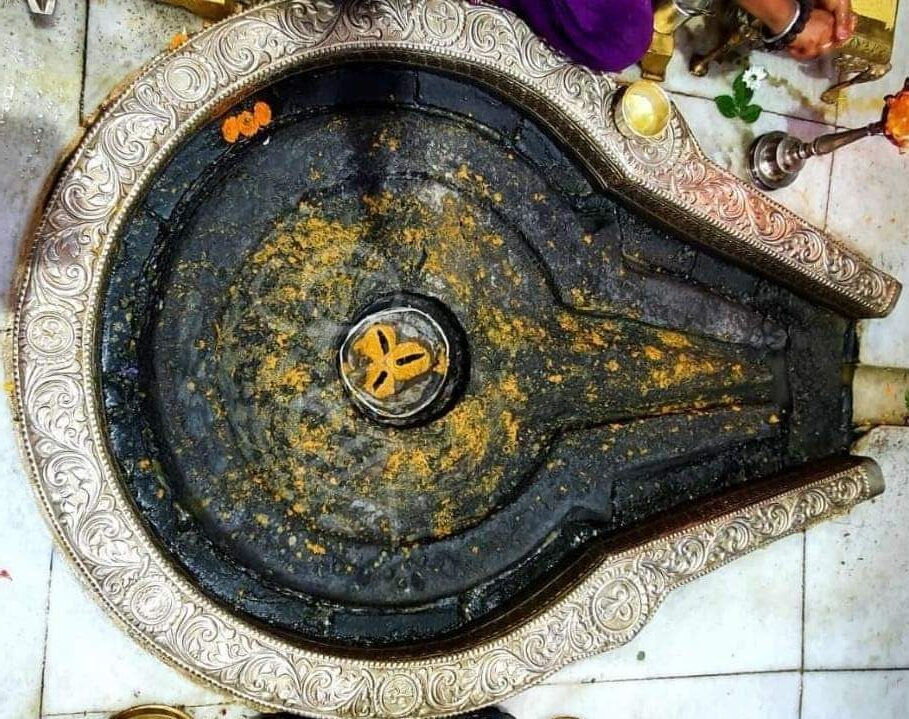
Situated atop the sacred Shri Shaila Mountain in the Nallamala Hills of Andhra Pradesh, the Mallikarjuna Temple in Srisailam is one of the twelve revered Jyotirlinga temples of Lord Shiva. Unique among the Jyotirlingas, Mallikarjuna also simultaneously enshrines a Shakti Peetha, making it a rare and deeply sacred space for the worship of Shiva and his consort Parvati, worshipped here as Bhramaramba. This convergence of Shaivism and Shaktism symbolises cosmic balance and union, earning the temple the epithet Kailash of the South. For centuries, pilgrims have journeyed through dense forests and rugged hills to seek blessings from the divine pair, believing the temple to be a source of spiritual power, peace, and transformation.

The Mallikarjuna Temple brims with ancient mythic tales that illuminate its divine origins and cosmic significance. According to one legend found in the Agni Purana and Skanda Purana, a pivotal event shaped the temple’s sanctity: the reconciliation and union of Lord Shiva and Goddess Parvati on the sacred hill of Shri Shaila.

One popular story recounts the marriage dilemma of Shiva’s sons, Ganesha and Kartikeya. When deciding which son should marry first, Shiva proposed a cosmic contest: whoever circled the universe first would win. Kartikeya rode off on his peacock mount to physically circle the world, while Ganesha circled his parents, Shiva and Parvati, symbolising the universe itself. Ganesha’s cleverness won him the first marriage, making Kartikeya angry and withdrawing to isolation.

To bring Kartikeya back, Shiva and Parvati took residence on Sri Shaila Mountain in the forms of Mallikarjuna (Shiva) and Bhramaramba (Parvati), thereby turning the hill into a sacred abode. It is believed that on new moon nights or Amavasya, Shiva appears as Mallikarjuna, and on full moon nights or Poornima, Parvati appears as Mallika, and together they await their son’s return.

Another legend suggests that Mallikarjuna is one of the three divine Shiva lingas appearing during different yugas at Srisailam, Draksharamam, and Kaleshwaram, representing his omnipresence. The name Mallikarjuna itself is derived from Mallika, meaning jasmine, believed to be the flower with which Shiva’s linga was worshipped here.

Local tribal lore enriches the temple’s mystique as well. The Chenchu tribes, forest dwellers who historically live in the area, regard Shiva as a hunter who married a Chenchu maiden, symbolising a deep connection between nature, divinity, and humanity.

Mallikarjuna Temple stands as one of Andhra Pradesh’s oldest and most venerated religious sites, dating back over a millennium. Archaeological and inscriptional evidence traces the temple’s roots to the Satavahana dynasty (circa 2nd century CE), with subsequent expansions by dynasties including the Chalukyas, Pallavas, and Reddys. The Satavahanas left inscriptions acknowledging the temple and its hill, sanctifying it as a place of divine worship. Brief mentions appear in ancient texts, underscoring its status as a spiritual hub.

Over centuries, rulers like Prolay Verma and Anavema Reddy developed roads and mandapas or pillared halls facilitating pilgrim access into the rugged hills. The temple prospered through the classical and medieval eras, with notable contributions from the Vijayanagara Empire, which enhanced the temple complex, incorporating elaborate mandapas and gopurams or gateway towers that showcase their architectural patronage.

The temple is also historically critical because it is one of the only places in India where both a Jyotirlinga Shiva linga and a Shakti Peetha exist under one roof. As per mythology, this spot is where a part of Goddess Sati’s body (her upper lip or mukh) fell during Shiva’s cosmic dance of grief.

Philosophers and saints such as Adi Shankaracharya, Siddha Nagarjuna, and Allama Prabhu paid homage to Mallikarjuna, contributing to its stature as a center for Shaiva-Shakta theological discourse.

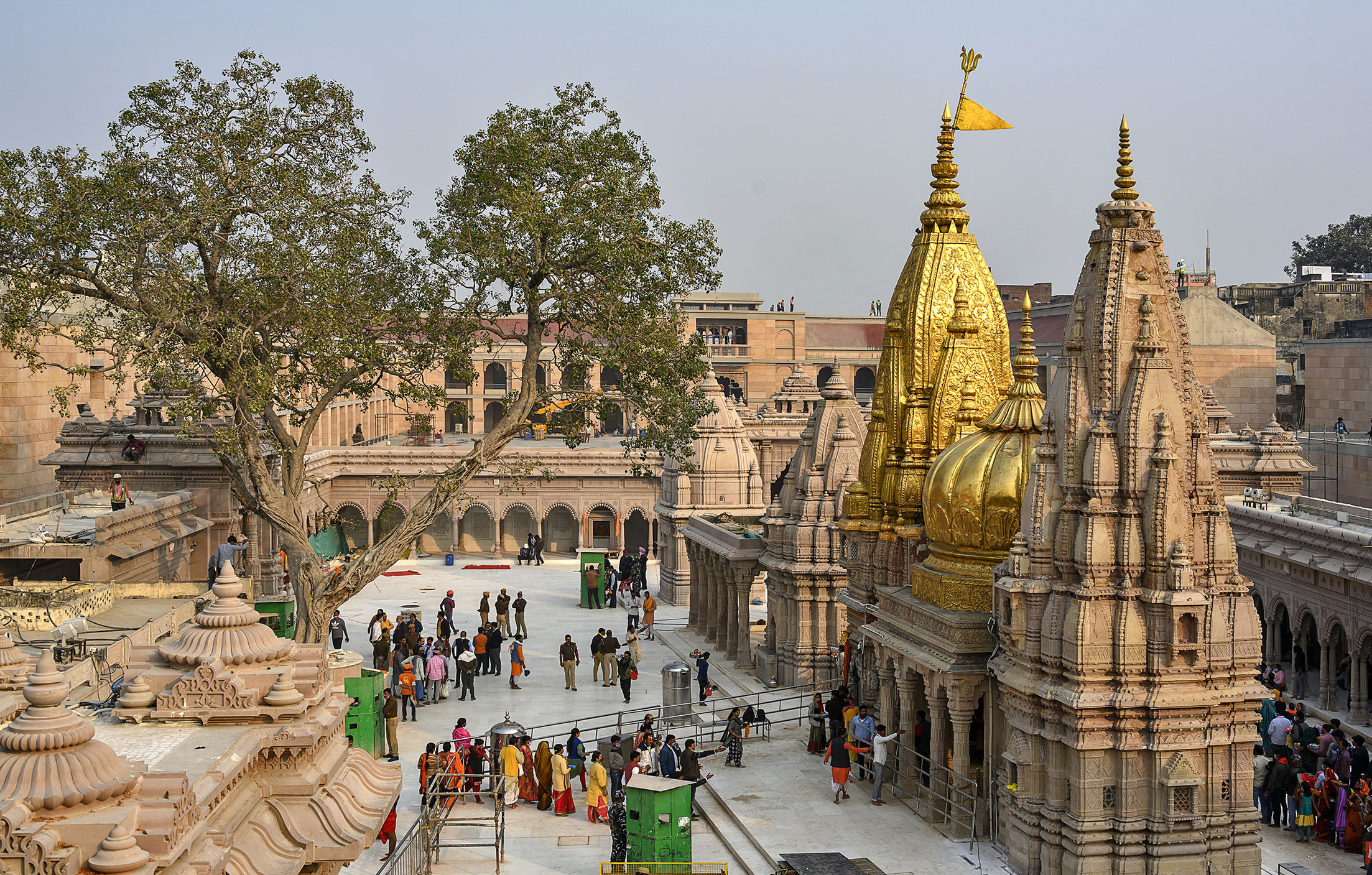
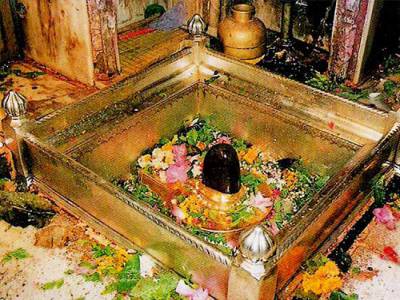
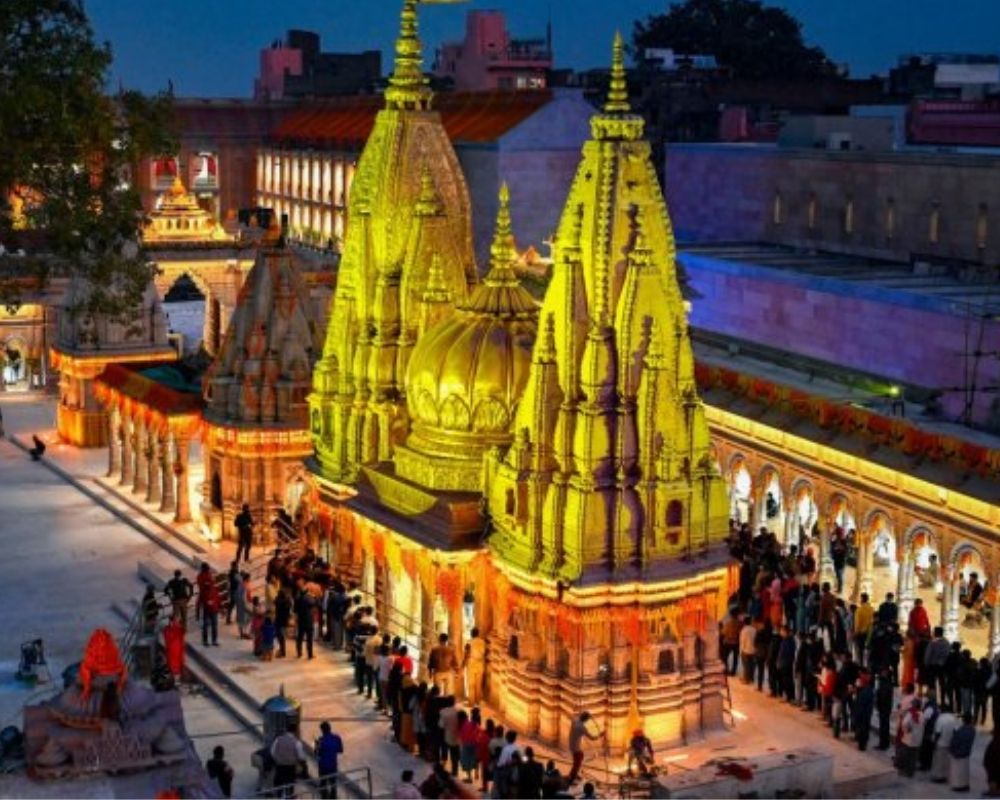
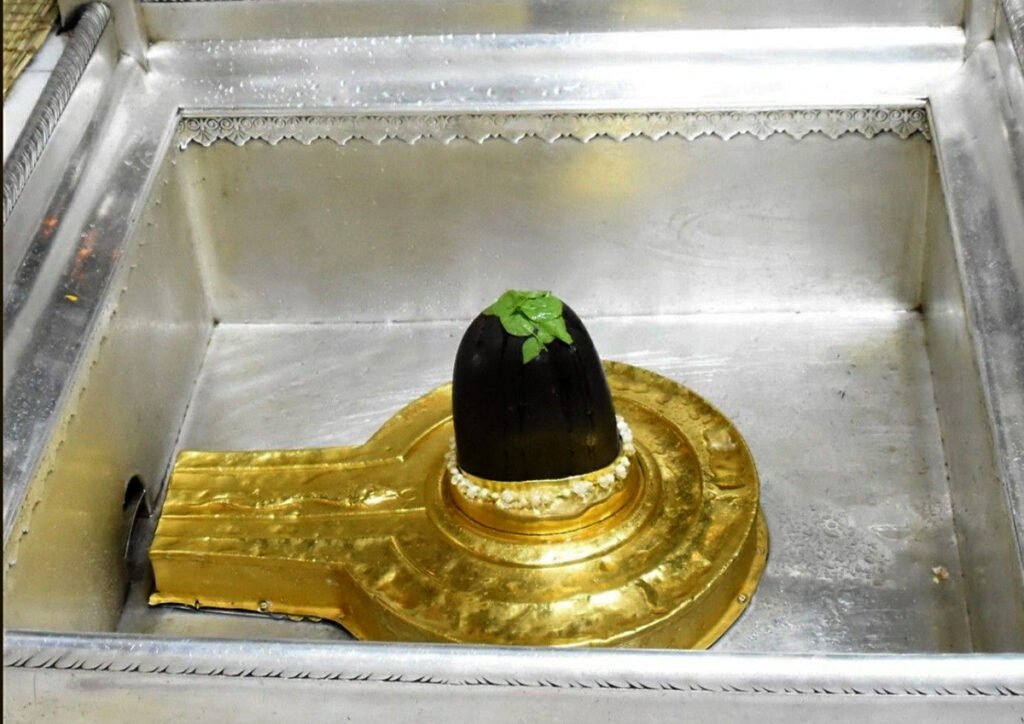
Mallikarjuna Temple is an architectural marvel distinguished by the Dravidian style prevalent in South India, enhanced by the influence of the Chalukyas and Vijayanagara artisans. Set on a sprawling temple complex amidst the dense Nallamala forests, the structure features multiple gopurams or towering gateways with each gate, intricately carved with mythological scenes and divine figures, that serve as a majestic entrance, symbolising the transition from the mundane to the sacred. There are also lavishly decorated Mandapas and Sabhas or halls to host religious gatherings and rituals. The Grabhagriha or Sanctum houses the Mallikarjuna Jyotirlinga for Shiva and the Bhramaramba Shakti Peetha for Parvati; both are freestanding and receive individual worship. The enduring granite walls blend with the natural terrain, evoking a sense of the divine emerging from the earth itself while intricate sculptures and motifs including wall carvings narrate Shiva’s legends, goddess lore, and depictions of flora and fauna native to the region, reflecting local aesthetics. The temple complex includes a thousand lingas or Sahasra Lingas, commissioned by Lord Rama and the Pandavas, further enriching the sacred environment. The temple’s architectural design cleverly integrates with its hilly setting, with steps and courtyards guiding pilgrims upward toward the sanctum, symbolising the spiritual ascent.

Mallikarjuna Temple is alive with daily rituals and vibrant festivals that celebrate Shiva and Shakti’s cosmic dance. Daily pujas begin early morning with abhisheka, bathing the lingam with holy water, milk, honey, and other sacred substances, accompanied by Vedic chants. Devotional singing and lamp waving rituals take place at multiple times, creating an immersive sensory worship experience.

Mahashivaratri is the most important festival, characterised by all-night vigils, fasts, and spiritual discourses. The temple also celebrates Navaratri, celebrating the goddess’s power, attracting thousands from across India. Devotees participate in the ritualistic circumambulation of the temple and the Sahasra Linga complex. Local traditions by the Chenchu tribes include offerings and ecological respect rituals, highlighting nature’s role in the temple’s sanctity. The temple management facilitates feeding and accommodation for pilgrims, supported by local societies that organize cultural programs and care for the shrine.

The journey to Mallikarjuna Temple is both a physical and spiritual pilgrimage through a lush, forested landscape teeming with biodiversity. Srisailam is connected by road and rail, with nearest major airports at Hyderabad and Kurnool. The last leg involves ascending rugged hill paths amid picturesque landscapes. The temple’s location in dense forests and hills adds a sense of seclusion and sanctity. Pilgrims often recount sensations of peace and divine presence amid chants, ringing bells, and the natural sounds of wildlife. Numerous dharamshalas or pilgrim hostels, eateries, and markets provide support to visitors, blending tradition with modern needs. Many pilgrims share stories of miraculous healing and spiritual experiences, attributing them to the temple’s cosmic energies and the mountain’s sanctity.

The Mallikarjuna Temple influences literature, music, and art, particularly in the Andhra region. The temple and its legends feature in classical Telugu and Sanskrit poetry, as well as oral folklore, which celebrates the divine union of Lord Shiva and Goddess Parvati. Devotional songs, especially during festivals, draw from regional and classical traditions, creating a rich sonic tapestry that resonates with the natural environment. The temple’s carvings influence contemporary art forms as well, inspiring devotees and artists alike. Beyond faith, the temple is a source of cultural pride for communities around Srisailam, integrating tribal heritage and mainstream Hindu traditions. The bees said to have made the temple their home, without harming worshippers, and stories of divine protection deepen the temple’s mythos within local culture.

Today, Mallikarjuna Temple serves as both a major pilgrimage destination and a cultural heritage site. The Sri Bhramaramba Mallikarjuna Devasthanam oversees temple operations, pilgrimage infrastructure, and festivals. Significant investments in roads, accommodations, and amenities have facilitated growing visitor numbers while preserving spiritual rhythms. Mahashivaratri attracts a national and international audience, blending traditional rituals with modern event management. Ongoing restoration projects safeguard ancient structures while adapting to environmental and tourist pressures. The temple attracts devotees from diverse backgrounds, including urban and rural, domestic and overseas, reflecting its broad spiritual appeal.

The Mallikarjuna Temple at Srisailam stands as a celestial beacon embodying the cosmic harmony of Shiva and Shakti—the masculine and feminine divine principles. Its ancient legends, rich history, and mesmerising architecture invite pilgrims to a spiritual journey of devotion and discovery. Uniting primal forest landscapes with sacred stone, it affirms India’s layered cultural and religious heritage. As a vital node in the Jyotirlinga circuit and a symbol of balance between power and grace, Mallikarjuna Temple continues to inspire faith, scholarship, and awe across generations.

Short Story: Second Chances

The conference room on the thirty-eighth floor of the Raffles Place tower buzzed with polite conversation as executives filtered in for the quarterly review meeting. Marcus Lim straightened his tie and checked his watch. He was early, as always. The acquisition of NexaFlow had been his project from the start, and today’s meeting would finalise the partnership that could make his career.

He was scrolling through his tablet when she walked in.

The woman commanded attention without trying. Her navy blazer was perfectly tailored, accentuating curves that spoke of confidence rather than apology. Dark hair swept into an elegant chignon, framing a face that was striking in its intelligence; sharp cheekbones, full lips, and eyes that seemed to see everything. When she spoke to her assistant, her voice carried the kind of authority that came from earning respect, not demanding it.

Marcus found himself staring. She was easily the most captivating woman he’d ever seen.

That’s Priya Kumar,” whispered his colleague, Wei Ming. “She built NexaFlow from nothing. Brilliant woman. A bit intimidating, though.”

Priya. The name suited her. Marcus watched as she took her seat at the head of the table, directly across from him. When their eyes met, he offered his most charming smile. She looked at him for a long moment, something flickering across her features, before nodding politely and turning away.

The meeting proceeded smoothly. Priya’s presentation was flawless, her responses to questions sharp and insightful. Marcus found himself genuinely impressed, not just attracted. This wasn’t just beauty and confidence; this was brilliance in action.

Mr. Lim,” Priya’s voice cut through his thoughts. “I believe you had some concerns about our data security protocols?

He recovered quickly, launching into his prepared questions. But throughout the discussion, he couldn’t shake the feeling that her dark eyes were studying him, measuring him against some invisible standard.

After the meeting, Marcus lingered, hoping to catch her alone.

Ms. Kumar?” He approached with what he hoped was professional interest. “I was wondering if you’d like to grab dinner tonight. To discuss the partnership, of course.”

For just a moment, something raw and vulnerable flashed in her eyes. Then it was gone, replaced by polished professionalism.

I don’t think that would be appropriate, Mr. Lim. All business matters can be handled during office hours.

The rejection stung more than it should have. “Of course. Professional boundaries. I respect that.

As he walked to his BMW in the Marina Bay Financial Centre car park, Marcus couldn’t understand why he felt like he’d failed some test he didn’t know he was taking.

Ten years earlier

Priya Raj pushed her thick glasses up her nose and clutched her textbooks tighter as she navigated the crowded NUS campus. At nineteen, she was already carrying more responsibility than most of her classmates could imagine: working two part-time jobs to help with family expenses while maintaining her first-class honours in computer science.

She’d learned to make herself invisible. It was easier that way.

Alamak, is that the same blouse she wore yesterday?” The voice carried across the Arts Link, followed by barely suppressed laughter.

Priya’s cheeks burned, but she kept walking. The blouse was one of three she owned, all carefully maintained but obviously not from Orchard Road boutiques. She’d learned not to react to comments from Marcus Lim’s circle, the golden boys and girls who seemed to glide through university on charm and family connections.

Marcus himself had never been cruel, not directly. He simply… didn’t see her. When Professor Tan paired them for a programming project, Marcus had looked right through her as if she were furniture, immediately suggesting they meet at the coffee shop in the Science canteen where she worked, not knowing, of course, that she’d be serving him while trying to discuss their code.

Can I get you anything else, ah?” she’d asked after bringing him his third kopi-O.

Just working on this project with…” He’d glanced around vaguely. “Some girl from class lah. She’s supposed to be here.”

Priya had stood there in her coffee-stained uniform, textbook tucked under her arm, invisible.

Three weeks into the partnership negotiations, Marcus was no closer to understanding Priya Kumar. She was professional, brilliant, and completely unreachable. Every attempt at conversation beyond business was met with polite deflection. Every invitation was declined with perfect courtesy.

It was driving him crazy.

You’re obsessing, bro,” Wei Ming observed over lunch at a trendy CBD restaurant. “It’s not like you. Usually, they’re all over you.”

Marcus poked at his laksa, watching the busy street through the floor-to-ceiling windows overlooking the Singapore River. “She’s different.”

Maybe that’s the point. Maybe she sees right through your usual charm.”

That afternoon, Marcus found himself really looking at the people around his Shenton Way office. His secretary, who always seemed nervous. The junior associates who laughed too loudly at his jokes. The cleaning auntie who hurried past him as if afraid to be noticed.

When had he stopped seeing people as individuals?

The question haunted him through another sleepless night in his Sentosa Cove penthouse.

The breakthrough came during a crisis. A cybersecurity breach at one of Lim Holdings’ subsidiary companies threatened to derail not just the NexaFlow partnership, but several other major deals. Marcus worked through the night, coordinating responses from his corner office overlooking Marina Bay, when his phone rang.

Mr. Lim? It’s Priya Kumar. I heard about the breach. I’m sending over my team.”

You don’t have to—

My reputation is tied to this partnership now. We fix this together.”

For the next eighteen hours, they worked side by side. Marcus watched Priya command her team with quiet authority, solving problems with elegant efficiency. She ordered zi char for everyone, remembered the security uncle’s name, and somehow made the crisis feel manageable.

Around dawn, they found themselves alone in the conference room, surrounded by empty coffee cups and whiteboards covered in code, the Marina Bay Sands and Singapore Flyer silhouetted against the pink sunrise beyond the windows.

Why?” Marcus asked quietly. “Why help when I know you don’t even like me?

Priya looked up from her laptop, fatigue softening her carefully maintained composure. “Because it was the right thing to do.”

I feel like I know you,” he said suddenly. “Like we’ve met before.”

Her fingers stilled on the keyboard. “We have.”

When? I would remember…

Would you?” Her voice was soft, almost sad. “National University of Singapore. Computer Science. Professor Tan’s Advanced Programming module.”

The pieces clicked into place with sickening clarity. The Science canteen coffee shop. The project partner he’d barely acknowledged. The girl whose name he’d never bothered to learn.

Oh God. Priya. You’re…

The same person I always was.” She closed her laptop with a quiet snap. “Just visible now.”

Marcus felt like the floor had dropped away. “I was such an asshole.

You were twenty.” Her voice was matter-of-fact. “We all were someone different then.”

No, I was worse than that. I was blind. I was…

You were a product of your environment.” Priya stood, gathering her things. “But that doesn’t mean I have to forget.”

She paused at the door. “The crisis is handled. I’ll have my legal team finalise the partnership documents. We don’t need to work together directly anymore.”

Marcus sat alone in the conference room as the sun rose over Singapore’s skyline, finally understanding why her eyes had seemed to see straight through him. She’d been measuring him against the boy who had looked right through her, and he’d been found wanting.

The question was: what was he going to do about it?

Marcus started small. He learned the names of everyone in his building: security guards, cleaning staff, and the uncle who ran the kopi tiam on the ground floor. He instituted monthly team meetings where junior associates could present ideas directly to leadership. He volunteered to mentor students at NUS, particularly those on financial assistance.

But mostly, he tried to become worthy of a second chance he wasn’t sure he’d ever get.

Two months later, he ran into Priya at a tech industry charity gala at the ArtScience Museum. She looked stunning in a midnight blue cheongsam, commanding attention in a room full of Singapore’s most influential people. Marcus approached carefully, his heart hammering.

Priya.”

She turned, and for the first time since their reunion, her expression wasn’t guarded. “Marcus. I heard about your mentorship program.

Word travels fast in Singapore.”

I fund three scholarships at NUS. I hear things.” She studied his face. “Why?”

Because I finally realised that the world doesn’t revolve around people like me. And I wanted to do something useful with that realisation.”

They talked for an hour. Really talked. About their work, their families, their hopes for Singapore’s tech scene. When the evening ended, Marcus found the courage to ask again.

Dinner? Not as a business meeting. As… whatever you’re comfortable with.”

Priya was quiet for so long, he thought she’d say no. Then: “There’s a place I like in Chinatown. Nothing fancy.

Perfect.”

The restaurant was a hole-in-the-wall zi char stall tucked away in a back alley near Tanjong Pagar, with plastic chairs and the kind of authentic Hokkien food that couldn’t be found in trendy Clarke Quay establishments. Priya had changed into jeans and a simple blouse, and Marcus had never seen her look more beautiful.

I used to come here during university,” she said, expertly manoeuvring her chopsticks around the sweet and sour pork. “It was the only place I could afford that felt special.”

What was it like?” Marcus asked quietly. “Uni, I mean. For you.”

Priya considered the question. “Lonely, mostly. I was so focused on survival, academically and financially, that I forgot to be young. I watched people like you having experiences I couldn’t afford, and I told myself I didn’t want them anyway.”

“I’m sorry I was part of that.”

“You weren’t cruel, Marcus. You just… existed in a different world. One where people like me didn’t matter.”

“They did matter. I was just too stupid and self-absorbed to see it.”

She smiled then, the first genuine smile she’d given him. “We were both different people then.”

“I’d like you to know the person I am now.”

I think,” Priya said slowly, “I’d like that too.”

Their courtship was careful, deliberate. Marcus learned that Priya had built her company not just from ambition, but from a desire to create opportunities for people who’d been overlooked the way she had been. She’d hired dozens of first-generation university graduates, funded coding bootcamps in heartland communities, and quietly revolutionised the way Singapore’s tech industry thought about talent.

Priya learned that Marcus’s newfound awareness wasn’t performative. He’d restructured his company’s hiring practices, implemented blind resume reviews, and somehow managed to do it all without seeking credit or recognition.

You’ve changed,” she told him one evening as they walked along the Marina Barrage, the city lights reflecting off the reservoir, six months into whatever they were calling their relationship.

Not changed,” Marcus said. “Just finally became who I was supposed to be.”

And who is that?

He stopped walking and turned to face her. “Someone worthy of you.”

Priya’s breath caught. In the glow of the Singapore skyline, she could see the boy he’d been in the man he’d become, but this version was better, deeper, marked by empathy and genuine humility.

I was so angry for so long,” she whispered. “At you, at everyone who made me feel invisible. I built my whole life around never being that powerless again.”

You were never powerless, Priya. You were just surrounded by people too blind to see your strength.”

When he kissed her, it tasted like forgiveness and possibility and the kind of love that comes from truly seeing another person.

One year later

The engagement party was held at the same conference room where they’d reconnected; Priya’s idea and characteristically perfect. Their two worlds had blended seamlessly: his family’s Peranakan heritage mixing with her chosen family of employees, mentees, and the professors who’d believed in her when no one else had. The catering was a mix of their favourites, from high-end hotel fare to zi char dishes that reminded them of their roots.

Marcus found Priya on the outdoor terrace, looking out over the glittering lights of the Marina Bay area.

Having second thoughts?” he asked, wrapping his arms around her from behind.

About marrying you? Never.” She leaned into him. “I was just thinking about that girl in the Science canteen. How she never could have imagined this moment.”

She deserved it even then.”

Maybe. But she wasn’t ready for it then. Neither of us were.”

Marcus turned her in his arms. “And now?”

Priya smiled, the expression transforming her face with joy. “Now we’re exactly who we’re supposed to be.”

As they kissed under the stars, the Singapore skyline sprawling endlessly below them, it felt like the best kind of second chance; not a revision of the past, but a bold new story written by two people who had finally learned how to truly see each other.

Some love stories begin with love at first sight. The best ones, perhaps, begin with sight at first love, the moment when two people finally become visible to each other, not as they were, but as they chose to become.

Mumbai Memories: The Preservation of the Agraharam Tamil Dialect

Growing up, everyone around me spoke Tamil or a Malayalam-tinged Tamil, and I didn’t think anything was amiss. This was my normal. I did hear a slightly different Tamil in the movies, but I didn’t really think too much about it, assuming it was normal for films to sound that way. However, after I moved to Singapore, I experienced culture shock in terms of the Tamil language spoken. The first one came from S and his family, who spoke Tamil, but it was slightly different from what I spoke and had heard spoken all my life. When I asked them, they said their Tamil is the Tamil of the masses, and when they spoke the Tambram dialect, they were teased and made fun of in school and outside, so over the years, the Tambram community in Singapore slowly stopped speaking that dialect and instead switched to the more locally spoken version.

But I am adamant about preserving my heritage, and so far have refused to succumb to subsuming my dialect into the standard Tamil. I don’t speak a lot of Tamil here in Singapore, but when I do, it’s the Tambram Tamil I spoke while growing up. Even with GG & BB, I always spoke to them in this dialect, but given their mostly English language usage, there’s not much hope that they will continue to speak this dialect, and so, at least in my family, the dialect will end with me.

However, the Tamil Brahmins from Tamil Nadu and Kerala who migrated to Mumbai in the 1930s, 1940s, and 1950s have remarkably preserved their Agraharam-style Brahmin Tamil dialects, setting them apart from their counterparts who remained in South India and gradually adapted their speech to local influences. This linguistic retention became a hallmark of communities in areas like Matunga and Chembur, where strong social bonds and cultural traditions reinforced the continuity of dialect and identity across generations.

The migration of Tamil Brahmins to Mumbai was driven by economic opportunities, education, and employment, especially in the early to mid-20th century. Communities from Palakkad in Kerala and Tanjore in Tamil Nadu settled in “urban agraharams” in Mumbai, where they recreated their traditional neighbourhoods with proximity to temples and strong community networks. These settlements fostered a unique microcosm reminiscent of their ancestral villages, creating an environment conducive to linguistic and cultural preservation.

Unlike Brahmins in Tamil Nadu and Kerala, who gradually incorporated elements of regional dialects and accents due to increased interaction with other linguistic communities, those settled in Mumbai retained the Brahmin Tamil dialect, often marked by Sanskritised vocabulary, specific pronunciation patterns, and unique idiomatic expressions. This form of speech, sometimes referred to as “Brāhmik” or “Agraharam Tamil,” remained virtually unchanged for decades because within these tight-knit Mumbai communities, Tamil was spoken largely among themselves, with limited outside influence.

Agraharam Tamil, as spoken by Mumbai’s Tamil Brahmin community, is distinguished by specific lexical, phonetic, and grammatical features that have remained remarkably consistent over decades. Vocabulary features include the extensive use of Sanskrit loanwords or Sanskritised Tamil vocabulary, even for everyday terms (e.g., “upahara” instead of “tiffin” or “snack”); a preference for traditional Brahmin Tamil words such as “aathu” (home) instead of the more common “veetu”; and words and phrases for family, kinship, and rituals that retain old usage (e.g., “aaththu manushaa” for family members).

Pronunciation and phonetic features include the retention of retroflex and “zh” sounds, as in “Tamizh”; here, the older pronunciation is kept alive. Pronunciation is stricter with consonant stress and word-final vowels that are preserved, sometimes more closely adhering to Sanskrit or North Indian phonology (e.g., “Bhāratham” rather than “Bāratham”). The word-final “u” pronounced as a full back vowel in specific contexts.

Grammatical distinctions include specific verb conjugations unique to Brahmin Tamil, such as “varela?” (Are you coming?) versus “vareengla?” in non-Brahmin Tamil. The imperatives use “vaango” (please come) instead of “vaanga”, while the third person plural is often merged with feminine forms, maintaining certain archaic grammatical constructions.

Idiomatic and register features include the frequent use of polite, honorific forms and respectful address stemming from Agraharam culture (words like “mama” and “mami” used for elders or equals), and idioms, greetings, and proverbs rooted in traditional religious or familial contexts.

Social features of the Agraharam Tamil include the use of the dialect within the community for cultural, religious, and domestic discourse, but a code-switch to standard Tamil, English, or Hindi in broader Mumbai society. These features set Mumbai’s Agraharam Tamil apart from both non-Brahmin Tamil and the evolving Tamil of South India, preserving an older, Sanskritised, culturally distinctive dialect in a modern urban setting.

Matunga, Chembur, and similar neighborhoods facilitated daily use of Tamil in religious, social, and family settings. Social gatherings, festivals, and temple activities provided communal reinforcement, allowing younger generations to hear and use the traditional dialect frequently. The cultural insularity of these groups, everyone known as “mama” (uncle) or “mami” (aunt), further insulated their speech patterns from citywide influences, slowing language attrition compared to other urban South Indian populations.

First-generation migrants spoke fluent Palakkad or Tanjore Tamil and often Malayalam, while their children balanced multilingualism, learning Hindi, Marathi, and English for school and work but still using traditional Brahmin Tamil at home. Over time, the third generation adopted more of Mumbai’s urban culture, leading to some language shift, but remnants of the original dialect persist in family conversations, proverbs, and religious contexts.

Brahmins remaining in Tamil Nadu and Kerala were more exposed to local non-Brahmin speech and urban Tamil developments. Political changes and cultural movements led to linguistic adaptation, and many Brahmin families shifted towards regionally dominant accents. In contrast, Mumbai’s Tamil Brahmins maintained a diaspora-style “mini Madras,” echoing older, more formal acculturations of Tamil.

Brahmin Tamil is generally characterised by an elevated use of Sanskrit borrowings, a conservatism in pronunciation and grammar, distinct idiomatic expressions, greetings, and terms, and the retention of certain words, sentences, and intonations associated with temple rituals or traditional family interactions.

These urban agraharams not only preserved language but also traditional food, dress (such as “pavadai” for girls), festivals, and rituals, further reinforcing linguistic distinctiveness. The synergy between physical environment (temple proximity, cohesive housing) and social activities ensured that dialect and culture remained intertwined and resistant to outside change for many decades.

The enduring legacy of the Agraharam-style Tamil dialect among Mumbai’s Tamil Brahmins is a testament to the resilience of cultural identity in the face of migration and urbanization. These communities have preserved not just a way of speaking, but a way of being, deeply rooted in tradition, even as they embraced the cosmopolitan vibrancy of Mumbai.

Sacred Stones, Spaces, and Stories: Jyotirlingas Part 2 – Somnath Temple

Somnath Temple, located in Prabhas Patan near Veraval on the western coast of Gujarat, India, is renowned as the first among the twelve sacred Jyotirlinga temples of Lord Shiva. Revered as Somnath, which means “Lord of the Moon,” the temple is intimately tied to ancient Hindu mythology and spiritual tradition. Positioned at the confluence of three rivers: Kapila, Hiran, and Saraswati, Somnath is not only a centre of profound religious significance but also a testimony to India’s enduring faith, resilience, and heritage. The temple serves as a radiant beacon for devotees seeking spiritual upliftment and a connection to the divine cosmic light that Shiva embodies.

The legends surrounding Somnath are as ancient as they are captivating, weaving together cosmic elements and divine intervention. The temple’s origins trace back mythologically to the Moon God, Soma or Chandra, who, according to legend, was cursed by his father-in-law, Daksha, for favouring his wife Rohini over his 27 other wives. This curse gradually dimmed Soma’s luminescence, threatening his celestial brilliance.

Desperate to redeem himself, Soma came to this sacred confluence, bathed in the Saraswati River, and prayed intensely to Lord Shiva for relief. Impressed by his devotion, Shiva lifted the curse, restoring Soma’s radiance, symbolising the waxing and waning moon cycles. In gratitude, the Moon God established the first temple of Lord Shiva here, dedicating it as Somnath, the protector of Soma’s lost lustre.

Another symbolic legend connects Somnath to the mythical Syamantaka jewel, associated with Lord Krishna, intertwining it with epic lore. The temple is also seen as a place where Lord Shiva manifests directly in the form of a Jyotirlinga, a column of radiant, unending light, representing the formless infinite. Devotees visit Somnath believing it to be a gateway to the divine and a powerful purifying force for the soul.

Somnath’s history is a tapestry of spiritual glory, cultural riches, repeated devastations, and resilient restoration. It is one of the earliest known Hindu pilgrimage sites, mentioned in sacred texts like the Skanda Purana and the Rigveda. Its sanctity as a Jyotirlinga dates back thousands of years.

The temple site, originally called Prabhas, was visited by ancient kings, including the Gurjara-Pratihara Nagabhata II in the 9th century. The first major stone temple is believed to have been constructed or renovated by the Solanki ruler Bhima I in the 10th century. However, Somnath is no stranger to destruction. It was famously looted and demolished by Mahmud of Ghazni in 1025 AD, an event deeply etched in Indian history. Though he broke and took rich temple treasures, the temple’s sacred Jyotirlinga was said to have been protected or quickly restored by faithful custodians, and the site continued as a pilgrimage destination. Over the centuries, Somnath experienced multiple waves of destruction by invaders and periodic restorations by devout kings like the Chaulukya ruler Kumarapala in the 12th century.

In the medieval period, the temple was sacked again in 1299 by Alauddin Khalji’s forces. Yet, the resilience of Somnath is legendary, each destruction was met with reconstruction, underscoring the indomitable spirit of Hindu worshippers. The most momentous reconstruction in modern times was completed in 1951, spearheaded by Sardar Vallabhbhai Patel, India’s first Deputy Prime Minister, as a symbol of India’s unity and revival after independence.

Today’s Somnath Temple blends tradition and grandeur in its architecture, reflecting the classic Chalukyan style infused with contemporary architectural revivalism. Positioned majestically on a rocky promontory overlooking the Arabian Sea, the temple’s striking silhouette is a blend of solid stonework and intricate carvings.

The temple complex is built predominantly of sandstone and marble, structured with multiple spires or shikharas that mimic the radiant cosmic pillar of light symbolised by the Jyotirlinga. Its massive walls and gateways bear sculpted depictions of Hindu deities, mythological tales, and floral motifs. The temple’s sanctum sanctorum houses the main Shiva lingam, enshrined beneath a large shikhara that draws the eyes heavenward. The temple layout adheres to traditional Hindu temple design principles, with an imposing mandapa or assembly hall leading to the garbhagriha or sanctum. The outer halls and corridors accommodate multitudes of pilgrims, emphasizing accessibility and communal worship.

The temple’s coastal location is architecturally significant, achieved by careful stone construction resistant to salt air corrosion and sea winds. The sound of the waves around the temple adds a dynamic aesthetic, enriching the spiritual atmosphere.

Beyond its spiritual and historical significance, Somnath Temple also houses a unique monument that reflects the advanced scientific and geographical knowledge of ancient India: the Baan Stambh or Arrow Pillar, which connects the temple’s sacredness with an extraordinary understanding of Earth’s geography. Dating back to approximately the 6th or 7th century CE, the pillar bears an inscription stating that if one were to draw a straight line due south from Somnath, there would be no landmass until reaching the South Pole or Antarctica. This claim: “there is no hindrance or no piece of land till the South Pole on this path”, has been confirmed by modern geographical knowledge and satellite imaging, making it a stunning testament to the advanced understanding of geography, astronomy, and Earth’s spherical nature held by ancient Indian scholars. This knowledge, inscribed centuries before the advent of modern navigation, points to a rich scientific heritage where spiritual sanctity and empirical observation coexisted. The pillar stands not only as a physical monument but as a symbol of India’s profound legacy in merging cosmic insight with earthly wisdom.

Somnath Temple’s ritual calendar is rich and vibrant, overseen by a dedicated group of priests who maintain continuous worship. Daily worship begins at dawn with the abhisheka, ceremonial bathing of the Shiva lingam with holy water, milk, honey, and bilva leaves, the sacred trifoliate leaves associated with Shiva. Devotees witness elaborate chants of the Vedas alongside the ringing of temple bells and burning of incense.

The temple celebrates all major Shiva festivals with grandeur, especially Mahashivaratri, attracting tens of thousands of devotees who vow fasting, night vigils, and special prayers to honor Shiva’s cosmic dance and benevolence. Other notable observances include Somvati Amavasya or New Moon days falling on Monday and Pradosham, days auspicious for Shiva worship.

Distinctive traditions include pilgrim offerings of coconuts, flowers, and silver bells, and the distributing of prasad or blessed food. Local communities participate actively in festival preparations, processions, and maintenance, highlighting the temple’s role as a shared spiritual and social space.

The journey to Somnath is as much a spiritual pilgrimage as a physical voyage. Located some 400 km from Ahmedabad, the temple is accessible by road, rail, and nearby airports at Diu and Rajkot. Pilgrims often combine visits with other nearby sacred sites in the Saurashtra region.

The town of Prabhas Patan around Somnath is known for its warm hospitality, with countless accommodations, eateries, and shops catering to pilgrims. The experience is enriched by the coastal ambience, sea breeze, and views of the Arabian Sea, making the temple visit soothing and contemplative. Many pilgrims recount tales of healing and peace upon arriving at the temple, reflecting its atmosphere of solemnity mingled with jubilant devotion. Local folklore includes stories of miraculous events, divine interventions, and blessings that have drawn believers for centuries.

Somnath Temple’s significance transcends religion; it has inspired literature, music, and art through ages. Praises of Somnath appear in Bhakti poetry, classical Sanskrit texts, and folk songs, celebrating Shiva’s power, the temple’s sanctity, and the heroic resilience of its custodians. The temple is a cultural symbol of Gujarat and India’s Hindu heritage, frequently invoked in nationalist narratives, especially post-independence, as an emblem of cultural integrity against adversity. Artistic depictions of Somnath adorn paintings, sculptures, and modern media, captivating visitors and devotees alike. The temple’s resilient history and spiritual aura continue to inspire performances, lectures, and pilgrim tales, contributing to the living cultural fabric of the region.

In the present day, Somnath Temple operates under the Shri Somnath Trust, which manages its maintenance, festivals, and visitor amenities. The temple is a major tourist and pilgrimage destination attracting millions annually, boosted by government initiatives to improve infrastructure and global awareness campaigns. Modern restoration efforts utilise advanced conservation techniques, blending heritage preservation with accessibility upgrades. The temple’s security and administration reflect contemporary needs while honoring traditional customs. Somnath’s festivals remain vibrant, incorporating large-scale events coupled with spiritual discourse, outreach, and cultural programs. Besides worship, the temple premises host charitable activities and community services.

The Somnath Temple stands as a luminous sentinel of India’s spiritual heritage: the first Jyotirlinga, a symbol of Shiva’s infinite light, lunar cycles, and divine resilience. Its history embodies the oscillation between destruction and spiritual revival, mirroring the eternal cycles Shiva governs. As the southern gateway of the Jyotirlinga pilgrimage circuit and a beacon for seekers of faith and renewal, Somnath not only enriches the religious landscape but also reflects the enduring cultural soul of India. Its sacred stones, rituals, and stories continue to draw pilgrims and culture lovers, ensuring that the eternal flame of Somnath shines brightly for generations to come.

Beat the Quit: Outsmarting Quitters Day and Winning at Resolutions

Quitters Day, observed on the second Friday of January, has become a cultural milestone that spotlights a common challenge: keeping New Year’s resolutions.

What Is Quitters Day? Quitters Day refers to the day when most people give up on their New Year’s resolutions, typically falling on the second Friday of January. Coined through analysis of data from fitness apps such as Strava, this day marks the point at which enthusiasm for ambitious goals starts to diminish and the realities of daily life set in. While the name may seem tongue-in-cheek, Quitters Day represents a genuine phenomenon rooted in human behaviour and motivation.

The concept of setting goals for the new year dates back roughly 4,000 years to the ancient Babylonians, who made promises to gods at the start of their calendar year (which began in spring, not January). With time, this tradition evolved and became a global practice, with January 1 serving as a symbolic reset for millions.

Quitters Day’s specific origin is data-driven: In 2019, Strava analysed 800 million activities logged by users and found that most give up on their resolutions by the second Friday of January. Recognising a sharp drop-off in goal-oriented activity, Strava dubbed this day “Quitters Day.” Since then, the day has been covered by major media and wellness advocates as an opportunity not to mock, but to encourage reflection, refocusing, and resilience.

Why do we quit? The psychology behind giving up
Most people start the year with ambitious resolutions: lose weight, get fit, save money, or eat healthier, but the drive and novelty quickly dwindle as daily routines and challenges resume. Studies show that up to 80% of New Year’s resolutions fail by February, and only about 6% of people persist through the year.

Common psychological barriers include:

  • Overambition: Setting unrealistic or overly broad goals leads to discouragement when progress is slow or setbacks occur.
  • Loss of motivation: The initial excitement wears off after a few weeks, making routines feel burdensome.
  • Lack of social support: Isolation makes it harder to stick to challenging habits, while support systems strengthen accountability.
  • Neglecting process: Focusing solely on outcomes rather than the daily habits that produce results can undermine motivation and adaptability.

Strategies to stay on track
Defeating Quitters Day and making resolutions last throughout the year is possible with intentional preparation, realistic goals, and proactive strategies. Below are proven tips and tricks:

  • Be picky with resolutions: Choose one or two meaningful goals rather than a long list. This prevents overwhelm and sets the stage for success. Being specific with resolutions, such as “go to the gym thrice a week” rather than “get fit,” also helps clarify the path forward.
  • Plan and prepare: Effective planning includes scheduling time for your goal, anticipating possible setbacks, and breaking down your resolution into smaller, actionable steps. For example, if quitting smoking is the target, research average timelines and expected withdrawal symptoms, and get support ready for tough moments.
  • Focus on process, not just outcomes: Success comes from developing daily habits rather than chasing distant results. Emphasise routines and create a supportive environment that fosters your goals: keep healthy snacks handy if you’re seeking to eat better, lay out workout clothes in advance for exercise objectives, and use reminders to keep commitments top-of-mind.
  • Create a supportive social network: Studies highlight that accountability and support strengthen the likelihood of sustaining habits. Join online communities, fitness groups, or simply share your goals with a friend or partner who can encourage and motivate you. Being part of a tribe lightens the emotional load and transforms challenges into collective endeavours.
  • Track progress and celebrate wins: Monitor your efforts and celebrate even the smallest successes. Use journals, apps, or planners to record achievements, reflect on setbacks, and measure growth over time. Small milestones, like completing a workout or resisting a craving, reinforce positive behaviour and keep motivation high.
  • Stay flexible and resilient: Anticipate setbacks and view them as learning opportunities, not failures. Life will disrupt routines and present temptations, but developing strategies for getting back on track is crucial. Recommit to your goal for a day, then a week; incremental recommitments compound into lasting habits.
  • Make goals specific and measurable: Use the SMART framework, which stands for specific, clear, and concrete goals; measurable and trackable outcomes; achievable and realistic expectations; relevant and personally meaningful; and time-bound deadlines or schedules set. Instead of “exercise more,” try “run 2 miles on Monday, Wednesday, and Friday for 2 months,” a goal you can monitor and adjust.
  • Keep a written commitment: Write goals down and revisit them regularly. People who articulate their objectives are significantly more likely to achieve them. Posting notes, using digital reminders, or sharing commitments on social media can raise accountability and reinforce intentions.
  • Embrace positive self-talk: Replacing negative inner dialogues (“I’ll never stick with this”) with encouraging ones (“I’ve made it this far; I can continue”) helps maintain persistence. Visualise success, use affirmations, and focus on progress rather than perfection.
  • Return after slipping up: Missed workouts or momentary lapses don’t equal failure. View setbacks as inevitable and temporary. Instead, recommit immediately, focusing on short intervals, day by day or week by week, until momentum returns.

Countless individuals have turned around their Quitters Day experiences by leveraging these strategies. For example, some have found that exercise adherence improves dramatically when joining group classes or training with a partner. Others report that food journaling, regular reflection, and celebrating tiny victories create positive reinforcement loops that sustain motivation long-term.

From quitting to thriving
Quitters Day puts a spotlight on a widespread challenge but also creates opportunities for growth, reflection, and renewed determination. Use Quitters Day as a checkpoint: reassess, adapt your approach, and recommit with fresh energy and smarter tactics.

Success with New Year’s resolutions is not about avoiding setbacks but developing resilience, adaptability, and self-compassion in how goals are pursued. Each stumble can be a step toward long-term change if met with persistence and strategic adjustments.

Actionable Tips
Success with New Year’s resolutions relies on building strong habits and choosing achievable objectives. Start by setting realistic goals, focusing on just one or two key changes rather than tackling an overwhelming list. This approach streamlines attention and energy, making progress more attainable. Planning is pivotal; break goals into smaller, actionable steps and anticipate obstacles, preparing solutions in advance to boost follow-through.

Instead of placing all focus on future outcomes, prioritise the everyday processes that lead to change. Daily routines and thoughtful adjustments become the true drivers of long-term success, while building a supportive network elevates commitment and accountability. Whether teaming up with a friend or joining a group, sharing your goals increases motivation and helps overcome challenges.

Tracking progress and celebrating wins along the way reinforce good habits and maintain inspiration. Even small milestones warrant recognition, fostering positive momentum. By embracing setbacks and remaining flexible, recommitting after slips, individuals cultivate resilience and the capacity for growth. To further enhance commitment, write down goals in visible places and revisit them regularly; this practice helps reinforce intentions and clarifies priorities.

Positive self-talk is another powerful tool. Encouraging affirmations and a constructive mindset shape persistence as obstacles arise. Ultimately, returning to your aim after setbacks and narrowing your focus to short-term intervals helps regain momentum, proving that sustainable improvement is founded on resilience, adaptability, and self-compassion.

If the second Friday in January finds motivation waning and old habits creeping back, remember: Quitters Day isn’t an endpoint, but an invitation to pause, regroup, and press forward. With realistic planning, focus on process, enduring support, and flexibility, every resolution can become a sustainable new reality.