International Mother Earth Day

Our planet is at a turning point. The massive global migration underway now from countryside to cities demands huge investments in energy, water, materials, waste, food distribution and transportation. At the same time, we are dealing with the fight against carbon emissions, climate change, air pollutants, marine debris and contaminated ground water.

Today, the 22nd of April is celebrated as International Mother Earth Day. This day is a globally celebrated holiday that often extends into Earth Week – a full seven days of events focused on green awareness. Typically on April 22 men, women, and children around the world will collect garbage, plant trees, clean up coral reefs, show movies, sign petitions, and plan for a better future for our planet.

Mother Earth is a common expression for the planet Earth in a number of countries and regions, which reflects the interdependence that exists among human beings, other living species and the planet we all inhabit. The Earth and its ecosystems are our home. In order to achieve a just balance among the economic, social, and environmental needs of present and future generations, it is necessary to promote harmony with nature and the Earth.

Source

International Mother Earth Day is celebrated to remind each of us that the Earth and its ecosystems provide us with life and sustenance. It promotes the view that the Earth as an entity sustains all living things found in nature. Shared responsibilities and inclusiveness is at the heart of this day which allows us to rebuild man’s troubled and fractured relationship with nature. This cause can also unite people across nations as it is a common cause not dependant on existing strife and enemity. Today, more than ever, we need to remember what the Earth does for us and what we have given back to the Earth.

This Day also recognizes a collective responsibility, as called for in the 1992 Rio Declaration, to promote harmony with nature and the Earth, to achieve a just balance among the economic, social and environmental needs of present and future generations of humanity. The International Mother Earth Day provides an opportunity to raise public awareness around the world to the challenges regarding the well-being of the planet and all the life it supports.

The United Nations designated 22 April as International Mother Earth Day through a resolution adopted in 2009, joining civic groups that celebrated Earth Day earlier. The resolution recognises that “the Earth and its ecosystems are our home” and that “it is necessary to promote harmony with nature and the Earth.” The term Mother Earth is used because it “reflects the interdependence that exists among human beings, other living species and the planet we all inhabit”

In fact, the original roots go back to 1970 with the first American protests against air pollution due to amounts of leaded gas through massive and inefficient automobiles and irresponsible industries. Environmental protection was not a priority of the political agenda. Soon awareness of environment grew and the movement went global, especially during the nineties, with more than 140 countries joining the initiative through different environmental platforms. In 1992, the Rio Declaration on Environment and Development, and the Statement of principles for the Sustainable Management of Forests were adopted by more than 178 Governments at the Rio de Janeiro Earth Summit, the first major conference in which Sustainable Development was the main issue discussed by member states.

Today many companies are implementing strategic ecological thinking as part of their strategy to be responsible global businesses. How can all of us be ecological warriors in our own small ways?

We should avoid driving and take public transportation when we leave our homes. Organisations should also allow employees to work remotely, which is what is happening in a huge way today. I really hope that once organisations see how effective remote working is, they do this even after we beat Covid-19 and lockdowns across the world are lifted. Building authorities across the world should look and mandate green materials when building or renovating. Everyone should avoid printing unnecessarily and if you do need to print anything, print it on both sides of the paper and also use paper that has been certified as being made from recycled paper. Recycle and upcycle everything you can including paper, clothes, bottles and cans. Save energy by turning off computers monitors, printers, copiers and lights at the end of each working day in your workplace and all switches which are not being used at home. You should also remove plugs when not needed. If you are using airconditioning, make sure you don’t keep the thermostat lower than 24 or 25 degrees celcius and also use a timer to maximise efficiency.

Did you know?
Recycling one aluminum can saves enough electricity to run a TV for 3 hours
Recycling one glass bottle or jar saves enough electricity to light a 100-watt bulb for four hours
Recycling one ton of plastic saves the equivalent of 1,000–2,000 gallons of petrol
More than 30 million trees are cut down to produce a year’s supply of newspapers
Recycling a pound of steel saves enough energy to light a 60-watt light bulb for 26 hours.
One drip per second from a faucet wastes 540 gallons of water a year.
It takes between 400 and 500 years for a Styrofoam cup to decompose. It takes an orange peel six months to decompose.
Using recycled glass uses 40% less energy than making products from all new materials.

A ton of paper made from recycled paper saves:
7,000 gallons of water
Between 17 and 31 trees
60 pounds of air pollutants

There’s an old Cree Indian proverb which is very apt here as an ending to this post – Only after the last tree has been cut down; Only after the last river has been poisoned; Only after the last fish has been caught; Only then can you find that money can’t be eaten. Remember we don’t have a Planet B!

Working From Home – Some Tips

Today the term Working from Home does not raise as many eyebrow as it does even a few months back. To many, it is the new normal and will remain so for the near future. In fact, for many it may even become something they can now negotiate in their jobs.

I remember meeting a neighbour a year or so back around 3 pm in the afternoon when I was coming home after a meeting. He asked me if I came home early from work or if I was on leave. When I told him that I worked from home, his eyebrows raised and he told me that he wished he could also do the same. I know what was in his mind – he was thinking I was slacking because I was working at home. And this thought is not a new one, especially in countries like Singapore where face time equates to productivity and managers are not happy if they don’t see you around the office, doing anything it would seem, but you can’t leave the office until the official dismissal time or later, even if you are just slacking and killing time before you can log off.

I can’t talk highly enough about working from home, as an introvert, it’s a dream job, but I do know other people don’t share my views and I have had some interesting discussions with family and friends who need other people around them to be productive and who hate this situation. And then there are those who have young children who are at home because schools are closed. Looking after them and trying to be productive is a whole new ballgame altogether and I have loads of respect for them.

But today’s new normal is working from home and I decided that, from my experiences, I should share some tips on how to maximise your productivity while working at home.

Organise your workspace
Keep aside a dedicated space for you to work on a daily basis. Make sure what is behind the space you will be working in. This is what your colleagues will be seeing when you are on video conference calls. Also it will be helpful if this space is a quiet place where you can concentrate and where you are unlikely to be disturbed during calls. This can be anyplace in your home, my office is my dining table which is quite central in the house. When S works at home, he is usually on the couch or uses a small pouf to work on the coffee table. This is entirely your choice, but if this a long time gig, you should have a space which is your office when your working. When I am not working, it transforms back into our dining table. I also have some scented candles and a diffuser close by which I use when I want the place to smell nice.

Maintain office hours
Keep as much as you can to your regular office hours and stick to it as much as you can. It helps if you can do a hard stop at the end of each day so you have time to do other things, like a hobby, working out or even watching television! If you are doing more on a particular day, like starting early or ending late, make up the next day so you are able to rest. What I do is basically maintain office hours. I am at my laptop not later than 8 am and don’t work past 6 pm. It has to be an emergency for me to continue past 6 pm, though I sometimes stop earlier too. My hard stop is when I switch off my laptop and move it out of the dining table to my room. Once I do this, I don’t touch my laptop unless it’s an emergency until the next morning.

Create a morning routine
I am strong proponent of having a good morning routine which allows you to have a work mindset when you start your work day. It must be wonderful to get out of bed and start working, but your brain is still at home that way! What works for me is to sit down at my desk after I am done with my morning chores and have had my bath and breakfast, so I am now in work mode. Also with video calls on the rise now, imagine having your boss or colleagues catching you in ratty sleepwear? While I don’t advocate business clothing, wear home clothes which are clean, neat and don’t have visible holes.

Set ground rules with your household
The other day I saw a very cute post on LinkedIn where a mum had previously posted the note she has on her door. What it says was if you can see this note and the door is shut, it means mommy is working and can’t be disturbed. Soon she posted a note her son posted on his door which basically mirrored hers and which told the parents not to enter the room when the door is closed because they are doing e-learning and they don’t want their teachers and friends to see their parents around, especially when they are busy! So yes, set ground rules for your family in advance. If you have older children like I do, it’s easier since they are also closeted in their rooms and won’t disturb you. But for those with younger children, maybe something like the note above can help or even using the traffic stoplights as a sign where red means not to be disturbed and green means they can enter the room. Also let your family know you can’t run errands anytime they say so just because you are at home, but can do all this at specific times in the day (this is when the breaks come into the picture). Let them know that just because you don’t work in an office, does not mean you are free anytime they want something or want to chat.

Take regular breaks
When you are in the office, you do take coffee and lunch breaks rights? Sometimes colleagues get together to have a discussion around the coffee machine and nobody raises an eyebrow. When you are at home, do make time for regular breaks, be it getting up to grab a cup of coffee or going outside for lunch or even a short walk. What I do is walk in the house for about 15-20 minutes for every two hours that I am in my desk. I use these walks to try and clock up my 10k steps for the day. I also advocate the Pomodoro method where say you work for a certain amount of time and then give yourself a break for a specified number of minutes.

Know your productive times
Know yourself and see what are your most productive times. Try and do the hard stuff at that point and schedule calls and conferencing for the times you are not 100%. Everyone works differently and only you can figure this out. I am most productive twice a day, first thing in the morning and then another run around mid afternoon after I have had coffee. That is when I am mostly like to be writing. Of course, we can’t choose when to work what at times and when I have meetings and events outside, I try and work around those.

Use technology to keep in touch
Use Whatsapp, Viber, Facetime, Skype as well as video conferencing options like Zoom and Blue Jeans to keep in touch with your friends and colleagues when you are working from home or stuck up at home because of a lockdown. I also know of people who have done virtual happy hours and meals with others because they can’t meet. Instant messaging and videoconferencing tools can make it easy to check in with coworkers and remind you how your work is contributing to the big picture.

Invest in a good pair of headphones
Even if you have a brand new laptop or a new smartphone, invest in a pair of good quality headphones with a mic. Noise-canceling features with a mute button can really help improve the clarity of your phone calls. The last thing you want is to be in an online meeting and have the doorbell ring or your children asking you to help them.

Listen to music or watch videos
If I am alone at home, sometimes I find the silence disconcerting. I find watching videos on Youtube on a tablet near me works for me. I can concentrate watching some inane videos, but I have also heard that keeping the television on in the background with a channel you are usually not fond of would work for others. I also like listening to music as background noise to help me concentrate. Spotify is one great option for when you feel like listening to music. You can choose your mood and Spotify will play music based on that. The only con to the free service is the constant adverts, but everything in life is not free, right? These days Spotify has many playlists for those working from home.

Use ‘To-Do’ lists to maintain and corral your task lists
Working from home without a boss breathing down your neck and no one to see when you are playing games instead of working may be challenging to complete your tasks for the day or week. What works best for me is to have weekly To-Do lists where I put down all my tasks, both personal, profession and my blog tasks for the week and check them out as they finish. I love Trello which allows you to create boards to work in. This is also a great tool to use when collaborating with others. I have multiple boards on Trello, including one where I put my blog posting schedule, one which is a catch-all for my blog post ideas, one for any travel I plan (which is redundant as of now) and of course my To-Do list. My Trello ‘To-Do’ Board has cards, one for each week this year and I use a checklist within the cards to plan my week. I really love it when I check all my items for the week and then archieve them. But that’s me. There are other online apps like ToDoist, Google Tasks, Prrofhub, Evernote, Remember the Milk and Wunderlist. I have used many of these previously and have settled on Trello as the one which works best for me. You can also play around with these apps and see what works best for you. Some of these are paid apps, but I have not used any paid versions and my version of Trello is also the free one. Most of these also have mobile versions which sync with the online version, so you can update your list on the go which I have found extremely useful.

Overcommunicate
When you are working from home, some people who equate face time to productivity may think you are slacking. This means you have to overcommunicate. Tell everyone who needs to know about your schedule and availability often. When you finish a project or important task, say so, especially to your team and manager so that they know you are not home watching videos and doing household chores instead of working. If you need to, email or call them to remind them you are in fact working and not playing!

Be positive
This time too shall pass and our world will go back to normal, or as normal as it can be. But the fact is that when you don’t have face time with people, they may not know how to interpret your tone either by email or phone. While video conferencing does mitigate this to an extent, being positive and upbeat helps when you are not on a screen.

Don’t Be Too Hard on Yourself
Somedays you just can’t hold it all together. It happens to the best of us and you can only wonder what happened when the day ends and you have nothing to show for it. Give yourself some slack when this happens and make sure you are super motivated and productive the next day to make it up.

So there you have it, a bakers dozen of 13 tips to help you navigate working from home. Do you have some tips to share which are not there above? Please do share, I love learning more about how I can be more productive as I work from home!

Poem: Our Life Today

The situation with Covid-19 is a grim one in our world today. This poem came out when I started thinking about our world and how our new normal is completely different today as compared to just a few months back.

Our Life Today

The streets are empty, they are devoid of traffic
The stores are empty, there’s a sense of panic

People are hoarding goods and groceries
Toilet paper, canned goods, vegetables and cheese

Don’t be that person, purchase only what you need
Let there be enough supplies for everyone, don’t give in to greed

Stay home, stay safe, don’t get out unless absolutely necessary
Travel, friends and party, they will be there, please that’s a humble plea

Use technology to keep in touch, there are many options available
Use them to the fullest, be nimble and agile

In all this, don’t forget to thank our heros of today
Our healthcare, frontline, retail and delivery workers who are all in the fray

Playing a huge part in trying to contain and find a that Covid-19 cure
So life can go on as before without taking much of a detour

So here’s a round of applause to all of us, because you have also done your part
How you ask, well by staying home, maintaining social distance and staying apart

Festivals of India: Tamil New Year

Tomorrow is the first day of year on the Tamil calendar and is set in sync with the solar cycle of the lunisolar Hindu calendar, as the first day of the Tamil month Chithirai. It therefore falls on or about 14 April every year on the Gregorian calendar. The same day is observed by Hindus elsewhere as the traditional new year, but is known by other names such as Vishu in Kerala, and Vaisakhi or Baisakhi in central and northern India. The Tamil calendar follows a 60-year cycle which is also very ancient and is observed by most traditional calendars of India and China. According to popular belief it is related to 5 revolutions of Jupiter around the Sun, and also to 60-year orbit of Nakshatras or stars as mentioned in Surya Siddhanta. The 2020 Tamil New Year is called Saarvari.

The day is observed as a family time and before this day, households clean up the house, prepare a tray with fruits, flowers and auspicious items, light up the family Puja altar and visit their local temples. People wear new clothes and children go to elders to pay their respects and seek their blessings, then the family sits down to a vegetarian feast.

The Tamil New Year follows the spring equinox and generally falls on 14 April of the Gregorian year. The day celebrates the first day of the traditional Tamil calendar and is a public holiday in both Tamil Nadu and Sri Lanka. The same date is observed as the traditional new year by many Hindus in Assam, West Bengal, Kerala, Manipur, Tripura, Bihar, Odisha, Punjab, Uttar Pradesh, Uttarakhand, Himachal Pradesh, Haryana, Rajasthan as well as by Hindus in Nepal and Bangladesh. Several Buddhist communities in Myanmar, Cambodia, Laos, Thailand, and Sinhalese in Sri Lanka also celebrate the same day as their new year, likely an influence of the shared culture between South and Southeast Asia in the 1st millennium. The day is celebrated as Vishu in Kerala, Vaisakhi or Baisakhi in central and north India, Pohela Sankranti in Odisha, Pohela Boishakh in West Bengal, and Bangladesh, Rongali Bihu in Assam, Bikram Samwat or Vaishak Ek in Nepal, Aluth Avuruthu in Sri Lanka as the Sinhalese New Year, Songkran in Thailand, Pi Mai in Laos, Choul Chhnam Khmer in Cambodia and Thingyan in Myanmar

There are several references in early Tamil literature to the April new year. Nakkirar, the Sangam period author of the Neṭunalvāṭai, wrote that the sun travels from Mesha/Chitterai through 11 successive signs of the zodiac. Kūdalūr Kizhaar refers to Mesha Raasi/Chitterai as the commencement of the year in the Puṟanāṉūṟu. The Tolkaapiyam is the oldest surviving Tamil grammar that divides the year into six seasons where Chitterai marks the start of the Ilavenil season or summer. The Silappadikaaram mentions the 12 Raasis or zodiac signs starting with Mesha/Chitterai or roughly Aries as per the western zodiac. The Manimekalai alludes to the Hindu solar calendar as we know it today. Adiyarkunalaar, an early medieval commentator or Urai-asiriyar mentions the twelve months of the Tamil calendar with particular reference to Chitterai. There were subsequent inscriptional references in Pagan, Burma dated to the 11th century and in Sukhothai, Thailand dated to the 14th century to South Indian, often Vaishnavite, courtiers who were tasked with defining the traditional calendar that began in mid-April

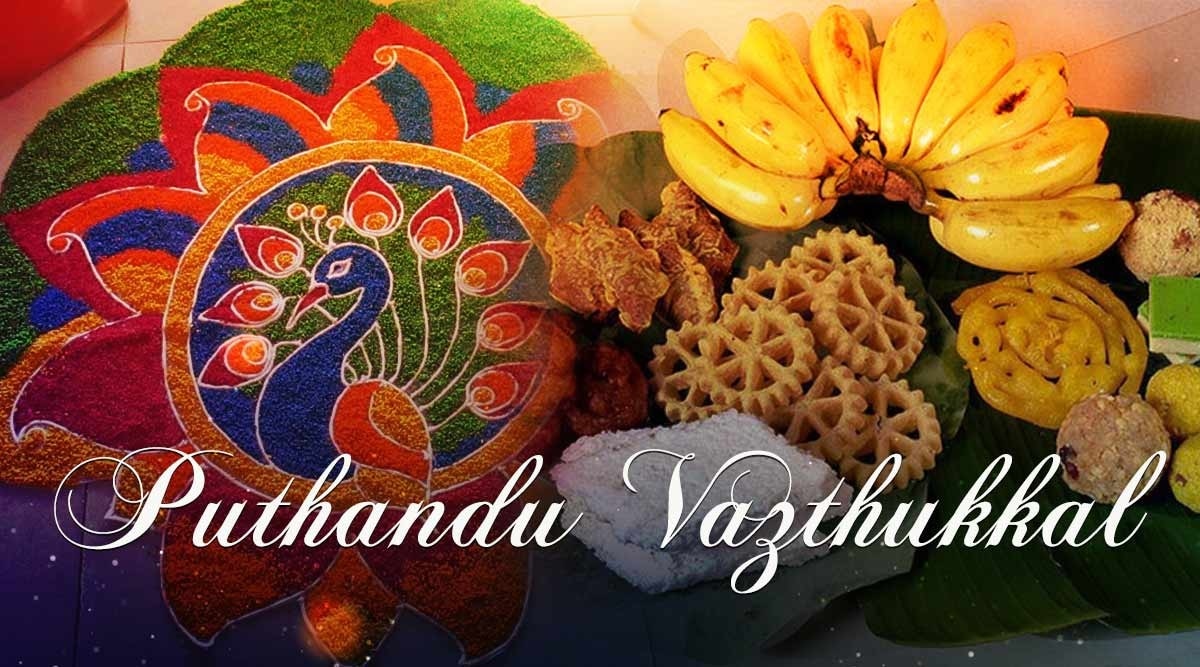
On the eve of the New Year or Puthandu, a tray arranged with three fruits (mango, banana and jack fruit), betel leaves and arecanut, gold/silver jewellery, coins/money, flowers and a mirror. This is similar to the Vishu new year festival ceremonial tray in Kerala. According to the Tamil tradition, this festive tray is auspicious as the first sight upon waking on the new year day. Home entrances are decorated elaborately with colored rice powder designs called kolams.

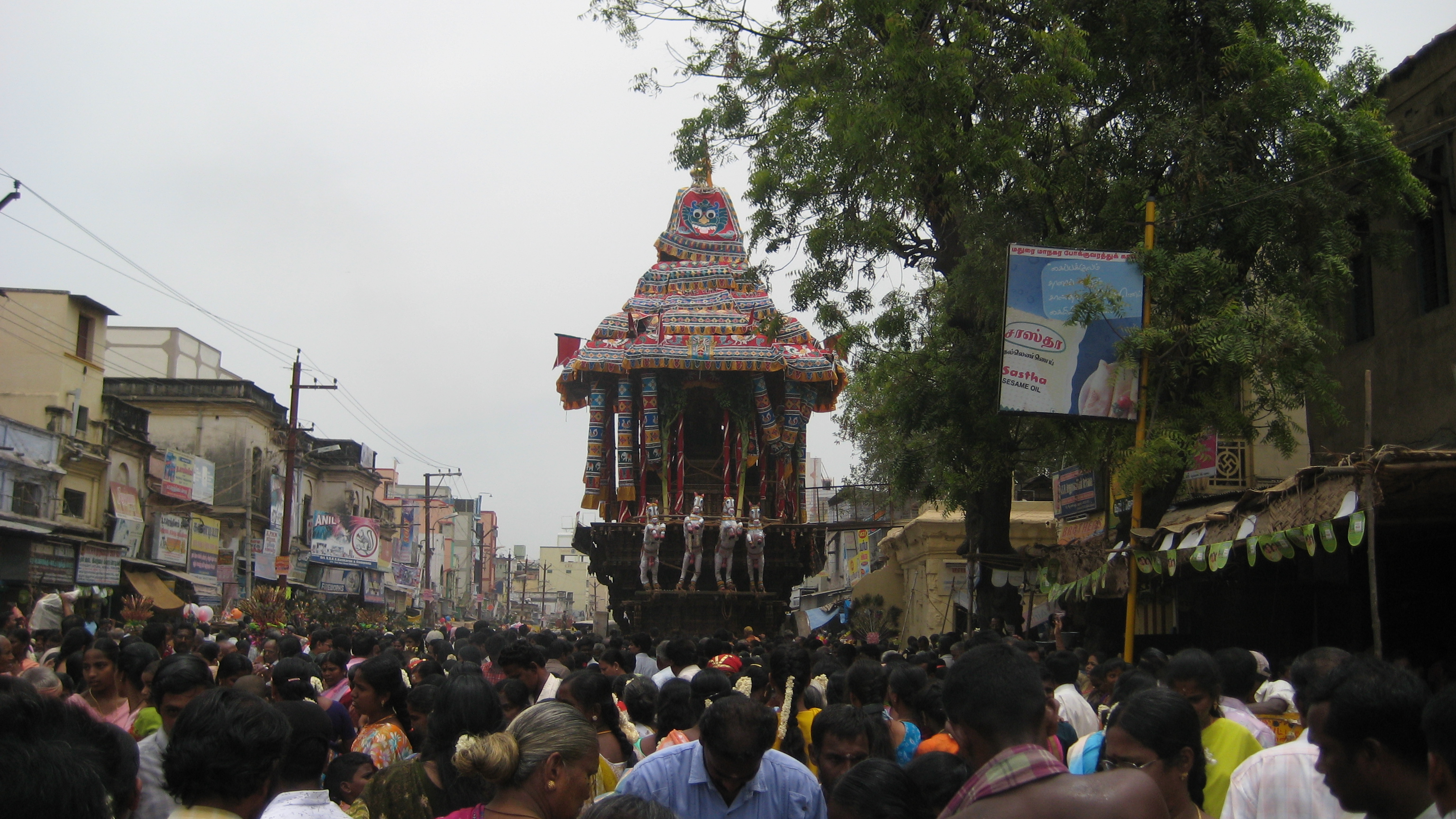
In the temple city of Madurai, the Chitterai Thiruvizha is celebrated in the Meenakshi Temple. A huge exhibition is held, called Chitterai Porutkaatchi. On the day of the Tamil New Year, a big Car Festival is held at Tiruvidaimarudur near Kumbakonam. Festivals are also held at Tiruchirapalli, Kanchipuram and other places.

In Sri Lanka, the Tamils observe the traditional new year in April with the first financial transaction known as the Kai-vishesham. In this transaction children go to elders to pay their respect, and elders give their blessings and gift pocket money to the children in return. The event is also observed with the ‘arpudu’ or the first ploughing of the ground to prepare for the new agricultural cycle. The game of ‘por-thenkai’ or coconut wars between youth is played in villages through the Tamil north and east of the island while cart races are also held. The festive Puthandu season in April is a time for family visits and the renewal of filial bonds. It also coincides with the Sinhalese new year season and so is a time of joy and celebration throughout the island.

During the festive lunch that day, families eat dishes which are a combination of all flavours – sweet, sour, bitter and pungent. This is usually in the form of a mango pachadi or salad since mangoes would have started to come into season by this time. These traditional recipes combining different flavours are a symbolic reminder that one must expect all flavors of experiences in the coming new year, that no event or episode is wholly sweet or bitter, experiences are transitory and ephemeral, and to make the most from them.

In our temple in Matunga, we also have the head priests of the temple reach the annual Panchangam or calendar or alamanc for the coming year. The priest will also interpret any interesting configurations of the stars and planets and let know know which nakshatras or stars and rashis or zodiac signs would likely to be affected or blessed in the coming year. This is only a very general and cursory reading, but is something my parents look forward to each year. This year, with the country under lockdown, they will not be partaking in this activity.

To everyone celebrating their new year these days, here’s wishing you a very Happy New Year and may the coming year put to rest all the calamities of the old year and bring you and your families happiness and prosperity!

Festivals of India: Hanuman Jayanti

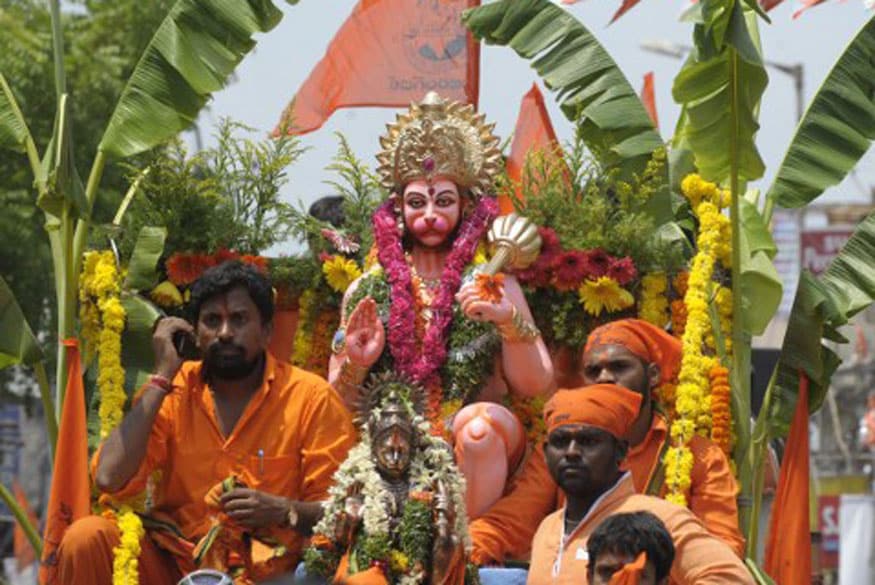
Celebrating the birth of India’s ancient superhero, Hanuman Jayanti is celebrated on different days in different parts of India. In most states of India, the festival is observed either in Chaitra, usually on the day of Chaitra Pournimaa or in Vaishakha, while in a few states like Kerala and Tamil Nadu, it is celebrated in the month Dhanu, also called Margazhi in Tamil. The date of Hanuman Jayanti varies from year to year and across India, various states and communities celebrate it in different times of the year. Communities in South India usually celebrate this festival during the Margazhi month of Moola Nakshathram as that month is believed to be when Hanuman was born. Telangana and Andhra Pradesh, however, celebrate Hanuman Jayanti from Chaitra Purnima to the tenth day of Krishna Paksha in the month of Vaishaka. Maharashtra places the holiday on the full moon day during the month of Chaitra.This year, the festival is celebrated today, the 8th of April, across India, Nepal, Sri Lanka and across the world where his devotees reside.

Also known as Sankatmochan, Dukhbhanjan, Maruti Nandan or Pawanputra, Lord Hanuman is an ardent devotee of Lord Sri Rama and is widely known for his unflinching devotion to Sri Rama. He is said to be able to assume any form at will, wield the mace or gada as well as many other celestial weapons, lift and move mountains, dart through the air, seize the clouds and equally rival Garuda in the swiftness of flight. Hanuman is seen as a symbol of strength and energy and also someone to turn to when a devotee is in difficulty.

Source

On Hanuman Jayati, devotees of Lord Hanuman celebrate him and seek his protection and blessings. They flock to temples to worship him and present religious offerings. In return, The devotees receive Prasad or the holy offering by the temple priests as sweets, flowers, coconuts, tilak, sacred ash and holy water. People also celebrate him on this day by reciting various devotional hyms and prayers like the Hanuman Chalisa and reading holy scriptures like the Ramayana and Mahabharata. Lord Hanuman is said to be the epitome of belief, trust and devotion. On this day, devotees pray to imbibe these qualities in their lives and lead a principled life.

Source

Lord Hanuman was born on the Anjaneri mountain. His mother Anjana was an apsara who was born on earth due to a curse. She was redeemed from this curse on giving birth to a son. The Valmiki Ramayana states that his father Kesari was the son of Brihaspati, he was the King of a place named Sumeru. Anjana performed intense prayers lasting 12 long years to Shiva to get a child. Pleased with their devotion, Shiva granted them the son they sought. Hanuman, in another interpretation, is the incarnation or reflection of Shiva himself.

Hanuman is often called the son of the deity Vayu or the Wind God; several different traditions account for the Vayu’s role in Hanuman’s birth. One story mentioned in Eknath’s Bhavartha Ramayana from the 16th century which states that when Anjana was worshiping Shiva, the King Dasharatha of Ayodhya was also performing the ritual of Putrakama yagna in order to have children. As a result, he received some sacred pudding or payasam to be shared by his three wives, leading to the births of Rama, Lakshmana, Bharata, and Shatrughna. By divine ordinance, a kite snatched a fragment of that pudding and dropped it while flying over the forest where Anjana was engaged in worship. Vayu, the Hindu deity of the wind, delivered the falling pudding to the outstretched hands of Anjana, who consumed it. Hanuman was born to her as a result. Another tradition says that Anjana and her husband Kesari prayed Shiva for a child. By Shiva’s direction, Vayu transferred his male energy to Anjana’s womb. Accordingly, Hanuman is identified as the son of the Vayu

Another story of Hanuman’s origins is derived from the Vishnu Purana and Naradeya Purana. Narada, infatuated with a princess, went to his lord Vishnu, to make him look like Vishnu, so that the princess would garland him at swayamvara or the husband-choosing ceremony. He asked for ‘Hari Mukh’ (Hari is another name of Vishnu, and mukh means face). Vishnu instead bestowed him with the face of a vanara. Unaware of this, Narada went to the princess, who burst into laughter at the sight of his ape-like face before all the king’s court. Narada, unable to bear the humiliation, cursed Vishnu, that Vishnu would one day be dependent upon a vanara. Vishnu replied that what he had done was for Narada’s own good, as he would have undermined his own powers if he were to enter matrimony. Vishnu also noted that Hari has the dual Sanskrit meaning of vanara. Upon hearing this, Narada repented for cursing Vishnu. But Vishnu told him not to repent as the curse would act as a boon, for it would lead to the birth of Hanuman, an avatar of Shiva, without whose help Rama (Vishnu’s avatar) could not kill Ravana.

Lord Hanuman is best known for his role in the epic poem and sacred text the Ramayana, which tells the story of the divine Prince Rama. Rama was sent into exile unjustly by his stepmother, Kaikeyi. While in exile, Rama’s wife, Sita, is abducted by the demon Ravana. Much of the epic poem is devoted to Rama’s determined quest to rescue Sita from Ravana. Rama successfully recovers Sita and kills Ravana with the help of the vanara or his monkey army. Rama and Sita return to the kingdom of Ayodhya and usher in a golden age of humanity. Rama, the titular character of the Ramayana, is identified as an incarnation, or avatara, of the god Vishnu.

Source

Hanuman plays a central role in the Ramayana, and his stories are nearly always tied to those of Prince Rama, also called Lord Ram. Even before Hanuman’s birth, it was predicted that he would be a devotee of Lord Ram. After he was born, Hanuman was a trouble maker who, among other feats of mischief, tried to grab the sun from the sky. In response, powerful sages cursed Hanuman and made him forget his magic powers. Hanuman became a loyal servant to Rama and a commander of Rama’s legions of monkeys. The memory of his powers was restored to Hanuman by Jambavan, the king of the bears, and as a result, Hanuman made a giant leap across the strait that lies between India and Sri Lanka, called the Palk Strait today, to steal the medicinal herbs necessary to heal the wounded in Rama’s army. When Hanuman struggled to identify the herbs, he picked up the entire mountain and brought that back to India. Before Hanuman left Sri Lanka, his tail was set on fire. Hanuman, however, used this fire to burn Sri Lanka to the ground.

Hanuman is held up as the embodiment of loyalty and devotion and these admirable traits are recognized year round at temples dedicated to Hanuman and given special attention during Hanuman Jayanti. During Hanuman Jayanti, Hindus take an early morning holy bath and either attend temples dedicated to Hanuman or perform puja at home if they have their own shrine dedicated to Hanuman. The Hanuman Chalisa is read in order to conquer evil spirits and provide mental peace to those reading and listening. People apply red powder to their foreheads in an echo of how Hanuman covered his whole body in sindoor to ensure Rama’s immortality. There is an interesting legend to why Hanuman covered his body with Sindoor. As per the legend, when Lord Hanuman found Sri Sita applying sindhūr to her forehead, He questioned her and she replied that doing so would ensure a long life for her husband, Lord Sri Rama. Lord Hanuman then proceeded to smear his entire body with sindhūr, thus ensuring Lord Sri Rama’s immortality.

Hanuman is also celebrated as a symbol of devotion, strength, magical powers and energy and also as the 11th Rudra avatara of the great god Shiva. Many devotees pray to Hanuman to be blessed with bravery, intelligence and loyalty like that which Hanuman displayed.

Hanuman is a popular god among Hindus, and his temples are often filled with monkeys who know that humans cannot harm them so long as they are on temple grounds. Hindus, however, are not the only ones who recognize Hanuman. Hanuman also appears in Buddhism, Sikhism and Jainism as well as in Indian pop culture.

Hanuman has been honored for millennia, and that fact has not changed in the modern age. Thousands still flock to his temples and wear sindoor in recognition of his devotion to Rama. Hanuman himself would likely be pleased with this. There is, after all, something perfect about the determined loyalty of Hindus to the god who was known for his faithfulness.

Here’s the divine voice of the late singer M.S. Subbalakshmi reciting the Hanuman Chalisa to end this blog post!