Schadenfreude: The Joy at Another’s Misfortune

The Japanese have a saying: “The misfortune of others tastes like honey.” The philosopher Arthur Schopenhauer called schadenfreude “an infallible sign of a thoroughly bad heart and profound moral worthlessness”, the worst trait in human nature.

We all feel happy when our favourite team wins and gloat at the other team. In an India-Pakistan cricket match, when India wins, you usually get to hear and see crackers burst with loats of gloating and I am sure it is pretty much the same on the other side when India loses a match.

There is a word for this feeling – a German word, schadenfreude which literally translates to harm-joy and is the experience of pleasure, joy, or self-satisfaction that comes from learning of or witnessing the troubles, failures, or humiliation of another. Schadenfreude is a complex emotion where, rather than feeling sympathy, one takes pleasure from watching someone’s misfortune. This emotion is displayed more in children than adults, but adults also experience schadenfreude, although generally we are able to conceal it.

I read about this word and was absolutely fascinated by it. So I decided to read up more about and the meaning behind the word.

As human beings, we know how to enjoy failures. Enjoying other people’s misfortunes might sound simple – a mere glint of malice, a flick of spite. But look closer and you’ll glimpse some of the most hidden yet important parts of our lives. We feel a sense of glee at someone’s incompetence, a self-righteous satisfaction when hypocrites are exposed and the inner triumph of seeing a rival falter. Sometimes it is easy to share our delight, but far harder to acknowledge are those spasms of relief which accompany the bad news of our successful friends and relatives. They come involuntarily, these confusing bursts of pleasure, swirled through with shame. And they worry us – not just because we fear that our lack of compassion says something terrible about us – because they point so clearly to our envy and inferiority, and how we clutch at the disappointments of others in order to feel better about our own.

Source

Researchers have found that there are three driving forces behind schadenfreude: aggression, rivalry, and social justice. Self-esteem has a negative relationship with the frequency and intensity of schadenfreude experienced by an individual; individuals with less self-esteem tend to experience schadenfreude more frequently and intensely. The reverse also holds true—those with higher self-esteem experience schadenfreude less frequently or with less emotional intensity. It is hypothesised that this inverse relationship is mediated through the human psychological inclination to define and protect their self – and in-group identity or self-conception.

Specifically, for someone with high self-esteem, seeing another person fail may still bring them a small, but effectively negligible surge of confidence because the observer’s high self-esteem significantly lowers the threat they believe the visibly-failing human poses to their status or identity. Since this confident individual perceives that, regardless of circumstances, the successes and failures of the other person will have little impact on their own status or well-being, they have very little emotional investment in how the other person fares, be it positive or negative. Conversely, for someone with low self-esteem, someone who is more successful poses a threat to their sense of self, and seeing this mighty person fall can be a source of comfort because they perceive a relative improvement in their internal or in-group standing.

Aggression-based schadenfreude primarily involves group identity. The joy of observing the suffering of others comes from the observer’s feeling that the other’s failure represents an improvement or validation of their own group’s (in-group) status in relation to external (out-groups) groups. This is, essentially, schadenfreude based on group versus group status. Rivalry-based schadenfreude is individualistic and related to interpersonal competition and arises from a desire to stand out from and out-perform one’s peers. This is schadenfreude based on another person’s misfortune eliciting pleasure because the observer now feels better about their personal identity and self-worth, instead of their group identity. Justice-based schadenfreude comes from seeing that behavior seen as immoral or bad is punished. It is the pleasure associated with seeing a bad person being harmed or receiving retribution and schadenfreude is experienced because it makes people feel that fairness has been restored for a previously un-punished wrong.

Today schadenfreude is all around us. It’s there in the way we do and view politics, how we treat celebrities, in online fail videos. Today it is probably easily felt and shared compared to earlier times. Most of us have a sense of unease while experiencing schadenfreude, but we squash it down firmly while enjoying yet another article or video about the failure of someone else, and if it is someone we don’t know, like a politician or celebrity, it somehow makes it ok. And if the suffering is because of something they said or did and is a comeuppance, it makes us feel justified as if they deserved whatever happened to them. But what about when we misjudge people? Those are the times our schadenfreude leaves feeling ackward and slightly upset at ourselves.

There has been an explosion of research. Before 2000, barely any academic articles were published with the word schadenfreude in their title, but now even a cursory search throws up hundreds, from neuroscience to philosophy to management studies. What is driving all this interest? No doubt it is partly motivated by our attempts to understand life in the internet age, where sniggering at other people, once often socially inappropriate, now comes with less risk. But could it also be that we are becoming more empathic? The capacity to attune ourselves to other people’s suffering is highly prized today, and rightly so. Putting ourselves in another’s shoes impacts on our ability to lead others, to parent, to be a decent partner and friend. And the more important empathy becomes, the more obnoxious schadenfreude seems. Schadenfreude has been called empathy’s shadow, casting the two as fundamentally incompatible. According to psychologist Simon Baron-Cohen, psychopaths are not only detached from other people’s suffering but even enjoy it. Yet schadenfreude has its benefits – a quick win which alleviates inferiority or envy; a way of bonding over the failure of a smug colleague. But it is also a testament to our capacity for emotional flexibility, our ability to hold apparently contradictory thoughts and feelings in mind simultaneously.

Living in an age of schadenfreude, we fear that this emotion can lead us astray and we really need to think with a different perspective about what this much-maligned emotion does for us, and what it tells us about our relationships with ourselves and each other.

Source

Exquisite, evocative and judgemental, schadenfreude is an inherent flaw in the human psyche, but it is a flaw we all must face up to and learn to live with if we truly want to understand life in the modern world.

The Elasticity of Time

I have been feeling this at least since June/July of last year. The days seem to be flying past. I would wake up one morning on a Monday and the next thing I know it’s Friday! The week has zipped past me without really realising it. I used to think it was just me, but on speaking with family and friends, I realised quite a few of them also felt the same. Here we are in the new year and time still seems not to stop. And in the midst of the pandemic when most of us are stuck at home, we would expect time to not pass as fast as it would during a normal time. Instead of time slowing down, it seems to be moving at wrap speed. I decided to see if this is a phenomenon and if this is scientifically true.

Time as a concept is fixed, there is a fixed number of hours in a day and day morphes into the night at a fixed time each day and is constantly moving and changing. What happens now is different from what happens in the next minute. Simply put, this minute you are reading this paragraph, but within the next sixty seconds or slightly later, you will reach the next paragraph and time has shifted.

But it has also been proven that time passes faster at the top of a mountain as opposed to at sea level. The difference is small but can be measured with precision timepieces that can be bought today for a few thousand dollars. This slowing down can be detected between levels just a few centimetres apart: a clock placed on the floor runs a little more slowly than one on a table.

Einstein understood this slowing down of time a century before we had clocks precise enough to measure it. He imagined that the sun and the Earth each modified the space and time that surrounded them, just as a body immersed in water displaces the water around it. This modification of the structure of time influences in turn the movement of bodies, causing them to “fall” towards each other.

But how does this explain why sometimes time is elastic, why sometimes time moves fast and other times it is as slow as molasses? Why when we are having a bad day, or eagerly awaiting something that will happen tomorrow, a day can feel as long as a year and when you are having fun or are on a holiday, an entire week can pass before you know it and it’s time to go back to our mundane life? This is probably what is the elasticity of time.

While researching this piece, I realised I am not the first to realise this and speak about it. While this has not yet been fully researched, some people feel that it is because we create our own subjective experience of time in our minds and it doesn’t always match up with what we read on the clock or the calendar. A 20-minute lunch with a friend goes by in a flash, while a 20-minute wait for a delayed train can feel interminable, yet in reality of course the duration is identical.

We estimate the passing of time in two ways, either prospectively by how fast is time passing right now or retrospectively by how fast did last week or the last year go by. When we are stuck at home, either in a lockdown or because we are told to work or study from home for the time being, we are stuck with those with whom we live and there are many who are isolated from family and friends and we have the long days to fill up. While work takes a big chunk of our time, we have also found other ways to pass time for when we are not working. We do that by rediscovering our hobbies, watching content online or on television, speaking with family and friends and other ways to fill those hours which we would have otherwise used for socialising. But inevitably, the days start to look and feel a little similar. Weekdays and weekends blend together and we find it hard to distinguish between them and there are many days when I have woken up and it has taken me some time to think about what day it is.

This blurring of days who all look the same leads us to create fewer new memories, which is crucial to our sense of time perception. When each day is either the same or similar to the previous one and the one before that, we fail to distinguish between them. Memories are one of the ways that we judge how much time has passed and so when days look similar or even identical, it just feels like one long day and with nothing to really distinguish between our weekdays and weekends, months go by before we have something new to add to our memory bank. It’s like when we go on a holiday to a new place, time seems to zip by there because everything is new, and when we get home and look back, because there are so many memories of the holiday, it feels like we’ve been away longer that we actually did.

During times like the pandemic, it’s the opposite that happens. Now, if we get to the end of the week and look back, because we have hardly any new memories made, time seems to disappear. It’s a less extreme version of the experience some people have while in prison or when they’re ill. Time passes painfully slowly and they long for it to be over, but when it is and they look back, time can feel as though it has contracted. Of course some of us have found ourselves busier than ever during this period, juggling the technological challenges of working from home with the new job of home-schooling children. So even though we may be busier than ever, we spend all our time at home and this means we don’t have many memories which are not associated with another place or location and this makes us feel that time has just zipped by. Dozens of Zoom calls from the same surroundings can start to merge into one compared with memories of real life where we see people in different places.

Our perception of time in the future has also altered. Pre-pandemic, we thought of the near future when we would take holidays plan for or other events in our lives. But today, we either look to the far future when all this is over or to the immediate future, perhaps planning on what to cook for lunch the next day. Once the pandemic is over, will we look back and see it as one chunk of time or will we be able to distinguish the various months of 2020? I do remember the time in January when Singapore reported its first case. This was just after we went for S’ cousin’s engagement over in Johor Bahru in Malaysia. That was the last time we went out anywhere significantly other than for errands and that day stands out in stark contrast to the rest of the year.

So what do you think of your time during this pandemic? Did time zip past you or was it slow as molasses? Do comment and let me know.

World Braille Day

Many years ago when I was in college, we used to have many visually handicapped students studying there. This was because it was one of the few colleges which had a fully functioning braille library and I remember them starting to add more books and resources to the library. This library was right next to the main college library and we also used to get students from other colleges come to use these resources. At one point, I was also recruited by a friend to act as a writer to a visually handicapped student for the final exam. My experience there was not very good as the student I got was not interested in the exam and since it was my subject and the student was a junior, they used to ask me to write the exam for them with no input from their side for each question. I refused to do so after the first question and the experience ended badly for me. But I did see sincere students who had prepped for the exams and even today, I remember this student who had so much to say that the student writer assigned to them had a cramped hand at the end of the exam!

Today is World Braille Day and this post is apt for the day. Celebrated since 2019, World Braille Day is observed to raise awareness of the importance of Braille as a means of communication in the full realisation of the human rights for blind and partially sighted people.

A tactile representation of alphabetic and numerical symbols using six dots to represent each letter and number, and even musical, mathematical and scientific symbols, Braille, named after its inventor in 19th century France, Louis Braille is used by blind and partially sighted people to read the same books and periodicals as those printed in a visual font. Braille is essential in the context of education, freedom of expression and opinion, as well as social inclusion.

Eye conditions are remarkably common. The World Health Organization estimates that globally 36 million people live with blindness and 216 million people have moderate to severe visual impairment. Persons with vision impairment are more likely than those without to experience higher rates of poverty and disadvantage. Vision loss often represents a lifetime of inequality, poorer health, and barriers to education and employment. In November 2018, it was decided to proclaim 4 January as World Braille Day, recognising that the full realisation of human rights and fundamental freedoms relies on an inclusive written promotion. Why 04 January? Because it is the birth anniversary of Louis Braille

World Braille Day is a reminder of the importance of accessibility and independence for people who are blind or visually impaired. Today’s reality is that many establishments such as restaurants, banks, and hospitals don’t offer braille versions of their print materials like menus, statements, and bills. Because of this, people with blindness or visual impairments often don’t have the freedom to choose a meal on their own or keep their finances private. This day spreads awareness about braille and other accessible forms of communication. It makes a visually impaired person be able to access educational opportunities and employment, be independent and be able to communicate with family, friends and society. Everyone deserves and is legally entitled to the same accommodations and service, regardless of ability. Let’s remember that and do our part to make our workplaces and community areas more accessible for everyone.

World Braille Day signifies inclusion and diversity. It is important to celebrate such days so that children become aware that people are different and unique, gaining an awareness of varying needs and requirements. Through celebrating days like this, it helps children raise important questions about additional needs and expands their knowledge of different people in our society.

The 2020 Words of the Year are…

2020 is finally over. Happy New Year! Welcome 2021 and hope this year we finally see an end to all the suffering worldwide!

2020 has been a year like no other we have seen in our lifetime for which there is no precedent in living memory. And every year, most dictionaries put out what they feel is the most important word for the year, something that encapsulates what the year has been. The German tradition, Wort des Jahres was started in 1971. The American Dialect Society’s Word of the Year is the oldest English-language version, and the only one that is announced after the end of the calendar year, determined by a vote of independent linguists, and not tied to commercial interest. However, various other organisations also announce Words of the Year for a variety of purposes.

A Word of the Year is a word or expression that has attracted a great deal of interest over the last 12 months with shortlisted words hotly debated by llexicographers, editors and even the public involved in choosing the word that is judged to reflect the ethos, mood, or preoccupations of that particular year and to have lasting potential as a word of cultural significance. So the word of the year is one which sums up the state of the world succiently and defines it.

For the first time, the Oxford Dictionary did not come up with a word for 2020 because according to them, it quickly became apparent that 2020 was not a year that could neatly be accommodated in one single “word of the year”, so they decided to report more expansively on the phenomenal breadth of language change and development over the year in their Words of an Unprecedented Year report. This report examines, in detail, the themes that were a focus for language monitoring in 2020, including Covid-19 and all its related vocabulary, political and economic volatility, social activism, the environment, and the rapid uptake of new technologies and behaviours to support remote working and living.  One of the year’s most remarkable linguistic developments, according to them, has been the extent to which scientific terms have entered general discourse, as we have all become armchair epidemiologists, with most of us now familiar with term like R number, flatten the curve and community transmission. You can download the report from here.

The Cambridge Dictionary has chosen Quarantine as their Word for 2020. According to their data, it was one of the most highly searched words on the Cambridge Dictionary this year. Quarantine was the only word to rank in the top five for both search spikes and overall views, more than 183,000 by early November, with the largest spike in searches at 28,545 searches seen the week of 18-24 March, when many countries around the world went into lockdown as a result of COVID-19. Noticing this spike in searches, the Cambridge Dictionary editors started to research how people were using the word quarantine, and found a new meaning emerging: a general period of time in which people are not allowed to leave their homes or travel freely, so that they do not catch or spread a disease. Research showed the word was being used synonymously with lockdown, particularly in the United States, to refer to a situation in which people stay home to avoid catching the disease. This new sense of quarantine has now been added to the Cambridge Dictionary, and marks a shift from the existing meanings, which relate to containing a person or animal suspected of being contagious. The two runner-up words to the word of the year was predictable – lockdown and pandemic. To know more, here is a short video.

Over at the Mariam Webster Dictionary, Pandemic was the word of the year chosen by them. According to Peter Sokolowski, editor-at-large for Merriam-Webster, this year the word pandemic is not just technical anymore, but has become a word in general usage and is probably the word which will be used to define this period and searches for the word pandemic on March 11 2020 were 115,806% higher than look-ups experienced on the same date in 2019. The word Pandemic, with roots in Latin and Greek, is a combination of the word pan, which means for all, and demos, for people or population. The latter is the same root of democracy and the word pandemic dates to the mid-1600s, used broadly for universal and more specifically to disease in a medical text in the 1660s, after the plagues of the Middle Ages. According to Sokolowski, the the traffic for pandemic was attributed not entirely to searchers who didn’t know what it meant but also to those on the hunt for more detail, or for inspiration or comfort.

The online dictionary, Dictionary.com also had Pandemic as its word of the year for 2020. An overwhelming choice, the word kept running through the profound and manifold ways our lives have been upended — and our language so rapidly transformed—in this unprecedented year. On March 11 when the WHO declared the COVID-19 as a pandemic, when only 4,291 lives were lost around the world, searches for pandemic skyrocketed 13,575% on Dictionary.com compared to 2019. The search volume for pandemic sustained the highest levels on the site over the course of 2020, averaging a 1000% increase, month over month, relative to previous years. Because of its ubiquity as the defining context of 2020, it remained in the top 10% of all lookups for much of the year since.

2020 has changed our vocabulary in ways that cannot be fathomed. Words that were previously scientific in nature have now become commonplace and are used in daily usage. Languages are constantly evolving but I don’t think there has been so many changes in such a short period. 2020 will be a year most of us will never forget, for many reasons and the pandemic that COVID-19 brought will be the foremost reason. This is a year, every one, including children will recount to their children and grandchildren and I pray that the future generations learn from our mistakes and don’t repeat them.

2020 Reflections

Most years I usually do a reflection for the year, which is part of my weekly update, but this year, because of how this year was, I thought it warranted a post all by itself.

2020 has been an extremely challenging year for each and every one of us, irrespective of where in the world you live in and what you do. This year we saw the COVID-19 pandemic hit pretty much every nation on earth and this is something none of us saw anything like this before. Not wars, not recessions and no other natural catasrophes came close to shutting down the world like COVID-19 has done.

Singapore went into a circuit breaker or lockdown for two months first in April and that was when S started working from home. The children had already been home for a few months by then since school had not yet started for them. They started their first year of school online and are a bit sore that orientation and other activities traditionally offered to incoming students were either cancelled, offered online or extremely abbreviated. They could not really make friends because they only saw their classmates face to face after months and either formed groups for projects randomly or as assigned to by teachers. They have now made friends within their project groups and they slowly start going back to face-to-face lessons, more for BB than GG, given their respective courses, they are making more friends and getting more used to poly life.

S started working from home sometime in April when the circuit breaker was instituted and has continued to do till now. He is someone who probably does not work well at home, so the initial days were a bit hard on him. He needs to feed off his colleagues and friends at work, and not having colleagues next to him or being able to meet them for a coffee chat or join them for lunch was hard. I am sure this is something a lot of people, baring introverts like me, would have and are facing with not much interaction with colleagues and friends.

As for me, life went on pretty much as usual, though I did lose some employment opportunities and clients because organisations were scaling down following loss of income during this period. But I can’t complain much as I was doing what I was doing pre-COVID, only this time with a house full of people.

For the first time, other than holidays, I had a house full of people living with each other 24/7. GG & BB are grown up now, so I don’t have to pander to them all the time and neither do I have to be behind them for online classes. They are fairly independent and are able to get their own work done and on time. But being the kind of mother that I am, I do keep a close eye on their work and especially during exams and their exam schedule and do make sure at least during this time they spend more time studying.

But my biggest takeaway this year has to be meditation. I have been meditating on and off for a few years now, though I have to say it was more off than on. Around April, I came across an app which was offering the full suite of their offerings free for a year and I took it up. I used to meditate at night before bed and started doing the same. Then I realised that this was why I was not regular, so started meditating in the morning. I usually get up 30 minutes before everyone else and use this time, when everything is quiet and dark to do my daily meditation. And this was what worked best for me. Today, I have been meditating for about nine months now and have not gone a single day without doing some form of meditation or the other. While I will not continue with the app I first used once the free period is over, I will continue with the meditation lessons I have learnt from it and also use other free apps. Meditation has allowed me to become more calm and collected and the things that used to irritate me previously do not as much today. Meditation has now become a part of my life and if I don’t meditate for a few minutes each morning, I feel something is missing that day. I am hopeful that I carry this habit over to 2021 onwards.

I have also introspected a lot this year and have decided that I will not tolerate negativity in my life. I am slowly started eliminating people and things that cause negativity and am taking small baby steps and slowly but surely will get there. We already have too much going on in our lives and to have negative thoughts, ideas and adding negativity to the mix makes life harder. Why do we do this to ourselves was a question I asked myself and the answer was an obvious no.

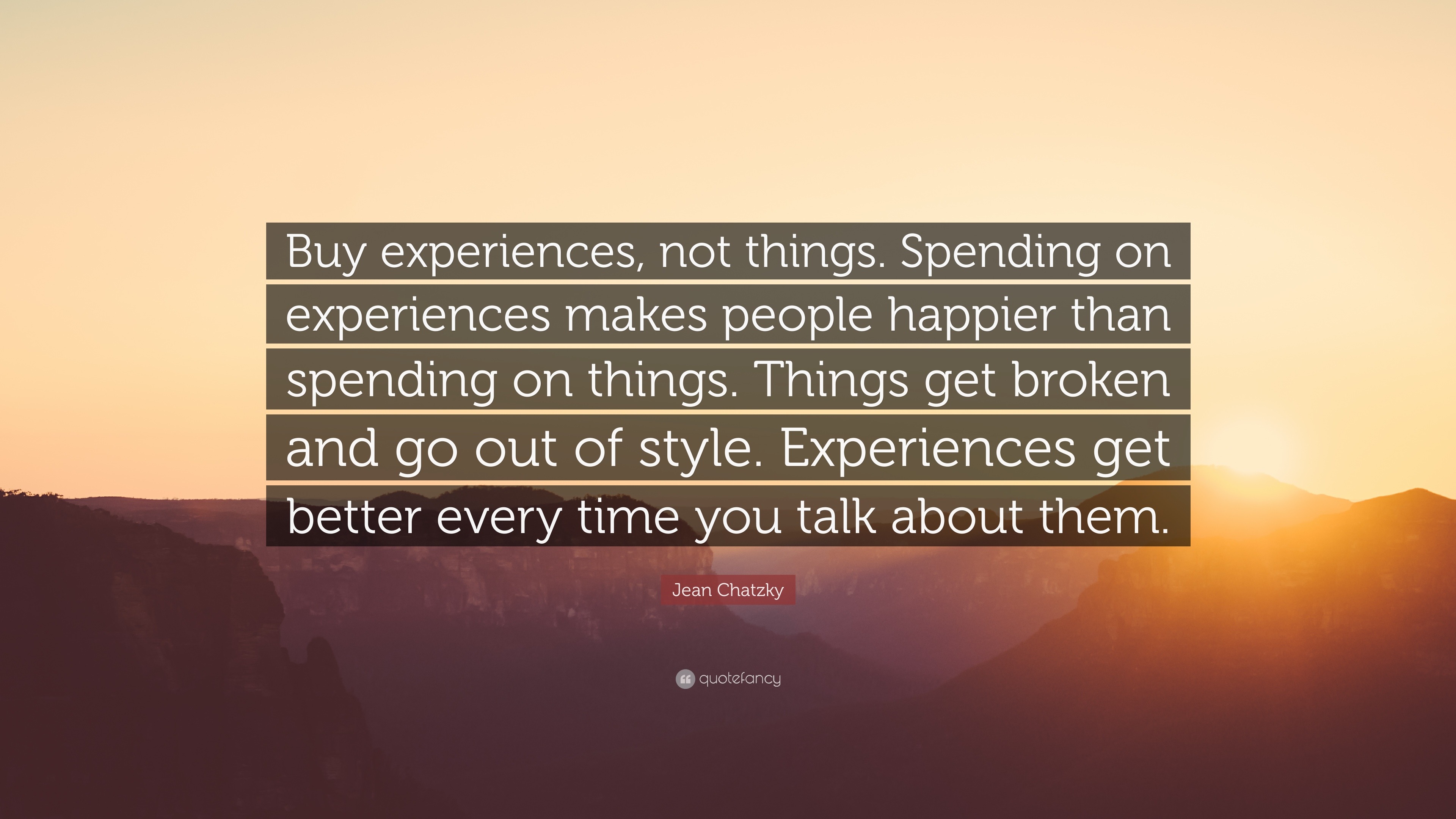
As I grow older I am also slowly realising the beauty of minimalism. This year, when we hardly left the house and din’t wear makeup and new clothes, I started questioning the need for uncontrolled materialism. I have always been someone who valued experiences over things, so this was not a huge shift in  thinking, but still it was a move in curbing impulse buying. I have very consciously tried not to buy anything new until and unless I really need it. And I am also trying to wait a few days before something so I can check in with myself to see if it is a need or a want, a luxury or a necessity.

2020 has brought about many changes in our lives – both personal and professional. We all have learnt that those who want to work from home are not slacking and in fact, working from home can make you more productive than an office. We have also learnt to live with ourselves and our loved ones. We have learnt that family is important and so are close friends who are the family you choose. We have learnt new normenclatures and new words and phrases have been added to our vocabulary.

My hope for 2021 is a very simple one. For one, I want the world to heal, for the vaccine to generate herd immunity to the disease, so we can all move on and live our lives. I want travel to resume so I can go and visit my parents and make what would probably one of my last trips to my hometown of Mumbai. I also want us to continue being a kinder world that we are today. The world we live in is already very fractured and the kindness generated by people this year should go on as we enter a new year so we continue to help our fellow human beings.

Happy 2021 folks! May this year bring joy, health and happiness to you and your loved ones!