Poem: What is Happiness

I was pondering about what makes us happy the other day and this poem was the result of that rumination. Happiness is that feeling that comes over you when you know life is good and you can’t help but smile. It’s the opposite of sadness. Happiness is a sense of well-being, joy, or contentment. When people are successful, or safe, or lucky, they feel happiness.

What is Happiness

What is happiness I ask you?
It is the spark from within which lights up your entire being
It is that essence that fills up and bring a smile so you want to sing

What is happiness I ask you?
It is the joy that springs forth and bubbles
Infecting everyone around with that same joy and chortles

What is happiness I ask you?
It is seeing that same happiness reflected in others
It is looking at someone and wordlessly knowing all the answers

What is happiness I ask you?
It is being content and satisfied
It is living a life in the present and with pride

What is happiness I ask you?
It is being with friends and family
It is being loved unconditionally

What is happiness I ask you?
It is spreading the same joy and happiness everywhere
For happiness is shared, is when you become a happiness billionaire

World Population Day

Source

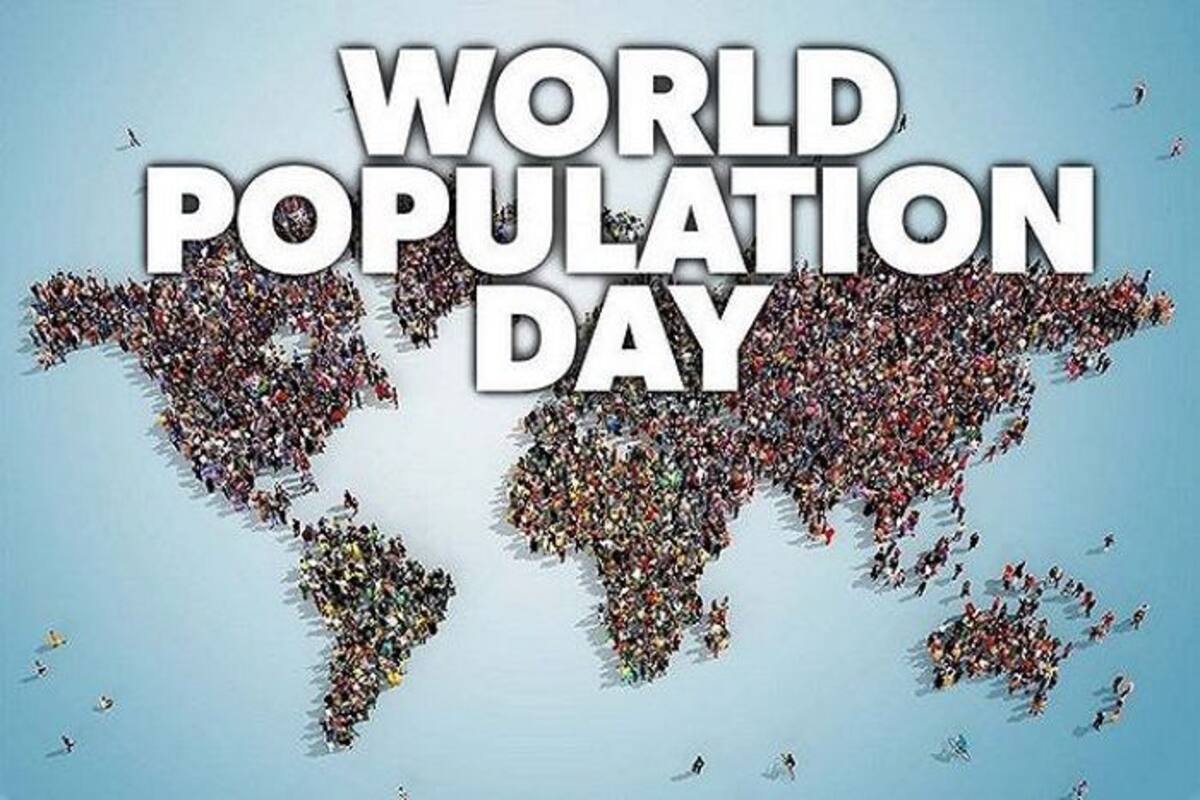
On Sunday the world celebrated the World Population Day. This day, which is observed annually on July 11 to raise awareness of global population issues. Established in 1989, the event was inspired by the public interest in Five Billion Day on July 11, 1987, the approximate date on which the world’s population reached five billion people. The World Population Day aims to increase people’s awareness on various population issues such as the importance of family planning, gender equality, poverty, maternal health and human rights. The suggestion of the day came from Dr. K. C. Zachariah, a senior demographer at the World Bank.

While press interest and general awareness in the global population surges only at the increments of whole billions of people, the world population increases annually by 100 million approximately every 14 months. The world population today is close to 7.9 billion and we add about 220,000 people to our world every single day! So on World Population Day, advocates from around the world call on leaders, policymakers, grassroots organisers, institutions and others to help make reproductive health and rights a reality for all.

It took hundreds of thousands of years for the world population to grow to 1 billion, then in just another 200 years or so, it grew sevenfold. In 2011, the global population reached the 7 billion mark, and today, it stands at about 7.8 billion, and it’s expected to grow to around 8.5 billion in 2030, 9.7 billion in 2050, and 10.9 billion in 2100. This dramatic growth has been driven largely by increasing numbers of people surviving to reproductive age, and has been accompanied by major changes in fertility rates, increasing urbanization and accelerating migration. These trends will have far-reaching implications for generations to come. In addition, the world is seeing high levels of urbanization and accelerating migration. 2007 was the first year in which more people lived in urban areas than in rural areas, and by 2050 about 66 per cent of the world population will be living in cities.

So why is population an important topic? The human race has an enormous impact on this planet. We control and modify the Earth more than any other species. How do we meet the needs of human beings and also preserve Earth’s finite resources, biodiversity, and natural beauty? This is the fundamental question of our time, and the challenge is becoming more critical as we continue to add more people. The world is vastly overpopulated and research conducted by the Global Footprint Network suggests that about 2 to 3 billion people is the number the planet can sustainably support, if everyone consumes the same amount of resources as the average European, which is about 60% the amount of the average American. U.N. experts predict that, unless we change course, world population will continue increasing until after 2100, with a most likely prediction of 10.9 billion people by the year 2100.

Worldwide, the average number of children per family has come down over the last 50 years, from more than 5 per woman to around 2.3, but the current average is still above replacement level, which would be 2.1 children per woman, and the number of women having children is about twice what it was in 1960. There is also huge demographic momentum since over 2/5 of the world’s population is 24 years or younger, either having children now, or poised to have them in the next 10 to 15 years and any changes we make today may not have a visible effect until a generation has passed.

Finally, people are living longer all over the world and will continue to do so, with a resultant slowdown in death rates. Thus, there’s a big imbalance in the birth to death ratio: currently more than 2 births for every 1 death worldwide.

These megatrends have far-reaching implications. They affect economic development, employment, income distribution, poverty and social protections. They also affect efforts to ensure universal access to health care, education, housing, sanitation, water, food and energy. To more sustainably address the needs of individuals, policymakers must understand how many people are living on the planet, where they are, how old they are, and how many people will come after them.

The theme for 2021 is focussed on COVID-19 and its impact specifically on safeguarding the health and rights of women and girls. The COVID-19 crisis has taken a staggering toll on people, communities and economies everywhere. But not everyone is affected equally. Women, who account for the largest share of front-line health workers, for example, are disproportionately exposed to the coronavirus. Supply chains around the world are being disrupted, impacting the availability of contraceptives and heightening the risk of unintended pregnancy. As countries are on lockdown and health systems struggle to cope, sexual and reproductive health services are being sidelined and gender-based violence is on the rise. Recent UNFPA research highlighted that if the lockdown continues for 6 months with major disruptions to health services, then 47 million women in low- and middle-income countries may not be able to access modern contraceptives resulting in 7 million unintended pregnancies. 31 million additional cases of gender-based violence can also be expected. The disruption of UNFPA’s programmes on the ground could result in 2 million cases of female genital mutilation and 13 million child marriages between 2020 and 2030 that could have been averted. Moreover, women disproportionately work in insecure labour markets and are harder hit by the economic impacts of COVID-19. Nearly 60 percent of women worldwide work in the informal economy, at greater risk of falling into poverty. Women’s unpaid care work has increased as a result of school closures and the increased needs of older people. The pandemic is hitting marginalised communities particularly hard, deepening inequalities and threatening to set us back in efforts to leave no one behind. Country responses to COVID-19 everywhere is critical and will determine how fast the world recovers.

So in honour of this day, spread the word anout the dangers of overpopulation and it’s impact on our world. This world, which we will leave to our children and grandchildren should be one that can sustain them and their desendents.

My Favourite Books as a Child

I have always loved reading and my earliest memories are either reading or looking for something to read. Growing up in the mid to late seventies and eighties in India meant that other than the school library and maybe friends, access to books was limited. But I still managed to read, sometimes resorting to newspapers and magazines to feed my reading addiction.

I was always reading one to two grades higher than my peers and by the time I was in grade seven and eight, I remember being allowed the read from the adults’ section in my school library. This was a locked cupboard from which teachers and other staff were allowed to borrow books and I started reading books from authors like George Orwell then. I think I was probably the only student at that time who was accorded this privilege.

But this post is about my favourite books I enjoyed as a child, so let’s dive right in.

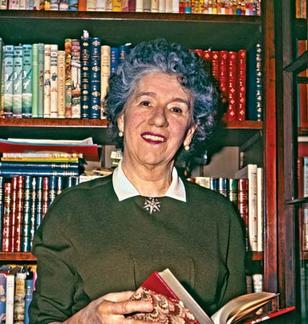
The earliest books I read and loved are those written by Enid Blyton. An English children’s author, Enid Mary Blyton who died in 1968 has written books since the 1930s and whose books have sold more than 600 million copies and have been translated into 90 languages and as of June 2018, is in 4th place for the most translated author.

My first introduction to Blyton’s books was the Faraway Tree series. The stories take place in an enchanted wood in which a gigantic magical tree, the Faraway Tree grows. The tree is so tall that its topmost branches reach into the clouds and it is wide enough to contain small houses carved into its trunk. The wood and the tree are discovered by three children named Jo, Bessie and Fanny, later updated to Joe, Beth and Frannie, who move into a house nearby and go on adventures to the top of the tree along with the inhabitants of the tree, some whom befriend the children. As I am writing this, a memory pops into my head. I must have been five or six and we were travelling down south to my paternal grandmother’s ancestral village to attend a wedding by train. I can still remember the title of the book I was reading, which was The Magic Faraway Tree and the 24-hour journey (at least the time spent in reading) flew past in a jiffy!

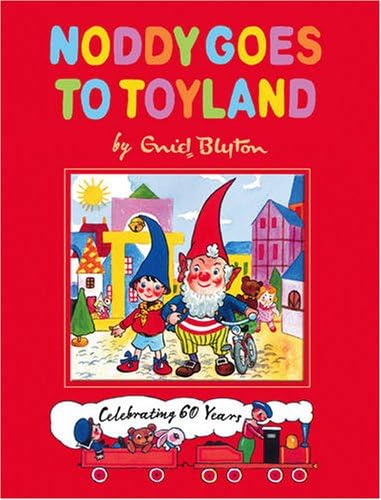
I have also read a few of the Noddy books, but don’t have any great memory of reading them. Noddy was made by a woodcarver in a toy store but runs away after the man begins to make a wooden lion, which scares Noddy. As he wanders through the woods naked, penniless, and homeless, he meets Big Ears, a friendly gnome who decides that Noddy is a toy and takes him to live in Toyland. The other toys can hear him coming by the distinctive Parp Parp sound of his car’s horn and the jingle of the bell on his blue hat. Noddy’s best friends are Big Ears, Tessie Bear, Bumpy Dog, and the Tubby Bears. Noddy has many run-ins with Mr Plod, the local policeman.

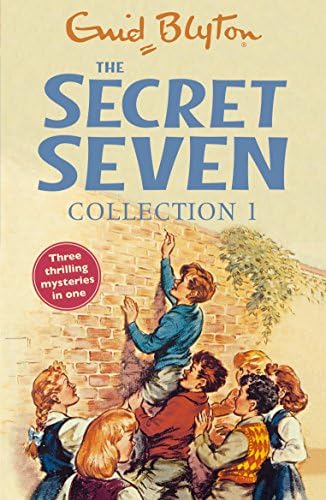
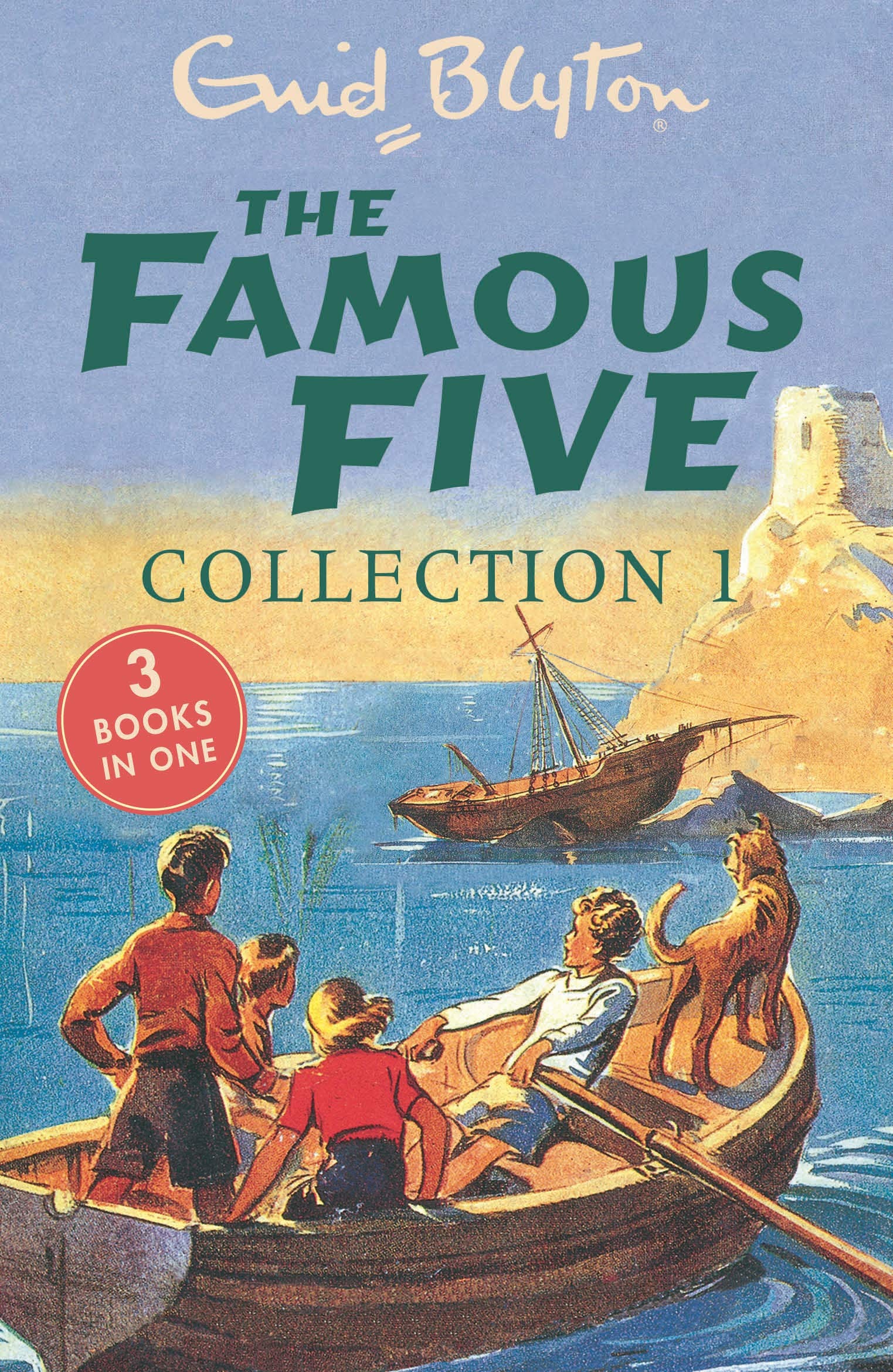
I then graduated to reading Blyton’s mystery books like the Secret Seven, the Five Find-Outers and the Famous Five. Of the three, my favourite was the Five Find-Outers mainly because one of the characters used to disguise himself to solve the case. I read these books more or less during my primary school days.

The Secret Seven is a group of child detectives consisting of Peter, the leader, Janet who is Peter’s sister, Pam, Barbara, Jack, Colin and George. Jack’s sister Susie and her best friend Binkie make occasional appearances in the books who they hate the Secret Seven and delight in playing tricks designed to humiliate them, although this is partly fuelled by their almost obsessive desire to belong to the society. Unlike most other Blyton series, this one takes place during the school term time because the characters go to day schools.

The Famous Five is a series of children’s adventure novels featuring the adventures of a group of young children, Julian, Dick, Anne and Georgina or George and their dog Timmy. The stories take place in the children’s school holidays after they have returned from their respective boarding schools. Each time they meet they get caught up in an adventure, often involving criminals or lost treasure, sometimes close to George’s family home at Kirrin Cottage in Dorset. George’s home and various other houses the children visit or stay in are hundreds of years old and often contain secret passages or smugglers’ tunnels. All the novels have been adapted for television, and several have been adapted as films in various countries.

My favourite, the Five Find-Outers is set in the fictitious village of Peterswood. The children, Larry or Laurence Daykin, Fatty or Frederick Trotteville, the leader of the group, Pip or Philip Hilton, Daisy or Margaret Daykin, Bets or Elizabeth Hilton and Buster, Fatty’s dog, encounter a mystery almost every school holiday, always solving the puzzle before Mr Goon, the unpleasant village policeman, much to his annoyance.

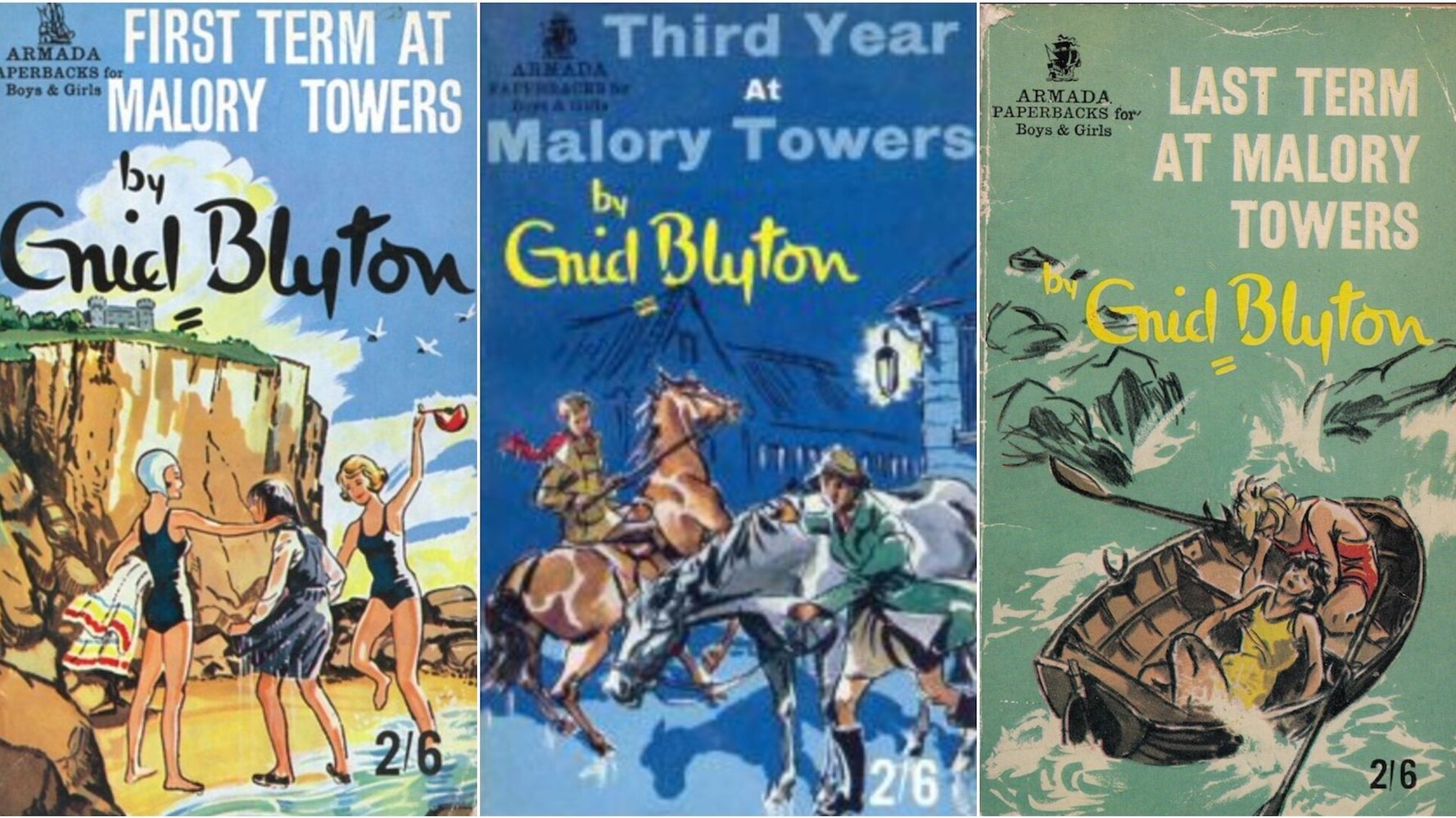
Another set of books written by Enid Blyton I loved were her school series, Malory Towers and St. Clare’s. I have read both the series throughout my school days and when GG was in primary school, I introduced them to her and she was as hooked as I was. Reading these books always made me wish I was in a boarding school with all the fun that the girls had. My friends and I would try to recreate their world in our school.

Malory Towers is a series of six novels based on a girls’ boarding school that Blyton’s daughter attended, Benenden School, which relocated during the war to the Cornish seaside. The series follows the protagonist, Darrell Rivers, on her adventures and experiences in boarding school. Darrell Rivers begins her first year at Malory Towers, a castle-like clifftop boarding school in Cornwall. Determined to do well and make friends, her first term is turbulent and the first book ends with Darrell becoming best friends with Sally Hope. Darrell eventually covers herself in the personal, scholastic and sporting glory that was originally expected of her and is head of the fourth form, games captain of the fifth, and head girl in her final year as well as being a successful lacrosse and tennis player. When she is in the fourth form, her younger sister, Felicity, joins her as a first former at the school. From then up until the last book in the original series, the focus is also on Felicity and the rest of her form. At the end of her school life, Darrell is bound for the University of St Andrews with Sally, Alicia, and her friend Betty. She puts her younger sister Felicity in charge of upholding the standard that she and her classmates set. The second series follows Felicity from the third year to her final term.

St. Clare’s is a series of nine books about a boarding school of the same name. The series follows Patricia or Pat and Isabel O’Sullivan from their first year at St. Clare’s. The series had the girls up to the usual English boarding school antics like the Malory Towers and we aspired to be like them.

Once I had finished the teenage detective books, I moved to slightly older books, and the timeline is roughly the time I was about 10 to about 12-13 years. I read the Nancy Drew and Hardy Boys series almost concurrently and my preference was for Nancy Drew, maybe because I identified with her more. Both series were created by publisher Edward Stratemeyer with the Nancy Drew series created as a female counterpart to the Hardy Boy series.

An American teen, Nancy Drew is a fictional amateur sleuth living in the fictional town of River Heights with her father, attorney Carson Drew, and their housekeeper, Hannah Gruen. Nancy is often assisted in solving mysteries by her two closest friends, cousins Bess Marvin, delicate and feminine and George Fayne, a tomboy and also occasionally joined by her boyfriend Ned Nickerson, a student at Emerson College. Often described as a super girl, Nancy is well-off, attractive, and amazingly talented at everything. The books were ghost-written by several authors and published under the collective pseudonym of Carolyn Keene. Over the decades, the character evolved in response to changes in US culture and tastes. The series was immensely popular worldwide with at least 80 million copies sold and translated into over 45 languages and has been translated into film, television shows and computer games. A cultural icon, Nancy Drew is cited as a formative influence by many women.

The Hardy Boys, brothers Frank and Joe Hardy, who are amateur sleuths, solving cases that stumped their adult counterparts. Frank is eighteen and Joe is seventeen and they live in the city of Bayport on Barmet Bay with their father, detective Fenton Hardy, their mother, Laura Hardy and their Aunt Gertrude. The brothers attend high school in Bayport, where they are in the same grade but school is rarely mentioned in the books and never hinders their solving of mysteries. The books themselves were written by several ghostwriters, most notably Leslie McFarlane, under the collective pseudonym Franklin W. Dixon. This series was also very popular with the books selling more than a million copies annually, and have been translated into more than 25 languages, television shows and video games,

These were the books and series that brought a lot of smiles during my childhood. This was a childhood where there was no internet, no smartphones and computers were large and restricted to offices. So, one of our minimal forms of entertainment was books and probably today’s children would never know the pleasure of just sitting down with a good book and spending hours on it.

Which were your favourite books growing up?

Poem: Morning Solitude

I love that time in the early morning when I am the only one awake. I use that time to drink my coffee peacefully, plan my day and practice mindfulness. The solitude of that time is so precious to me that I try to wake up at least 30 minutes before the rest of the household even on weekends and holidays! This poem is my take on what solitude means to me.

Morning Solitude

I wake up while the world is still dark
When the world is asleep awake like the lark
The darkness in the room comforting like in midnight
Backlight from the kitchen gently providing some sight

With a hot cup of coffee in my hand
I sit and contemplate my day, planned and unplanned
Think about my day, and plan my weekday
Inspiration strikes me too at this time of the day

Then its time for the favourite part of my morning
It’s time for my daily mindfulness practice
That’s what puts a zing to the morning
And makes my day flawless

And then what I fear daily happens
The rest of the household slowly awakens
People start walking into where I am, quiet as a tomb
Talking and chatting, brightening the room

The solitude I so desperately craved is broken
The peace I was enjoying is shattered
But that’s allright, I think to myself
Tomorrow will come soon enough

And then I will have a new hour of solitude
A new hour to chill and to brood
This daily solitude is super precious
One that I am unwilling to give up without a fuss

An Attitude of Gratitude

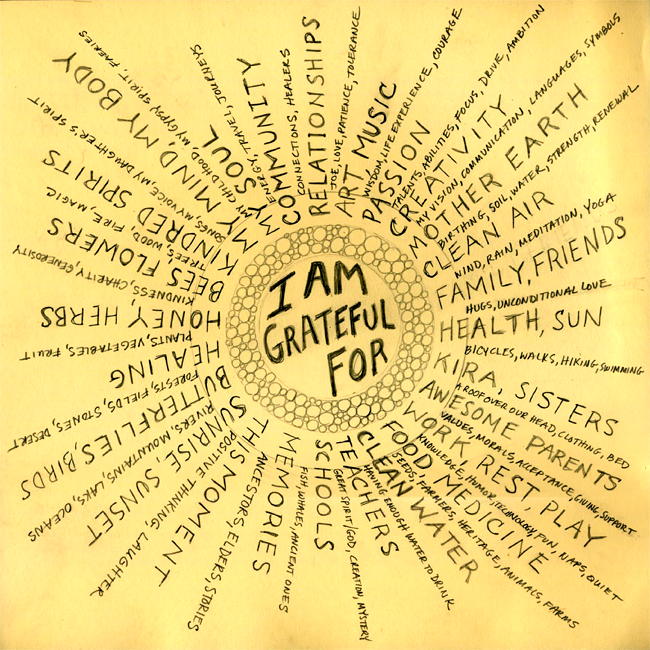
Gratitude is the quality of being thankful, a readiness to show appreciation for and to return kindness. And today this quality is needed more than ever. When one is content with what we have and are thankful for it, it boosts happiness and the overall sense of wellbeing.

When you have an attitude of gratitude, you tend to appreciate everything in life, grateful for relationships, health, work, and have a general sense of well-being. It shifts the focus from yourself to appreciating someone or something else. But this is something that is not innate in human beings, it has to be cultivated and one needs to make it a conscious habit to express thankfulness and appreciation for every part of their life. Having an attitude of gratitude means one operates from a place of abundance, rather than scarcity.

Gratitude shifts the mindset and is a thankful appreciation for what one has, not what one doesn’t have. When gratitude is expressed, one feels more positive and intentional and developing this attitude requires a mindset shift to make it a daily habit. It is important because what one appreciates grows and increases in value, so when one practices gratitude, all that is around, like relationships, work, health and mindset become more important.

Being grateful improves self-confidence, self-esteem and enhances the enjoyment of the present moment. So, when one feels grateful daily, they feel more positive and are more present at the moment.

Source

An attitude of gratitude means creating a conscious mindset and habit to express thankfulness and be grateful for every aspect of our life, both the things that are going well and the things that aren’t. When one has an attitude of gratitude, they can focus on expanding the positives in their lives, rather than dwelling on the negatives. When one expresses gratitude, they feel more confident, positive, and optimistic as well as happier and joyful about the things they have, and the people that matter most. This mindset reduces stress, overwhelm and frustration and creates feelings of abundance and happiness.

And in addition to improving mood, recent studies show that feeling and expressing gratitude leads to better physical health as well. Paul Mills, a Professor of Family Medicine and Public Health at the University of California San Diego School of Medicine, conducted studies that looked at the role of gratitude on heart health. Among other things, he found that participants who kept a journal most days of the week, writing about 2-3 things they were grateful for, which included everything from appreciating their children to travel and good food, had reduced levels of inflammation and improved heart rhythm compared to people who did not write in a journal. And the journal-keepers also showed a decreased risk of heart disease after only 2 months of this new routine.

Another study from the University of Pennsylvania found that people who wrote and delivered a heartfelt thank-you letter actually felt happier for a full month after, and the same researchers discovered that writing down three positive events each day for a week kept happiness levels high for up to six months.

So how does one develop an attitude of gratitude?

Appreciate everything: To cultivate an attitude of gratitude, look for things to appreciate daily. Developing active gratitude is different from reactive gratitude. With reactive gratitude, one waits for something to happen before they express appreciation or thanks, but with active gratitude, one consciously looks for ways to be grateful and express appreciation. Thus, expressing gratitude becomes a choice. When one express gratitude daily, the things and people they appreciate grow in value and they start to see more things to be grateful for, which in turn makes one happier and more content, increasing positivity and happiness.

Express gratitude every day: It’s important to express gratitude daily, rather than on occasion. Developing a gratitude practice of acknowledging what one is thankful for or appreciate daily will expand the value of the things one is grateful for. A good gratitude practice is to start and end each day by writing down three things you’re grateful for. When one expresses gratitude on a daily basis, one builds positive habits and forces them to appreciate every day, even if was a bad day. It may seem strange initially, especially when you have to think about what you are grateful for that day, but after some time, it gets easier and one can easily find a few things that day to be grateful for. Try it initially for 30 days. Be specific about what you are thankful for and watch how your thoughts develop over time.

Take ownership of your present: Start with appreciating and giving thanks for what you have today and be happy about what you’ve achieved and give thanks to the people in your life which increases gratitude. When one takes ownership of their present moment, they choose to be grateful, optimistic and positive. A positive mindset reframes negative thoughts and builds confidence from past accomplishments.

Source

Meditate: Meditation is a powerful practice in self-awareness. The goal isn’t to silence your thoughts, rather, it’s to become an active observer of them. The process of meditation is all about allowing the mind to do its thing and accept it as it is. Through meditation, one can build up areas of the brain and rewire it to enhance positive traits like focus and decision making and diminish the less positive ones like fear and stress. When the mind is masters, the emotions become a servant to the mind and one becomes less reactive and better able to handle life’s challenges. Irrespective of whether you regularly meditate, try and take a break a few times a day to focus on a spirit of thankfulness.

Celebrate the small things: Humans are conditioned to focus on and celebrate big achievements, instead of small wins. However, if one fails to ignore the small things in life and keep rushing from one thing to the next, demotivation will quickly set in. Who one becomes is not determined by the end goal, instead, it’s determined by the person they become while going on the journey to reach the goal and life’s successes. When the small things in life are celebrated, it means celebrating good habits. Take time to pause, slow down and savour the small things. Instead of obsessing about the future or dwelling on the past and be more aware of the present moment.

Commit to a gratitude practice: When one commits to a daily gratitude practice, their mindset and thinking changes. When there is an appreciation for the things that matter, there is more insight into what’s important. This, in turn, gives a chance to pause and think about the purpose with clarity on why certain things are important and why certain things and people are valuable. Committing to a gratitude practice helps one understand why they appreciate certain things rather than others and learn about themselves a little bit more. They also get to see the positive effect their gratitude has on others.

So there you have it, a gratitude practice, irrespective of how you do it, has immense benefits. As this practice develops, the habit will eventually bring positivity to our lives and we will feel happier, more positive and learn to appreciate and value all the little happiness in life.

As for me, after researching for this post, I have started to work on my gratitude journal, something I have done off and on for a few years now, but have never followed through consistently. Hopefully, this post will give me that push I need to make it a regular practice.