Traits of a Great Leader

A couple of weeks back, I was having a conversation with GG & BB about their future and what they want to achieve in life. The conversation then turned to leadership and we started talking about what makes a good leader.

A leader is defined as someone who who leads or commands a group, organisation, or country and leadership is seen as both a research and a practical skill encompassing the ability of an individual, group or organization to lead, influence or guide other individuals, teams, or entire organisations. Leadeship is the act of motivating other people toward a common goal. And good leaders are essential, to drive communities, organisations and countries and to make the large scale decisions to keep our worlds, be them big or small moving. People that have leadership skills showcase a strong personality and interpersonal skills to lead others in their direction.So what makes a good leader?

A successful leader is one who is the power and intellect behind their organisation. They are the visionaries charged with steering their brand around pitfalls and must know when to seize opportunities and how to rally those under them to work hard toward their common goals. An effective leader is one who transcends the leadership title they have and find ways to achieve the right combination of charisma, enthusiasm and self-assurance, probably with a healthy dose of luck and timing. Most of us think and feel that some people are just gifted with these skills, but the truth is most leadership traits can be learned and sharpened with time and practice.

Before we go into what are the traits of a good leader, what should a leader not do? Leaders should act a certain way and there are some negative qualities that leaders should never exhibit. Some of these include failure to set clear goals for their teams, insult or degrade people, give praise too easily, act inappropriately or exhibit behavior that one wouldn’t expect from others, not hold regular meetings with their subordinates, fail to take decisive actions and act tough or lack empathy.
Source

A good leader is one who has most, if not all of the following character traits:

Integrity: A good leader has integrity and the importance of this trait is obvious. Integrity is essential for an individual and an organisation and especially important for top-level executives who are charting an organisation’s course and making many significant decisions.

Delegation: A good leader is able to delegate. Delegating is one of the core responsibilities of a leader and the goal of delegating is not just free up time, but to enable direct reports, facilitate teamwork, provide autonomy, lead to better decision-making, and help direct reports grow. In order to delegate well, one needs to build trust with their team.

Communication: An effective leader is one who is able to communicate their ideas, be able to coach their people and since communication is a two way process, the leader is one who should be able to listen to and communicate with a wide range of people. Powerful leaders know when to talk and when to listen. They are effective communicators and are able to clearly and succinctly explain to those under them everything from goals to specific tasks. They will need to be able to communicate on all levels, be it one on one, or to many, as well as via phone, email and social media.C ommunication is built on a steady flow of verbal and nonverbal exchanges of ideas and information, so to be a good leader one needs to work on being approachable and involving people from different levels.

Gratitude: Being thankful can make one a better leader. Gratitude can lead to higher self-esteem, reduced depression and anxiety, and even better sleep. Few people regularly say thank you, even though most people say they’d be willing to work harder for an appreciative leader.

Learning Agility: This is the ability to know what to do when one don’t know what to do. If one is a quick study or is able to excel in unfamiliar circumstances, they might already be learning agile, but this is a learned skill and anybody can foster learning agility through practice, experience, and effort. Truly great leaders know that the strength of their leadership is built on their ability to adapt to suddenly changing circumstances and to know how and when to seize on opportunities amid a changing landscape. Having an insatiable curiosity will fuel the desire to constantly learn and grow. Learning agility hinges on developing critical thinking skills, being accepting of uncertainty, having social and emotional intelligence and always having the desire and determination to push forward.

Influence and Relationships: To some influence and influencers may have negative connotations, but the ability to convince people through logical, emotional, or cooperative appeals is a component of being an inspiring, effective leader. Influence is quite different from manipulation, and it needs to be done authentically and transparently and requires emotional intelligence and trust-building. A compelling leader does more than just inspire others to follow them; they know how to motivate the people under them to strive wholeheartedly for common goals. Subordinates who feel valued and appreciated, who feel like what they do makes a difference, will feel invigorated to push harder to achieve success. Outstanding leaders also understand that they need to be effective at networking, not just to advance their own careers, but for the benefit of what they are leading. By creating a vast and varied network of people, leaders establish impactful relationships with everyone.

Empathy: Correlated with job performance, empathy is a critical part of emotional intelligence and leadership effectiveness. If you show more empathy towards your direct reports, our research shows you’re more likely to be viewed as a better performer by your boss. Empathy can be learned, and in addition to making you more effective, it will also improve work for you and those around you.

Courage: This is self-explanatory because without courage, it can be hard to speak up at work, whether to voice a new idea, provide feedback, or flag concerns and this is a key skill for good leaders. Rather than avoiding problems or allowing conflicts to fester, courage enables leaders to step up and move things in the right direction and it has been proven that a psychologically safe workplace culture encourages speaking the truth.

Respect: Treating people with respect on a daily basis is one of the most important things a leader can do. It will ease tensions and conflict, create trust, and improve effectiveness. Respect is more than the absence of disrespect, and it can be shown in many different ways. Explore how you can cultivate a climate of respect at work.

Self-Managing: A good leader is someone who is able to manage himself well as it is hard to manage others effectively if they can’t manage themself. Self-managing means being able to prioritise their goals and being responsible for accomplishing those objectives. An effective leader is able to regulate their time, attention and emotions, while remaining aware of others’ strengths, weaknesses and potential sources of bias. They are adept at handling stress and balancing their personal and professional lives, maintaining self-control and discipline in their actions, without becoming overly reserved or inflexible.

Act Strategically: A forward-thinking, open-minded approach is necessary for today’s leaders. Leaders must always be prepared to adjust their strategies to capture emerging opportunities or tackle unexpected challenges. Thinking strategically is an ongoing process that involves assessing the environment which can be cultivated by being curious and genuinely interested in the environment around them, being flexible in their mindset and trying new approaches and ideas, focusing on the future and maintaining a positive outlook.

Accountable and Responsible: A successful leader is one who know how to use the power and authority they have appropriately without overwhelming or overpowering those under them. Effective leaders hold themselves accountable and take responsibility for their own mistakes, and expect others to do the same. They can work within established procedures, and be productive and efficient in their decisions. They appreciate the importance of supporting and encouraging individuality while also understanding organisational structures and the need to follow rules and policies and are able to balance different perspectives while taking appropriate action.

Goal Setting: To be a successful and effective leader, set clear goals and be determined and purposeful in achieving them. Back it all up with unshakable self-confidence. If one radiates enthusiasm and are truly excited about what they’re doing, people will be naturally drawn to them. Also something to remember is that writing down goals is key to the success, but accomplishing those goals takes time. If one give up, so will everyone around them. So to be a successful leader, one must be willing to keep going when others are tempted to throw in the towel.

Future Vision: An exceptional leader is one who has the ability to look into the future and make clear, concrete goals that will benefit them and the people under them. They are confident and optimistic, inspiring enthusiasm in those around them. Being a visionary is about managing change while striking a balance between stability and growth and incorporating new approaches without getting distracted from the main goals. Being a visionary means understanding that continuous change is occurring all around, so what worked in the past may not always work now. Practicing being adaptable and agile as new strategies are implemented is what makes strategies evolve over time.

Problem Solving: A good leader must be a problem solver who can make decisions under rapidly shifting circumstances with learning to lead in a complex environment a vital skill for any leader. Even before any definitive information is available, effective leaders must assess a situation’s complexity and choose appropriate courses of action. This means being able to scan the environment in search of subtle trends and indicators of disruptive change, and establish practices that allow you and what you are leading to respond swiftly.

Creativity And Innovation: A great leader is one with the courage to risk experimentation and encourage creativity. The key is to always be persistent in pursuing the goals set, and be open minded and flexible in how to get there. A good leader will encourage the people around them to spend at least 15 percent of their time exploring new ideas through brainstorming and prototyping.

Teamwork: Successful leadership is built on the people around them. Team building is essential to leading a diverse and unique group of people with distinct personalities, motivations and skills. Strong teams and teamwork are key to achieving many of things above, such as fostering innovation, effective communication and achieving goals. With the right kind of people under them, recruited, developed and nutured carefully, they can create an unstoppable force that will drive success.

So there you have it, the traits that one needs to nuture to become an effective and successful leader. It is also essential to realise that leadership is a social process and if one demonstrates several of the characteristics of a good leader but fail to grasp this, chances are they won’t get very far on their own. One may be well-liked and respected, but it will be challenging to accomplish team or organisational goals. And it’s worth remembering that leadership isn’t a destination, it’s something that one will have to work at regularly throughout their career, regardless of the level they are in. Leadership is less about a strong or charismatic individual and more about a group of people working together to achieve results. That’s why leadership is a journey, with different teams, projects, situations, and organisations that will require one to apply these skills in different ways.


Memories: My Chitti

In pretty much every Indian language, every relationship has a specific name. A paternal grandmother is referred to differently than a maternal grandmother and a mother’s sister has a different name than a father’s sister and some communities have specific ways to distinguish a sister’s daughter from a brother’s daughter and the same for their sons. In Tamil, your mother’s sister and father’s brother’s wife are both called Chitti. I looked but could not find the exact meaning, but it probably means a younger mother or someone who could potentially replace a mother if something happens to her.

My mother is the oldest of four sisters and consequently I am the oldest grandchild from my maternal side. I was very young, maybe slightly older than a toddler when the next sister after her got married and so I don’t have many memories about her. Her last sister was brought up by their childless aunt who lived close by, and so my biggest and best memories are about my second aunt. I was her favourite and in fact, long after she married and moved overseas, I was her favourite. So much so that on one of their trips to Mumbai, during an outburst, her older daughter even complained that she loved me more than she loved her and her sister.

When I first started school, around the time I was about four years old, my parents and paternal grandparents had to go to a temple town in South India for a family wedding. I can’t really remember why I didn’t go, but I assume it was a combination of me refusing to go because I didn’t want to miss school and the fact that my aunt may have jumped at the chance to look after me. I do remember that I was supposed to live with my maternal grandparents and aunt for about a month or so since my parents were supposed to do a small pilgrimage given they were going to a temple town which was close to other temples. My sister would have been a toddler at that point, so they took her along and I was sent to my grandparents house along with my things. My aunt was working as a teacher then in a nearby school and used to take tuitions in the evening and perhaps in the mornings too.
On the first that I was to go to school from there, we were at the building gate bright and early, waiting for the school bus. Even after waiting for more than 30 minutes, the bus did not come and after asking around, we were told the bus had already left. My aunt was so angry, but because we were getting late, she quickly bundled me into a taxi and dropped me off to school. At school, she made sure to tell the teacher to put me in the correct bus (otherwise I would have landed in my parents place which was empty) and when the bus dropped me home, tore the bus driver a good one, which ensured that I was never forgotten as long as I stayed at their place.

Kindergarten ended around noon and I would reach home around 12:30, around which time, chitti would be getting ready for school. She taught primary classes which meant she would leave home around the time I got home. Once she left, my grandmother would get me changed, feed me lunch and make me take a nap. By the time I woke up and was ready, chitti would be back from school. She would then start her tuitions on the days she had them and teach me together with her students and get me to complete my homework. Once that was done, I would go down to play with friends before it was dinner time.

The month flew past before long and I went back home to my parents. But the bond between me and my aunt has remained till day. For both her pregnancies, when she came home from the hospital, I insisted to spending time with her, especially during her second pregnancy because I was older and it was our summer holidays. I must have spent the whole holiday there playing with my sister, cousin and friends and helping her look after the new baby.

This post took me down so many memory lanes that I throughly enjoyed putting it down. I am going to show this post to my chitti the next time I meet her to show her that I still remember our time together even after so many decades.

World Book and Copyright Day

Today is the World Book and Copyright Day also known as World Book Day. I have written previously about this day, so hop there to know more about the history of why this day has been celebrated.

The World Book and Copyright Day is a celebration to promote the enjoyment of books and reading. Each year, on 23 April, celebrations take place all over the world to recognise the scope of books, a link between the past and the future, a bridge between generations and across cultures. On this occasion, UNESCO and the international organizations representing the three major sectors of the book industry – publishers, booksellers and libraries, select the World Book Capital for a year to maintain, through its own initiatives, the impetus of the Day’s celebrations.

The original idea of this day was from the Spanish writer Vicente Clavel Andrés as a way to honour the author Miguel de Cervantes, first on 7 October, his birth anniversary, then on 23 April, his death anniversary. In 1995 at UNESCO’s General Conference held in Paris, it was decided that the World Book and Copyright Day would be celebrated on 23 April, as the date is symbolic in world literature as it is also the anniversary of the death of Miguel de Cervantes, William Shakespeare and Inca Garcilaso de la Vega, as well as that of the birth or death of several other prominent authors.

This year, when many schools and institutes of learning have been shut because of the pandemic caused by COVID-19, reading has become an essential habit, more than ever. As more people spend time at home and limit social gatherings, the power of books should and can be leveraged to combat isolation, reinforce ties between people, expand our horizons, while stimulating our minds and creativity. Books have the unique ability both to entertain and to teach. They are at once a means of exploring realms beyond our personal experience through exposure to different authors, universes and cultures, and a means of accessing the deepest recesses of our inner selves.

Not just during the month of April, but all year round, it is critical to take the time to read on your own or with your children, if they are too young to read on their own. It is a time to celebrate the importance of reading, foster children’s growth as readers and promote a lifelong love of literature and integration into the world of work. Through reading and the celebration of World Book and Copyright Day, we can open ourselves to others despite distances, and we can travel thanks to our imagination, even though leisure travel has stopped more or less across the world.

The 2021 World Book Capital is Tbilisi, Georgia. Cities designated as UNESCO World Book Capital undertake to carry out activities with the aim of encouraging a culture of reading and diffusing its values in all ages and population groups in and out of the national borders. The cities commit to promoting books and fostering reading during a 12 months period between one World Book and Copyright Day and the next.

So please read today if you don’t otherwise read often. If you are a parent with a child too young to read, sit down with them with a favourite book and spend time reading and inculcating the love and joy that comes when you read a good book. For parents with older children, be a good role model and lead by example and show to your children how important reading is. I am going to spend most of today and the weekend with a good book, some nice hot tea or coffee and just read. What about you?

Earth Day

Human beings live on planet Earth and it is our sacred duty to preserve our planet for our future generations. The connection that we have to nature, plants, and the land is integral to our health and all that we are. Earth Day, celebrated tomorrow on 22 April each year reminds us to take care of our planet, whether it’s cleaning up litter, planting more trees, recycling and repurposing, or going on a walk in a green space amidst the wildflowers.

Earth Day 2021 will mark the 51st anniversary of celebrating this day which was first organised in 1970 in the USA. Dealing with dangerously serious issues concerning toxic drinking water, air pollution, and the effects of pesticides, an impressive 20 million Americans—10% of the population—ventured outdoors and protested together. Today, Earth Day is marked by more than a billion people every year as a day of action to change human behaviour and create global, national and local policy changes. As of the 2020 Earth Day celebrations, 1 Billion individuals have been mobilised for action every Earth Day with more than 190 countries engaged in this cause.

With the largest global crisis of our generation currently on, it has become clear how important it is to think ahead of the next crisis. Climate change, species loss, pandemics and massive natural disasters might define the future, unless we do something now.

The theme for the 2021 edition of Earth Day is Restore our Earth. The theme is based on the emerging concept that rejects the idea that our only options to save the planet are to mitigate or adapt to the impacts of climate change and other environmental damage. Scientists, non-governmental organizations, business, and governments worldwide now are looking at natural system processes and emerging green technologies to restore the world’s ecosystems and forests, conserve and rebuild soils, improve farming practices, restore wildlife populations and rid the world’s oceans of plastics. While the world waits for global political and business leaders to take decisive action to reduce carbon emissions, natural processes including reforestation and soil conservation can store massive amounts of carbon while restoring biodiversity, clean water and air and rebalancing ecological systems. Restoration is pragmatic and necessary to reduce climate change.

Restoration also brings hope, itself an important ingredient in the age of COVID-19. The impacts of the pandemic have illustrated with painful clarity that the planet faces two crises and they are connected: global environmental degradation and its connection to our health. Deforestation, wildlife trade, air and water pollution, human diets, climate change and other issues have all fed into a breakdown of our natural systems, leading to new and fatal diseases, such as the current pandemic, and a breakdown of the global economy.

Everyone of us can celebrate the day. With restrictions in place in many countries, the activities we can do need not be just physical, they can also be virtual. You could perhaps, plant a garden or add some green to your home like a small herb garden which is easy to grow and maintain. You could also take a walk while social distancing and discover green spaces closeby and learn about the plants and animals indigenous to your area. Learn about recycling and upcycling as well as shop sustainable brands online and see how you can save the environment. While at home, we can also watch documentaries about the earth which will increase our knowledge about this beautiful planet we call home. And lastly, we can also take virtual field trips which many national parks and other outdoor places organise. This way, you don’t travel and increase your carbon footprint!

So how do you plan on celebrating and commemorating Earth Day?

Festivals of India: Baisakhi

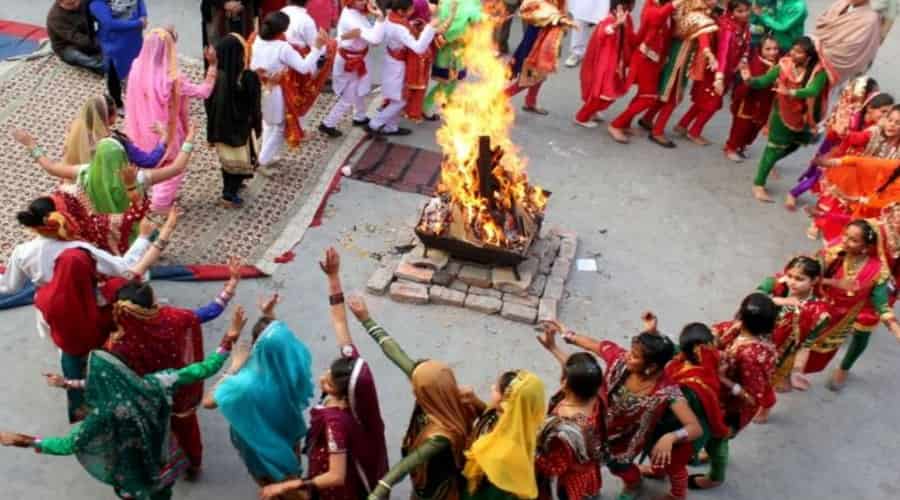
Today marks the beginning of the Hindu solar new year and this means its festival time! The new year is set in sync with the solar cycle of the lunisolar Hindu calendar and it falls on or about 14 April every year according to the Gregorian calendar. Across the Indian subcontinent, various communities celebrate the day as their new year. It is the New Year’s Day for Hindus in Assam, Bengal, Bihar, Himachal Pradesh, Haryana, Kerala, Odisha, Punjab, Tamil Nadu, Uttar Pradesh, Uttrakhand and other parts of India. However, this is not the universal new year for all Hindus. For some, such as those in and near Gujarat, the new year festivities coincide with the five-day Diwali festival. For others, the new year falls on Cheti Chand, Gudi Padwa and Ugadi which falls a few weeks earlier. Essentially a spring harvest festival, in the state of Punjab, it is known as Baisakhi, Vaisakhi or Vaisakha Sankranti as it marks the first day of the month of Vaisakha.

Baisakhi is a historical and religious festival in both Hinduism and Sikhism. For Hindus, the festival is their traditional solar new year, a harvest festival, an occasion to bathe in sacred rivers such as the Ganges, Jhelum, and Kaveri, visit temples, meet friends and take part in other festivities. For the Sikhs, Vaisakhi observes major events in the history of Sikhism and the Indian subcontinent that happened in the Punjab region.

The significance of Baisakhi as a major Sikh festival marking the birth of the Sikh order started after the persecution and execution of Guru Tegh Bahadur for refusing to convert to Islam under the orders of the Mughal Emperor Aurangzeb. This triggered the coronation of the tenth Guru of Sikhism and the historic formation of the Khalsa, both on the Vaisakhi day. The Khalsa tradition started in the year 1699, as it is on this day that the 10th Guru of the Sikhs, Guru Gobind Singh laid down the foundation of the Panth Khalsa, that is the Order of the Pure Ones, by baptising Sikh warriors to defend religious freedoms. This gave rise to the Vaisakhi or Baisakhi festival observed as a celebration of Khalsa Panth formation and is also known as Khalsa Sirjana Divas and Khalsa Sajna Divas. The Birth of the Khalsa Panth was probably on 30 March 1699. Since 2003, the Sikh Gurdwara Prabhandak Committee named it Baisakh or Vaisakh, making the first day of the second month of Vaisakh according to its new Nanakshahi calendar. A special celebration takes place at the Talwandi Sabo, where Guru Gobind Singh stayed for nine months and completed the recompilation of the Guru Granth Sahib, in the Gurudwara at Anandpur Sahib the birthplace of the Khalsa, and at the Golden Temple in Amritsar.

Ranjit Singh was proclaimed as Maharaja of the Sikh Empire on 12 April 1801, which was the Baisakhi day, creating a unified political state with Sahib Singh Bedi, a descendant of Guru Nanak dev, conducting the coronation. Vaisakhi was also the day when the British colonial empire official, General Reginald Dyer, committed the Jallianwala Bagh massacre on a gathering, an event influential to the Indian movement against colonial rule.

On Baisakhi, Mandirs and Gurdwaras are decorated. Hindus perform a mandatory daan or charity especially of hand fans, water pitchers and seasonal fruits. A ritual dip in the Ganga river or other holy water bodies is often performed and community fairs are held at Hindu pilgrimage sites and in many areas, a procession of temple deities is taken out. Sikhs hold kirtans, visit local Gurdwaras, community fairs and Nagar kirtan processions are held, and people gather to socialise and share festive foods.

The tradition of celebrating Baisakhi among Punjabi Hindus predates the birth of Sikhism. In undivided Punjab, before India’s partition, the Hindu shrine of Katas Raj was known for its Baisakhi fair which was attended by around 10,000 pilgrims, mostly Hindus. Similarly, at the shrine of Bairagi Baba Ram Thaman, a Baisakhi fair was held annually since the 16th century, which is today in Kausar in Pakistan’s Punjab, which was attended by around 60,000 pilgrims and Bairagi saints from all over India used to throng the shrine. The most spectacular gathering of the Baisakhi fair is at Thakurdwara of Bhagwan Narainji at Pandori Mahatan village in Gurdaspur district of Punjab where the fair lasts for three days from the 1st day of Vaisakha to the 3rd day of Vaisakha. The celebrations start in form of a procession on the morning of the 1st day of Vaisakha, carrying the Mahant in a palanquin by Brahmacharis and devotees. After that, the Navgraha Puja is held and charities in money, grains and cows are done. At sunset, the Sankirtan is held in which the Mahant delivers religious discourses and concludes it by distributing prasad or holy offerings of Patashas or candy drops. Pilgrims also do the ritual bath at the sacred tank in the shrine.

According to the Khalsa Sambat, the Khalsa calendar started with the creation of the Khalsa which was 13 April 1699 and accordingly, Baisakhi has been the traditional Sikh New Year. The alternative Nanakshahi calendar begins its year a month earlier on 1 Chait which generally falls on 14 March and begins with the birth year of the Guru Nanak Dev in 1469.

Vaisakhi is an important festival among Dogra Hindus of the Jammu region. On this day, people get up early in the morning, throng the rivers, canals, and ponds and take a ritual dip on this occasion. In Dogra households, a puja or prayer is performed then and part of the food crop is offered to the deities. New fruits of the year are enjoyed with the ritual bath at the Tawi river being common in Jammu. Baisakhi is celebrated at Udhampur on the banks of the Devika river where for three days devotees enjoy folk songs. At Sudhmahadev, this festival is celebrated with great pomp and show where folk singers come down and competition of folk songs is held. You will find vendors with stalls of eatables and games during this time. People also go to the Nagbani temple near Jammu to witness the grand new year celebration. The occasion is marked by numerous fairs and people come by the thousands to celebrate the festival.

In Himachal Pradesh, Baisakhi is an important festival for the Hindus. People get up early in the morning and have their ritual bath. Two earthen lamps are lit on this day, one with oil and the other with ghee and kept in a large saucer along with a water pot, blades of evergreen turf, Kusha, Incense, sandal, vermillion and money and the household deities are worshipped with all these items. Alms are given in form of rice and pulses with small coins called Nasrawan. Fried cakes of black gram prepared a day in advance are distributed to neighbours after the prayers and other special delicacies are prepared. In the evenings’ people enjoy the many fairs organised for three days.

In the state of Haryana, Baisakhi is celebrated with a fair in Kurukshetra at Baan Ganga Tirtha, which is associated with Lord Arjuna of the Mahabharata. There is a Vaisakhi tradition of a ritual bath at the sacred tank of Baan Ganga Tirtha and a fair is held annually on Baisakhi. The Haryana government also organises a Baisakhi festival in Pinjore Gardens to commemorate this festival.

In the state of Uttar Pradesh, Baisakhi is also known as Sattua or Satwahi, as Sattu, made by dry roasting and finely grinding grams is donated and consumed on this day. The common rites during this festival are bathing in a river or pond and eating sattu and jaggery.

Wishing everyone who celebrates this festival a very Happy New Year! Enjoy this day and especially the yummy food, though socialising may still not be allowed under social distancing norms in most countries.