Can any of us imagine a world without television. The generation which has grown up with the flickering television screen would probably be as brefet of it as today’s generation without access to the internet.
In 1927, a 21 year old inventor by the name of Philo Taylor Farnsworth invented the world’s first electronic television. He lived in a home without electricity until he was 14 years old. In high school, he began to think of a system that could capture moving pictures, change them into a code, and them move those images with radio waves to different devices. He was years ahead of the mechanical television system as his structure captured moving images using a beam of electrons. Farnsworth later famously transmitted the image of a dollar sign using his television after a fellow inventor asked “When are we going to see some dollars from this thing?” Neither of them knew how prelevant the television would become across the world with young people today having no concept of a world without one. The first mechanical tv station called W3XK, created by Charles Francis Jenkins aired its first broadcast in 1928.
Television continues to be the single largest source of video consumption. I seriously doubt there are many households in this world today who don’t have access to a television set. Though screen sizes have changed, and people create, post, stream and consume content on different platforms, the number of households with television sets around the world continues to rise. The interaction between emerging and traditional forms of broadcast creates a great opportunity to raise awareness about the important issues facing our communities and our planet.
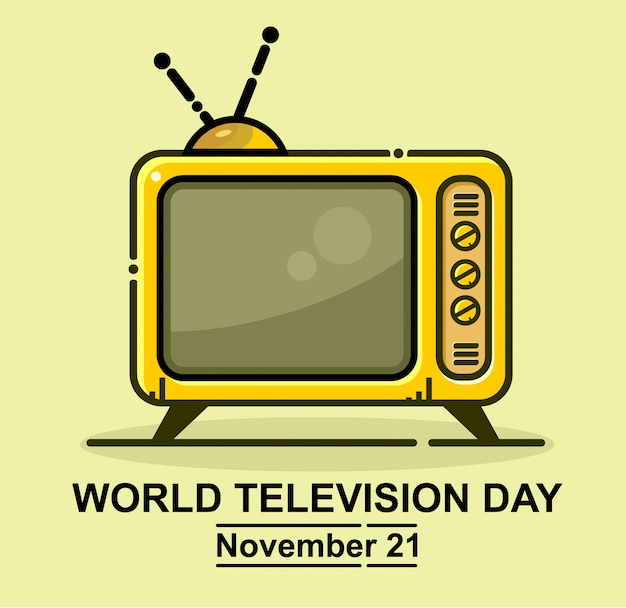
In times of internet, with people hooked to their laptops and mobile screens, does the television still hold importance, one may ask. As per the United Nations, television continues to be the single largest source of video consumption with the number of TV households across the world rising from 1.63 million in 2017 to 1.74 billion by 2023, according to a study. The World Television Day stands as a reminder of the power of visual media and how it helps in shaping public opinion and influencing world politics.
In recognition of the increasing impact television has on decision-making by bringing world attention to conflicts and threats to peace and security and its potential role in sharpening the focus on other major issues, including economic and social issues, the United Nations General Assembly proclaimed 21 November as World Television Day, through resolution 51/205 of 17 December 1996.
World Television Day is not so much a celebration of the tool, but rather the philosophy which it represents. Television represents a symbol for communication and globalisation in the contemporary world. On 21 and 22 November 1996 the United Nations held the first World Television Forum, where leading media figures met under the auspices of the United Nations to discuss the growing significance of television in today’s changing world and to consider how they might enhance their mutual cooperation. That is why the General Assembly decided to proclaim 21 November as World Television Day. This was done in recognition of the increasing impact television has on the process of decision-making. Television was thus acknowledged as a major tool in informing, channelling and affecting public opinion. Its impact and presence and its influence on world politics could not be denied.
Now the day is commemorated with meet-ups at local and global levels to raise awareness among people about the role television plays in communication and globalisation. This day acknowledges the role of broadcast media. Writers, journalists, bloggers and others associated with the medium come together to promote this day. The interaction between emerging and traditional forms of broadcast creates a great opportunity to raise awareness about the important issues facing our communities and our planet. The World Television Day also marks the commitment of governments, news organisations and individuals to deliver unbiased information in times when veracity of content on social media is questionable.
Tomorrow is World Diabetes Day. As someone who is diabetic, this day is something that I like to write about each year so more people become aware of this silent killer. Created in 1991 by the International Diabetes Federation and the World Health Organisation in response to growing concerns about the escalating health threat posed by diabetes, the World Diabetes Day became an official United Nations Day in 2006. 14 November was chosen to commemorate the day as it is the birthday of Sir Frederick Banting, who co-discovered insulin along with Charles Best in 1922.
The world’s largest diabetes awareness campaign reaching a global audience of over 1 billion people in more than 160 countries, the World Diabetes Day draws attention to issues of paramount importance to the diabetes world and keeps diabetes firmly in the public and political spotlight.
The World Diabetes Day campaign aims to be the platform to promote IDF advocacy efforts throughout the year and be the global driver to promote the importance of taking coordinated and concerted actions to confront diabetes as a critical global health issue. The campaign is represented by a blue circle logo that was adopted in 2007 after the passage of the UN Resolution on diabetes. The blue circle is the global symbol for diabetes awareness. It signifies the unity of the global diabetes community in response to the diabetes epidemic.
Today, world-wide, 463 million adults, or an estimated one in eleven, were living with diabetes in 2019, with the number of people living with diabetes expected rise to 578 million by 2030. Many must live with the complications of diabetes and many still die young as a consequence of their condition. 1 in 2 adults with diabetes remain undiagnosed and the majority have type 2 diabetes. More than 3 in 4 people with diabetes live in low and middle-income countries and 1 in 6 live births or approximately 20 million are affected by high blood glucose or hyperglycaemia in pregnancy. Two-thirds of people with diabetes live in urban areas and three-quarters are of working age. 1 in 5 people with diabetes or about 136 million are above 65 years old. Diabetes caused 4.2 million deaths in 2019 and was responsible for at least $760 billion in health expenditure in 2019, accounting for about 10% of the global total spent on healthcare. The numbers continue to grow but the resources allocated to diabetes are often insufficient and are under increased pressure as a result of the COVID-19 pandemic. The WHO estimates that diabetes services have been disrupted in 50% of countries worldwide.
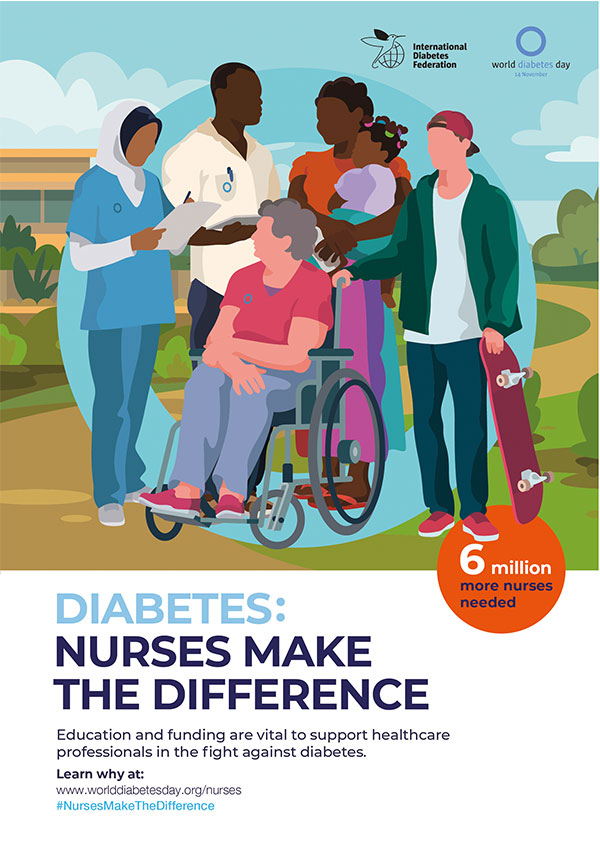
Every year, the World Diabetes Day campaign focuses on a dedicated theme that runs for one or more years. The theme for World Diabetes Day 2020 is The Nurse and Diabetes. This year’s campaign aims to raise awareness around the crucial role that nurses play in supporting people living with diabetes.
Nurses currently account for over half of the global health workforce. They do outstanding work to support people living with a wide range of health concerns. People who either live with diabetes or are at risk of developing the condition need their support too. People living with diabetes face a number of challenges, and education is vital to equip nurses with the skills to support them. As the number of people with diabetes continues to rise across the world, the role of nurses and other health professional support staff becomes increasingly important in managing the impact of the condition. Healthcare providers and governments must recognise the importance of investing in education and training. With the right expertise, nurses can make the difference for people affected by diabetes.
According to the World Health Organization, nurses account for 59% of health professionals and the global nursing workforce is 27.9 million, of which 19.3 million are professional nurses with a global shortage of nurses in 2018 being 5.9 million with 89% of that shortage concentrated in low and middle-income countries. The estimated number of nurses trained and employed needs to grow by 8% a year to overcome alarming shortfalls in the profession by 2030. WHO estimates that the total investment required to achieve the targets outlined in the Social Development Goals by 2030 stand at 3.9 trillion USD – 40% of which should be dedicated to remunerating the health workforce.
As highly valued members of the community, nurses do outstanding work to support people living with a wide range of health concerns. People who either live with diabetes or are at risk of developing the condition need their support too. People living with diabetes face a number of challenges, and education is vital to equip nurses with the skills to support them. The IDF wants to facilitate opportunities for nurses to learn more about the condition and receive training so that they can make a difference for people with diabetes. As the number of people with diabetes continues to rise across the world, the role of nurses and other health professional support staff is becoming increasingly important in managing the impact of the condition. Nurses are often the first and sometimes only health professional that a person interacts with and so the quality of their initial assessment, care and treatment is vital. Nurses play a key role in diagnosing diabetes early to ensure prompt treatment, providing self-management training and psychological support for people with diabetes to help prevent complications and tackling the risk factors for type 2 diabetes to help prevent the condition. Healthcare providers and governments must therefore recognise the importance of investing in education and training. With the right expertise, nurses can make the difference for people affected by diabetes.
In my last year’s post on this day, I have written extensively about the types of diabetes, so read more there.
“You could not remove a single grain of sand from its place without thereby … changing something throughout all parts of the immeasurable whole.” – Fichte, The Vocation of Man (1800)
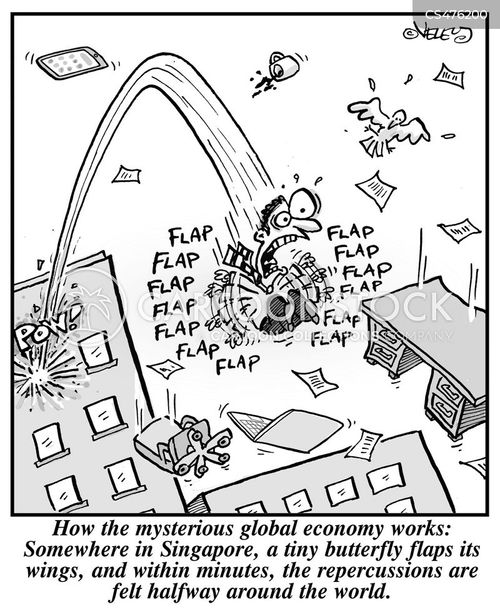
Have you ever wondered that sometimes a small act in one part of the world has huge consequences in another part of the world. This is what is known as the Butterfly Effect which essentially means that that small things can have non-linear impacts on a complex system. The concept is imagined with a butterfly flapping its wings and causing a typhoon.
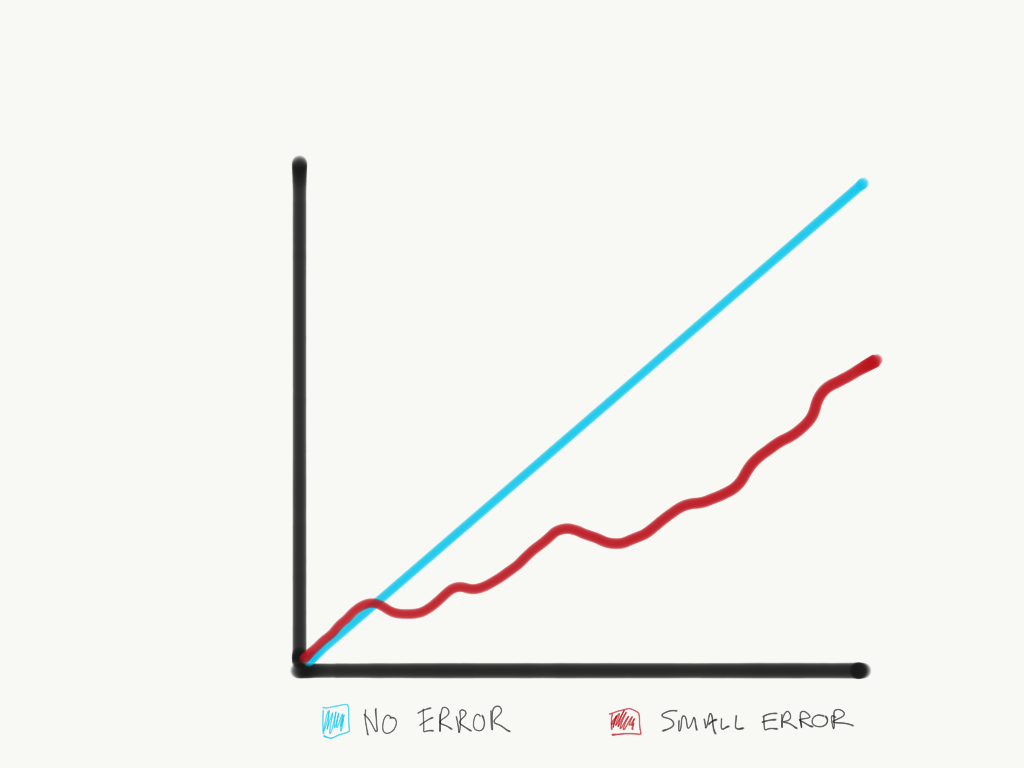
In chaos theory, which is a branch of mathematics focusing on the study of chaos — the states of dynamical systems whose apparently random states of disorder and irregularities are often governed by deterministic laws that are highly sensitive to initial conditions, the butterfly effect is the sensitive dependence on initial conditions in which a small change in one state of a deterministic nonlinear system can result in large differences in a later state. The term, closely associated with the work of Edward Lorenz, is derived from the metaphorical example of the details of a tornado with the exact time of formation and the exact path taken being influenced by minor perturbations such as the flapping of the wings of a distant butterfly several weeks earlier. Lorenz discovered the effect when he observed that runs of his weather model with initial condition data that were rounded in a seemingly inconsequential manner would fail to reproduce the results of runs with the unrounded initial condition data. A very small change in initial conditions had created a significantly different outcome.
In an experiment to model a weather prediction, he entered the initial condition as 0.506, instead of 0.506127. The result was surprising with a somewhat different prediction. From this, he deduced that the weather must turn on a dime. A tiny change in the initial conditions had enormous long-term implications. By 1963, he had formulated his ideas enough to publish an award-winning paper entitled Deterministic Nonperiodic Flow. In simpler language, he theorized that weather prediction models are inaccurate because knowing the precise starting conditions is impossible, and a tiny change can throw off the results. To make the concept understandable to non-scientific audiences, Lorenz began to use the butterfly analogy.
The idea that small causes may have large effects in general and in weather specifically was earlier recognized by French mathematician and engineer Henri Poincaré and American mathematician and philosopher Norbert Wiener. Edward Lorenz’s work placed the concept of instability of the Earth’s atmosphere onto a quantitative base and linked the concept of instability to the properties of large classes of dynamic systems which are undergoing nonlinear dynamics and deterministic chaos.
Of course, a single act like the butterfly flapping its wings cannot cause a typhoon. Small events can, however, serve as catalysts that act on starting conditions.
However, in popular culture, the term “butterfly effect” is almost always misused. It has become synonymous with “leverage”—the idea of a small thing that has a big impact, with the implication that, like a lever, it can be manipulated to a desired end. This misses the point of Lorenz’s insight. The reality is that small things in a complex system may have no effect or a massive one, and it is virtually impossible to know which will turn out to be the case.
There’s a proverb that’s been around since the 14th century in English and since the 13th century in German. Benjamin Franklin offered a poetic perspective in his variation of the proverb, long before the theory of the bufferfly effect came to being. The proverb goes like this:
For want of a nail the shoe was lost, For want of a shoe the horse was lost, For want of a horse the rider was lost, For want of a rider the battle was lost, For want of a battle the kingdom was lost, And all for the want of a horseshoe nail.
So the lack of one horseshoe nail could be inconsequential, or it could indirectly cause the loss of a war and therefore a kingdom. There is no way to predict which outcome will occur.
The butterfly effect is somewhat humbling—a model that exposes the flaws in other models. It shows science to be less accurate than we assume, as we have no means of making accurate predictions due to the exponential growth of errors. During the early days of computers, many people believed they would enable us to understand complex systems and make accurate predictions. People had been slaves to weather for millennia, and now they wanted to take control. With one innocent mistake, Lorenz shook the forecasting world, sending ripples which spread far beyond meteorology.
Beyond science, the Butterfly effect can also be seen in business. Marketplaces are, in essence, chaotic systems that are influenced by tiny changes. This makes it difficult to predict the future, as the successes and failures of businesses can appear random. Periods of economic growth and decline sprout from nowhere. This is the result of the exponential impact of subtle stimuli—the economic equivalent of the butterfly effect. According to Tom Breuer, we live in an interconnected, or rather a hyper-connected society with organisations and markets behaving like networks. This triggers chaotic and complex rather than linear behavior.
Preparing for the future and seeing the logic in the chaos of consumer behavior is not easy. Once-powerful giants collapse as they fall behind the times while tiny start-ups rise from the ashes and take over industries. Small alterations in existing technology transform how people live their lives. Fads capture everyone’s imagination, then disappear. Businesses have two options in this situation: build a timeless product or service, or race to keep up with change. Many businesses opt for a combination of the two. This approach requires extreme vigilance and attention to consumer desires in an attempt to both remain relevant and appear timeless. Businesses leverage the compounding impact of small tweaks that aim to generate interest in all they have to offer.
According to Dr. Rajagopal in The Butterfly Effect in Competitive Markets, most global firms are penetrating bottom-of-the-pyramid market segments by introducing small changes in technology, value perceptions, marketing-mix strategies, and driving production on an unimagined scale of magnitude to derive a major effect on markets. Companies like Procter & Gamble, Kellogg’s, Unilever, Nestlé, Apple, and Samsung, have experienced this effect in their business growth. Well-managed companies drive small changes in their business strategies by nipping the pulse of consumers. Most firms use such effect by making a small change in their strategy in reference to produce, price, place, promotion, posture which is developing their corporate image, and proliferation which is to gain higher market share and profit in a short span.
For most businesses, incessant small changes are the most effective way to produce the metaphorical typhoon. These iterations keep consumers engaged while preserving brand identity. If these small tweaks fail, the impact is hopefully not too great. But if they succeed and compound, the rewards can be monumental.
By nature, all markets are chaotic, and what seem like inconsequential alterations can propel a business up or down. Rajagopal explains how the butterfly effect connects to business. Globalisation and frequent shifts in consumer preferences toward products and services have accelerated chaos in the market due to the rush of firms, products, and business strategies. Chaos theory in markets addresses the behavior of strategic and dynamic moves of competing firms that are highly sensitive to existing market conditions triggering the butterfly effect. The initial conditions which include economic, social, cultural and political in which a business sets up are vital influences on its success or failure. Lorenz found that the smallest change in the preliminary conditions created a different outcome in weather predictions, and we can consider the same to be true for businesses. The first few months and years are a crucial time when rates of failure are highest and the basic brand identity forms. Any of the early decisions, achievements, or mistakes have the potential to be the wing flap that creates a storm.
Some historic examples of the butterfly effect, which have shaped our lives include the following:
The bombing of Nagasaki: The US initially intended to bomb the Japanese city of Kuroko, with the munitions factory as a target. On the day the US planned to attack, cloudy weather conditions prevented the factory from being seen by military personnel as they flew overhead. The airplane passed over the city three times before the pilots gave up. Locals huddled in shelters heard the hum of the airplane preparing to drop the nuclear bomb and prepared for their destruction. Except Kuroko was never bombed. Military personnel decided on Nagasaki as the target due to improved visibility. The implications of that split-second decision were monumental. We cannot even begin to comprehend how different history might have been if that day had not been cloudy. Kuroko is sometimes referred to as the luckiest city in Japan, and those who lived there during the war are still shaken by the near-miss.
The Rise of Hitler: The Academy of Fine Arts in Vienna rejecting Adolf Hitler’s application, twice. In the early 1900s, a young Hitler applied for art school and was rejected, possibly by a Jewish professor. By his own estimation and that of scholars, this rejection went on to shape his metamorphosis from an aspiring bohemian artist into the human manifestation of evil. We can only speculate as to how history would have been different. But it is safe to assume that a great deal of tragedy could have been avoided if Hitler had applied himself to water colors, not to genocide.
The assassination of Archduke Franz Ferdinand: A little-known fact about the event considered to be the catalyst for both world wars is that it almost didn’t happen. On the 28th of June, 1914, a teenage Bosnian-Serb named Gavrilo Princip went to Sarajevo with two other nationalists to assassinate the Archduke. The initial assassination attempt failed; a bomb or grenade exploded beneath the car behind the Archduke’s and wounded its occupants. The route was supposed to have been changed after that, but the Archduke’s driver didn’t get the message. Had he actually taken the alternate route, Princip would not have been on the same street as the car and would not have had the chance to shoot the Archduke and his wife that day. Were it not for a failure of communication, both world wars might never have happened.
The Chernobyl disaster: In 1986, a test at the Chernobyl nuclear plant went awry and released 400 times the radiation produced by the bombing of Hiroshima. One hundred fifteen thousand people were evacuated from the area, with many deaths and birth defects resulting from the radiation. Even today, some areas remain too dangerous to visit. However, it could have been much worse. After the initial explosion, three plant workers volunteered to turn off the underwater valves to prevent a second explosion. It has long been believed that the trio died as a result, although there is now some evidence this may not have been the case. Regardless, diving into a dark basement flooded with radioactive water was a heroic act. Had they failed to turn off the valve, half of Europe would have been destroyed and rendered uninhabitable for half a million years. Russia, Ukraine, and Kiev also would have become unfit for human habitation. Whether they lived or not, the three men—Alexei Ananenko, Valeri Bezpalov, and Boris Baranov—stilled the wings of a deadly butterfly. Indeed, the entire Chernobyl disaster was the result of poor design and the ineptitude of staff. The long-term result, in addition to the impact on residents of the area was widespread anxiety towards nuclear plants and bias against nuclear power, leading to a preference for fossil fuels. Some people have speculated that Chernobyl is responsible for the acceleration of global warming, as countries became unduly slow to adopt nuclear power.
The Cuban Missile Crisis: We all may owe our lives to a single Russian Navy officer named Vasili Arkhipov, who has been called “the man who saved the world.” During the Cuban Missile Crisis, Arkhipov was stationed on a nuclear-armed submarine near Cuba. American aircraft and ships began using depth charges to signal the submarine that it should surface so it could be identified. With the submarine submerged too deep to monitor radio signals, the crew had no idea what was going on in the world above. The captain, Savitsky, decided the signal meant that war had broken out and he prepared to launch a nuclear torpedo. Everyone agreed with him—except Arkhipov. Had the torpedo launched, nuclear clouds would have hit Moscow, London, East Anglia and Germany, before wiping out half of the British population. The result could have been a worldwide nuclear holocaust, as countries retaliated and the conflict spread. Yet within an overheated underwater room, Arkhipov exercised his veto power and prevented a launch. Without the courage of one man, our world could be unimaginably different.
So you see, something very small and something we think is inconsequential has far reaching impact on not just our world, but also on future generations.
I will end this post with a video, in which the science behind this phenomenon is explained.
The secret of health for both mind and body is not to mourn for the past, worry about the future, or anticipate troubles, but to live in the present moment wisely and earnestly. – The Buddha
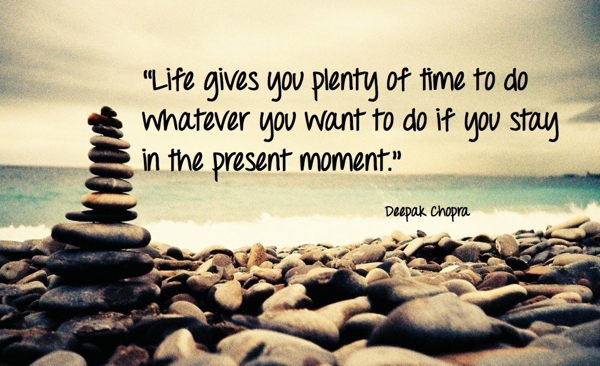
We’ve heard this before that instead of looking backwards or forwards, we should live in today. But is that something that is easy to do, especially in today’s fast-paced world, where you have so many demands on your life and time? There’s always something coming up that we need to prepare for or anticipate, and our lives are so well-documented that it’s never been easier to get lost in the past. Given the fast pace and hectic schedules most of us keep, a base level of anxiety, stress, and unhappiness is the new norm. We may not even realise it, but this tendency to get sucked into the past and the future can leave us perpetually worn out and feeling out of touch with ourselves.
The cure for this condition is what so many people have been saying all along – conscious awareness and a commitment to staying in the “now.” Living in the present moment is the solution to a problem we may not have known we had. But what does it actually mean to “live in the present moment?” How could we be living in anything but the present?
Living in the present is not just an arbitrary term or a popular phrase—it’s a recognised and evidence-backed lifestyle that psychologists are quick to recommend for those struggling with anxiety and stress in their day-to-day life. Being in the present moment, or the “here and now,” means that we are aware and mindful of what is happening at this very moment. We are not distracted by ruminations on the past or worries about the future, but centered in the here and now. All of our attention is focused on the present moment.
Why is being present minded so important? Being present minded is the key to staying healthy and happy. It helps us fight anxiety, cut down on our worrying and rumination, and keeps us grounded and connected to ourselves and everything around us. Although it has become a popular topic in recent years, living in the present is not just a fad or trendy lifestyle tip, it is a way of life that is backed up by good science. Being present and exerting our ability to be mindful not only makes us happier, it can also help us deal with pain more effectively, reduce our stress and decrease its impact on our health, and improve our ability to cope with negative emotions like fear and anger.
Living in the now is so difficult because we are always encouraged to think about the future or dwell on our past. Advertisements, reminders, notifications, messages, and alerts are all so often geared towards the past or the future. Think about how often we are busy doing something else, perhaps even fully engrossed in it, when we are jolted out of our flow by our phone’s sudden “ding!” Our phones are incredible pieces of technology that allow us to do so much more and do it so much more efficiently than ever before, but we really need to take a break from our phones at least once in a while. Other factors that contribute to our inability to live in the now include the fact that we often edit out the bad parts of our experiences, making our past seem more enjoyable than it really was, we face a lot of uncertainty when we live in the present, which can cause anxiety and our minds simply tend to wander! It can be tough fighting these factors, but luckily we are not slaves to the tendencies of our brains and it is possible to overcome our more destructive or harmful urges and make better choices.
We need to have a balancing act between the past, present, and the future. We need to look back over our past successes and mistakes and learn from them and be planned for the future or prepare ourselves for what is to come.
It’s essential when we want to a healthy life to spend some time thinking about the past and the future, but it’s rare that we don’t think enough about the past or the future—usually our problem is focusing too intently, or even obsessively on the past or the future.
One of the aims of mindfulness and a key factor in living a healthy life is to balance your thoughts of the past, the present, and the future. Thinking about any of them too much can have serious negative effects on our lives, but keeping the three in balance will help us to be happy and healthy people. It’s hard to say what the exact right balance is, but we will know we’ve hit that when we worry less, experience less stress on a regular basis, and find ourselves living the majority of our life in the present. So how do we ensure we get to this healthy balance? Here are some guidelines to keep in mind. Think about the past in small doses, and make sure we are focusing on the past for a reason, perhaps to relive a pleasant experience, or maybe identify where we went wrong, or figure out the key to a past success. We should think about the future in small doses, and make sure we are focusing on the future in a healthy, low-anxiety way which means we don’t spend time worrying about the future and think about the future just long enough to prepare for it and then move on. And lastly, we need to stay in the present moment for the vast majority of our time. It’s easy for me put these down here and I also struggle, but if we keep doing this, we will get better with practice.
So how can we live in the moment, but also plan for our future? It may seem complicated to figure out this delicate balance, but it’s not as complex as it seems. When we engage in mindfulness or present moment meditation, we are not ignoring or denying thoughts of the past or future, we are simply choosing not to dwell on them. It’s okay to acknowledge and label our past and future-focused thoughts, categorise them, and be aware of their importance. The important point is to not allow yourself to get swept up in thinking about the past or future. When we are aware and present, we don’t need to worry about getting caught up in thoughts of our past or anxiety about our future—we can revisit our past and anticipate what is to come without losing ourselves.
Present moment awareness is a great way to cut down on how much you worry. The following six steps will help us become more attuned to the present and rid ourselves of excess anxiety. We should cultivate unselfconsciousness and let go and stop thinking about our performance. We must practice the art of savouring which means avoid worrying about the future by fully experiencing the present. Another step is to focus on our breath and allow mindfulness to make us more peaceful and smooth our interactions with others. And then find our flow and make the most of our time by losing track of it. We should also improve our ability to accept, move toward what is bothering us rather than denying or running away from it. Lastly we should enhance our engagement and work on reducing moments of mindlessness and noticing new things to improve our mindfulness.
For yoga practitioner, it is an excellent way to get connected to the present and stay in the moment. Yoga has many reasons that it is helpful for mindfulness, but one of the biggest is certainly the focus on the breath. However, for people like me, who are yoga-challenged, I believe that breath control and meditation helps in the pretty much the same way. Set aside some time every day, preferably in the mornings and meditate. It is not an instant cure, I will be honest. I used to meditate on and off previously, but since about April this year, I have start meditating seriously and it has taken me about six months for me to actually see results. I feel I am now more aware and also less stressed and things that used to cause me anxiety and stress have actually reduced. The best thing, I have started not worrying about things that don’t really matter and have started to beome non-judgemental and disengage myself from stressful situations which earlier used to make me spend hours worrying about.
I have found five execises which help to strengthen present moment awareness. The first is a mindful body scan, which I love and try to do at least twice a day, once in the morning to energise me and the second in the evening to help me relax. So how do we do a body scan? Sit or lie down and take a few deep, mindful breaths. Notice the way the breath enters and exits our lungs. Starting with your toes, focus the attention on one part of the body at a time. Pay attention to how that area is feeling and notice any sensations that are being experienced. After a few moments of focused attention, move up to the next part of your body, so from the toes to the feet to the calves, abdomen etc. If you are doing a body scan to relax, start from the top of your head and work your way downwards. Not only is a good method for putting you in a mindful state right off the bat, it can also help you notice when your body is feeling differently than normal. You might catch an injury or illness that you wouldn’t normally notice, just by taking a few minutes each morning to scan your body.
Another good exercise that can help set the right mindful tone for the day is to write in a journal. I have spoken about this previously and I like to use Google Docs for this as this allows me to sync the page across my different digital devices. For a more mindful day, when you start your day, take a few minutes and make an entry and write what is in your mind and clear it. Journaling like this allows us to remove all the thoughts from our heads and allow us to relax. The best thing, at least for me, is that these pages are very confidential and nobody other than me can access it. A physical book on the other hand, may land in hands you would rather not read what you have written. You can also visualise your goals which will make it more likely that they will be followed through and become mindful on a more regular basis. I like using project management tools to track my tasks for a week and when I check them off, it is a wonderful feeling. And when I finish my weekly tasks before Sunday, it is a serious high! People also say that taking a mindful walk among nature is a good way to cultivate mindfulness. Just engage all your senses and stay aware of what’s happening both around you and within you, be intentional with your awareness; notice your feet hitting the ground with each step, see everything there is to see around you, open your ears to all the sounds surrounding you, feel each inhale and exhale, and just generally be aware of what is happening in each moment. Lastly before you end your day, take a few minutes and review your day. Think back to the start of the day and remember your mindfulness exercise that kicked it all off. Think about how it made you feel. Think through the rest of your day, being sure to note any particularly mindful moments or memorable events. Take stock of your mood as you moved through your daily routine and end your day on the right note.
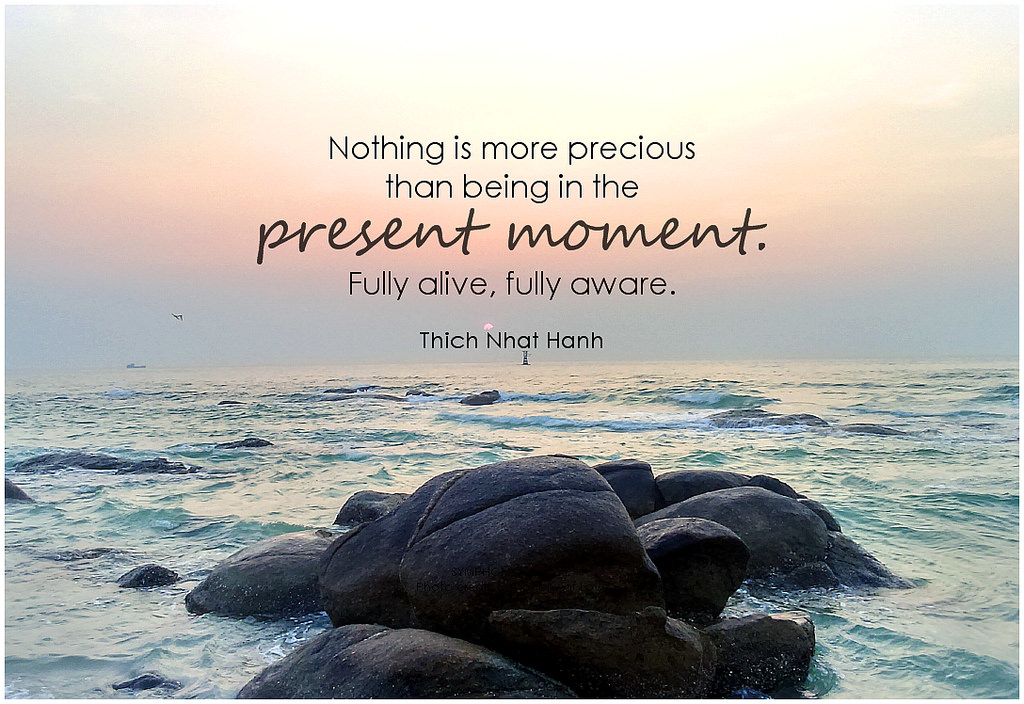
You can become mindful at any moment just by paying attention to your immediate experience. You can do it right now. What’s happening this instant? Think of yourself as an eternal witness, and just observe the moment. What do you see, hear, smell? It doesn’t matter how it feels—pleasant or unpleasant, good or bad—you roll with it because it’s what’s present; you’re not judging it. And if you notice your mind wandering, bring yourself back. Just say to yourself, “Now. Now. Now.”
Here’s the most fundamental paradox of all: Mindfulness isn’t a goal, because goals are about the future, but you do have to set the intention of paying attention to what’s happening at the present moment. Become aware of being alive. And breathe. As you draw your next breath, focus on the rise of your abdomen on the in-breath, the stream of heat through your nostrils on the out-breath. If you’re aware of that feeling right now, as you’re reading this, you’re living in the moment. Nothing happens next. It’s not a destination. This is it. You’re already there.
A lot of us like to put to tomorrow what we can do today. But what is tomorrow? Some time back, while walking, I started pondering about this question and this poem started to take shape.
Tomorrow
What is today, but yesterday’s tomorrow? What is tomorrow, but today’s tomorrow?
Tomorrow is a word infused with hope Truth or false, maybe in your horoscope?
As a child, tomorrow felt so far away Especially when tomorrow is your birthday It seemed that tomorrow would never come But when it came, it was today, oh what a conundrum
As you grow older, tomorrow seems to alter From anticipation, it changes to become a chore Deadlines and work become important And then tomorrow is something you wish Doesn’t come soon and becomes more distant
At the end of the day, as you know Tomorrow is just another day, make it your maxium So my advice to you is to just go with the flow And know that tomorrow is always there in the distance, it just never comes









 Memories and Such