Adulting 101: Dealing with Difficult Coworkers and Office Politics

Navigating the workplace can be challenging, especially for young adults just starting their careers. One of the most significant hurdles they may face is dealing with difficult coworkers and office politics. Understanding how to manage these situations effectively is crucial for maintaining a positive work environment and ensuring professional growth.

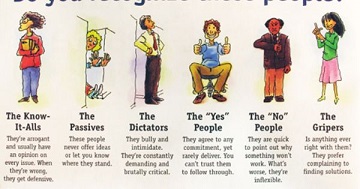
Difficult coworkers can manifest in various ways, from passive-aggressive behaviour to overt hostility. Recognising the different types of difficult coworkers is the first step in learning how to manage these relationships effectively.

Types of Difficult Coworkers

The Gossip: This coworker thrives on spreading rumours and creating drama. They often distort the truth and can create a toxic atmosphere.

The Micromanager: This individual has a hard time letting go of control. They may hover over colleagues’ work, constantly checking in and offering unsolicited advice.

The Negative Naysayer: This coworker is perpetually pessimistic and focuses on problems rather than solutions. Their negative attitude can be contagious and demoralising.

The Credit Stealer: This person takes credit for others’ ideas or work, often undermining a colleague’s contributions in front of others.

The Saboteur: This coworker actively works against a colleague by spreading false information or undermining their efforts.

The Know-It-All: This individual believes they have all the answers and is often dismissive of others’ ideas or contributions.

Recognising the Impact of Difficult Coworkers

Difficult coworkers can significantly affect one’s work experience, leading to increased stress, decreased productivity, and even burnout. Understanding the impact of these relationships is essential for developing effective coping strategies.

Emotional Toll: Constantly dealing with difficult personalities can lead to feelings of frustration, anxiety, and resentment.

Reduced Collaboration: Difficult coworkers can hinder teamwork and collaboration, making it challenging to achieve common goals.

Career Advancement: Negative interactions can impact one’s professional reputation and hinder career advancement opportunities.

Work-Life Balance: Stress from difficult coworkers can spill over into the personal life, affecting overall well-being.
Strategies for Dealing with Difficult Coworkers

Maintain professionalism: Regardless of the behaviour of coworkers, it’s essential to maintain professionalism in all interactions. This includes staying calm and keeping emotions in check, even in challenging situations. Responding with anger or frustration can escalate conflicts. Using respectful language and choosing words carefully. One should avoid using derogatory or confrontational language, even when they provoke. One should also set an example and model the behaviour they wish to see in others. Demonstrating professionalism can encourage coworkers to do the same.

Communicate effectively: Effective communication is key to resolving conflicts with difficult coworkers. One should practice active listening and show genuine interest in what their coworker is saying. This can help de-escalate tensions and foster a more collaborative environment. One can also frame concerns using ‘I’ statements to express how a situation affects them without placing blame. For example, “I feel overwhelmed when deadlines are changed at the last minute.” One can also be direct but tactful while addressing issues. Avoid beating around the bush, as this can lead to misunderstandings.

Set boundaries: Establishing clear boundaries is crucial when dealing with difficult coworkers. Identify limits and decide what behaviours one is willing to tolerate and what crosses the line. Be clear about boundaries and communicate them well directly to the coworker. For example, if a coworker frequently interrupts one’s work, let them know one needs uninterrupted time to focus. One should also be consistent in enforcing said boundaries. If a coworker is allowed to cross them occasionally, it may become a pattern.

Focus on solutions: When faced with difficult coworkers, it’s essential to focus on finding solutions rather than dwelling on problems. Try to understand the underlying reasons for the coworker’s behaviour. This can help address the issue more effectively. Collaborate with the coworker to brainstorm and identify potential solutions to the problem. This can foster a sense of teamwork and cooperation. Sometimes, finding a middle ground is necessary for resolving conflicts. Be willing to compromise when appropriate.

Seek support from management: If a difficult coworker’s behavior becomes unmanageable, it may be time to seek support from management or HR. Document incidents and keep a record of specific incidents involving the difficult coworker, including dates, times, and details. This documentation can be helpful when discussing the issue with management. Identify the appropriate person to speak to, whether it’s a supervisor, HR representative, or team leader. When discussing the issue with management, present the concerns calmly and professionally. Focus on how the behaviour affects work and the team.

Practice self-care: Dealing with difficult coworkers can be emotionally draining. Practising self-care is essential for maintaining well-being. Find activities that help unwind and relieve stress, such as exercise, meditation, or hobbies. Talk to trusted friends or family members about the experiences. Sharing feelings can provide emotional relief and perspective. Make time for activities that bring joy and fulfilment outside of work. This can help recharge and maintain a positive outlook.

Understanding Office Politics

Office politics refers to the dynamics and power structures that exist within a workplace. While it can be challenging to navigate, understanding office politics is essential for career success. Office politics often involves navigating the power dynamics between colleagues, supervisors, and management. Understanding who holds influence can help you navigate relationships more effectively. Building positive relationships with colleagues can be beneficial in a politically charged environment. Networking and fostering connections can enhance one’s professional reputation. Office politics can lead to conflicts and competition among coworkers. Recognising these dynamics can help one avoid unnecessary drama.
Strategies for Navigating Office Politics

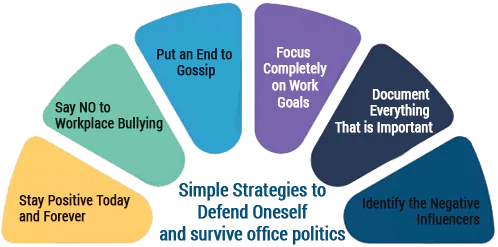
Build strong relationships: Take the time to connect with colleagues across departments. Building a strong professional network can provide support and open doors for future opportunities. Foster a friendly and approachable demeanor. Being open to conversations can help one build rapport with coworkers.

Stay informed: Stay informed about company developments, changes in leadership, and organisational goals. Understanding the bigger picture can help one navigate office politics more effectively. Pay attention to conversations and dynamics within the office. Being aware of the political landscape can help one make informed decisions.

Stay neutral: Steer clear of gossip and negative talk about coworkers. Engaging in gossip can damage the reputation and create unnecessary drama. When conflicts arise, try to remain neutral. Taking sides can alienate one from colleagues and create tension.

Focus on performance: Focus on delivering high-quality work and meeting goals. A strong performance can help one build credibility and respect within the organisation. Regularly seek feedback from supervisors and colleagues. This shows the commitment to improvement and can help one navigate office dynamics.

Be professional: Regardless of the political climate, always maintain professionalism in all interactions. This includes being respectful, courteous, and accountable. Stay above the fray and avoid engaging in office drama. Focus on the work and maintain a positive attitude.

Dealing with difficult coworkers and navigating office politics can be challenging, especially for young adults entering the workforce. However, by implementing the strategies outlined above, one can effectively manage difficult relationships and foster a positive work environment. Maintaining professionalism, effective communication, and a focus on solutions are key to overcoming challenges in the workplace. Additionally, understanding the dynamics of office politics can help one navigate relationships and enhance their career prospects. Ultimately, the workplace is a microcosm of society, and learning to manage difficult personalities and political dynamics is an essential skill that will serve one well throughout their career. Embrace these challenges as opportunities for growth, and remember that the ability to navigate difficult situations will contribute to one’s long-term success and fulfilment in their professional life.
2024 Week 46 Update

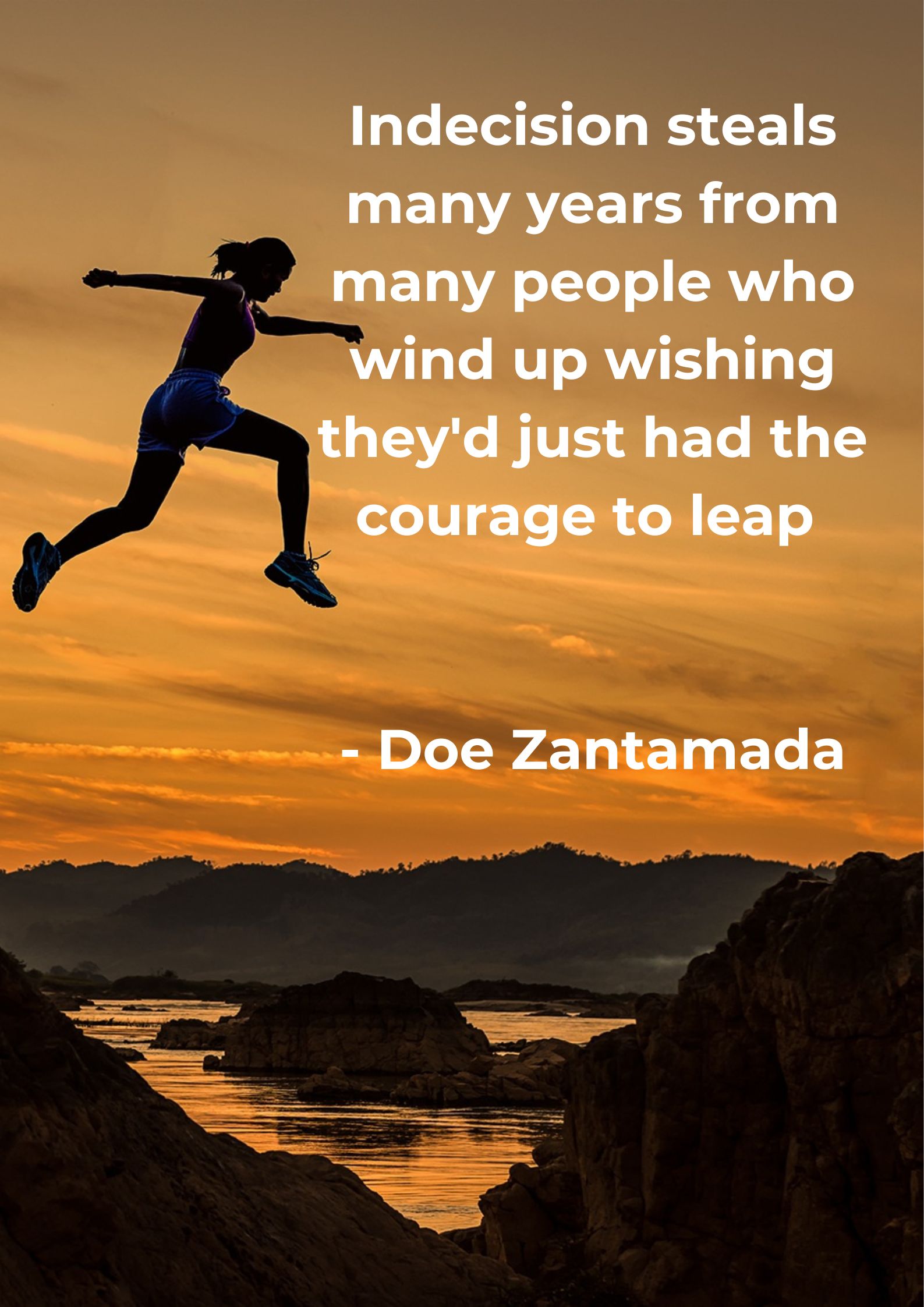
Today’s quote from author and artist Doe Zantamata highlights the toll that hesitation and fear can take on one’s life. When faced with major decisions or opportunities, it’s easy to get stuck in a cycle of “what ifs,” allowing fear to prevent us from taking meaningful steps forward. While seemingly protective, this hesitation can hold people back, causing years to slip by filled with missed experiences and unrealised potential. Zantamata’s message is ultimately about courage: leaping, even if uncertain, can lead to personal growth, discovery, and fulfilment—outcomes that indecision can never provide. By encouraging people to act, she highlights that it’s better to move forward with some uncertainty than to let the fear of failure or imperfection paralyse them. The quote reminds us that growth and change often require stepping out of our comfort zones and embracing a bit of the unknown to lead a fuller, richer life.

This week was all about me trying to manage my ankle pain. I finally caved in and saw a doctor who told me that it was most likely tendonitis. She gave me some medication and I have till tomorrow to decide if it has healed or not. If not, she will send me to have looked over by a specialist. As of this morning, it seems healed, but let me give it the rest of the day and I will make a call tomorrow morning.

GG has been very busy with exams, but the end is near. She has her last exam early next week and then is free for the next two months. She wanted to go for an internship, but because we are going to India later in the year, she decided to forego an internship this semester break. 

BB finished his driving course sometime last week and is back with his unit. We miss him during the week, as during this part of the course, he could come home each night. Now that he is back with his unit, we will only see him for 48 hours each week. But c’est la vie, and I am now counting down to next October when he will be done with his national service.

That’s all from me this week. Take care and stay positive!

In My Hands Today…

Some People Need Killing: A Memoir of Murder in My Country – Patricia Evangelista

My job is to go to places where people die. I pack my bags, talk to the survivors, write my stories, then go home to wait for the next catastrophe. I don’t wait very long.”

Journalist Patricia Evangelista came of age in the aftermath of a street revolution that forged a new future for the Philippines. Three decades later, in the face of mounting inequality, the nation discovered the fragility of its democratic institutions under the regime of strongman Rodrigo Duterte.

Some People Need Killing is Evangelista’s meticulously reported and deeply human chronicle of the Philippines’ drug war. For six years, Evangelista chronicled the killings carried out by police and vigilantes in the name of Duterte’s war on drugs—a war that has led to the slaughter of thousands—immersing herself in the world of killers and survivors and capturing the atmosphere of fear created when an elected president decides that some lives are worth less than others.

The book takes its title from a vigilante whose words seemed to reflect the psychological accommodation that most of the country had “I’m really not a bad guy,” he said. “I’m not all bad. Some people need killing.”

Festivals of India: Shree Kolayat Fair

The Shree Kolayat Fair, also known as the Kapil Muni Fair, is one of Rajasthan’s most vibrant and culturally rich festivals. Held annually in the town of Kolayat, near Bikaner, this fair is a significant religious and social event that attracts thousands of devotees and tourists. The fair is dedicated to Kapil Muni, a revered sage in Hindu mythology, and is marked by a series of rituals, cultural performances, and communal activities. 

The origins of the Shree Kolayat Fair are deeply rooted in Hindu mythology and the ancient history of Rajasthan. The town of Kolayat is believed to be where Kapil Muni, an incarnation of Lord Vishnu, meditated and attained enlightenment. According to legend, Kapil Muni was a great sage and philosopher who composed the “Sankhya Darshan,” one of the six classical systems of Indian philosophy.

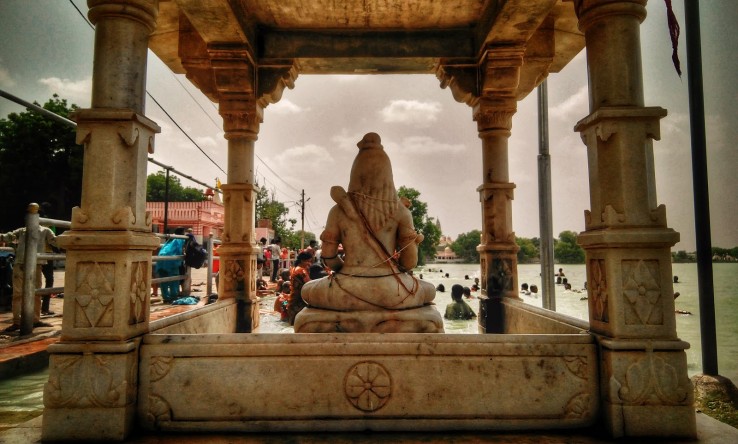
Kolayat is home to the Kapil Muni Temple, which stands by the side of a large lake known as Kolayat Lake. The lake is considered sacred, and its waters are believed to have purifying properties. The Shree Kolayat Fair is held in honour of Kapil Muni and is a time for devotees to pay homage to the sage, seek blessings, and take part in various religious and cultural activities.

The Shree Kolayat Fair is steeped in mythology and legends that add to its spiritual significance. One of the central myths associated with the fair revolves around Kapil Muni’s penance and the sanctity of Kolayat Lake. Kapil Muni is regarded as an incarnation of Lord Vishnu and is credited with the authorship of the Sankhya philosophy, which emphasises the dualism of matter and spirit. According to legend, Kapil Muni chose Kolayat as his place of meditation due to its serene and tranquil environment. It is said that his intense penance and meditation at Kolayat Lake sanctified the waters, making them capable of absolving sins and granting spiritual purification. Another legend tells of a time when the sage’s meditation was disturbed by a group of celestial beings. In his anger, Kapil Muni cursed them, but later, out of compassion, he granted them the boon that anyone who bathed in the lake during the fair would be absolved of their sins. This belief continues to draw thousands of devotees to Kolayat Lake each year.

Another significant myth associated with Kapil Muni and Kolayat Lake involves King Sagara and his sons. According to the legend, King Sagara performed the Ashwamedha Yagna (a horse sacrifice ritual) to assert his supremacy. Indra, the king of gods, became jealous and stole the sacrificial horse, hiding it in the hermitage of Kapil Muni. King Sagara’s 60,000 sons searched for the horse and eventually found it at Kapil Muni’s hermitage. Mistaking the sage for the thief, they disturbed his meditation. In his anger, Kapil Muni reduced them to ashes with his fiery gaze. The king’s descendants later performed penance to appease the sage and were instructed to bathe in Kolayat Lake to purify their souls and attain salvation.

The Shree Kolayat Fair blends religious rituals, cultural performances, and communal activities. The fair typically takes place in the month of Kartik, around October-November according to the Gregorian calendar and culminates on Kartik Purnima, the full moon day of Kartik. 

One of the most important rituals of the Shree Kolayat Fair is the holy dip in Kolayat Lake. Devotees believe that bathing in the lake during the fair absolves them of their sins and grants spiritual purification. The lake is surrounded by 52 ghats or bathing steps, and each ghat has its significance. On Kartik Purnima, one sees the highest number of devotees taking the holy dip, creating a vibrant and bustling atmosphere.

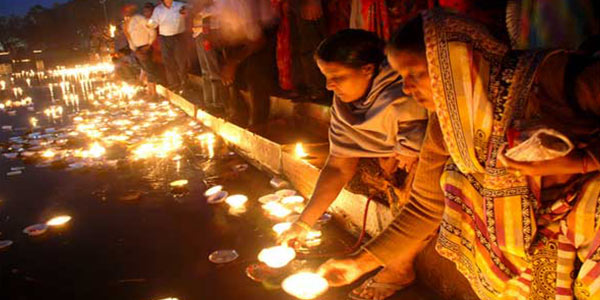
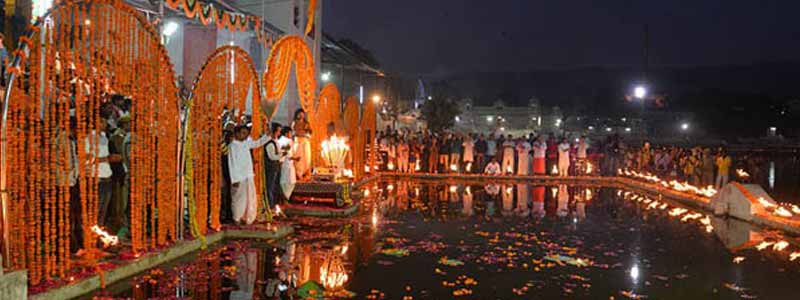
Another significant ritual is the offering of diyas or earthen lamps to the lake. Devotees light diyas and set them afloat on the waters of Kolayat Lake as an offering to Kapil Muni. The sight of thousands of diyas floating on the lake creates a mesmerising and serene ambiance, symbolising the triumph of light over darkness and good over evil.

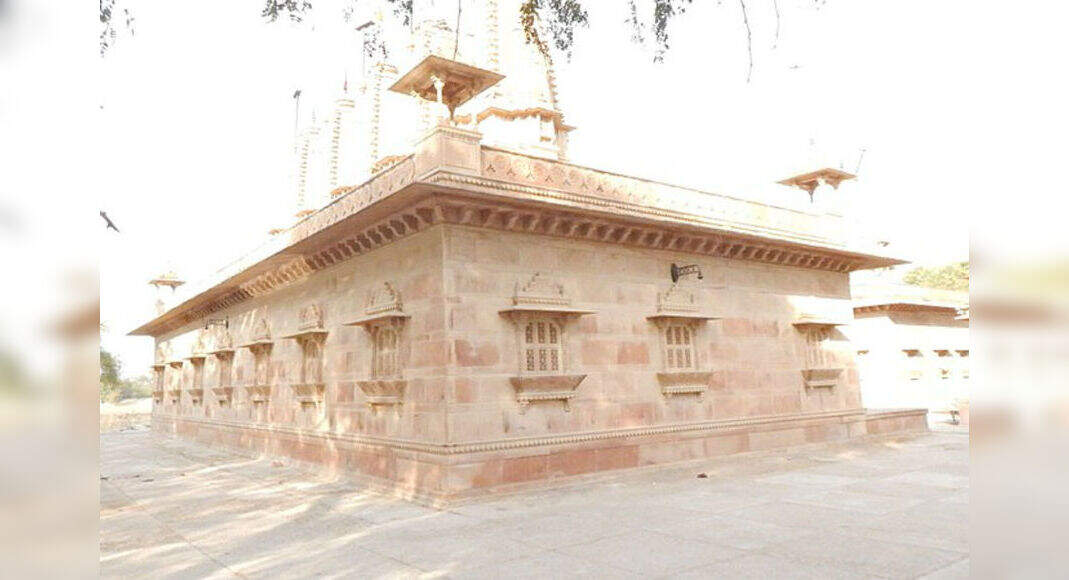
The Kapil Muni Temple, located on the banks of Kolayat Lake, is the focal point of the fair. Devotees visit the temple to offer prayers, seek blessings, and perform rituals to honour Kapil Muni. The temple is beautifully decorated during the fair, and special pujas or worship ceremonies are conducted by the priests.

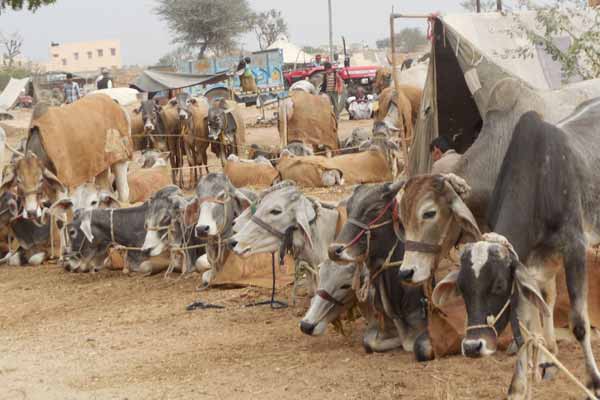
The Shree Kolayat Fair is also known for its cattle trading activities. Farmers and traders from various parts of Rajasthan and neighbouring states bring their livestock to the fair for trading. The cattle market is a bustling hub of activity, with a wide variety of livestock, including cows, camels, goats, and horses, being bought and sold. The trading of livestock is an essential aspect of the fair, reflecting the agrarian lifestyle of the region.

The fair is a celebration of Rajasthani culture and heritage, with a variety of cultural performances taking place throughout the event. Folk music and dance performances, puppet shows, and traditional Rajasthani plays are some of the highlights. These performances provide entertainment for the visitors and offer a glimpse into the rich cultural traditions of Rajasthan.

Community feasts are an integral part of the Shree Kolayat Fair. Devotees and visitors come together to share meals, fostering a sense of community and camaraderie. The feasts typically include traditional Rajasthani dishes, and the food is often prepared and served by volunteers.

The fair attracts pilgrims from various parts of India, and many of them undertake long journeys to reach Kolayat. Pilgrims often travel in groups, singing devotional songs and carrying flags and banners. Processions are a common sight during the fair, with devotees carrying idols of Kapil Muni and other deities through the streets.

Kartik Purnima, the full moon day of the Hindu month of Kartik, holds special significance in Hinduism and is considered an auspicious day for various religious activities. The Shree Kolayat Fair culminates on this day, and it is believed that the spiritual benefits of participating in the fair are magnified on Kartik Purnima.

Kartik Purnima is associated with several important Hindu deities and events. It is believed to be the day when Lord Vishnu incarnated as Matsya, his fish avatar to save the Vedas from the demon Hayagriva. It is also considered the day when Lord Shiva defeated the demon Tripurasura, leading to the celebration of Tripuri Purnima.

In the context of the Shree Kolayat Fair, Kartik Purnima is the day when the blessings of Kapil Muni are most potent. Devotees believe that performing rituals and taking a holy dip in Kolayat Lake on this day can lead to the absolution of sins and the attainment of spiritual merit.

The rituals on Kartik Purnima at the Shree Kolayat Fair are elaborate and deeply symbolic. Devotees wake up early in the morning and take a holy dip in the lake at sunrise. They then visit the Kapil Muni Temple to offer prayers and seek blessings. Special pujas and havans or rituals with the holy fire are conducted by the priests, and devotees participate in these ceremonies with great devotion. In the evening, the lake is illuminated with thousands of diyas, creating a breathtaking spectacle. Devotees offer the diyas to the lake, and the sight of the floating lamps is a symbol of hope, faith, and spiritual enlightenment.

The Shree Kolayat Fair is not just a religious event; it is a significant cultural and social gathering that has a profound impact on the local community and the region as a whole. The fair provides a substantial economic boost to the town of Kolayat and the surrounding areas. The influx of pilgrims and tourists leads to increased business for local vendors, artisans, and traders. The cattle market, in particular, is a major economic activity, with significant transactions taking place during the fair. The cultural performances and activities at the fair play a crucial role in promoting and preserving Rajasthani culture. Folk music, dance, and traditional arts are showcased, providing a platform for local artists and performers. The fair also attracts cultural enthusiasts and researchers who are interested in studying and documenting the rich heritage of Rajasthan.

The Shree Kolayat Fair fosters social cohesion and community spirit. It brings together people from different backgrounds and regions, creating an environment of unity and harmony. The communal activities, such as feasts and processions, encourage social interaction and strengthen bonds within the community. While the Shree Kolayat Fair continues to be a vibrant and significant event, it faces several challenges in the modern era. Efforts are being made to address these challenges and ensure the preservation of the fair’s cultural and religious significance. The large number of visitors to the fair can lead to environmental issues, such as pollution and waste management challenges. Efforts are being made to promote eco-friendly practices, such as the use of biodegradable materials and proper waste disposal systems. 

Awareness campaigns are also conducted to educate visitors about the importance of preserving the natural environment of Kolayat Lake. With the influence of modernisation and changing lifestyles, there is a risk of losing traditional practices and rituals associated with the fair. Cultural preservation initiatives, such as documentation and promotion of traditional arts, are being undertaken to ensure that the heritage of the Shree Kolayat Fair is passed down to future generations. To accommodate the growing number of visitors, there is a need for improved infrastructure and facilities. This includes better transportation, accommodation, sanitation, and medical services. The local government and community organisations are working together to enhance the infrastructure while maintaining the cultural integrity of the fair.

The Shree Kolayat Fair is a celebration of faith, culture, and community that holds a special place in the hearts of the people of Rajasthan. It is a time when devotees come together to honor Kapil Muni, seek spiritual purification, and celebrate the rich cultural heritage of the region. The fair’s vibrant rituals, cultural performances, and communal activities create an atmosphere of joy and devotion, making it a unique and memorable experience for all who attend. As the fair continues to evolve and adapt to modern challenges, it remains a testament to the enduring traditions and values of the Garo people. The Shree Kolayat Fair is not just a festival; it is a living tradition that connects the past with the present and offers a glimpse into the spiritual and cultural richness of Rajasthan.

In My Hands Today…

The Power of Regret: How Looking Backward Moves Us Forward – Daniel H. Pink

Everybody has regrets, Daniel H. Pink explains in The Power of Regret. They’re a universal and healthy part of being human. And understanding how regret works can help us make smarter decisions, perform better at work and school, and bring greater meaning to our lives.

Drawing on research in social psychology, neuroscience, and biology, Pink debunks the myth of the “no regrets” philosophy of life. And using the largest sampling of American attitudes about regret ever conducted as well as his own World Regret Survey–which has collected regrets from more than 15,000 people in 105 countries–he lays out the four core regrets that each of us has. These deep regrets offer compelling insights into how we live and how we can find a better path forward.

As he did in his bestsellers Drive, When, and A Whole New Mind, Pink lays out a dynamic new way of thinking about regret and frames his ideas in ways that are clear, accessible, and pragmatic. Packed with true stories of people’s regrets as well as practical takeaways for reimagining regret as a positive force, The Power of Regret shows how we can live richer, more engaged lives.