The Lunar New Year is the most important festival in the Chinese calendar. Also known as the Chinese New Year, this festival celebrates the beginning of a new year on the traditional lunisolar Chinese calendar. In Chinese, the festival is commonly referred to as the Spring Festival as the spring season in the lunisolar calendar traditionally starts with lichun, the first of the twenty-four solar terms which the festival celebrates around this time. of the Chinese New Year. Marking the end of winter and the beginning of the spring season, observances traditionally take place from Chinese New Year’s Eve, the evening preceding the first day of the year, to the Lantern Festival, held on the 15th day of the year. The first day of the Lunar New Year begins on the new moon that appears between 21 January and 20 February.
The Lunar New Year is one of the most important holidays in Chinese culture and has influenced similar celebrations in other cultures, such as the Losar of Tibet, the Tết of Vietnam, the Korean New Year, and the Ryukyu New Year.
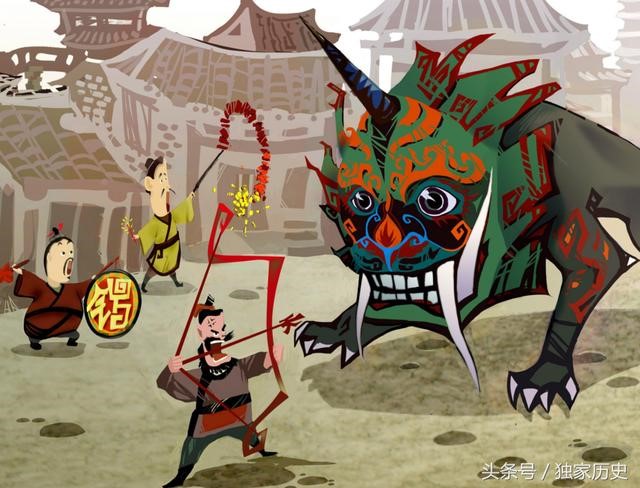
According to legend, the Chinese New Year started with a mythical beast called the Nian, a beast that lives under the sea or in the mountains during the annual Spring Festival. The Nian would eat villagers, especially children, in the middle of the night. One year, all the villagers decided to hide from the beast. An older man appeared before the villagers went into hiding and said that he would stay the night and would get revenge on the Nian. The old man put red papers up and set off firecrackers. The day after, the villagers came back to their town and saw that nothing had been destroyed. They assumed that the old man was a deity who came to save them. The villagers then understood that Yanhuang had discovered that the Nian was afraid of the colour red and loud noises. Then the tradition grew when New Year was approaching, and the villagers would wear red clothes, hang red lanterns, and red spring scrolls on windows and doors and use firecrackers and drums to frighten away the Nian. From then on, Nian never came to the village again. The Nian was eventually captured by Hongjun Laozu, an ancient Taoist monk.
The fifteenth day of the new year is celebrated as the Lantern Festival, also known as the Yuanxiao Festival, the Shangyuan Festival, and Chap Goh Meh. Rice dumplings, or tangyuan, a sweet glutinous rice ball brewed in a soup, are eaten this day. Candles are lit outside houses as a way to guide wayward spirits home. Families may walk the streets carrying lanterns, which sometimes have riddles attached to or written on them as a tradition. This day often marks the end of the Chinese New Year festivities.
In China and Malaysia, this day is celebrated by individuals seeking a romantic partner, akin to Valentine’s Day. Nowadays, single women write their contact numbers on mandarin oranges and throw them in a river or a lake after which single men collect the oranges and eat them. The taste is an indication of their possible love: sweet represents a good fate while sour represents a bad fate. In Singapore, chap goh mei is also a day where single ladies wishing for husbands throw oranges, red dates and longans into the Singapore River.
Another reunion dinner is held with lanterns and oranges being a large part of the celebrations. It is also referred to as dengjie or lantern festival due to a tradition that originated during the Tang Dynasty involving the lighting of lanterns on this day. The Lantern Festival marks the final day of the traditional Chinese New Year celebrations. As early as the Western Han dynasty, between 206 BC and 25 AD, it had become a festival with great significance.
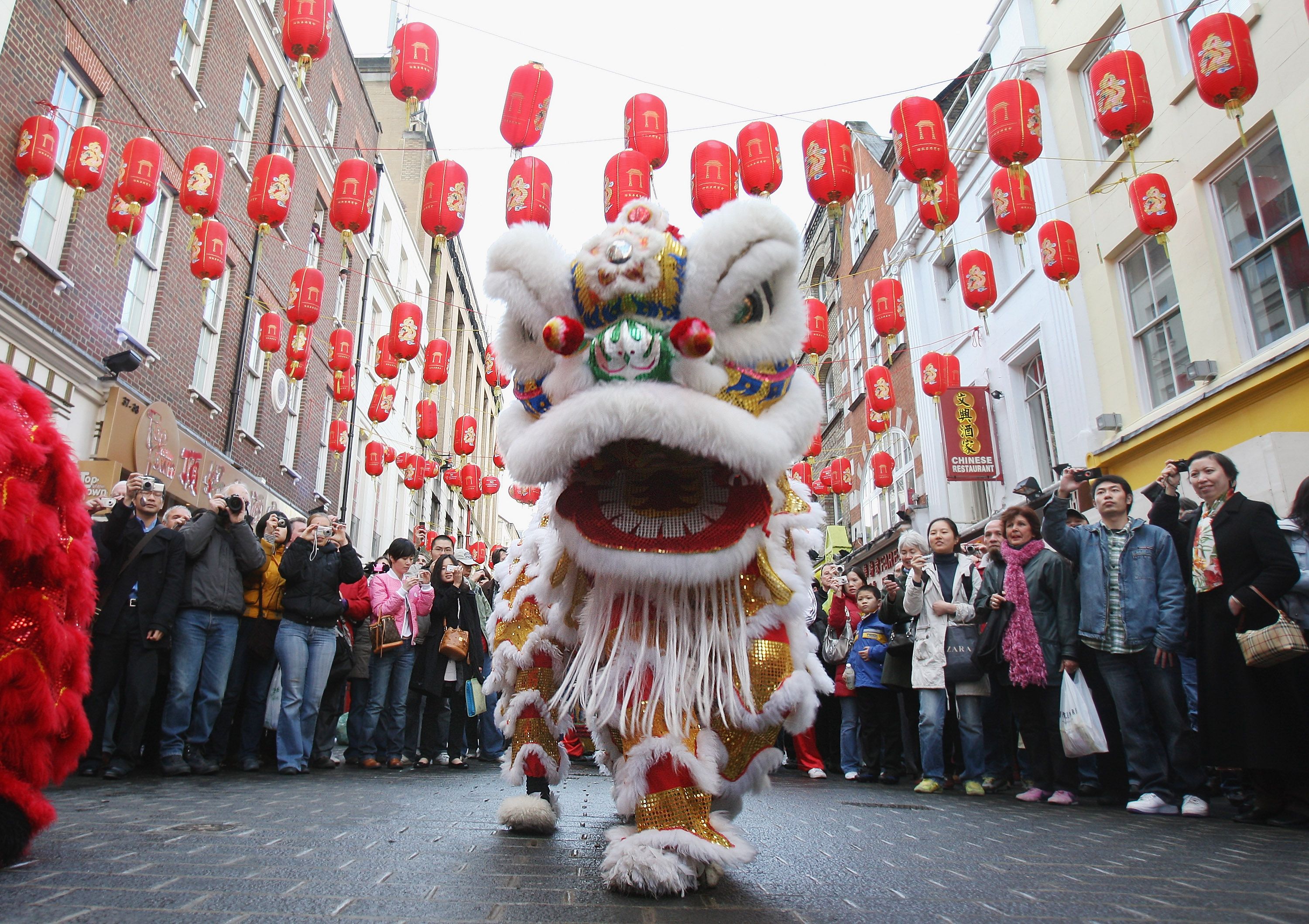
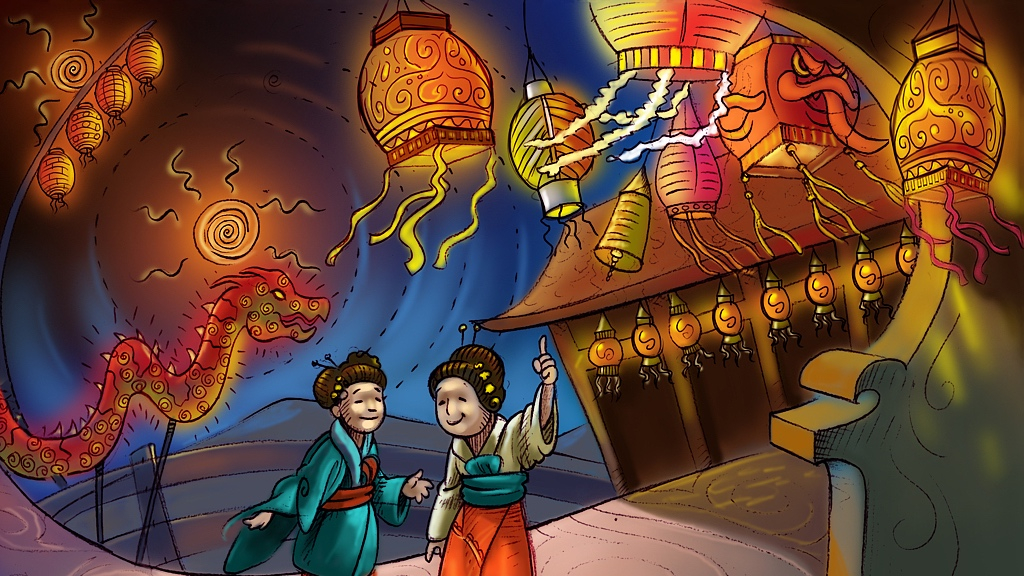
During the Lantern Festival, children go out at night carrying paper lanterns and solve riddles on the lanterns. In ancient times, the lanterns were fairly simple, and only the emperor and noblemen had large ornate ones. In modern times, lanterns have been embellished with many complex designs. The lanterns are almost always red to symbolise good fortune.
There are several beliefs about the origin of the Lantern Festival. However, its roots trace back more than 2,000 years and are popularly linked to the reign of Emperor Wen of the Han dynasty. Emperor Ming, an advocate of Buddhism, noticed that Buddhist monks would light lanterns in temples on the fifteenth day of the first lunar month. As a result, he ordered all households, temples and the imperial palace to light lanterns on that evening. From there it developed into a folk custom. Another likely origin is the celebration of the declining darkness of winter and the community’s ability to move about at night with human-made light, namely, lanterns. During the Han dynasty, the festival was connected to Ti Yin, the deity of the North Star.
There is one legend that states that it was a time to worship Taiyi, the God of Heaven in ancient times. The belief was that Taiyi controlled the destiny of the human world. He had sixteen dragons at his beck and call and he decided when to inflict drought, storms, famine or pestilence upon human beings. Beginning with Qin Shi Huang, the first emperor of China, all the emperors ordered splendid ceremonies each year. The emperor would ask Taiyi to bring favourable weather and good health to him and his people. Another legend associates the Lantern Festival with Taoism. Tianguan is the Taoist deity responsible for good fortune. His birthday falls on the fifteenth day of the first lunar month. It is said that Tianguan likes all types of entertainment, so followers prepare various kinds of activities during which they pray for good fortune. Yet another legend associates the Lantern Festival with the worship of the lunar goddess Chang’e, who is said to reside on the moon with her companion, the jade rabbit. According to folklore, on the 15th day of the first lunar month, Chang’e descends to Earth to bestow blessings upon those who honour her with offerings of lanterns, fruits, and sweet treats.
Another legend associates the Lantern Festival with an ancient warrior named Lan Moon, who led a rebellion against the tyrannical king in ancient China. He was killed in the storming of the city and the successful rebels commemorated the festival in his name. Yet another common legend dealing with the origins of the Lantern Festival speaks of a beautiful crane that flew down to earth from heaven. After it landed on earth it was hunted and killed by some villagers. This angered the Jade Emperor in heaven because the crane was his favourite. So, he planned a storm of fire to destroy the village on the fifteenth lunar day. The Jade Emperor’s daughter warned the inhabitants of her father’s plan to destroy their village. The village was in turmoil because nobody knew how they could escape their imminent destruction. However, a wise man from another village suggested that every family should hang red lanterns around their houses, set up bonfires on the streets, and explode firecrackers on the fourteenth, fifteenth, and sixteenth lunar days. This would give the village the appearance of being on fire to the Jade Emperor. On the fifteenth lunar day, troops sent down from heaven whose mission was to destroy the village saw that the village was already ablaze, and returned to heaven to report to the Jade Emperor. Satisfied, the Jade Emperor decided not to burn down the village. From that day on, people celebrate the anniversary on the fifteenth lunar day every year by carrying lanterns on the streets and exploding firecrackers and fireworks.
Another legend about the origins of the Lantern Festival involves a maid named Yuan-Xiao. In the Han dynasty, Dongfang Shuo was a favourite adviser of the emperor. One winter day, he went to the garden and heard a little girl crying and getting ready to jump into a well to commit suicide. Shuo stopped her and asked why. She said she was Yuan-Xiao, a maid in the emperor’s palace and that she never had a chance to see her family since she started working there. If she could not have the chance to show her filial piety in this life, she would rather die. Shuo promised to find a way to reunite her with her family. Shuo left the palace and set up a fortune-telling stall on the street. Due to his reputation, many people asked for their fortunes to be told but everyone got the same prediction – a calamitous fire on the fifteenth lunar day. The rumour spread quickly. Everyone was worried about the future so they asked Dongfang Shuo for help.
Dongfang Shuo said that on the thirteenth lunar day, the God of Fire would send a fairy in red riding a black horse to burn down the city. When people saw the fairy they should ask for her mercy. On that day, Yuan-Xiao pretended to be the red fairy. When people asked for her help, she said that she had a copy of a decree from the God of Fire that should be taken to the emperor. After she left, people went to the palace to show the emperor the decree which stated that the capital city would burn down on the fifteenth. When the emperor asked Dongfang Shuo for advice, the latter said that the God of Fire liked to eat tangyuan which are sweet dumplings. Yuan-Xiao should cook tangyuan on the fifteenth lunar day and the emperor should order every house to prepare tangyuan to worship the God of Fire at the same time. Also, every house in the city should hang a red lantern and explode firecrackers. Lastly, everyone in the palace and people outside the city should carry their lanterns on the street to watch the lantern decorations and fireworks. The Jade Emperor would be deceived and everyone would avoid the disastrous fire.
The emperor happily followed the plan. Lanterns were everywhere in the capital city on the night of the fifteenth lunar day and people were walking on the street and there were noisy firecrackers. It looked as if the entire city was on fire. Yuan-Xiao’s parents went into the palace to watch the lantern decorations and were reunited with their daughter. The emperor decreed that people should do the same thing every year. Since Yuan-Xiao cooked the best tangyuan, people called the day the Yuan-Xiao Festival.
As the lanterns cast their radiant glow upon the world, the Lantern Festival serves as a beacon of hope, renewal, and cultural pride. Across continents and generations, people come together to celebrate the triumph of light over darkness, unity over division, and joy over adversity.





:max_bytes(150000):strip_icc():focal(999x0:1001x2)/year-of-the-dragon-020624-tout-f82b60115a9d462dbf2a40256e40c7ae.jpg)



 Memories and Such