In My Hands Today…

Half Lion: How P.V. Narasimha Rao Transformed India – Vinay Sitapati

When P.V. Narasimha Rao became the unlikely prime minister of India in 1991, he inherited a nation adrift, violent insurgencies, and economic crisis. Despite being unloved by his people, mistrusted by his party, and ruling under the shadow of 10 Janpath, Rao transformed the economy and ushered India into the global arena.

With exclusive access to Rao’s never-before-seen personal papers and diaries, this definitive biography provides new revelations on the Indian economy, nuclear programme, foreign policy and the Babri Masjid. Tracing his early life from a small town in Telangana through his years in power, and finally, his humiliation in retirement, it never loses sight of the inner man, his difficult childhood, his corruption and love affairs, and his lingering loneliness. Meticulously researched and brutally honest, this landmark political biography is a must-read for anyone interested in knowing about the man responsible for transforming India.

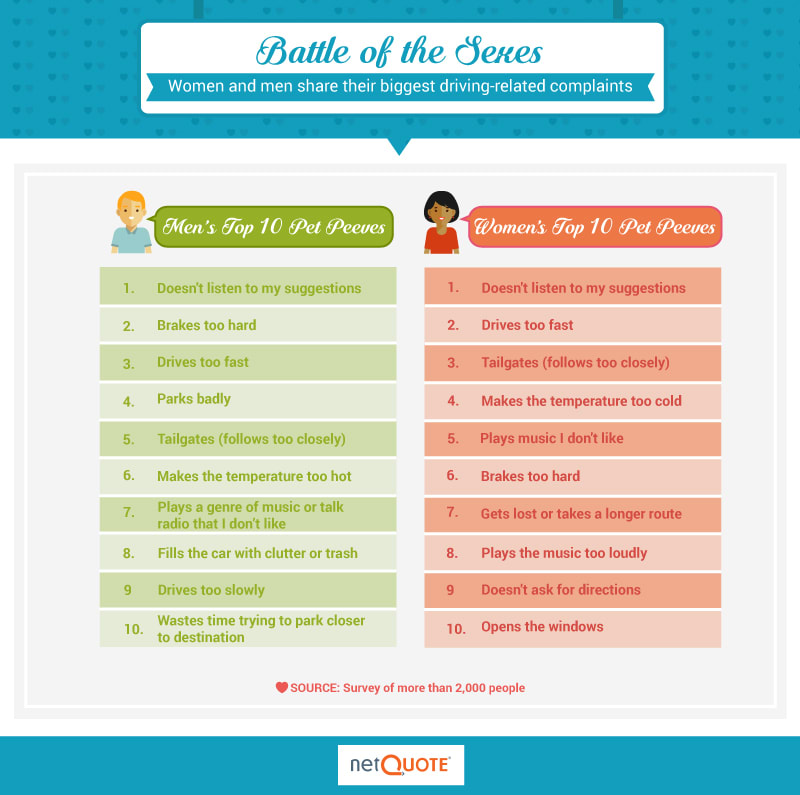
Pet Peeves: Small irritations that can really annoy

You are in a restaurant or café and suddenly the person at the table next to you starts eating their food with loud noises. You instantly get triggered and irritated. That’s a pet peeve!

So what is a pet peeve? A pet peeve, pet aversion, or pet hate is a minor annoyance that an individual finds particularly irritating to them, to a greater degree than would be expected based on the experience of others. Pet peeves aren’t things that are so inappropriate and rude that they necessarily warrant taking action, but they’re generally bothersome in a way that will make one roll their eyes in frustration. While pet peeves are essentially trivial, hence the name, they are an evolutionary remnant of human beings’ survival skills. The feeling one gets when they are peeved was the body’s way of alerting a person to danger in the past, that something is wrong, triggering a flight response. They’re not as life-threatening anymore in modern society, but the discomfort remains.

The noun peeve, meaning an annoyance, is believed to have originated in the United States early in the twentieth century, derived by back-formation from the adjective peevish, meaning “ornery or ill-tempered”, which dates from the late 14th century. The term pet peeve was introduced to a wide readership in the single-panel comic strip The Little Pet Peeve in the Chicago Tribune during the period 1916–1920 and was created by the cartoonist Frank King, who also created the long-running Gasoline Alley strip. King’s “little pet peeves” were humorous critiques of generally thoughtless behaviours and nuisance frustrations.

In their book Annoying: The Science of What Bugs Us, Joe Palca and Florence Lichtman explore the history of research behind pet peeves. According to the authors, the three U’s are how we identify annoyances. The three Us are Unpleasant, which is the annoying stimulus is something we don’t like, Unpredictable because we have no way of determining when the annoying stimulus will happen and Uncertain Duration because it is repetitive and will continue for an indefinite amount of time.

The three types of annoyances are social annoyances which are caused by the violation of social norms, environmental annoyances which come from the sounds and smells of our environment and interpersonal annoyances that are caused by individuals around us, especially those with interact with frequently.

But why do we become annoyed in the first place? The truth is science hasn’t quite figured it out. According to some scientists, it could be a remnant of the evolutionary response where our brains are shocked into a focus mode when we become annoyed and we become more aware of our surroundings and pay greater attention to the stimulus that is annoying us which is nature’s way of protecting us, something that ancient man needed more than today’s humans.

Everyone has some pet peeve or the other and here is a compilation of some of the most irritating habits that trigger most people and includes some of my pet peeves.

  • Loud chewing, people chewing with their mouths open or generally making any noises while eating.
  • Chronic lateness. As someone who is always on time, this tells me that my time is not as important as theirs. Of course, sometimes things happen, but if they don’t let me know they are late, it is even more irritating.
  • People who shuffle their feet while walking
  • The screeching of fingernails on a blackboard.
  • People who block the entrance to the train or bus and do not allow others to board or alight.
  • Those who cough or sneeze without covering their mouths.
  • People that clip their nails at work, while sitting at their desks.
  • People who walk slowly or stop suddenly in the middle of the sidewalk.
  • People who cut queues. This is not an issue in Singapore, but when I am in India, this makes me want to grit my teeth in frustration.
  • People who take ages to get through airport security and don’t know the rules even today.
  • People who stand on the left side of an escalator. Right is for standing! Left for walking!
  • Misspelling my name when it’s right there in the email staring you in the face.
  • Online stores that charge for shipping.
  • People who talk over you when you’re still in the middle of the sentence.
  • Passive-aggressive behaviour. If you have something you want to say, just say it.
  • People on public transport who will not use their headphones and instead choose to let the whole bus or train carriage their choice of music or personal conversations.
  • When people repeatedly hit the elevator button, as if that’ll make the elevator arrive sooner.
  • The reply-all that asks to be taken off of an email thread.
  • Receiving emails from a colleague with the boss copied.
  • People who abbreviate things that don’t need to be shortened.
  • Excessive public displays of affection.
  • Micro-Management at work
  • Staring at someone’s Phone
  • Standing too close to another person.
  • Talking to someone who has headphones on
  • Cracking knuckles.
  • Pushy salespeople and especially those salespeople who accost you while one is walking.
  • Being constantly pessimistic.
  • Looking at the phone during a conversation.
  • Leaving the toilet seat up.

In a perfect world, everyone would be mindful of their actions and habits not to be annoying. Sadly, some people don’t care about others and continue with their irritating ways. Instead of perpetually complaining, there are measures you can do to keep pet peeves from affecting your mood and disposition. The first thing you can do is admit what is bothersome. Being in denial and dismissive about what’s wrong will only delay the inevitable anger and frustration. It’s better to take the bull by the horns and be honest, even if it’s with yourself. Next, you can address the source of the pet peeve and open the lines of communication. This is important if the person who annoys you is someone you live or work closely with. Remember to be kind and polite when telling them. Sometimes, people are unaware of their quirks and are willing to accommodate your request. Lastly, you can choose to accept the situation that you can’t control everything. Take deep breaths when it happens or remove yourself from the area. Don’t let a simple pet peeve ruin your day.

So what are your pet peeves? Did they make my list?

2022 Week 03 Update

Namaskar and hello from Mumbai! I landed in Mumbai late last week after more than two years on what is my last trip to my childhood home. I am here to help my parents clear up the house they have lived together for fifty years and where my father and his parents and siblings have lived for more than seventy years and move them to their new home in a different state. My mother’s sister also stays in the same place they will be living in, so there’s some relief for me and my sister in case of any emergencies. The place is also equipped with a nurse on call 24/7 and in cases of medical emergencies, they have an ambulance that will take the patient to a nearby hospital with which they have a tie-up. Any trips after this to Mumbai will be as a visitor and one where I will either live in a hotel or someone else’s home. As my flight landed in Mumbai, I felt both happiness and sadness.

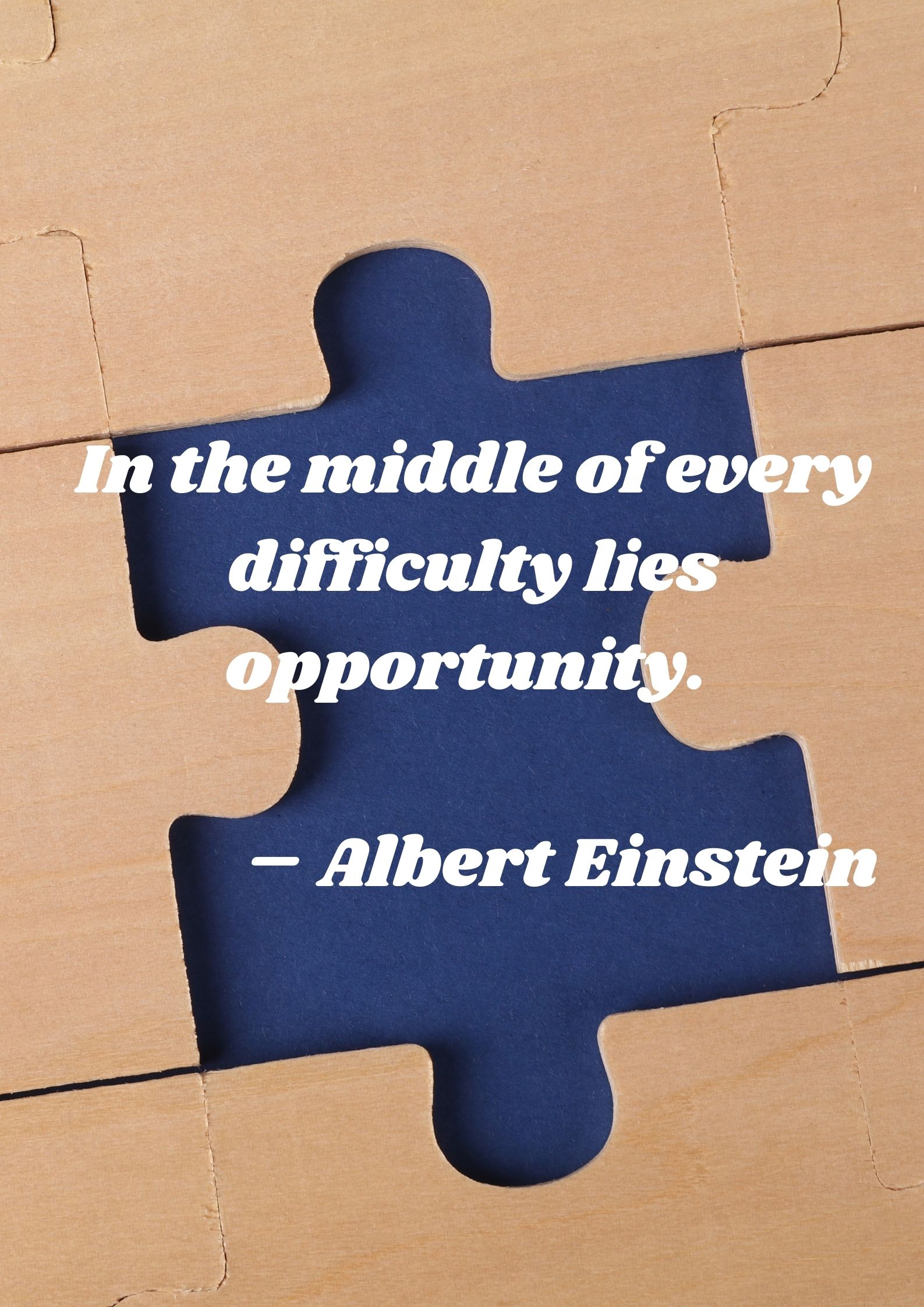
As the world is trying to battle COVID, today’s quote from Albert Einstein is so apt. Einstein says that amid every difficulty lies an opportunity. This is part of a larger quote attributed to him which says Out of clutter, find simplicity. From discord, find harmony. In the middle of difficulty, lies opportunity. What this means is that when one is in trouble and difficulty, in the middle of problems, if we find the core of the issue we are facing, that will give us the key to that issue. It also means that when one faces challenges, one has a greater possibility of growth and understanding. If things are easy, one does not change one’s preconceptions or alter one’s view of life.

So take care and stay safe. I hope to remain safe and COVID-free during my time in India, so I can return home without any complications. Please get vaccinated if you still are unvaccinated and get the booster shots if eligible as this has proven to help with the virus.

In My Hands Today…

Genghis Khan and the Making of the Modern World – Jack Weatherford

The name Genghis Khan often conjures the image of a relentless, bloodthirsty barbarian on horseback leading a ruthless band of nomadic warriors in the looting of the civilized world. But the surprising truth is that Genghis Khan was a visionary leader whose conquests joined backward Europe with the flourishing cultures of Asia to trigger a global awakening, an unprecedented explosion of technologies, trade, and ideas. In Genghis Khan and the Making of the Modern World, Jack Weatherford, the only Western scholar ever to be allowed into the Mongols’ “Great Taboo”—Genghis Khan’s homeland and forbidden burial site—tracks the astonishing story of Genghis Khan and his descendants, and their conquest and transformation of the world.

Fighting his way to power on the remote steppes of Mongolia, Genghis Khan developed revolutionary military strategies and weaponry that emphasized rapid attack and siege warfare, which he then brilliantly used to overwhelm opposing armies in Asia, break the back of the Islamic world, and render the armored knights of Europe obsolete. Under Genghis Khan, the Mongol army never numbered more than 100,000 warriors, yet it subjugated more lands and people in twenty-five years than the Romans conquered in four hundred. With an empire that stretched from Siberia to India, from Vietnam to Hungary, and from Korea to the Balkans, the Mongols dramatically redrew the map of the globe, connecting disparate kingdoms into a new world order.

But contrary to popular wisdom, Weatherford reveals that the Mongols were not just masters of conquest, but possessed a genius for progressive and benevolent rule. On every level and from any perspective, the scale and scope of Genghis Khan’s accomplishments challenge the limits of imagination. Genghis Khan was an innovative leader, the first ruler in many conquered countries to put the power of law above his own power, encourage religious freedom, create public schools, grant diplomatic immunity, abolish torture, and institute free trade. The trade routes he created became lucrative pathways for commerce, but also for ideas, technologies, and expertise that transformed the way people lived. The Mongols introduced the first international paper currency and postal system and developed and spread revolutionary technologies like printing, the cannon, compass, and abacus. They took local foods and products like lemons, carrots, noodles, tea, rugs, playing cards, and pants and turned them into staples of life around the world. The Mongols were the architects of a new way of life at a pivotal time in history.

In Genghis Khan and the Making of the Modern World, Jack Weatherford resurrects the true history of Genghis Khan, from the story of his relentless rise through Mongol tribal culture to the waging of his devastatingly successful wars and the explosion of civilization that the Mongol Empire unleashed. This dazzling work of revisionist history doesn’t just paint an unprecedented portrait of a great leader and his legacy, but challenges us to reconsider how the modern world was made.

The Tiara Syndrome: Something that will never happen unless you ask for it

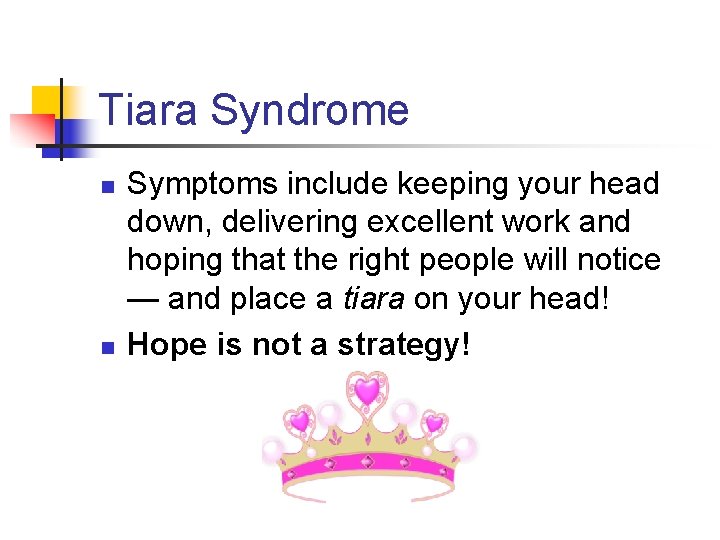
A term coined by Carol Frohlinger and Deborah Kolb, the founders of Negotiating Women, Inc, the Tiara Syndrome or the Tiara Effect is used to describe how many women approach salary and raise negotiations.

As Carol Frohlinger says, “Women expect that if they keep doing their job well someone will notice them and place a tiara on their head. That never happens.”

The fact is, most women don’t negotiate. That tiara is the recognition in the form of increased salary or pay. Women believe that they will be recognised for their value and automatically be paid what they are worth but the reality is, you have to ask for what you want. And if you don’t ask, the answer is always no.

In her bestselling book, Lean-In, Sheryl Sandberg says, “Women are also more reluctant to apply for promotions even when deserved, often believing that good job performance will naturally lead to rewards.”

Many women feel that working hard and doing a good job will be enough and the reality is that women are often extremely conscientious at delivering against their objectives. Just as at school where girls’ conscientiousness often leads to higher academic results than achieved by boys, many women believe that this same strategy will lead to success at work. However, sometimes this very diligence gets in the way of fast-tracking their careers. Many women are so so focused on doing the operational aspects of their job well that they don’t have time to step back and focus on strategic priorities and they often feel they do not have space in their busy working weeks to fit in networking which is seen as an unnecessary, and often uncomfortable, use of their precious time. In the same vein, they do not seek mentors to guide them or get the support of sponsors to give them the invaluable exposure and opportunities needed to step up to senior leadership positions.

Academic psychologist Cordelia Fine says such behaviour stems from socialisation, not innate differences between the sexes. And, of course, some men are sufferers, just as many women aren’t. But how do those who have been schooled not to boast learn to champion their cause and get over tiara syndrome?

A 2003 study of thirty-eight business students conducted University of California at Irvine discovered that 85% of the men believed that it was up to them to make sure their company paid them what they were worth. Only 17% of the women in the study believed this to be the case. The remaining 15% of the men and 83% of women assumed their worth would be determined by what their company paid them. The Tiara Syndrome only adds to the pay disparity between men and women. If we don’t ask for more pay based on our contributions, the answer is always no.

As women, we don’t negotiate. Most of us don’t negotiate our first job offer, which has been calculated to equal $500,000 over the length of her career. And all because we don’t speak up for ourselves and our worth.

So why do we women avoid negotiating? This is to a large extent because of the social conditioning females are brought up in where we are always told to be polite and quiet. Asking for money seems, greedy and rude and it is also uncomfortable. Frohlinger advises women to keep a work journal by month detailing the projects and accomplishments achieved, client kudos, amounts in new business created, or savings generated. This compelling evidence of their value to the company can be persuasively presented during a salary negotiation. Even if one gets an automatic raise annually, this substantiation of the corporate value could pay off in a larger increase. If you are stepping into a new role or moving to a new organization, don’t settle for the first offer.

Tory Johnson, the CEO of Women for Hire and Good Morning America’s career expert recommends the following for negotiating that initial offer. Start positive and get the whole compensation package in writing if it has been verbal so far. Be firm. If you have been offered a package lower than your expectations, then let them know politely with an emphasis on the skills and experience you bring to the role and ask them how much wriggle room is available. Every organisation will have a wriggle room, especially for someone they deem the best fit. Follow up especially if the hiring manager is firm on their offer. Work towards reaching an agreement, on paper, for a salary negotiation or review within a pre-determined period. Also try and negotiate on non-money aspects like vacation time, flexible working arrangements, medical benefits, etc.

What are the blocks that don’t allow extremely able women from progressing? These include insufficient impact and presence and lack of a strong personal brand, a lowered productivity and overwhelm through being pulled in too many directions at once as well as poor work-life balance, a belief that doing a good job will be enough and not seeking sponsors, discomfort with networking both internally and externally, being insufficiently strategic and too stuck in the detail, a lack of strategic career planning and reduced confidence and lack of self-belief as a leader.

If you suffer from this syndrome, here’s what you can do to overcome it:

Own your career, acknowledge that you suffer from the syndrome and come up with an action plan. If you don’t like talking about it, use technology instead. Copy your boss into relevant emails and share them on your professional social media accounts. Keep a career journal to keep a record of your accomplishments. This is great for building evidence required for negotiations, it can be confidence boosting and be useful for CVs, appraisals, and other career development opportunities. Stop comparing yourself to others and plan for and maximise the formal opportunities for negotiation, whether for a pay rise or a promotion. Build your brand and internal network. Your brand also includes managing your energetic presence, personal image and communication, including body language. Harness Your Potential which includes identifying and capitalising on strengths as well as being clear about which weaker areas are mission-critical and maximising time and energy. Creating a balance between work and other aspects of life is also vital for sustainable career success. Cultivate supportive relationships within your current work setting as well as the wider professional network, including sponsors and mentors. It is important to be able to initiate these relationships, enhance your influence and also handle difficult relationships. Focus on strategy and volunteer for strategic or extra credit projects so that you can develop an idea of the big picture. Thinking like a leader is necessary to develop a leadership mindset and this includes handling the little voice of doubt that we all have in our heads and also learning to let go of some of what we have excelled at to take on even higher level leadership tasks.

It’s naive to think that delivering excellent results is all that it takes to succeed in the workplace. The playing field is not yet equal for women; the fact is that women have to negotiate for things their male colleagues can often take for granted. In addition to the obvious issue regarding compensation, women should negotiate for high visibility assignments, the resources they need to get the job done, support from those senior in the organization and buy-in from colleagues. They should also negotiate in their personal lives for the things that will enable them to be successful in the workplace. Effective negotiation is a prerequisite to “leaning in”. As Sheryl Sandberg says, “Do not wait for power to be offered. Like that tiara, it might never materialise.” So to all the women reading this post, if you have the Tiara Syndrome, shrug it off and know that you too are worth it!