Secunderabad
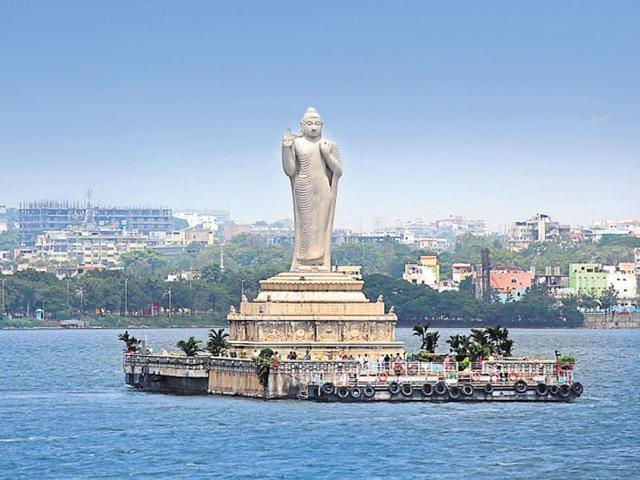
Known as Hyderabad’s twin city, Secunderabad was established in 1806 as a British cantonment and is named after Sikandar Jah, the third Nizam of the Asaf Jahi dynasty. Although both the cities are together referred to as the twin cities, Hyderabad and Secunderabad have different histories and cultures, with Secunderabad having developed directly under British rule until 1948, and Hyderabad as the capital of the Nizams’ princely state of Hyderabad. Geographically divided from Hyderabad by the Hussain Sagar Lake, Secunderabad is today no longer a separate municipal unit and has become part of Hyderabad’s Greater Hyderabad Municipal Corporation with both cities collectively known as Hyderabad and together form the sixth-largest metropolis in India.
Following the dissolution of the Chalukya empire into four parts in the 11th century, the areas around the present-day Hyderabad and Secunderabad came under the control of the Kakatiya dynasty, whose seat of power was at Warangal. Secunderabad is also where the then Mughal emperor Ahmad Shah Bahadur was defeated in 1754 by the Maratha Confederacy. The area around Secunderabad changed hands between various rulers, and the area was part of Nizam’s Hyderabad by the 18th century.
Modern Secunderabad was founded as a British cantonment after Nizam Asaf Jah II was defeated by the British East India Company. He was then forced to sign the 1798 Treaty of Subsidiary Alliance to get the favour of the British troops camped in the village of Ulwul, northeast of the Hussain Sagar Lake. In 1803, Nizam Sikandar Jah, the third Nizam of Hyderabad, changed Ulwul’s name to Secunderabad after himself and the city was formed in 1806 after the order was signed by the Nizam allotting the land north of Hussain Sagar to set up the British Cantonment.
The twin cities are separated by the man-made Hussain Sagar Lake, which was built during the reign of the Qutb Shahi dynasty in the 16th century. Unlike Hyderabad, the official language of Secunderabad was English and the city was exempted from customs duty on imported goods, thus making trade very profitable. After the First War of Indian Independence of 1857, the construction of a 7-metre-high wall was started at Trimulgherry and completed in 1867. Originally constructed in 1860 as the country house of the British Resident at Hyderabad, the Residency House is now known as the Rashtrapati Nilayam, the official retreat of the President of India.
First formed in 1945, the Secunderabad Municipal Corporation was merged with Hyderabad Corporation to form a single municipal corporation in 1960 and today, Secunderabad is part of the Hyderabad district. Because of the presence of different communities, Secunderabad has historically been a cosmopolitan city and used to be referred by locals as Lashkar, which means the armed forces and the city’s culture reflected the same.
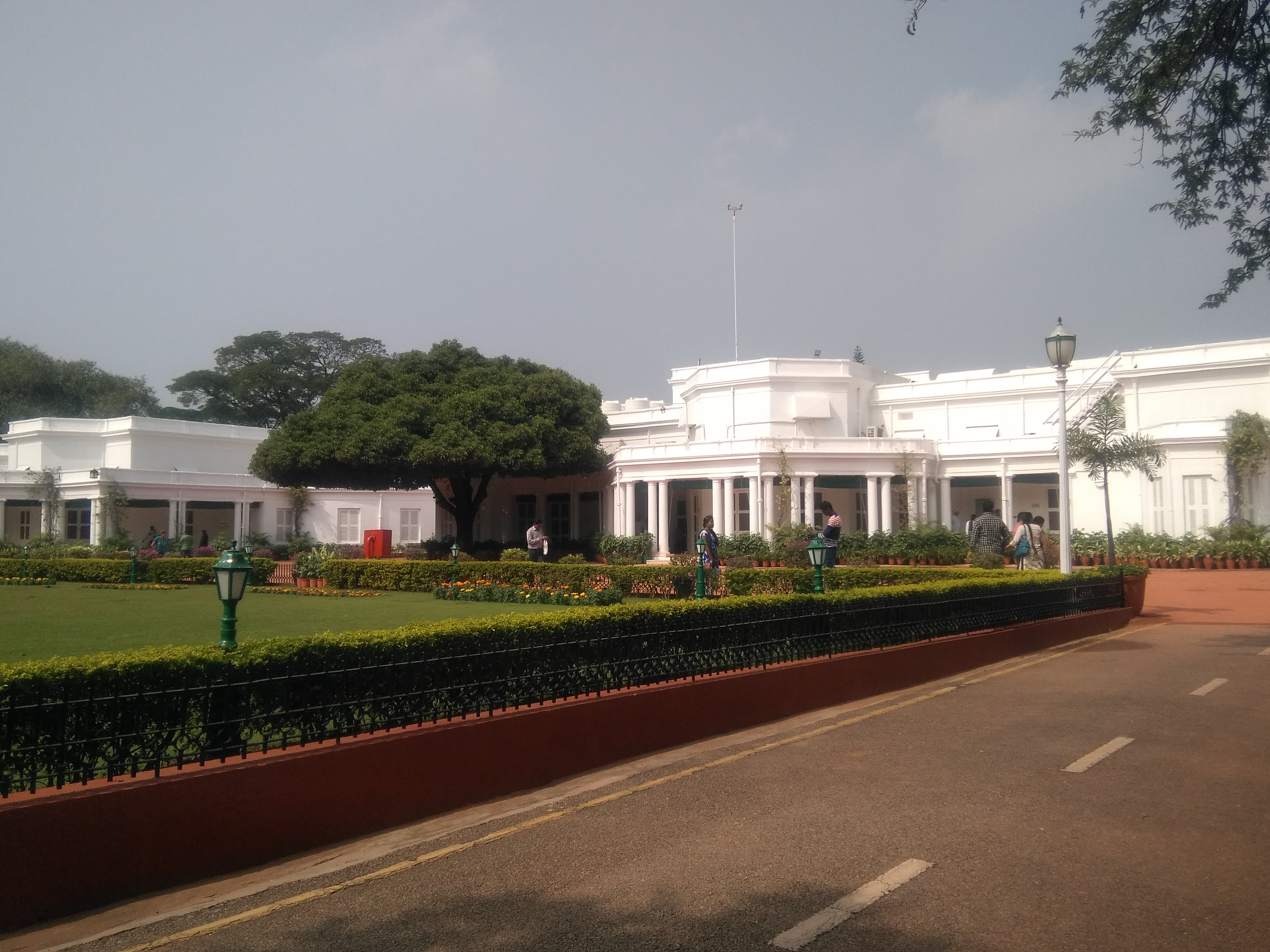
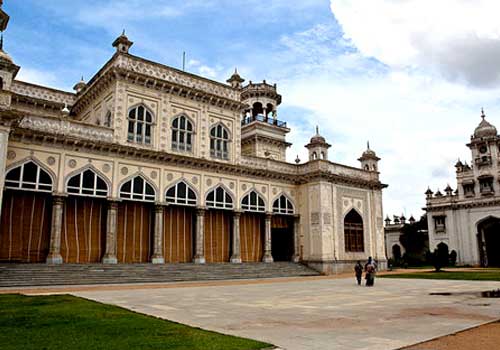
Rashtrapati Nilayam, or Residency House, is a presidential retreat for the President of India’s southern sojourn. Spread over an area of 92 acres, the mansion occupies 35 acres with the remaining 80% filled with lush green lawns, fragrant flower gardens and vegetation. It was originally built by Nizam Nasir-ud-Dauhla, the fourth ruler of the Asaf Jahi dynasty and taken over by the British during their colonial rule. During the Nizam’s reign, it used to be the official residence of the Chief Military Officer and was known as the Residency during the British colonial rule. After Hyderabad became part of the Indian Union, it was renamed Rashtrapati Nilayam and every Indian President has stayed there at least once a year. The single-story white building is divided into three wings – the Presidential Wing, the Family Wing and the ADC Wing. The 20 rooms in the three wings include a cinema, the State Dining Hall, a morning room, the Durbar Hall and the ADC Dining room. Standing about 25 feet tall, the kitchen is connected to the dining hall through an underground tunnel to restrict staff interference and noise. The building is equipped with enough staff and a guest house to accommodate 150 people. There are tour guides available who brief visitors about the geography and history of the Nilayam. Entry to Rashtrapati Nilayam is exclusive, however, recently it was made open to the public from 01 to 10 January with visiting hours from 10 am to 5 pm with last entry at 4 pm and there is no entry fee.

The 120 feet high Secunderabad Clock Tower is built on an area of 2.5 acres and has been around since colonial times. Centrally located, the clock tower was designed by the then Nizam of Hyderabad with the clock on top of the tower donated by Dewan Bahadur Seth Lachmicharan Ramgopal and was renovated recently
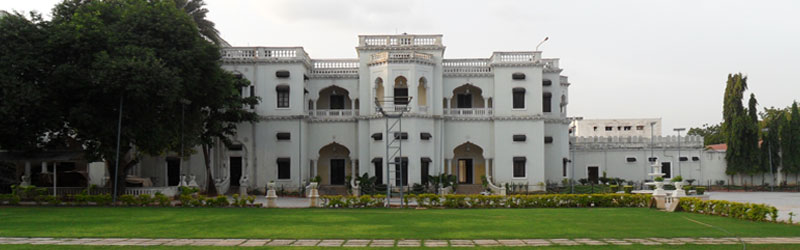
An embodiment of the Indo-European culture, the Paigah Palace was built by Sir Vicar-ul-Umra in 1900 as a gift for the sixth Nizam of Hyderabad Mir Mahbub Ali Khan. Paigah was a title that meant grandeur and the high rank was given to nobles who were second to the Nizams. The palace sits on a four-acre area and is an opulent two-storied neo-classical building with a grand portico, semicircular arches, Corinthian columns and deep arcaded verandas on all four sides which face both inward and outward with a spectacular view of the courtyard. The palace today can be rented for functions. The construction of the palace started in the 1880s along with two other palaces called the Devdi Nasir Nawaz Jung palace and the Vikhar Manzi and construction was completed in 1900. Today, the palace is divided into three parts. One part is a residential area where the Paigah royals still live. The second part is converted into a club, and the third part is converted into a ceremonial place where religious ceremonies take place. When one steps into the palace, one will see a magnificent ceiling which is twenty-two feet tall on the ground floor and twenty-six feet tall on the first floor. The palace has four halls and more than twenty rooms and is protected from extreme weather by its twenty-four-inch-thick insulated wall. The palace has arches with three beautiful windows with floral designs intricately carved on the top of the walls on both floors. A delicately carved wooden staircase leads to the second floor of the palace. A new four storied building was added to the palace in 1999 with landscaping done a few years ago.
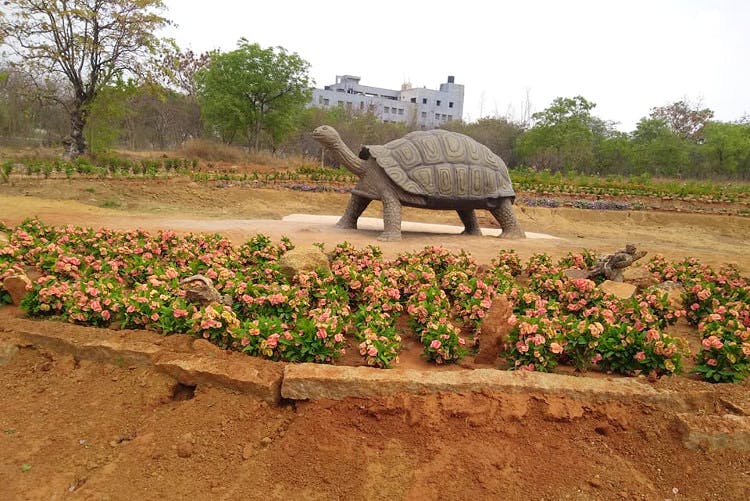
The Kandalokya Oxygen Park is a 75-acre park with hundreds of fruit trees and medicinal plants and tranquil spots. A hub for picnics, yoga lessons, picnics, occasional or weekly meetings and school visits, the park attracts many to seek solace and meditate. The Butterfly Garden is surrounded by greenery with a statue of a yellow butterfly with a seat attached to it which is known to be a selfie spot. A massive tortoise placed beside a lake known as the Tortoise Lake is eye-candy for children who try and climb on it. The 2.2 km long jogging and walking track is surrounded by trees and the Canopy Walk is a 226-meter long fenced pathway with trees. The Gazebo is a seating arrangement that is often used as a picnic spot. One of the trees has been carved into a structure resembling Groot from Guardians of the Galaxy which is also very popular. A children’s favourite is the spiral stairway leading to a treehouse providing fantastic views of the park. There are also two areas promoting learning in nature that have been equipped with the necessary classroom paraphernalia of blackboards, chairs and tables. The Zipline, which is a rope connected from one end of the park to the other provides an over-the-top experience. The fee to book a ride from the rope is INR 50. The park has an entry fee of INR 15 for adults and INR 10 for children from 5 to 12 years and also monthly and annual membership passes available. The park is open daily from 6 am to 6 pm.
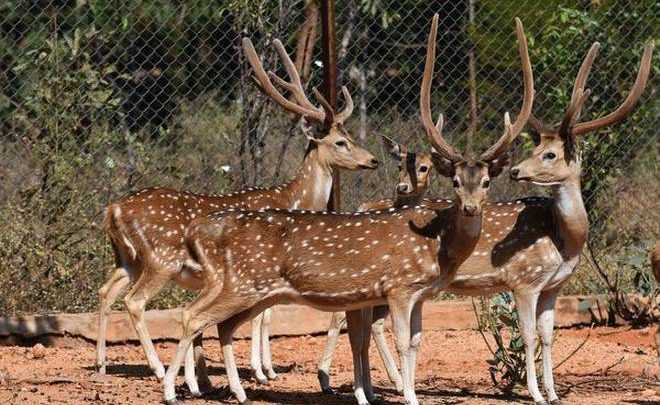
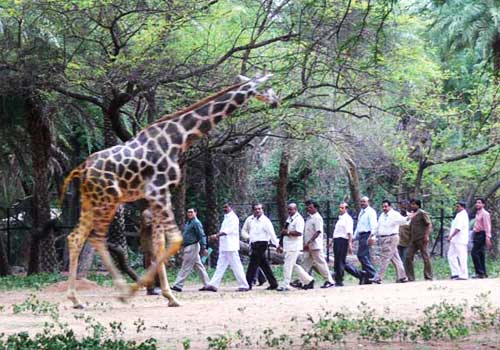
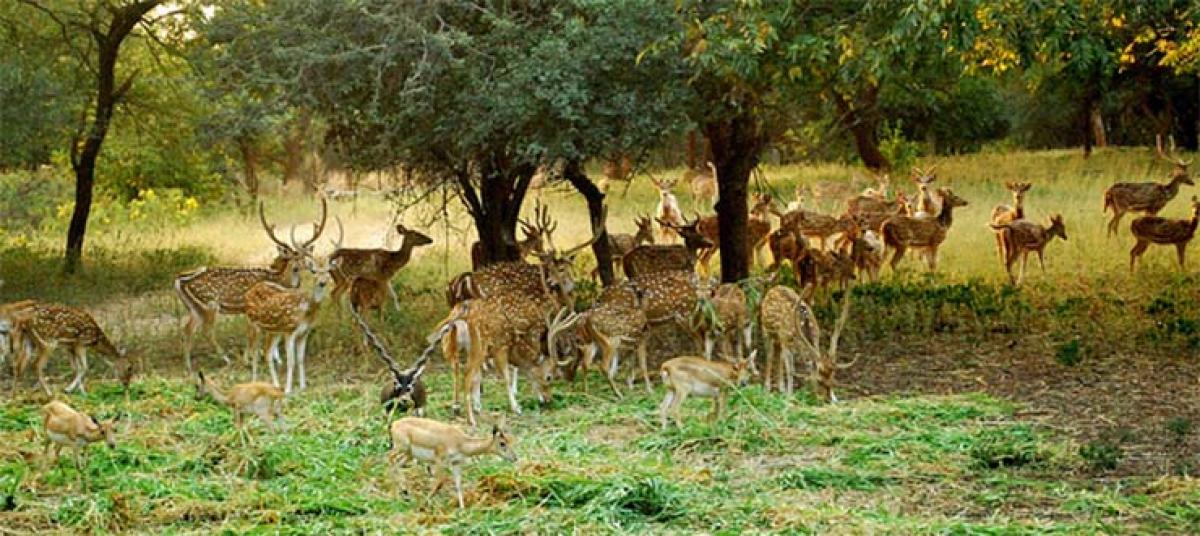
Located in the city’s outskirts, the Shamirpet Deer Park was built in 1971 during the rule of Nizams. Spread over an area of 54 acres, the park is home to a wide array of animals, including many species of deer seen in their natural habitat. Blackbuck and Chital Deer are the main wildlife attractions with the Shamirpet Lake located in the proximity of the park. Also known as the Jawahar Deer Park, it is maintained by the government of Telangana. The Park is best explored by taking a walk. The Park is divided into two areas – the visitors’ area and the core area with tourists only allowed in the Visitors’ area. There is also a watchtower and a viewpoint that gives gorgeous views of Shamirpet Lake. Other activities that can be done in the park include boating, trekking and bouldering. The ideal trekking time is between 5 and 11 am. The park is open from 9 am to 5 pm every day except Mondays and has an entry fee of INR 10 for those above 6 and INR 5 for the others.

Sprawling over an area of 116 hectares and called one of the urban lung spaces of the twin cities, the Bhagyanagar Nandanavanam Deer Park is a nature conservation park that houses a wide range of flora and fauna, prominent among them being deer. Other than wildlife creatures, the park offers well-laid cycling tracks, an elevated canopy walkway, a watchtower to facilitate bird watching, wildlife photography and more. Park remains open for both, morning walkers and tourists. The walking hours are between 5 and 9 am while visiting hours are between 11 am and 6 pm. The Park is open on all days of the week and entrance tickets are INR 15 for adults and INR 10 for children between 5 and 12.
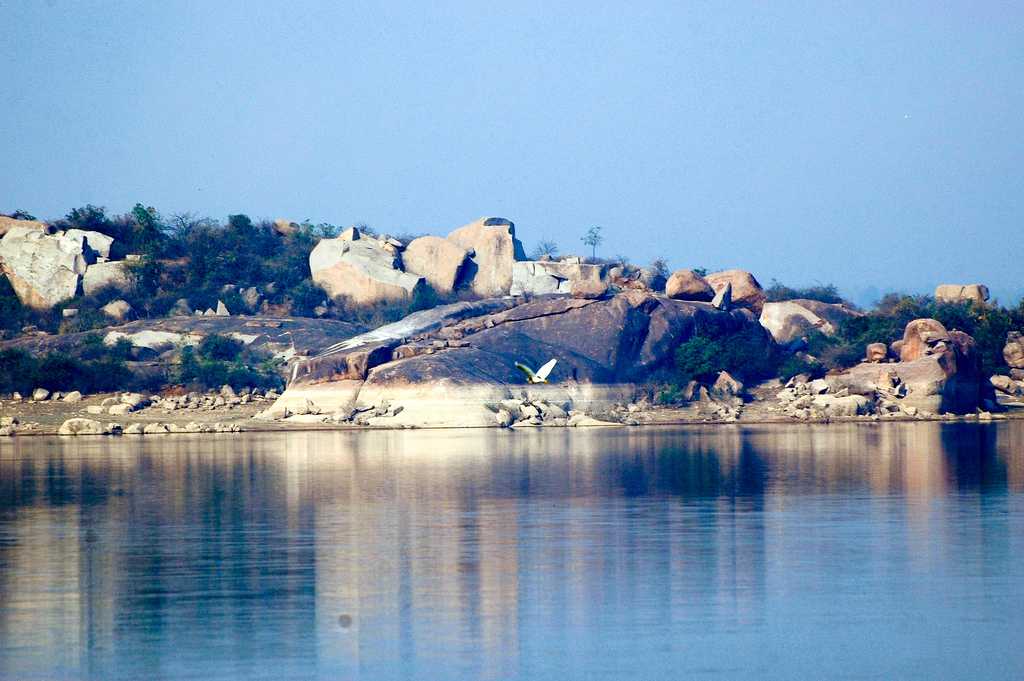
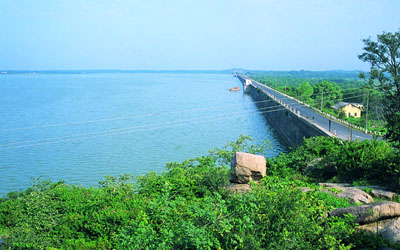
Located in the heart of Secunderabad, the Shamirpet Lake is an artificial lake built during the reign of the Nizam of Hyderabad. During the winter month, flamingos and pelicans flock here and it is best visited between November to February.

The Fox Sagar Lake also called the Jeedimetla Chevuru or Kolla Chevuru is the second largest lake in Secunderabad. This 120-year-old man-made lake has a maximum depth of 33 feet and was linked to the Hussain Sagar Lake by a tributary of the Musi river. Kolla Chevuru has a stone structure shaped like a dome called the pump set which is led through by an iron bridge that looks like a watchtower with a tomb and has 1897 inscribed in it. The view from there is beautiful, led through a narrow muddy road and is most visited during dusk and dawn. What was once a beautiful lake has turned into a dump yard in recent years and because of encroachment, from a famous picnic spot, it has now become the second most polluted lake in the twin cities. The lake which once spread over 290 acres now covers only 126 acres. However, WWF, in collaboration with the Telangana State Special Protection Force, began a cleaning camp in 2017 which is still ongoing.
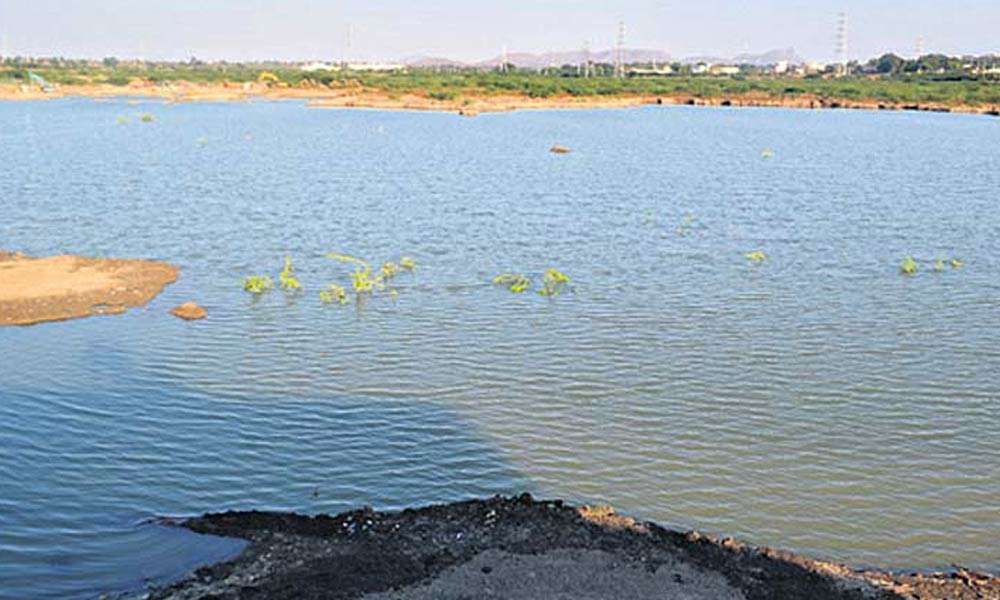
Also known as the Oora Cheruvu, Kapra Lake’s natural beauty is spread over an area of 113 acres. Autumn is the best time to visit the lake which is believed to have been one of the important sources of water when Nizam-ul-Mulk ruled over the Hyderabad state in the early 18th century. Edulabad Lake was constructed in the 16th century and is often referred to as the Lakshminarayana Cheruvu. A favourite birdwatching and camping spot as well as a sunrise and sunset point its five sq km area acts as a natural habitat for a varied species of birds and is home to a recorded 152 species of birds. The best time to visit the lake is in winter due to the pattern of bird migration. However, pollution in the lake poses a problem but the lake is surrounded by lush green fields. Also called the Ramanthapur Lake, Pedda Cheruvu was once highly polluted with weeds, debris and plastic. However, in 2018 the lake sprang back to life after the Government and an NGO purified the water, the water retention capacity was improved, and the lake was beautified with various plants. The lake has a catchment capacity of about 68.97 sq km and a cumulative flow of 8,860 cusecs. As there is no road that links to the lake, a temporary road is under construction to make it easier to reach the lake. Pedda Chevuru which means Large Lake in Telugu is a natural lake that was discovered in 1897 during the rule of Mir Mahaboob Ali Khan, the 6th Nizam of Hyderabad.
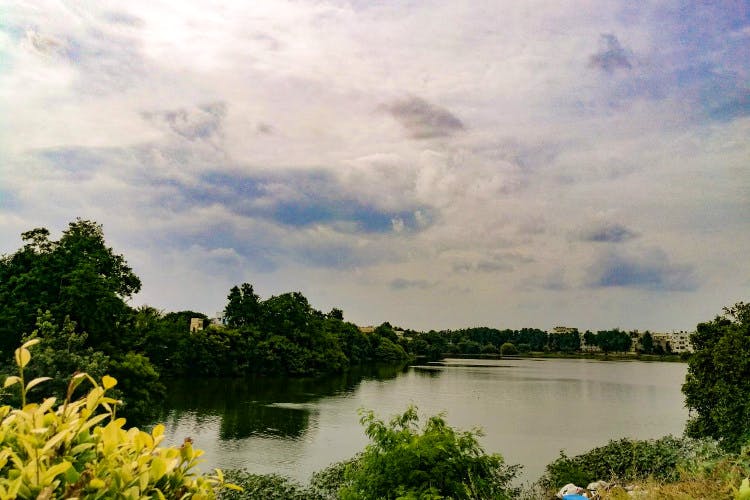
Safilguda Lake is a local favourite for morning walks, jogging and meditation. There is a small island in the middle of the lake, called the Nadimi Bird Island which is covered in thick timber that attracts many migratory birds. There is also a park adjacent to the lake known as the Safilguda Lake Park. Since the boundary of the lake is similar to that of the Tank Bund, it is also popularly known as the Mini Tank Bund. Despite the area of only 5 acres, the lake has a rich biodiversity, high vegetation and many migratory birds visiting it throughout the year. Alwal Lake is a scenic artificial lake about 9 km from the twin cities and is extremely popular among those who enjoy fishing.

Telangana’s best-kept secret, Narsapur Forest is hidden away near the tiny village of Narsapur, about 47 km north of Secunderabad. Considered to be a popular getaway, the forest abounds in natural beauty and sprawls over 30 sq km with the highlight of the forest a cosy lake tucked away in the heart of the forest where one can just sit and relax or spend time with loved ones having a picnic. Other than monkeys, the forest also is home to many birds and butterflies. There are several ponds, rock formations and flower beds here.
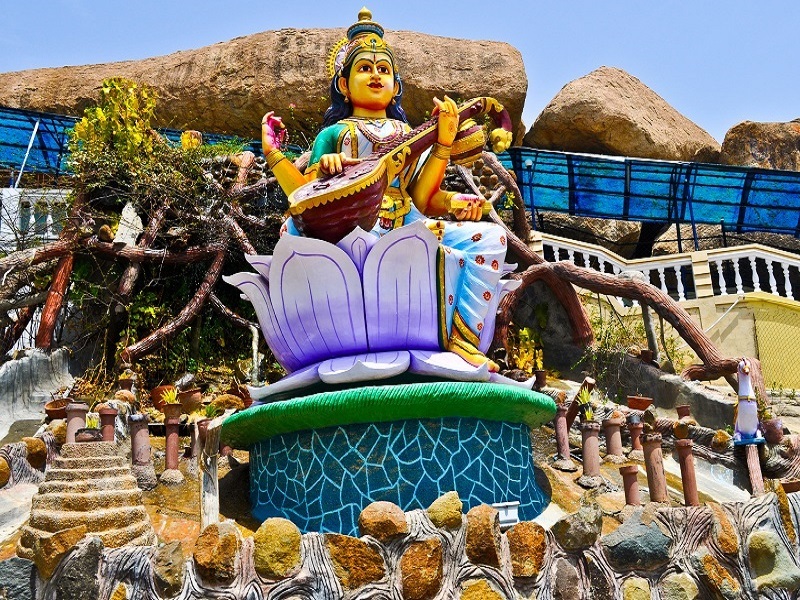
The Wargal Saraswati temple, otherwise called the Sri Vidya Saraswati Temple, is located in a hillock. The construction of the temple began in 1998 and is currently being maintained by the Kanchi Sankara Mutt. The main goddess here is Goddess Saraswati and the temple attracts many to pray for their children’s education and career. The temple also houses a Veda pathshala or school within its premises. The temple is open between 6 am to 12:30 pm and then from 4 to 7:30 pm, Mondays to Thursdays and from 6 am to 2 pm and between 4 to 7:30 pm on Fridays, Saturdays and Sundays.

About 200 years old, the Sri Ganesh temple is one of the famous temples in Telangana. The main deity is Lord Ganesha, and apart from the main deity, there are six other sannathis dedicated to various gods and goddesses namely Lord Shiva, Sri Navagraha, Sri Subramanya Swamy, Sri Anjaneya, Sri Uma Maheshwari, RahuKetu and the Maha Ganapathi Mandapam. It is a belief that the idol of Lord Ganesha was discovered in 1824 by the Madras Regiment of Sepoys while digging a well. Later, the temple was built and the idol of the Lord was placed as the main deity. The idol is a beautiful structure of the Lord posing with his right arm on his thigh, another hand holding the Ankusham, his left hand placed on the trunk and the fourth hand holding a Damarakam with a snake. The Temple is crowned with a huge tomb, traditionally called the Gopuram which has intricate carvings on them. The structure of the temple and the placement of the idols are based on the Agama Sastra. The Rathothsavam or the wooden chariot in the temple is another major attraction that is used during Ganesh Chathurthi when three idols from the temple take their place in the chariot and are carried around the city till the tank and brought back after the other idols are immersed. The temple is open daily from 5:30 am to 1 pm and then between 4 to 8:30 pm.
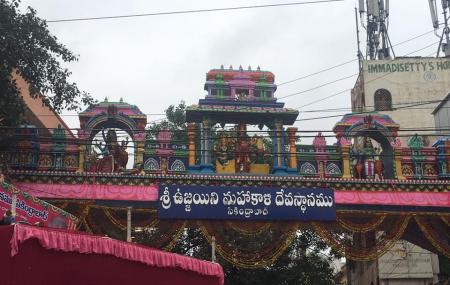
The Ujjaini Mahankali Temple is a 191-year-old temple that is illuminated during July and August for the festival of Mahankali Ammari Jathra with electric lights and decorated with garlands, buntings and festoons. Goddess Mahankali’s stone idol has four hands carved on it, each of which holds a Sword, a Damaru, a spear and an amrut vessel. She is seated in the Padmasana pose and covered in a layer of silver with Vendi Kavacham. Beside Goddess, Mahankali resides another Hindu deity called Goddess Manikyaladevi. According to a myth, In 1813, there was a cholera epidemic in present-day Secundrabad and many lives were lost. Suriti Appaiah, the Doli bearer who belonged to the military battalion, took upon himself to seek the blessings of the Goddess and rid people of their suffering. He went to the Mahankali temple in Ujjain and asked Goddess Kali to cure people of the epidemic misfortunes. He offered his devotion in the form of a temple that he built after reaching Secunderabad. Soon, people were healed and came to the temple to give their thanks. He set up a stone idol of Goddess Kali and worshipped her. The temple is open from 6 am to 12 noon and from 4 to 9 pm all days except Fridays when it’s open from 6 am to 1 pm and 4 to 10 pm.
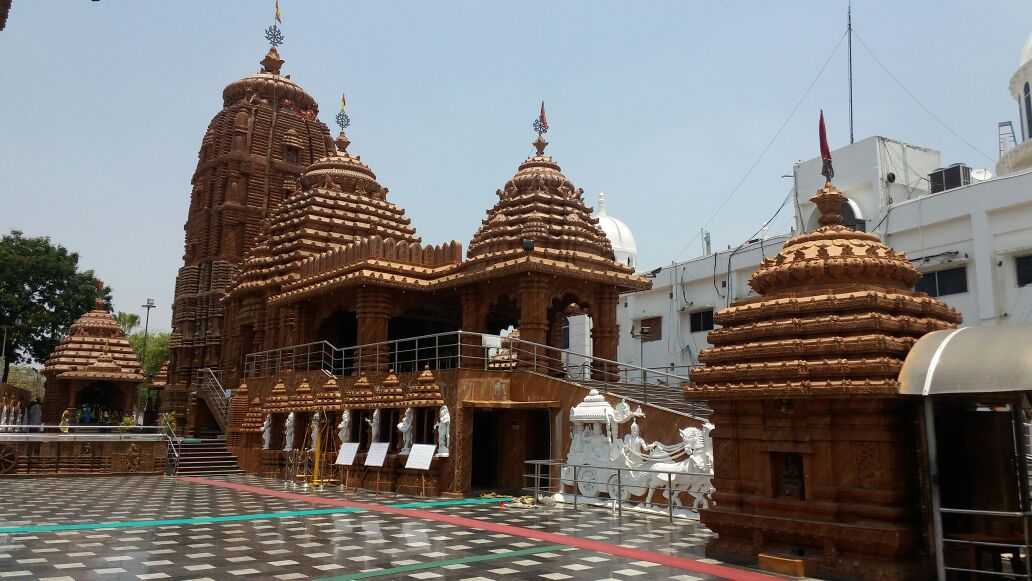
The Nagamma Temple is one of the oldest temples in the area with intricately carved idols and ancient architecture. The temple is dedicated to Goddess Nagamma, a snake deity whom devotees believe will satisfy desires and reduce the issues with their horoscope. The temple, also known as the Naga Devata Temple, can be traced back to the period of British rule and was originally a small place of worship for locals. The construction of the grand temple that exists today, was commenced in the 1960s and was completed in 1970. Several strategically positioned smaller temples surround the Nagamma Temple. The temple displays South Indian influences in its design, featuring a recently incorporated marriage hall; ancient stone pillars from the Ujjain Mahankali Temple which are covered in intricate carvings of significant Hindu deities; a traditional prayer hall; life-like idols of snakes and associated gods and goddesses. There is also a tower-like structure known as a Vihmana, attached to the temple which showcases mythology related to the God of snakes or the Nag Devata through detailed embellishments. The temple is open from 6 am to 12:30 pm and then in the evenings between 5 to 9 pm.
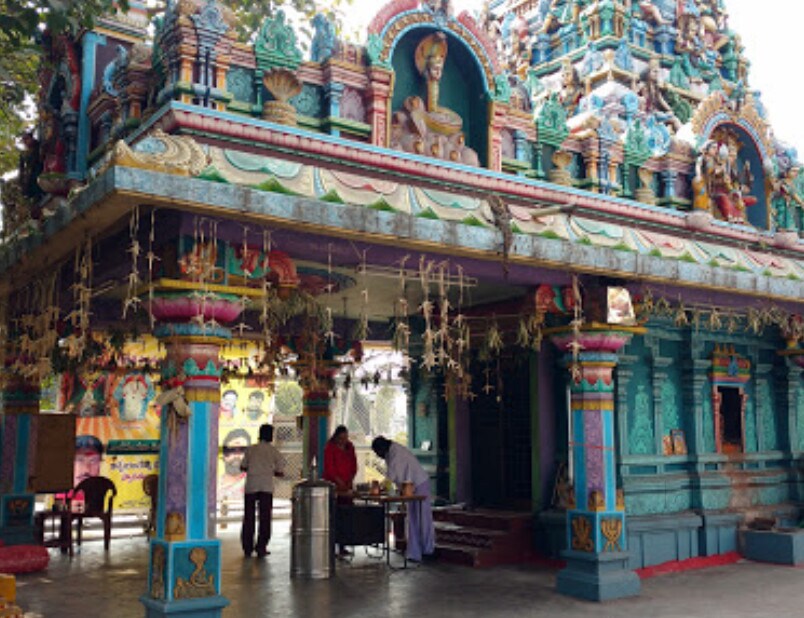
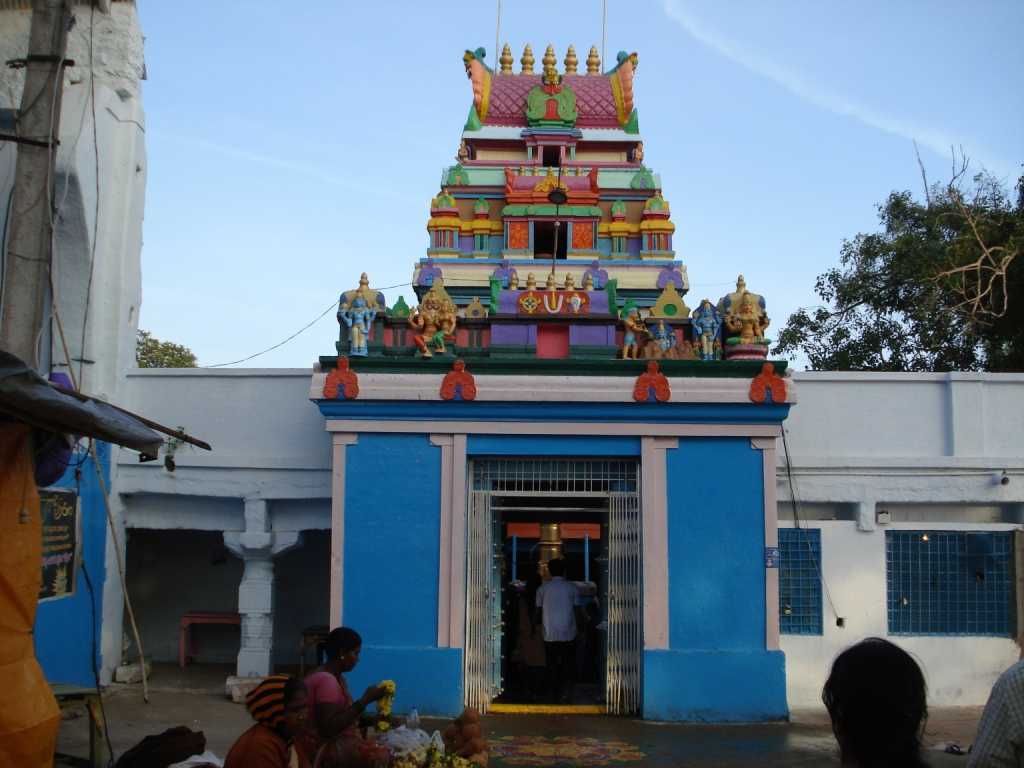
The Subrahmanya Swamy Temple is dedicated to Lord Subramanyeshwara Swamy. The temple also has idols of Lord Shiva, Lord Bhaktanjaneya Swamy, the Navagrahas, a Shiva Linga, Lord Ganesha, Lord Dattatreya Swamy and Lord Sai Baba among others. The main porch of the temple, often referred to as a mandapam is supported by sturdy pillars fashioned out of stone and features an enormous banyan tree, strategically situated at the northern end of the temple which is a region dedicated to the Navagrahas, the planet deities. Dating back 300 years, the temple is surrounded by vast groves of banyan trees, and is also why the temple is known as Marri trees. On Fridays, the temple is open from 7 am to 11:30 pm while on other days, it is open from 7 am to 11 pm.

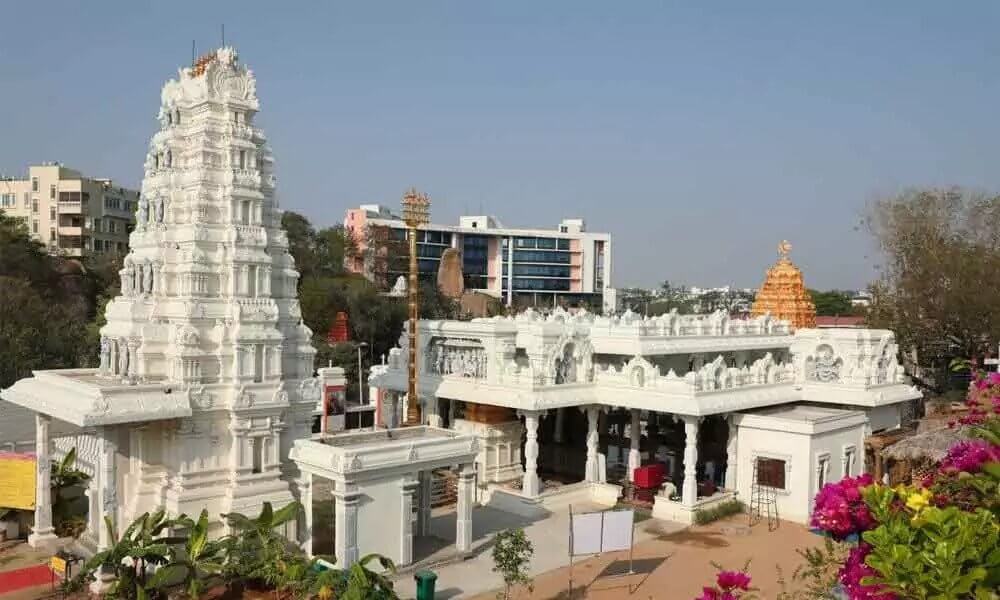
The Keesaragutta Temple is situated on the hill of Keesaragutta and is dedicated to Lord Shiva and his companions Bhavani and Shivadurga. Lord Laxmi Narsimha and Lord Rama with his wife Sita have different shrines dedicated to them. A huge pristine Hanuman idol stands right beside the temple. The Temple has a Veda Pathshala where the students learn shlokas, rituals and Hindu scriptures. There are no records as to when the temple was built, but there is a fascinating story leading to the formation of the temple. Legend has it that Lord Rama wished to absolve his sins for killing Ravana, a Brahmin, he decided to establish a shiva linga on the beautiful hill of Keesaragutta. Lord Rama ordered Lord Hanuman to bring a shiva linga from Varanasi. Lord Hanuman was a little late in arriving with the Shivalinga and the auspicious hour was close by so Lord Shiva himself brought a Shivalinga to be installed. Hence the Shivalinga is Swayambhu or self-manifested and is called Ramalingeswara, which means Shivalinga established by Rama. Devastated that he couldn’t reach in time to provide Shivalinga, Hanuman threw them in the valley and even today many Shivalings can be seen scattered around the temple. Seeing this, Lord Rama placated Hanuman and promised him that he would be the first God worshipped in the temple and also named the hill after Hanuman, Kesargiri which was later changed to Keesaragutta. The temple sports Dravidian architecture which dominates a Gopuram. Archaeological excavations done around the temple show that the Shiva linga and brick remnants belong to the Chalukyan Empire which was found on a hill north of the temple and near the hill’s water reservoir and proof that Jainism and Hinduism co-existed during the reign of Vishnukundins in the 4th and 5th centuries were also found as well as prayer halls, a Yagya shala and fortification walls were unearthed on Keesaragutta hill. The temple is open daily from 6 am to 12:45 pm and from 3 to 7:30 pm.

The Moula Ali Dargah is located on the top of a hillock called Moula Ali with the Dargah or mosque dedicated to Hazrat Ali. The hill has 500 odd steps which aren’t too steep, leading to the top of the hillock where the dargah is located. There is a pavilion and a place specially allocated to beat drums in the dargah and it is one of the 11 heritage sites identified by the Heritage Conservation Committee. The dargah came into being during the Qutb Shahi times and it is believed that Yakoob, the courtier of the 16th century Sultan Ibraham Quli Qutub Shah dreamt of the imprint of Ali’s palm. He later found a similar imprint on a rock in the Moula Ali hill and so the dargah was believed to have been constructed around that rock.
In the shrine, there is a particular rock that is believed to have healing powers. On the doorway of the dargah, one can find locks hanging which is put up devotees if they wanted any of their wishes to be fulfilled. The Dargah is led through a chamber; inside, it is beautifully decorated with hundreds of frosted glasses in vibrant colours. On the inner side, there is an imprint of Ali’s palm, which is hidden behind a screen, and on the other side, there are scriptures and other framed pictures. The dargah is open daily from 5:30 am to 10 pm.
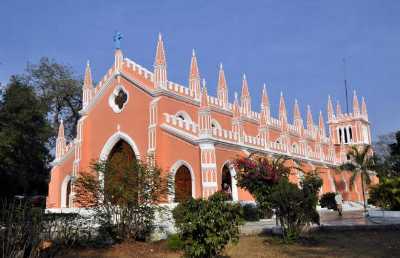
The All Saints Church falls under the denomination of the Church of South India, which was previously regarded as Anglican and is dedicated to the All Saints. Legend has it that before the church was entrusted to the Church of South India in 1947, it was a garrison church and the army chaplains presided over it. The church is known for its grand celebration of Christmas and other occasions like Good Friday, Palm Sunday and Easter. The church is surrounded by beautiful gardens where one can take a walk. The church is open between 7 am and 7 pm daily.

The Basilica of Our Lady of the Assumption is one of the oldest Roman Catholic churches in India and was earlier known as the Cathedral of the Archdiocese of Hyderabad and St. Mary’s Church. It is a minor basilica and is dedicated to the Blessed Virgin Mary. Relatively simple from the inside, St. Mary’s church is an excellent example of the use of Gothic architecture with curved arches and pointed supports. The congregation has four bells which were bought from Italy in 1901 and has several side altars dedicated to specific saints. There is also a museum featuring the church’s history and pictures. The church is open from 8 am to 7 pm daily.