Paris. The name alone conjures images of chestnut-lined boulevards, sidewalk cafés, breathtaking façades around every corner–in short, an exquisite romanticism that has captured the American imagination for as long as there have been Americans.
In 1995, Adam Gopnik, his wife, and their infant son left the familiar comforts and hassles of New York City for the urbane glamour of the City of Light. Gopnik is a longtime New Yorker writer, and the magazine has sent its writers to Paris for decades–but his was above all a personal pilgrimage to the place that had for so long been the undisputed capital of everything cultural and beautiful. It was also the opportunity to raise a child who would know what it was to romp in the Luxembourg Gardens, to enjoy a croque monsieur in a Left Bank café–a child (and perhaps a father, too) who would have a grasp of that Parisian sense of style we Americans find so elusive.
So, in the grand tradition of the American abroad, Gopnik walked the paths of the Tuileries, enjoyed philosophical discussions at his local bistro, wrote as violet twilight fell on the arrondissements. Of course, as readers of Gopnik’s beloved and award-winning “Paris Journals” in The New Yorker know, there was also the matter of raising a child and carrying on with day-to-day, not-so-fabled life. Evenings with French intellectuals preceded middle-of-the-night baby feedings; afternoons were filled with trips to the Musée d’Orsay and pinball games; weekday leftovers were eaten while three-star chefs debated a “culinary crisis.”
As Gopnik describes in this funny and tender book, the dual processes of navigating a foreign city and becoming a parent are not completely dissimilar journeys–both hold new routines, new languages, a new set of rules by which everyday life is lived. With singular wit and insight, Gopnik weaves the magical with the mundane in a wholly delightful, often hilarious look at what it was to be an American family man in Paris at the end of the twentieth century. “We went to Paris for a sentimental reeducation – I did anyway – even though the sentiments we were instructed in were not the ones we were expecting to learn, which I believe is why they call it an education.”
Sunday is World Mental Health Day. In the last two years or so, we all have finally woken up to the importance of mental health and its importance in our lives. Mental health includes our emotional, psychological, and social well-being. It affects how we think, feel, and act and also helps determine how we handle stress, relate to others, and make healthy choices. Mental health is important at every stage of life, from childhood and adolescence through adulthood.
Mental and physical health are equally important components of overall health. For example, depression increases the risk for many types of physical health problems, particularly long-lasting conditions like diabetes, heart disease, and stroke. Similarly, the presence of chronic conditions can increase the risk for mental illness. It’s important to remember that a person’s mental health can change over time, depending on many factors. When the demands placed on a person exceed their resources and coping abilities, their mental health could be impacted.
There is no single cause for mental illness with many factors contributing to the risk for mental illness, including early adverse life experiences, like trauma or a history of abuse, experiences related to other ongoing or chronic medical conditions, biological factors or chemical imbalances in the brain, use of alcohol or drugs or having feelings of loneliness or isolation.
The World Mental Health Day celebrated on 10 October is an international day for global mental health education, awareness and advocacy against this social stigma. It was first celebrated in 1992 at the initiative of the World Federation for Mental Health, a global mental health organisation with members and contacts in more than 150 countries. On this day, each October, many awareness programmes bring attention to mental illness and its major effects on peoples’ lives worldwide with some countries having an awareness week as part of the awareness programme.
Up until 1994, the day had no specific theme other than general promoting mental health advocacy and educating the public. In 1994 World Mental Health Day was celebrated with a theme for the first time: “Improving the Quality of Mental Health Services throughout the World”. On World Mental Health Day 2018, the then UK Prime Minister Theresa May appointed UK’s first suicide prevention minister as the government hosted the first-ever global mental health summit.
The theme for the 2021 edition of the World Mental Health Day is “Mental Health in an Unequal World”. This theme was chosen because the world is increasingly polarised, with the very wealthy becoming wealthier, and the number of people living in poverty still far too high. 2020 highlighted inequalities due to race and ethnicity, sexual orientation and gender identity, and the lack of respect for human rights in many countries, including for people living with mental health conditions. Such inequalities have an impact on people’s mental health.
The theme will highlight that access to mental health services remains unequal, with between 75% to 95% of people with mental disorders in low and middle-income countries unable to access mental health services at all, and access in high-income countries is not much better. Lack of investment in mental health disproportionate to the overall health budget contributes to the mental health treatment gap. Many people with a mental illness do not receive the treatment that they are entitled to and deserve and together with their families and carers continue to experience stigma and discrimination. The gap between the ‘haves’ and the ‘have nots’ grows ever wider and there is continuing unmet need in the care of people with a mental health problem.
Research evidence shows that there is a deficiency in the quality of care provided to people with mental health problems. It can take up to 15 years before medical, social and psychological treatments for mental illness that have been shown to work in good quality research studies are delivered to the patients that need them in everyday practice. The stigma and discrimination experienced by people who experience mental ill-health not only affects that persons physical and mental health, it also affects their educational opportunities, current and future earning and job prospects, and also affects their families and loved ones. This inequality needs to be addressed so that people with mental health issues are fully integrated into all aspects of life. Research has shown that those with physical illness also often experience psychological distress and mental health difficulties. As an example, one can take visual impairment. Over 2.2 billion people have visual impairment worldwide, and the majority also experience anxiety and/ or depression and this is worsened for visually impaired people who experience adverse social and economic circumstances.
The COVID 19 pandemic has further highlighted the effects of inequality on health outcomes and no nation, however rich, has been fully prepared for this. The pandemic has and will continue to affect people, of all ages, in many ways: through infection and illness, sometimes resulting in death bringing bereavement to surviving family members; through the economic impact, with job losses and continued job insecurity; and with the physical distancing that can lead to social isolation.
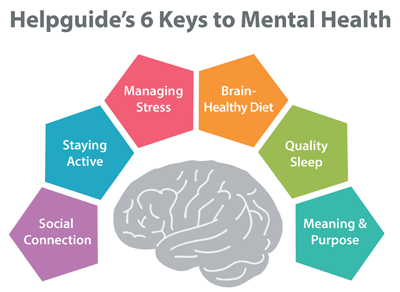
So if you or someone you know have issues relating to mental health, please reach out to an expert. If that is not possible, at least talk to someone sympathetic to you and your condition. If there are hotlines or numbers where you can speak with someone, anonymously, please do so and if possible, reach out to a medical expert, even if it is your general physician or family doctor who can point you in the right direction in terms of treatment and counselling. I have always advocated meditation, so try and incorporate some meditation into your daily routine, even if it is as little as five to ten minutes a day, it helps!
Tracks: A Woman’s Solo Trek Across 1700 Miles of Australian Outback – Robyn Davidson
Robyn Davidson’s opens the memoir of her perilous journey across 1,700 miles of hostile Australian desert to the sea with only four camels and a dog for company with the following words: “I experienced that sinking feeling you get when you know you have conned yourself into doing something difficult and there’s no going back.”
Enduring sweltering heat, fending off poisonous snakes and lecherous men, chasing her camels when they get skittish and nursing them when they are injured, Davidson emerges as an extraordinarily courageous heroine driven by a love of Australia’s landscape, an empathy for its indigenous people, and a willingness to cast away the trappings of her former identity. Tracks is the compelling, candid story of her odyssey of discovery and transformation.
Karaikal is also an enclave of Tamil Nadu and occupies an area of 160 sq km. A small coastal enclave, Karaikal is bound on three sides by districts of Tamil Nadu and the Bay of Bengal on the east.It is about 132 km south of Puducherry. Karaikal became a French Colony in 1674 who controlled the enclave, with occasional interruption from the British and Dutch, until 1954, when it was incorporated into the Republic of India, along with Chandernagore, Mahé, Yanaon, and Pondichéry. Forming a part of the fertile Cauvery delta, the region is completely covered by the distributaries of Cauvery and the group of rocks known as Cuddalore formations met with in the area contiguous to Karaikal region in Nagappattinam district.
The origin of the word Karaikal is uncertain with the British probably meaning it means a fish pass. But both the words, Karai and Kal have multiple meanings, of which the more acceptable ones are lime mix and canal respectively and it has been suggested that the name may mean a canal built of lime mix, however, no trace of such a canal is evident.
Before 1739, Karaikal was under the regime and control of Raja Pratap Singh of Tanjore. In 1738, the French negotiated with Sahuji of Thanjavur for possession of Karaikal, the fortress of Karakalcheri and five village for 40,000 chakras and took possession of Karaikal town, the fort of Karakalcheri and eight dependent villages on 14 February 1739. By a treaty signed on 12 January 1750 Pratap Singh ceded to the French 81 villages around Karaikal and cancelled the annual rent payable for the villages. This was all the territory the French possessed around Thanjavur when they surrendered to the British in 1761. The territory then passed twice to British control before it was finally handed over to the French in 1816/1817 under the Treaty of Paris of 1814.
In 1947, after the rest of India became independent, the French territories also started their struggle until 31 October when the French flag was lowered with due military honours and the de facto transfer of power took place on 1 November 1954 followed by de jure transfer on 16 August 1962.
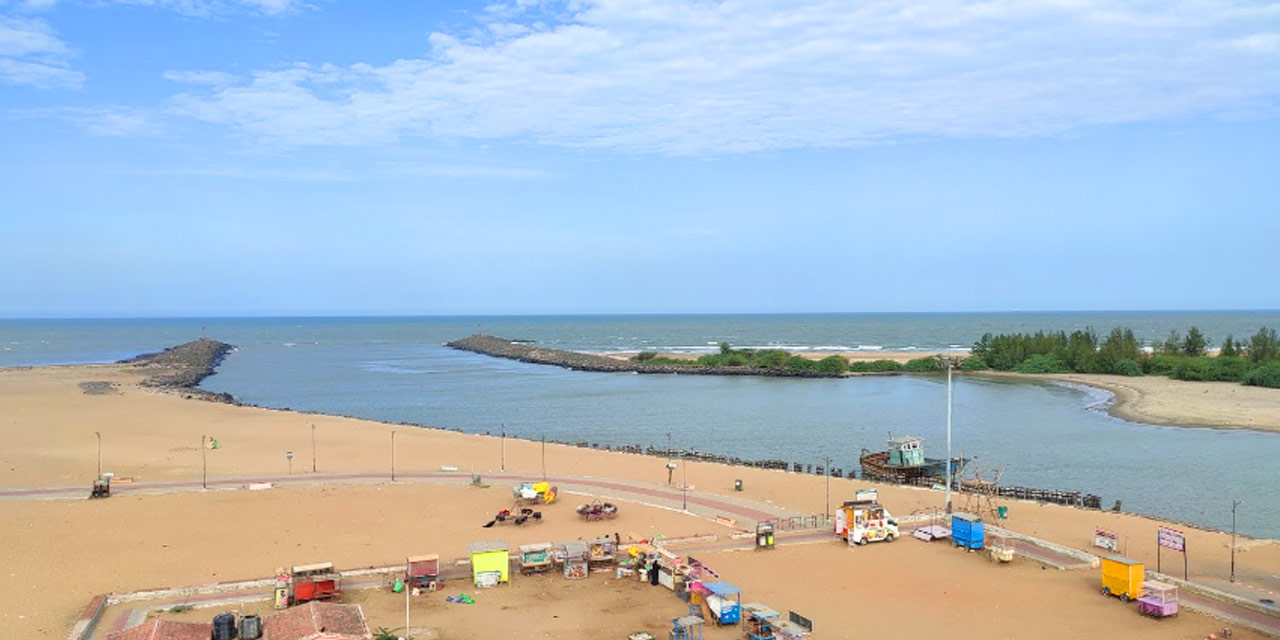
The breathtaking views from Karaikal Beach is what makes it so popular. It is a natural beach that lies on the Bay of Bengal and is an excellent spot for a dip and for evening walks. An ideal place to witness the sunset, there is a rocky path here to walk on, fishing boats to watch and plenty of opportunities for nature photography. The beach is perfect for water activities like swimming, canoeing and kayaking with the boat club allowing visitors to rent motor boats, peddle boats and rowing boats. There is a lighthouse on the premises that attracts large crowds with several fountains adding to the area’s appeal. There is also a children’s park and a tennis court close by. A walk or drive from the Arasalar Bridge provides an opportunity to admire the water, the hills around and the mangroves near the backwaters.
Mahé is an enclave of Kerala and the smallest district by size and the sixth least populous district of India. It is bound on three sides by districts of Kerala and the Arabian Sea on the west and geographically is part of North Malabar. Also known as Mayyazhi, Mahé is situated at the mouth of the Mahé River.
The name Mahé derives from Mayyazhi, the name given to the local river and region in the Malayalam. It was also called variously from the early 1720s as Mayé, Mahé and Mahié until the early 19th century when Mahé became the how the town was spelt. Before the arrival of the European trading companies, this area was part of the Kolathu Nadu which comprised of Thulunadu, Chirakkal and Kadathanadu. The French East India Company constructed a fort on the site of Mahé in 1724, because of an accord between André Mollandin and Raja Vazhunnavar of Vatakara three years earlier. In 1741, the French retook the town after a short period of occupation by the Marathas. In 1761 the British captured Mahé, and the settlement was handed over to the Rajah of Kadathanadu. The British restored Mahé to the French as a part of the 1763 Treaty of Paris and in 1779, the French lost Mahé in the Anglo-French war. In 1783, the British agreed to restore to the French their settlements in India, and Mahé was handed over to the French in 1785 and captured it in 1793 and then restored it back to the French in 1816 as part of the 1814 Treaty of Paris. After Indian independence, it continued to be French-ruled until 13 June 1954, when a long anti-colonial struggle culminated in it joining the Indian Union as a district of Puducherry Union Territory.
The Sri Puthalam Bhagavathy Temple is an ancient historic temple dedicated to Goddess Bhagavathi. The temple’s legend is based on events that occurred during the conflict between the French and Indian armies. The historic St Theresa Church was constructed in 1757 as a part of the Mahe Mission. Mooppenkunnu is a hillock and a popular picnic spot with pavements to walk on, benches to rest and a restroom facility. The hillock contains the historic Lighthouse and is a famous sunset view point.
Source
The walkway on the banks of Mahé river is a major tourist attraction which surrounds the landscape and has park benches to relax and enjoy the beauty of the river. Azhimukham is the estuary of the Mahe river and the Arabian Sea. There is a small park named Tagore Park here and the reconstruction of a 2-km walkway along the bank of river from the estuary towards Mahe Bridge.
Located close to Kannur, Mahe Beach is a quiet and clean beach, part of Kerala’s northern coast. Lined with tall palm trees, the beach is a must-visit during the early hours of the morning to witness the gorgeous sunrise. Ideal not just for swimming, but also for beach sports, the view of the sunrises and sunsets are absolutely spectacular. There are several fishermen villages around the beach because of which there are always numerous colourful boats around. Dharmadam Island is ideal for watching the sunrise or sunset which can be reached by a short boat ride.
An enclave of Andhra Pradesh, Yanam is one of the four districts of the Union Territory of Puducherry in India and occupies an area of 20 sq km. It is located south of Kakinada port on the north bank of the Godavari River, slightly inland and is surrounded by the East Godavari district of Andhra Pradesh. Yanam is covered with coconut trees and is located over the banks of the Gauthami Godavari River, one of the main branches of the river Godavari when it enters the Bay of Bengal after flowing about 12 km through Yanam. Indigo wells or Neelikundilu are still found in the west of Yanam.
Yanam or Yanaon as it was called during the French colonial times, is located in the East Godavari district in Andhra Pradesh with a population of 35,000, most of whom speak Telugu. A French colony for nearly 200 years, it possesses a blend of French and Telugu culture, and is nicknamed Frelugu. During French rule, the Tuesday market, the Marché du mardi or Mangalavaram Santa was popular among residents of the the Madras Presidency, who used to visit Yanam to buy foreign and smuggled goods during Yanam People’s Festival held annually in January. After the implementation of the Child Marriage Restraint Act, 1929 in British India, people often travelled to Yanam to conduct child marriages, which remained legal under the French administration.
Yanaon was a Dutch colony prior to French takeover in the 1720s and the Dutch built a fort, used to store their currency, which was minted at nearby Neelapalli. The location of the fort is today referred to by locals as the Saali Kota or Saalivandru, meaning shawl-hut, since after the Dutch moved out, the building was taken over by cloth weavers. The region was presented to the by the king of Vizianagaram as a token of gratitude for their help in his fight against the rulers of Bobbili. Yanaon was the third French colony established in India, though it was officially confirmed as one only by 1751. It went to the British after the Anglo-French war of 1758 which was won by the British and was restored again to the French in 1785. During 1793 and 1816 it was under British control and after the Napoleonic wars, by the Treaty of Paris of 1814, Yanam along with the factory at Machilipatnam was finally returned to the French on 26 September 1816. From then it was continuously under French control until its transfer to India in 1954.
The Lord Sri Rajarajeswara Temple on the bank of Atreya Godavari, which is also known as the Corangi river. The temple was built by the Chalukya kings of Rajamahendravaram or Rajahmundry in the 15th century with sculptures of that period present in the temple. The main festivals in the temple are the Kalyanotsavam and the Rathostavam which have been performed for centuries with devotees singing slogans and bhajans. The Kalyanotsavam festival celebrated in January/February is when Lord Srī Rajarajeswara becomes a groom and has a procession on the streets of the town with chariots each day. The Kalyaṇam, Rathotsavam and Trisulatirtham are the important events of the festival with the Vahana Samprokshaṇa or the ritual cleansing of the chariot done by priests every day for each of the chariots used for the procession.
The Venkanna Babu Temple is a temple dedicated to Lord Vishnu known as Venkanna Babu, Chaldikudu Venkanna and Meesala Venkanna. The speciality of the temple is that the Lord’s idol has a big moustache like that of Lord Sathyanarayana Swamy of Annavaram. The temple was built by the Chalukya kings of Rajamahendravaram or Rajahmundry in the 15th century. This temple used to perform child marriages and when the Child Marriage Act was passed in British India, people from nearby areas used to come here to conduct such marriages as the French allowed such practices.
The site for the Grand Mosque was donated by the French Government in 1848 and a small mosque was constructed there and in 1956, it was remodelled. It was demolished in 1978 and a new mosque constructed and in 1999–2000, the mosque was expanded to become the Grand Mosque. Around 200 persons can pray in this mosque at a time.
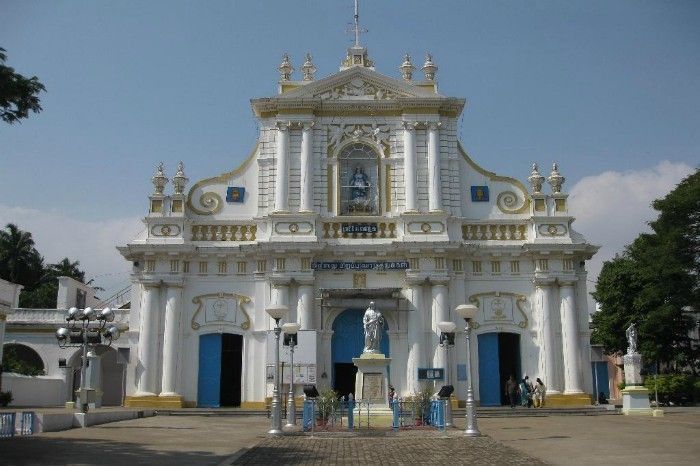
The French Catholic are linked with the Catholic Church in Yanam, the St. Ann’s Catholic Church. Built in the European style, in 1846 by French missionaries, all furniture and decoration articles were imported from France. The church holds a Catholic Festival in March
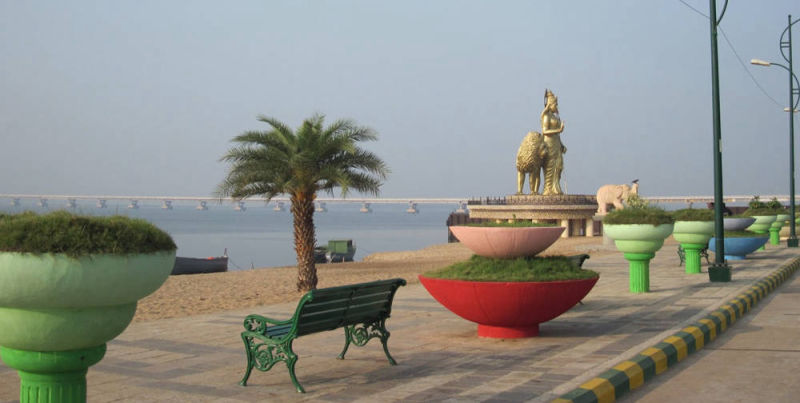
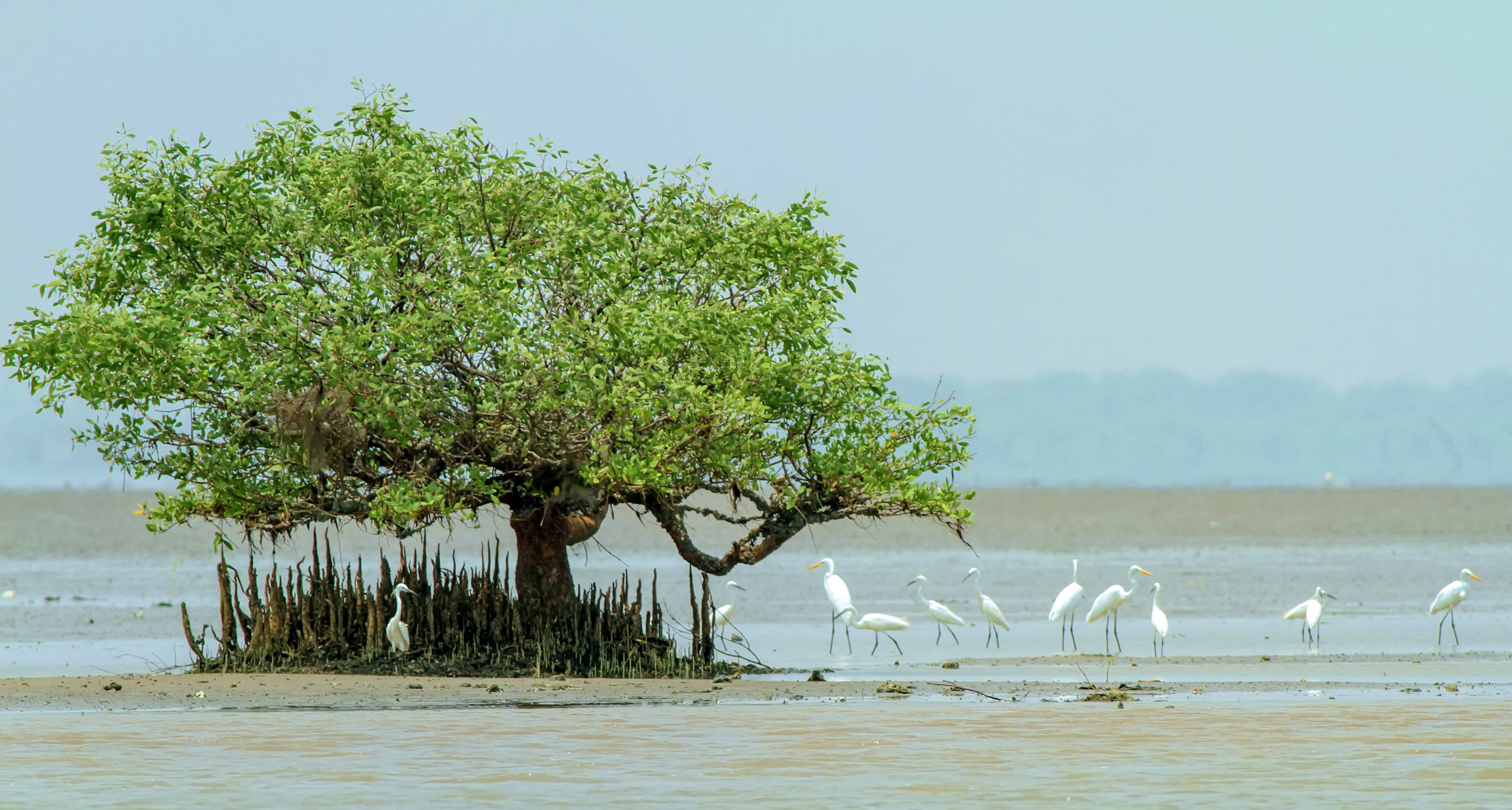
Yanam Beach is the best getaway to spend quiet time away from the crowds. Also known as the Rajiv Gandhi Beach, one can take boat rides at the beach as well as walks along the Ferry Road. There are many packages available including a ride over the Godavari River, cruises to a few islands, visiting the Sangam where the river meets the sea or a ride to the mangrove forest on the Gowthami Godavari River. There are also houseboat services that begin from Rajiv Gandhi Arch Road near the Shiva Linga. The Yanam Ferry Road inaugurated in 2000 is a walking trail along the beach with elephant statues guarding the Shiva Linga from the entrance to the pathway. The Nagoor Meera Sahib Mandir on the Ferry Road is built as a ship.
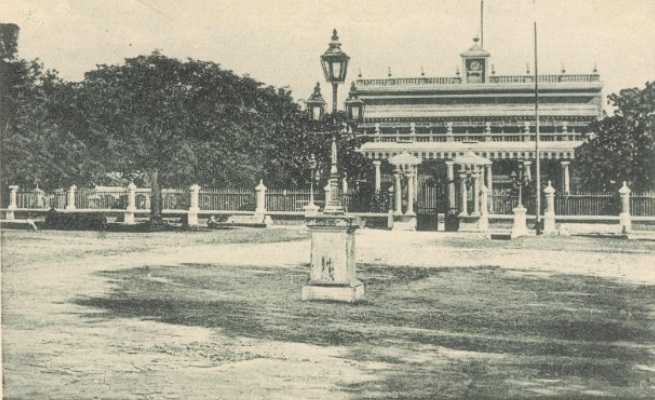
The Palais de Justice or the French courthouse and St. Ann’s Catholic Church are around 1 km away from the beach. The Court building is situated in an ancient white monument building of French architecture and has two floors, the ground floor is the court and the first floor is the residential quarters of the judge and was renovated in 1967. The Sivalayam on the banks of the Corangi River is 3 km away from the beach and is a religious hub. The Fete de Pondicherry is a three-day cultural event conducted by the government of Puducherry.
The Coringa Wildlife Sanctuary is 21 km away from Yanam Beach and is a great spot for bird lovers. The sanctuary shelters more than 120 bird species and endangered species, such as the long-billed vulture and the white-backed vulture are found here.
This short, but interesting series on the Union Territory of Puducherry was quite illunimating to me as I hope it was for you. I learnt a lot about the former French colonies of India, especially Karaikal, Mahe and Yanam, which I barely knew about previously.
Three Cups of Tea – Sarah L. Thomson, David Oliver Relin and Greg Mortenson
On the afternoon of September 2, 1993, Greg Mortenson realized that he had failed in his attempt to climb K2, the world’s second-highest mountain.
But disappointment was the least of his problems. Emaciated, exhausted, thoroughly disoriented, and suffering from edema, his grip on life was loosening.
He was taken in and nursed back to health by the impoverished populace of a remote Pakistani village.
Grateful, he promised to return someday to build them a school. Three Cups of Tea is the story of that promise and the story of how one man changed the world, one school at a time.