Bhaktapur
Also known locally as Khwopa and historically called Bhadgaon, Bhaktapur, or the city of devotees lies in the eastern part of the Kathmandu Valley in Nepal, about 13 km east of Kathmandu. It is the smallest city of Nepal as well as the most densely populated. Along with Kathmandu and Lalitpur, Bhaktapur is one of the three main cities of the Kathmandu Valley and is a major Newar settlement of the country. The city is also known for its Newar tradition, cuisine, and artisans. Bhaktapur suffered heavy damage in the April 2015 earthquake.
As part of the Kathmandu Valley, it shares its history, culture and language with the other cities of the valley. Although chronicles like the Gopal Raj Vamshavali put the foundation of Bhaktapur in the 12th century, it has been the site of numerous settlements since at least the Licchavi dynasty. The capital place of Kasthamandu was Bhaktapur Nepal during the first half of Malla dynasty from the 12th century to 1482 when Nepal split into three independent kingdoms. The Malla dynasty is considered a golden period for Bhaktapur and even after its division in 1428, Bhaktapur managed to stay as a wealthy and a powerful Newar kingdom, mostly due to its position in the ancient India-Tibet trade route. In 1769, Bhaktapur was attacked and annexed into the expanding Gorkha Kingdom, which later became the Kingdom of Nepal. After its annexation, Bhaktapur remained largely isolated from other parts of Nepal which led to stagnation in the development of its economy and arts and to allowed it to remain as a homogeneous Newar city. Due to being isolated and overlooked by the central government in Kathmandu, its infrastructure and economy deteriorated and the 1934 earthquake further exacerbated the situation. Bhaktapur’s economy and infrastructure would only improve from the 1980s, largely due to tourism and aid provided by West Germany as part of the Bhaktapur Development Project.
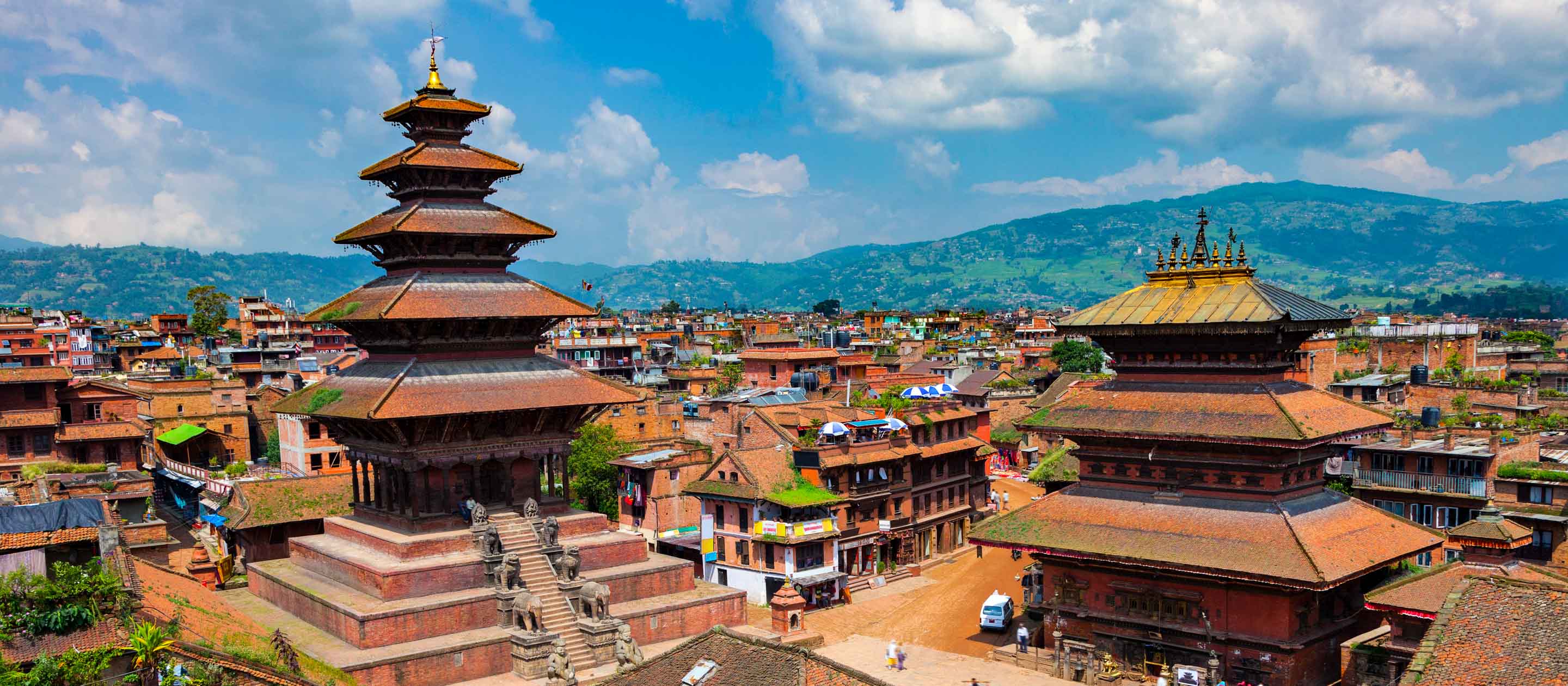
Compared to other Newar settlements, Bhaktapur is predominantly Hindu and speaks a distinct dialect of Nepal Bhasa. The Nyatapola, a five roofed pagoda completed in 1702 is the most famous structure of Bhaktapur and along with the former royal palace, it forms the tourism center of Bhaktapur. The city is also famous for its numerous festivals and carnivals like the spring festival of Biska Jatra and the carnival of Saparu or Gai jatra, both of which are significant part of the local culture and contribute well to tourism. Bhaktapur is also called Nepal’s Music and Dance capital due to presence of over 200 types of traditional dances, most of which are masked dances and exept for a few, are a part of the annual carnival of Saparu. It is also famous for its cuisine with the juju dhau, a type of yogurt made from buffalo milk being the most popular. Bhaktapur’s potters and handicraft industries are also known nationwide. Due to its well preserved medieval nature, UNESCO inscribed Bhaktapur as a World Heritage Site since 1979.
The present day name of the city in Newar, the indigenous language of Bhaktapur is Khwopa. This name is derived from Khopring, a term that can be traced to an early form of the Newar language. The oldest instance of the name Khopring is from a Licchavi dynasty inscription from 594. The term Khopring is a combination of two words from an early form of the Newar language, kho and pring which translate to cooked rice and village, respectively. Bhaktapur boasted fertile soil conducive to rice cultivation, making it a significant rice-producing area. Consequently, the city was aptly named after its primary agricultural output. The city was also sometimes referred as Bhaktagrama instead of Bhaktapura where grama denoted a village as opposed to pura which denoted a town in Sanskrit.
By the 11th century, Khopring had evolved to Khwopa as the term appeared for the first time in a manuscript from 1004. Similarly, the Gopal Raj Vamshavali written in the 14th century refers to the city as Khwopa and in some pages of the manuscript as Khwopu and Swopa. The term Khwopa was used to describe the city in almost all of the inscriptions, manuscripts and documents from the Malla dynasty.
After the conquest of Bhaktapur by the Gorkhali armies of Prithivi Narayan Shah in 1769, Bhaktapur was started to be referred as Bhatgaon, the Khas translation of Bhaktagrama. The name Bhatgaon was used until the 1930s when Juddha Shumsher Rana, after witnessing the numerous temples in the city and the devotion of the locals towards it, decreed that the city should be referred as Bhaktapur or the city of devotees instead of Bhatgaon. However, many scholars and people from outside Bhaktapur used the name Bhatgaon till the late 20th century.
Bhaktapur’s oldest hiti is also dated from the Licchavi dynasty. It is said that the Rajkulo canals, which supply water in hitis were built and managed by Tula Rani, a mythical queen who is believed to have lived in Bhaktapur during the Licchavi dynasty. In folklore, Tula Rani made and repaired the Rajkulo canals, as she is said to only weigh a single tola, or 11 grams, and hence float on water.
In legends and chronicles, Ananda Deva, who ruled Nepal Mandala from 1146 to 1167 is credited to have established the city of Bhaktapur. Since there were already settlements in Bhaktapur like Mākhopring and Mākhoduluṃ during the Licchavi dynasty, it was more likely that Ananda Deva unified these smaller settlements into a single unit. Because Bhaktapur lay on the trade route road taken by merchants going to Tibet, its size and population continued to grow by the 12th century. Ananda Deva also established a royal court named Tripura Rajkula in the central part of Bhaktapur and declared it as the new capital of Nepal. Bhaktapur was chosen as the new capital because of its geography. It is situated on top of a small hill and the hill itself is surrounded by the Hauman river in the south and the Kasan river in the north, making it easier to defend during a foreign invasion. Ananda Deva is also credited with the establishment of shrines of the eight Matrikas, known as Ajima in Nepal Bhasa, on the edges of the city proper, due to which Bhaktapur is regarded as a sacred Mandala. In Bhaktapur, there are nine Matrikas instead of the traditional eight and the shrine of ninth goddess, Tripura Sundari, who is considered the leaders of the Matrikas of Bhaktapur, was established in the central part of the town with the goddess acting as the focal point of the mandala.
As Bhaktapur became the seat of the government, it also became the target for numerous foreign invasions. The main reasons for these attacks was the internal division among the royal family of Nepal. Soon after Ananda Deva’s death, a new royal house emerged from within. Believed to have been started by Ari Malla, they used Malla as their surname replacing their ancestral surname, Deva. When the conflictions between both houses worsened, the House of Tripura sought help from Tirhut while the House of Yuthunimam sought help from Khasa Kingdom. Thus, both of these kingdoms started interfering in the internal politics of Nepal. In the 1310s, the monarch Rudra Malla in order to improve Nepal Mandal’s relation with Tirhut married off his sister Devaladevi to the Tirhut king, Harisimhadeva.After the marriage, the relation between the two kingdoms smoothed and Tirhut’s attack on Nepal ceased.
In 1349, Nepal suffered one of the most devastating attack in its history. Shamsuddin Ilyas Shah, the Sultan of Bengal and his armies plundered the Nepal Valley for a week in the winter of 1349. Bhaktapur suffered the most from this attack as not only it was the capital at that time, the city was also in the eastern part of the valley, the same direction the 20,000 forces came from. After the invasion, which destroyed much of the city, Bhaktapur was entirely rebuilt under Devaldevi, who like Ananda Deva, did so on the basis of Sanskrit treatises in architecture. The layout of the old part of the city has remained mostly the same since then. In November 1769, Bhaktapur was attacked by and after suffering a heavy loss eventually surrendered to the expanding Gorkha kingdom which became the Kingdom of Nepal.
After its defeat in 1769, Bhaktapur lost most of its political and cultural importance to Kathmandu and Lalitpur, the capital of the newly formed Kingdom of Nepal. The great earthquake of 1833 and 1934 damaged most of the city including the palace and temples. In the earthquake of 1833, Bhaktapur suffered the most damage in the Kathmandu Valley. When the 8.0 magnitude earthquake struck in 1934, Bhaktapur was one of the most affected towns of Nepal. Almost all the buildings in Bhaktapur Durbar Square were heavily damaged and around 177 heritages were completely destroyed.Many of the Malla era temples and palaces of the city like the Basantapur Lyākū, Chaukot Lyākū and Thanthu Lyākū were completely destroyed in the earthquakes and many of them were never restored and the few that were, were reconstructed in a Mughal style stucco dome by the Ranas. The economy of Bhaktapur which had already been struggling after losing the flow of Tibetan traders was greatly crippled by the earthquakes of 1833 and 1934. The earthquake permanently damaged the Rajkulo canals that had been providing fresh water to the city since the time of the Mallas. An economically struggling Bhaktapur was unable to repair these canals and as a result fresh water became scarce in the city. The sanitation level of Bhaktapur became severely low and poverty and diseases became rampant.
In the 1950s, when the Rana dynasty ended and Nepal was opened up to the outside world, Kathmandu and the other cities around it like Patan saw a big rise in urbanisation and population. However, Bhaktapur was farther away from the capital and was left out from the development that occurred in the other cities of the Kathmandu Valley. Bhaktapur was also greatly isolated and ignored by the central powers. When a new highway was built, it completely bypassed the city and instead ran through the outskirts. Bhaktapur was the poorest city of Nepal in the 20th century. The Rajkulo canals that provided fresh water was never repaired and sanitation level was very low. Diseases were rampant and greatly affected the farmer majority population of Bhaktapur couldn’t afford modern medicine. Under the Bhaktapur Development Project which was funded by West Germany, the city’s physical infrastructure and heritage sites were all revitalised and tourism became a major source for Bhaktapur’s economy.
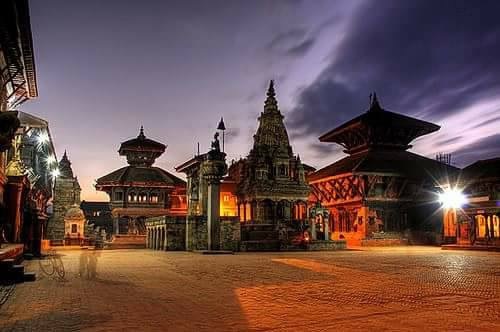
Once home to the Bhaktapur royal family and a UNESCO World Heritage Site today, the Bhaktapur Durbar Square is locally known as Khwopa or the ancient Newa City. The complex is made up of four squares: Taumadhi Square, Durbar Square, Pottery Square, and Dattatreya Square. Located about 13 km east of the Kathmandu Valley, it is often visited from Kathmandu. The square is a massive display of traditional Newari architecture with every building a work of art. The square was severely damaged in the 1934 and 2015 earthquakes and most of the ancient architecture suffered, and several buildings, statues, and structures were destroyed.
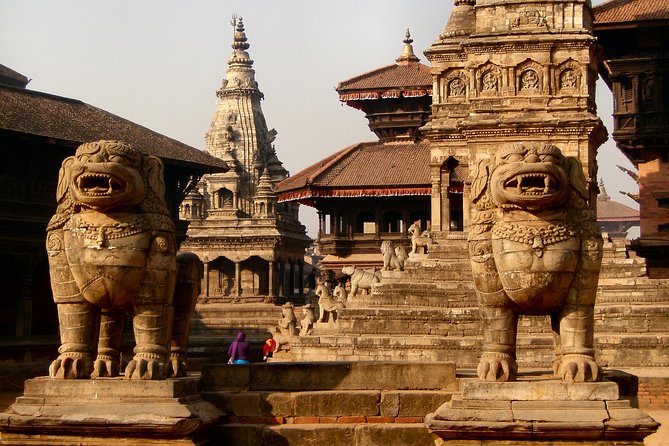
Bhaktapur Durbar Square comprised of buildings, temples, statues, etc. all belonging to the 18th century. The Royal Residence or Palace is located at Durbar Square, which was initially situated at Dattatreya Square. The remaining buildings are spread across the rest of the site. Here, one can see well-preserved 17th and 18th century Newari, traditional pagoda and shikhara style of architecture. There is extensive use of wood and stone that bear beautiful carvings depicting stories and mythical creatures of the time. The square is open daily from 7 am to 7 pm and entry fees are NPR 1500 for foreigners, NPT 500 for SAARC and Chinese citizens and free entry for Nepalis.
The Palace of Fifty-Five Windows was built by King Jitamitra Malla for his 55 wives, with one window for each of them. The palace dates back to the 18th century. Apart from this, the king also laid down the foundation stone for another iconic structure in the vicinity – the Nyatapola Temple. The inside of the palace has been closed for visitors for many years now. The Golden Gate, also called Sun Dhoka, is the entrance to several inner courtyards around the palace. The Golden Gate is one of the most lavish and important artefacts in Nepal. There is also a holy pool near the palace called Naga Pokari which is believed to be used by goddess Taleju for daily ritual baths. It was built like a water tank and it is encircled by a cobra.
Siddha Pokhari is an artificial rectangular pond located near the main gate of Bhaktapur Durbar Square. It is one an old and traditional Nepali ponds. Also known as Indra Daha, it was built in the 15th century during the rule of King Yakshya Malla. Siddha Pokhari is also called by the name Ta-Pukhu. The pond is surrounded by buildings, however, one can also spot snowy mountain peaks on a clear day. Ta Pukhu is a popular place for locals as well as tourists and they can often be seen feeding the fish with food bought from stalls nearby. A large fair takes place every year on the day of Ashwin Krishna Dwithiya. The devotees come here to dip into the holy water and worship goddess Indrayani and believe they will be blessed with health and happiness. The entire pond will be decorated with lamps during this day. There will be idols of Shaiva, Shakti, Baishanv and Buddha near the pond.
Changu Narayan is a synonymous word with both the old Nepalese temple and the village that surrounds it and is Nepal’s oldest temple with an authentic Newari style of architecture. With its two-storey brick-red edifice, the temple is perches atop a hill which is also called Changu or sometimes Dolagiri. Dedicated to Lord Vishnu, the temple houses several of his avatars and other deities.
One of the legends about the temple is about a cow herder. The cowheard bought a cow from Sudarshan and used to take it for grazing in the pastures of Kathmandu valley. One day when the cow went to one of the trees in the Champak forest, she gave very little milk, compared to the other days when she produced milk in large quantities. Helpless, the cowherd asked help from the man he brought the cow from, but he too could not solve the problem. One day they saw a small boy coming out of that particular tree and drinking milk from the cow. Thinking him to be a reincarnation of the devil, they cut down the Champak tree immediately. As the tree started bleeding out, they felt they had made a grave mistake by taking a life.
That is when Lord Vishnu arrived in front of them and said that it was not their fault as he was himself cursed for killing Sudarshana’s father while hunting, though unintentionally. Thus, he had to roam around the earth on his mount Garuda. When they cut the tree, they beheaded his earthly incarnation, thus freeing him from the bound of the curse. Knowing this, the two mortals started worshipping Lord Vishnu then and there. The priests of Changu Naraya temple are said to be Sudarshan’s descendants and the conservators to be the bloodline of the cowherd. The other legend is a local one, where it is believed that 400 years ago a mighty warrior of the valley named Pranjal was defeated here by another Nepali warrior called Changu. He won over the hearts of the Nepali people, and they built Changu Narayan to pay tribute to him.
The Changu Narayan temple has a unique architectural style. It is neither built in the Shikhara or the Pagoda styles, but purely Newari. The main shrine right in the middle of the temple premise has four gates. Each of them is guarded by pairs of holy animal gargoyles – lions, elephants, sarabha and Garuda himself. Among these, the one guarded by Garuda on the western side is the main gate. The four symbols of Vishnu – chakra or disc weapon, khadga or the weapon that replaces the traditional mace in Vishnu idols, kamal or lotus bud and shankha or conch shell are carved meticulously. These stone pillars are the one with the inscriptions of King Manadeva. This is considered as the oldest written inscription text in Nepal at present. Inside, the idol is of Vishnu Narayan in his Preserver of the Universe avatar. The exteriors of the temple are equally impressive. Around the courtyard of the temple, all ten avatars of Vishnu are prominently displayed in authentic Newari style. At the southwest corner, he is Narsimha – his man-lion incarnation and as Vikaranta or Vamana – his dwarf manifestation who later becomes a giant.
The 1500-year-old, ten-headed and ten-armed stone carving of Vishnu is a unique piece not seen in other Hindu temples. The Garuda Narayan idol where Vishnu rides on his vahaan as per the curse of the legend is also glimpse-worthy. Other shrines in Changu Narayan temple complex includes the headless Tantric goddess Chhinnamasta, Kileshwor shrine for Lord Shiva, Ashta Matrika temple and a small shrine for King Bhupatindra Malla and his queen Bhuvanlaxmi near the main entrance.
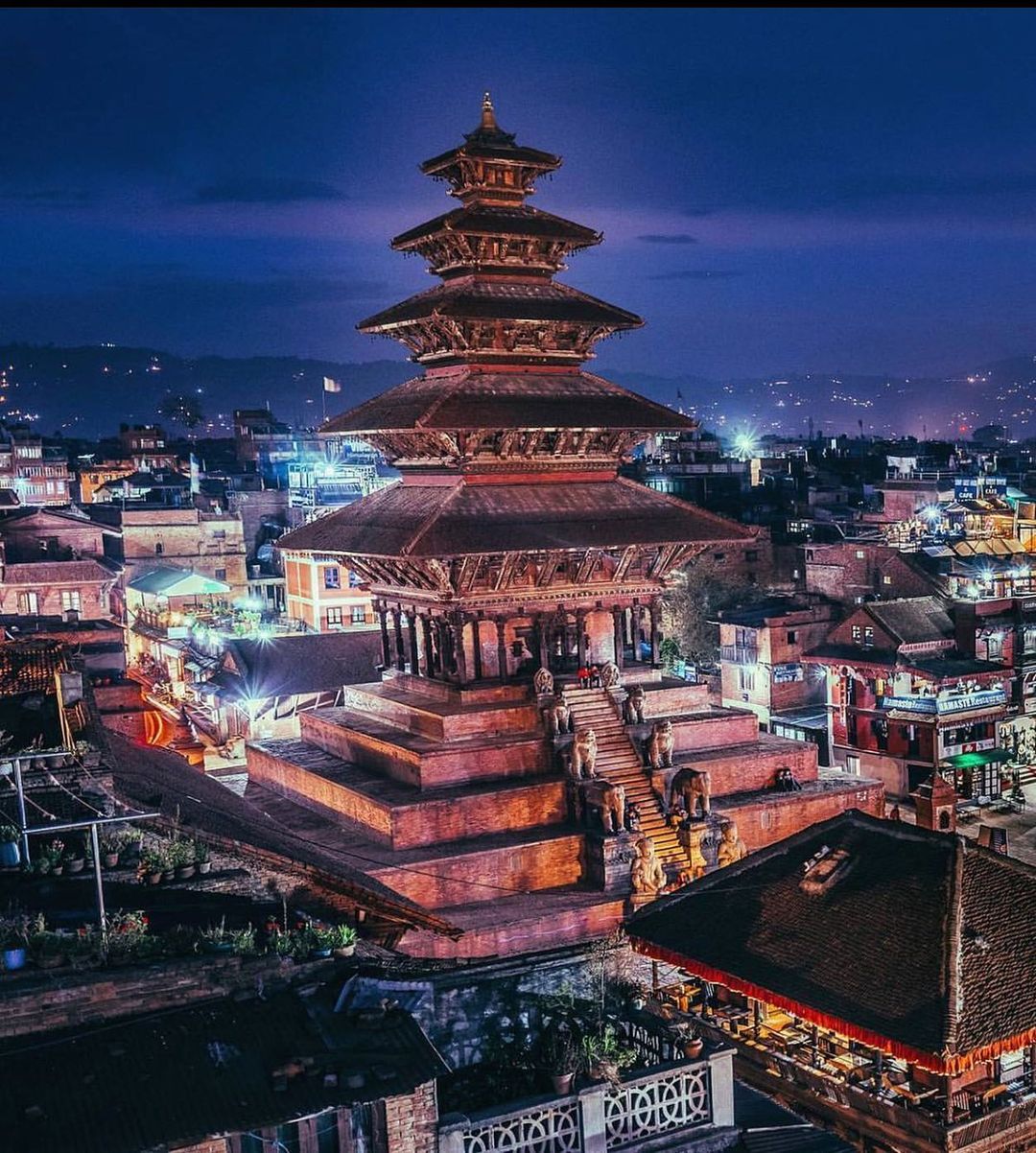
Nyatapola Temple is an 18th-century temple, the tallest building in the valley and the tallest temple in the country. The temple was built in 1702 and is dedicated to Goddess Siddhi Lakshmi, an incarnation of Goddess Parvati. The idol of the Goddess, which is installed in the sanctum sanctorum, is believed to be extremely fearsome. Although only the temple priests enter the sanctum sanctorum, visitors can explore the rest of the temple. The monument has survived two major earthquakes in the region and has suffered minor damages. It is also, therefore, known for its structural strength.
The temple was built during the reign of King Bhupatindra Malla who ruled Bhaktapur between 1692 and 1722. The temple has traditional pagoda-style architecture with a five-storey roof that makes it a strikingly tall building in the region. It took about seventeen months to build the temple during the time. The Goddess it is dedicated to is believed to be Tantric and hence, is also called Tantric Lakshmi. The temple is placed over five platforms or terraces built one on top of the other. Right in the middle of the yard, a stone staircase stretches leading to the temple entrance. Each level has stone statues of mythical protectors, elephants and tigers on either side. Inside, there is a sanctum sanctorum where the idol of the Goddess is placed. Across the remaining temple, Goddess and legendary incarnations in relation the goddess are carved.
According to a legend, Lord Bhairava or Lord Shiva was once causing havoc in the region. Seeking help, the people called upon Goddess Parvati to help them. The Goddess appeared in the avatar of Siddhi Lakshmi. She is said to be more potent than Lord Bhairava and carried him to control him. The temple was thus built in her honour. And because she is believed to be stronger than Lord Bhairava, her Temple was made to be sturdier and taller than the Bhairava Temple located nearby.
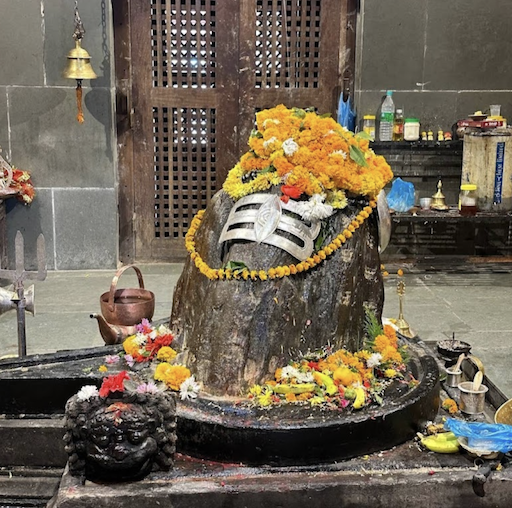
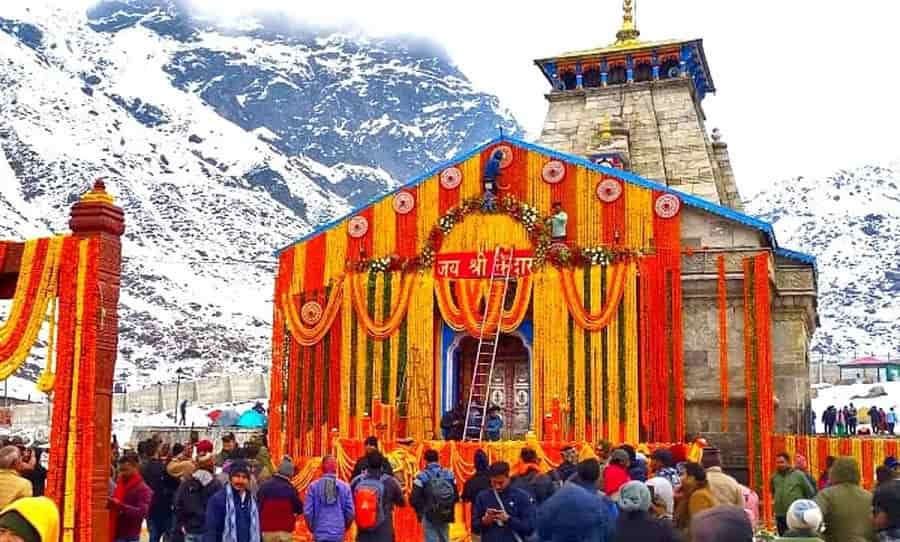
The Doleshwar Mahadev Temple is located 20 km from Kathmandu and is dedicated to Lord Shiva, believed to be 4000 years old. It is believed that visiting the Doleshwar Mahadev, Pashupatinath and Kedarnath temples will wash off one’s sins by receiving blessings from Lord Shiva.
We will continue learning more about Bhaktapur before checking out other cities.












 Memories and Such