In My Hands Today…

Savarkar: Echoes from a Forgotten Past, 1883–1924 – Vikram Sampath
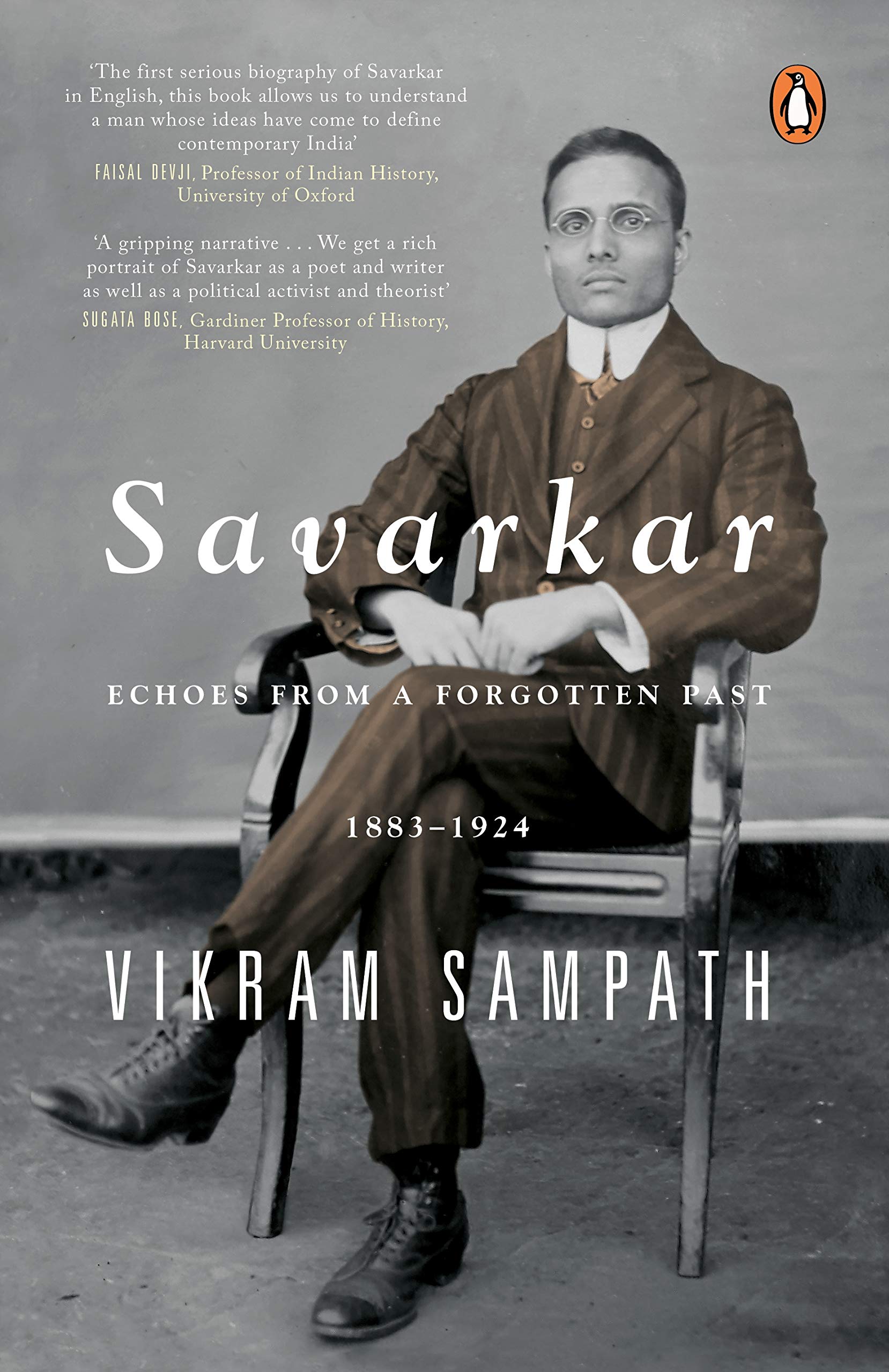
As the intellectual fountainhead of the ideology of Hindutva, which is in political ascendancy in India today, Vinayak Damodar Savarkar is undoubtedly one of the most contentious political thinkers and leaders of the twentieth century. Accounts of his eventful and stormy life have oscillated from eulogizing hagiographies to disparaging demonization. The truth, as always, lies somewhere in between and has unfortunately never been brought to light. Savarkar and his ideology stood as one of the strongest and most virulent opponents of Gandhi, his pacifist philosophy and the Indian National Congress.

An alleged atheist and a staunch rationalist who opposed orthodox Hindu beliefs, encouraged inter-caste marriage and dining, and dismissed cow worship as mere superstition, Savarkar was, arguably, the most vocal political voice for the Hindu community through the entire course of India’s freedom struggle. From the heady days of revolution and generating international support for the cause of India’s freedom as a law student in London, Savarkar found himself arrested, unfairly tried for sedition, transported and incarcerated at the Cellular Jail, in the Andamans, for over a decade, where he underwent unimaginable torture.

From being an optimistic advocate of Hindu-Muslim unity in his treatise on the 1857 War of Independence, what was it that transformed him in the Cellular Jail to a proponent of ‘Hindutva’, which viewed Muslims with suspicion?

Drawing from a vast range of original archival documents across India and abroad, this biography in two parts-the first focusing on the years leading up to his incarceration and eventual release from the Kalapani-puts Savarkar, his life and philosophy in a new perspective and looks at the man with all his achievements and failings.

In My Hands Today…

I Contain Multitudes: The Microbes Within Us and a Grander View of Life – Ed Yong

Every animal, whether human, squid, or wasp, is home to millions of bacteria and other microbes. Many people think of microbes as germs to be eradicated, but those that live with us—the microbiome—build our bodies, protect our health, shape our identities, and grant us incredible abilities. In this astonishing book, Ed Yong takes us on a grand tour through our microbial partners, and introduces us to the scientists on the front lines of discovery.

Yong, whose humor is as evident as his erudition, prompts us to look at ourselves and our animal companions in a new light—less as individuals and more as the interconnected, interdependent multitudes we assuredly are. The microbes in our bodies are part of our immune systems and protect us from disease. Those in cows and termites digest the plants they eat. In the deep oceans, mysterious creatures without mouths or guts depend on microbes for all their energy. Bacteria provide squids with invisibility cloaks, help beetles to bring down forests, and allow worms to cause diseases that afflict millions of people.

I Contain Multitudes is the story of these extraordinary partnerships, between the creatures we are familiar with and those we are not. It reveals how we humans are disrupting these partnerships and how we might manipulate them for our own good. It will change both our view of nature and our sense of where we belong in it.

In My Hands Today…

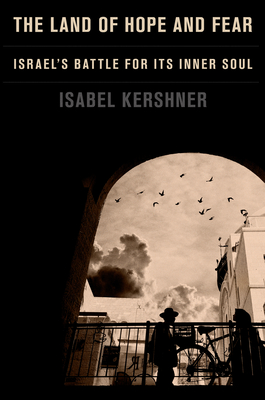
The Land of Hope and Fear: Israel’s Battle for Its Inner Soul – Isabel Kershner

Despite Israel’s determined staying power in a hostile environment, its military might, and the innovation it fosters in businesses globally, the country is more divided than ever. The old guard—socialist secular elites and idealists—are a dying breed, and the state’s democratic foundations are being challenged. A dynamic and exuberant country of nine million, Israel is now largely comprised of native-born Hebrew speakers, and yet any permanent sense of security and normalcy is elusive.

In The Land of Hope and Fear , we meet Jews and Arabs, religious and secular, Eastern and Western, liberals and zealots—plagued by perennial conflict and existential threats, citizens who remain deeply polarized politically, socially, and ideologically, even as they undergo generational change and redefine what it is to be an Israeli. Who are these people and to what do they aspire?

In moving narratives and with on-the-ground reporting, Isabel Kershner reveals the core of what holds Israel together and the forces that threaten its future through the lens of real a son of Zionist pioneers, cynical about what is to come and his people’s status in it; a woman in her nineties whose life in a kibbutz has disintegrated; a brilliant poet caught up in the political maelstrom; an Arab gallery owner archiving a lost Palestinian landscape; and a descendant of the Russian aliyah; representing millions of culturally and religiously different Jews, laying bare the question Who is an Israeli? The Land of Hope and Fear decodes Israel today at its seventy-fifth anniversary, examining the ways in which the country has both exceeded and failed the ideals and expectations of its founders.

In My Hands Today…

How Big Things Get Done: The Surprising Factors That Determine the Fate of Every Project, from Home Renovations to Space Exploration and Everything In Between – Bent Flyvbjerg, Dan Gardner

Nothing is more inspiring than a big vision that becomes a triumphant, new reality. Think of how the Empire State Building went from a sketch to the jewel of New York’s skyline in twenty-one months, or how Apple’s iPod went from a project with a single employee to a product launch in eleven months.

These are wonderful stories. But most of the time big visions turn into nightmares. Remember Boston’s “Big Dig”? Almost every sizeable city in the world has such a fiasco in its backyard. In fact, no less than 92% of megaprojects come in over budget or over schedule, or both. The cost of California’s high-speed rail project soared from $33 billion to $100 billon—and won’t even go where promised. More modest endeavors, whether launching a small business, organizing a conference, or just finishing a work project on time, also commonly fail. Why?

Understanding what distinguishes the triumphs from the failures has been the life’s work of Oxford professor Bent Flyvbjerg, dubbed “the world’s leading megaproject expert.” In How Big Things Get Done, he identifies the errors in judgment and decision-making that lead projects, both big and small, to fail, and the research-based principles that will make you succeed with yours. For example:

  • Understand your odds. If you don’t know them, you won’t win.
  • Plan slow, act fast. Getting to the action quick feels right. But it’s wrong.
  • Think right to left. Start with your goal, then identify the steps to get there.
  • Find your Lego. Big is best built from small.
  • Be a team maker. You won’t succeed without an “us.”
  • Master the unknown unknowns. Most think they can’t, so they fail. Flyvbjerg shows how you can.
  • Know that your biggest risk is you.

Full of vivid examples ranging from the building of the Sydney Opera House, to the making of the latest Pixar blockbusters, to a home renovation in Brooklyn gone awry, How Big Things Get Done reveals how to get any ambitious project done—on time and on budget.

In My Hands Today…

Flowers of Fire: The Inside Story of South Korea’s Feminist Movement and What It Means for Women’s Rights Worldwide – Hawon Jung

Since the beginning of the #MeToo movement, tens of thousands of people in South Korea have taken to the street, and many more brave individuals took a stand, to end a decades-long abortion ban and bring down powerful men accused of sexual misconduct—including a popular presidential contender. South Korean feminists know that the revolution has been a long time coming, between battles against its own patriarchal society as well as challenging stereotypes of docile Asian women in the Western imagination.

Now, author Hawon Jung will show the rest of the world that these women are no delicate flowers—they are trailblazing flames. Flowers of Fire takes the reader into the trenches of this fight for equality, following along as South Korean activists march on the streets, navigate public and private spaces where spycam porn crimes are rampant, and share tips and tricks with each other as they learn how to protect themselves from harassment and how to push authorities to act.

Jung, the former Seoul correspondent for the AFP, draws on her on-the-ground reporting and interviews with many women who became activists and leaders, from the elite prosecutor who ignited the country’s #MeToo movement to the young women who led the war against non-consensual photography. Their stories, though long overlooked in the West, mirror realities that women across the world are all too familiar with: threats of defamation lawsuits to silence victims of assault, tech-based sexual abuse, and criminal justice systems where victims’ voices are often met with suspicion and abusers’ downfalls are met with sympathy. These are the issues at the heart of their #MeToo movement, and South Korean women have fought against them vigorously—and with extraordinary success. In Flowers of Fire, Jung illuminates the strength and tenacity of these women, too often sidelined in global conversations about feminism and gender equality.