The Elixer of Life: My Water Stories

Water is essential for human beings to survive. Water carries nutrients to all cells in our body and oxygen to our brain. allows the body to absorb and assimilate minerals, vitamins, amino acids, glucose, and other substances, flushes out toxins and waste and helps to regulate body temperature. As a general rule of thumb, a human being can survive without water for roughly 72 hours or three days. And many experts have predicted that the next major world crises will be over water and suggest that growing water scarcity will drive violent conflict as access to water dries up for certain communities.

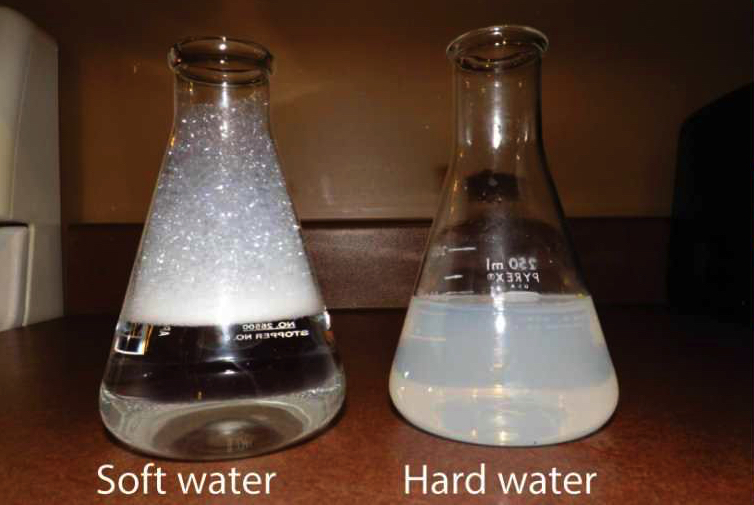
So with all the importance of water, it is certianly an essential part of our lives. In many parts of the world, water can be hard or soft and most water that is piped is usually soft water, which is treated and only has chorine and sodium. I am super finicky about the taste of water and probably because of the water I am used to, both while growing up in Mumbai and now in Singapore, which is treated chrolinated water, I can’t drink or find it hard to drink any other type of water. So here are some water stories from my life.

A representation of the water cooler we used to carry. Source

When we were younger, we used to travel by train during our summer holidays to visit our grandparents, first only to Bengaluru and then to Chennai first and then to Bengaluru. This is way before bottled water flooded the Indian market and on a train travel, the only water you had was either the water you carried with yourself in large cans or coolers or what you were able to refill in stations enroute. So we would carry as much water as we could from home in large five or 10 litre cans and this was common with pretty much everyone doing the same. This water would finish up roughly about halfway into the journey and we would have to fill it up from one of the stations, usually in Andhra Pradesh. The water would usually be hard and have a brackish taste to it and I would stop drinking water. If I was very thirsty, I would badger my mother to buy me a drink or something else to quench my thirst and if nothing was available, then a sip or two would all that I could stomach. Luckily the period of low to no water would not be too long and we would reach Bengaluru soon and as soon as we reached home, I would gulp water from the largest glass available.

In fact in our home in Bengaluru or Bangalore as it used to be called then, we had two sources of water – one from the well in the house which was slightly hard and the second which was piped in by the city from the Kaveri. I always preferred the Kaveri water and would always tell my grandmother to keep that water for drinking. This water would come in once every other day and when it came in, it would be a process to ensure it was pumped up to the holding tanks so it could be used for cooking eating and drinking while the well water was used for other needs. In fact, on our most recent trip to Bengaluru, my aunt’s house also had some kind of semi-hard water and I just could not bring myself to drink it. This trip was a very short one and we spent a fair amount of time outside visiting family in the city, so I didn’t have to drink it a lot, but the relief I felt when coming back to Bombay and drinking normal water was so immense that everyone who saw me rush to the kitchen to drink water as soon as we reached home had a hearty laugh at my expense.
Source

My maternal grandparents house in Chennai was another matter and there was no source of any soft water. So holidays there used to be a torture for me because there was no alternative source of water I could use. I soon learnt that if the water was ice cold, the taste could be masked and I could drink it, so that’s exactly what I did. Now, I am someone who normally does not drink cold water, but when in Chennai, I would ensure that there was sufficient cold water available so I could use that cold water for drinking and for even brushing my teeth! Our trip to Chennai used to be for a week, after which we would travel to Bangalore for the rest of the holiday, so it was not too bad.

Another story, similar to the above comes from the time when I was around 15. We were on a school trip to the beach town of Bordi which lies almost at the border between the states of Maharashtra and Gujarat. The whole class X cohort was on the trip, and was a combined Girl Guides and Social Services service trip. In Bordi the water was so bad that pretty much none of us drank the water. And this was the late eightees, so we didn’t have much in terms of pocket money and would restrict ourselves to one bottle of a soft drink a day which we would empty into our water bottles. Girls with a larger amount of pocket money would have purchased more than one and all of us were so glad to be back in Bombay where we could drink water to our heart’s content. This three day trip has been in my memories for more than three decades now because I can still remember the feeling of thirst and now being able to drink water because it was so bad. Like what I used to do in Chennai, when the thirst got too much to bear, we would drink a couple of sips of the hard water and then stop.

Source

So these were my water stories. Water is the true elixir of life, with over 71% of our planet and up to 60% of our bodies made up of water. Without water, life will cease to exist and for this reason, we must learn to preserve it for the future generations.

Music Appreciation: The most potent instrument of education

When I was young, most people I knew had a subscription to a local music sabha. A sabha is supposed to be a congregration or an assembly in ancient India and in the south, a music sabha is a conregration for music lovers, especially during the music season. Close to our home and very close to my grand mother’s home was the music sabha we went to. My grand parents were members and when they moved out of Bombay (when it was still Bombay and had not yet been renamed to Mumbai), my parents took over the membership.

I remember a representative from the sabha would come home once every few months and pass us the membership card along with the sabha schedule for the next few months. This was way before social media and mobile phones, so everything was done manually. This sabha was one of the most prestigiuous sabhas in Bombay at that time. It was established a few years after India’s independence with the aim of promoting the fine arts and provide a platform to showcase various artists in the various areas of the fine arts, especially music, dance and drama.

My parents and grand parents from both sides used to look forward to this programme and we would also be taken to the sabha for a dose of culture and music appreciation. Sometimes when a friend was also going there, we would not mind going, but most times we would rebel. When they could not get us to accompany them, my mum would leave us at my grandmother’s house which was just 2-3 minutes away from the sabha and go and enjoy the concert. We would enjoy the next few hours in the company of friends and when the concert ended, they would come to my grand mother’s house, have dinner and go home. Most of the concerts used to involve classical Carnatic music and dancen and when a distinguished artist was scheduled to perform, people would beg and borrow extra passes so family and friends could also listen and see the artist at play. 

When a distinguished artist was performing, we would all troop down to the sabha and any requests to stay at home would not be entertained as this would be a rare opportunity to hear and see such a distinguished performer. Relatives who stayed in other parts of the city would also make their way and I remember an aunt, my mother’s sister who was herself a singer and had learnt Carnatic music when she was younger would come down, especially if the concert was on a Saturday and stay at her mum’s place so she could attend it. I remember either attending or my parents attending performances by M.S Subbulakshmi among other celebrated artists.

When I just finished school, the sabha was unfortunately destroyed in a devastating fire and for a very long time all performances were stopped while it was being rebuilt. By then, we had all grown up and after a few more years of being members, my parents also gave up their membership and the sabha is now just a distant memory or a place for nostalgia when we pass by it.

Though I didn’t really recognise it then, this forced attendance has help me appreciate music. Though I did learn Carnatic music and my sister learnt Bharatanatyam, as did pretty much every tambram girl I knew, we did not take it up far and gave it up when school got too much for us. But those lessons and the concerts and dance performances we attended gave us a appreciation of what good music was all about. We learnt how to carry a tune and recognise when someone is out of tune. Even today, when I hear music which is even slightly out of tune, even though I may not recognise the raga being played, I know it is not correct and I wince, mostly unconsciously.

Today, research has confirmed what our parents and grandparents instinctively knew. That when you learn and listen and appreciate good music, it is extremely beneficial, especially to young children. Music is a megavitamin for the brain, the ultimate mood enhancer for emotional balance, a golden key for unlocking creativity, the secret code behind health and longevity, and the connective fiber between human beings of all races, nationalities and generations.

Musical training helps develop language and reasoning as it develops the areas of the brain related to language and reasoning. Children who are exposed to music early are more emotionally developed with empathy towards other cultures and also tend to have a higher self esteem and are better at coping with anxiety. Math and pattern recognition skills are developed with a music education and someone who has learnt music can better detect meaningful, information-bearing elements in sounds. Music also builds the imagination and intellectual curiosity and help foster a positive attitude toward learning and curiosity. An artistic education develops the whole brain and develops a child’s imagination. It is universally known that music helps fight stress and can be incredibly relaxing and also develop spatial intelligence in children.

When I look back in hindsight, I am so thankful to my parents for forcing this on me, even when I could not see it then. At that time, all it meant that going to classical concerts and dance performances meant that my Saturday evenings were being wasted, and I could use that time to play with friends. But today, as I do the same to my children, I realise how much this has benefitted me. GG & BB started learning Carnatic vocal music at about the age of seven. BB dropped it when he was about 12, when puberty hit and his voice started to break, but GG has still continued to learn. When I told her she could drop it if she wanted to, she told me it was very relaxing and wanted to continue. I do believe that these forced lessons have made them appreciate good music, even if their current music taste is not classical. GG also learnt western ballet for almost a decade, but gave it up when school got too much to balance. Today GG continues to sing, both classical and other music while BB, who actually has a good voice and a head for tune, sings very casually, though he will not really admit it.

My Favourite Books as a Child

I have always loved reading and my earliest memories are either reading or looking for something to read. Growing up in the mid to late seventies and eighties in India meant that other than the school library and maybe friends, access to books was limited. But I still managed to read, sometimes resorting to newspapers and magazines to feed my reading addiction.

I was always reading one to two grades higher than my peers and by the time I was in grade seven and eight, I remember being allowed the read from the adults’ section in my school library. This was a locked cupboard from which teachers and other staff were allowed to borrow books and I started reading books from authors like George Orwell then. I think I was probably the only student at that time who was accorded this privilege.

But this post is about my favourite books I enjoyed as a child, so let’s dive right in.

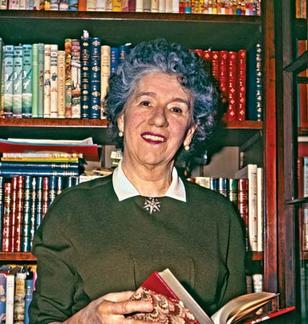
The earliest books I read and loved are those written by Enid Blyton. An English children’s author, Enid Mary Blyton who died in 1968 has written books since the 1930s and whose books have sold more than 600 million copies and have been translated into 90 languages and as of June 2018, is in 4th place for the most translated author.

My first introduction to Blyton’s books was the Faraway Tree series. The stories take place in an enchanted wood in which a gigantic magical tree, the Faraway Tree grows. The tree is so tall that its topmost branches reach into the clouds and it is wide enough to contain small houses carved into its trunk. The wood and the tree are discovered by three children named Jo, Bessie and Fanny, later updated to Joe, Beth and Frannie, who move into a house nearby and go on adventures to the top of the tree along with the inhabitants of the tree, some whom befriend the children. As I am writing this, a memory pops into my head. I must have been five or six and we were travelling down south to my paternal grandmother’s ancestral village to attend a wedding by train. I can still remember the title of the book I was reading, which was The Magic Faraway Tree and the 24-hour journey (at least the time spent in reading) flew past in a jiffy!

I have also read a few of the Noddy books, but don’t have any great memory of reading them. Noddy was made by a woodcarver in a toy store but runs away after the man begins to make a wooden lion, which scares Noddy. As he wanders through the woods naked, penniless, and homeless, he meets Big Ears, a friendly gnome who decides that Noddy is a toy and takes him to live in Toyland. The other toys can hear him coming by the distinctive Parp Parp sound of his car’s horn and the jingle of the bell on his blue hat. Noddy’s best friends are Big Ears, Tessie Bear, Bumpy Dog, and the Tubby Bears. Noddy has many run-ins with Mr Plod, the local policeman.

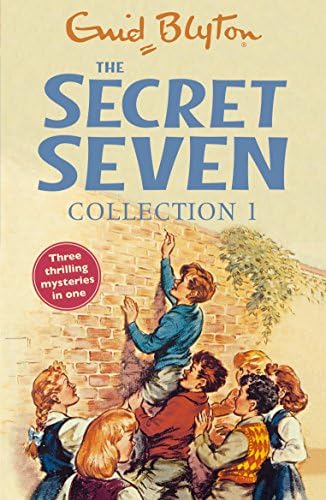
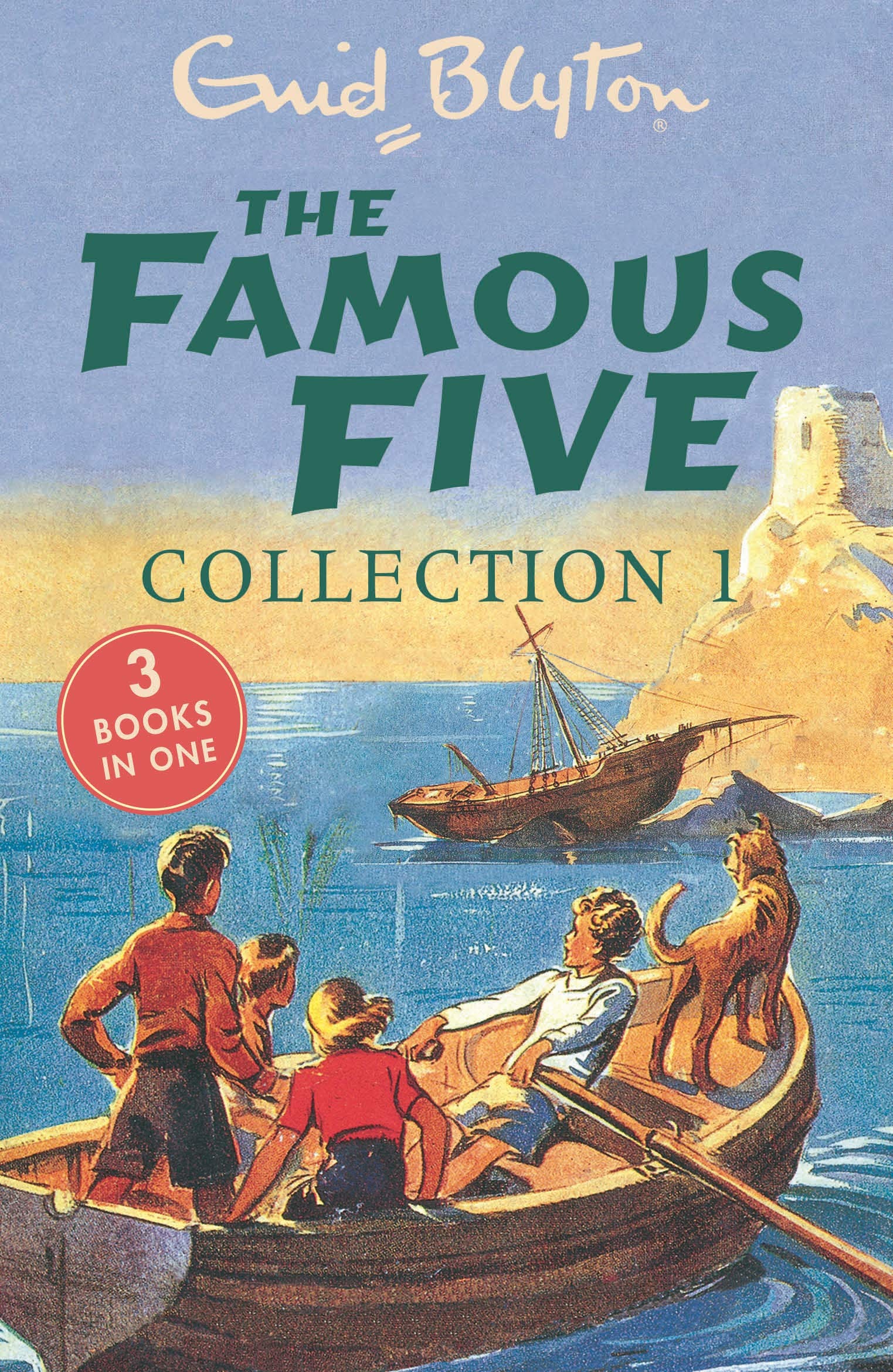
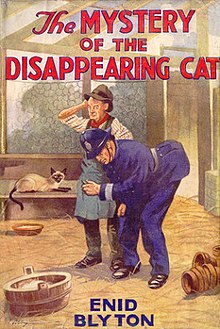
I then graduated to reading Blyton’s mystery books like the Secret Seven, the Five Find-Outers and the Famous Five. Of the three, my favourite was the Five Find-Outers mainly because one of the characters used to disguise himself to solve the case. I read these books more or less during my primary school days.

The Secret Seven is a group of child detectives consisting of Peter, the leader, Janet who is Peter’s sister, Pam, Barbara, Jack, Colin and George. Jack’s sister Susie and her best friend Binkie make occasional appearances in the books who they hate the Secret Seven and delight in playing tricks designed to humiliate them, although this is partly fuelled by their almost obsessive desire to belong to the society. Unlike most other Blyton series, this one takes place during the school term time because the characters go to day schools.

The Famous Five is a series of children’s adventure novels featuring the adventures of a group of young children, Julian, Dick, Anne and Georgina or George and their dog Timmy. The stories take place in the children’s school holidays after they have returned from their respective boarding schools. Each time they meet they get caught up in an adventure, often involving criminals or lost treasure, sometimes close to George’s family home at Kirrin Cottage in Dorset. George’s home and various other houses the children visit or stay in are hundreds of years old and often contain secret passages or smugglers’ tunnels. All the novels have been adapted for television, and several have been adapted as films in various countries.

My favourite, the Five Find-Outers is set in the fictitious village of Peterswood. The children, Larry or Laurence Daykin, Fatty or Frederick Trotteville, the leader of the group, Pip or Philip Hilton, Daisy or Margaret Daykin, Bets or Elizabeth Hilton and Buster, Fatty’s dog, encounter a mystery almost every school holiday, always solving the puzzle before Mr Goon, the unpleasant village policeman, much to his annoyance.

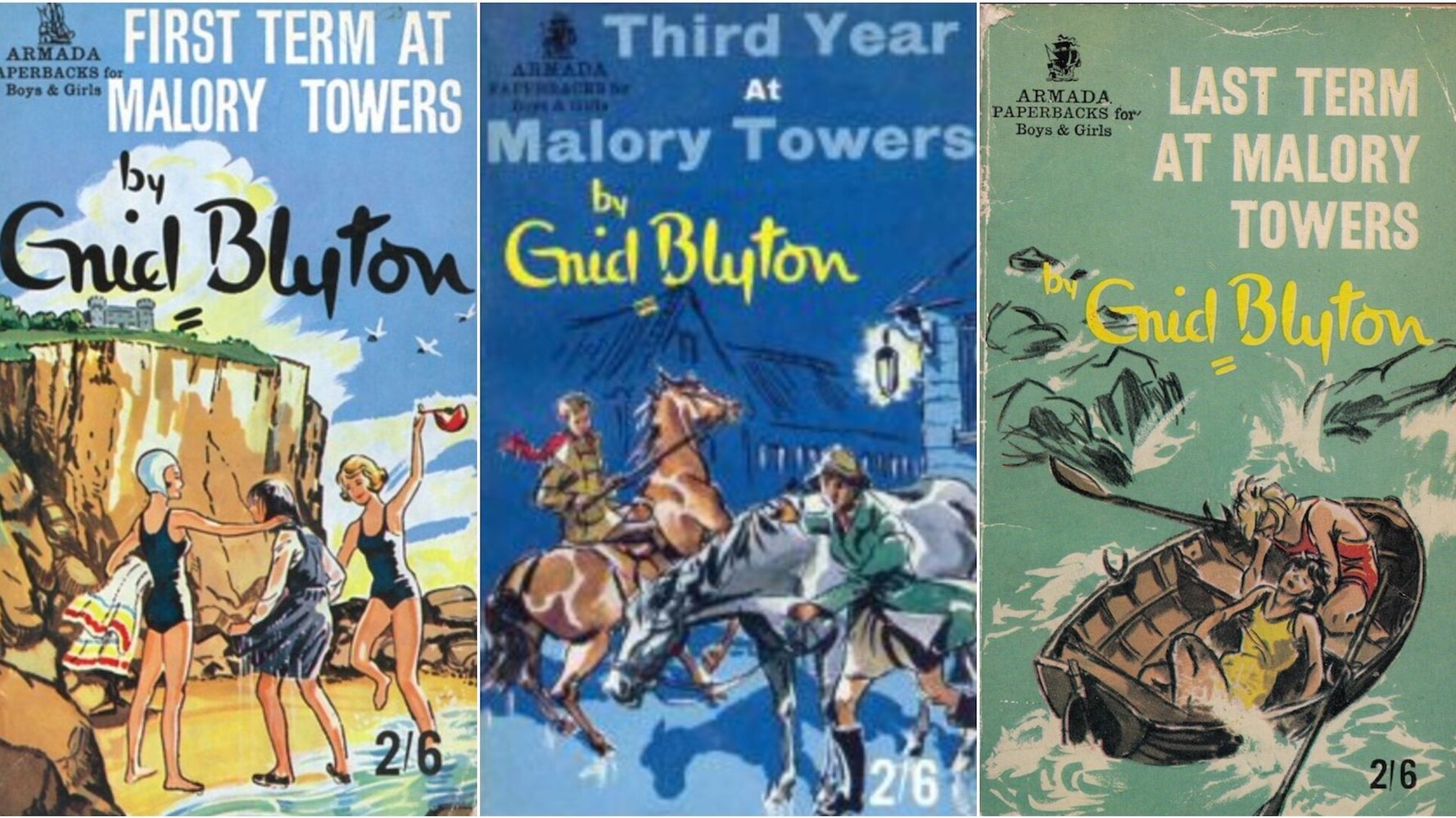
Another set of books written by Enid Blyton I loved were her school series, Malory Towers and St. Clare’s. I have read both the series throughout my school days and when GG was in primary school, I introduced them to her and she was as hooked as I was. Reading these books always made me wish I was in a boarding school with all the fun that the girls had. My friends and I would try to recreate their world in our school.

Malory Towers is a series of six novels based on a girls’ boarding school that Blyton’s daughter attended, Benenden School, which relocated during the war to the Cornish seaside. The series follows the protagonist, Darrell Rivers, on her adventures and experiences in boarding school. Darrell Rivers begins her first year at Malory Towers, a castle-like clifftop boarding school in Cornwall. Determined to do well and make friends, her first term is turbulent and the first book ends with Darrell becoming best friends with Sally Hope. Darrell eventually covers herself in the personal, scholastic and sporting glory that was originally expected of her and is head of the fourth form, games captain of the fifth, and head girl in her final year as well as being a successful lacrosse and tennis player. When she is in the fourth form, her younger sister, Felicity, joins her as a first former at the school. From then up until the last book in the original series, the focus is also on Felicity and the rest of her form. At the end of her school life, Darrell is bound for the University of St Andrews with Sally, Alicia, and her friend Betty. She puts her younger sister Felicity in charge of upholding the standard that she and her classmates set. The second series follows Felicity from the third year to her final term.

St. Clare’s is a series of nine books about a boarding school of the same name. The series follows Patricia or Pat and Isabel O’Sullivan from their first year at St. Clare’s. The series had the girls up to the usual English boarding school antics like the Malory Towers and we aspired to be like them.

Once I had finished the teenage detective books, I moved to slightly older books, and the timeline is roughly the time I was about 10 to about 12-13 years. I read the Nancy Drew and Hardy Boys series almost concurrently and my preference was for Nancy Drew, maybe because I identified with her more. Both series were created by publisher Edward Stratemeyer with the Nancy Drew series created as a female counterpart to the Hardy Boy series.

An American teen, Nancy Drew is a fictional amateur sleuth living in the fictional town of River Heights with her father, attorney Carson Drew, and their housekeeper, Hannah Gruen. Nancy is often assisted in solving mysteries by her two closest friends, cousins Bess Marvin, delicate and feminine and George Fayne, a tomboy and also occasionally joined by her boyfriend Ned Nickerson, a student at Emerson College. Often described as a super girl, Nancy is well-off, attractive, and amazingly talented at everything. The books were ghost-written by several authors and published under the collective pseudonym of Carolyn Keene. Over the decades, the character evolved in response to changes in US culture and tastes. The series was immensely popular worldwide with at least 80 million copies sold and translated into over 45 languages and has been translated into film, television shows and computer games. A cultural icon, Nancy Drew is cited as a formative influence by many women.

The Hardy Boys, brothers Frank and Joe Hardy, who are amateur sleuths, solving cases that stumped their adult counterparts. Frank is eighteen and Joe is seventeen and they live in the city of Bayport on Barmet Bay with their father, detective Fenton Hardy, their mother, Laura Hardy and their Aunt Gertrude. The brothers attend high school in Bayport, where they are in the same grade but school is rarely mentioned in the books and never hinders their solving of mysteries. The books themselves were written by several ghostwriters, most notably Leslie McFarlane, under the collective pseudonym Franklin W. Dixon. This series was also very popular with the books selling more than a million copies annually, and have been translated into more than 25 languages, television shows and video games,

These were the books and series that brought a lot of smiles during my childhood. This was a childhood where there was no internet, no smartphones and computers were large and restricted to offices. So, one of our minimal forms of entertainment was books and probably today’s children would never know the pleasure of just sitting down with a good book and spending hours on it.

Which were your favourite books growing up?

Filter Coffee: The best way to wake up!

Growing up in a tambram household in the seventies meant you woke to the sounds of MS Subbalakshmi singing the Venkatesha Suprabhartam and the smell of fresh filter coffee. I have always loved this ritual of coffee drinking and even today take my time to drink my first cup of coffee.

Filter coffee or kaapi as we southies call it, is the perfect cup of coffee. I rate it far above any coffee chain and with due apologies to coffee drinkers from popular coffee chains, I just don’t see the attraction for those, especially with the prices they charge. So what’s the difference between an espresso and filter coffee? I looked this up since I used to think an espresso is just the decoction of the filter coffee which is thinned slightly. An espresso, Italian for quick, is brewed with with high-temperature at almost boiling and has pressurised water running through finely ground coffee beans. It is also denser and more concentrated than filter coffee. The filter coffee is somewhat similar, it is made by filtering packed ground coffee through hot, boiling water through a filter, but instead of being pushed out by pressure, the water poured on the top half of the coffee filter runs down to the bottom purely on the basis of gravity. This means the brewing process takes much longer and is not really instant as the espresso is. It also means, you need much more water and coffee grounds to get the same amount of decoction for filter coffee.

I have never liked drinking milk and there are many stories in my home about how my paternal grandmother would force feed me milk, even as a toddler. Because of this intense distaste for milk, I must have made the switch to some sort of chocolate milk pretty early on. It was some protein powder in various flavours including chocolate that I drank for a few years. I switched to drinking coffee pretty early considering that most people I know didn’t start drinking tea or coffee until their teens.

My grandmother and then my mother used to buy raw coffee beans from the coffee board once every few months and then grind them till the house was full of this evocative aroma of coffee. Then using a small coffee blender they used to grind a small amount of the beans which would be just enough for a week or so. This ensured that the coffee we brewed was absolutely fresh. When I started college, it became my responsibility to get the raw coffee beans since there was a coffee board office not too far from my college. I still remember she would buy the Peaberry and Plantation beans. The Peaberry beans are also known as caracol, which is Spanish for snail, and is a naturally occurring mutation present in arabica and robusta coffee varieties where only one bean is present inside of the coffee cherry instead of two. The Plantation variety is probably a coffee plantation crop and I have no idea if it is a robusta or arabica.

A few years after I graduated and started working, the coffee board closed down its office from where we used to purchase our stock of raw coffee seeds and once my mother finished up her stash, she started buying blended coffee powder. Fortunately for us, we live very close to the heart of the tambram community, Matunga, where there is a store which sells freshly ground coffee powder, so that’s where she buys it from today. And when I make a trip to Mumbai, I never come back to Singapore without a few kilos of that freshly ground coffee powder in my luggage.

I have always been an early riser and used to wait for my mother to boil the milk and make coffee when I was young. Usually at that point, it would be just the two of us who were awake and in that dim lighting in the kitchen when the world is just waking up. Coupled that with a cup of hot steaming filter coffee in the traditional tumbler and dawara where the coffee is not stirred, but pulled is sheer bliss. When my mother makes coffee for BB, GG and S who usually drink in mugs, she will use a tumbler and dawara, which is a small cup which is used to pull the coffee and pull it to mix the milk, coffee and sugar together, with that lovely layer of froth on top and then pour it into a cup for them to drink. Even today my favourite time of the day is in the morning when I am the only one awake and it’s just me and a cup of coffee. Although now, I prefer my coffee to be black rather than with milk, it’s still a filter coffee which I brew every few days and refrigerate.

Another tradition in my home and I think most tambram households, is the ritual of a second cup of coffee after breakfast. Though I don’t follow it in Singapore, but when I am in Mumbai, that half glass of coffee after breakfast is something I really look forward to. And I drink my coffee with milk while in Mumbai because that to me is the taste of my childhood, adolescence and youth and it doesn’t matter how old I get, when I drink that cup, I am instantly transported back in memory.

Source

I can drink lots of coffee, but a few years back, decided to restrict it to twice a day and only indulging in the third cup if I am super tired or outside with friends. I wrote an ode to coffee some time back, so pop by there to read if you are a fan of coffee. As with all my memory posts, writing this brought a smile on my face while I was transported back in time, a time when life was uncomplicated and simpler, when our needs were simple and a cup of good filter coffee was all it took to welcome someone to your home! What’s your favourite coffee memory?

Memories: My Chitti

In pretty much every Indian language, every relationship has a specific name. A paternal grandmother is referred to differently than a maternal grandmother and a mother’s sister has a different name than a father’s sister and some communities have specific ways to distinguish a sister’s daughter from a brother’s daughter and the same for their sons. In Tamil, your mother’s sister and father’s brother’s wife are both called Chitti. I looked but could not find the exact meaning, but it probably means a younger mother or someone who could potentially replace a mother if something happens to her.

My mother is the oldest of four sisters and consequently I am the oldest grandchild from my maternal side. I was very young, maybe slightly older than a toddler when the next sister after her got married and so I don’t have many memories about her. Her last sister was brought up by their childless aunt who lived close by, and so my biggest and best memories are about my second aunt. I was her favourite and in fact, long after she married and moved overseas, I was her favourite. So much so that on one of their trips to Mumbai, during an outburst, her older daughter even complained that she loved me more than she loved her and her sister.

When I first started school, around the time I was about four years old, my parents and paternal grandparents had to go to a temple town in South India for a family wedding. I can’t really remember why I didn’t go, but I assume it was a combination of me refusing to go because I didn’t want to miss school and the fact that my aunt may have jumped at the chance to look after me. I do remember that I was supposed to live with my maternal grandparents and aunt for about a month or so since my parents were supposed to do a small pilgrimage given they were going to a temple town which was close to other temples. My sister would have been a toddler at that point, so they took her along and I was sent to my grandparents house along with my things. My aunt was working as a teacher then in a nearby school and used to take tuitions in the evening and perhaps in the mornings too.
On the first that I was to go to school from there, we were at the building gate bright and early, waiting for the school bus. Even after waiting for more than 30 minutes, the bus did not come and after asking around, we were told the bus had already left. My aunt was so angry, but because we were getting late, she quickly bundled me into a taxi and dropped me off to school. At school, she made sure to tell the teacher to put me in the correct bus (otherwise I would have landed in my parents place which was empty) and when the bus dropped me home, tore the bus driver a good one, which ensured that I was never forgotten as long as I stayed at their place.

Kindergarten ended around noon and I would reach home around 12:30, around which time, chitti would be getting ready for school. She taught primary classes which meant she would leave home around the time I got home. Once she left, my grandmother would get me changed, feed me lunch and make me take a nap. By the time I woke up and was ready, chitti would be back from school. She would then start her tuitions on the days she had them and teach me together with her students and get me to complete my homework. Once that was done, I would go down to play with friends before it was dinner time.

The month flew past before long and I went back home to my parents. But the bond between me and my aunt has remained till day. For both her pregnancies, when she came home from the hospital, I insisted to spending time with her, especially during her second pregnancy because I was older and it was our summer holidays. I must have spent the whole holiday there playing with my sister, cousin and friends and helping her look after the new baby.

This post took me down so many memory lanes that I throughly enjoyed putting it down. I am going to show this post to my chitti the next time I meet her to show her that I still remember our time together even after so many decades.