Memories: Growing up in an urban agraharam

I grew up in Mumbai, very close to what is the heart of the tambram community in the city, Matunga. Where we lived was a 15 minute walk to the heart of the community, to the market and the temples, to the flower shops and the vegetable vendors, some of whom though they came from the northern states of Bihar and Uttar Pradesh, but could banter with the mamas and manis in Tamil. Before COVID-19 stuck and life changed, my mother used to make the thrice weekly trip every week to Matunga to get her fix of all of the above.

The other day while I was thinking about this, I realised that I actually grew up in an urban agraharam. So what is an agraharam you may ask? An Agraharam or Agrahara was a grant of land and royal income from it, typically by a king or a noble family in India, for religious purposes, particularly to Brahmins to maintain temples in that land or a pilgrimage site and to sustain their families. Agraharams were also known as Chaturvedimangalams in ancient times as well as known as ghatoka, and boyas. Agraharams were built and maintained by dynasties such as the Cholas and Pallavas. The name originates from the fact that the agraharams have lines of houses on either side of the road and the temple to the village god at the centre, thus resembling a garland around the temple. According to the traditional Hindu practice of architecture and town-planning, an agraharam is held to be two rows of houses running north–south on either side of a road at one end of which would be a temple to Shiva and at the other end, a temple to Vishnu. An example is Vadiveeswaram in Tamil Nadu.
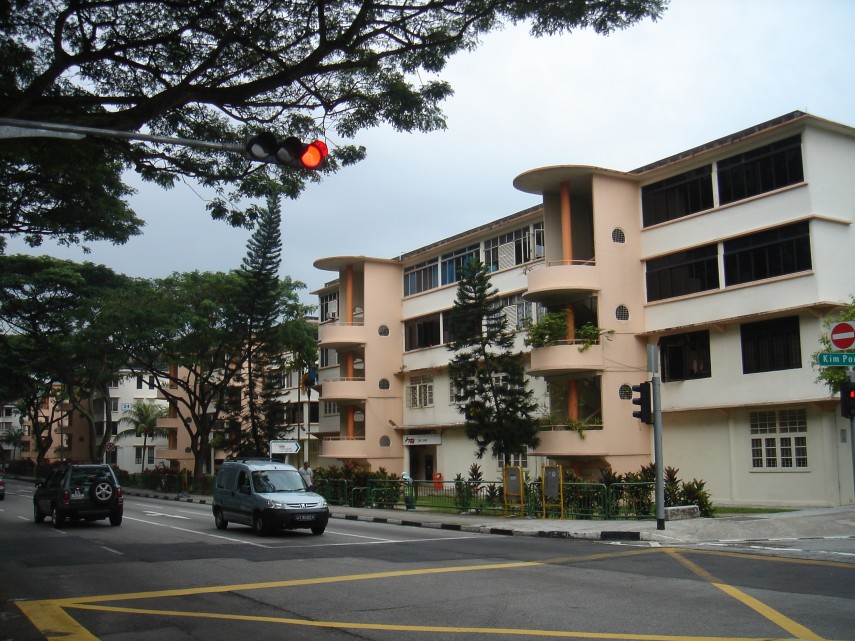
Where we grew up was a collection of about 50-60 two to three storey buildings set in a sort of square with roads intersecting them. We were framed by educational institutes on three sides and a main road on the fourth. While our small community comprised of people from different communities across the various states of India, if I look back, I can see the Tamil Brahmin community most predominant here, with most of them from Kerala or the Palakkad Iyers. Most buildings, with some exceptions which only had people from a certain community as residents, had a few tambram families in residence. Everyone was a mama or mami and not uncle or aunty and everyone knew everyone, or at the very least knew our parents and grandparents, many of whom they were either together at school, in the same class or from the same village in Tamil Nadu or Kerala.

In my own building, the bulk of our neighbours were from my own community and this is why I call my small slice of area an urban agraharam. Everyone was solidly middle class and if you probed enough, you found some connection with them, either through family or friends and once the connection was made, you were part of them. I know now that even living in a secular and multi-community city like Mumbai made us quite insular when it came to Tamil culture. The only Tamil culture I knew was the Tambram one and coming to Singapore, to a culture similar to my own was actually a culture shock to me.
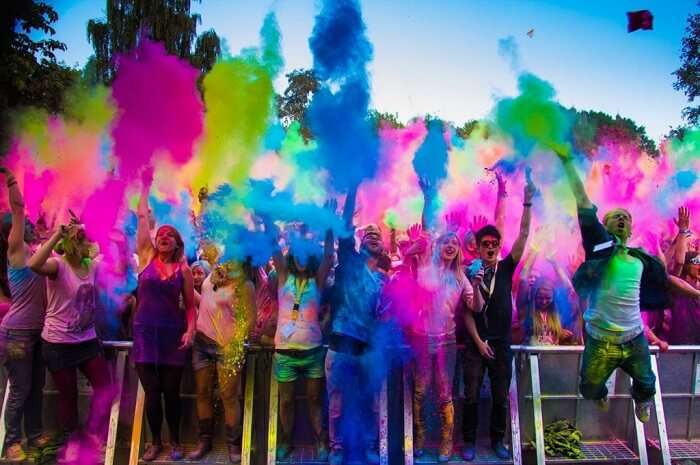
But, growing up in a community made mostly of people who had the same values, the same traditions as us was just as charming. Festivals which are unique to my community was commonplace here and I never questioned why the rest didn’t celebrate it. For example, the annual Avani avittam festival which is the only festival for the men who on this day would change their sacred threads used to be held in a nearby school with a few priests from one of the temples in Matunga coming over to conduct the rituals. Since there were enough men who wore the sacred thread, it probably made sense for the organizers to hold a mini session in our area. Since the day was not a public holiday, they used to do the session fairly early so the men and boys could then go on to work and school. And in all the years my grandfather and then father went here instead of to our temple in Matunga, I never questioned why. It all seemed normal to me. We loved going to each other’s homes for festivals like Diwali, Navratri and Ganesh Chaturti in our pavadais and sing songs and gorge on the delicacies.

That was a lovely time growing up. Everyone looked out for each other and mamas and mamis didn’t heaitate to scold or tell on a child they knew if the said child did something wrong. We thought nothing of going into anyone’s house for a drink of water or to use the bathroom. We were also quite safe in our little enclave and most of us pretty much lived our whole lives there till we moved out.
Source

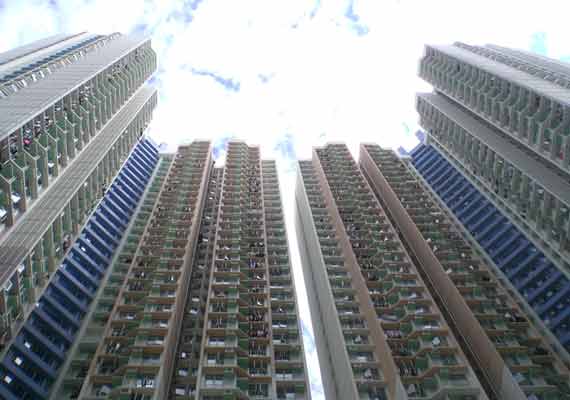
Life in our small community has changed now. Many buildings are being knocked down to make way for high rises, especially since this area is now a prime area, within what is considered the original Bombay and close, but not too close to the city. A lot of people from the community moved to suburbs like Chembur, Thane and Dombivili when the real estate prices here started picking up in the nineties. I think my grandparents and parents even explored the idea of moving to Chembur, but thankfully dropped the idea very soon. Life goes on, but in our area, the percentage of tambrams has reduced tremendously, so much so it can’t be called an agraharam anymore. I mourn for this loss, but c’est la vie and life must go on. The chakra of life never stops and I am sure in some of the suburbs I mentioned newer urban agraharams have been created.

Memories: Grandmother Tales – 3

Sometime back I received a video on one of my family Whatsapp groups. This was a small documentary about Sanskrit scholars who had settled down in the villages on the banks of the Tamarabarani River in Tirunelveli district in Tamil Nadu a few centuries back. They were fleeing muslim invaders, most likely the Mughals and fled to preserve their culture and way of life. These scholars are today most likely known as the Tamil Brahmins who are my ancestors. When I saw this video, I was instantly taken back to a conversation I had with my paternal grandmother a few weeks before she passed away.

We were travelling back to Bangalore from Sringeri, after a wonderful trip to celebrate my cousin’s thread ceremony and we stopped at a place, whose name escapes me now for a break. That was when she told me, possibly in passing, that her ancestors originally came from either or someplace close to Nagpur in Maharashtra and then moved to someplace in Karnataka, where they settled down for a few centuries before finally moving down south to settle on the banks of the Tamarabarani in Tirunelveli district. So when I saw that video, I immediately thought of my ammama and was very sad that she passed away before I really got to know her as an adult. I did some research on this and this is probably true. I also found writings which said that Tamil brahmins probably came down to the south from either coastal Andhra Pradesh from the Godavari basin or coastal Karnataka. This ties in to what my ammama told me.

I was very close to her and I was her favourite, maybe necause I was her first grandchild and was named after her. I am also told I resemble her a lot, both in looks as well as in temperament and in the way we look at things. I have only seen her in the traditional tambram saree called the Madisar and when I wore one at my wedding, pretty much everyone in the room, including my parents and extended family said they felt I looked like her. She loved reading and was interested in history. I really wish we had some more time with her so I could get to know her as a person, speak with her as an adult and learn more about my family.

Unfortunately, we don’t have any written family history, and those who knew the oral history have passed away. This is a very sad thing and I wish I was interested in this a lot earlier, when I could have perhaps gotten to know my own ancestral history a bit more.

While this is not really memories of my grandmother, when I read about things like this, I remember her a at that point in time and have a happy smile the rest of the day.

Childhood Memories

Childhood memories are the dreams that stay with you after you wake up

As I grow older, I start remembering old memories, so I thought I will start putting it down here just as a way to preserve these memories.

As I look back, my first memory is that of my grandmother. I have written about her before and she is someone who has really shaped me. I was the first born grandchild on both sides of the family (maternal and paternal) and was quite pampered until my sister came along a couple of years later.

I miust have been around 3-4 years old and one afternoon was with my mother who was buy vegetables from a vendor on the road outside our building. I now can’t remember why, but while she was busy haggling with the vendor, I quickly darted across the road. Those days not many people owned cars in India but somehow at that very exact time, a car drove on the road and I was probably knocked down. My mum was frantic and someone quickly went up to my home and got my grandmother. There was a doctor’s clinic just opposite our building and just where I was probably knocked down. I was quickly taken to the doctor who advised that the wound which was superficial and just below my left eyebrow be stitched up. My grandmother flatly refused saying what if something happened and my eye got hurt. Even today when my eyebrows are shaped, you can see the faint scar that remained from my accident when I was a toddler. Nothing really happened to me and I was ok within a day or two.

Another memory I have is of my sister. She must have been around 2-3 years old and I was about 4-5 years old. She was and has been incredibly bold as a person. On a Sunday evening, my parents had taken us to Dadar for shopping. This was in Dadar which has this bridge which spans the train stations of the Western and Central railways and the corresponding Dadar stations and which connects what is called Dadar TT (called because a long time ago the trams used to terminate here and so TT stands for Tram Terminus. The trams have gone for a long long time, but even today that circle is called Dadar TT) and Dadar BB (I didn’t know why Dadar BB was called that until I did a Google search. It seems that since the western line which it lies on was part of the Bombay & Baroda & Central India (BB&CI) Railway, hence the BB. You learn something new every day).

This incident happened either on the bridge or just after we crossed the bridge to the western side. The road and market was quite crowded and my parents had a tight grip on us. But while walking, we suddenly realised that my sister was missing. My parents went crazy looking for her and starting looking frantically. After a while they saw a police chowky (a police box which is usually there in crowded locales so that the police from the local police station can do crowd control and keep an eye) and went to ask the policeman stationed there if he could help. He promised to check and told us to come back to him in a while. After searching unsuccessfully for another 10-15 minutes, we went back to the chowky to see my sister there waiting for us!

What happened was she suddenly found herself alone in the crowd and wanted to use her brain. She went to the nearest adult she could find and told him that her parents were lost and that if they could help her. She was lucky that the person who found her was a decent man and he took her to the police chowky and handed her over to the beat policeman who knowing my parents were looking for her decided to keep her while waiting for them to come back. My parents were so relieved to find her and found her ingenuity brave that she pretty much got away with slipping from my mother in the first place.

This story has now gone down in my family lore and my parents and grandparents (when they were alive) used to dish it out so many time! I am sure her children have also heard parts, if not this story in its entity. If not, I am going to tell them the next time I meet them.

School Stories: Sports Day

One more story from my school days. Last week I was speaking with GG and BB and we started talking about sports days in school. BB’s school usually alternates between sports day and cross country running every other year and so I shared some stories about sports days in my school.

In my school, sports day usually happened in the second term, which would be after the winter holidays (you could not schedule anything before that because of the Mumbai monsoon) so it would be sometime in December/January.

Our primary school races are the standard ones and happen without much fanfare. It’s the Secondary school that has all the fun in my opinion. I’ve mentioned before how our houses are allocated and during the main sports day, one half of the stadium is split into four parts – each section for a house. So we generally sit in our house section and not with friends, because that day it’s house loyalty before family and friends.

The sports day would usually be on a Sunday and would start around noon. Once we reached secondary school, we would go on our own and my parents would come by later to pick us up. It’s usually a festive air there with hundreds of school girls screaming and shouting.

There’s fierce competition to see which house comes first and a blackboard in the centre of the field will usually have the current point tally going on. The prize for the best house, in addition to the champions trophy is the honour to lead the march past at the end of the sports day and this would be fought relentlessly.

The house I was allocated to, Shenaz or the Green House used to always win the championship and we used to lead the March past each year. I can only remember one year we did not. I must have been in grade 5 then and was the first time in the Secondary bleacher when this happened. What happened was unprecedented in the history of the school. Three houses were joint first and since three houses can’t march together, they had to toss and Godafried or the Red House won the toss! I can still see the red house captain coming excitedly to the stands to the house teacher and shouting that they were going to lead the march past while our captain walked by crying. We were second in the march past that year.

In the last few years in school, I used to get pulled into the march past contingent. We used to march wrongly while practicing thinking we will be kicked out, but no such luck for us! Being in the march past meant that we had to wait all the way till the sports day ended and could not sneak out earlier.

But it also meant a month or so of missing the last few periods in school going for march past practise in the garden behind the school. As I type this, I can hear the commands in head and the one arm length we had to stand behind each other. We used to wear a strip of ribbon in the house colour on the sides of our white shorts (we were one of those rare schools at that time who had to wear white shorts for PE and sports) and a cap in the house colour.

I just checked my school website and Shernaz is still continuing to rule, they are still overall champions, though some of the uniforms we used to play in has changed over the years. The march past is no longer in shorts, but in black long pants and they wear a house tee shirt over it, while we used to wear our school uniform shirt. The cap still remains and the school head girls and captains and vice captains all wear black long pants and a blazer (with the captains and vice captains also wearing the house cap). During the the I was in school, they all used to only wear their usual school uniform. And we also have a school band now! That looks so much fun, wish that was there when we were studying too.

The march past would be like in major sporting events. The head would be the school head girl carrying the school flag with her deputies behind her followed by the junior head girl and her deputies. Then we would have the first contingent which would have one girl (usually a small grade 5 girl) carrying the house name, followed by the house captain with the house flag and her deputies behind her. Behind them would be 30 girls marching in three columns. This would be followed by the house which came second and then the third house and the last house bringing up the rear. We would make one circuit of the stadium and the guest of honour would get the salute after which would be the prize distribution ceremony including that for the best march past contingent (which I can’t remember us ever winning). We would go home late evening, tired but happy with the day. The next day would be a holiday from school which was very warmly welcomed by all.

As with other school memories, this post brought many smiles to me as I went back decades to relive my school days. For more stories about my school, click here and here


Memories: The time I repeated Junior KG

Do memories become stronger as you grow old? I wonder about this because these days I have been thinking about my childhood a lot. So here’s another memory for your reading pleasure plus for me to browse when I am old and probably senile.

A small background before I start – when I was young, I remember my dad telling me that our area was designed to be an educational hub when the city of Bombay was being expanded. So if you draw a circle of around 2 km diameter around my home, you will find many educational institutions like schools, colleges and even higher educational institutions. This includes my dad’s alma mater as well as the school me and my sister went to.

This memory is around the time I was about three years old. Since we had many schools in our vicinity, it’s quite usual to see students on their way to school in the mornings. Growing up, there were many people around my age group (give or take five years) in my building and when I was around three years old, they were all in school too. My mum was handling me and my sister who was a toddler around that time. We also had a fulltime mum’s helper named Maria who would come in the mornings and go back in the evenings and her main job was to help my mum look after two young children and play with me. Maria stayed with us for about two years and then left as she was getting married. By then I started formal school and my sister was also slightly older so my mum was able to manage without a helper.

When I used to see my friends go to school and also see all the children going to school from our home, I also decided that I wanted to go to school. However, the school my mum had decided for me would only take me in for Kindergarten 1 at the age of four which was still a year away. I have spoken more about the discussions and arguments my mum and grandmother had in deciding the school I would attend in a previous post.

I started throwing mega tantrums about going to school and used to create a ruckus at home because I wanted to go to school. Exasperated, my parents decided to send me to a school which was literally next door. This school would allow me to get into Kindergarten 1 or Junior KG as it was known in Bombay then. So I started going to school and was thrilled. I think I started school after the formal term had started because I don’t remember wearing the school’s uniform and used to wear my normal clothes to school. Most days, it used to be either my mum or Maria who would take me to school around 8:30 – 9 am and bring me back around lunchtime.

I must have been a model student there because the teacher who used teach me remembered me right around the time I was in college and would ask my mum about me when she met her on the streets. I used to be so touched when my mum used to tell me about her encounters with the teacher. Someone who in her career has taught thousands of students who pass through her class still remembers this one girl who was so determined to go to school, even though she was there in her class for less than a year. I actually have no memories about this teacher and don’t remember her name or even face.

So this is how I repeated Junior KG!