Festivals of India: Thiruvathirai


chidambaram-temple-bw-1

Chidambaram Temple..Source

A festival unique to the southern states of Tamil Nadu and Kerala, Thiruvathirai or Arudhra Darisanam is a Hindu festival celebrated on the full moon night in the Tamil month of Margazhi (approximately in December–January), which is also the longest night in the year. The Thiruvathirai vrata is one of the eight significant vratas dedicated to Lord Shiva as it is considered to be the nakshaththram of Lord Nataraj and is the longest night of the year. The word


Thiruvathirai or Arudhra in Tamil means “sacred big wave”, that was used when this universe was created by Lord Shiva about 132 trillion years ago. The famous Chidambaram temple in Tamil Nadu, celebrates this temple with great pomp and splendour and has been celebrating for more than 1500 years, as evident from literary and historical evidence in the form of stone inscriptions.


chidambaram_natarajar1

Main Statue of Lord Natraj at Chidambaram Temple…Source 

The festival celebrates Lord Shiva’s cosmic dance of Natraj. The cosmic dance of Lord Shiva represents five activities – Creation, Protection, Destruction, Embodiment and Release. In essence, it represents the continuous cycle of creation and destruction. This cosmic dance takes place in every particle and is the source of all energy. Arudra Darshan celebrates this ecstatic dance of Lord Shiva. Arudhra or Thiruvathirai signifies the golden red flame and Shiva performs the dance in the form this red-flamed light. Lord Shiva is supposed to be incarnated in the form of Lord Nataraja during the Arudra Darshan day.


Lord Shiva never took birth and therefore there is no nakshaththram dedicated to celebrate his birthday. It was mentioned in the Hindu mythology that once Lord Vishnu was resting on the great serpent and Adhi seesha felt that He was in some deep thinking. On asking Lord Vishnu told Adhi seesha that he was remembering the dance of Lord Shiva. This answer invoked the desire in Adhi seesha to witness this great dance. He asked Lord Vishnu how this desire could be fulfilled. Lord Vishnu then urged him to do rigorous ‘tapasya’ at Chidambaram’. Adhi seesha followed his advice and devotedly prayed to Lord Shiva for a very long time. At the same there, a muni and devotee of Lord Shiva known as Viyaagra Paadha also lived in that same place. He worshipped to Lord Shiva to obtain the legs of a tiger in order to pluck flowers at the dawn, without being touched by the bees for offering to the God. He also observed ‘tapas’ to see His great ‘Nataraj’ dance. Finally, Lord Shiva was pleased with their prayers and devotion and he showed his ‘Nataraj’ dance in Chidambaram on the day of Thiruvaadhirai. From then onwards the ‘Nataraaja’ image of Shiva is worshipped here with great fervour on this day.
 

tvti04

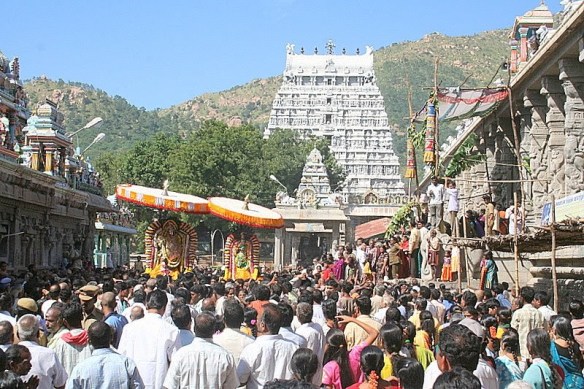
Temple processions during Thiruvathurai….Source

Tamil hymns of Maanikavasagar’s Thiruvasagam (particularly the hymns Thiruvempavai and Thiruppalliezhuchi) are chanted in temples instead of Sanskrit mantras. On the very day of Thiruvathirai, the idols of Nataraja (Lord Shiva) and his consort Shivagami (Parvati) are taken out of the temple premises for a grand procession. It is one of the major events in almost all the Shiva temples in Tamil Nadu.


In Tamil homes, during Tiruvathirai, a special dish called Thiruvadhirai Kali is made. The kali is made with rice, jaggery, moong dal, coconut, cardamom and ghee. The kali is usually eaten with a special curry called Thiruvathirai ezhlu curry koottu which is made out of seven vegetables, that is cooked and served on this day. The vegetables used for this kootu include pumpkin, ash gourd, raw bananas, field beans, sweet potatoes, colocasia, potatoes, eggplants etc.


Sumangali Pooja Part 2

Please read Part 1 before continuing to read Part 2

Before the sumangalis come, the house is decorated with rice flour rangolis and the lamps are lit in the home altar. Two separate big silver lamps called kuthu villaku are also kept ready to be lit just before the function starts.

When the sumangalies come, we welcome them and give them haldi and kumkum as well flowers to keep in their hair. Then the lady of the family (aka me) lights the big kuthu villakkus. We kept each lamp next to an altar, one each for a sumangali and the young girl. The altar was made using a small low stool (called palagai in Tamil) which has some rangoli done on it. On this is kept the nine-yard saree (which has been made madi in the morning) and the pavadai (for the sumangali and the kanya) and then a mirror is kept behind it in such a way your reflection is seen. This is so that any sumangalis or kanyas of the family who are dead, but who are present in the house at the time of the function can see themselves. We also decorate the mirror with a comb, haldi kumkum, flowers and some gold ornaments like chains, bangles etc. A small pooja is then performed and the entire family (including men if present) offer prayers to the ancestral women of the family and seek their blessings.

We then invite the sumangalis and the kanyas to sit down to eat on plantain leaves. Two leaves, one on top of the other lightly apart, is also kept for the God (called Swami Elai) which in some families, one member of the family would then eat. Before the women sit down (they have to first stand in front of their leaves), the lady organising this function will call the names of all sumangalis in the family. If no names can be found (like in our case), we just call for all known and unknown sumangalis of the family to come and partake the meal. The invited sumangalis and kanyas are actually eating on behalf of the departed souls.

While serving, the food served has to be served to the swami elai first and then to the others in a clockwise direction. In my place, what we did was everyone helped in serving the dishes and then just before the rice was served, the sumangalis sat down to eat. After the rice is served, all the women and girls will have to be given a drop of water from a silver cup called Panchpatram which is a small silver cup with a spoon which men usually use for their gayatri mantram and sandhyavandhanam after they have their sacred thread on.

The menu is fairly traditional and so I prepared Paruppu payasam, sweet mango pachadi, grated cucumber pachadi, raw banana curry, beans curry, ash gourd kootu, snake gourd kootu, bitter gourd pitla, mor kozambu, Mysore rasam, plain white rice, urad dal vadai, boli, panagam, neer mor (like a thin buttermilk) and a chutney made with curry leaves. My mother-in-law made the pitla at her home and also the dough for the vadai and boli which we then made in my home. A mix of sukku podi (dry ginger) and jaggery also will be kept, which is given to all after eating to enhance digestion.

Once the food is served, the lady organising the function willl do neivedhyam and show karpooram to the pudavai ilai and all the people from the host’s family will put flowers on the pudavai ilai and do namaskarams to that. Generally while putting flowers elders will tell us to pray for a wish to happen and then do it. It is strongly believed that the wishes made during this time will be fulfilled.

Once the lunch is over, the lady of the house has to clean the leaves used for eating. Then the women are given pan to eat and also asked to apply the specially prepared turmeric and mehendi and also given flowera again. We also offer them haldi kumkum again and give them the saree/blouse/pavadai. This is actually optional, but since this was the first time I was doing this, we decided to buy sarees for all plus pavadais for the little girls. I also gave them some money to make up for the lack of providing them with the oil, soap, shampoo that morning.

After this, the four of us (BB, GG, S & me) bowed down to the women and did namaskar to them and they blessed us with akshadai (rice made yellow with some turmeric which is very auspicious). They also blessed BB for his poonal and then left. We then sat down to eat.

By the time everyone went home and I was able to put my feet up, I was up on my feet for almost 12 straight hours! I was super exhausted that day.

I hope with this post, I’ve been able to shed some light on the customs of our community. This post is also a reminder for me if I have to do this another time on this function and also for BB & GG in the future. If you have any questions or comments, please feel free to comment below….

Sumangali Pooja Part 1

So last weekend, I did the Sumangali Prarthanai which is usually done by a married woman in each family or clan when there is a major ceremony happening in a family like weddings or thread ceremonies. Some families (like my mum) also do this on an annual basis.

The Sumangali Pooja is a typical brahmin function, I can’t say I have seen other communities doing this. In our community, this pooja is done to invoke to seeking the blessings of the ancestral women of the family who enjoyed a long and prosperous family life and left this world as sumangalis (those who died before their husbands) and any young unmarried girls in the family. Every family will differ slightly in the way they do this function, but by and large, the procedure should be more or less similar. Unlike most other functions or religious poojas, this function is a 100% ladies function. The men in the family are only for decorative or helpful purposes and have no real role to play. Usually, the oldest woman present will take the mantle of the master of ceremonies and lead the function as she will be the most knowledgeable of all present.

Usually, these days people have around 5 Sumangalis and 2 young girls, though you can have any odd number like 3, 5, 7, 9 or even 11 and 13! You can invite both married women from within your family or outside for the function. The day before the function, all the invited sumangalis are given sesame oil, shikhakai, and turmeric and henna in advance or in the early hours of the day of pooja. The tradition is they have to apply mehendi and take oil bath and also apply turmeric while taking a bath which is considered very auspicious. They will come home the next day by taking oil bath and wear a 9 yards saree which has been made madi (means they have to wash and dry it separately without touching other clothes or even with their hands). These days, especially in places like Singapore, where a saree is getting rarer, people may not be comfortable wearing a nine-yard saree, so sometimes, they wear a normal six-yard saree or even other clothes, come to the host’s house and then change into the nine-yard saree.

Generally, if a daughter is getting married on the girl’s side they will do it compulsorily before the wedding and keep the daughter who is going to get married as one of the pondugal. But in the boy’s house also they do the sumangali prarthanai but they can either do it before the wedding with their family members or they can either do it once the daughter in law comes into the house. This function should also be done only once a year by a family. So in our case, since I just did the function, if S’ cousin gets married anytime in the next one year, his mum (S’ aunt) can’t do it before the wedding, as it’s usually done. The ideal day of the week for this function is a Friday, but these days with people working and children in school during the week, Fridays are not practical so most people do it on a Sunday. The inauspicious time of Rahu Kaal is also to be taken into account when choosing the time. On Sundays the Rahu kaal is in the afternoon, so this function which ends at lunch is perfect to be done on a Sunday.


I’d Love to Visit….Mount Kailash and Manasarovar Lake

I just finished reading Colin Thubron’s ‘To a Mountain in Tibet’ and the book reignited one of my life bucket lists. The book is an account of his travel from Kathmandu to the foothills of the sacred and mystic mount Kailash, which is revered by Hindus , Buddhists, Jains and the followers of the Bon religion. Hindus believe that Kailash is the earthly incarnation of the mystical mount Meru, which is the supposed to be the centre of the universe in Hindu mythology. Buddhists and Jains also believe in the sanctity of mount Meru and therefore Mount Kailash and so for members of all three religions, circumambulating or doing a parikrama of the mountain will wash off all sins. Hindus also believe that Lord Shiva, the Destroyer, one of the three Gods who form the trinity of the Hindu pantheon, also resides at the top of Mount Kailash.


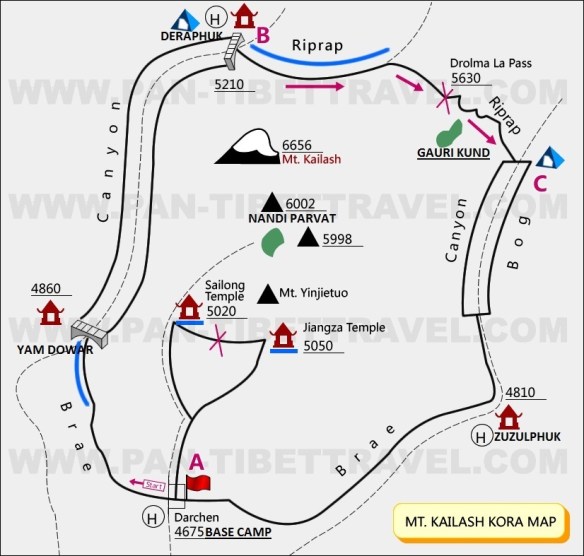
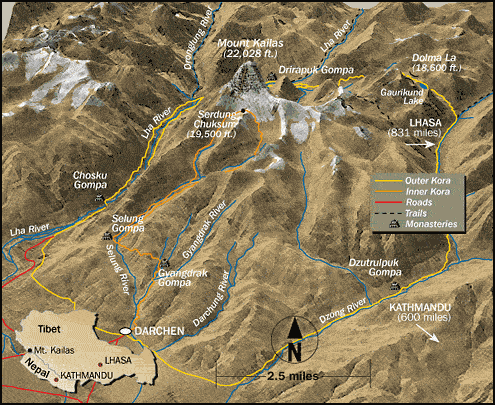
map2bof2bkailash2bparikrama2b25e025a6259525e025a7258825e025a625b225e025a625be25e025a625b82b25e025a625aa25e025a725b025e025a625bf25e025a6259525e025a7258d25e025a725b

Mount Kailash Parikrama Map. Source 

This post is neither about the book nor about Hindu mythology. What it is instead is about Mount Kailash and Manasarovar Lake. Ever since I’ve heard of these two places, I want to go there. Both are in Tibet, which is now in China. But most importantly, both are at very high altitudes, around 15,000 feet above sea level. For someone born, brought up and living in areas which are at sea level, I need to be extremely fit to attempt climbing this high, for my lungs to be able to cope. I still want to do this, preferably before I am too old, but one can only hope.


Mount Kailash is extremely ancient, even predating the Himalayas according to the book. The mountain is probably an island in the ancient Sea of Tethys which was what the whole Tibetan plateau was before the Indian subcontinent (India was a continent then) collided with what is now the rest of Asia, the tectonic shift that was caused gave birth to the Himalayas. It is said, even today, fossils of marine animals can be found in Tibet. The four faces of the mountain also correspond to the four cardinal points and four of India’s rivers, Ganges, Sutlej, Brahmaputra and Indus also originate close to the base of the mountain.


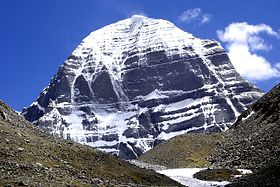
280px-kailash_north

North face of Mount Kailash Source

The Indian government has a lottery where certain people get selected for the Kailash Manasarovar Yatra which is a pilgrimage officially sanctioned by the government and which enters Tibet through India. This trip is a longish one, through Himachal Pradesh and so pilgrims have a chance to slowly acclimatise themselves for the high altitudes. But I’ve heard that it’s quite difficult to get into this pilgrimage and also many people drop out during the process. You can also do this via private operators, most who are based in Nepal. I understand they fly you directly to Tibet from Kathmandu (huge amounts of elevations in altitudes in a matter of hours) and then you use vehicles to get as far as you can, and the balance is done by foot.


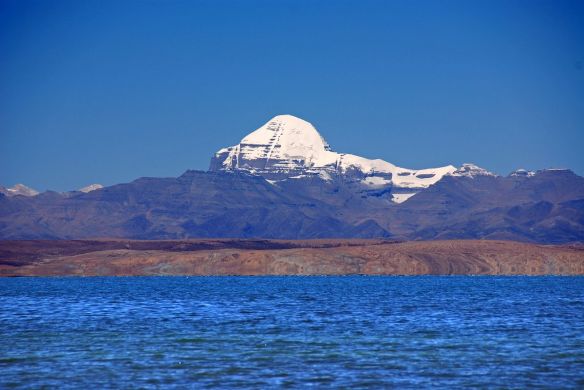
lake-manasarovar-and-mount-kailash

Manasarovar Lake with Mount Kailash in the background. Source

Manasarovar Lake and Rakshas Tal are two lakes found in the base of the Kailash Mountains. They lie around 15,000 feet above sea level. Manasarovar is a fresh water lake, probably one of the largest at that elevation. Rakshas Tal, which lies next to it is, however, a salt-water lake and there’s a natural channel which connects the two of them. Hindu mythology has this lake as a manifestation of Lord Brahma’s mind and so is quite sacred. It is said, anyone drinking the water of this lake will be cleansed from sin over a hundred lifetimes.


about-yam-dwar

Yam Dwar or Lord Yama’s Door. Source

The first step or the start of the parikrama is a small door called Yama Dwar or Lord Yama’s door. Lord Yama is the Lord of Death (like the Grim Reaper in western thought) and the reasoning is that by going through this door, you get reborn. Another reason is that all of us have sinned at some point in time in life and it’s only a newborn who is pure of heart. So when you are reborn, you become pure and can complete the circuit without much difficulty.


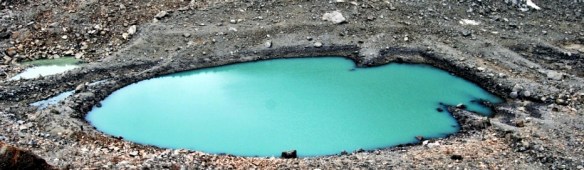
gauri-kund

Gouri Kund Source

Then you start the parikrama. It is said a very fit person can complete it in 15-16 hours, but realistically speaking, for a normal person, not used to the high altitude and thin air, it should take at least two to three days to complete it, taking into account frequent rest stops on the way plus a camp at night. The average altitude for the parikrama is around 16,500 feet. You also see the Gouri Kund along the parikrama. This freshwater lake can be found during your descent from the Dolma Pass and is said to be a sacred place where Goddess Parvati seduced her husband and also the place where the Sky Dancers or Dakhinis in Tibetan mythology play and take bath in.


I loved writing this post and this has really allowed me to live through a virtual pilgrimage. I hope that in the near future before I am too old, I can actually do this physically as opposed to living it virtually!

Ode to a Saree

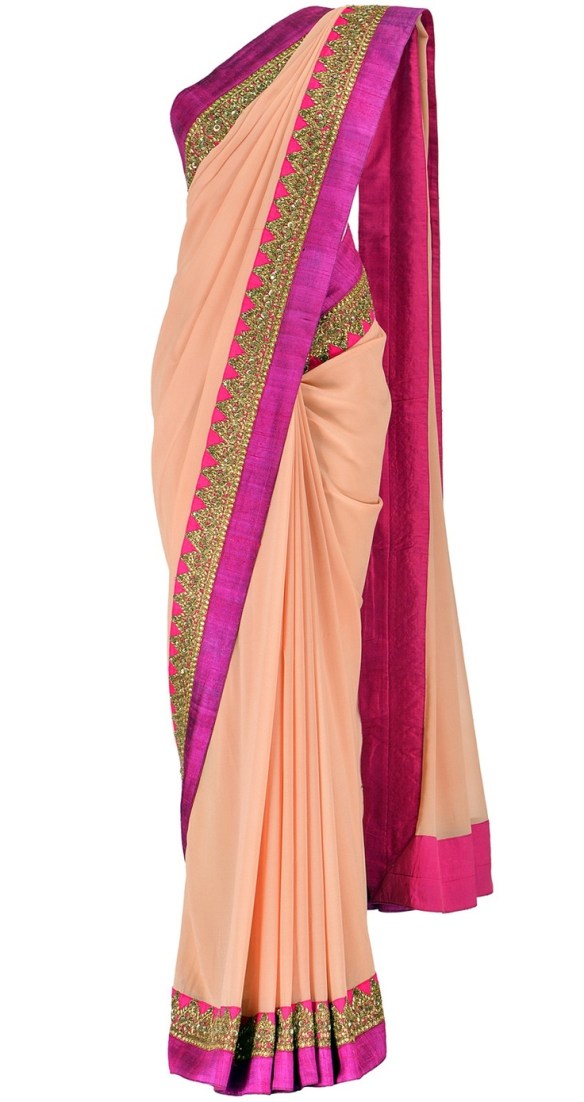
8e68083407d603b3a20f519a36735bc8The very word ‘Saree or Sari’ evokes a sense of pure bliss for the six yards of fabric which exude grace and elegance. This traditional Indian garment for women is in every Indian woman’s wardrobe, even if she is not a saree wearer, but she will wear a saree for very special occasions.
I used to love wearing the saree and have loads of memories pre-marriage of wearing them. Back in college, we used to have ‘Saree Day’ and ‘Traditional Day’ each year, where girls would wear the saree on saree day and either a saree or their traditional dress on traditional day. When we had official functions in college, again the saree would come out and those days the whole college would look so colourful with everyone checking out theirs and their friends sarees and accessories.

Even when I started work, sarees played an important role. Every interview was always in a saree, as this was considered formal wear for women and again when we had important meetings, presentations or visitors we’d all wear sarees to work. Another time the saree was brought out was during festivals. During festivals, everyone came in their festive best and during festivals like Navratri, where each day has a specific colour associated with it, all the women in the office would wear the same colour!

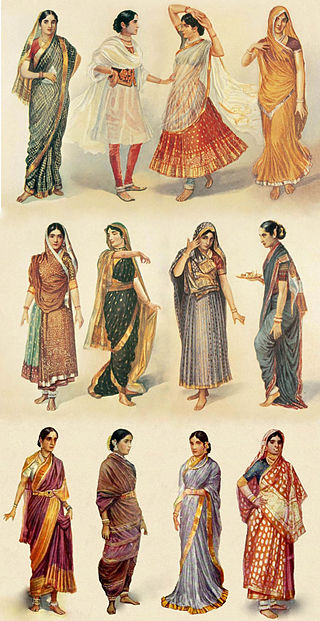
320px-styles_of_sariAfter coming to Singapore, my saree wearing slowed down and after having BB & GG, almost came to a stop! But in the last year or so, I have rediscovered my love for the saree again, what with seeing images of women doing everything in this garment on social media. I’ve now decided to wear them more often, though the heat does everything to discourage me. I’ve also decided to buy more sarees from India’s rich heritage and want to own atleast one saree from every Indian state – from the Bandini of Rajasthan to the Patola of Gujarat to the Kantha of West Bengal to the Muga Silk of Assam to the Sambalpuri of Odisha to the Pochampalli of Telangana to the Paithani from Maharashtra to the Kanjivaram from Tamil Nadu to the Mangalgiri and Gadwal silks from Andhra Pradesh to the Maheshwari and Chanderi from Madhya Pradesh to the Banrasi Silk from Uttar Pradesh to Mysore Silks from Karnataka. The rich cultural heritage of the various Indian states ensure you can never run out of sarees to wear!

Now I am off to arrange my small stack of sarees and make notes on what I need to buy to add to it!