Unworldly Encounters and Superstitions

Lately in this micro blogging site I frequent, I’ve seen many people post their ghostly encounters – maybe it’s happened to them, or they’ve heard it from someone else.
I’ve noticed that in Southeast Asia, people tend to believe in the ‘otherwordly’ encounters more. Yes, India has a ‘glorious tradition’ of ghost stories, but somehow, most people I know usually brush them aside.

Another thing is that, even though I am highly spiritual and believe in a pure higher energy, somehow, I am not as much a believer of ghosts as I think I should be. When I read these stories, I am torn between believing them and being extremely skeptical!

I remember this time, when I was in college; a friend of mine introduced us to Planchet. For those who don’t know what it is, Planchet is a way you call spirits to answer your questions. You write all the letters of the alphabet plus numbers from one to 10 on a sheet of paper and then using a coin, call the spirit. This could be any wandering spirit or a specific one. Then one by one, everyone asks the spirit questions, who answer it by moving from one coin to another. Once you are finished, you thank the spirit and ask it to leave. The spirit leaves by moving the coin to the outside of the sheet.

We started doing this at my place a few times and then one of us (I forget who at this point) had the brainwave to call my late aunt. When she came, we asked questions and then when it was time to leave, she refused to go. We got real scared and then had to call my mum to ask her to get the spirit to leave. Till date, I am not sure if there really was the spirit of my late aunt or was it one of us who were manipulating the coin? After that day, I refused to do any more of Planchet.

In my part of the world aka Southeast Asia, lots of people believe in the existence of spirits, especially in public places like hotels. From what I’ve read, here is what you should do when you go to new places aka hotels:

  1. Knock before you enter the room: This shows courtesy and manners to the ‘anyone in the room’. Apparently this is to let them know someone is coming in so that they leave the room.
  2. Avoid corner rooms: Apparently ‘otherworldly people’ like to be in these empty rooms and so try to avoid staying in such rooms.
  3. Let there be light: As soon as you enter the room, open the curtains and switch on all lights. This is to brighten the room and dispel darkness. If you come in after it’s dark, switching on the lights will do the trick.
  4. Occupy all beds: If you are a single traveler, try to get a room with a single bed. If that’s not possible, then use the second bed to keep your things. An empty bed signals an invitation for ‘someone’ to use it while you are in the room.
  5. Don’t touch any religious book if it’s open to a specific page: Apparently this indicates a presence in the room and the religious book open at a specific page indicates protection to the room.
  6. Flush the toilet before you use it for the first time: The idea is to dispel any negative energy in the room that was there before you came in.
  7. Don’t sleep facing mirrors: A bit difficult in hotels and especially if you move a lot at night. This belief is based on the fact that good luck will be reflected out when you sleep facing mirrors.
  8. Place shoes facing opposite directions: This is to confuse any spirits in the room who can locate you based on the direction of your shoes.
  9. Avoid the number 4: The Chinese believe that the number 4 sounds like death, so they avoid rooms and floors with this number. Some hotels in the region do not have the 4th floor or rooms ending in 4!
  10. Leave a light on while sleeping: This is to keep spirits away as they are discouraged by lights. So leave a small light – maybe a toilet light or a night light when sleeping.

These are some of the common superstitions here in Southeast Asia, especially when it comes to hotels. I’d love to hear any others that you may have encountered! Do share….

Festivals of India: Ganesh Chaturthi

Ganpati Bappa Morya, Mangal Murti Morya”

With these words, hundreds of thousands of devotees across India would have welcomed the very loved elephant-head God, Lord Ganesh into their homes for his annual visit.

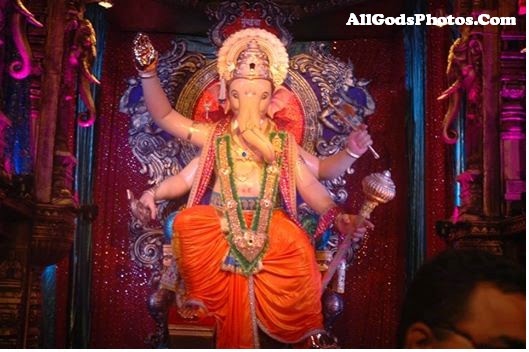
Lalbagcha Raja – 2014

The festival, also known as Vinayaka Chaturthi, is observed in the Hindu calendar month of Bhaadrapada, starting on the shukla chaturthi (fourth day of the waxing moon period). The date usually falls between August and September. The festival usually lasts for 10 days, ending on Anant Chaturdashi.

While the festival is celebrated all over the country and across the Indian diaspora, today’s post will mostly focus on the way it is celebrated in my home state of Maharashtra and is full of nostalgia….

Mumbaicha Raja – 2014

Earlier, homes in Maharashtra used to celebrate Ganesh Chaturti like others in India, by worshipping him in their homes. But all this changed in a large scale when the legendary freedom fighter Lokmanya Tilak, who impressed by the first Sarvajanik (Public) Ganesh idols installed by Shrimant Bhausaheb Rangari Ganpati, Bhudwar Peth, in Pune, praised it in his revolutionary newspaper Kesari and started using the concept of Sarvajanik Ganeshotsav to disseminate the concept of freedom from the British to the people of Mumbai. The concept then took up and has not looked back since then. Till around 20 odd years, it was mainly restricted to Maharashtra, but these days, you can find Sarvajanik Ganesh Pandals all over the country.

GSB Seva Mandal – 2014

Weeks before the festival, Ganesh Mandals (groups) would have decided on the theme of their Mandal and would have ordered the idol based on the theme. Then they would collect donations from the neighbourhood and using this would buy the decorations for their mandal. The mandals also vie with each other to put up the biggest statue and the best pandal and the duration of the idol’s visit would have cultural activities like singing and theater performances, orchestra and community activities like free medical checkup, blood donation camps, and charity for the poor.

The idols, both communal and the ones at home are worshiped in every morning and evening until the departure. The worship involves various offerings to the idol including flowers and durva. Each durva bunch has 21 shoots and the shoots have either three or five strands. Other offerings like modak also have to number 21 in Ganesh worship. The daily worship ceremonies ends with the worshipers singing the Aarti in honor of Ganesh, other Gods and saints. The Ganesh aarti sung in Maharashtra was composed by the 17th century, saint Samarth Ramdas.As per the tradition of their respective families, the domestic celebrations come to an end after 1, 3, 5, 7 or 11 days when the statue is taken in a procession to a large body of water such a lake, river or the sea for immersion. Due to environmental concerns, a number of families now avoid the large water bodies and instead let the clay statue disintegrate in a bucket or tub of water at home. After a few days the clay is used in the home garden. In some cities, a public eco-friendly process is used for immersion.

Some of the Ganesh idols in Mumbai are iconic, among them being Lalbagcha Raja and Mumbaicha Raja, which are usually one of the biggest idols in the city and GSB Seva Mandal’s idol where the idol is said to be made of gold and some of the ornaments are said to be made of diamonds!

What’s a festival without sweets and the neividhyam (offering) for Ganesh Chaturti is Modak or Kozhakottai as its called in Tamil. This is Lord Ganesh’s favourite sweet and different families have their own recipe to make this delicious sweet!

Writing this post is making me very nostalgic to be in Mumbai. In all the years that I’ve been away, I’ve never been able to get back for this festival. This is my favourite festival as Lord Ganesh is my ishtadev (favourite God) and I can remember how we went to major roads to see the Ganpati idols making their way to the pandals or go pandal-hopping the day of the festival and across the 10 days to see the major Ganpati idols or even standing for hours on Anant Chaturdashi day to see the idols being taken for immersion…

I’m going to leave you with the Aarti I love for Ganpati which is sung by the nightingale of India, Lata Mangeshkar. This song never fails to soothe my soul….

Ganpati Bappa Morya, Mangal Murthi Morya

These are a few of my Favourite Things

As the song goes….Raindrops on roses, whiskers on kittens…..from the Sound of Music, one of my favourite movies growing up. I must have seen the movie so many times that I think at one point, I could recite all the dialogues and songs, I loved it so much!

My favourite people in the world are my kids and S, followed by my parents. I think I can spend days with them, of course, sometimes each of them do things that infuriate me and irritate me, but I love them loads and can’t live without them. One of my secret worries in life is losing any of them – losing a child is a parent’s worst nightmare and I am also the same, but everytime S is late and I can’t reach him, I start imagining the worst. Another nightmare I am still not ready for is for my parents to leave me. I know, logically and practically, this will happen sometime, but I want this to happen later than sooner. I am still not ready to not have my parents at the other end of a phone call!

The next thing I can’t really live without are books, of course! I love reading and as it’s evident here and in my other blog, I need to read as much as I need to breathe. This has gotten me into lots of trouble in school (think reading in class, material that the rest of them had not yet graduated to). I was a very precocious reader, very often reading books 3-4 grades above. In the school library, I remember there was this cupboard which was mostly kept locked. I used to wonder what was in there that they didn’t want us to read and once somewhere in grade 7 or 8, I got the librarian to open it up as I had read all the books in the shelves meant for us. There I discovered adult books. I remember reading George Orwell’s 1984 around that age. It may not seem great these days for a 12/13 year old to reach such books, but in those days, given that there was no internet, India was still a socialist economy, people didn’t read for fun. I was that oddball who wanted to read, not because it was mandated by school, but because I just wanted to. We didn’t have access to many books beyond the school library and I remember I used to beg and borrow books, so much that I used to read older students school books (subjects like History, Geography and English) just so I had material to read!

I am so glad BB & GG, especially GG share my love for reading. GG is a lot like me in this respect, she will probably read a lot and widely as she grows up. BB is more a non-fiction boy – he prefers to read what his passions are – which is usually something to do with planes, cars and trains (in that order). I have to push him to read fiction.

Another favourite thing is music. Most days at work, I am plugged into earphones listening to music while working (I am listening to new age music as I type this). I usually listen to Indian music, mostly Bollywood music while at work, but I also like Fusion, New Age and Classical (both Indian and Western). I rarely, if never, listen to western rock and pop. I may change my mind sometime, if GG & BB start listening to such music at home, but as of now, it’s not something that still appeals to me.

Travelling to new places, soaking up on different cultures and learning new things are among the other things I adore. Since BB & GG’s birth, we haven’t done much travel, but the last year or so, we’ve made it a point to visit a new place each trip. Now that they move to secondary school and are teens/young adults, I envision more trips in the future. I plan to start taking them around the region and then the world’s our oyster. We do need to make periodic trips to India to keep in touch with our roots as well as visit the grandparents and other relatives (part of keeping in touch with your roots), but I want to add small side trips each time to a different part of India. India is so vast and beautiful, with so much to offer, that it’ll take a while before we discover the whole country. I have a big bucket list of places to see before I die and should start making a serious dent on that list.

So here you have – a list of some of my favourite things. I’ll leave you with the song which inspired this post, Maria’s favourite things from The Sound of Music

Festivals of India: Sri Krishna Jayanthi

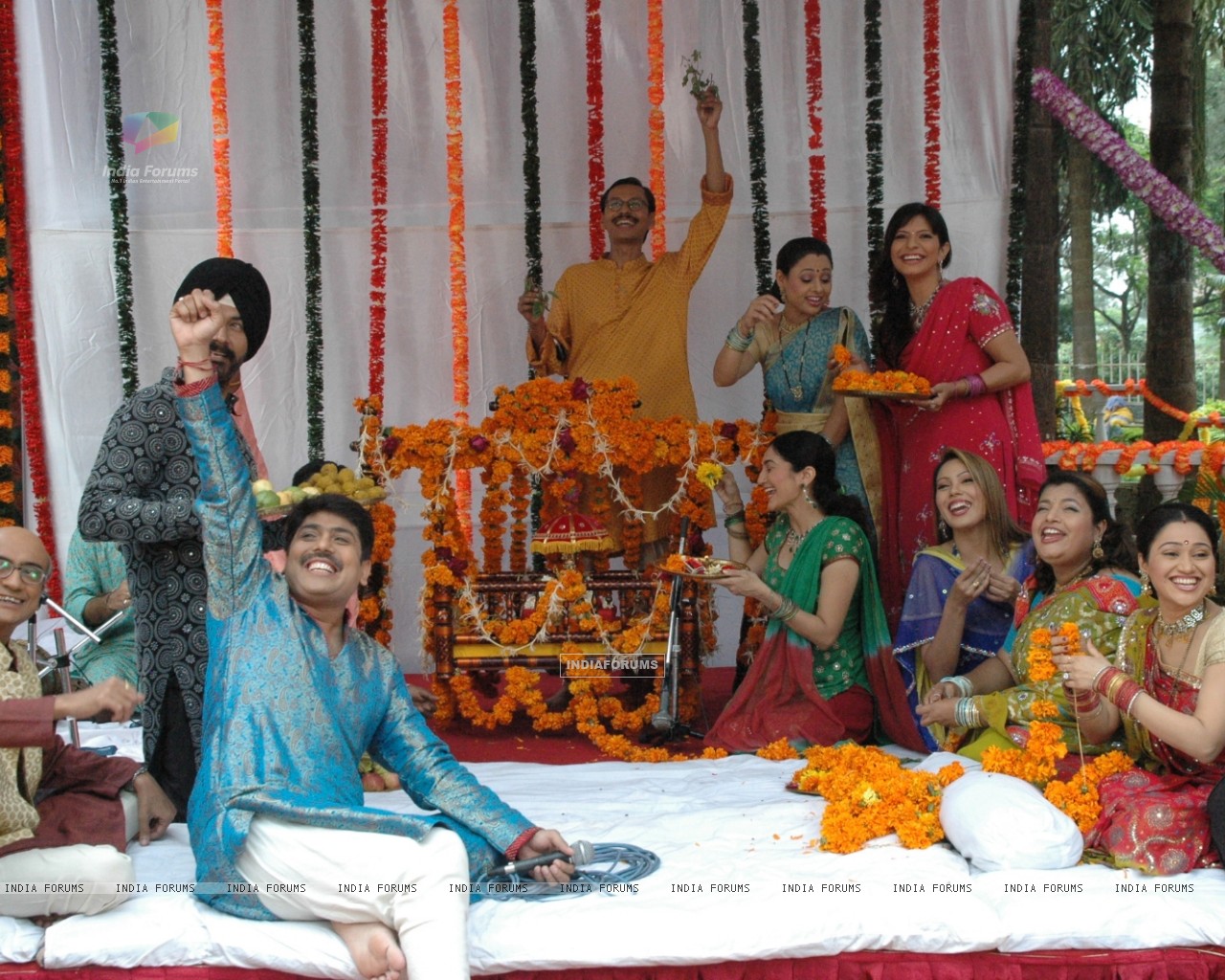
The festival season in India continues with Sri Krishna Jayanthi or Janmashtami tomorrow. This is the day Lord Krishna, the eight avatar of Lord Vishnu, was supposed to have been born. Also known as Gokulashtami or Sree Jayanthi, this festival is celebrated across the country, but more so in what is known as Braj Bhoomi or the regions where Lord Krishna grew up and became a young man, mostly in Northern India (present day Uttar Pradesh) and where Lord Krishna established his kingdom of Dwarka (in present day Gujarat).

Krishna was the eighth son of Devaki and Vasudeva. Based on scriptural details and astrological calculations, the date of Krishna’s birth, known as Janmashtami, is 18 July 3228 BCE and he lived until 18 February 3102 BCE. Krishna belonged to the Vrishni clan of Yadavas from Mathura, and was the eighth son born to the princess Devaki and her husband Vasudeva.

Mathura (in present day Mathura district, Uttar Pradesh) was the capital of the Yadavas, to which Krishna’s parents Vasudeva and Devaki belonged. King Kansa, Devaki’s brother, had ascended the throne by imprisoning his father, King Ugrasena. Afraid of a prophecy that predicted his death at the hands of Devaki’s eighth son, Kansa had the couple locked in a prison cell. After Kansa killed the first six children, and Devaki’s apparent miscarriage of the seventh (which was actually a secret transfer of the infant to Rohini as Balarama), Krishna was born.

Following the birth, Vishnu ordered Vasudeva to take Krishna to Gokul to Nanda and Yashoda, where he could live safely, away from his Uncle Kansa. Vasudeva took Krishna with him and crossed the Yamuna to reach Gokul. There, everyone was asleep; so he quietly kept him there and returned with Yashoda’s daughter. Kansa, thinking her to be Devki’s eight child, threw her on a stone. But she rose into the air and transformed into Yogmaya (who is Vishnu’s helper) and warned Kansa about his death. Then, she disappeared. Krishna grew up in Gokul with his brother, Balram. He then returned to Mathura and killed Kansa with the help of Balram.

Most people fast the night before Krishna’s birth and also place small cradles in the room to signify his birth, breaking their fast after midnight, the time when Lord Krishna was supposed to have been born.

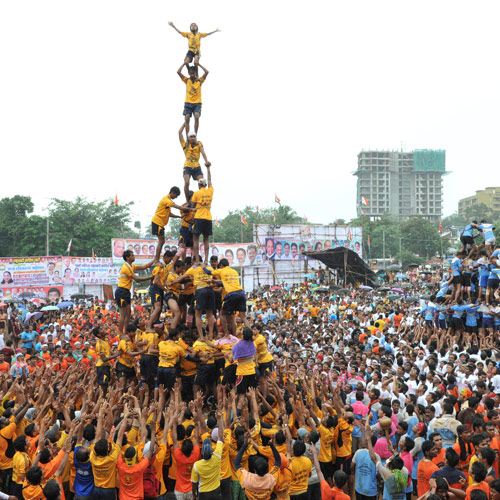
In most of Maharastra, the festival is celebrated with the breaking of dahi handis which are pots of yoghurt tied high above the ground. Groups of young men (mostly) and women called Govindas go around the city and when they spy on the dahi handis, they form human pyramids and the person at the top of the pyramid attempts to break the handi. If successful, they win the prize money which would be inside the handi (or be given the prize by the organisers of the handi).

In South India, especially in the community I belong to, Sree Jayanthi is usually celebrated in the evening of the day Lord Krishna was supposed to be born. Kolams or decorative patterns made of rice flour are drawn outside the house and little footprints depicting Lord Krishna as a baby entering the house from the doorstep to the Puja room are made. In homes where there are little kids or toddlers, the feet of these toddlers are dipped in the kolam paste and they are made to walk across the house from the door to the pooja room. We did this for a couple of years when BB & GG were young. Since the young Krishna loved butter, this would be a major part of the offering. Other offerings include sweet and salty seedai (round balls made of flour).

Festivals of India: Raksha Bandhan

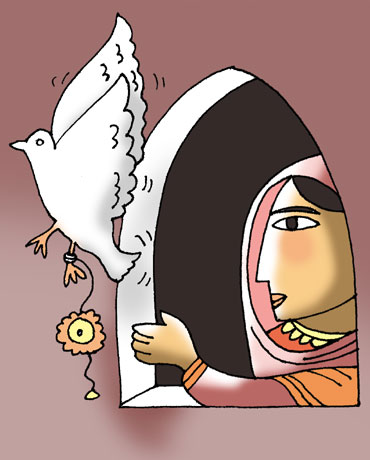
Tomorrow is Raksha Bandhan, a beautiful festival which celebrates the beautiful bond between a brother and his sister. Tomorrow  is also Avani Avittam, the only Hindu festival which is a men’s festival, as opposed to others where it’s women all the way. I’ve blogged about Avani Avittam before, so this post is mainly about Raksha Bandhan.

Known simply as Rakhi in India, not only is this festival celebrated between blood siblings, but also between people who consider each other as brother and sister. This festival is mainly celebrated in Northern and Western India, but these days, it is celebrated all over the country as well as in places where the Indian diaspora have settled down.

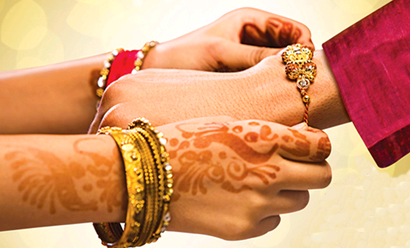
The literal meaning of Raksha Bandhan in Sanskrit is “the knot of protection”. A sister performs the Rakhi ceremony to her brother which incorporates her love for her brother and her wishes for his continued well-being and happiness. In return, the brother pledges to love and protect her under any and all circumstances. When brothers and sisters are far away from each other, sisters generally send their brothers their rakhi by post or courier. In return for the rakhi tied to his wrist, a brother generally gives his sister money or gifts as tokens of his love to his sister.

The festival has many myths surrounding it along with historical references. You can read them here, but some of the historical references are as ancient as the wife of Alexander the Great, Roxana, sending a Rakhi to King Puru asking him not to harm her husband in battle and Rani Karnavati of Chittor in present day Rajasthan sending a Rakhi to Emperor Humayun when Shah Bahadur, the sultan of Gujarat invaded her kingdom. Humayun rushed to help his sister, but arrived too late.

Avani Avittam and Raksha Bandhan are usually the start of the festive season for Hindus which goes on till almost the end of the year.

GG has been tying Rakhi to BB since she was less than a year old and I hope they continue doing this their whole life, irrespective of where in the world both may be. BB does not like to keep the Rakhi on, especially if it’s a school day, but this year, he has said he’ll keep it on the whole weekend!