Festivals of India: Ganesh Chaturthi

Ganpati Bappa Morya, Mangal Murti Morya”

With these words, hundreds of thousands of devotees across India would have welcomed the very loved elephant-head God, Lord Ganesh into their homes for his annual visit.

Lalbagcha Raja – 2014

The festival, also known as Vinayaka Chaturthi, is observed in the Hindu calendar month of Bhaadrapada, starting on the shukla chaturthi (fourth day of the waxing moon period). The date usually falls between August and September. The festival usually lasts for 10 days, ending on Anant Chaturdashi.

While the festival is celebrated all over the country and across the Indian diaspora, today’s post will mostly focus on the way it is celebrated in my home state of Maharashtra and is full of nostalgia….

Mumbaicha Raja – 2014

Earlier, homes in Maharashtra used to celebrate Ganesh Chaturti like others in India, by worshipping him in their homes. But all this changed in a large scale when the legendary freedom fighter Lokmanya Tilak, who impressed by the first Sarvajanik (Public) Ganesh idols installed by Shrimant Bhausaheb Rangari Ganpati, Bhudwar Peth, in Pune, praised it in his revolutionary newspaper Kesari and started using the concept of Sarvajanik Ganeshotsav to disseminate the concept of freedom from the British to the people of Mumbai. The concept then took up and has not looked back since then. Till around 20 odd years, it was mainly restricted to Maharashtra, but these days, you can find Sarvajanik Ganesh Pandals all over the country.

GSB Seva Mandal – 2014

Weeks before the festival, Ganesh Mandals (groups) would have decided on the theme of their Mandal and would have ordered the idol based on the theme. Then they would collect donations from the neighbourhood and using this would buy the decorations for their mandal. The mandals also vie with each other to put up the biggest statue and the best pandal and the duration of the idol’s visit would have cultural activities like singing and theater performances, orchestra and community activities like free medical checkup, blood donation camps, and charity for the poor.

The idols, both communal and the ones at home are worshiped in every morning and evening until the departure. The worship involves various offerings to the idol including flowers and durva. Each durva bunch has 21 shoots and the shoots have either three or five strands. Other offerings like modak also have to number 21 in Ganesh worship. The daily worship ceremonies ends with the worshipers singing the Aarti in honor of Ganesh, other Gods and saints. The Ganesh aarti sung in Maharashtra was composed by the 17th century, saint Samarth Ramdas.As per the tradition of their respective families, the domestic celebrations come to an end after 1, 3, 5, 7 or 11 days when the statue is taken in a procession to a large body of water such a lake, river or the sea for immersion. Due to environmental concerns, a number of families now avoid the large water bodies and instead let the clay statue disintegrate in a bucket or tub of water at home. After a few days the clay is used in the home garden. In some cities, a public eco-friendly process is used for immersion.

Some of the Ganesh idols in Mumbai are iconic, among them being Lalbagcha Raja and Mumbaicha Raja, which are usually one of the biggest idols in the city and GSB Seva Mandal’s idol where the idol is said to be made of gold and some of the ornaments are said to be made of diamonds!

What’s a festival without sweets and the neividhyam (offering) for Ganesh Chaturti is Modak or Kozhakottai as its called in Tamil. This is Lord Ganesh’s favourite sweet and different families have their own recipe to make this delicious sweet!

Writing this post is making me very nostalgic to be in Mumbai. In all the years that I’ve been away, I’ve never been able to get back for this festival. This is my favourite festival as Lord Ganesh is my ishtadev (favourite God) and I can remember how we went to major roads to see the Ganpati idols making their way to the pandals or go pandal-hopping the day of the festival and across the 10 days to see the major Ganpati idols or even standing for hours on Anant Chaturdashi day to see the idols being taken for immersion…

I’m going to leave you with the Aarti I love for Ganpati which is sung by the nightingale of India, Lata Mangeshkar. This song never fails to soothe my soul….

Ganpati Bappa Morya, Mangal Murthi Morya

In My Hands Today…

The Hall of a Thousand Columns: Hindustan to Malabar with Ibn Battutah – Tim Mackintosh-Smith and Martin Yeoman

All the best armchair travellers are sceptics. Those of the fourteenth century were no exception: for them there were lies. Damned lies and Ibn Battutah’s India.Born in 1304 . Ibn Battutah left his native Tangier as a young scholar of law; over the course of the thirty years that followed he visited most of the known world between Morocco and China. Here Tim Mackintosh-Smith retraces one leg of the Moroccan’s journey – the dizzy ladders and terrifying snakes of his Indian career as a judge and a hermit. courtier and prisoner. ambassador and castaway. From the plains of Hindustan to the plateaux of the Deccan and the lost ports of Malabar. the author reveals an India far off the beaten path of Taj and Raj.Ibn Battutah left India on a snake. stripped to his underpants by pirates; but he took away a treasure of tales as rich…

In My Hands Today…

Butter Chicken in Ludhiana: Travels in Small Town India – Pankaj Mishra

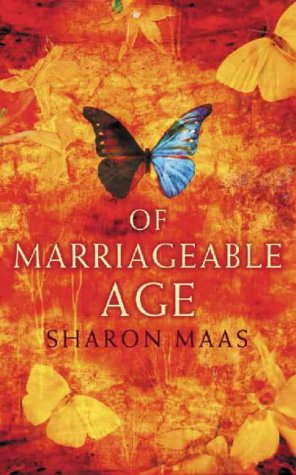
In Butter Chicken in Ludhiana, Pankaj Mishra captures an India which has shrugged off its sleepy, socialist air and has become instead kitschy, clamorous and ostentatious. From a convent educated beauty pageant aspirant to small shopkeepers planning their vacation in London, Pankaj Mishra paints a vivid picture of a people rushing headlong to their tryst with modernity. An absolute classic, this is a witty and insightful account of India’s aspirational middle class.

Small and short conversations with different people about their mindset and living style are described in this book. The people includes young women from Jhansi, with dreams of winning a beauty pageant, and naxalites in Bihar trying to initiate a revolution, and a young man from Gujarat speaking of killing Muslims in public. The author has shared all his experiences through this book. Butter Chicken In Ludhiana: Travels In Small Town India is an interesting read with a rich variety of languages and cultures. The stories in this book are full of irony, humour, and violence. There are so many characters portrayed in this book, and Mr Sharma from Ambala stands out.

The lifestyles of both village and city folk are depicted by the author, in this book which narrates the differences between the dreams and psychology of these people. In Butter Chicken In Ludhiana, the author talks about the reason of unemployment, which is caused by small fast food chains in small towns.

Festivals of India: Sri Krishna Jayanthi

The festival season in India continues with Sri Krishna Jayanthi or Janmashtami tomorrow. This is the day Lord Krishna, the eight avatar of Lord Vishnu, was supposed to have been born. Also known as Gokulashtami or Sree Jayanthi, this festival is celebrated across the country, but more so in what is known as Braj Bhoomi or the regions where Lord Krishna grew up and became a young man, mostly in Northern India (present day Uttar Pradesh) and where Lord Krishna established his kingdom of Dwarka (in present day Gujarat).

Krishna was the eighth son of Devaki and Vasudeva. Based on scriptural details and astrological calculations, the date of Krishna’s birth, known as Janmashtami, is 18 July 3228 BCE and he lived until 18 February 3102 BCE. Krishna belonged to the Vrishni clan of Yadavas from Mathura, and was the eighth son born to the princess Devaki and her husband Vasudeva.

Mathura (in present day Mathura district, Uttar Pradesh) was the capital of the Yadavas, to which Krishna’s parents Vasudeva and Devaki belonged. King Kansa, Devaki’s brother, had ascended the throne by imprisoning his father, King Ugrasena. Afraid of a prophecy that predicted his death at the hands of Devaki’s eighth son, Kansa had the couple locked in a prison cell. After Kansa killed the first six children, and Devaki’s apparent miscarriage of the seventh (which was actually a secret transfer of the infant to Rohini as Balarama), Krishna was born.

Following the birth, Vishnu ordered Vasudeva to take Krishna to Gokul to Nanda and Yashoda, where he could live safely, away from his Uncle Kansa. Vasudeva took Krishna with him and crossed the Yamuna to reach Gokul. There, everyone was asleep; so he quietly kept him there and returned with Yashoda’s daughter. Kansa, thinking her to be Devki’s eight child, threw her on a stone. But she rose into the air and transformed into Yogmaya (who is Vishnu’s helper) and warned Kansa about his death. Then, she disappeared. Krishna grew up in Gokul with his brother, Balram. He then returned to Mathura and killed Kansa with the help of Balram.

Most people fast the night before Krishna’s birth and also place small cradles in the room to signify his birth, breaking their fast after midnight, the time when Lord Krishna was supposed to have been born.

In most of Maharastra, the festival is celebrated with the breaking of dahi handis which are pots of yoghurt tied high above the ground. Groups of young men (mostly) and women called Govindas go around the city and when they spy on the dahi handis, they form human pyramids and the person at the top of the pyramid attempts to break the handi. If successful, they win the prize money which would be inside the handi (or be given the prize by the organisers of the handi).

In South India, especially in the community I belong to, Sree Jayanthi is usually celebrated in the evening of the day Lord Krishna was supposed to be born. Kolams or decorative patterns made of rice flour are drawn outside the house and little footprints depicting Lord Krishna as a baby entering the house from the doorstep to the Puja room are made. In homes where there are little kids or toddlers, the feet of these toddlers are dipped in the kolam paste and they are made to walk across the house from the door to the pooja room. We did this for a couple of years when BB & GG were young. Since the young Krishna loved butter, this would be a major part of the offering. Other offerings include sweet and salty seedai (round balls made of flour).

In My Hands Today…

Nine Lives – William Dalrymple

A mesmerizing book that explores how traditional religions are observed in today’s India, revealing ways of life that we might otherwise never have known.

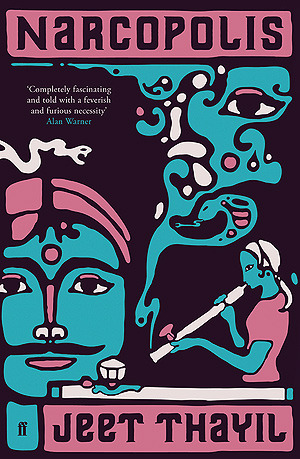
A middle-class woman from Calcutta finds unexpected fulfillment living as a Tantric in an isolated, skull-filled cremation ground . . . A prison warder from Kerala is worshipped as an incarnate deity for two months of every year . . . A Jain nun tests her powers of detachment watching her closest friend ritually starve herself to death . . . The twenty-third in a centuries-old line of idol makers struggles to reconcile with his son’s wish to study computer engineering . . . An illiterate goatherd keeps alive in his memory an ancient 200,000-stanza sacred epic . . . A temple prostitute, who resisted her own initiation into sex work, pushes her daughters into the trade she nonetheless regards as a sacred calling.

William Dalrymple tells these stories, among others, with expansive insight and a spellbinding evocation of remarkable circumstance, giving us a dazzling travelogue of both place and spirit