Festivals of India: Chapchar Kut Festival

Deeply rooted in Mizo culture, the Chapchar Kut Festival has an origin story dating back centuries. Rooted in centuries-old customs and folklore, this annual extravaganza captivates the senses with its colourful pageantry, lively performances, and spirit of camaraderie.

The festival traces its origins to ancient times when the Mizo tribespeople celebrated the arrival of spring and the onset of the agricultural season. As the winter frost receded and the land bloomed with new life, communities gathered to give thanks for the bountiful harvest and seek blessings for the year ahead.

The festival began around 1450–1700 in the village of Suaipui. The festival apparently originated when the hunters came back to the village empty-handed. To make up for the disappointment, the village chief proposed an impromptu feast with rice, beer and meat. Since then, every year, the festival has been repeated in the village of Suaipui and gradually spread to other villages. Thus, the Chapchar Kut was born—a celebration of resilience and community spirit. The festival originally served as a thanksgiving to the gods because during the clearing of forests on hill slopes for jhum cultivation or the shifting of agriculture, the people needed divine protection. Chapchar Kut marked the end of this arduous process, and the Mizo community expressed gratitude for their safety.
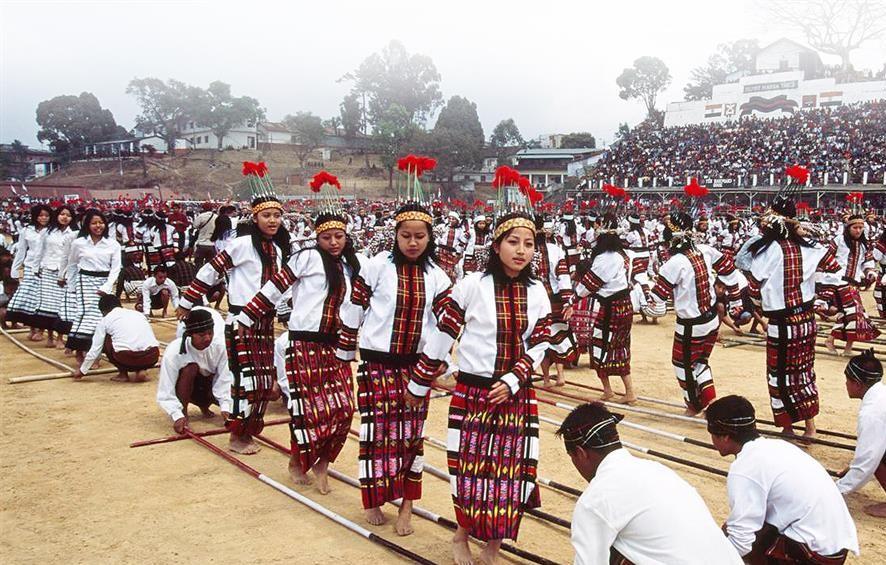
Chapchar Kut was first revived in 1962 on a grand scale in Aizawl; however, it was discouraged when it was felt that it did not adhere to Christian values and rekindled pre-Christian cultural practices like the drinking of rice beer. However, it was revived once again in 1973 on a mass scale, sans animistic practice and the Cheraw dance. Even the church, which had been critical of the festival, no longer objected to the festival as it felt that traditional culture was disappearing. Chapchar Kut is now held annually in the month of March. People dance, perform skits, and play musical instruments to celebrate their beloved festival, with the aim of fostering camaraderie among the people.

In the early days, Chapchar Kut was a lively affair with plenty of drinking and eating. Young men and women danced through the night, celebrating life and unity, with women adorning themselves in traditional attire, including the Vakiria, a traditional Mizo shawl. The Chai dance traces its origins to this festival. Today, Chapchar Kut aligns with the drying period for trees and bamboo felled during jhum cultivation. The festival provides a well-deserved break for shifting cultivators.
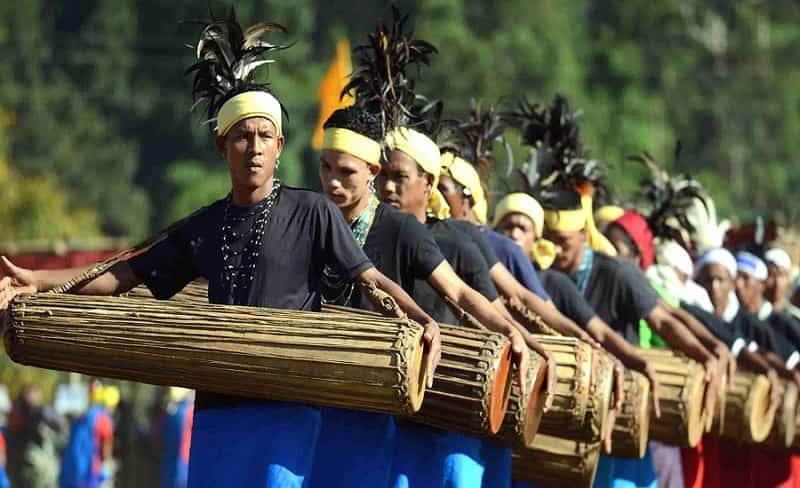
The Chapchar Kut Festival is marked by meticulous preparations and elaborate rituals that reflect the rich cultural tapestry of Mizoram. Weeks in advance, communities come together to clean and decorate their villages, weaving intricate patterns of bamboo and banana leaves to adorn their homes and public spaces. The festival provides an opportunity for Mizo men and women to showcase their traditional attire and finery, with vibrant costumes and elaborate headdresses adding to the spectacle of the occasion. From intricately woven shawls to ornate jewellery adorned with semi-precious stones, every garment tells a story of craftsmanship and cultural pride. Central to the Chapchar Kut Festival is the pulsating rhythm of music and dance, as performers take to the stage to showcase their talent and skill. Traditional instruments such as the khuang or the drum, the tuium or the flute, and the dawte or the gong set the beat for energetic performances that captivate audiences and evoke the spirit of celebration and joy.

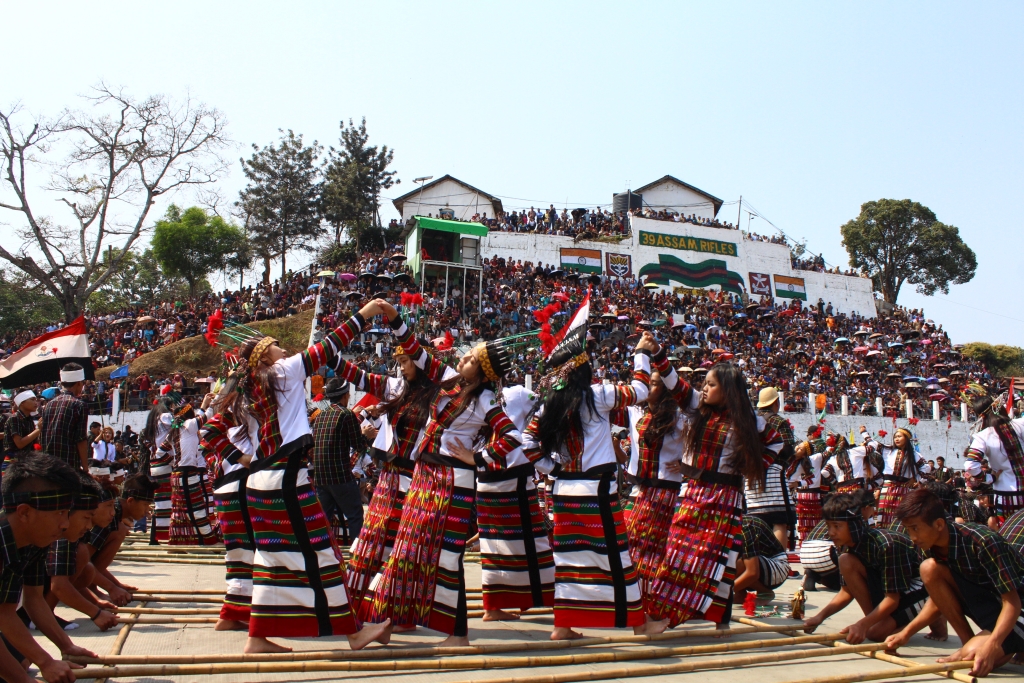
Key activities of the festival include the Chhawnghnawh, a pre-Christian custom where boiled eggs are playfully stuffed into each other’s mouths. The Cheraw dance takes centre stage, accompanied by other traditional dances like the Khuallam, the Chheihlam, and the Chai. The Chapchar Kut Run, a spirited race celebrating physical fitness, is also held during the festival. As a nod to the Mizo heritage, traditional games and a costume parade is the highlights of the festival.

A highlight of the Chapchar Kut Festival is the Thangchhuah or traditional bamboo dance, where men and women form intricate patterns and formations as they dance to the rhythmic beat of drums and gongs. The dance symbolizes unity, harmony, and collective endeavour—a reflection of the communal spirit that defines Mizo culture. Food plays a central role in Chapchar Kut celebrations, with elaborate feasts and communal meals bringing families and communities together in a spirit of camaraderie and conviviality. Traditional delicacies such as bai, a rice-based dish, vawksa rep, smoked meat, and sa-um, fermented bamboo shoot, are prepared with love and shared with neighbours and guests.

As part of the festival festivities, cultural exhibitions, and competitions are organized to showcase the diverse traditions and talents of the Mizo people. From traditional crafts and artwork to indigenous games and sports, these events provide a platform for artisans, performers, and athletes to showcase their skills and creativity.

While the Chapchar Kut Festival remains deeply rooted in tradition, it also reflects the evolving dynamics of contemporary Mizoram. Today, the festival serves as a catalyst for community engagement, social cohesion, and intergenerational dialogue, fostering a sense of belonging and pride among Mizo youth and elders alike.

In recent years, the Chapchar Kut Festival has emerged as a major tourist attraction, drawing visitors from across India and around the world to experience the vibrant colours, sights, and sounds of Mizoram’s cultural extravaganza. The festival offers a unique opportunity for cultural exchange and mutual understanding, as visitors immerse themselves in the customs and traditions of the Mizo people.

As Mizoram grapples with environmental challenges such as deforestation and climate change, efforts are underway to integrate principles of sustainability and conservation into the Chapchar Kut Festival. Initiatives such as tree planting drives, waste management programs, and eco-friendly practices aim to minimize the festival’s ecological footprint while preserving the natural beauty and biodiversity of the region.

2024 Week 09 Update

An Irish modernist writer known for his innovative and experimental writing style, James Joyce’s quote emphasises the reciprocal nature of the mind’s workings. Joyce suggests that the mind functions akin to a mirror, reflecting the content and quality of the thoughts, ideas, and experiences that one feeds into it. The quote underscores the principle that the quality of one’s mental output, such as creativity, understanding, and perception, is directly influenced by the quality of the mental input, including education, experiences, and reflections. Joyce’s words imply that individuals bear responsibility for what they expose their minds to, highlighting the importance of cultivating a nourishing mental environment through reading, learning, and introspection.

This week has been crazy at work and I am so glad for today. It’ll be a mini break for me before the new work week starts again. I am so busy working on my laptop that my shoulders are perpetually achy and I have to keep getting GG to give me shoulder massages.

BB will finally finish his BMT next week and hopefully, he gets posted into a vocation that he enjoys for the next year and a half. We will know only the week after, so please send him positive energy. GG is, as usual, busy with school and projects and is constantly worried about grades.

And that’s all from me this week. Stay safe and positive and keep smiling!

In My Hands Today…

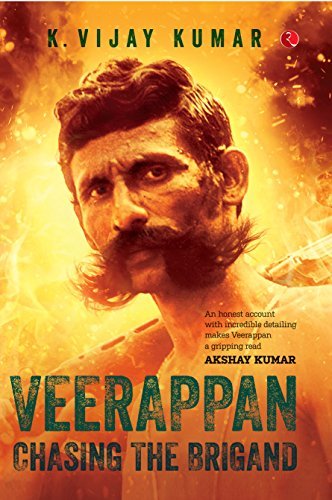
Veerappan: Chasing the Brigand – K. Vijay Kumar

No other bandit in recent times has captured the public’s imagination as much as Koose Muniswamy Veerappan.

Be it his trademark moustache, stories of his daring escapades, or his ruthless massacre of officers, Veerappan continues to fascinate, even thirteen years after his death.

Chasing the Brigand is a lucid and incisive account of the rise and fall of India’s most dreaded forest brigand. Chronicled by K. Vijay Kumar, IPS, the man who spearheaded the Tamil Nadu Special Task Force (STF) that planned and executed the dreaded bandit’s encounter, the book recounts the various incidents that shaped Veerappan’s life, from his birth in Gopinatham in 1952 to his death in 2004 in a shootout in Padi.

It traces his dramatic rise from a small-time poacher and sandalwood smuggler to a brutal fugitive who held three states to ransom for two decades. The ruthless killings and high-profile kidnappings masterminded by Veerappan, including the 108-day ordeal involving Kannada cinema superstar, Dr Rajkumar, are described in fascinating detail. Chasing the Brigand is the most authentic account of the life and times of the dreaded outlaw.

Festivals of India: Jaisalmer Desert Festival

An annual festival that takes place in the heart of the Thar Desert, the Jaisalmer Desert Festival is a mesmerising celebration that transports one to a world where time stands still and the desert comes alive with the vibrant spirit of Rajasthan.

Nestled on the westernmost frontier of India, Jaisalmer is a city like no other. Its honey-coloured fort, rising majestically from the desert floor, earns it the moniker Golden City. As the gateway to the Thar Desert, Jaisalmer has a rich history steeped in tales of valour, trade, and the sands. The Desert Festival is held every year during the Hindu month of Magh, three days before the full moon. The festival is celebrated in the dunes of Sam, about 42 km from the city.

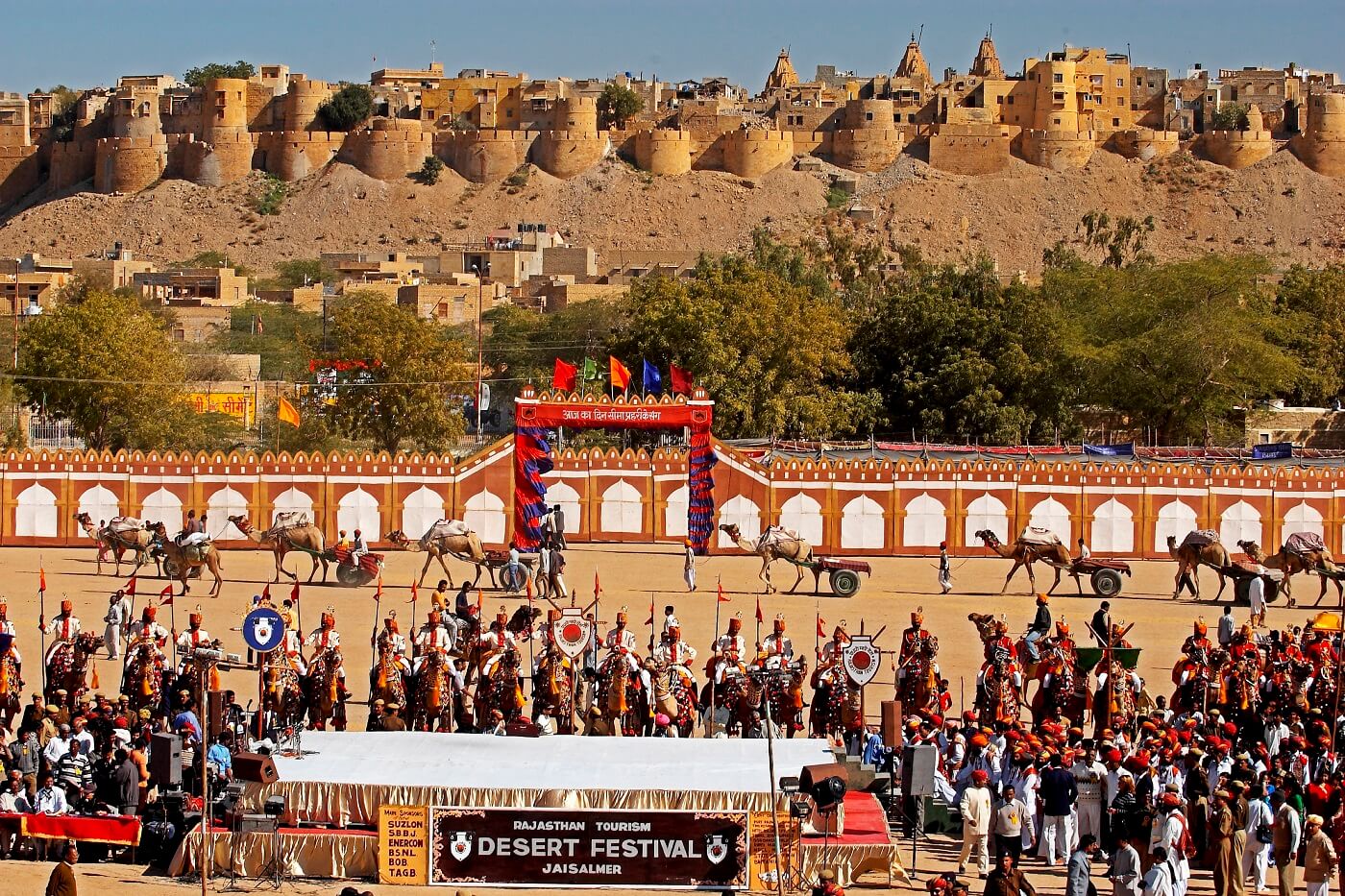
The Desert Festival kicks off with a regal procession through the narrow lanes of Jaisalmer. Bedecked camels, adorned with traditional finery, lead the way, followed by local musicians, dancers, and colourfully dressed locals. The rhythmic beats of folk music and the twirl of traditional dancers create an enchanting symphony that resonates across the dunes. From the energetic Kalbeliya dance to the soulful tunes of Manganiyar musicians, every performance reflects the vibrancy and diversity of Rajasthan’s artistic legacy.

The undulating dunes surrounding Jaisalmer set the stage for one of the festival’s highlights—the Camel Safari. Visitors can embark on a journey into the heart of the Thar Desert, accompanied by skilled guides who regale them with tales of desert life. The surreal landscape, shifting hues with the changing light, creates a canvas of unparalleled beauty.

One of the most anticipated events is the Battle of the Bands—a showcase of traditional Rajasthani music. Local musicians engage in friendly competition, captivating audiences with their skilful performances on instruments like the dholak, sarangi, and khartaal.

In a nod to the region’s proud heritage, the festival hosts a lively moustache competition. Men from far and wide showcase their elaborate facial hair in categories that celebrate the artistry and individuality of Rajasthani moustaches. It’s a spirited contest that adds a touch of whimsy to the cultural festivities.

Turbans, or pagris, are an integral part of Rajasthani attire, symbolising honour and pride. The turban-tying competition invites participants to showcase their skill in creating elaborate headgear. Each turban tells a story, with colours and styles representing a wearer’s community, occupation, or personal history.

The narrow lanes of Jaisalmer come alive with street performances, puppet shows, and magic acts. The vibrant bazaars, adorned with traditional crafts and textiles, become a playground for artists, capturing the imaginations of locals and visitors alike.

No festival is complete without a culinary journey, and the Desert Festival is no exception. Visitors are treated to a feast of Rajasthani delicacies, each dish a testament to the region’s rich culinary heritage. From the aromatic Dal Baati Churma to the indulgent Ghevar, the festival is a gastronomic adventure that tantalises the taste buds.

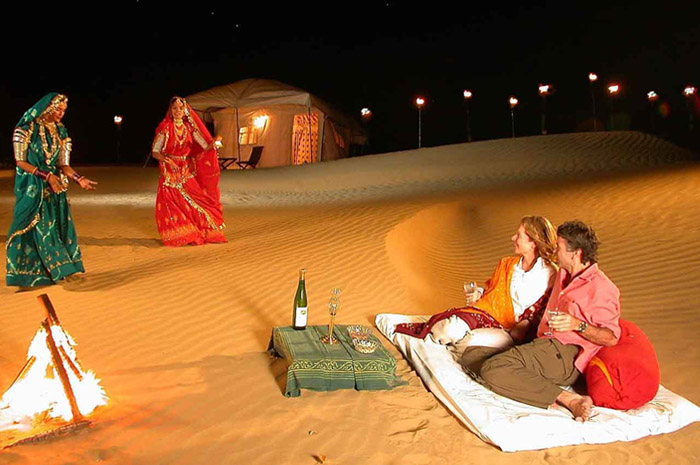
Beyond the festivities, the Desert Festival offers a unique opportunity to experience the desert lifestyle. Traditional desert camps, known as ‘khudde,’ provide a glimpse into the daily lives of desert dwellers. Visitors can participate in workshops on traditional crafts, learn the art of tie-dyeing, and engage with local artisans, creating memories that extend beyond the festival’s vibrant days.

For photography enthusiasts, the Jaisalmer Desert Festival is a visual feast. The stark beauty of the desert, juxtaposed with the riot of colours from traditional attire and festivities, creates a surreal panorama. Sunrise and sunset over the dunes offer photographers a canvas to capture the changing hues of the landscape.

The Desert Festival attracts a significant influx of visitors. Planning accommodations and travel well in advance ensures a seamless experience amid the festivities. The desert sun can be intense. Sunscreen, hats, and sunglasses are essential to staying protected while exploring the dunes and attending outdoor events. Jaisalmer’s cobbled streets and the sandy dunes require comfortable footwear. Whether exploring the city or venturing into the desert, sturdy shoes are a must. Respect local customs and traditions. Seek permission before photographing people, especially during religious ceremonies or private moments. The desert climate can be dehydrating. Carry a reusable water bottle to stay hydrated, especially during camel safaris and outdoor events.

After being at the Desert Festival in Jaisalmer, visitors take back with them memories etched in the sands of time. The vibrant tapestry of culture, music, and camaraderie experienced amid the Thar Desert is not merely a festival; it is an experience of a lifetime. A journey that transcends time echoes the folk music, the vibrant hues of turbans, and the enchanting dance of the desert winds that linger long after the festival tents come down and visitors have gone back to their humdrum lives.

Festivals of India: Medaram Jatara

The world’s largest festival for tribals, the Medaram Jatra, is held every two years over four days and, in the last decade, has become a major pilgrimage. The festival is held in the Medaram village of Tadvai Mandal, deep in the heart of the thick forests of the Mulugu district in the state of Telangana. Declared a state festival in 1998, the Jathra will take place between February 21 and 24 this year.

Pilgrims make their way to this tiny village whose population otherwise does not exceed 300, but during the jathra, it swells to almost ten million from Telangana, Andhra Pradesh, Orissa, Maharashtra and Madhya Pradesh to pay their respects and pray to the deities Sammakka and Saralamma.

The origins of the Medaram Jatara are shrouded in legend and mythology, tracing back to the valiant tale of Sammakka and Saralamma—the revered tribal deities of the region. The Jathara commemorates the fight of a mother and daughter, Sammakka and Saralamma, with the reigning rulers against an unjust law. According to folklore, Sammakka, a fearless warrior queen of the Koya tribe, waged a fierce battle against injustice and tyranny, ultimately sacrificing her life to protect her people. In her honour, a grand temple was erected in Medaram, where pilgrims flock to seek blessings and offer prayers to this day. It is believed that after the Kumbha Mela, the Medaram Jathara attracts the largest number of devotees in the country. It is celebrated in Medaram during the time the goddesses of the tribals are believed to visit them. Medaram is a remote place in the Eturnagaram Wildlife Sanctuary, a part of Dandakaranya, the largest surviving forest belt in the Mulugu.

There are many legends about the miraculous powers of Sammakka. According to a tribal story, in the 13th century, some tribal leaders who went hunting found a newborn girl, aka Sammakka, emitting enormous light while playing amidst tigers. She was taken to their home. The head of the tribe adopted her and brought her up as a chieftain. When she came of age, she was married to Pagididda Raju, a feudatory tribal chief of the Kakatiyas, who ruled the country of Andhra from Warangal City between 1000 AD and 1380 AD. She was blessed with two daughters and one son, namely Sarakka, Nagulamma and Jampanna, respectively.

The festival has no Vedic or Brahmanic influence. Until 1998, the only way to reach Medaram was by a bullock cart. In 1998 the state government declared the 1000-yr-old festival official and laid down a motorable road. In recent times the gatherings in the Jathara are roughly near 10 million. The traffic jam during the festival sometimes goes as far as 60 km on the Warangal highway.

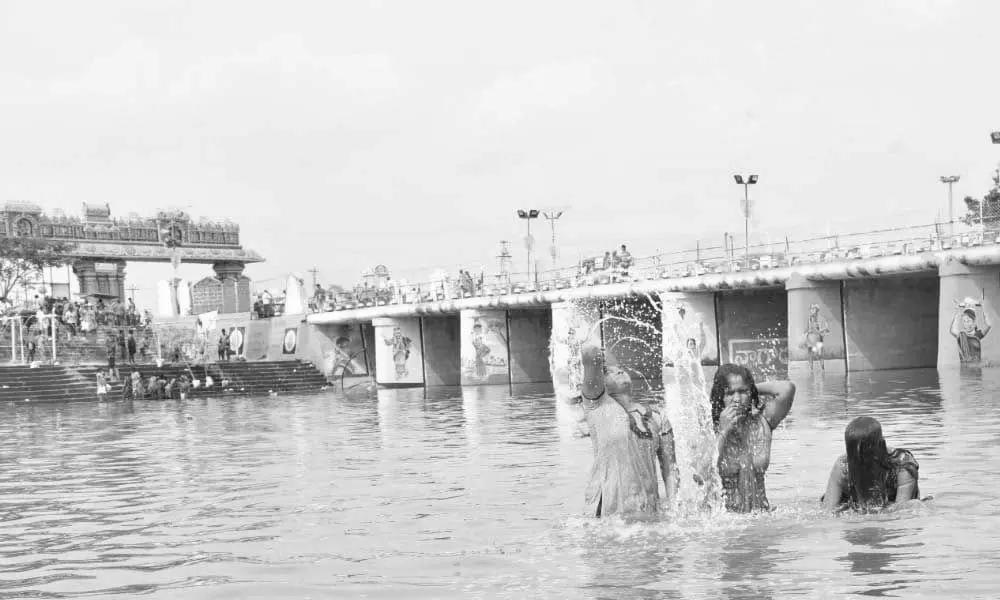
Jampanna Vagu is a tributary of the River Godavari. According to history, Jampanna is the tribal warrior and the son of the tribal goddess Sammakka. Jampanna Vagu took his name as he died in a battle fighting against the Kakatiyan army in the stream. The Jampanna vagu is still red, marked with the blood of Jampanna, though scientifically the red colour of the water is attributed to the soil composition. Tribals believe that taking a holy dip in the red water of Jampanna Vagu reminds them of the sacrifice of their Gods who will save them and also induces courage into their souls. There is a bridge constructed on top of Jampanna Vagu, known as Jampanna Vagu Bridge.

At the heart of the Medaram Jatara are the sacred rituals and traditions that define the festival’s essence. From the ceremonial installation of the gaddelu—wooden poles adorned with sacred symbols—to the ritualistic offering of jaggery and bangaram (jaggery and gold) at the feet of the deity, each gesture is imbued with deep spiritual significance.

The first day of the festival is celebrated as the arrival of Saralamma onto the Medaram Gaddhe or platform. Saralamma was the daughter of Sammakka. Saralamma is installed in a temple at Kannepalli, a small village near Medaram. In the morning pujaris perform pujas secretly. The unmarried women and men, those who want to have children and those who are suffering from diseases perform special pujas to Saralamma on this day. The villages of Kannepalli perform Aarti and organise a grand farewell to Saralamma. From there, the idol of Saralamma is brought to Medaram Gaddhe through the Jampanna Vaagu and after arriving at the Gaddhe, Saralamma is worshipped with special pujas and other rituals.

Day 2 of the Jathra is celebrated as the arrival of Sammakka on the Medaram Gaddhe. Sammakka is welcomed amidst the official homage from the police and government. On this day, pujaris bring bamboo sticks and place them on the Gaddhe. Amidst the protection and official homages of police, Pujaris bring Sammakka to the Gaddhe. Sammakka is usually installed at Chilukala Gutta in the form of a Kumkuma Bharina. Sammakka is the presiding deity of Medaram Sammakka Saralamma Jathara At Chilukala Gutta, as the indication of the arrival of Sammakka, the district Superintendent of Police fires his gun thrice in the air and inaugurates the bali to please Sammakka. Amidst the slogans praising Sammakka, pujaris bring the deity onto Gaddhe.

On the 3rd day of the Medaram Jathara, devotees and pilgrims can finally have a glimpse of their beloved deities. After taking a bath in the Jampanna Vaagu, devotees visit the Goddesses and offer various offerings to Sammakka and Saralamma. Women offer Odi Biyyam or sacred rice and saare which is a combination of necessary daily items to the Goddesses. The third day is the busiest one among the four festival days. The important offering in Sammakka Sarakka Jathara is Bangaram or jaggery which is offered as gold to the Goddesses.

The 4th day, which is the last day of the jathra is celebrated as Vana Pravesham of Sammakka and Sarakka. After getting worshipped the goddesses return to the forest. The day marks the conclusion of the 4-day Sammakka Saralamma Jathara. The same security and the official homage they have got while arriving on the platform are paid to the Goddesses while returning to the forest.

The Medaram Jatara is not just a religious pilgrimage but a celebration of Telangana’s rich cultural heritage. Traditional folk dances, music performances, and theatrical presentations captivate audiences, transporting them to a bygone era of rustic charm and rural splendour. In recent years, efforts have been made to promote environmental sustainability and conservation during the festival. Initiatives such as waste management, water conservation, and tree plantation drives aim to mitigate the ecological impact of the massive congregation while preserving the natural beauty of the surrounding landscape.

With the growing influx of pilgrims and visitors, there is a pressing need for infrastructure development to accommodate the increasing footfall. Investments in road networks, sanitation facilities, and accommodation options can enhance the pilgrim experience while ensuring the sustainable growth of the festival. As the Medaram Jatara embraces modernity, there is a delicate balance to be struck between tradition and innovation. Efforts must be made to preserve the authenticity of the festival’s rituals and traditions while embracing opportunities for cultural exchange and enrichment.

The Medaram Jatara stands as a symbol of faith, resilience, and cultural identity. In an era of rapid change and upheaval, the festival stands as a testament to the enduring spirit of the tribals of not just Telangana, but also the neighbouring states.