Safer Internet Day

Today, it is impossible to think of a life without the internet. Tomorrow is Safer Internet Day and this day is more than important in fostering a secure online environment. This day, observed annually on the second Tuesday of February, serves as a global call to action, urging individuals, organisations, and governments to reflect on the evolving challenges of digital safety and work collaboratively towards a safer cyberspace.

Since its inception in 2004, Safer Internet Day has evolved into a cornerstone event, transcending geographical boundaries to address the multifaceted aspects of online safety. Facilitated by the joint efforts of governments, NGOs, industry leaders, and individuals, the day seeks to raise awareness, promote responsible digital behaviour, and ignite conversations around the ever-expanding frontier of the internet.

The theme for Safer Internet Day 2024, Empowering Digital Wellness, reflects a nuanced understanding of the Internet’s role in our lives. It goes beyond traditional notions of safety, encompassing a holistic approach that considers not only the avoidance of harm but also the cultivation of positive, healthy online experiences.

Cyber threats today are becoming more of a norm than they were previously. From sophisticated phishing attacks to ransomware campaigns targeting critical infrastructure, the arsenal of cyber threats continues to expand. Safer Internet Day serves as a rallying point to fortify our virtual defences and elevate cybersecurity awareness. The accumulation of personal data by tech giants and the subsequent concerns over data privacy have become central issues in the digital discourse. As individuals navigate the online landscape, safeguarding privacy is paramount, and Safer Internet Day prompts us to scrutinize the implications of our digital footprints.

The propagation of misinformation and the manipulation of online narratives pose significant threats to the integrity of digital spaces. Safer Internet Day underscores the importance of media literacy and critical thinking as bulwarks against the tide of disinformation. The younger generation, digital natives in their own right, face unique challenges in the online sphere. Safer Internet Day directs attention towards fostering a digital environment where young minds can explore, learn, and socialize without succumbing to the perils of cyberbullying, predatory behaviour, or exposure to inappropriate content.

So what is digital wellness?
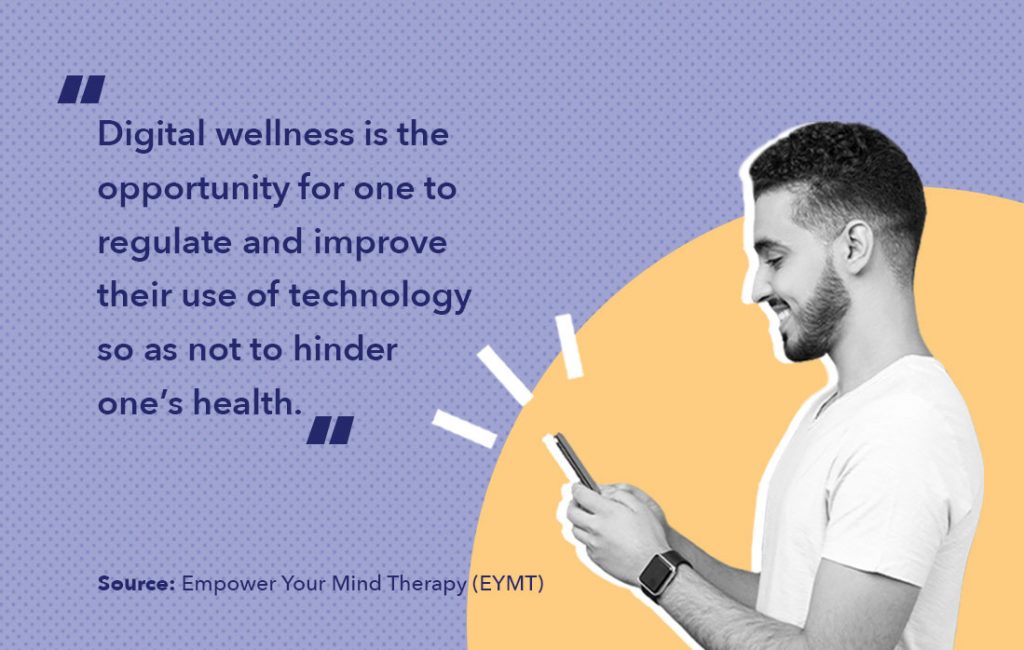
Digital wellness transcends the binary perspective of safety versus danger. It delves into the qualitative aspects of our online experiences, urging us to strike a balance between connectivity and mental well-being. On Safer Internet Day, we are prompted to reflect on the impact of our digital habits on overall health. A key tenet of digital wellness is the cultivation of positive interactions. This day encourages individuals to contribute to a culture of respect, empathy, and constructive dialogue online. From social media etiquette to responsible commenting, the goal is to create a virtual space that mirrors the values of the physical world. An empowered user is a resilient user. Safer Internet Day emphasises the need for robust digital literacy initiatives that equip individuals with the skills to navigate the internet safely, discern reliable information from misinformation, and fortify themselves against cyber threats. Beyond individual efforts, the responsibility also lies with the tech industry to design platforms and services that prioritise user safety and well-being. Safer Internet Day calls for ethical considerations in the development and deployment of digital technologies.

Governments around the world use Safer Internet Day as an opportunity to announce new policies, launch initiatives, and engage in collaborative efforts to enhance online safety. The day acts as a catalyst for cross-border cooperation in addressing global digital challenges. Tech giants and corporations leverage Safer Internet Day to showcase their commitment to user safety. From releasing transparency reports to implementing enhanced security features, these initiatives contribute to a safer online ecosystem. You can also find non-governmental agencies that advocate for digital rights and online safety, amplifying their voices on this day. Safer Internet Day provides a platform for awareness campaigns, educational programs, and policy advocacy.

Educational institutions worldwide leverage Safer Internet Day to integrate digital safety into their curricula. From primary schools to universities, students are educated on topics such as online ethics, privacy protection, and cybersecurity. Workshops, seminars, and awareness programs are conducted to engage students, parents, and educators in discussions about responsible digital behaviour. The goal is to create a shared understanding of the challenges and opportunities presented by the digital landscape.

As we navigate the complex and ever-evolving digital terrain, Safer Internet Day serves as a call to action—a collective summons to become guardians of the virtual realm. It prompts us to scrutinise our digital habits, advocate for digital wellness, and actively contribute to the creation of a safer, more resilient internet. As individuals, we are also encouraged to reflect on our digital behaviours, assess our online footprint, and consider the impact of our actions on the broader online community. A conscious and informed user is the first line of defence in the digital realm.

Safer Internet Day is not merely a commemoration but a call to arms—an acknowledgement of the collective responsibility we bear in safeguarding the virtual commons. It challenges us to transcend the dichotomy of utopia and dystopia, recognizing that the internet, like any realm of human interaction, reflects our collective values, aspirations, and shortcomings.

In the quest for a safer internet, the journey begins with individual choices, extends through community engagement, and converges in the halls of policy and technology design. As we traverse the intricate web of the digital realm, let us be the architects of a virtual space that mirrors the principles of justice, equity, and shared humanity. In the hands of the global community, the internet can become a beacon of enlightenment, collaboration, and progress—a testament to the triumph of the human spirit in the face of the unprecedented challenges of our digital age.


(Still) Blogging Anonymously

anonymous_blogger

I decided to go way back to my first posts and see how long I have been blogging. I realised I would have been blogging on WordPress for 7 years this year (my blog anniversary is sometime in August) and a couple of years before that on Blogspot. Wow! That’s a long time to be blogging, that too anonymously.

I revisited this topic again when sometime last week, I came across an opinion piece in an Indian newspaper by a famous author who was arguing about the privacy issues that a famous Bollywood couple are facing over their new baby’s photo. The baby’s photo was published across media when the doting father put it up as his Whatsapp profile picture (as most parents are wont to do so) and she argued that in this day and age of digital invasion, especially for a high-profile couple like these two, it was par on course, and not something they should take seriously. I am not going to link to the article, nor mention any names, though any Indian who reads this, may know who I am talking about. This article again raised the issue of being anonymous on social media.

05324746-photo-protection_1_0

Today, with oversharing being the norm, being someone who hides behind an identity on social media, I am probably an anomaly rather than the norm. With the exception of Facebook and LinkedIn where I am present as myself, I blog under a pseudonym on all other media. I guess I am not 100% anonymous here – you guys do know that I live in Singapore and have two children who are twins and are around 13/14 years old and in secondary school. But I have still not shared more details about myself or a photograph of me and my family, which seems to be what most family and lifestyle bloggers (as I see myself) have on their About me page. Maybe someone who is diligent can find out who I am, but I’d like to think that I am not someone who is famous or infamous that people are really curious to know whom I am in real life.

I know it’s quite hard for me not to build traffic to this site because I can’t just link posts from here onto any of my other social media accounts, so conversely I am actually proud of each and every new subscriber as I know you’ve come here organically and because you like what I write. This is pure validation to someone who considers herself as a closet writer.

I also want to protect BB & GG from any adverse effects of my blogging. Technology is jumping by leaps and bounds and what is probably in the realm of science fiction today may be a something very normal 10 years down the line. I want them to start and live their lives on a clean slate and don’t want any embarrassing photos or blog posts to pop up when a future employer searches their name a few years down the line when they start work or even when they apply for admissions at their dream schools. After all, even today a sweep of your social media profile is done when you are looking at hiring new employees or even students and you don’t want something awkward coming up when your name is searched.

blogger_anonymity

So there you have why I chose to blog anonymously. I am still not sure if this was the right decision or not, but it’s something I chose to do and will continue to do so moving forward.

In My Hands Today…

Time Stops at Shamli and Other Stories – Ruskin Bond

An enchanting collection of stories from the little-known heartland of India Ruskin Bond’s characters—who live for the most part in the country’s small towns and villages—are not the sort who make the headlines but are, nonetheless, remarkable for their quiet heroism, their grace under pressure and the manner in which they continue to cleave to the old values: honesty, fidelity, a deep-rooted faith in God, family and their neighbour. They do have problems, of course—the sudden death of a loved parent, unfulfilled dreams, natural calamities, ghostly visitations, a respected teacher gone crooked, strangers who make a nuisance of themselves in a town marooned in time—but these are solved with a minimum of fuss and tremendous dignity. Taken together these stories are a magnificent evocation of real India by one of the country’s foremost writers.

Cyberbullying

The past few days I have been riveted to a saga on this micro blogging site I signed up for. I am not sure if it is popular in other parts of the world, most of the bloggers there seem to be from Southeast Asia.

What happened was that one of the more popular bloggers, let’s call him A,  went on a trip a reasonably faraway place with his wife, toddler, infant and parents and blogged about how difficult it was travel with young children/infants. One of the other bloggers, let’s call her B,  with children similar ages as that blogger and who does not live in this continent commented  that it was not too difficult, especially since in Asia you had access to help (parents, live-in helpers etc) which she apparently didn’t have.

This happened early in the month of July I guess. Then sometime in the middle of the month, the blogger’s wife, let’s call her C, apparently a popular blogger herself (apparently since I had not heard of her before joining this site) and one who makes a living blogging herself wrote a post on her blog, calling out B out in her blog in a very passive aggressive way – not naming names, but with enough details that her followers, many of whom also are on the micro blogging site, recognized who B was.

Then it started – a lot of the bloggers started calling out B and it degenerated to a lot of name calling, which was awful to read. People who supported B also were called names, which given that quite a few of the name callers are supposedly respected bloggers who make a living through blogging and have a lot clients whom they blog about. The irony was that A to whom the original comment was intended to has kept silent completely. C responded once and I understand from B’s posts that she reached out to C through email to apologise.

This whole incident has left a bad taste in my mouth. This is simply a case of Cyberbullying. According to Wikipedia , Cyberbullying is the harming or harassing via information technology networks in a repeated and deliberate manner. According to U.S. Legal Definitions, “cyber-bullying could be limited to posting rumors or gossips about a person in the internet bringing about hatred in other’s minds; or it may go to the extent of personally identifying victims and publishing materials severely defaming and humiliating them”

What was a non-incident has been blown up unnecessarily and made people take camps. While I have not yet commented on this in the micro blogging site, I decided to post here, mostly because this is something many of us may have experienced.  So if a person posts comments which may not be to your liking (maybe showing a hint of crack in the perfect life you potray on social media), does that mean, you and maybe your friends start bullying the person who posted the comment? Most of the people who commented negatively against B were those who were not involved – just friends of A & C. Where does the line end?

I am now seriously worried for my kids as teens are supposed to be experts at Cyberbullying. I need to educate them over the school holidays on the perils of posting online, especially since they now move out the secure primary school environs and more to a more socially aware and social media dominated environment that is secondary school.

More information on Cyberbullying, escpecially in relation to children and teen cyberbullying can be found here, here and here.

The internet never forgets, what you post anywhere will stay on forever – even if you delete it….

Facebook


I came into Facebook quite late – sometime in early 2009 if I remember correctly. I was pretty much against it and was dragged into it kicking and screaming! As you may know, I am an intensely private person, so the idea of having my entire life played put for the world to see seems to be very ugh to me!

Don’t take this as an anti-Facebook rant – far from it. Once I discovered Facebook and what it can do, I was hooked! I reconnected with classmates and friends whom I had probably seen  on the day we collected our class X results, around 20 years back and it was great to be a part of their lives, albeit through Facebook. Unlike some people, I am very discerning about whom I ‘friend’. I need to know who this person is and also check for mutual friends before I ‘accept’ their friends request. Sometimes without a photo, I have rejected requests only to find out later that I do know them after all – and then go and give them a friend request!

But seriously how many friends are you really in touch on Facebook? I would say there are about less than 10 that I regularly send messages or write on walls. There would be another 20 odd with whom I have sporadic conversations. The rest are either work related friends (and I use the term very loosely here) with whom there would be interactions perhaps a couple of times a year or school/college/previous workplace friends who’ve friended me and whom I’ve accepted as a friend just because I know them. Other than an initial chat when we first reconnected, there’s nothing to talk!

So how many ‘friends’ do you have on Facebook and to how many so you regularly and really talk to?

Here’s a real funny video about what would happen if Facebook happened in real life!

http://www.youtube.com/watch?v=nrlSkU0TFLs