In My Hands Today…

SuperFreakonomics: Global Cooling, Patriotic Prostitutes And Why Suicide Bombers Should Buy Life Insurance – Steven D. Levitt and Stephen J. Dubner

The New York Times best-selling Freakonomics was a worldwide sensation, selling over four million copies in thirty-five languages and changing the way we look at the world. Now, Steven D. Levitt and Stephen J. Dubner return with SuperFreakonomics, and fans and newcomers alike will find that the freakquel is even bolder, funnier, and more surprising than the first.

Four years in the making, SuperFreakonomics asks not only the tough questions, but the unexpected ones: What’s more dangerous, driving drunk or walking drunk? Why is chemotherapy prescribed so often if it’s so ineffective? Can a sex change boost your salary?

SuperFreakonomics challenges the way we think all over again, exploring the hidden side of everything with such questions as:

How is a street prostitute like a department-store Santa?
Why are doctors so bad at washing their hands?
How much good do car seats do?
What’s the best way to catch a terrorist?
Did TV cause a rise in crime?
What do hurricanes, heart attacks, and highway deaths have in common?
Are people hard-wired for altruism or selfishness?
Can eating kangaroo save the planet?
Which adds more value: a pimp or a Realtor?

Levitt and Dubner mix smart thinking and great storytelling like no one else, whether investigating a solution to global warming or explaining why the price of oral sex has fallen so drastically. By examining how people respond to incentives, they show the world for what it really is – good, bad, ugly, and, in the final analysis, super freaky.

Freakonomics has been imitated many times over – but only now, with SuperFreakonomics, has it met its match.

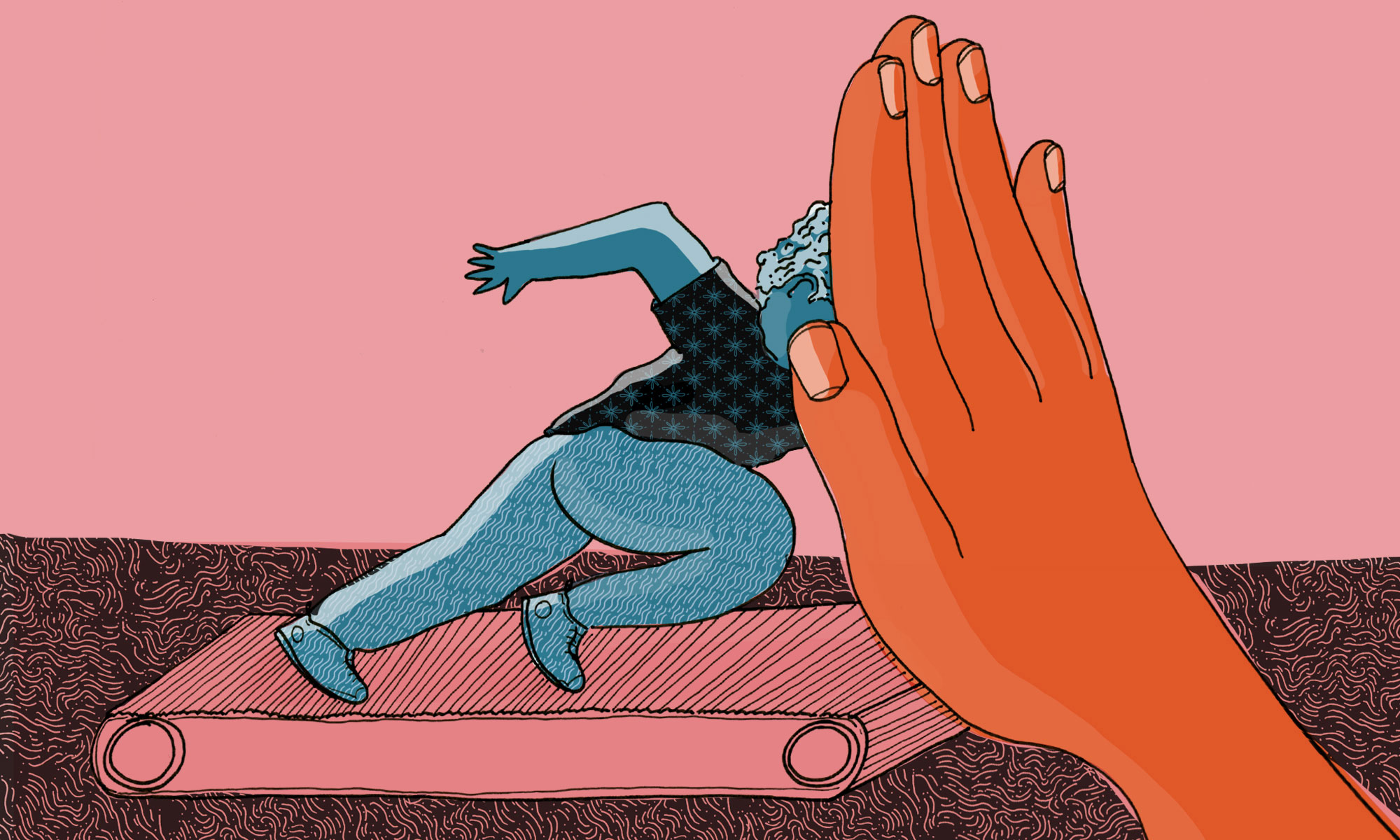
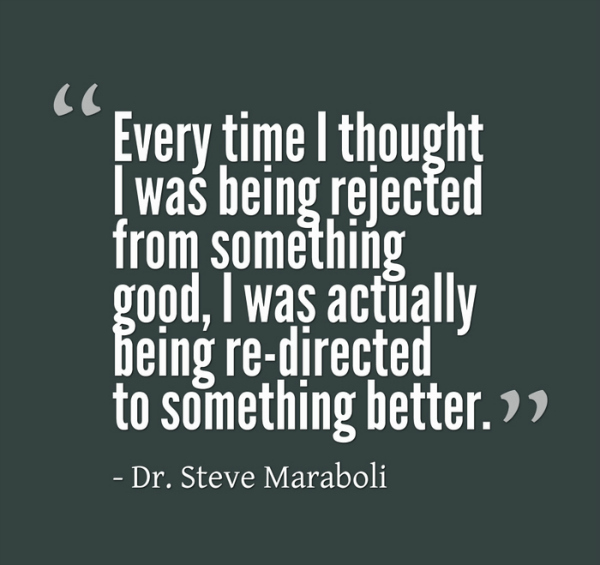
Not a Rejection, but a Redirection

This is a scenario that has probably happened to all of us. We are desperately waiting for an answer for either a dream job or a place in the course we yearn to be in. And then there comes a call or more likely an email that dashes our hopes to the ground – a rejection letter if we are lucky. The more likely scenario is ghosting and then slowly we give up hope. We are despondent and think our world has come to an end.

Bryant McGill said Rejection is merely a redirection: a course correction to your destiny. And this is true. Failure or rejection is just a delay in our plans, a temporary detour, not the end. It may be very difficult to see it then, but that rejection is a sign from the universe that there is something better waiting. But after some time, we have to get up, dust off the rejection and the pain it caused us and continue doing what we need to do to reach our goal. Rejection teaches us that hard work and tenacity will allow us to reap the ultimate reward.

Rejection forces us to dig deep and clarify our passions. Many times, failure and loss result from a diminished passion and we realise we weren’t as passionate as we first thought. The pruning effect is positive and as we clear your plate a little, we’ll make more room for what excites us and direct our energies toward that and it is clear that focused energy is when we’re most effective.

Challenges and losses compel us to gather up our resources and develop and uncover skills we didn’t know we had. It gives that jolt of adrenalin to our system which forces us to go beyond what we thought we were capable of. A rejection keeps us in check. There will always be someone who is better than us and deserves what we were hoping to get and a rejection shows us that. It pulls us down and if we are at that point arrogant or too sure of our abilities, that’s the universe telling us no, we aren’t. The rejection then becomes a lesson for us, reminds us to be better the next time round and strive harder. With pain, comes gain and when we are all out to reach a goal, then we should be prepared for rejection, criticism and hate and with each such prick, you start to develop a thick skin, which makes future rejections easier to handle. Rejection also eliminates what doesn’t serve us and we are also allowed to reject something that is not right for us, a sort of reverse rejection.

When faced with a large failure, you see who is there for you. When you hit rock bottom, it is your family and close friends, ones who are there in thick and thin, in sadness and happiness. So you can sieve those who are genuine from the freeloaders when rejection comes calling. During rejection, we can figure out where we are lacking, especially the habits and skills we have not yet acquired which a failure reminds us to go forth and get.

We are all plagued with the superhero syndrome and this becomes harmful when the candle is burning at both ends, drifting toward burnout. It is only when faced with rejection, that you start to learn to ask for help and then realise that asking for help is not a weakness but can be viewed in a positive light.

When we are rejected, we usually go back to the drawing board to take stock and reevaluate what went wrong. This is something that we need to do regularly, but when faced with success, we rarely do that, it’s only failure that compels us to rethink options and who knows the rethink may set us on a new path, something we had not considered previously.

Lastly, when we are rejected, our successes become sweeter. Value and meaning become heightened in the face of difficulty with the greatest celebrations coming from the toughest battles. When the journey to get to the peak includes getting back on our feet and dusting ourselves off, we’ll be more inclined to stop when we see roses and express a little more gratitude at the finish line.

When we are rejected or we are subject to failures, at that moment, we are so hurt and dejected that it is impossible to see past it. In retrospect, in many cases, failure would be the best thing that could have happened to us. Failure and rejection are what keeps us hungry, motivated, and allows us to shoot for the stars by bettering ourselves for the next opportunity that comes along. In short, the bitterness of every failure adds sweetness to every victory.

In My Hands Today…

Blink: The Power of Thinking Without Thinking – Malcolm Gladwell

Malcolm Gladwell redefined how we understand the world around us. Now, in Blink, he revolutionizes the way we understand the world within. Blink is a book about how we think without thinking, about choices that seem to be made in an instant – in the blink of an eye – that actually aren’t as simple as they seem. Why are some people brilliant decision makers, while others are consistently inept? Why do some people follow their instincts and win, while others end up stumbling into error? How do our brains really work – in the office, in the classroom, in the kitchen, and in the bedroom? And why are the best decisions often those that are impossible to explain to others?

In Blink we meet the psychologist who has learned to predict whether a marriage will last, based on a few minutes of observing a couple; the tennis coach who knows when a player will double-fault before the racket even makes contact with the ball; the antiquities experts who recognize a fake at a glance. Here, too, are great failures of “blink”: the election of Warren Harding; “New Coke”; and the shooting of Amadou Diallo by police. Blink reveals that great decision makers aren’t those who process the most information or spend the most time deliberating, but those who have perfected the art of “thin-slicing” – filtering the very few factors that matter from an overwhelming number of variables.

In My Hands Today…

Never Split the Difference – Chris Voss and Tahl Raz

After a stint policing the rough streets of Kansas City, Missouri, Chris Voss joined the FBI, where his career as a hostage negotiator brought him face-to-face with a range of criminals, including bank robbers and terrorists. Reaching the pinnacle of his profession, he became the FBI’s lead international kidnapping negotiator.

Never Split the Difference takes you inside the world of high-stakes negotiations and into Voss’s head, revealing the skills that helped him and his colleagues to succeed where it mattered most: saving lives. In this practical guide, he shares the nine effective principles—counter-intuitive tactics and strategies—you too can use to become more persuasive in both your professional and personal life.

Life is a series of negotiations you should be prepared for: buying a car; negotiating a salary; buying a home; renegotiating rent; deliberating with your partner. Taking emotional intelligence and intuition to the next level, Never Split the Difference gives you the competitive edge in any discussion.

In My Hands Today…

The Power of Habit: Why We Do What We Do in Life and Business – Charles Duhigg

A young woman walks into a laboratory. Over the past two years, she has transformed almost every aspect of her life. She has quit smoking, run a marathon, and been promoted at work. The patterns inside her brain, neurologists discover, have fundamentally changed.

Marketers at Procter & Gamble study videos of people making their beds. They are desperately trying to figure out how to sell a new product called Febreze, on track to be one of the biggest flops in company history. Suddenly, one of them detects a nearly imperceptible pattern—and with a slight shift in advertising, Febreze goes on to earn a billion dollars a year.

An untested CEO takes over one of the largest companies in America. His first order of business is attacking a single pattern among his employees—how they approach worker safety—and soon the firm, Alcoa, becomes the top performer in the Dow Jones.

What do all these people have in common? They achieved success by focusing on the patterns that shape every aspect of our lives.

They succeeded by transforming habits.

In The Power of Habit, award-winning New York Times business reporter Charles Duhigg takes us to the thrilling edge of scientific discoveries that explain why habits exist and how they can be changed. With penetrating intelligence and an ability to distill vast amounts of information into engrossing narratives, Duhigg brings to life a whole new understanding of human nature and its potential for transformation.

Along the way we learn why some people and companies struggle to change, despite years of trying, while others seem to remake themselves overnight. We visit laboratories where neuroscientists explore how habits work and where, exactly, they reside in our brains. We discover how the right habits were crucial to the success of Olympic swimmer Michael Phelps, Starbucks CEO Howard Schultz, and civil-rights hero Martin Luther King, Jr. We go inside Procter & Gamble, Target superstores, Rick Warren’s Saddleback Church, NFL locker rooms, and the nation’s largest hospitals and see how implementing so-called keystone habits can earn billions and mean the difference between failure and success, life and death.

At its core, The Power of Habit contains an exhilarating argument: The key to exercising regularly, losing weight, raising exceptional children, becoming more productive, building revolutionary companies and social movements, and achieving success is understanding how habits work.

Habits aren’t destiny. As Charles Duhigg shows, by harnessing this new science, we can transform our businesses, our communities, and our lives.